
Medically Reviewed by Dr. Lisa Hartford, MD
At-Home Skin Tech, Reviewed
Radio Frequency Skin Tightening at Home: What the Evidence Actually Says in 2026
Radio frequency is one of the most studied non surgical ways to firm aging skin. Here is how it works, what the clinical evidence supports, where at-home devices genuinely help, and the honest limits you should know before you buy.
Related: our complete guide to sagging skin after weight loss.
Key takeaways
- Radio frequency (RF) heats the deeper layer of skin, which causes existing collagen to contract right away and prompts the body to build new collagen over the following weeks.13
- Clinic RF is the most robust evidence base. Reviews report improvement in skin texture and firmness in a large share of patients, though strong long term data are still limited.2
- At-home RF devices run at lower energy than clinic machines. That is a safety requirement, not a flaw. It means results are more gradual and more subtle, and consistency matters more than intensity.6
- At-home RF can support the look of firmer, smoother skin. It does not replace a surgical facelift or a high energy clinic procedure such as Thermage or RF microneedling.
- The device choice that matters most is one that pairs RF with complementary modalities and is built for safe, repeated home use. Our pick is the EvenSkyn Lumo+.
What radio frequency skin tightening is
Radio frequency skin tightening is a non ablative treatment, which means it works below the surface without wounding or removing the top layer of skin.12 A device sends high frequency electrical energy into the dermis, the layer that holds collagen and elastin. Because RF heats tissue based on its natural resistance to that energy rather than by targeting pigment, it can be used across the full range of skin tones.1
That is the core difference between RF and light based treatments. A laser or an intense pulsed light device aims at chromophores such as melanin. RF does not, so the risk profile around pigment is different, and it is one reason RF has become a mainstay in aesthetic dermatology for laxity, fine lines, and loss of firmness.12
How radio frequency actually works on the skin
The effect happens in two stages, one immediate and one that plays out over weeks.
Stage one: immediate collagen contraction
Collagen is a coiled, triple helix protein. When the dermis is heated into roughly the 40 to 48 degrees Celsius range, those helices begin to denature and the fibers contract, which produces the mild tightening some people notice soon after a session.14 Laboratory work using transmission electron microscopy has shown this immediate heating leads to collagen denaturation, fiber contraction, and tissue thickening.3 The contraction response is most pronounced near 63 degrees Celsius, with deeper coagulation occurring across roughly 55 to 70 degrees Celsius.15
Stage two: new collagen over the following weeks
Controlled heating triggers a wound healing response. Fibroblasts, the cells that make collagen, are stimulated to lay down and reorganize new collagen and elastin over the weeks and months that follow.34 This is why RF results tend to build gradually rather than appear all at once, and it is the mechanism most reviews credit for the longer term change in firmness and texture.2 In clinic devices, the surface is cooled while deeper tissue is heated, creating a reverse thermal gradient that protects the epidermis while the dermis does the work.3
Monopolar, bipolar, multipolar, and unipolar RF
Not all RF is the same. The number and arrangement of electrodes changes how deep the energy travels and how it is controlled, which is directly relevant to what you can expect from a home device.1
| Type | How it delivers energy | Practical notes |
|---|---|---|
| Monopolar | Energy flows from a single electrode through the body to a grounding pad, reaching deep into the dermis. | Deepest penetration and the strongest single session effect. Needs careful energy control and surface cooling, which is why it is mostly a clinic technology.14 |
| Bipolar | Current runs between two closely spaced electrodes, so heating is shallower and more contained. | More predictable and easier to keep safe without heavy cooling. Common in home devices.6 |
| Multipolar | Three or more electrodes alternate, spreading heat over a wider, shallower zone. | Gentle and comfortable, which suits home use. Penetration is shallower, so the effect can be milder than monopolar.6 |
| Unipolar | A single electrode emits RF in all directions without a grounding pad. | Can reach deep, and has been used in some home handpieces. Studied in home settings for effects such as brow lift.8 |
Clinic RF versus at-home RF: the honest difference
This is the part that most product pages skip. At-home RF and clinic RF share the same underlying mechanism, but they are not the same treatment.
Home devices operate at lower energy outputs than professional equipment. That is a deliberate safety requirement so the device can be used without a trained operator, not a shortcoming in the design.6 Because monopolar energy is hard to control safely at home, home RF beauty devices usually use bipolar or multipolar configurations, which reduce the risk of overheating the surface and remove the need for the cooling systems clinics rely on. The trade off is that multipolar energy penetrates more shallowly and can act more gently.6
| In clinic RF | At-home RF | |
|---|---|---|
| Energy level | High, operator controlled | Lower by design, for unsupervised safety |
| Typical configuration | Often monopolar with surface cooling | Usually bipolar or multipolar |
| Result timeline | Fewer sessions, faster visible change | Gradual, builds with consistent use |
| Magnitude of effect | Stronger per session | More subtle, maintenance oriented |
| Cost and access | Higher per session, requires appointments | One device, used on your schedule |
The practical way to think about it: a home device is a maintenance and prevention tool that supports the look of firmer skin over time. A clinic procedure such as high energy monopolar RF or RF microneedling is a stronger, one time intervention. They can complement each other. For a deeper look at where the two meet, see our guides on RF microneedling at home versus the clinic and the at-home Morpheus8 alternative approach.
What at-home RF can and cannot do
Setting expectations correctly is the difference between satisfaction and disappointment.
What it can support
- The look of firmer, smoother skin on the face, jawline, and neck with consistent use over weeks.
- The appearance of softened fine lines, particularly when RF is combined with other modalities.6
- A maintenance routine that fits between or instead of periodic clinic visits.
What it cannot do
- Replace a surgical facelift or remove significant loose skin.
- Match the per session strength of a high energy clinic device.
- Deliver instant, permanent results. The regenerative effect is gradual and is maintained through continued use.
What the evidence shows
The strongest evidence is for professional RF. A systematic review of RF for facial rejuvenation found that the most robust improvements were in skin texture and firmness, reported across studies in a large share of patients, with a pattern of gradual and sustained improvement over months. The same review is candid that strong long term data remain scarce.2 Monopolar RF studies with histologic sampling have objectively documented the collagen changes that underpin those results.4
Evidence specific to home devices is younger and smaller. A review focused on home beauty devices catalogued a modest number of clinical trials on home RF, and noted that combining RF with a second technology, such as red light or microcurrent, tended to improve outcomes in those studies.6 Separate home based RF device trials, including an open label controlled study of a temperature sensing home device, have reported improvements in facial elasticity with mild adverse effects.7 The honest summary: the mechanism is well established, clinic efficacy is well supported, and the home device evidence base is real but still growing.
Is at-home radio frequency safe?
For most healthy adults, RF has a favorable safety profile, and the lower energy of home devices reduces the main risks further.26 The most common effects are temporary, such as mild redness or a feeling of warmth during and shortly after use. Quality home devices manage safety through shallower bipolar or multipolar heating, contact detection so energy is only delivered when the head is properly on the skin, and in some cases a temperature sensor for real time control.67
Who should not use RF at home without medical advice
- Anyone with a pacemaker, defibrillator, or other implanted electronic or metal device.
- People who are pregnant.
- Skin with an active infection, open wound, active acne flare, or inflammatory condition in the treatment area.
- Areas with recent injectable treatments or over permanent implants, without clearing timing with a professional.
- Anyone with a medical condition affecting healing or sensation should check with a clinician first.
This is general information, not medical advice. If you have any doubt about whether RF is appropriate for you, speak with a licensed dermatologist or physician before starting.
How to choose an at-home RF device
Ignore the marketing superlatives and judge a device on a short list of things that actually change results and safety.
- Bipolar or multipolar RF. These are the configurations suited to safe, unsupervised use.6
- Contact detection. The device should only fire when it is properly coupled to the skin, which keeps heating even and safe.
- More than one modality. The home device literature repeatedly finds that pairing RF with red light or microcurrent improves outcomes over RF alone.6
- Built for consistency. Short, comfortable sessions you will actually repeat matter more than a single powerful setting you avoid using.
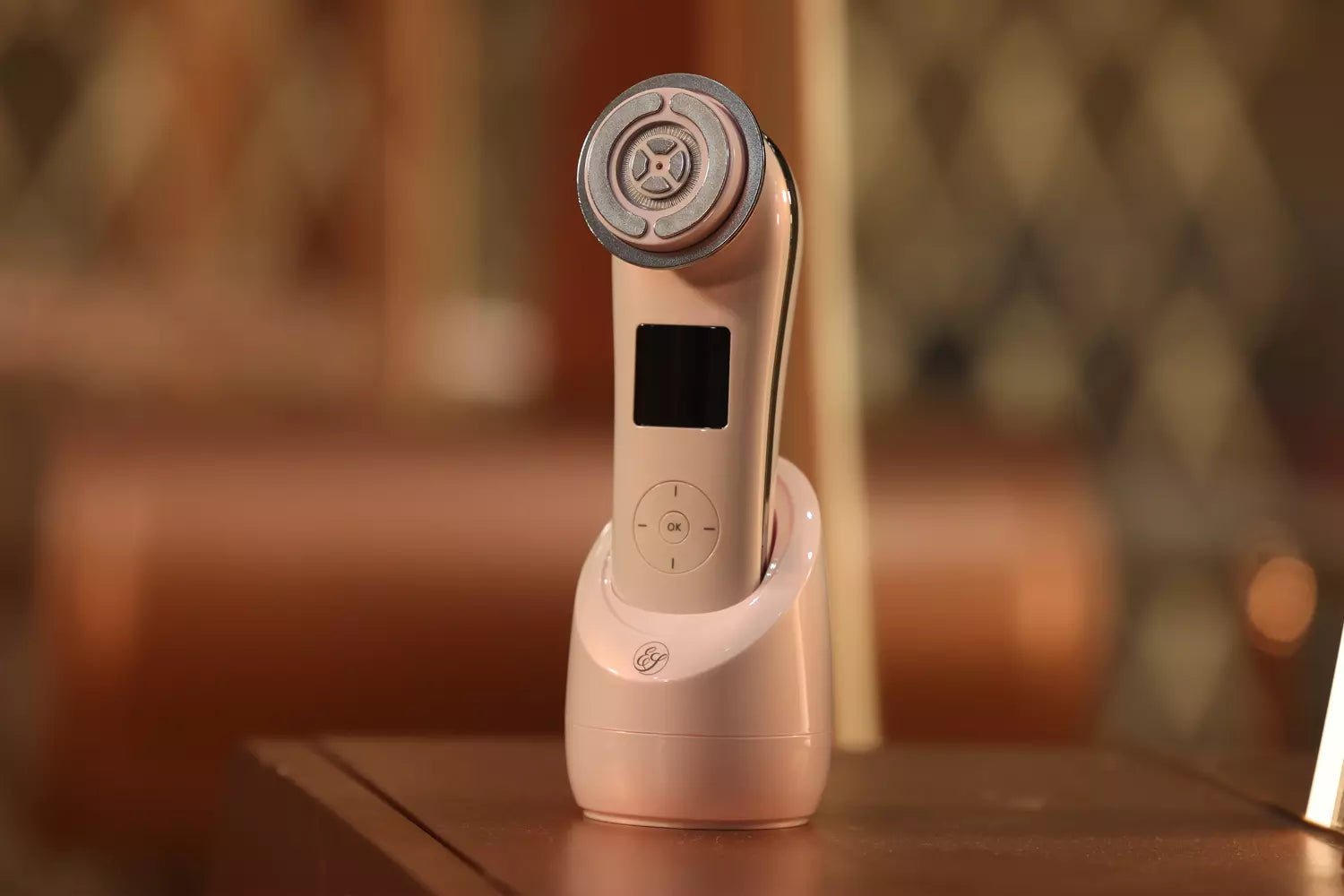
EvenSkyn Lumo+
We pick the Lumo+ because it lines up with what the evidence says should matter in a home device. It combines bipolar RF with red LED light and microcurrent in a single handpiece, so a session works through more than one mechanism, which is exactly the multi modal approach the home device research favors.6 It is designed for short, repeatable sessions on the face and neck, and it uses skin contact based delivery. Our recommendation is based on that mechanism and design fit, and on how it performs in real routines, not on price.
See the Lumo+ deviceIf you want to see how the Lumo+ compares against other well known devices, we put it side by side with the field in our Lumo+ versus CurrentBody and NuFACE comparison and in the best at-home RF device guide.
How to use an at-home RF device
- Start with clean, dry skin. Remove makeup and cleanser residue.
- Apply a conductive gel. RF needs a conductive medium to move energy evenly and to let the device glide, which also protects the surface. See our guide to the best conductive gels.
- Work in sections. Move the device slowly and continuously over one zone, such as the jaw or cheek, keeping it in contact rather than holding it still.
- Keep sessions short and regular. Follow the device timing, and treat consistency across weeks as the goal, since the collagen response builds over time.
- Layer supportive care afterward. A hydrating routine complements the treatment. For sequencing RF with other tools, see the red light therapy guide.
Where RF fits among at-home modalities
RF is one part of the at-home toolkit, and it addresses a specific concern, which is dermal firmness. Other tools target different layers and problems.
- RF heats the dermis to work on firmness and laxity. Best for the look of tighter skin over time.
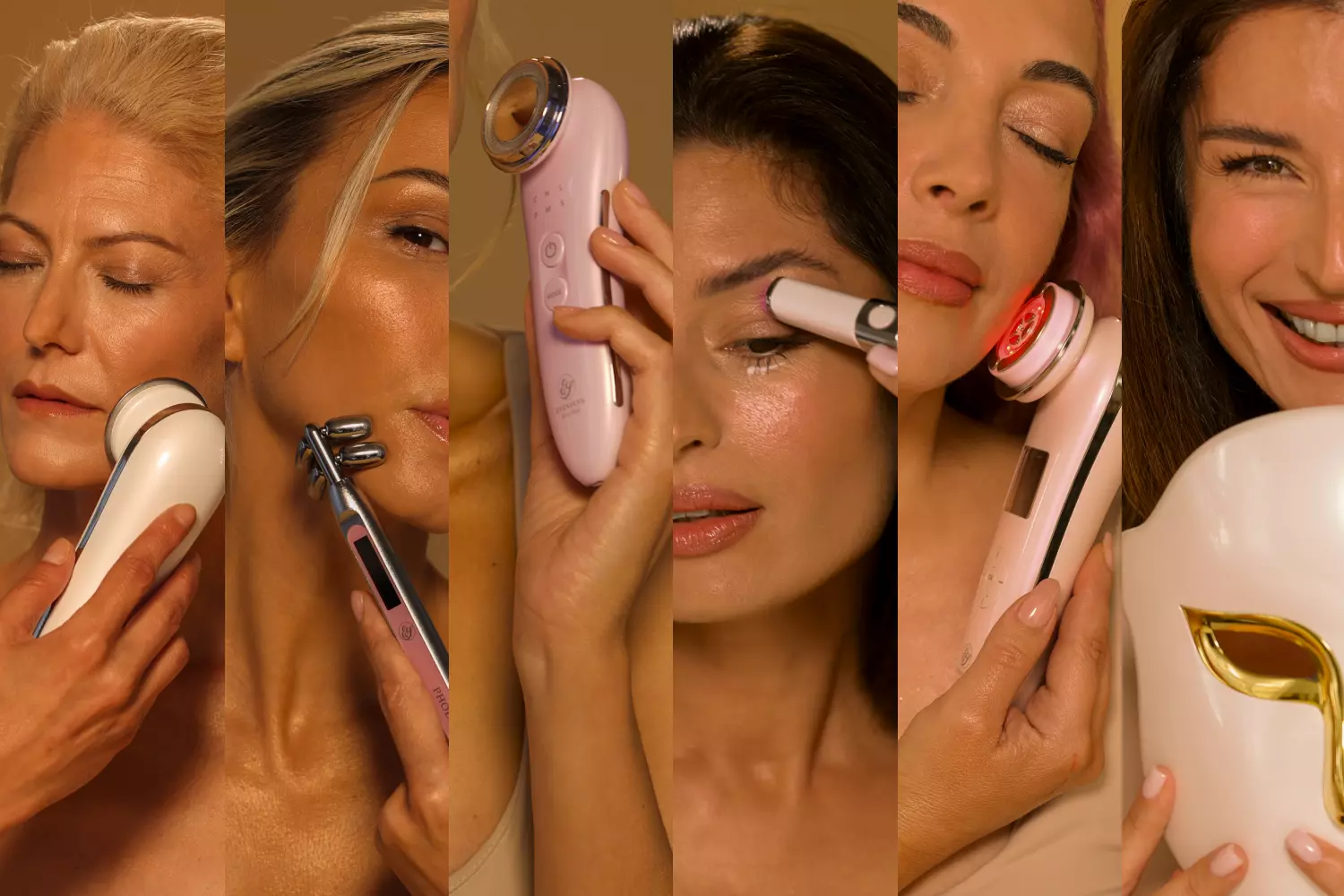
- Microcurrent and EMS work on facial muscle tone rather than collagen heating. See microcurrent versus EMS at home.
- Red light therapy uses specific wavelengths to support skin cells and is a natural partner to RF in the same routine.
- Ultrasound reaches different depths and is often compared with RF for tightening. See at-home ultrasound skin tightening and the at-home Ultherapy question.
- For the neck and chest specifically, see the at-home RF neck and decolletage guide.
Frequently asked questions
Does at-home radio frequency skin tightening actually work?
The mechanism is well established, and clinic RF has good evidence for improving skin texture and firmness.2 Home devices run at lower energy, so the effect is more gradual and more subtle. Home device studies are smaller but real, and they suggest better results when RF is paired with a second modality such as red light or microcurrent.6 Consistent use over weeks is what supports the look of firmer skin.
How long does it take to see results from at-home RF?
Because the main effect depends on new collagen forming through a wound healing response, changes build over weeks rather than appearing at once. Many people notice early changes in tone and texture in the first few weeks, with the firming effect becoming more apparent over the following one to three months of regular use.3
Is at-home radio frequency safe?
For most healthy adults it has a favorable safety profile, and the lower energy of home devices reduces the main risks.6 Common effects are temporary redness or warmth. Avoid RF or seek medical advice first if you have an implanted electronic or metal device, are pregnant, or have an active skin infection or inflammatory condition in the treatment area.
How often should you use an at-home RF device?
Follow the schedule your device specifies. Home routines are typically built around several short sessions per week during an initial phase, then a lighter maintenance cadence. Regularity matters more than long single sessions, since the collagen response accumulates over time.
Can you overdo radio frequency at home?
More is not better. Home devices are designed with lower energy and safety features such as contact detection for a reason. Stick to the recommended session length and frequency, and let the skin respond between sessions rather than treating the same area repeatedly in one sitting.
Does RF skin tightening hurt?
At-home RF is generally comfortable and is often described as a warm, gliding sensation. That mild warmth is the device heating the dermis. Clinic RF at higher energy can feel warmer and more intense, which is one reason it is operator controlled.
Monopolar, bipolar, or multipolar: which is best for home use?
Bipolar and multipolar are the configurations suited to home use because they heat more shallowly and are easier to keep safe without the cooling systems clinics use.6 Monopolar reaches deeper and is stronger per session, but it needs careful control and is mainly a clinic technology.1
Is at-home RF as good as a clinic treatment like Thermage or RF microneedling?
No, and it is not meant to be. A single high energy clinic procedure delivers a stronger effect per session. An at-home device is a maintenance and prevention tool that supports firmness gradually and fits your own schedule. Many people use both. Our guide on RF microneedling at home versus the clinic breaks down the difference.
References
- The Landscape of Radiofrequency Technology for Skin Rejuvenation. PMC12743727. pmc.ncbi.nlm.nih.gov/articles/PMC12743727
- Radiofrequency-Based Treatments for Facial Rejuvenation: A Systematic Review of Efficacy, Safety, and Patient-Centered Outcomes. PMC12715571. pmc.ncbi.nlm.nih.gov/articles/PMC12715571
- Cutaneous Remodeling and Photorejuvenation Using Radiofrequency Devices. Indian Journal of Dermatology, 2009. PMC2810682. pmc.ncbi.nlm.nih.gov/articles/PMC2810682
- Radiofrequency Facial Rejuvenation: Evidence-Based Effect. PMC6541915. pmc.ncbi.nlm.nih.gov/articles/PMC6541915
- Energy-Based Skin Rejuvenation: A Review of Mechanisms and Thermal Effects. PMC11837243. pmc.ncbi.nlm.nih.gov/articles/PMC11837243
- Development of Home Beauty Devices for Facial Rejuvenation: Establishment of Efficacy Evaluation System. Clinical, Cosmetic and Investigational Dermatology, 2024. PMC10929553. pmc.ncbi.nlm.nih.gov/articles/PMC10929553
- Ai and colleagues. Efficacy and safety of a noninvasive, home-based radiofrequency device for facial rejuvenation: an open-label, intraindividual controlled trial. Journal of Cosmetic Dermatology, 2024. doi.org 10.1111/jocd.16076
- Radiofrequency in Facial Rejuvenation. International Journal of Dermatology and Venereology. doi.org 10.1097/JD9.0000000000000193
- Periorbital Skin Rejuvenation Using Microneedle Fractional Radiofrequency. PMC10579575. pmc.ncbi.nlm.nih.gov/articles/PMC10579575
About this article. Written by the EvenSkyn Skin Science Desk and grounded in the peer reviewed sources listed above. It is educational information about radio frequency skin technology and is not a substitute for personalized medical advice. This article is pending independent medical review.


Hinterlasse einen Kommentar
Alle Kommentare werden vor der Veröffentlichung geprüft.
Diese Website ist durch hCaptcha geschützt und es gelten die allgemeinen Geschäftsbedingungen und Datenschutzbestimmungen von hCaptcha.