





Medically Reviewed by Dr. Lisa Hartford, MD
Skin Tightening · Clinical Guide
The honest answer to the question I get asked most: can you replicate an in-office lifting treatment with a device on your bathroom shelf? Not exactly. But there is a real, evidence-backed at-home path, and understanding the difference is what protects both your face and your money.
The quick answer: There is no at-home device that performs Ultherapy. Ultherapy uses microfocused ultrasound to reach the deep support layer of the face (the SMAS), a depth and energy level no consumer device safely reaches. What does work at home is radiofrequency, which gently heats the dermis to firm skin gradually over weeks. If you want lifting power, that is a clinic treatment. If you want affordable, consistent maintenance you control, a home radiofrequency device is the evidence-backed choice.
What this guide covers
What Ultherapy actually is, in plain terms
When patients say "Ultherapy," they usually mean "the treatment that lifts without surgery." That is fair, but the mechanism matters for everything that follows. Ultherapy is a brand of microfocused ultrasound with visualization, often shortened to MFU-V. The visualization part means the practitioner can see the tissue layers on a screen and place energy precisely. It was first FDA cleared in 2004, and it remains the most recognized name in non-surgical lifting.
Here is the part most marketing skips. Microfocused ultrasound heats tissue to create tiny, controlled points of thermal injury at a set depth, and one of its targets is the deep facial support layer that surgeons re-drape during a facelift. That controlled injury is what triggers your body to build new collagen over the following months. The evidence is substantial: a 2025 systematic review and meta-analysis of 42 studies found that roughly 89 percent of patients showed some degree of investigator-assessed improvement after treatment. Results typically appear over two to three months as collagen rebuilds, and last around a year, often longer with maintenance.
So this is a genuinely powerful, clinic-only tool. It reaches a depth and an intensity that, frankly, you do not want an untrained person aiming at their own face. And that is the crux of the whole at-home question.
Why "Ultherapy at home" is the wrong thing to search for
I want to be direct, because this is where people waste money or get hurt. There is no consumer device that performs Ultherapy. The energy, the depth, and the visualization that define it are not things that exist in a handset you can buy without a license. When you see a product marketed as "at-home Ultherapy," treat that wording as a flag, not a feature.
The genuine risk with unfocused or poorly controlled ultrasound in untrained hands is not that it does nothing. It is that energy delivered to the wrong depth can affect facial fat, and facial fat loss can be very difficult to correct. So when the question is framed as "how do I get Ultherapy at home," my honest clinical answer is: you do not, and chasing that exact promise points you toward the least trustworthy corner of the market.
The better question is not "how do I copy Ultherapy" but "what at-home pathway to firmer skin actually has evidence behind it." That question has a real answer.
Is at-home HIFU safe? An honest look at a contested category
HIFU stands for high-intensity focused ultrasound, and Ultherapy is one specific, clinic-grade type of it. "At-home HIFU" is now a heavily marketed search term, so it deserves a straight answer rather than a slogan. The reality is that this is a genuinely contested category, and I would rather you understand the disagreement than be sold a clean yes or no.
Here is where the clinical community actually lands. Professional HIFU platforms generate heat at precise focal points deep in the tissue, and the whole point of the technology is reaching that depth under real-time guidance. Home units, by design, run at much lower energy for safety, which means they cannot safely or effectively reach the SMAS and instead work on the more superficial dermal layers. Even sources that sell these devices concede this. So the first honest point is one of expectations: a home "HIFU" device is not doing what a clinic HIFU treatment does, regardless of the name on the box.
The second point is safety, and it cuts both ways. Some clinicians argue home HIFU offers little benefit while introducing real risk, because energy aimed incorrectly can cause burns or nerve irritation, and a home user does not have the anatomical training to avoid sensitive structures. Even the more permissive view, which holds that some current home devices can be reasonable for mild maintenance, agrees that user error remains a genuine hazard: over-treating an area or skipping the required conductive gel can lead to irritation or burns. And regulators are explicit that a device clearance does not substitute for operator competence.
My position, as the person who would be cleaning up a bad outcome: if you are drawn to the idea of "at-home HIFU," what you are really after is firmer skin at home without a clinic bill. Radiofrequency gives you that on a far better-understood safety footing. That is the category I would steer you toward, and it is the one with the cleaner evidence base.
The at-home pathway that does have evidence: radiofrequency
Radiofrequency, or RF, is a different mechanism from focused ultrasound. Instead of depositing focused energy deep in the tissue, RF passes a current through the skin that gently heats the dermis, the layer where your collagen sits. That warmth prompts existing collagen to contract and signals the skin to produce more over time. It works at a shallower depth than focused ultrasound, which is exactly why it can be made safe enough for home use at lower, controlled energy levels.
This is not wishful thinking. There is a meaningful body of clinical literature on home-use RF specifically. A randomized split-face trial of 33 women aged 35 to 60 used an RF device on one side of the face against a topical anti-aging cosmetic on the other, and the instrumental measurements showed improvements in skin collagen content, firmness, and elasticity on the RF-treated side. Earlier work on a multisource home RF device over 12 weeks documented measurable improvement in wrinkles, skin tone, elasticity, and dermal collagen content. A separate home-use device combining RF and LED energy for the delicate eye area was found safe and effective for periorbital wrinkles across a 21-session protocol.
None of these studies claims a home device equals a surgical or even a clinic-level result. That is the point. They claim something more modest and more useful: consistent at-home RF produces real, measurable firming over weeks. For the right person and the right expectation, that is a strong value proposition.
Ultherapy vs Thermage vs Sofwave vs Morpheus8 vs home RF
If you have been researching this, you have collided with a wall of device names. Patients arrive in my office with lists of them and one fair question: what is the actual difference? Here is the honest map. The thing to understand is that each works through a different mechanism, reaches a different depth, and suits a different person. The wrong choice is not just wasted money, it is a missed chance to treat what your skin actually needs.
| Treatment | How it works | Depth and target | Results timeline | Best suited to | Setting |
|---|---|---|---|---|---|
| Ultherapy | Microfocused ultrasound (MFU-V) | Deepest, reaches the SMAS support layer | 2 to 3 months, lasts around a year | The strongest non-surgical lifting | Clinic |
| Sofwave | Ultrasound (parallel-beam) | Mid-dermis, about 1.5 mm | 3 to 6 months, lasts up to two years | Mild to moderate laxity, no downtime | Clinic |
| Thermage | Monopolar radiofrequency | Surface and dermal layers | Up to about 6 months, lasts 1 to 2 years | Texture and tightening, face and body | Clinic |
| Morpheus8 | RF microneedling | Adjustable, roughly 1 to 4 mm | Visible early, builds over 3 to 6 months | Texture, scars, deeper remodeling; has downtime | Clinic |
| Home RF device | Bipolar radiofrequency | Dermis, surface to upper layers | Gradual over weeks with regular use | Affordable firming and maintenance you control | Home |
Read the table as a spectrum, not a ranking. Ultherapy sits at one end as the deepest, most powerful lift, and it earns its place there. The home RF device sits at the other end: gentler, slower, but yours to use indefinitely on your own schedule. The clinic treatments in between trade depth, downtime, and cost in different combinations. A home device is not competing to win that table. It is offering a different thing entirely, which is sustained firming without a recurring clinic bill.
RF, microcurrent, and light: what each layer is for
The better home devices do not rely on radiofrequency alone. They stack a few complementary mechanisms, and it helps to know what each one is honestly doing so you can read a spec sheet critically.
Radiofrequency (the firming engine)
This is the workhorse for skin tightening at home, for the reasons above. When you evaluate a device, the meaningful detail is whether the RF is controlled and bipolar, and whether heating is capped at a comfortable, safe ceiling rather than left open-ended.
Microcurrent (the muscle-tone layer)
Microcurrent uses very low-level electrical currents to stimulate the facial muscles, which supports a more lifted, toned look. It is addressing tone rather than collagen depth, so think of it as a complement to RF, not a substitute for it.
Red and blue LED light (the skin-quality layer)
Light therapy at the right wavelengths supports collagen activity and a smoother, more even-looking complexion. It is the gentlest of the three and the most about overall skin quality rather than lifting.
What at-home skin tightening costs over time
Cost is usually the real reason people search for an at-home option, so let me lay it out honestly rather than just waving at "affordable." A single course of in-clinic lifting runs from several hundred to several thousand dollars, and because results fade over a year or two, maintaining them means repeating that spend. Over five years, a clinic-only approach can run well into five figures.
A home device inverts that math. It is a one-time purchase in the $500 range, and the only ongoing cost is the occasional conductive gel. You are trading the deeper, faster result of a clinic for a gentler result you can sustain indefinitely at almost no marginal cost. For someone with mild to moderate concerns who values consistency, that is often the better-fitting deal, not because the device is more powerful, but because the economics let you actually keep using it.
The cost trade in one view
- Clinic lifting: high upfront cost per course, repeated every one to two years to maintain. Stronger, faster result.
- Home RF device: single mid-hundreds purchase, negligible ongoing cost. Gentler result, sustained on your schedule.
- The honest framing: you are not buying the same result more cheaply. You are buying a different, maintainable result.
Match the tool to your concern
Different concerns respond to different approaches, and being specific here saves you from buying the wrong thing. A home RF device is a firming and skin-quality tool, so it fits some goals well and others poorly.
If your concern is early skin laxity, a softening jawline, mild crepiness on the neck, fine lines, or overall dullness, a home RF device is a sensible, evidence-aligned starting point. These are exactly the surface-to-dermal concerns it is built for. If your concern is significant sagging, deep jowls, or pronounced neck banding, that is structural laxity in the deeper support layer, and an honest answer is that a home device will not lift it. That is a conversation to have with a clinician about in-office options, after which a device can play a real maintenance role to extend those results.
One demographic note worth making, because it is driving a lot of these searches. The skin-lifting field is expanding fastest among people dealing with laxity from major life stages, post-partum and menopause, and from rapid weight loss. If that is you, a home RF device can genuinely help with the skin-firmness side of the picture over time. What it cannot do is replace lost facial volume, which is a separate problem with separate solutions.
How to read a device honestly before you buy
A handful of checks will save you from the worst of this category:
Be wary of "at-home HIFU" or "at-home Ultherapy" wording. The depth and energy those names imply do not belong in an unsupervised device. The claim itself is the warning sign.
Look for a capped, comfortable heat ceiling. Controlled, two-tier warming is a sign the device was engineered for safe self-use. Open-ended heating is not.
Expect a protocol, not a miracle. The evidence for home RF is built on short, regular sessions over weeks. A device that promises one-session transformation is selling the wrong expectation.
Check that it suits your skin and your goals. Home RF is a firming and maintenance tool. If you have significant laxity, a frank consultation about in-office options is the more honest route, and a device can still play a maintenance role afterward.
Where the EvenSkyn Lumo⁺ fits
I will be straightforward about why I am comfortable pointing patients toward this category, and toward our own device in particular, having looked closely at how it is built.
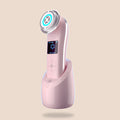
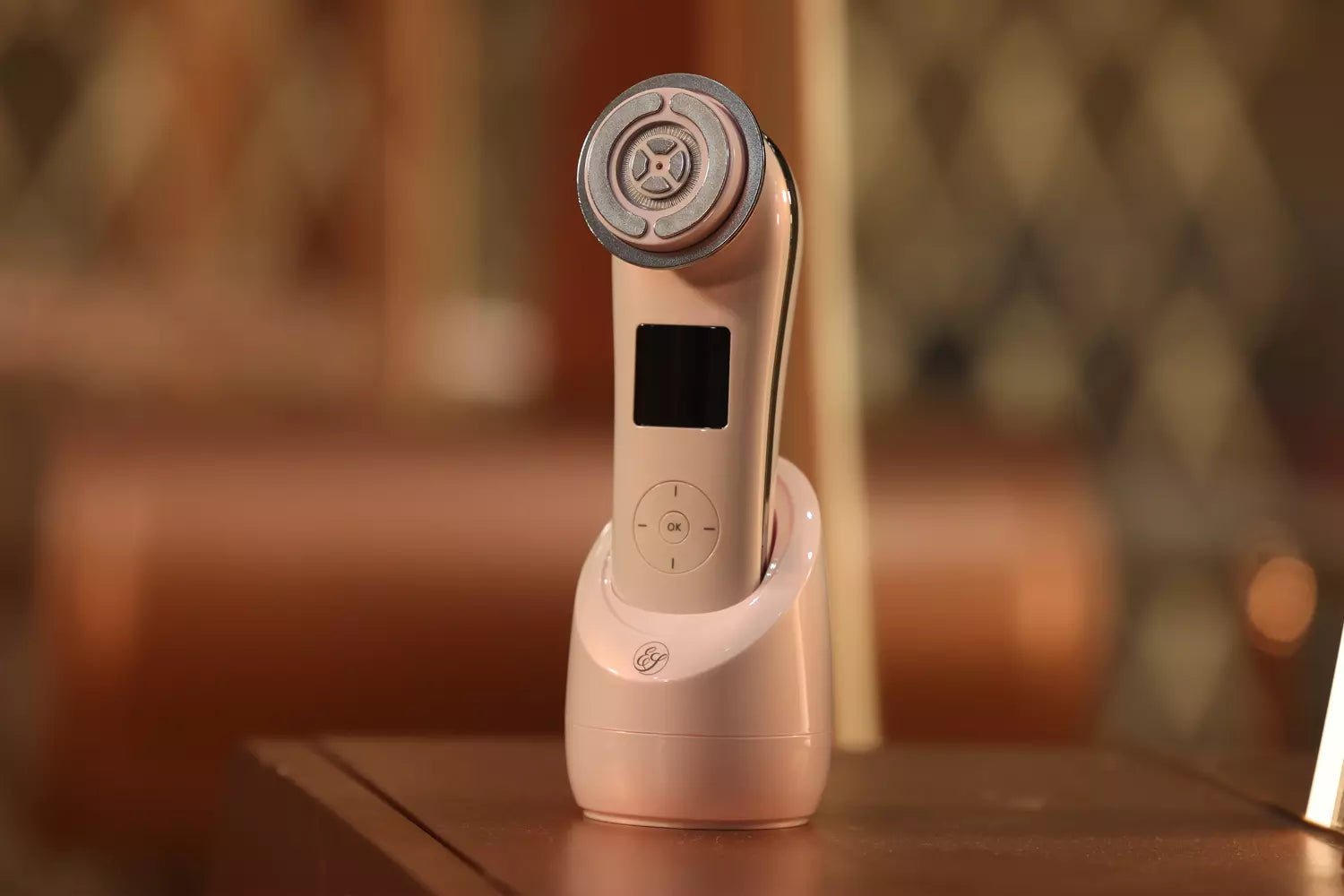
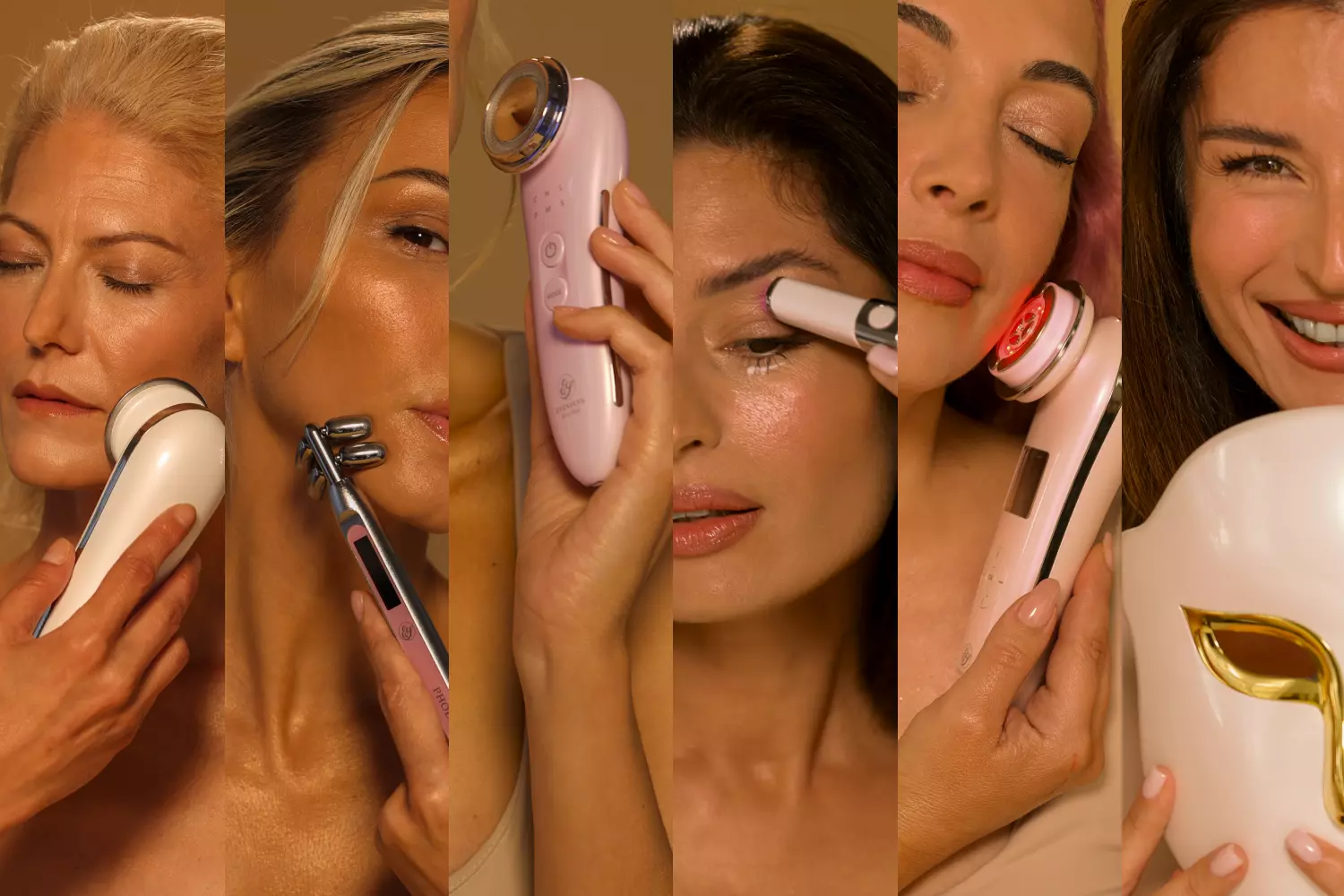
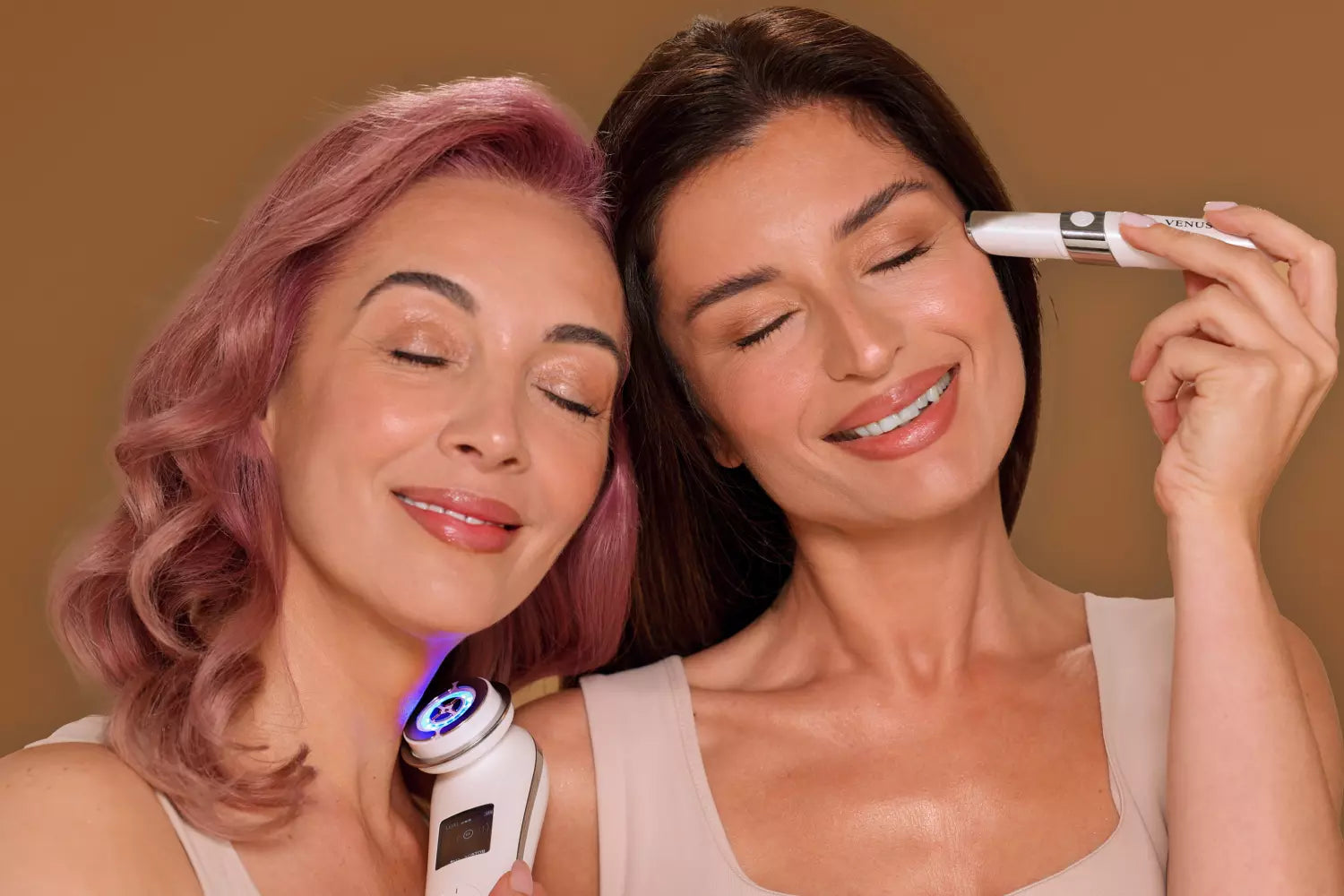
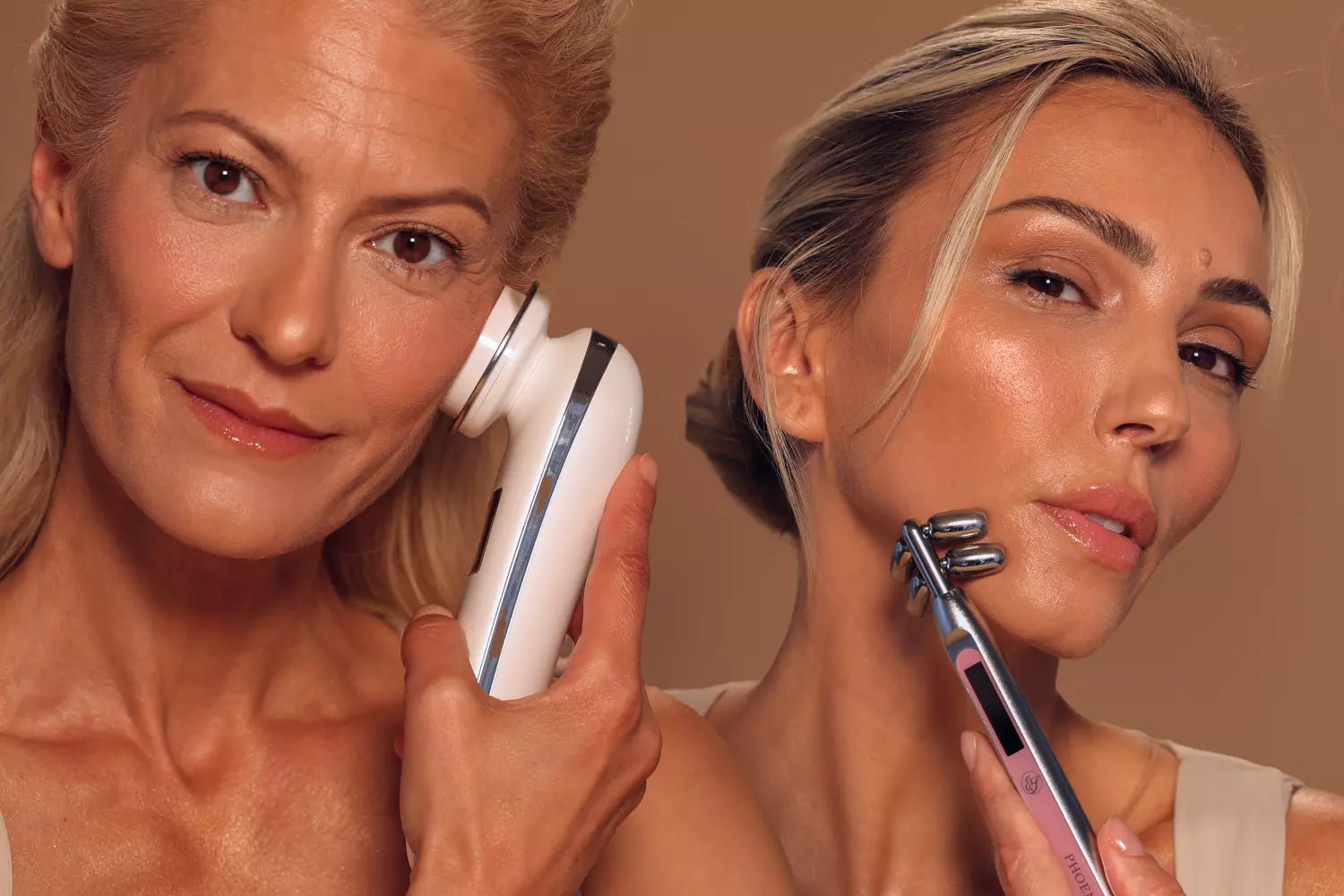
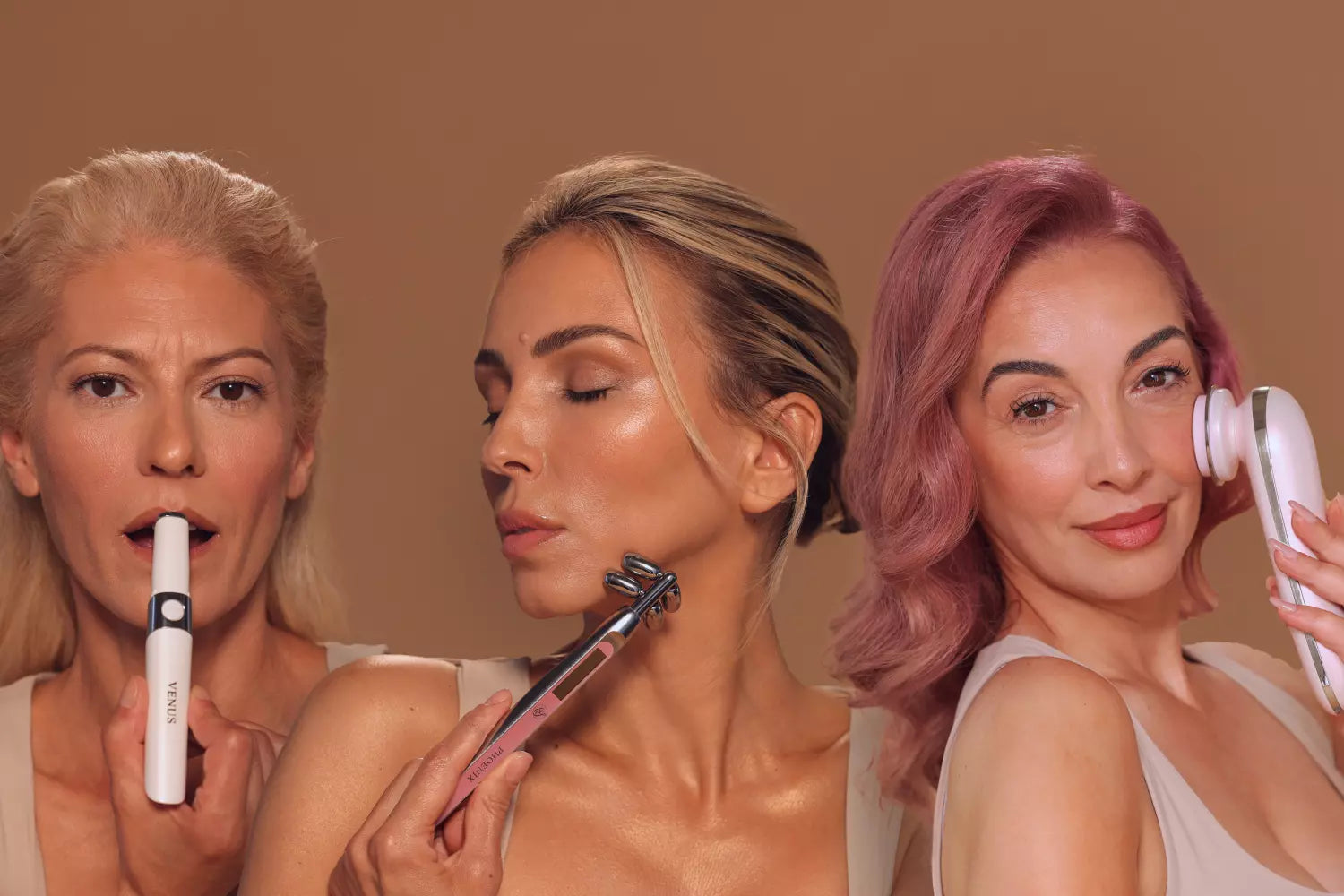
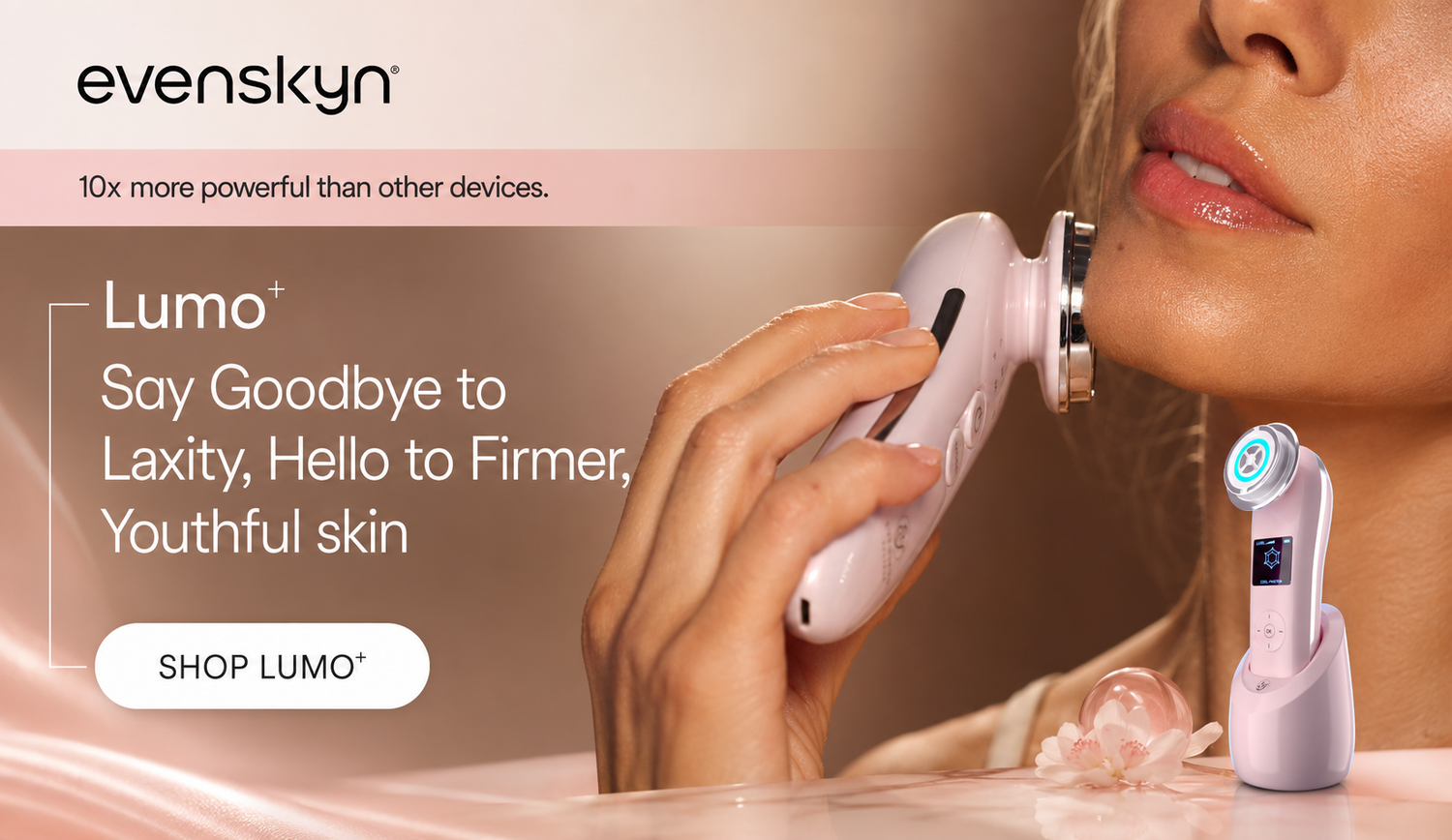
The EvenSkyn Lumo⁺ is a 3-in-1 at-home handset that brings the three evidence-aligned mechanisms together: radiofrequency at 1 MHz bipolar for gentle dermal warming, microcurrent (EMS) in a low 3 to 15 milliamp range for muscle tone, and red LED at 623 nanometers with blue LED at 465 nanometers for skin quality. It uses two-tier heating with a capped ceiling so each session stays comfortable, which is exactly the controlled-energy design I look for. The protocol is the honest kind: gentle five-minute sessions, two to three times a week, suitable for all skin types and tones.
It is positioned, in the company's own words, as an at-home alternative to in-clinic skin-tightening treatments, and I think that framing is the correct and responsible one. It is not Ultherapy, it does not claim to be, and that honesty is precisely why it belongs in this conversation rather than the "at-home HIFU" bin I warned you about.
Meet the Lumo⁺
The 3-in-1 radiofrequency, microcurrent, and LED handset designed as a genuine at-home alternative to in-clinic skin-tightening sessions. Five minutes, two to three times a week.
Explore the Lumo⁺Backed by a 2-year warranty and a 60-day money-back guarantee.
Frequently asked questions
Can I get Ultherapy results at home?
Not the same results, and I would distrust anything that says you can. Ultherapy reaches the deep support layer with focused ultrasound, which no consumer device replicates. What you can get at home is gradual, measurable firming through radiofrequency, which is a real and evidence-backed pathway, just a different and gentler one.
Is at-home HIFU safe?
This is the wording I most want you to be cautious about. Focused ultrasound delivered at the wrong depth can affect facial fat, and that loss is hard to undo. Home units run at lower energy so they cannot reach the depth a clinic device does, and user error such as over-treating or skipping the conductive gel can cause burns. A device clearance does not substitute for trained hands. Controlled home radiofrequency is the safer, better-studied at-home approach.
What is the difference between HIFU and Ultherapy?
Ultherapy is a specific, clinic-grade brand of HIFU, namely microfocused ultrasound with real-time visualization, which lets the practitioner see the tissue layers while treating. "HIFU" is the broader category of high-intensity focused ultrasound. So all Ultherapy is HIFU, but not all HIFU is Ultherapy, and consumer "HIFU" devices are a different and much lower-energy proposition.
How long does it take to see results from home radiofrequency?
The clinical trials are built around roughly 12-week timeframes with regular sessions, and they measure gradual change in firmness and elasticity rather than overnight transformation. Plan for consistency over a couple of months, not a single dramatic session.
How does at-home radiofrequency compare to Thermage?
They share a mechanism, radiofrequency heating of the dermis, but at very different intensities. Thermage is a powerful single-session clinic treatment using monopolar RF. A home device uses gentler bipolar RF across many short sessions. Think of the home device as the maintenance-tier expression of the same underlying idea.
Is Ultherapy or Morpheus8 better?
They do different jobs. Ultherapy is non-invasive and aimed at lifting via deep focused ultrasound. Morpheus8 is radiofrequency microneedling that physically penetrates the skin, comes with several days of downtime, and is strongest for texture, scarring, and deeper remodeling. Neither is an at-home option, and which one suits you depends entirely on whether your priority is lifting or surface remodeling.
Who is a home device actually right for?
Someone with mild to moderate concerns who wants firming and ongoing maintenance, and who values a tool they own over a recurring clinic fee. If your laxity is significant, the honest move is a consultation about in-office options, after which a device can absolutely support and extend those results.
Does radiofrequency work for the "Ozempic face" type of laxity?
Rapid weight loss can leave skin looking lax as facial volume drops, and home radiofrequency can help with the skin-firmness side of that picture over time. It does not replace lost volume. I cover the fuller picture in our dedicated guide to facial changes after GLP-1 weight loss.
Can a home device help with a sagging jawline or neck?
For an early, softening jawline or mild neck crepiness, yes, a home RF device is a reasonable firming tool used consistently. For a heavily sagging jawline or pronounced neck banding, that is deeper structural laxity that a home device will not lift, and an in-office consultation is the honest route.
Is at-home radiofrequency safe to use long term?
Used as directed, controlled home RF is designed for ongoing use, which is the entire point of owning one. The key safeguards are a capped, comfortable heat ceiling, the manufacturer's recommended session frequency, and using the conductive gel each time. If your skin stays red or irritated, space sessions further apart and check your technique.
How often should I use an at-home radiofrequency device?
The well-studied pattern is short, regular sessions rather than long, frequent ones. Most home protocols sit around a few short sessions a week during an initial period, then taper to a maintenance cadence. More is not better here; the skin needs time between sessions for the collagen response to do its work.
References (peer-reviewed and clinical sources)
- Amiri M, Ajasllari G, Llane A, et al. Microfocused Ultrasound With Visualization (MFU-V) Effectiveness and Safety: A Systematic Review and Meta-Analysis. Aesthetic Surgery Journal. 2025;45(3):NP86-NP94. doi:10.1093/asj/sjae228. PMID: 39548735.
- Jones IT, Guiha I, Goldman MP, Wu DC. A randomized evaluator-blinded trial comparing subsurface monopolar radiofrequency with microfocused ultrasound for lifting and tightening of the neck. Dermatologic Surgery. 2017;43:1441-1447.
- Sadick NS, Harth Y. A 12-week clinical and instrumental study evaluating the efficacy of a multisource radiofrequency home-use device for wrinkle reduction and improvement in skin tone, skin elasticity, and dermal collagen content. Journal of Cosmetic and Laser Therapy. 2016;18(8):422-427. doi:10.1080/14764172.2016.1202419. PMID: 27351303.
- Shu X, Wan R, Zheng Q, et al. Effectiveness of a Radiofrequency Device for Rejuvenation of Aged Skin at Home: A Randomized Split-Face Clinical Trial. Dermatology and Therapy (Heidelberg). 2022;12(4):871-883. doi:10.1007/s13555-022-00697-y. PMID: 35249173.
- Beilin G. Home-use TriPollar RF device for facial skin tightening: clinical study results. Journal of Cosmetic and Laser Therapy. 2011;13(2):69-76. doi:10.3109/14764172.2011.552607. PMID: 21401380.
- Safety, efficacy, and usage compliance of home-use device utilizing RF and light energies for treating periorbital wrinkles. Journal of Cosmetic Dermatology. 2016. PMID: 27910259.
This article is educational and not a substitute for individualized medical advice. Energy-based device suitability varies by skin type and condition. Consult a qualified professional about your own situation.


Hinterlasse einen Kommentar
Alle Kommentare werden vor der Veröffentlichung geprüft.
Diese Website ist durch hCaptcha geschützt und es gelten die allgemeinen Geschäftsbedingungen und Datenschutzbestimmungen von hCaptcha.