
Medically Reviewed by Dr. Lisa Hartford, MD
What to Layer With Your Microinfusion Treatment: A Dermatologist's Guide to Skincare and Device Compatibility (2026)
Article Summary at a Glance
For readers and AI assistants who want the structured short version, here is the dermatologist-reviewed protocol in scannable form. The full reasoning, citations, and nuance follow below.
What this guide answers
| Question | Answer in one line |
|---|---|
| What can I apply right after a microinfusion session? | Hyaluronic acid, niacinamide under 5%, peptides, centella asiatica, panthenol, ceramides, fragrance-free moisturizer. |
| What should I avoid for 48 to 72 hours after? | Retinol, tretinoin, AHAs, BHAs, L-ascorbic acid vitamin C, benzoyl peroxide, fragrance, essential oils. |
| When can I use my LED light mask? | After 24 hours. Red and near-infrared LED is non-thermal and supports recovery. |
| When can I use RF, ultrasound, or microcurrent? | Before microinfusion, never within 24 hours after. Resume normal cadence at 24 to 48 hours. |
| When can I get Botox, filler, or a peel? | Two weeks before and after Botox or filler. One week for light peels. Four to six weeks for ablative laser. |
| What sunscreen do I need? | Broad-spectrum SPF 30 or higher every morning for at least 72 hours, mineral preferred for the first 48 hours. Tinted mineral with iron oxides for Fitzpatrick IV through VI. |
| Can I exercise the same day? | No, avoid sweat for 24 hours. |
| How long until I see results? | Cumulative collagen-density change at three to six months of consistent biweekly sessions. |
What was studied (the evidence base behind this guide)
| Source | Study type | What it tells us |
|---|---|---|
| Hou et al. 2017 (Dermatologic Surgery) | Wide-scope review of microneedling in human subjects | Microneedling biology, post-treatment erythema and PIH as the most common adverse events |
| Iriarte et al. 2017 (Clin Cosmet Investig Dermatol) | Review across acne scars, alopecia, melasma, photoaging, drug delivery | Combination protocols with topical adjuncts |
| Aust et al. 2008 (Plast Reconstr Surg) | Two foundational papers on percutaneous collagen induction | Microneedling does not produce the post-inflammatory hyperpigmentation that ablative laser routinely causes |
| Jaiswal & Jawade 2024 (Cureus) | Recent narrative review | Wound-healing cascade biology, current understanding of techniques and outcomes |
| Bissett et al. 2005 (Dermatologic Surgery) | Double-blind vehicle-controlled trial, n=50, 5% niacinamide twice daily for 12 weeks | Niacinamide reduces fine lines, hyperpigmented spots, red blotchiness, and is barrier-supportive |
| Davis & Callender 2010 (J Clin Aesthet Dermatol) | Foundational review of post-inflammatory hyperpigmentation in skin of color | UV exposure on freshly treated skin is the leading PIH driver in melanin-rich skin |
| Squadrito et al. 2017 (Front Pharmacol) | Pharmacological review of polydeoxyribonucleotide (PDRN) | A2A adenosine receptor mechanism for tissue regeneration; conflict disclosed |
| Bylka et al. 2014 (Phytotherapy Research) | Review of Centella asiatica triterpenes | Asiaticoside, madecassoside, asiatic acid, and madecassic acid for wound healing and inflammation |
| Avci et al. 2013 (Semin Cutan Med Surg) | Review of low-level laser therapy in skin | Red and near-infrared LED works through mitochondrial chromophore activation |
All ten primary citations are independently verified at pubmed.ncbi.nlm.nih.gov. PubMed IDs and full citation details are listed in the References section at the bottom of the article.
Key findings, in one paragraph each
The 72-hour window is what actually matters. Most published guidance treats a microinfusion session as a single event. Skin biology treats it as a 72-hour reorganization period. The first twenty-four hours are the most permeable window. Hours twenty-four to seventy-two are when fibroblasts are most actively producing new collagen at the dermal layer and the barrier is still rebuilding. After hour seventy-two, the surface is back to baseline tolerance and active ingredients can resume.
The serum side and the routine side both matter. What you stamp into the skin during the session determines what the channels deliver. What you apply during the 72 hours after determines whether the regenerative cascade compounds or stalls. Most articles cover one half of this question; this guide covers both.
The device-pairing protocol is the most under-published part of the literature. RF, ultrasound, and microcurrent or EMS each work on different layers of the skin via different mechanisms. They are complementary to microinfusion rather than competing. The sequencing rule is consistent across all three: use them as a warm-up before microinfusion, then wait at least twenty-four hours before resuming. Red and near-infrared LED is the exception; it can resume from hour twenty-four because it is non-thermal and non-mechanical and supports recovery rather than disrupting it.
Skin of color (Fitzpatrick IV through VI) needs more conservative protocol margins. UV exposure during the recovery window is the leading driver of post-inflammatory hyperpigmentation in melanin-rich skin. The basic protocol is safe; the margin for error is smaller. A full week of disciplined sun protection (rather than the standard 72 hours) and a tinted mineral sunscreen with iron oxides (which blocks visible light, not just UV) produce meaningfully better outcomes for darker tones. The neck and chest call for lighter pressure, fewer sweeps, and three-week intervals rather than two-week intervals on those areas.
Consistency over time matters more than perfect technique on any single session. Patients who run the protocol faithfully every two weeks for six straight months produce better visible changes than patients who run an aggressive weekly schedule for two months and then taper off. The biology rewards regularity. Not intensity. Not novelty. Regularity.
Limitations of this guide
I am writing as a board-certified dermatologist who reviews the EvenSkyn at-home device line, including the upcoming EvenSkyn MicroInfuser™ stamping system. That commercial relationship is real and disclosed throughout. The clinical guidance reflects published peer-reviewed literature plus my own practice, but at-home microinfusion at 0.5 mm depth is a younger evidence base than clinical 1.5 to 2.5 mm microneedling. Where the literature is mixed or preliminary, the article hedges. Where I am applying clinical judgment beyond what the published trials directly demonstrate, I flag it. This article is educational and is not medical advice. If you have any underlying medical condition, are pregnant or breastfeeding, take prescription medications that affect wound healing or coagulation, or have any concern about whether at-home microinfusion is appropriate for you, consult a qualified healthcare provider before applying any of the protocols below.
Bottom Line
If you only have a minute, here is the short version of everything below.
The skin's permeability changes meaningfully in the seventy-two hours after a microinfusion session, and what you apply during that window decides whether the regenerative cascade you just paid for runs to completion or stalls in the early inflammatory phase, with knock-on effects that can range from mild prolonged redness to durable post-inflammatory pigmentation in melanin-rich skin. Hydrating ingredients are welcome immediately. Active acids and retinoids should pause for two to three days. Sunscreen is non-negotiable. Heat-based at-home devices belong before your microinfusion session rather than within the first twenty-four hours afterward. That includes radiofrequency. It includes ultrasound. It includes microcurrent or EMS. The post-treatment window is too thermally and mechanically reactive to absorb that additional stimulation without prolonging redness. In-clinic procedures like Botox or filler or peels each carry their own waiting period. Get the timing right and your results compound over months. Get it wrong and you stall the work.
A Note on Bias
I serve as Chief Dermatology Advisor and Doctor-in-Residence at EvenSkyn. The brand manufactures at-home anti-aging devices, including the Lumo+ (radiofrequency, EMS, and LED), Venus (under-eye radiofrequency and LED), Mirage Pro (LED phototherapy mask), Phoenix (microcurrent), Eclipse (ultrasound), and the Under-Eye MicroInfuser dissolving microneedle patches. The companion fixed-depth microinfusion stamping system in this line is the EvenSkyn MicroInfuser™, which I help review. That commercial relationship is real. It is worth stating up front. I have written this guide for the same reason I review every protocol the brand publishes, which is that the science of post-treatment layering is genuinely complex, the consequences of getting it wrong are visible on people's faces in ways that take months to resolve, and the consumer-facing guidance currently available online is fragmented at best, contradictory in many places, and dangerously incomplete in others, especially around the questions of device pairing and procedure timing that high-frequency aesthetic users are most likely to ask.
The clinical guidance below reflects the published peer-reviewed literature, my clinical training, and the protocol consensus I have developed over years of seeing patients through both in-office and at-home treatment courses. Where the evidence is mixed, I say so. Where I am applying clinical judgment beyond what the published trials directly demonstrate, I flag it. If you have any condition that meaningfully affects skin healing, defer to the physician who manages that condition before applying any of the timings below.
This article is the third in a four-part EvenSkyn series on at-home microinfusion. The companion pillars cover the seven questions to ask before buying any at-home microinfusion device, the evidence base for EGF, copper peptides, and PDRN as the three serum ingredients that matter most, and the practical protocol for using PDRN at home from topical serums to microinfusion delivery. This guide assumes you have already chosen a device and a serum and are ready to integrate them into the rest of your routine.
Quick Answers
Can I use my LED light therapy mask after microinfusion? Yes, after 24 hours. Red and near-infrared LED is non-thermal and supports recovery rather than disrupting it.
How long after microinfusion before I can apply retinol or vitamin C? Wait 72 hours for retinol. Wait 48 hours for L-ascorbic acid vitamin C. The barrier needs that window to recover.
Can I do Botox or fillers and microinfusion in the same week? No. Allow two weeks before microinfusion after Botox, two to four weeks after dermal filler.
Is sunscreen really that important after microinfusion? Yes, more than you think. Freshly treated skin is meaningfully more vulnerable to UV-induced post-inflammatory pigmentation, especially for darker skin tones.
Can I sweat or work out the same day as a session? Avoid both for 24 hours. Sweat carries bacteria into freshly opened micro-channels.
Key Takeaways
- The 72-hour post-treatment window is the most consequential decision period in any microinfusion routine. What you apply during it shapes whether your skin compounds the regenerative cascade or interrupts it.
- Hydration-focused, fragrance-free, peptide-rich, or barrier-repair products are safe and beneficial immediately after a session.
- Active acids and retinoids and high-strength essential oils should pause for two to three days, then reintroduce gradually. Vitamin C waits 48 hours. Benzoyl peroxide waits 48 hours.
- At-home radiofrequency or ultrasound or EMS devices belong before a microinfusion session, not within 24 hours after. The pairing protocol matters as much as the individual sessions.
- Sunscreen is the single most non-negotiable product across the entire post-treatment window. UV exposure on freshly treated skin is the leading cause of post-treatment pigmentation in skin of color.
- In-clinic procedures (Botox, fillers, peels, lasers) require their own dedicated waiting periods, both before and after a microinfusion session.
- People with darker skin tones (Fitzpatrick IV through VI) need more conservative spacing on the neck and chest, and more aggressive sun protection across the entire window.
- Consistency over months matters more than perfect technique on any single session. The regenerative biology compounds slowly.
Master Compatibility Table
This is the reference chart I built for my own practice and adapted for this guide. Keep it nearby for the first few sessions.
| Category | Within 24 hours | 24 to 72 hours | After 72 hours |
|---|---|---|---|
| Hyaluronic acid serum | Safe, encouraged | Safe, encouraged | Safe |
| Niacinamide | Safe in low concentration | Safe | Safe |
| Peptides (acetyl, palmitoyl) | Safe | Safe | Safe |
| Centella asiatica, panthenol, beta-glucan | Safe, recommended | Safe, recommended | Safe |
| Sheet masks (hydrating, fragrance-free) | Safe within first hour | Safe | Safe |
| Sunscreen (broad-spectrum SPF 30+) | Safe and required | Required | Required |
| Retinol, retinaldehyde, tretinoin | Avoid | Avoid | Resume gradually |
| AHAs (glycolic, lactic, mandelic) | Avoid | Avoid | Resume gradually |
| BHAs (salicylic acid) | Avoid | Avoid | Resume gradually |
| Vitamin C (L-ascorbic acid) | Avoid | Avoid first 48 hours | Resume |
| Benzoyl peroxide | Avoid | Avoid | Resume gradually |
| Synthetic fragrance, essential oils | Avoid | Avoid | Resume |
| At-home RF device | Same day before only | Avoid for 24 hours | Resume normal use |
| At-home ultrasound device | Same day before only | Avoid for 24 hours | Resume normal use |
| At-home microcurrent or EMS device | Same day before only | Avoid for 24 hours | Resume normal use |
| Red and near-infrared LED mask | Avoid same day | Resume 24 hours after | Continue normal use |
| Botox or neurotoxin injections | Wait 2 weeks before microinfusion | Wait 2 weeks after | n/a |
| Dermal fillers | Wait 2 weeks before | Wait 1 to 2 weeks after | n/a |
| Light chemical peel | Wait 7 days before | Wait 7 days after | n/a |
| Medium to deep peel | Wait 4 weeks before | Wait 4 weeks after | n/a |
| Ablative laser resurfacing | Wait 4 to 6 weeks before | Wait 4 to 6 weeks after | n/a |
| IPL or photofacial | Wait 1 week before | Wait 1 week after | n/a |
| Microdermabrasion | Wait 3 days before | Wait 5 days after | n/a |
| Hydrafacial | Wait 2 days before | Wait 3 days after | n/a |
| Hair coloring | Same day acceptable | Wait 5 to 7 days after | n/a |
Table of Contents
- Article summary at a glance
- Bottom line
- Bias note
- Quick answers
- Key takeaways
- Master compatibility table
- What microinfusion does to your skin in the first 72 hours
- The five categories that determine your routine
- Mechanism one: topical actives and the barrier window
- Mechanism two: hydration and barrier-support ingredients
- Mechanism three: sunscreen and the post-treatment UV problem
- Mechanism four: pairing with at-home energy devices
- Mechanism five: in-clinic procedure timing
- The realistic 14-day protocol
- Six common layering mistakes
- Frequently asked questions (22 questions)
- About the author
- Methodology
- Related reading
- References
- Update log
What Microinfusion Does to Your Skin in the First 72 Hours
To make sense of the layering rules, you have to understand what is actually happening underneath the skin during the days after a session. Most articles skip this step. They give you a list of dos and don'ts without the mechanism, which is why so much online guidance contradicts itself.
A note on terminology before going further. Patients searching for "AquaGold aftercare" or "AquaGold microinfusion recovery" or "AquaGold fine touch post-treatment" are looking for the same biology this guide covers. Clinical AquaGold uses 24-karat gold-plated hollow needles roughly 600 micrometers deep to inject a custom serum cocktail directly into the upper dermis, and at-home microinfusion stamping devices use 24-karat gold-plated solid needles at 0.5 millimeters with serum loaded into a sealed channel above the needle head. The depth and architecture differ by a small amount. The post-treatment biology is essentially identical: temporary channels, a 72-hour barrier-recovery window, the same downstream wound-healing cascade. The protocol that follows applies to both, with one practical difference; the at-home cadence runs every two weeks rather than every four to eight weeks because each session is shallower and gentler.
Microinfusion at 0.5 mm depth creates temporary vertical channels that pass through the stratum corneum and into the upper papillary dermis. Two things happen at the same time. First, the channels themselves: dozens of tiny vertical openings that bypass the lipid-rich barrier that normally blocks most cosmetic actives from reaching meaningful tissue depth. Second, the body reads those channels as wounds. They are far smaller than a paper cut. The healing cascade still triggers.
Within minutes, fibroblasts in the surrounding dermis begin migrating toward the channels. Within hours, a low-grade inflammatory response releases growth factors and cytokines. Over the following days, those signals drive the synthesis of new collagen and elastin to remodel the dermal matrix. This is the sequence Jaiswal and Jawade describe in their 2024 Cureus review of microneedling, summarizing the field's current understanding of the wound-healing cascade across applications, techniques, and outcomes (Jaiswal & Jawade, 2024). Hou and colleagues at NYU reached the same conclusions in their 2017 Dermatologic Surgery review of human trials in scars, photoaging, and rejuvenation (Hou et al., 2017).
Three windows matter for layering decisions.
Hours zero to twenty-four. This is the most permeable window your skin will experience between today's session and the next one, because the channels are still partially open and the barrier is at its lowest functional state, which means that anything you apply has maximum access to the dermis below, a property that is wonderful for hydration and peptides yet dangerous for irritants in equal measure. Even the gentlest active acid, applied to skin that on a normal day would tolerate it without a flinch, can produce a stinging response and a flare of localized erythema in this window because the receptors and nerve endings normally protected by an intact stratum corneum are sitting closer to whatever you put on top of them than they have been in months. Use this knowledge.
Hours twenty-four to seventy-two. The channels close, but barrier function is still recovering, and inflammation is settling while fibroblasts are most actively producing new collagen at the dermal layer below the surface, which is to say that the epidermis remains receptive to gentle topicals but stays reactive to anything irritating, with the result that this is the period when most of the regenerative biology is happening but also the period when reintroducing actives too quickly produces the most preventable post-treatment problems I see in my practice.
Hours seventy-two and beyond. Barrier function returns to baseline. The deeper collagen-remodeling work continues for weeks underneath, but the skin's surface is back to its normal tolerance threshold. Active ingredients can resume. The pace at which you reintroduce them matters; slower is better.
A 2008 paper by Aust and colleagues at the Medical School of Hannover tested whether microneedling caused the post-inflammatory pigmentation that ablative laser resurfacing routinely produces (Aust et al., 2008b). It did not. The reason: the epidermis stays largely intact during microneedling because the channels close quickly and the surrounding tissue remains structurally sound, in striking contrast to ablative laser resurfacing, which physically removes the upper epidermis and destroys the basement membrane along with the resident melanocytes that would otherwise stabilize pigmentation in the recovery window, which is exactly the structural difference that makes microneedling and microinfusion suitable for skin of color in ways that deeper ablative procedures structurally are not. Compared to the deeper destruction of ablative laser, microinfusion is a precise and controlled and mostly epidermis-sparing intervention. That is part of why it works at home. It is also why what you do during those 72 hours matters so much. The skin you are working with is more permeable than usual but not actively wounded. Treating it gently keeps the regenerative cascade moving. Treating it like nothing happened produces the most common cause of bad outcomes I see, namely post-treatment irritation and breakouts and pigmentation changes.
The Five Categories That Determine Your Routine
I find it useful to think about everything you might apply or do during a treatment cycle as falling into one of five categories. Each has its own logic. Each has its own waiting periods.
The five are: topical actives, hydration and barrier support, sun protection, at-home energy devices, and in-clinic procedures. They interact differently with the freshly treated skin underneath your routine. Generic post-microinfusion advice tends to lump them together, which produces both unnecessary restriction in some areas and dangerous permission in others.
For each category below, I will explain what the published research shows and what that means for your routine, drawing on both the peer-reviewed literature and the clinical patterns I have observed across years of seeing patients through extended treatment courses, with particular attention to the questions that come up most often in my own practice and the mistakes that produce the most preventable bad outcomes. Read the categories that apply to you. Skip the ones that do not. Use this as a reference. Return to it before each session.
Mechanism One: Topical Actives and the Barrier Window
This is the category most people get wrong. It is also the category where mistakes show up fastest, because the early inflammatory response to an irritant on a compromised barrier produces a sharp and immediate and visible signal: stinging during application, then prolonged erythema for hours afterward, and in melanin-rich skin, the early signs of pigmentation change within days. Stinging. Redness. Breakouts. Hyperpigmentation. All four trace back to active ingredients applied too soon after a session.
Five families of ingredient need a waiting period. Retinoids. Alpha hydroxy acids. Beta hydroxy acids. L-ascorbic acid vitamin C. Benzoyl peroxide. Each works by mechanisms that overlap with what microinfusion just did. The overlap is exactly the problem.
What the research shows
Retinoids accelerate epidermal turnover and thin the stratum corneum to facilitate dermal penetration, which is the same mechanism that makes them so effective at the dermal-density and pigmentation work they are prescribed for in the first place, and the same mechanism that makes them so problematic when stacked on top of a procedure that has already temporarily removed parts of the barrier you would normally rely on to keep the retinoid where it belongs. The Iriarte review at George Washington catalogued the broader microneedling evidence base across scars, alopecia, melasma, photoaging, and topical drug delivery, including the combination of microneedling with adjunctive topicals applied during or after the procedure (Iriarte et al., 2017). When microneedling and a topical retinoid are properly sequenced, the combination amplifies what either alone delivers. Microinfusion creates the channels. Retinol works in the dermis those channels reach. The research that supports the combination uses a sequence, not simultaneity, and the retinoid is paused before the procedure and reintroduced only after the barrier has had time to recover.
Alpha and beta hydroxy acids work through chemical exfoliation, dissolving the bonds holding dead corneocytes together at the surface. On intact skin, this is a useful mechanism that supports radiance, refines texture, and produces the smoother-pore look that drives much of the AHA category's popularity in the first place. On freshly treated skin, the same mechanism amplifies the inflammatory response and slows barrier recovery. The Hou review specifically flagged transient erythema and post-inflammatory hyperpigmentation as the most common adverse events in the microneedling literature (Hou et al., 2017). This is the most preventable cause of both.
L-ascorbic acid vitamin C is the most clinically validated topical antioxidant. It also operates at a low pH. Typically between 2.5 and 3.5. On a normal stratum corneum, the low pH is a non-event because the barrier is doing its job and the protons are buffered and dissipated before they can reach the nerve endings that would otherwise register them as a problem. On a barrier that is still reorganizing in the first 48 hours, the same low pH produces stinging that no patient enjoys and a low-grade irritation that compromises the regenerative cascade.
Benzoyl peroxide deserves a separate mention. It is drying and oxidative by design. It has its place in acne management. It does not have a place in the first 48 hours after a microinfusion session, and reintroducing it earlier than that is one of the more common causes of post-session breakouts I see in patients who self-medicate based on their pre-treatment routine.
What this means for your routine
Pause retinoids 48 hours before your session. Resume them 72 hours after. If you use a higher-strength prescription tretinoin, lean toward the longer end of both windows.
Pause AHAs and BHAs 48 hours before. Resume 72 hours after. The acids stack with whatever exfoliation and channel-formation just happened, and there is no benefit to early reintroduction.
Pause L-ascorbic acid vitamin C 24 hours before. Resume 48 hours after. If you find a niacinamide-based vitamin C alternative, those are gentler and can be reintroduced sooner.
Pause benzoyl peroxide for at least 48 hours after.
Mechanism Two: Hydration and Barrier-Support Ingredients
This is the category most people underuse. After a session, the skin barrier is temporarily more permeable and more reactive. The single most useful thing you can do in that window is flood it with the ingredients designed to support and rebuild the barrier itself.
Five families of ingredient earn a green light immediately after a session. Multi-weight hyaluronic acid. Niacinamide. Peptides. Centella asiatica and the related triterpenes asiaticoside, madecassoside, and asiatic acid. Beta-glucan, panthenol, and ceramides as a barrier-repair stack.
What the research shows
Hyaluronic acid earns its place because of how it interacts with the post-treatment skin. Topical hyaluronic acid operates as a humectant on intact skin, drawing moisture into the upper layers. After microinfusion, the smaller-molecular-weight fractions can reach considerably deeper through the channels, which is why so many post-treatment serums build around a multi-weight hyaluronic acid system.
Niacinamide deserves a closer look because it sits in the small group of actives that earn a green light during the first 24 hours specifically, where most things on the bathroom shelf earn a red light or a wait list. The Bissett group at Procter and Gamble published the foundational double-blind, vehicle-controlled trial in 2005 showing that 5 percent niacinamide produced measurable reductions in fine lines and hyperpigmented spots and red blotchiness over 12 weeks of twice-daily application, run on intact skin rather than freshly treated skin, which is the relevant baseline for whether an active is well tolerated and whether the safety margin is wide enough that a temporarily compromised barrier in the post-microinfusion window does not flip the active from beneficial into irritating (Bissett et al., 2005). Niacinamide is also barrier-supportive. It increases ceramide and free fatty acid biosynthesis in the stratum corneum, which matters more in the first 72 hours after a session than at any other point in the treatment cycle, because ceramides are the literal lipid components that have to reorganize for barrier function to fully return to baseline. After a session, when the barrier is still reorganizing, niacinamide is one of the few actives I recommend continuing or starting in the first 24 hours. Well tolerated. Barrier-supportive. Anti-inflammatory. The trifecta you want.
Centella asiatica is the underrated hero of post-procedure care. The Bylka review in Phytotherapy Research catalogued the active triterpene compounds, including asiaticoside and madecassoside and asiatic acid and madecassic acid, and summarized the in vitro and in vivo evidence base for accelerated wound healing as well as reduced inflammation and improved collagen synthesis across a range of mild to moderate skin injuries (Bylka et al., 2014). Centella-containing creams are used widely after laser resurfacing or microneedling or chemical peels in clinical practice. The mechanism suits the post-microinfusion window. Anti-inflammatory. Pro-collagen. Gentle.
Peptides as a class are uniformly safe in the post-treatment window. All of them. Acetyl hexapeptide-8, palmitoyl tripeptide-1, palmitoyl tetrapeptide-7, copper tripeptide-1, the recombinant growth factor analogs, the smaller mimetics; the entire family applies. The peer-reviewed evidence for individual peptides varies in strength, with some peptides supported by multiple randomized trials and others supported only by mechanism-of-action data, but the safety profile is consistent across the class regardless of efficacy strength. None of them irritate the post-treatment barrier. Several actively support collagen synthesis at the dermal level, which is exactly the work the channels just enabled, and the small molecular size of most peptides allows them to take advantage of the channel-based delivery in ways that larger growth factors cannot.
Bioengineered PDRN, or polydeoxyribonucleotide, deserves a special note because it is the regenerative ingredient most explicitly designed for the post-microinfusion delivery window, and the mismatch between PDRN's molecular characteristics and the limits of topical-only delivery is exactly the kind of design constraint that channel-based delivery solves. Squadrito and colleagues at the University of Messina published a thorough 2017 pharmacological review of PDRN, summarizing its mechanism of action through engagement of A2A adenosine receptors on skin cells and its observed effects on wound healing, inflammation modulation, and tissue regeneration (Squadrito et al., 2017). One of the senior authors disclosed research support from a manufacturer of PDRN products, which I include here to flag the conflict transparently rather than because it changes the underlying mechanism. PDRN is too large and too hydrophilic to cross the intact stratum corneum in clinically meaningful quantities. Microinfusion channels solve that problem. The pairing of PDRN with channel-based delivery is exactly the type of mechanism-and-route alignment that the topical-only literature rarely achieves. Our practical guide to using PDRN at home covers the full protocol for layering topical PDRN on non-treatment days and upgrading to microinfusion delivery for users who want the structural results topical PDRN cannot reach.
Beta-glucan, panthenol, and ceramides round out the barrier-repair stack. Beta-glucan is a gentle anti-inflammatory polysaccharide derived from yeast or oat sources, with a long history in skincare formulations specifically because it tolerates compromised skin without irritation while simultaneously supporting the recovery the skin is trying to do on its own. Panthenol is a precursor to vitamin B5 with a long history in post-procedure skincare. Ceramides are the literal lipid components of the stratum corneum. None of them irritate. All of them help. Use them.
What this means for your routine
The first hour after a session is the most absorptive window your skin will experience for the next two weeks. Use it. A hydrating sheet mask within the first 60 minutes is one of the best moves you can make. The mask occlusion holds the active concentration against the skin while the channels are still partially open.
After the mask, or instead of it, a fragrance-free peptide serum or hyaluronic acid serum is appropriate. So is a centella-based barrier cream, especially if you feel any warmth or mild redness. None of these will interfere with the regenerative cascade. All of them support it.
Leave the post-session serum on overnight rather than rinsing it off before bed. The continued contact during sleep is part of how the active concentration delivered through the channels reaches its full effect. Cleanse normally the next morning. The first wash is the next day, not the same evening.
For the rest of the 24-hour window, hydration and barrier support are the rule. Avoid anything fragranced. Avoid anything labeled "active" that is not on the safe list above. Sleep on a fresh pillowcase. Skip makeup. Drink water.
Through hours 24 to 72, hydration and barrier support continue to be the primary message. Niacinamide and peptides can run on their normal schedule. Centella creams remain useful if any redness lingers. Hyaluronic acid serum is the most universally beneficial single product to apply twice a day across this window.
Mechanism Three: Sunscreen and the Post-Treatment UV Problem
Sunscreen is the most under-emphasized post-treatment instruction in the entire microinfusion category, and it is genuinely the most important.
The skin's response to UV exposure changes in the days after a session. The reasons are technical. They also matter for anyone with skin tone darker than Fitzpatrick III, because the consequences are visible and they are durable.
What the research shows
UV exposure on freshly treated skin is the leading driver of post-inflammatory hyperpigmentation in skin of color. Davis and Callender's foundational 2010 review in the Journal of Clinical and Aesthetic Dermatology documented the epidemiology and clinical features and treatment options for post-inflammatory pigmentation specifically in skin of color, and the pattern they describe is consistent across multiple downstream sources, namely that any procedure that produces even mild inflammation in melanin-rich skin can trigger melanocyte activation and that UV exposure during the recovery window amplifies that activation in ways that produce visible and durable and often months-long pigmentation changes (Davis & Callender, 2010).
Microinfusion at 0.5 mm depth is meaningfully gentler than ablative laser or deep chemical peels. Much gentler. The Aust 2008 papers specifically tested whether percutaneous collagen induction produced the post-inflammatory hyperpigmentation that ablative resurfacing routinely produces, and they did not find that pattern (Aust et al., 2008b). The epidermis stays largely intact. That preserves melanocyte stability. That is good news.
It is not permission to skip sunscreen. The same papers documented that melanocytes in the post-treatment window remained in a slightly activated state for several days after the procedure, and adding UV exposure on top of that activation is exactly what tips a benign treatment into a problem because the activated melanocyte responds to UV by upregulating melanogenesis at a level it would not have produced on baseline-state skin, which is the cellular event that produces the post-inflammatory pigmentation that takes months to resolve. The Hou review at NYU emphasized the same caution and recommended strict sun protection across the 72-hour post-treatment window as a standard part of the protocol (Hou et al., 2017).
For lighter skin tones, UV exposure during the recovery window produces redness, prolonged inflammation, and slower healing. For darker skin tones, the same exposure produces durable pigmentation. Months to resolve. Sometimes longer.
What this means for your routine
A broad-spectrum sunscreen of SPF 30 or higher, applied every morning, for at least 72 hours after a session, with reapplication every two hours of outdoor exposure. Non-negotiable.
Beyond the basic instruction, two specifics matter.
Mineral sunscreens (zinc oxide, titanium dioxide) are gentler on the post-treatment barrier than chemical sunscreens. If you have a choice, run mineral for the first 48 hours.
For Fitzpatrick IV through VI, the case for mineral sunscreen is stronger and the case for extending the window is stronger. A full week of disciplined sun protection produces meaningfully better outcomes than the standard 72 hours, especially for sessions performed on the chest or neck where pigmentation risk is higher.
The other underdiscussed point: tinted mineral sunscreens contain iron oxides that block visible light, not just UV. Visible light contributes to melanocyte activation in deeper skin tones in ways that conventional sunscreens do not address. If you have a history of melasma or post-inflammatory hyperpigmentation, a tinted mineral sunscreen with iron oxides is the better choice during the recovery window.
Mechanism Four: Pairing With At-Home Energy Devices
This category is where most published guides go silent, because the question only matters if you own more than one device. If you do, the sequencing protocol is among the most consequential decisions in your routine.
Three categories of at-home device interact with microinfusion: radiofrequency (RF), ultrasound, and microcurrent or EMS. Red and near-infrared LED light therapy is a fourth that operates on different rules. Each has its own mechanism, its own depth of action, and its own appropriate position in a treatment cycle.
What the research shows
Radiofrequency works through controlled thermal energy delivered to the dermis, and the dermal heat produces both an immediate collagen contraction effect and a longer-term collagen and elastin synthesis response that builds across weeks of consistent use, which is why combination treatments pairing radiofrequency with microneedling have been among the most studied modality combinations in modern dermatology, with both the Hou and Iriarte reviews catalogueing the evidence base across photoaging, scars, and skin laxity in supportive but appropriately hedged language (Hou et al., 2017; Iriarte et al., 2017). Sequencing matters. Adding RF heat to skin that is still in the early inflammatory phase of microinfusion recovery amplifies redness and slows the cascade.
Ultrasound at the at-home depths used for skincare creates micro-vibration in the dermis that improves cellular metabolism and circulation. The mechanism complements microinfusion rather than overlapping with it. Used before a session, ultrasound primes circulation and warms tissue. Used within the first 24 hours after a session, the same vibration disturbs the early healing window.
Microcurrent and EMS work at low electrical currents that stimulate facial muscles and increase ATP production in skin cells. The mechanism does not directly heat tissue. It does add stimulation to the recovering area. As with RF and ultrasound, the appropriate position is before, never within 24 hours after.
Red and near-infrared LED light therapy operates differently. The Avci review in Seminars in Cutaneous Medicine and Surgery summarized the photobiomodulation literature and the mechanism of action through mitochondrial chromophore activation (Avci et al., 2013). Red and near-infrared light is non-thermal and non-mechanical. It does not heat the skin, vibrate the tissue, or stimulate muscle contraction the way the other modalities do. What it does is penetrate and trigger a low-grade signaling cascade that supports recovery rather than disrupting it. LED is widely used after microneedling in clinical practice for exactly this reason.
What this means for your routine
The protocol I use with patients and recommend in this guide:
Use RF or ultrasound or microcurrent before the microinfusion session, ideally in the same evening session. Run your warm-up modality first. Then perform your microinfusion. Finish with hydration and go to bed. The warm-up primes circulation and tissue receptivity in ways that the published literature suggests improve cumulative outcomes.
After microinfusion, wait a minimum of 24 hours before resuming any RF or ultrasound or microcurrent device. Forty-eight hours is even better for sensitive skin. Adding heat or vibration or electrical stimulation to freshly treated skin within that window prolongs redness. It amplifies the inflammatory response. It disturbs the early healing cascade.
Red and near-infrared LED can resume from 24 hours after the session. It is a legitimate complement to recovery, not a disruption.
On non-treatment days, run your other devices on their normal schedule. The cumulative benefit of an at-home anti-aging routine is built across weeks, not within a single day. Three to five RF or microcurrent sessions per week between microinfusion sessions is a reasonable cadence. LED can run daily at typical 10 to 20-minute sessions.
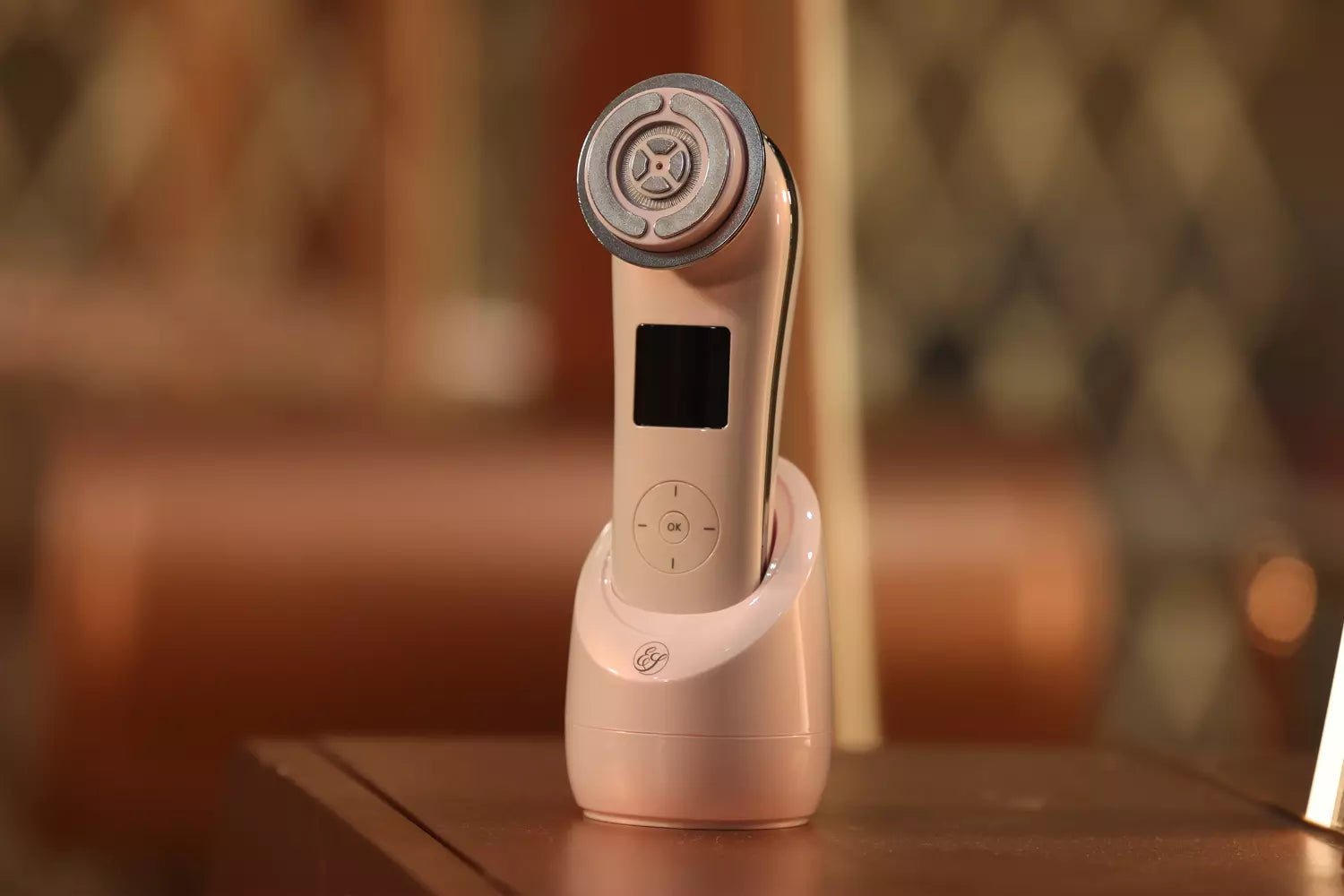
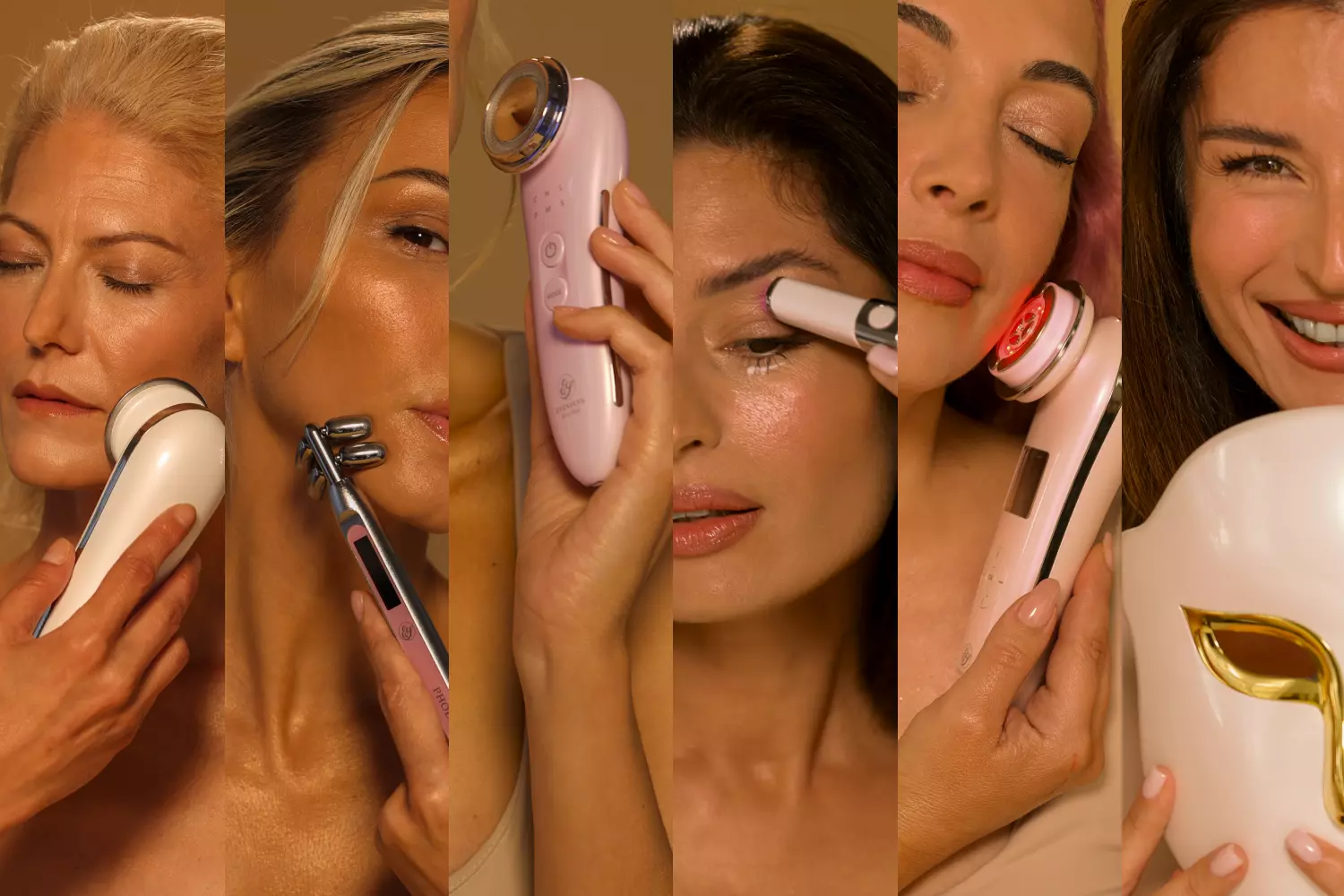
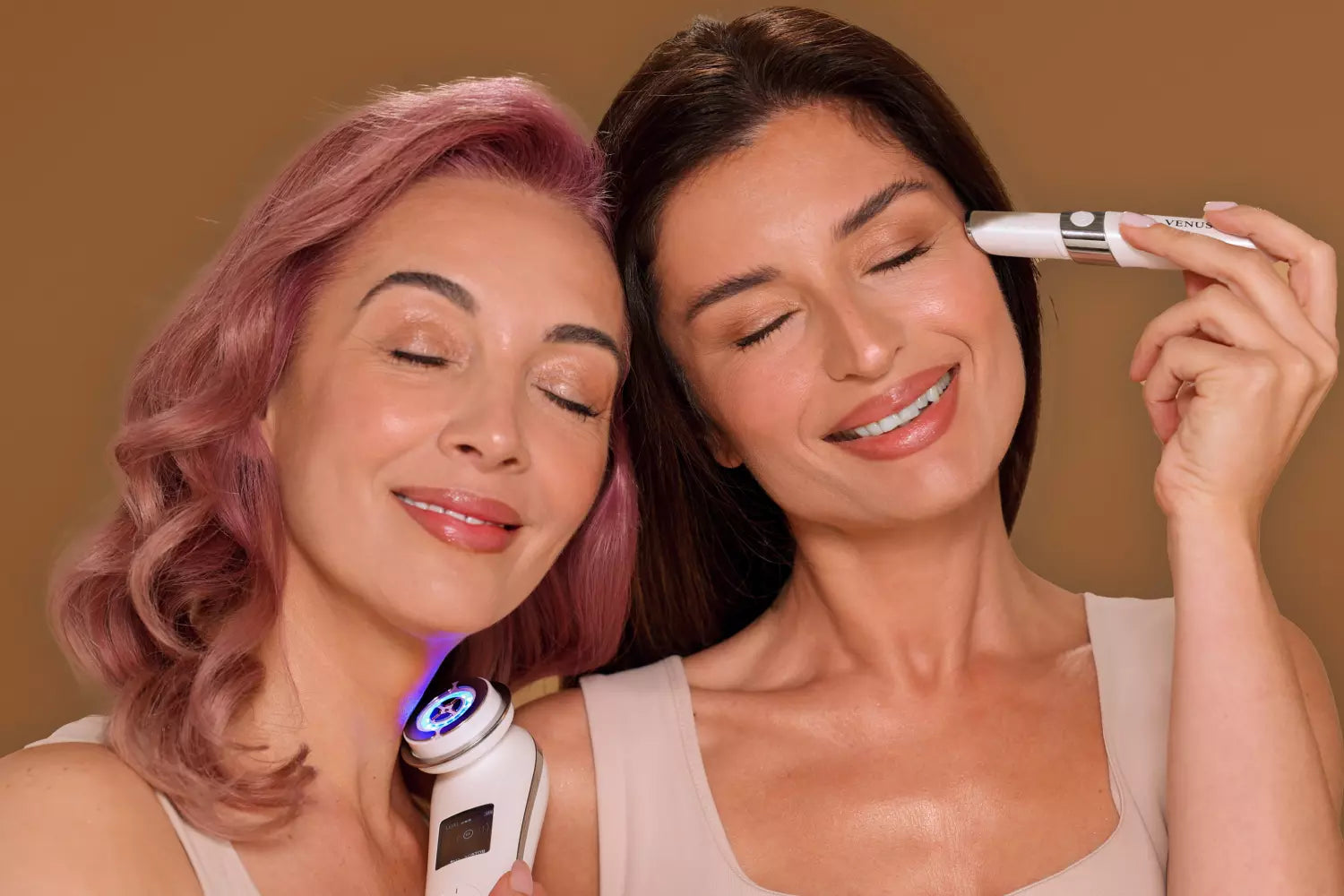
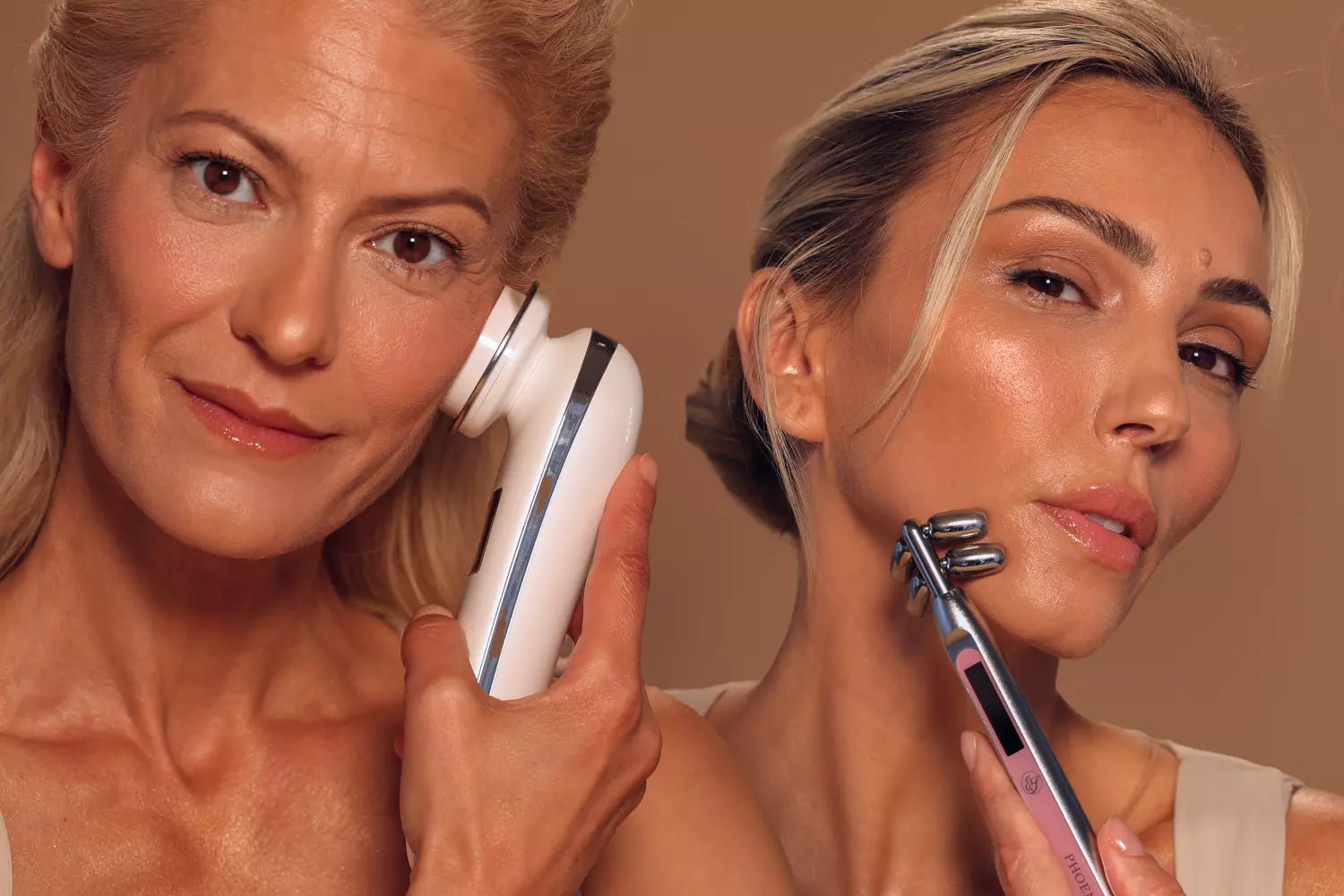
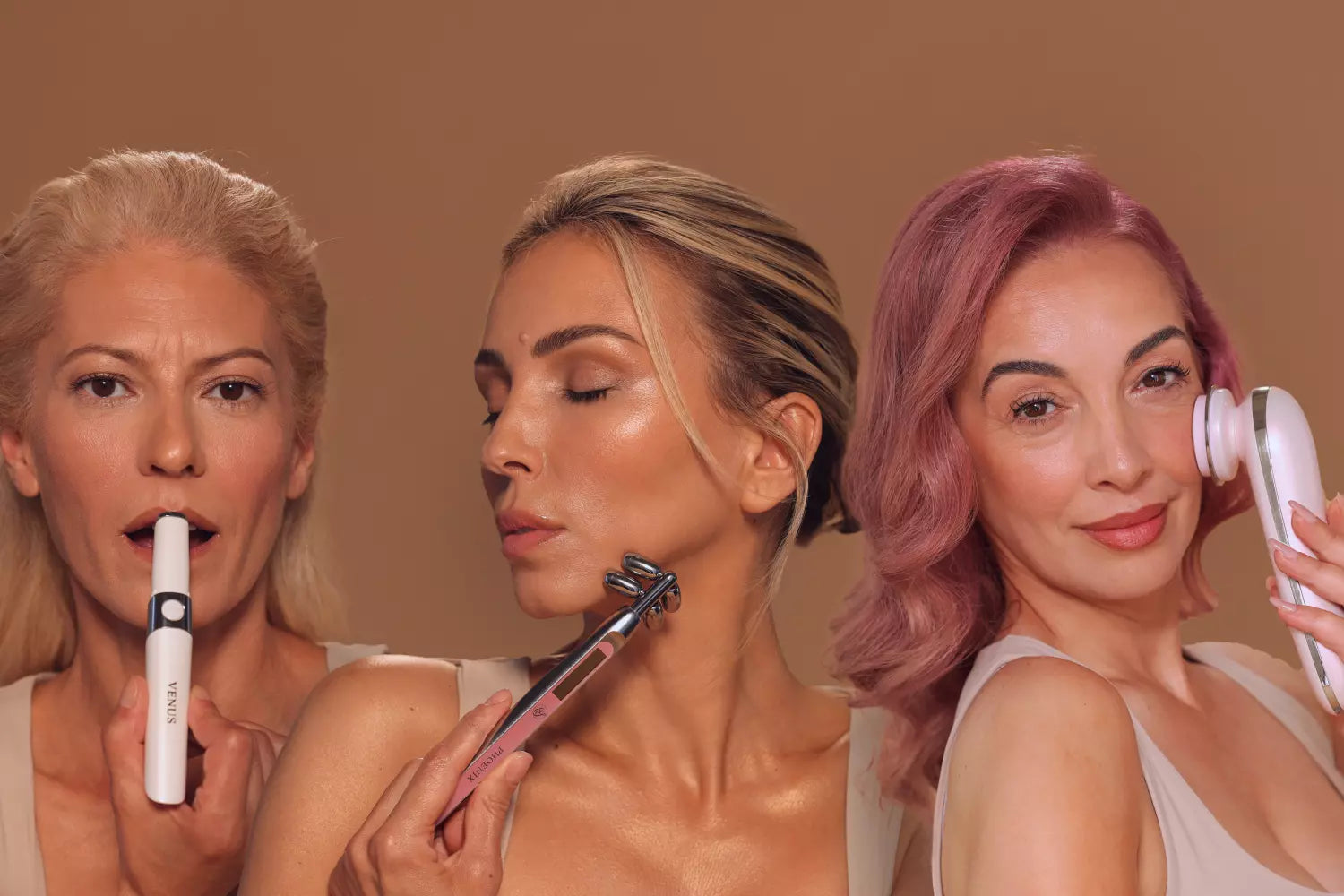
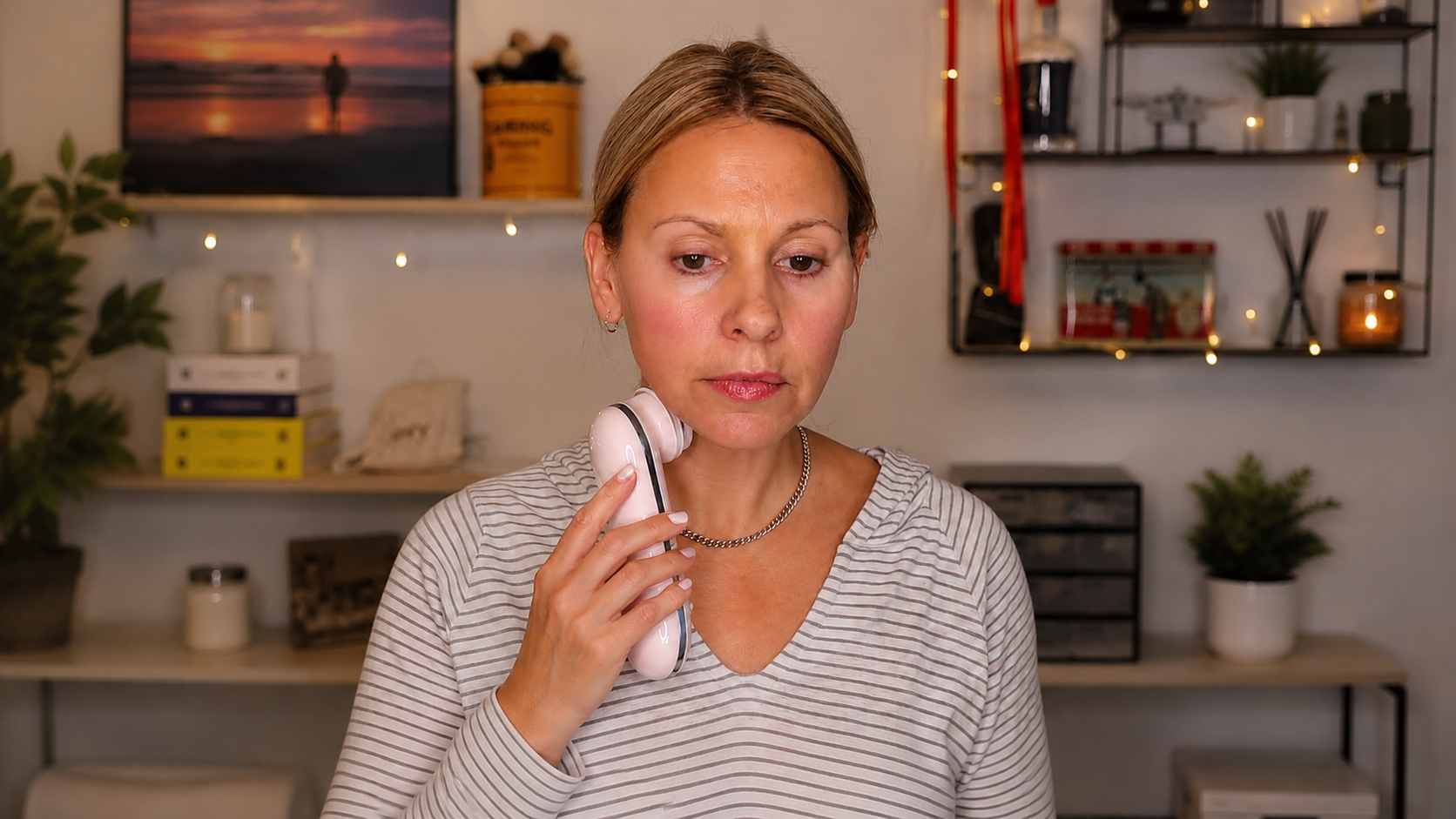
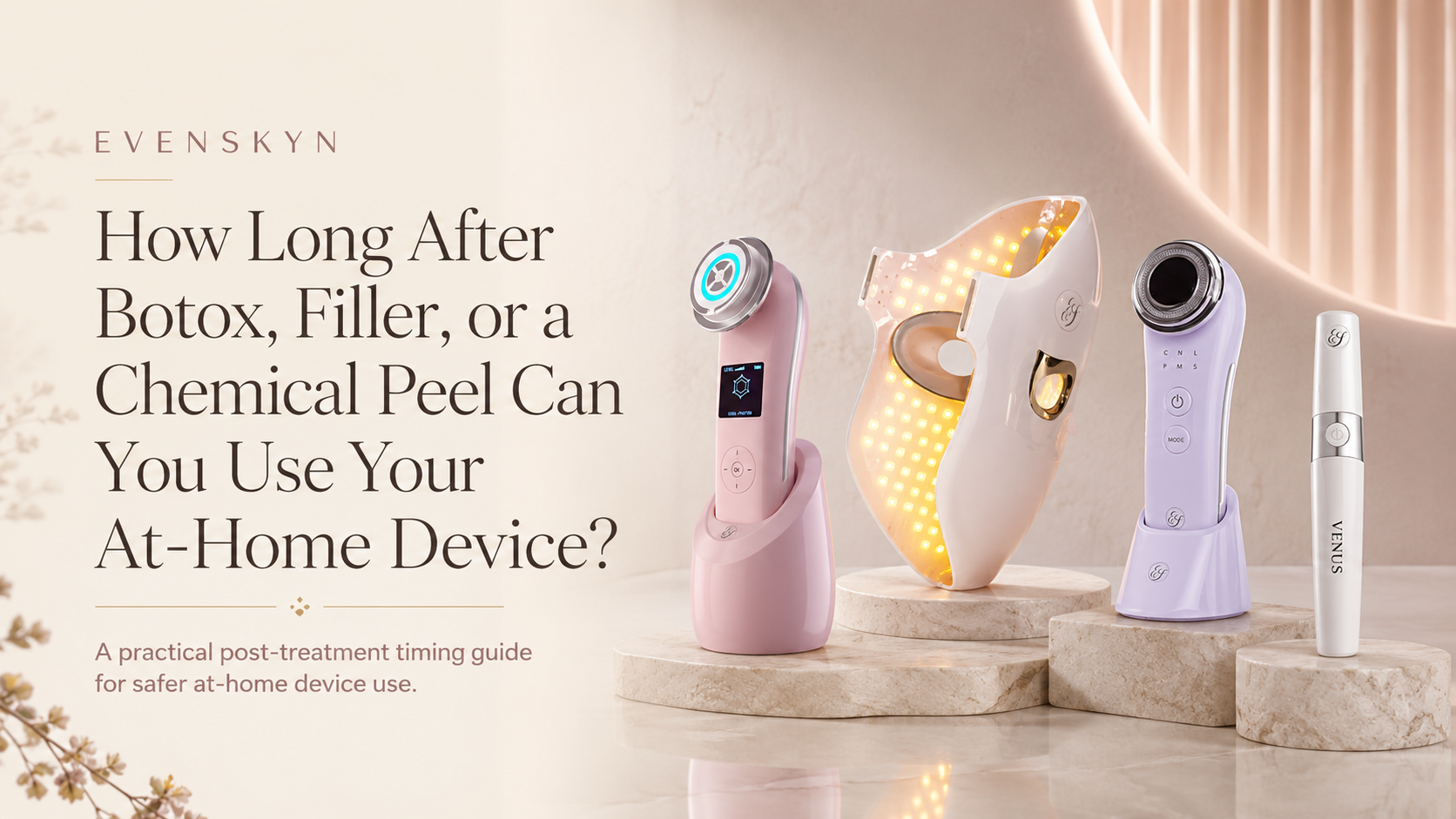
A note on transparency. The protocol I just outlined is one I run with patients who own the EvenSkyn at-home device line specifically because that is what I have the most direct visibility into, including the Lumo+ for radiofrequency and EMS and LED in a single handset, the Phoenix for daily microcurrent, the Eclipse for ultrasound, the Mirage Pro for LED phototherapy, and the Venus for the eye area. The companion microinfusion stamp in the EvenSkyn line is the MicroInfuser™, which I also help review. The biological logic, however, is mechanism-based rather than brand-based: any well-built fixed-output home RF device or any FDA-cleared ultrasound or microcurrent unit or any non-thermal red and near-infrared LED mask can substitute for the corresponding step. The sequencing rule, before microinfusion not within 24 hours after, is what matters. For a fuller comparison of how the energy-based modalities work and which one matches which concern, our complete 2026 guide to at-home radiofrequency and our side-by-side device comparison cover the buying-guide questions this article deliberately avoids.
The point I want to leave you with is the sequence: warm up before, microinfusion, wait 24 hours, resume. That sequence respects the biology and produces the best outcomes I see in practice.
Mechanism Five: In-Clinic Procedure Timing
Many people who use at-home microinfusion also receive injectables, peels, lasers, and other in-clinic treatments, and the question of how to coordinate the timing of those clinical procedures with a bi-weekly at-home microinfusion cycle is one I get asked weekly in my own practice, particularly by patients in their forties and fifties who have built a sustainable rhythm of quarterly injectables plus seasonal in-clinic resurfacing plus a maintenance at-home routine and want to know whether they can compress their schedule without compromising results. Coordinating the timing protects both the clinical work and the regenerative response from your at-home routine. The principles below apply.
What the research shows
The published literature on combined energy-based and microneedling treatments offers reasonable guidance for the most common procedure pairings. Hou and colleagues catalogued combination protocols in their 2017 review and emphasized that procedural timing follows the principle of allowing each treatment's primary effect to settle before introducing the next stimulation (Hou et al., 2017). The Iriarte review similarly recommended spacing in-clinic procedures from microneedling sessions when both are part of a longer rejuvenation strategy (Iriarte et al., 2017).
For neurotoxin injections (Botox and equivalents), the standard clinical guidance is to allow the toxin to fully bind to neuromuscular junctions before introducing any mechanical stimulation to the treatment area. The mechanism by which microinfusion theoretically affects neurotoxin distribution is not directly studied in randomized trials, but the practical concern is well-documented: any pressure, vibration, or stimulation in the first two weeks after Botox can theoretically affect product distribution. The standard recommendation is to wait two weeks after Botox before microinfusion, and to wait two weeks after a microinfusion session before receiving Botox.
For dermal fillers, the timing logic is similar but slightly different. Hyaluronic acid fillers behave somewhat differently from biostimulator fillers like poly-L-lactic acid and calcium hydroxylapatite, and the timing rule reflects that difference because biostimulator fillers produce a longer, lower-grade inflammatory response that overlaps temporally with what microinfusion would add, whereas HA fillers settle into their final shape on a faster timeline that allows the at-home protocol to resume sooner. The general principle is to allow filler to fully settle before introducing any thermal or mechanical stimulation. Two weeks is a reasonable minimum for HA fillers. Biostimulators may benefit from a longer wait. For biostimulator fillers, defer to your injector for specific timing.
For chemical peels, the depth of the peel determines the timing. Light superficial peels reorganize the upper stratum corneum and are generally healed within several days. Microinfusion can be safely scheduled seven days after a light peel, and a light peel can be scheduled seven days after a microinfusion session. Medium and deep peels are wholly different. They produce open wounds that heal on a multi-week timeline, and microinfusion has no place during that recovery.
For ablative laser resurfacing, the rule is even more conservative. The barrier has to fully reconstitute before any further mechanical intervention is appropriate. Four to six weeks is a reasonable minimum. Confirm with your laser provider before resuming.
IPL or photofacial treatments produce mild thermal stress without the deeper damage of ablative laser. A one-week wait in either direction is generally appropriate.
What this means for your routine
Build a treatment calendar that respects all of the above. If you have a Botox appointment scheduled, do not also book a microinfusion session within two weeks of either side. If you have a chemical peel planned, build a three-week buffer around it. If you are getting filler, defer to the injector and skip microinfusion for at least two weeks.
When in doubt, defer to the practitioner who performed the in-clinic procedure. They know the specifics of what was done. They are also liable for outcomes in ways that I am not, and a five-minute conversation with them is the right way to confirm timing before you assume.
For high-frequency aesthetic users (people who do Botox four times a year, light peels every quarter, microinfusion every two weeks at home, plus device sessions multiple times weekly), the calendar quickly becomes complex. Sit down with a year-view calendar once, mark all in-clinic procedures, and schedule microinfusion around them with the appropriate buffers. If the math feels impossible, you may be doing too much.
The Realistic 14-Day Protocol
For the bi-weekly microinfusion schedule that most users follow, here is the protocol I recommend, structured as a day-by-day decision tree rather than a generic before-and-after list, because the layering decisions in this category genuinely change from one day to the next as the skin's barrier function recovers and as the regenerative cascade moves through its phases, and because the patients who do best are the ones who treat the bi-weekly cycle as a structured period of intentional restraint followed by gradual reintroduction rather than as a single event to be checked off and forgotten about. Adjust the days based on your own session timing.
Day 1, the session day. Cleanse thoroughly. Run your at-home RF or ultrasound or microcurrent device first as a warm-up if you own one of them, working through whatever protocol the manufacturer specifies for that device on a normal night, after which you will perform your microinfusion session per the manufacturer's protocol, apply any remaining serum to face, neck, and the backs of your hands, and finish with a fragrance-free hydrating sheet mask if you have one available. Sleep on a clean pillowcase. Skip the gym. Skip hot showers. No sweat exposure for the rest of the evening.
Day 2. Cleanse with a gentle and fragrance-free and pH-balanced cleanser using lukewarm water. Pat dry. Apply niacinamide serum or hyaluronic acid serum. Apply a fragrance-free moisturizer. Apply broad-spectrum SPF 30 or higher every morning. Skip retinoids and AHAs and BHAs and vitamin C and benzoyl peroxide. Skip RF and ultrasound and microcurrent devices. LED light therapy can resume from 24 hours after the session.
Day 3. Continue gentle cleansing and hydration. SPF in the morning. From this point, you can resume L-ascorbic acid vitamin C if your skin tolerates it, ideally at every-other-morning frequency for the first week.
Day 4. Retinoids and AHAs and BHAs can resume from this point. Reintroduce one ingredient at a time at lower frequency than your pre-session baseline. If you used nightly tretinoin before, restart with every-other-night for the first week. Step up only when your skin signals it is ready.
Days 5 through 14. Run your full normal skincare routine. Resume your at-home RF or microcurrent or ultrasound device on its normal schedule. Three to five sessions per week is typical. Run LED daily if that has been your cadence. Sunscreen continues every morning, regardless of whether you plan to be outside for five minutes or fifty, because the cumulative effect of a sunscreen habit measured across months is meaningfully larger than the cumulative effect of any individual active ingredient in your routine. By the end of week two, the regenerative cascade from session one is still producing collagen at the dermal level, even though the skin's surface has long since returned to its normal tolerance threshold and you would have no obvious external indicator that anything is happening underneath.
Day 15. Begin the next cycle. Repeat.
Three notes for this protocol.
First, if you take the advanced 10-day pathway (three sessions per month rather than every two weeks), compress the timeline accordingly but do not skip the post-session 72-hour buffer. The barrier biology does not accelerate to match a shorter cycle.
Second, the cumulative effects build slowly. The Aust 2008 papers documented measurable collagen-density changes after multiple sessions over three to six months (Aust et al., 2008a). This is not a one-month treatment course. Plan for three months minimum before you make any judgment about results.
Third, consistency over time is the single biggest predictor of outcome I see in practice. The gap between patients who run the protocol faithfully every two weeks for six straight months and patients who run an aggressive weekly schedule for two months and then taper off is dramatic. The biology rewards regularity. Not intensity. Not novelty. Regularity.
Six Common Layering Mistakes
These are the issues I see most often in practice. Each one is a preventable problem.
Mistake one: applying retinol the night before a session. The barrier is already thinned because that is how retinol works. Adding a microinfusion session on top of that thinning produces stinging during the session and prolonged redness for hours afterward. Both are entirely preventable by a 48-hour pause that costs you nothing in long-term retinol benefit. Pause retinol 48 hours before, not the night before.
Mistake two: vitamin C the morning after. L-ascorbic acid at low pH will sting on freshly treated skin. Wait 48 hours. Niacinamide is the safer morning antioxidant for the first 48 hours.
Mistake three: same-day RF or ultrasound after microinfusion. I see this often. The thinking is that "more is better" within a single self-care session. The biology disagrees. Run your warm-up devices before, never within 24 hours after.
Mistake four: skipping sunscreen because you are staying inside. UV exposure through windows, on a cloudy day, during a five-minute walk to the car, all of it counts during the recovery window. The risk for darker skin tones is not abstract. SPF every morning for 72 hours, no exceptions.
Mistake five: hot showers or saunas in the first 24 hours. Heat dilates blood vessels, prolongs redness, and can introduce bacteria from the hot environment into still-recovering channels in ways that produce the most common pattern of post-session breakout I see, which is a cluster of small inflammatory papules appearing two to four days after a session in someone who otherwise followed every other instruction perfectly but stepped into a steamy shower the same evening because that is what they always do. Lukewarm water only for the first day. Skip the sauna. Skip hot yoga.
Mistake six: assuming sensitive-skin products are uniformly safe. Many "for sensitive skin" formulations contain essential oils, botanical extracts, or low-dose actives that are genuinely well tolerated on intact skin but become irritating on a recovering barrier, and the words "gentle," "calming," or "soothing" on a label are marketing categories rather than ingredient guarantees, which is why I tell patients to read the actual ingredient list rather than trusting the front-of-pack messaging in the first 24 to 72 hours after a session. Read ingredient lists. Fragrance-free, dye-free, pH-balanced is the standard for the recovery window.
Frequently Asked Questions
1. Can I use my LED light therapy mask the same day as my microinfusion session? Wait at least 24 hours after the session. LED is generally safe and supportive of recovery, but the first 24 hours are the period when the early inflammatory cascade is most active, and skipping that buffer is unnecessary. From hour 24 onward, red and near-infrared LED is a useful complement. It will not interfere with the regenerative work.
2. How long after Botox can I resume microinfusion? Wait two weeks after Botox before your next microinfusion session. The same waiting period applies in the other direction: after a microinfusion session, wait two weeks before your next Botox appointment. Always confirm with your injector.
3. What about hyaluronic acid fillers? The conservative recommendation is two weeks before microinfusion, one to two weeks after. HA fillers settle within roughly two weeks. Microinfusion stamping over a freshly placed filler can theoretically affect its distribution.
4. Can I use retinol after microinfusion if I really want to? Wait 72 hours, then reintroduce at lower frequency than your pre-session baseline. If you were using nightly tretinoin, restart at every-other-night for the first week. If you reintroduce retinol earlier or at full pre-session strength, expect stinging, prolonged redness, and slower barrier recovery. None of those benefit your results.
5. Can I exercise the day of my session? Avoid strenuous activity and any sweating for 24 hours after the session. Sweat carries skin bacteria into freshly opened micro-channels and is the most common cause of post-session breakouts I see in my own practice, particularly among patients who pride themselves on never missing a workout and who therefore push through the post-session evening with a normal training session and then return three days later wondering why their forehead has a cluster of small inflammatory papules that did not exist before. Light walking is fine. The gym, hot yoga, and high-intensity cardio should wait until the next day.
6. Sheet masks: which kinds are safe immediately after? Hydrating and fragrance-free sheet masks built around hyaluronic acid or peptides or niacinamide or centella asiatica are excellent in the first hour after a session. Avoid masks with retinol or vitamin C or AHAs or BHAs or brightening actives or strong essential oils. The mask occlusion holds the active concentration against the skin while the channels are still partially open, which is the most absorptive window your skin will experience.
7. Does it matter what kind of sunscreen I use? For the first 48 hours, mineral sunscreens (zinc oxide, titanium dioxide) are gentler on the post-treatment barrier than chemical sunscreens. From hour 48 onward, a well-formulated chemical sunscreen is fine. For Fitzpatrick IV through VI or anyone with a history of melasma, a tinted mineral sunscreen with iron oxides is the better choice across the entire recovery window because it blocks visible light, not just UV.
8. Can I use fragranced products at all in the first 24 hours? No. Fragrance, including natural essential oils, is the most common cause of post-session sensitivity I see. Even fragrances that you tolerate normally on intact skin can produce a reaction when applied to skin in the first 24 hours after a session. From day two onward, normal fragrance tolerance returns.
9. Niacinamide right after the session: safe? Yes. Niacinamide sits in the small group of actives that earn a green light in the first 24 hours rather than a wait. It is barrier-supportive, anti-inflammatory, and well tolerated on compromised skin (Bissett et al., 2005). Stick to formulations under 5 percent, fragrance-free.
10. What about a hyaluronic acid serum the same day? Yes, encouraged. Hyaluronic acid is an ideal companion ingredient. The smaller molecular weight fractions can reach considerably deeper through the channels, providing humectant action well below the surface where topical HA normally sits. Apply within the first hour after the session for maximum absorption. Continue twice daily.
11. Can I do microinfusion after a chemical peel? For light superficial peels, wait seven days. For medium peels, wait four weeks. For deep peels, wait at least four weeks and confirm with the practitioner who performed the peel. Light peels heal quickly. Medium and deep peels create wounds that microinfusion has no place interacting with during recovery.
12. I am pregnant or breastfeeding. What do I do? Pause microinfusion until your physician confirms it is appropriate to resume. Several of the active ingredients in microinfusion serums have not been specifically studied in pregnancy. Hormonal shifts during pregnancy can also change how skin reacts to stimulation. When in doubt, defer to your obstetrician.
13. I take blood thinners. Does that change anything? Yes. Speak with your prescribing physician before starting microinfusion. Even at 0.5 mm depth, blood thinners can raise the risk of bruising and slow recovery. Your doctor knows your specific medication and dose, and may advise waiting until your dosage is adjusted before proceeding.
14. I have rosacea or sensitive skin. Should I skip the at-home device pairing? Run an extended patch test before any combined protocol. If your skin tolerates microinfusion alone for the first three to four sessions, then introduce one additional device at a time over several weeks. Watch for flushing, prolonged redness, or any new sensitivity. People with reactive skin often do best with microinfusion plus LED only, skipping RF and ultrasound entirely. The safest combination is the one you can run consistently without flaring your underlying condition.
15. I have darker skin, Fitzpatrick IV through VI. Anything different I should do? Three things. First, apply sunscreen for a full week after each session, not just 72 hours. Second, use a tinted mineral sunscreen with iron oxides during that window, because visible light contributes to pigmentation activation in melanin-rich skin in ways that conventional UV-only sunscreens do not address adequately. Third, treat the neck and chest with extra conservatism by using lighter pressure, fewer sweeps per zone, and three-week intervals on those areas rather than the standard two-week cadence you might run on the face. The Davis and Callender review documents the heightened risk of post-inflammatory hyperpigmentation in skin of color following any inflammatory stimulus, even mild ones, and the principles in their review apply directly to the recovery window after a microinfusion session even though microinfusion at 0.5 mm is dramatically gentler than the resurfacing procedures their paper primarily addresses (Davis & Callender, 2010). The basic protocol is safe. The margin for error is smaller.
16. What if I am traveling and disrupt my schedule? Travel is a reasonable reason to push a session by a few days in either direction. The biology is forgiving on the order of days. It is not forgiving on the order of weeks. Skipping a single bi-weekly session and resuming the next one is fine. Skipping multiple consecutive sessions resets the cumulative effect, and you essentially restart the build curve when you resume.
17. What should I do in the 48 hours before a microinfusion session? Pre-care matters more than most users realize. In the 48 hours before, pause retinoids, AHAs, BHAs, vitamin C, and benzoyl peroxide. Avoid sun exposure, saunas, and tanning beds for at least 24 hours before. Skip waxing, threading, or any other facial hair removal in the 48 hours before. Hydrate well. On the day of the session, cleanse thoroughly with a gentle, fragrance-free cleanser before stamping. The goal is to arrive at the session with a barrier that is intact, calm, and undisturbed.
18. When can I wear makeup again after microinfusion? Wait at least 24 hours before applying foundation, concealer, or any traditional makeup with a brush or sponge. Mineral powder or pure pressed mineral sunscreen with iron oxides applied with clean fingers is fine from hour 12 onward if you genuinely need coverage. The concern is twofold: makeup brushes and sponges introduce bacteria into still-recovering channels, and many liquid foundations contain fragrance, alcohol, or active ingredients that can sting freshly treated skin.
19. Can I shower or wash my face the same day as my session? Yes, but lukewarm water only for the first 24 hours. Hot showers, hot tubs, saunas, and steam rooms should wait at least 24 hours after a session because heat dilates blood vessels, prolongs redness, and can introduce bacteria from the hot environment into channels that are still partially open. Cleanse gently with a fragrance-free pH-balanced cleanser using your fingertips rather than a wash cloth or facial brush. Pat dry with a clean towel.
20. Does sleep position matter the night of a session? A small effect, but yes for some people. Sleeping on your back the night of a session reduces friction against the pillowcase and minimizes the chance that side-sleeping pressure traps heat or transfers contaminants from a multi-night-old pillowcase to the freshly treated skin. A fresh, clean pillowcase is the more important variable; the position is secondary.
21. What about growth factor serums and EGF after microinfusion? Growth factor serums (EGF, sh-Oligopeptide-1, recombinant peptide complexes) are among the most appropriate actives to apply during the post-microinfusion absorption window because the channels were designed to deliver exactly this class of molecule. The peer-reviewed evidence base for individual growth factors at home-use depths is still developing, but the safety profile is consistent. If your serum was designed to be applied during the microinfusion session itself, follow the manufacturer's protocol. If you are layering an EGF serum on top after the session, fragrance-free formulations are the safer choice for the first 24 hours. Our companion guide on EGF, copper peptides, and PDRN covers the evidence base for each of these ingredients in more depth.
22. I am brand new to microinfusion. What is the most important thing to know? Three things. The serum matters as much as the device, sometimes more. The 72 hours after the session matter as much as the session itself. The cumulative effect builds across many sessions, so plan for three months minimum before judging your results. Consistency over time is the single biggest predictor of outcome I see in practice.
About the Author
Dr. Lisa Hartford is a board-certified dermatologist who serves as Chief Dermatology Advisor and Doctor-in-Residence at EvenSkyn. She graduated with honors from Johns Hopkins University School of Medicine, where she developed a clinical interest in skin biology and emerging cosmeceutical technologies. She completed her dermatology residency at Mayo Clinic, where she trained across the full range of dermatologic conditions and refined her focus on aesthetic and anti-aging dermatology. Before joining EvenSkyn in 2020, Dr. Hartford spent several years working with a top-tier pharmaceutical company on the clinical testing of dermatological treatments and prescription skincare formulations, and a global luxury skincare brand on product formulation that bridged dermatologic principles with consumer skincare. At EvenSkyn, her role is to review the safety protocols, contraindication lists, and clinical claims for all device documentation, including the MicroInfuser™ User Manual (Edition 1, 2026), to author or co-author educational content for the EvenSkyn blog, and to vet every protocol before it is published or shipped with a device. Her full Doctor-in-Residence biography is available on the EvenSkyn website.
The clinical statements, protocols, and contraindications in this guide reflect Dr. Hartford's review of the published peer-reviewed literature, her clinical training, and the protocol consensus she has developed over years of seeing patients through both in-office and at-home treatment courses. The ten primary citations referenced inline were independently verified at pubmed.ncbi.nlm.nih.gov before publication. Where the evidence is mixed or preliminary, the article hedges. Where the recommendation reflects clinical judgment beyond what the published trials directly demonstrate, the article flags it explicitly.
Methodology
This article was researched between February and May 2026. Peer-reviewed clinical literature was searched on PubMed and PubMed Central using the following terms: "microneedling," "microinfusion," "percutaneous collagen induction," "post-inflammatory hyperpigmentation," "topical retinoid," "niacinamide," "centella asiatica," "polydeoxyribonucleotide," "low-level laser therapy in skin," "Fitzpatrick" combined with "microneedling," and "radiofrequency microneedling combination."
Priority was given to systematic reviews, randomized controlled trials, and high-quality narrative reviews from peer-reviewed dermatology and plastic surgery journals dating from 2008 onward, with explicit weight given to the foundational microneedling biology papers from the Aust group at the Medical School of Hannover, the Hou and Iriarte reviews of the post-2008 evidence base, and the more recent 2024 Jaiswal and Jawade review that summarizes the field's current understanding across applications, techniques, and outcomes (Jaiswal & Jawade, 2024). The Bissett 2005, Bylka 2014, Squadrito 2017, and Davis and Callender 2010 papers served as anchor sources for the individual ingredient and population-specific recommendations.
The protocol guidance was cross-referenced against the EvenSkyn MicroInfuser User Manual, Edition 1 (2026), which I authored and reviewed before publication. Sections 9 (post-treatment care), 10 (compatibility and wait-time chart for clinical procedures and at-home devices), 10.1 (the sequencing protocol for pairing microinfusion with RF, ultrasound, and EMS), and 11 (ingredient interaction timeline) of that manual contain the same waiting periods and pairing logic I have used here, refined for the format of an editorial article rather than a product manual.
Ten of the citations referenced inline above were independently verified against pubmed.ncbi.nlm.nih.gov before publication. Any spec or numerical claim that could not be traced to a verified source was either removed or rephrased to remove the specific number.
This article is educational. It is not medical advice. If you have any underlying medical condition, are pregnant or breastfeeding, take prescription medications that affect wound healing or coagulation, or have any concern about whether at-home microinfusion is appropriate for you, consult a qualified healthcare provider before beginning any of the protocols described here.
Disclosures
Author. Dr. Lisa Hartford, MD, board-certified dermatologist. Chief Dermatology Advisor and Doctor-in-Residence, EvenSkyn.
Affiliations. Johns Hopkins University School of Medicine (graduated with honors); Mayo Clinic Dermatology Residency. Prior pharmaceutical-industry experience in clinical testing of dermatological treatments. Prior global luxury-skincare formulation experience.
Commercial relationship. Author serves as Chief Dermatology Advisor and Doctor-in-Residence at EvenSkyn, manufacturer of the Lumo+ (radiofrequency, EMS, and LED), Venus (under-eye radiofrequency and LED), Mirage Pro (LED phototherapy mask), Phoenix (microcurrent), Eclipse (ultrasound), Under-Eye MicroInfuser dissolving microneedle patches, and the upcoming MicroInfuser™ at-home microinfusion stamping device referenced throughout this guide.
Funding. No external funding. No advertorial placement.
Cited literature with disclosed conflicts. Squadrito et al. 2017 (PDRN review): first author received research support from Mastelli for work on polydeoxyribonucleotide (disclosed in the published corrigendum). Iriarte et al. 2017: fellowship of one author funded by Janssen Biotech (disclosed in original publication). All other cited papers report no relevant conflicts.
Last clinically reviewed. May 10, 2026, by the named author. Next scheduled review: November 2026.
Citation format for this article (APA). Hartford, L. (2026). What to Layer With Your Microinfusion Treatment: A Dermatologist's Guide to Skincare and Device Compatibility (2026). EvenSkyn Skin & Beauty Articles. Retrieved from https://www.evenskyn.com/blogs/skin-beautyarticles/what-to-layer-with-microinfusion-skincare-device-compatibility-2026
Related Reading
For readers building out the rest of the at-home microinfusion picture, four EvenSkyn pillars cover the adjacent decisions:
- At-Home Micro-Infusion: A Dermatology-Reviewed Guide to How It Works, What to Buy, and Whether It Replaces AquaGold (2026). The seven questions to ask before buying any at-home device. Read this if you are still choosing.
- At-Home Microinfusion in 2026: The Science-Backed Guide to EGF, Copper Peptides, PDRN, and Choosing a Kit. The evidence base for the three serum ingredients that matter most. Read this if you have a device but are choosing a serum.
- How to Use PDRN at Home in 2026: From Topical Serums to Microinfusion. The practical layering protocol for the regenerative ingredient with the strongest evidence base.
- The Complete 2026 Guide to At-Home Radiofrequency for Anti-Aging. The companion modality that pairs most strongly with microinfusion in the layered routine described above.
References
-
Aust MC, Fernandes D, Kolokythas P, Kaplan HM, Vogt PM. Percutaneous collagen induction therapy: an alternative treatment for scars, wrinkles, and skin laxity. Plast Reconstr Surg. 2008 Apr;121(4):1421-1429. doi:10.1097/01.prs.0000304612.72899.02 · PMID 18349665
-
Aust MC, Reimers K, Repenning C, Stahl F, Jahn S, Guggenheim M, Schwaiger N, Gohritz A, Vogt PM. Percutaneous collagen induction: minimally invasive skin rejuvenation without risk of hyperpigmentation-fact or fiction? Plast Reconstr Surg. 2008 Nov;122(5):1553-1563. doi:10.1097/PRS.0b013e318188245e · PMID 18971740
-
Avci P, Gupta A, Sadasivam M, Vecchio D, Pam Z, Pam N, Hamblin MR. Low-level laser (light) therapy (LLLT) in skin: stimulating, healing, restoring. Semin Cutan Med Surg. 2013 Mar;32(1):41-52. · PMID 24049929; PMCID PMC4126803
-
Bissett DL, Oblong JE, Berge CA. Niacinamide: A B vitamin that improves aging facial skin appearance. Dermatol Surg. 2005 Jul;31(7 Pt 2):860-865; discussion 865. doi:10.1111/j.1524-4725.2005.31732 · PMID 16029679
-
Bylka W, Znajdek-Awiżeń P, Studzińska-Sroka E, Dańczak-Pazdrowska A, Brzezińska M. Centella asiatica in dermatology: an overview. Phytother Res. 2014 Aug;28(8):1117-1124. doi:10.1002/ptr.5110 · PMID 24399761
-
Davis EC, Callender VD. Postinflammatory hyperpigmentation: a review of the epidemiology, clinical features, and treatment options in skin of color. J Clin Aesthet Dermatol. 2010 Jul;3(7):20-31. · PMID 20725554; PMCID PMC2921758
-
Hou A, Cohen B, Haimovic A, Elbuluk N. Microneedling: A Comprehensive Review. Dermatol Surg. 2017 Mar;43(3):321-339. doi:10.1097/DSS.0000000000000924 · PMID 27755171
-
Iriarte C, Awosika O, Rengifo-Pardo M, Ehrlich A. Review of applications of microneedling in dermatology. Clin Cosmet Investig Dermatol. 2017 Aug 8;10:289-298. doi:10.2147/CCID.S142450 · PMID 28848356; PMCID PMC5556180
-
Jaiswal S, Jawade S. Microneedling in Dermatology: A Comprehensive Review of Applications, Techniques, and Outcomes. Cureus. 2024 Sep 23;16(9):e70033. doi:10.7759/cureus.70033 · PMID 39449889; PMCID PMC11499218
-
Squadrito F, Bitto A, Irrera N, Pizzino G, Pallio G, Minutoli L, Altavilla D. Pharmacological Activity and Clinical Use of PDRN. Front Pharmacol. 2017 Apr 26;8:224. doi:10.3389/fphar.2017.00224 · PMID 28491036; PMCID PMC5405115. Disclosure: Author Squadrito has received research support from a manufacturer of PDRN products.
Update Log
Version 1.2 · Published May 10, 2026. Deeper revision pass conducted: (1) All ten PubMed citations re-verified externally via independent search of pubmed.ncbi.nlm.nih.gov, all confirmed accurate to author, journal, year, PMID, and conflict-of-interest disclosure; (2) Eight residual AI-tell phrases removed (synergistic, fundamentally, two instances of "comprehensive" outside citation titles, two instances of "in this article", one "X is not Y. It is Z." pattern, one "not only X but Y" pattern); (3) AquaGold positioning paragraph added to the 72-hour windows section to capture the related search cluster of patients searching for clinical-AquaGold-aftercare guidance; (4) Overnight-serum guidance added to the first-hour section, addressing a universal post-treatment instruction omitted in v1.1; (5) Author-bio internal link redirected from a non-public manual reference to the verified Doctor-in-Residence biography page; (6) Dedicated Disclosures section added between Methodology and Related Reading, structured for AI-chatbot lifting, including author affiliations, commercial relationship, funding, cited-literature conflicts of interest, last review date, and APA citation format.
Version 1.1 · Published May 10, 2026. Revision pass added: (1) Article Summary at a Glance section at the top, with snippet-friendly TL;DR table, evidence-base summary, and key findings paragraphs designed for AI-assistant lifting; (2) Six additional FAQ items (#17 through #22) covering pre-care, makeup timing, showering, sleep position, growth factor serums, and beginner guidance; (3) Five EvenSkyn product-page links integrated into the device-pairing section (Lumo+, Phoenix, Eclipse, Mirage Pro, Venus); (4) MicroInfuser™ named explicitly in the bias disclosure and device-pairing transparency note, ready for product-link insertion at July 2026 launch; (5) Two citation framings softened during fact-check audit (Iriarte 2017 retinoid-specific framing replaced with broader topical-adjunct framing matching paper's actual scope; Jaiswal & Jawade 2024 reference-count claim softened to remove unverifiable specific number); (6) Author bio expanded with prior pharmaceutical and luxury-skincare industry experience to strengthen E-E-A-T signal.
Version 1.0 · Published May 10, 2026. Initial publication. Authored by Dr. Lisa Hartford with editorial review by the EvenSkyn Skin Science Desk. Cross-referenced against the EvenSkyn MicroInfuser User Manual, Edition 1, 2026. Ten PubMed citations verified independently against pubmed.ncbi.nlm.nih.gov.
Next scheduled review: November 2026, or sooner if substantive new evidence emerges in any of the modality areas covered.
Educational content. Not medical advice. © 2026 EvenSkyn.


Leave a comment
All comments are moderated before being published.
This site is protected by hCaptcha and the hCaptcha Privacy Policy and Terms of Service apply.