Research citations current through Q1 2026. This article is educational and does not constitute medical advice.
Quick Answer
At-home radiofrequency (RF) is a non-invasive anti-aging treatment that uses controlled electromagnetic heating of the dermal layer, typically to 40 to 42°C at 1 to 3 mm depth, to trigger immediate collagen contraction and longer-term collagen and elastin regeneration. A 2025 systematic review of 15 clinical studies covering 1,230 participants found that RF treatments improved skin firmness in 52.9% to 100% of patients and skin texture in 71% to 100% of patients. A 2025 randomized controlled trial published in Lasers in Surgery and Medicine concluded that a novel monopolar RF device was "not inferior" to standard clinical RF therapy for skin tightening. Visible results from consistent at-home use typically appear at 4 to 8 weeks, with peak collagen remodeling occurring at 12 weeks and continued improvement over 3 to 6 months.
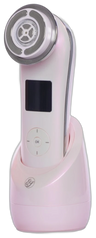
The EvenSkyn Lumo+ is a multi-modal at-home RF device delivering bipolar RF at 1 to 3 mm dermal depth, combined with red LED light therapy, EMS, and ion delivery in a single handpiece. It is designed for facial and neck skin tightening, wrinkle reduction, and jawline contouring in consistent 20-minute sessions.
Table of Contents
- How RF Works on Aging Skin: The Mechanism
- What the 2024 to 2025 Clinical Evidence Actually Shows
- At-Home RF vs In-Clinic RF: The Honest Comparison
- Is At-Home RF Safe? (And Who Shouldn't Use It)
- Is At-Home RF Safe for Skin of Color?
- What to Look For in an At-Home RF Device
- Top At-Home RF Devices Compared (2026)
- How to Use At-Home RF for Best Results
- Realistic Results Timeline: Week by Week
- Combining RF With Red Light, Microcurrent, and Microinfusion
- Frequently Asked Questions
1. How RF Works on Aging Skin: The Mechanism
Radiofrequency for skin rejuvenation uses high-frequency electromagnetic energy, typically 0.3 to 10 MHz: to generate controlled thermal energy within the dermal layer of the skin. Unlike light-based treatments that target chromophores such as melanin or hemoglobin, RF heats tissue based on its impedance to the electrical current, meaning it works across all skin tones.
The biological effect is twofold. First, when dermal tissue reaches approximately 40 to 42°C, existing collagen fibers contract immediately, producing the visible "tightening" that many users notice after a single session. This contraction is a thermal response of type I and type III collagen fibers, which denature and shorten at these temperatures.
Second, controlled thermal injury activates dermal fibroblasts to produce new collagen and elastin over the following weeks and months, a process called neocollagenesis and neoelastogenesis. According to current histological evidence cited in a 2025 Frontiers in Medicine study, collagen fiber remodeling occurs over 3 to 6 months after RF treatment, which is why results continue to improve long after the last session.
There are three major categories of RF technology:
-
Monopolar RF delivers energy between a single active electrode and a return pad, penetrating deepest (up to 4.5 mm) but requiring precise operator control. This is the technology behind clinic devices like Thermage.
-
Bipolar RF delivers energy between two closely spaced electrodes on the device tip, with shallower penetration (typically 1 to 3 mm) but a significantly safer profile because the energy path is contained. This is the technology used in most at-home RF devices, including the EvenSkyn Lumo+.
-
Multipolar and fractional microneedle RF combine multiple electrodes or needle arrays for deeper or more targeted energy delivery. These are primarily clinic-based technologies, though at-home versions are emerging.
A 2026 systematic review published in Health Science Reports concluded that bipolar RF is "ideal for sensitive regions like the periorbital area" due to its confined energy delivery and reduced risk of collateral damage, a key reason it is the preferred modality for consumer devices.
2. What the 2024 to 2025 Clinical Evidence Actually Shows
The clinical literature on RF for facial rejuvenation has matured significantly in the last five years. Below are the most rigorous recent findings relevant to consumers considering at-home RF.
2025 Systematic Review: 15 Studies, 1,230 Participants. A PRISMA-compliant systematic review published in 2025 synthesized evidence from 15 clinical studies on RF-based facial rejuvenation. Skin texture improved in 71% to 100% of patients across four studies. Skin firmness improved in 52.9% to 100% of patients across two studies. The review concluded that RF treatments "consistently improved aesthetic outcomes" with a favorable safety profile.
2025 Randomized Controlled Trial: Monopolar RF Non-Inferiority. Wang et al., publishing in Lasers in Surgery and Medicine (2025), conducted a prospective randomized controlled study of 40 participants comparing a novel monopolar RF device against a standard clinical RF device. The conclusion: "the novel monopolar RF device is clinically safe and effective for skin tightening in the lower face area, and is not inferior to the regular RF therapeutic device." This is among the first well-controlled studies demonstrating parity between newer-generation devices and established clinical systems.
2025 Prospective Study: 95% Wrinkle Improvement. A 2025 prospective study in Clinical, Cosmetic and Investigational Dermatology followed 22 participants through four RF treatments. At three weeks after the fourth treatment, 21 of 22 participants (95.46%) achieved the primary efficacy endpoint of at least 25% improvement in Fitzpatrick Wrinkle Scale score compared to baseline.
2022 At-Home RF Split-Face Trial. Shu et al., publishing in Dermatology and Therapy (2022), conducted a randomized split-face clinical trial specifically evaluating an at-home RF device. Split-face trials: in which one side of each participant's face receives treatment and the other serves as a control, are considered a gold-standard design in cosmetic dermatology because they control for all individual biological variables. The study found significant measurable improvement on the treated side compared to the untreated side.
2024 Long-Term Monopolar RF Study. A 2024 study in Cosmetics followed 20 women for 24 weeks after a single monopolar RF treatment. Skin laxity in the jowls and nasolabial folds showed significant improvement at 12 weeks post-treatment, with benefits maintained through the 24-week follow-up.
2025 RF vs Focused Ultrasound Comparison. A 2025 single-blind non-randomized trial in the Journal of Cosmetic Dermatology compared RF against focused ultrasound (FU) in 36 patients. Both modalities produced significant improvements on the Fitzpatrick Wrinkle Scale and Allergan Skin Roughness Scale at three-month follow-up, with RF showing comparable efficacy to FU-based treatments like Ulthera.
2026 Landscape Review: Health Science Reports. Zhang et al., publishing a comprehensive systematic review in Health Science Reports (2026), analyzed monopolar, bipolar, and multipolar RF systems and concluded that RF technologies "have evolved into cornerstone modalities for noninvasive skin rejuvenation, with monopolar, bipolar, and multipolar systems demonstrating efficacy across diverse anatomical regions and skin types."
Summary Evidence Table
| Study |
Year |
Design |
N |
Key Finding |
| Zhang et al., Health Science Reports
|
2026 |
Systematic Review |
Multiple |
RF established across all skin types |
| RF Systematic Review (PRISMA) |
2025 |
Systematic Review |
1,230 |
52.9 to 100% firmness improvement |
| Wang et al., Lasers in Surgery and Medicine
|
2025 |
RCT |
40 |
Novel RF non-inferior to clinical RF |
| CCID Prospective Study |
2025 |
Prospective |
22 |
95.46% achieved ≥25% wrinkle improvement |
| Zhao et al., J Cosmetic Dermatology
|
2025 |
Prospective |
36 |
RF comparable to focused ultrasound |
|
Cosmetics Long-Term Study |
2024 |
Prospective |
20 |
Benefits sustained at 24 weeks |
| Shu et al., Dermatology and Therapy
|
2022 |
Split-Face RCT |
, |
Significant improvement on
treated side |
3. At-Home RF vs In-Clinic RF: The Honest Comparison
This is the question most consumer content avoids answering directly. The honest answer has three parts.
In-clinic RF delivers more energy per session. Clinical devices like Thermage FLX and Morpheus8 deliver substantially higher energy in a single treatment and can reach deeper dermal targets (up to 4.5 mm and beyond, in the case of fractional microneedle RF). A single clinic session costs typically $1,500 to $4,000 and is often recommended annually.
At-home RF delivers lower energy over more sessions. Consumer devices like the EvenSkyn Lumo+ operate at lower power levels designed for safe self-administration, with treatment protocols typically calling for 2 to 3 sessions per week over 8 to 12 weeks, then maintenance sessions.
The cumulative effect of consistent at-home use is clinically meaningful. This is where the 2025 Wang et al. RCT becomes important: newer-generation RF devices have demonstrated non-inferiority to clinical RF for specific indications like lower-face skin tightening. The 2022 Shu et al. split-face trial on an at-home device specifically found measurable improvement versus the untreated side. In other words, while a single in-clinic session produces a larger single-event change, consistent at-home use over 8 to 12 weeks can produce comparable cumulative results for mild-to-moderate skin laxity at a fraction of the lifetime cost.
Where at-home RF is not a substitute. Severe skin laxity, significant jowling that affects facial contour, or deep wrinkles beyond the reach of bipolar RF are better addressed by clinical treatments or surgical options. At-home RF is most effective for prevention, maintenance, and treatment of mild-to-moderate aging concerns.
The EvenSkyn manufacturing heritage. EvenSkyn's component lineage traces to professional-grade devices used in cosmetic clinics for treatments like Thermage and Morpheus8. The Lumo+ uses bipolar RF components derived from this clinical supply chain, combined with consumer-safe power regulation and integrated multi-modality (LED, EMS, ion delivery) in a single handpiece.
4. Is At-Home RF Safe? (And Who Shouldn't Use It)
Bipolar RF at controlled depth (1 to 3 mm) delivered through a temperature-regulated consumer device has a strong safety profile when used as directed. The 2025 PRISMA systematic review of 1,230 participants reported that the most common side effects across studies were transient erythema (mild redness) and mild edema (slight swelling), both typically resolving within hours. What to check on a home device before you buy is in our guide to radio frequency skin tightening at home.
Contraindications: do not use at-home RF if you:
- Have a pacemaker, internal defibrillator, or any other implanted electronic device
- Are pregnant or breastfeeding
- Have active skin infection, open wounds, or inflammatory skin conditions in the treatment area
- Have received injectable fillers or neurotoxins (Botox) in the treatment area within the past two weeks
- Have a history of keloid or hypertrophic scarring
- Have metal implants or dental implants in the treatment area
- Have been diagnosed with cancer and are undergoing active treatment
- Have autoimmune conditions affecting the skin without clearance from your physician
Device-level safety features to look for. Automatic temperature regulation with thermal shut-off, treatment timers that prevent over-treatment of a single area, and a maximum power output calibrated for consumer use. The Lumo+ includes integrated temperature control that maintains bipolar RF output at approximately 42°C, the therapeutic threshold for collagen stimulation without crossing into tissue damage.
What "FDA-cleared" actually means. FDA clearance (through the 510(k) pathway) means the device has been determined to be substantially equivalent in safety and effectiveness to a legally marketed predicate device. It is not the same as FDA approval, which applies to drugs and higher-risk medical devices. Many at-home aesthetic devices, the Lumo+ included, are sold as cosmetic devices instead, so check which status a brand actually claims.
5. Is At-Home RF Safe for Skin of Color?
Yes: and this is one of the significant advantages of RF over light-based treatments.
A 2023 review by Syder, Chen, and Elbuluk, published in Dermatologic Surgery, specifically addressed RF and RF microneedling safety in skin of color. Because RF heats tissue based on impedance rather than targeting melanin, the risk of post-inflammatory hyperpigmentation (PIH), the primary concern with laser and IPL treatments in Fitzpatrick IV to VI skin types, is substantially lower with RF than with light-based modalities.
The 2026 Health Science Reports systematic review specifically noted that RF systems demonstrate efficacy "across diverse anatomical regions and skin types," and newer clinical research has extended RF applications to melasma management in Korean and Southeast Asian cohorts, with one study showing a 13.7% reduction in melanin indices.
Practical guidance for Fitzpatrick IV to VI skin tones using at-home RF:
- Start with shorter session durations and lower frequency (once weekly for the first 2 to 3 weeks) before ramping to standard protocols
- Always apply a tested conductive gel evenly to prevent uneven heat distribution
- Continue diligent daily SPF use, as photoprotection is critical during active collagen remodeling
- Avoid combining RF with exfoliating acids, retinoids, or resurfacing treatments within 48 hours of each session
6. What to Look For in an At-Home RF Device
Use this checklist when evaluating any at-home RF device, not just ours:
-
A plainly stated regulatory status, with any claimed clearance verifiable in the FDA's public device database
-
Bipolar RF technology, safer for at-home use than monopolar due to contained energy path
-
Temperature regulation with automatic shutoff, prevents accidental burns
-
Appropriate dermal depth (1 to 3 mm for facial skin), matches the biological target for collagen stimulation
-
Clinical or histological study backing for the specific device or its underlying technology
-
Published treatment protocol, session duration, frequency, and total treatment course
-
Multi-modality integration, devices combining RF with LED, microcurrent, or ion delivery provide more comprehensive treatment than single-modality tools
-
Manufacturer warranty, at minimum one year; the Lumo+ includes a full one-year manufacturer's warranty
-
Transparent safety certifications, Health Canada, CE, EMC, RoHS, CQC, or comparable marks
7. Top At-Home RF Devices Compared (2026)
| Device |
Technology |
FDA Cleared |
Depth |
Modalities |
Price Range |
| EvenSkyn Lumo+ |
Bipolar RF |
No (cosmetic device) |
1 to 3 mm |
RF + Red LED + ION + EMS |
$$ |
| NuFACE Trinity+ |
Microcurrent only |
Yes |
Surface |
Microcurrent (no RF) |
$$$ |
| Tripollar Stop X |
Tripollar RF |
Yes |
1 to 3 mm |
RF only |
$$$ |
| Silk'n Titan |
Bipolar RF + IR + LED |
Yes |
1 to 3 mm |
RF + Infrared + LED |
$$ |
| LYMA Laser |
Near-infrared laser |
Yes |
Deeper |
Laser (not RF) |
$$$$ |
| Medicube Age-R Booster Pro |
Multi-modal |
Yes |
Surface |
Microcurrent + EMS + LED + Electroporation |
$$ |
How to read this table. The Lumo+ is the only device in its price tier that combines bipolar RF with LED, EMS, and ion delivery in a single integrated handpiece, meaning one device replaces what would otherwise require three or four separate tools. NuFACE is a strong microcurrent device but does not deliver RF. Tripollar is RF-focused but lacks integrated light therapy and microcurrent. LYMA uses laser rather than RF and sits at a significantly higher price point.
8. How to Use At-Home RF for Best Results
Recommended protocol (general guidance: follow your specific device instructions):
-
Prepare the skin. Cleanse thoroughly with a gentle cleanser to remove makeup, SPF, and oils. Skin must be free of residue for proper electrical conductivity.
-
Apply conductive gel. A water-based conductive gel ensures even energy delivery and prevents uncomfortable hot spots. Apply generously to the treatment area.
-
Treatment session: 5 to 8 minutes on the Lumo+, per its manual. Move the device in small circular or linear motions across the treatment zones. Do not hold the device stationary on one spot. Common facial zones: jawline, cheeks, nasolabial folds, forehead. Neck treatment uses the same protocol.
-
Post-session care. Remove conductive gel. Apply a hydrating serum (hyaluronic acid works well for post-RF skin). Finish with a moisturizer. If daytime, apply broad-spectrum SPF 30 or higher.
-
Frequency. 2 to 3 sessions per week for the initial 8 to 12 weeks, then 1 to 2 sessions per week for maintenance.
What to avoid for 48 hours post-treatment:
- Direct sun exposure without SPF
- Chemical exfoliants (AHAs, BHAs)
- Retinoids and retinol
- Hot showers, saunas, or heated exercise classes
- Alcohol-based toners
9. Realistic Results Timeline: Week by Week
-
Weeks 1 to 2: Immediate skin tightening effect after each session due to collagen fiber contraction. Skin may feel firmer and appear more toned, but this initial effect is partly transient.
-
Weeks 4 to 6: Visible firming becomes apparent as fibroblasts begin producing new collagen. Fine lines around the eyes and mouth typically soften first.
-
Weeks 8 to 12: Peak results from neocollagenesis. Jawline definition improves, nasolabial folds soften, and skin texture is measurably smoother. This aligns with the 12-week primary endpoints used in most clinical studies.
-
Months 3 to 6: Continued collagen remodeling produces further improvement. Transition to maintenance protocol.
-
Beyond 6 months: With consistent maintenance (1 to 2 sessions per week), results are sustained. Clinical research shows RF-induced collagen changes persist for at least 24 weeks after treatment cessation.
10. Combining RF With Red Light, Microcurrent, and Microinfusion
At-home anti-aging works best as a stack of complementary modalities rather than a single treatment. Each targets a different biological process:
-
Radiofrequency (RF), heats the dermis to stimulate collagen contraction and remodeling. Targets structural firmness and wrinkle depth.
-
Red LED light therapy, photobiomodulation of mitochondrial activity in skin cells, with evidence for reducing inflammation and supporting collagen synthesis at a cellular level. Targets skin quality, tone, and recovery.
-
Microcurrent (EMS), low-level electrical stimulation of facial muscles, producing a visible lift through muscle toning. Targets facial contour and definition.
-
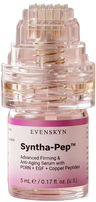
Microinfusion, enhanced delivery of active serum ingredients into the upper dermis through micro-channels. Targets hydration, active ingredient efficacy, and brightness.
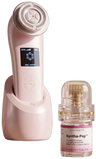
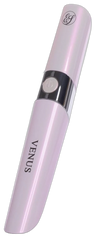
The EvenSkyn ecosystem is designed around this stack. The Lumo+ integrates RF, red LED, EMS, and ion delivery into a single facial device. The Venus targets the delicate eyelid and under-eye area with fractional RF, red LED, and sonic vibration. The Phoenix focuses on microcurrent-led muscle lifting for facial contouring.
Order of operations when stacking modalities in a single session: cleanse → microcurrent (on bare skin with conductive gel) → RF (with gel) → red LED (on clean skin) → serums → moisturizer → SPF (if daytime).
11. Frequently Asked Questions
Does at-home RF actually work for wrinkles? Yes. Clinical evidence, including a 2025 prospective study in Clinical, Cosmetic and Investigational Dermatology showing 95.46% of participants achieved at least 25% wrinkle improvement after four RF treatments, supports RF as an effective non-invasive modality for fine lines and mild-to-moderate wrinkles. Results are cumulative and require consistent use over 8 to 12 weeks.
Is at-home RF as effective as Thermage? At-home RF does not match a single Thermage session in peak energy delivery, but consistent at-home use over weeks can produce comparable cumulative results for mild-to-moderate skin laxity. A 2025 RCT in Lasers in Surgery and Medicine demonstrated non-inferiority between a novel RF device and standard clinical RF for lower-face skin tightening.
How long until I see results from at-home RF? Immediate tightening is visible after the first session due to collagen contraction, but this is partly transient. Measurable, lasting improvement typically appears at 4 to 8 weeks with consistent 2 to 3x weekly use. Peak results align with the 12-week collagen remodeling window documented in clinical literature.
Can I use RF with Botox or dermal fillers? Wait at least two weeks after receiving injectables before resuming RF treatment in the treated area. The thermal energy of bipolar RF at consumer-device levels has not been shown to degrade FDA-approved dermal fillers at standard depths, but the two-week buffer is a standard precaution to allow the injection site to fully settle.
Is at-home RF safe for darker skin tones? Yes. Because RF heats tissue based on impedance rather than targeting melanin, the risk of post-inflammatory hyperpigmentation is substantially lower than with laser or IPL treatments. The 2023 review by Syder, Chen & Elbuluk in Dermatologic Surgery confirmed RF safety across Fitzpatrick IV to VI skin types.
Can I use at-home RF every day? No. 2 to 3 sessions per week during the active treatment phase (weeks 1 to 12) and 1 to 2 sessions per week for maintenance is the evidence-based protocol. Daily use does not accelerate results and risks overheating the treatment area.
Does at-home RF tighten loose neck skin? Yes, though the neck typically requires longer treatment timelines than the face because the dermis is thinner and collagen density is lower. Expect visible improvement at 8 to 12 weeks with consistent use.
What age should I start using at-home RF? Most users begin in their late 20s to mid-30s for prevention, or in their 40s to 60s for active treatment. There is no lower age restriction for healthy adults, though under-25 users typically see minimal benefit because age-related collagen decline has not yet begun meaningfully.
RF vs microcurrent: which is better? They target different biological processes and are complementary, not competitive. RF stimulates dermal collagen (structural firmness). Microcurrent stimulates facial muscles (contour and lift). A combined device like the Lumo+ pairs RF with EMS muscle stimulation.
Do I need to use conductive gel with RF? Yes. Water-based conductive gel is essential for even energy delivery, preventing hot spots, and protecting the skin. Do not substitute with oil-based serums, which interfere with RF conductivity.
Can I do RF over active acne? No. Avoid treating areas with active inflammatory acne, open pustules, or broken skin. Wait until the skin is clear before treating that zone.
How long does an at-home RF device last? Well-made devices from established manufacturers typically last 3 to 5+ years with normal use. Look for at least a one-year manufacturer's warranty.
About EvenSkyn
EvenSkyn is a Canadian beauty technology brand specializing in at-home anti-aging devices. Our manufacturing heritage traces to professional-grade component supply for cosmetic clinic devices including those used in Thermage and Morpheus8 treatments. We design consumer devices that bring clinical-grade technologies, radiofrequency, LED light therapy, EMS, and ion delivery: into at-home skincare routines. Our flagship device, the Lumo+, integrates five modalities into a single multi-use handpiece.
Explore the EvenSkyn Lumo+ | Shop all anti-aging devices
Sources
- Zhang et al. "The Landscape of Radiofrequency Technology for Skin Rejuvenation." Health Science Reports, 2026. [PMC12743727]
- "Radiofrequency-Based Treatments for Facial Rejuvenation: A Systematic Review." 2025. PRISMA-compliant review, 15 studies, 1,230 participants.
- Wang et al. "Long-Term Efficacy and Safety of a Novel Monopolar Radiofrequency Device for Skin Tightening: A Prospective Randomized Controlled Study." Lasers in Surgery and Medicine, 2025.
- Prospective study on RF and wrinkle improvement. Clinical, Cosmetic and Investigational Dermatology, 2025.
- Zhao B., Li P., Fu Y., et al. "Efficacy and Safety of Radiofrequency and Focused Ultrasound in Facial Rejuvenation." Journal of Cosmetic Dermatology, 2025.
- Shu X., Wan R., Huo W., et al. "Effectiveness of a Radiofrequency Device for Rejuvenation of Aged Skin at Home: A Randomized Split-Face Clinical Trial." Dermatology and Therapy, 2022.
- Syder NC, Chen A, Elbuluk N. "Radiofrequency and radiofrequency microneedling in skin of color: A review of usage, safety and efficacy." Dermatologic Surgery, 2023.
- Long-term monopolar RF study, 20 women, 24-week follow-up. Cosmetics, 2024.
- Austin GK, Struble SL, Quatela VC. "Evaluating the Effectiveness and Safety of Radiofrequency for Face and Neck Rejuvenation: A Systematic Review." Lasers in Surgery and Medicine, 2022.
This article is educational and not a substitute for professional medical advice. Consult a board-certified dermatologist or aesthetic physician before beginning any at-home skin treatment protocol, especially if you have pre-existing skin conditions or medical concerns.
Last reviewed and updated: April 2026.





Leave a comment
All comments are moderated before being published.
This site is protected by hCaptcha and the hCaptcha Privacy Policy and Terms of Service apply.