

PDRN Treatment Cost: Injections vs Microneedling vs At Home
PDRN treatment costs, compared
At the 11 US clinics whose price pages we read on 6 November 2026, injected Rejuran and other polynucleotides cost $599 to $950 a session, and PDRN microneedling $500 to $925. A session with an at-home micro-infusion kit costs $45.00, or $27.00 with code BLACK40 until 30 Nov, a quarter of the kit price. That gap is mostly a depth gap and a supervision gap, not a discount, and this page shows the working.
Three ways to pay for PDRN
PDRN is a mixture of DNA fragments. Many clinic injectables use its longer-chain relatives, polynucleotides (PN), under brand names such as Rejuran. Either way the material is far larger than the rough 500 Dalton ceiling for passive skin penetration[1], and the tissue it acts on sits in the dermis[2]. So each route below is a way of getting it past the surface, and the price mostly tracks how deep it goes and who holds the needle.
Injection. A clinician injects a polynucleotide or PDRN product into the skin, usually as many small deposits across the face. This is the route almost all of the published clinical work used[3].
Clinic PDRN microneedling. A practitioner microneedles at a depth they set and applies a PDRN or polynucleotide serum, so the serum travels through the channels the needles make. Some clinics sell this as Rejuran or salmon DNA microneedling.
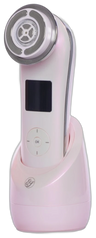
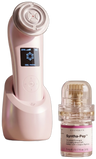
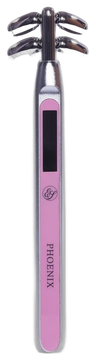
At home. A micro-infusion kit like ours stamps short needles that are fixed at the head and delivers a sealed serum through them in the same motion. For the session itself, see our guide to PDRN microneedling at home.
PDRN treatment cost per session, by route
| Route | Per session, as listed | Usual first course | Where the price comes from |
|---|---|---|---|
| Injection: Rejuran or another polynucleotide | $599 to $950; $1,600 for a two-syringe session | Usually three or four sessions, two to six weeks apart | Five US clinics' own price pages, listed below. The price includes the product, which clinics often charge by the syringe. |
| Clinic PDRN microneedling | $500 to $925 | Usually three sessions, three to six weeks apart | Seven US clinics' own price pages, listed below. Microneedling with a PDRN or polynucleotide serum applied to the channels. |
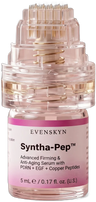
| At home: EvenSkyn MicroInfuser | $45.00, or $27.00 with code BLACK40 until 30 Nov | Four sessions in one kit, one every two weeks | Our store price divided by four. Each session uses one sealed single-use Syntha-Pep PDRN ampoule and one fresh sterile needle head. |
Clinic prices were read from each clinic's own website on 6 November 2026, as listed and before any tax or consultation fee the clinic may add. They are US prices and change often, so check before you book. Ours loads live from our store.
The clinic prices behind these ranges
| Clinic | What it lists | Price, as listed |
|---|---|---|
| NYC Rejuvenation Clinic, New York, NY (rejuvenationny.com) | Rejuran salmon DNA injections | $599 |
| AMMA Aesthetics, South Miami, FL (ammaaesthetics.com) | Salmon DNA (polynucleotide) injections across the face | $600 a session |
| Diamond Advanced Aesthetics, New York, NY (diamondadvancedaesthetics.com) | Rejuran Healing Essence by injection, 2 ml | $750 |
| Tribeca Park Dermatology, New York, NY (triparkderm.com) | Rejuran by syringe or Glowpin | $850 for one syringe, $1,600 for two, per session |
| AIVI Aesthetics, Agoura Hills, CA (aiviaesthetics.com) | Rejuran Healer by injection | $950 a session |
| AMMA Aesthetics, South Miami, FL (ammaaesthetics.com) | SkinPen microneedling with polynucleotides, full face | $500 |
| Reviv Beauty Med Spa, Sanford, FL (revivbeauty.com) | SkinPen Elite with VAMP PDRN | $525; buy two sessions, get the third free |
| Forbidden Well, New York, NY (forbiddenwell.com) | PDRN facial delivered with microneedling | $655; three sessions for $1,200 |
| Rev Med Spa, Quartz Hill, CA (revmedspas.com) | SkinPen microneedling with salmon PDRN | $675 face; $725 face and neck |
| Skinsation LA, Los Angeles, CA (skinsationla.com) | Microneedling with PDRN polynucleotides, 60 minutes | From $800 |
| Allure Esthetic, Seattle, WA (allureesthetic.com) | Microneedling with Rejuran | $800 ($300 microneedling plus $500 Rejuran) |
| Beauty Boost Med Spa, Newport Beach, CA (beautyboostmedspa.com) | Microneedling, with salmon DNA applied after | $925; three sessions for $2,600 |
The Rejuran name is also on a skincare line, and that is a different purchase. Sephora listed the Rejuran Turnover Ampoule c-PDRN 0.5% at $52.00 and the Nutritive Cream c-PDRN 0.2% at $54.00 on 6 November 2026. Those are topical products for daily use, not the clinic injection. We score 44 PDRN serums and creams by label in our PDRN serum and cream picks.
What a first course costs
Clinics sell these as a series, so the course price is the realistic figure. The totals below use each clinic's own package price where it lists one, and its session price multiplied out where it does not.
| Route | A first course | Listed total | Upkeep the clinics describe |
|---|---|---|---|
| Injection | Three or four sessions | $1,800 to $3,800: three at AMMA's $600 is $1,800, four at AIVI's $950 is $3,800 | AMMA: a maintenance session every six to twelve months |
| Clinic PDRN microneedling | Three sessions | $1,050 to $2,600 as packages: $1,050 at Reviv (buy two, get the third free), $1,200 at Forbidden Well, $2,600 at Beauty Boost | Reviv: maintenance every three to four months |
| At home | One kit, four sessions over eight weeks | $179.98, or $107.99 with code BLACK40 until 30 Nov | One session every two weeks. A second kit covers sessions five to eight. |
What the price difference is actually buying
It is tempting to put $45.00 a session next to $599 for an injection and call the at-home route the same treatment for a fraction of the price. That is the wrong reading. The gap is mostly a depth gap and a supervision gap.
A clinician injecting places the product in the skin directly. A practitioner microneedling can work deeper than a 0.5 mm needle, adjusts to the skin in front of them, and carries the training to decide when not to treat at all. With injections the clinic is also buying the product, often by the syringe: Tribeca Park Dermatology in New York lists one syringe at $850 a session and two at $1,600. None of that is in a box. What the at-home kit buys instead is a routine and privacy at a price that does not need a course commitment, with a needle length that is fixed at the head and cannot be changed. For some people that fixed limit is the feature rather than the limitation.
The claim we will not make. Nobody has published a measurement of PDRN delivery through a microchannel at any depth, in clinic or at home, and nobody has run a controlled trial of PDRN microneedling against microneedling alone. An outcome comparison between these routes would be invention. What this page compares is cost, depth and supervision, which are things that can actually be checked.
Are PDRN and Rejuran injections approved in the US?
Not as of 6 November 2026. Polynucleotides are not among the four materials on the FDA's list of approved dermal fillers, which are hyaluronic acid, calcium hydroxylapatite, poly-L-lactic acid and PMMA[4]. When we searched the FDA's premarket approval, 510(k) and device registration records through openFDA the same day, we found no entry for Rejuran, polynucleotide or PDRN[5]. Korean business press reported in August 2026 that Rejuran's maker, PharmaResearch, is seeking FDA medical device approval and estimates that Rejuran could reach the US market around 2031 to 2032[6].
Elsewhere the status differs. Korean trade press reported a European class III CE certificate for Rejuran in January 2017[7]. In Canada, a 2018 Health Canada advisory listed Rejuran and Rejuran i among unauthorized injectable products seized from a Vancouver clinic[8].
That matters for cost because an injection price pays for a product as well as a procedure. Before you book one, ask the clinic which product it uses, where it came from, and who will inject it. For fillers, the FDA tells consumers the provider should use properly labelled, sealed vials or pre-filled syringes of an FDA-approved product[9]. Several US clinics instead apply Rejuran or PDRN to the skin during microneedling, which is the second row of the cost table above.
Where salmon DNA facials fit
"Salmon DNA facial" and "salmon sperm facial" are spa names rather than a separate treatment. They are one of the routes above, most often microneedling with a PDRN or polynucleotide serum: of the 15 US clinic listings in the dated price table in our guide to the salmon sperm facial, 12 were microneedling or microchanneling treatments. The city-by-city prices live there, so we do not repeat them here.
Which route fits which situation
| If this is you | Route | Why |
|---|---|---|
| Treating scarring, deep textural damage, or anything you would call a medical concern | Clinic | Depth and clinical judgement are the whole point. An at-home device is the wrong instrument and we would rather say so than sell past it. |
| You want the product placed in the skin by injection, and the budget is there | Clinic injection | Injection is the route almost all of the published clinical work used. In the US, ask which product the clinic uses first; see the approval section above. |
| You want practitioner-set depth without an injection | Clinic microneedling | A course of three ran $1,050 to $2,600 as packages at the clinics we read, for depth that a fixed needle length cannot reach. |
| You want a maintained routine rather than a course, at a needle length you cannot change | At home | One kit, $179.98, or $107.99 with code BLACK40 until 30 Nov, covers four sessions on your own schedule, one every two weeks, with the needle length set by the hardware rather than by you. |
| You already own a microneedling pen | Check the serum first | A serum used with needles has to clear a stricter bar than one applied by hand. Our serum screening guide sets out that test. |
| You are pregnant or breastfeeding, have a personal or family history of keloid scarring, have taken oral isotretinoin in the last six months, or have an active skin infection | None of these | These are standard reasons to avoid needle-based treatment. Ask a clinician, not a product page. |
Where our kit sits, stated plainly
We make the EvenSkyn MicroInfuser, an at-home micro-infusion system with a 0.5 mm nominal needle length, fixed at the head, and a Syntha-Pep PDRN serum delivered from a sealed single-use ampoule through the channels in the same motion that creates them.
The honest case for it is a chain of published evidence, not an outcome claim: PDRN's targets are in the dermis[2], PDRN is far too large to be expected to cross intact stratum corneum[1], and polynucleotides are in active clinical use by injection for exactly the tissue effects people want[3]. A delivery route is needed. Ours is one.
The honest limits are equally clear. Nobody has measured PDRN delivery through a microchannel, including us. This is a cosmetic device, not a medical one. And it does not reach the depth a practitioner works at, which is the thing the clinic price is buying. The full evidence review, including the studies that cut against us, is on our PDRN absorption page. If you are comparing kits rather than routes, that is the micro-infusion buyer's guide.
One sourcing fact belongs here because almost every kit in this category leaves it out: supplier documentation reviewed in August 2026 records the PDRN in Syntha-Pep as biosynthetic and not derived from salmon. Every competitor kit we have found that discloses a source uses salmon-derived PDRN. On current evidence the molecule behaves the same either way, so read this as a known, controlled origin, not as a performance claim. The same documentation records the Soluble Collagen as produced by yeast fermentation rather than extracted from animal sources. Those declarations cover those two ingredients only, and EvenSkyn makes no vegan claim because no formula-level attestation is on file. Correction, 4 September 2026: earlier versions of this page described the collagen as marine-derived and advised against use with a fish or shellfish allergy on that basis. That premise is not what the documents say. This is not a statement that the serum is safe for anyone with a fish or shellfish allergy: we hold no allergen testing on the finished formula, and the full ingredient declaration is published so you can read it and speak to a doctor before a first session. The source table for the whole category is on the PDRN absorption page linked above.
Questions people ask
How much do PDRN injections cost?
At the five US clinics whose price pages we read on 6 November 2026, injected Rejuran or another polynucleotide cost $599 to $950 a session: $599 at NYC Rejuvenation Clinic, $600 at AMMA Aesthetics in South Miami, $750 for 2 ml at Diamond Advanced Aesthetics in New York, $850 for one syringe at Tribeca Park Dermatology in New York and $950 at AIVI Aesthetics in Agoura Hills, California. Tribeca lists $1,600 for a two-syringe session. Most of these clinics suggest three or four sessions to start, which comes to $1,800 to $3,800 at their listed prices.
How much does Rejuran cost?
As an injection, listed as Rejuran, Rejuran Healer or Rejuran Healing Essence, it ran $599 to $950 a session at the four US clinics we found that name it on their price pages on 6 November 2026, and at $1,600 for a two-syringe session at Tribeca Park Dermatology in New York. Added to microneedling it costs less: Allure Esthetic in Seattle charges $500 for the Rejuran on top of $300 for the microneedling. Rejuran-brand skincare is a separate product line: Sephora listed the Turnover Ampoule at $52.00 and the Nutritive Cream at $54.00 the same day.
How much is PDRN microneedling?
At the seven US clinics whose price pages we read on 6 November 2026, microneedling with a PDRN or polynucleotide serum cost $500 to $925 a session: $500 at AMMA Aesthetics, $525 at Reviv Beauty Med Spa, $655 at Forbidden Well, $675 for the face at Rev Med Spa, from $800 at Skinsation LA, $800 with Rejuran at Allure Esthetic and $925 at Beauty Boost Med Spa. Packages of three ran $1,050 to $2,600. Our guide to microneedling cost in 2026 has the ranges for standard and RF microneedling.
How many sessions do you need, and what does a course cost?
Clinics usually sell three or four sessions to start. The injection clinics we read space them two to six weeks apart, and the microneedling clinics three to six weeks apart, with upkeep every three to twelve months depending on the clinic. At home our kit is used once every two weeks, and one kit is four sessions, so a session costs a quarter of the kit price.
Are PDRN or Rejuran injections FDA approved?
No. Polynucleotides are not among the materials on the FDA's list of approved dermal fillers, and when we searched the FDA's premarket approval, 510(k) and device registration records through openFDA on 6 November 2026 we found no Rejuran, polynucleotide or PDRN entry. Korean business press reported in August 2026 that Rejuran's maker, PharmaResearch, is seeking FDA medical device approval and estimates that Rejuran could reach the US market around 2031 to 2032. In Europe, Korean trade press reported a class III CE certificate for Rejuran in January 2017.
Is PDRN microneedling better than PDRN injections?
They are not the same treatment and nobody has run the head to head study that would settle it. Injection places PDRN directly at depth and is the route almost all of the published clinical work used. Microneedling creates temporary channels and relies on the serum travelling through them, which is a less direct route. The published outcomes people cite for PDRN come from injected PDRN in medical settings, and those results do not transfer to a topical product applied through channels, whether that happens in a clinic or at home.
Can you do PDRN microneedling at home?
You can use an at-home micro-infusion device with a PDRN serum. It is not the same procedure a clinic performs. A clinic uses a practitioner-set depth on a professional device. An at-home stamp like ours has a 0.5 mm nominal needle length, fixed at the head, that cannot be adjusted. Nominal length is not delivery depth, and nobody has measured where the serum ends up with our kit or any other. It is a real delivery route, and a shallower one than a clinic works at.
Does PDRN microneedling actually work?
The mechanism is reasonable and the outcome evidence for this specific combination does not exist. PDRN is far larger than the rough 500 Dalton limit for passive skin penetration and its targets sit in the dermis, so a delivery route is needed. Microchannels do measurably increase delivery of large molecules. What nobody has published, including us, is a measurement of PDRN delivery through a microchannel, or a controlled trial of PDRN microneedling against microneedling alone. Anyone telling you the combination is proven is going beyond the evidence.
What is the difference between PDRN microneedling and micro-infusion?
Microneedling makes channels and the serum is applied to the surface before or after, so it has to find its way in. Micro-infusion delivers the serum through the needles in the same motion that creates the channels, from a sealed ampoule. The practical difference is that micro-infusion does not leave an open channel sitting exposed while you apply something to it, and the dose is contained rather than spread on the skin. Both are needle-based delivery. The distinction is when the serum arrives.
How often can you do PDRN microneedling?
Clinic courses are spaced by weeks because the depth worked at needs recovery time: the clinics we read space sessions three to six weeks apart. Our at-home kit is used once every two weeks, in the evening, which is the cadence on its instructions. Channels close after use, and treating again before the skin has settled gives you irritation rather than a better result. If you are unsure, less often is the safer error.
References
- Bos JD, Meinardi MM. The 500 Dalton rule for the skin penetration of chemical compounds and drugs. Exp Dermatol. 2000;9(3):165-9. PubMed
- Squadrito F, Bitto A, Irrera N, Pizzino G, Pallio G, Minutoli L, Altavilla D. Pharmacological Activity and Clinical Use of PDRN. Front Pharmacol. 2017;8:224. PubMed
- Lee KWA, Chan KWL, Lee A, Lee CH, Wan J, Wong S, Yi KH. Polynucleotides in Aesthetic Medicine: A Review of Current Practices and Perceived Effectiveness. Int J Mol Sci. 2024;25(15):8224. PubMed
- US Food and Drug Administration. FDA-Approved Dermal Fillers. Content current as of 9 November 2020; read 6 November 2026. FDA
- openFDA device premarket approval, 510(k) and registration and listing records, searched 6 November 2026 for Rejuran, polynucleotide and polydeoxyribonucleotide: no matches. openFDA query
- Edaily (Korea), 27 August 2026, on PharmaResearch's plans for US approval of Rejuran. Edaily
- Daily Pharm (Korea), 23 January 2017, on Rejuran's European class III medical device CE certificate. Daily Pharm
- Health Canada. Unauthorized injectable drugs and medical devices seized from Revoskin in Vancouver, B.C., may pose serious health risks. 7 March 2018. Health Canada
- US Food and Drug Administration. Dermal Filler Do's and Don'ts for Wrinkles, Lips and More. Content current as of 7 July 2023. FDA
This page is maintained by the EvenSkyn research team. It carries no clinician byline because no clinician has reviewed it. Clinic prices were read on 6 November 2026. Last updated 6 November 2026.