What Is PDRN? The Complete Guide to Benefits, Evidence and Every Way to Use It (2026)
PDRN (polydeoxyribonucleotide) is purified DNA in short fragments. What it does in skin, what the human trials show, why delivery decides results, and every way to use it, ranked: at-home micro-infusion, patches, serums, creams and clinic treatments.
Published
24 min read
Published by EVENSKYN, which makes and sells at-home beauty devices.
An evidence guide, 24 sources checked, updated 14 November 2026
What the research on PDRN supports, where it stops, and why the route it takes into your skin matters more than the bottle it comes in.
EvenSkyn Skin Science Desk. We make the MicroInfuser and Syntha-Pep, which this guide recommends. No clinician reviewed this version.
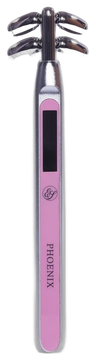
Illustrative still life.
At a glance
What it is. PDRN (polydeoxyribonucleotide) is purified DNA in short fragments, traditionally taken from the sperm of salmon trout or chum salmon and now also made without fish, for example from bacteria.1,2 In skin cells it works mainly through the adenosine A2A receptor, a switch tied to tissue repair and calmer inflammation.1
The catch. PDRN is far too big to soak through intact skin. When researchers tracked a PDRN eye cream on a volunteer’s forearm, about 3% had penetrated after a full day, reaching just past 20 micrometres.3 That makes delivery the thing that decides your results, more than the brand on the bottle. At home, micro-infusion, which applies the serum as each needle stamp opens the skin, is the most direct route we know of. Patches, serums and creams follow, in that order.
Key takeaways
01Classic PDRN fragments weigh 50 to 1,500 kilodaltons,1 which is 100 to 3,000 times the roughly 500 daltons that pass through intact skin.4
02The strongest human data come from PDRN or PN placed under the surface, for example injected after a skin procedure.5 One randomized trial also found a 0.1% PDRN eye cream beat 0.1% retinol over 28 days.3
03Microneedles have carried DNA itself into skin, in mice and in human skin samples,6,7 and the channels they open reseal within about two hours when left uncovered.8
04Our at-home ranking: micro-infusion, then dissolving microneedle patches, then serums, then creams and masks. For acne scars, go to a clinic.
05Nobody, us included, has published a trial of at-home PDRN micro-infusion. Where this guide infers rather than reports, it says so.
What PDRN is, and how big it is
PDRN stands for polydeoxyribonucleotide. The pharmaceutical version is a mix of DNA fragments purified from the sperm of salmon trout (Oncorhynchus mykiss) or chum salmon (Oncorhynchus keta), cleaned of the proteins that could set off an immune reaction.1 It began as a registered drug for tissue repair, and wound healing is still where most of its research sits.1,9 Aesthetic medicine picked it up for recovery and skin quality, and it is now sold as gels, creams, serums, masks and injectables.10
PDRN is DNA cut into fragments. Illustrative still life.
Labels use three overlapping words:
PDRN for the shorter chains. A 2025 review proposes keeping the name for chains under 1,500 kilodaltons.10
PN (polynucleotides) for longer chains, the stuff of injectable “skin boosters” such as Rejuran.10,5
Sodium DNA or Polydeoxyribonucleotides on ingredient lists. Brands are loose with all three, so read what the list actually says.
Salmon is no longer the only source. A 2025 study made PDRN from the bacterium Lactobacillus rhamnosus and found it acted through the same A2A receptor in lab tests, with stronger antioxidant activity and better cell migration than salmon PDRN.2 Extraction methods and cosmetic uses are reviewed in detail elsewhere.11
Size is what matters for skin
Using the standard average of about 650 daltons per DNA base pair, the salmon PDRN in that 2025 comparison (200 to 800 base pairs) works out to roughly 130,000 to 520,000 daltons, and the microbial PDRN (under 100 base pairs) to under about 65,000.2 That is our arithmetic, and it sits inside the classic range.1 The PDRN in our Syntha-Pep serum measures 31 kilodaltons on average as a raw material.12 Every one of these is dozens to thousands of times past the 500 dalton rule of thumb for absorption through intact skin.4 Much smaller fragments, down to about 1 kilodalton, have been described,10 but shrinking PDRN may change what it does: its receptor activity appears to depend on molecular weight, DNA origin and how it is made.1
Fig. 1 | PDRN is far larger than what passes intact skin. Molecular weight on a log scale. Dashed line, the 500 dalton rule of thumb for absorption through intact skin.4 Points are single values, bars are reported ranges and the arrow marks an upper bound. Pharmaceutical range as reported;1 salmon and microbial values are our arithmetic at about 650 daltons per base pair from the fragment lengths reported;2 Syntha-Pep from our raw-material record;12 niacinamide and retinol from their chemical formulas.
How big is a PDRN fragment?
Pick a preset or drag the slider. We convert at about 650 daltons per base pair.
100 Da500 Da line2,000,000 Da
Syntha-Pep average (measured): about 31,000 daltons, roughly 62 times the 500 dalton line.
Is PDRN a miracle ingredient?
It gets sold as one. The lab biology is genuinely good, and specific:
What PDRN does
Where it was shown
What it means for your face
Engages adenosine A2A receptors, and supplies building blocks for the salvage pathway cells use to make DNA
Each row comes from the cited source. Cell, animal and wound findings do not prove cosmetic results in people.
So, a miracle? No. PDRN is one of the better-founded ingredients of the current trend cycle, and it has been reviewed as a promising anti-aging agent.17 But most of the striking results come from PDRN that ended up under the skin’s surface. The rest of this guide is about how to get it there.
What the human studies show
Use
What the study found
Our grade
PN injected right after fractional needle radiofrequency
Split-face trial, 25 women, saline on the other side, measured at 6 weeks. Pore score +4.79 vs +0.95 and wrinkle score +5.04 vs +3.67. Water loss through the skin fell from 8.19 to 3.85 on the PN side only, and hydration rose more on the PN side. No difference in dermal thickness or elasticity.5
Moderate Controlled but small; randomization not stated
0.1% PDRN eye cream vs 0.1% retinol
Randomized, double-blind split-face trial, 31 women aged 35 to 55 with sensitive skin, 28 days. Crow’s feet wrinkle area and number fell about 20 to 23%, against about 6 to 7% for retinol. Dermal thickness and density, eye bags and tear trough improved about two-fold more; elasticity and firmness about 1.8-fold more. No adverse reactions reported.3
Moderate One trial; several authors are affiliated with biotechnology companies
PDRN injections with a botulinum toxin technique for acne scars
Narrative reviews. One concludes that more controlled studies are needed.19,20
Reviews Not trials
At-home micro-infusion of PDRN
No published trial of any brand, ours included. The case rests on delivery evidence, set out below.
Mechanistic
Grades are ours. Moderate means a controlled human trial exists. Early means the design is uncontrolled or unknown to us. Mechanistic means the case rests on how delivery works, not on a trial of the product.
Fig. 2 | The two strongest human results.a, Reduction in crow’s feet wrinkle area and number at day 28 in a randomized, double-blind split-face trial of a 0.1% PDRN eye cream against 0.1% retinol in 31 women; bars span the approximate values given in the study text.3b, Pore and wrinkle score change at week 6 with polynucleotide (PN) injected after fractional needle radiofrequency, against saline on the other side of the face, in 25 women; higher means more improvement.5
We also ran an internal, participant-blinded study of our own kit from January to June 2026. It is unpublished and has not been independently checked, so we quote nothing from it.12 Every number on this page comes from a source you can look up.
Why delivery decides results
The outer layer of skin is built to keep large molecules out. As a rule of thumb, a compound needs to weigh under about 500 daltons to be absorbed through intact skin.4 PDRN is nowhere near that (Fig. 1).
The 2026 eye cream trial gives the best look yet at how far topical PDRN actually gets. In a lab-grown skin model the PDRN signal rose over 24 hours. In pig skin, a labelled version reached the dermis at 8 to 12 hours. On one volunteer’s forearm, relative penetration was 0% at 4 hours, about 2% at 8 hours and about 3% at 24 hours, with the signal just past 20 micrometres into the upper living layer.3 The authors call the human data descriptive, and their method cannot fully separate applied PDRN from the skin’s own DNA. It still fits the size problem: some gets in, slowly, and only a small share.
Fig. 3 | How far topical PDRN got, next to needle lengths. Depth drawn to scale in micrometres. The topical value is the deepest PDRN signal measured on one volunteer’s forearm at 24 hours.3 Needle lengths are from our product specifications and are not delivery depths; nobody has measured where PDRN goes after an at-home session, including us. Layer boundaries are drawn for orientation only.
Formulation helps at the margins. Wrapping PDRN in liposomes raised skin permeation 1.22 times and skin retention 1.40 times over plain PDRN in a lab diffusion test.21 Shorter fragments may absorb better, though the microbial PDRN study suggested this rather than measured it.2 A 2026 review names fast breakdown and diffusion as PDRN’s weak points and looks at pairing it with hyaluronic acid, growth factors, lasers and shockwave therapy.22
Physical routes are a different order of change. Microneedles make micron-scale channels through the outer layer that large molecules can follow,23 and clinics have used microneedling to get topical products into skin for years.24 Our PDRN absorption explainer goes further into what topical PDRN can reach.
Our reading of the evidence
Our inference, clearly labelled
This section is ours. It connects published findings that, as far as we can tell, nobody has put side by side for PDRN. Every step is cited. The conclusion is not proven, and we say below what would prove it wrong.
PDRN is DNA, and what it does depends on its size and origin.1
Intact skin passes little above about 500 daltons.4 Classic PDRN, and ours at 31 kilodaltons, is 60 to 3,000 times bigger (Fig. 1).
Topical PDRN can still work, with a small fraction. The eye cream beat retinol in a randomized trial, yet in the same paper only about 3% had penetrated one volunteer’s skin after a day.3
Formulation tweaks move delivery by tens of percent. Liposomes: 1.22 times.21
Breaking the barrier moves DNA delivery by orders of magnitude. Microneedle arrays raised activity from naked DNA up to 2,800 times above topical application in mice,6 and microneedles delivered DNA that cells in human skin samples went on to express.7 Those studies used plasmid DNA, a much longer form of DNA than PDRN fragments.
The window is short. In people, microneedle channels resealed within 2 hours when left uncovered, and stayed open 3 to 40 hours under occlusion, depending on needle design.8
Fig. 4 | Formulation tweaks versus breaking the barrier. Fold change over plain PDRN or topical application, log scale. Liposomal PDRN in a lab diffusion test.21 Microneedle arrays, reporter gene activity from naked plasmid DNA in mice, upper value reported.6 Different studies, measures and models: the figure shows the size of change each approach has produced, not a head-to-head comparison.
What we infer. If a cream that gets roughly 3% in can beat retinol around the eyes, then getting more PDRN past the outer layer should matter more than anything else on the label. Every needle-based route is a bet on that.
What we infer about timing. Because open channels reseal within hours, serum that is already on the skin as each channel opens has the longest window to get in. A system that applies serum in the same motion as each stamp uses that window better than rolling first and applying serum after.8
Fig. 5 | Microneedle channels close within hours. Time to skin barrier recovery after microneedle insertion, measured in people. Longer, more numerous and wider needles slowed resealing.8
What we infer about size. Chasing ever-smaller fragments to sneak PDRN through intact skin may change what it does,1 although short microbial PDRN still worked through the A2A receptor in the lab.2 Channels make size less of a constraint, so a formula does not have to trade activity for absorption.
Our hypothesis. At-home micro-infusion puts more PDRN into the living layers of skin than any topical product. Nobody has measured this for PDRN, including us. What would prove us wrong: a head-to-head study in which topical PDRN matches channel delivery on skin measurements, or one showing that channel delivery adds irritation without adding benefit.
Fig. 6 | Our reading of the evidence. The six cited findings listed above lead to our inference and to a hypothesis nobody has tested yet, including us. The inference and the hypothesis are ours, not the cited authors’.
What we recommend, and why
Our recommendation follows from the chain above, and yes, it points at our own product. The logic is laid out so you can disagree with it.
Firmer, smoother skin at home, and fine with fine needles: micro-infusion every two weeks. It is the at-home route built to get a large-molecule serum below the outer layer.
Under-eyes: a well-made PDRN eye cream has the best topical trial behind it.3 Dissolving microneedle patches are the needle option for that area.
Hydration and calm only: a serum is enough.
Acne scars or deep texture: a clinic. Home needles are too short for scars.
Our pick, and yes, we make it
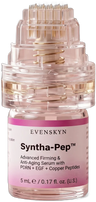
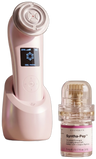
EvenSkyn MicroInfuser with Syntha-Pep PDRN serum
Four sealed sessions of PDRN micro-infusion, built to put the serum on the skin as each channel opens.
How it deliversA sterile microneedle head clicks onto a sealed, single-use 5 mL ampoule, and the serum is applied in the same motion as you stamp. Each session uses a fresh head and a fresh ampoule, so the serum never sits in an open chamber.
Needles0.5 mm nominal length, fixed at the head, 24 karat gold-plated, single use and gamma-sterilised. Needle length is not delivery depth, and we do not quote a depth.
The PDRNBiosynthetic, not salmon-derived, per our supplier’s written declaration. 2,000 ppm (0.2%), with a raw-material average of 31 kilodaltons.12 That is twice the concentration of the eye cream in the trial above, though concentration tells you what is in the ampoule, not what reaches your skin.
Alongside itsh-Oligopeptide-1, Copper Tripeptide-1 (GHK-Cu), a four-form hyaluronic acid system, niacinamide, ergothioneine and Centella Asiatica extract. Full list in what is in Syntha-Pep; batch certificates in the Transparency Lab.
StatusA cosmetic device, not a medical device and not FDA-cleared. 60-day money-back guarantee on unused treatments for US and Canada residents.
$179.98
Four treatments, one every two weeks in the evening, 5 to 10 minutes each.
What it will not do: match injections or clinic-depth needling, or treat scars.
What PDRN sessions cost
Sessions: 4 (one kit is four; every two weeks for six months is 13)
MicroInfuser at home:180.00 USD(45.00 USD per session)
Clinic microneedling with PDRN:2,000 to 3,700 USD
Clinic injections:2,396 to 3,800 USD
At home: kit price divided by its four treatments. Clinics: $500 to $925 and $599 to $950 per session, read 6 November 2026. Clinic sessions go deeper and are usually spaced further apart, so this compares cost, not results.
Every way to use PDRN, ranked
We ranked at-home options by how directly they can put PDRN below the outer layer, then listed clinic options separately.
Option
How PDRN gets in
Evidence
Cost per session
Best for
1At-home micro-infusion
Fine needles open channels while the serum is applied
Microneedle delivery well studied; no published product trial
Kit price divided by four (calculator above)
Firmness and texture without clinic prices
2Dissolving microneedle patches
Tiny needles made of the formula dissolve into the top layers
Delivery mechanism established; little PDRN-specific data
Maximum effect, with a few days of bumps and swelling
Clinic prices are per session, before tax and consultation fees, from US clinic websites read on 6 November 2026. Sources are listed on our PDRN cost comparison.
Find your route in three questions
At-home micro-infusion, every two weeks. It is the at-home route built to get PDRN below the outer layer, at a fraction of clinic prices per session. Read why
At-home micro-infusion, in practice
A micro-infusion system pairs a head of short, fine needles with a serum supply, so serum and channels arrive together. Rolling a dry roller and then pressing serum on is a weaker version of the same idea, because the serum arrives after the channels start to close.8
Illustration, not to scale. Serum sits on the skin as each stamp opens fine channels; how far it travels after that has not been measured.
Where the evidence stops. No brand has published a trial of at-home PDRN micro-infusion, ours included. Home needles are also too short for scar work. Our guide to the molecules used in micro-infusion covers the depth question.
Running a session well
Evening, on clean, dry skin, once every two weeks and no more often.
Use a fresh head and ampoule each time. Light, overlapping stamps; pressing harder does not help.
Keep retinoids, exfoliating acids and vitamin C off the area around a session. Our how-to guide gives the timings.
Afterwards, only a plain, fragrance-free moisturiser, and SPF 30 or higher the next morning.
Do not run radiofrequency on freshly micro-infused skin.
PDRN patches: hydrogel and microneedle
Two very different products get sold as “PDRN patches”:
Hydrogel or sheet eye patches sit on the skin for 15 to 30 minutes, like a mask. They hydrate and soothe, with the same surface limit as any topical.
Dissolving microneedle patches carry the formula in tiny needles that dissolve into the top layers over a few hours. More gets past the surface than with hydrogel, but each patch holds a small, fixed dose for a small area.
If the box does not say “microneedle”, assume hydrogel. Our own under-eye micro-infusion patches carry 1,800 dissolving needles, each about 0.25 mm long, made from hyaluronic acid and peptides. They do not contain PDRN, and they do contain a gentle retinoid. Our evidence review of microneedle eye patches covers what they can and cannot do.
PDRN serums, creams, toners and masks
This is where most people meet PDRN. A serum can hydrate, calm and support the barrier, and the 2026 eye cream trial shows a good formula can do more.3 Creams, toners and masks usually carry less.
Five things to check on the label:
Source. Salmon, microbial or biosynthetic. It matters for allergies and for ethics.
Position on the list. Near the end usually means a trace.
Fragment size or concentration. Rarely disclosed. Brands that publish it are telling you something.
The rest of the formula. Fragrance and harsh surfactants add irritation and nothing else.
Whether it is made for channels. Never needle or stamp a product that was not designed for it. Our PDRN serum checker flags the usual problem ingredients.
Microneedling with PDRN, often sold as the “salmon DNA facial”, pairs clinic-depth needling with a PDRN or PN product applied into the channels. Seven US clinics we checked on 6 November 2026 charged $500 to $925 per session, and several sell it in packs of three. Our salmon sperm facial guide compares it with home use.
Injections place PN or PDRN in the dermis and carry the strongest human data, such as the 25-patient split-face trial after needle radiofrequency.5 Five US clinics we checked charged $599 to $950 per session. Expect redness, small bumps and some swelling for a few days. As of this writing we found no FDA approval for injecting PDRN or PN for cosmetic use in the US, so ask any US provider exactly what they are injecting.
PDRN for specific skin concerns
Concern
What the evidence says
Best route
Fine lines and crepey under-eyes
A PDRN eye cream cut crow’s feet wrinkles about three times as much as retinol over 28 days3
A well-made eye cream; patches for the eye area
Loss of firmness
Fibroblast growth in the lab;13 firmness needs PDRN in the dermis
Micro-infusion at home, injections in clinic
Large pores and rough texture
Injected PN improved pore scores after needle radiofrequency5
Choose the route before the product. Size is the bottleneck, so delivery decides more than concentration.4
Get it on while the skin is open. Channels left uncovered reseal within about two hours.8
Apply to clean skin, before heavier layers. A cream on top seals it in; a cream underneath is in the way.
Keep acids and retinoids for other nights. With channel delivery they add irritation, not results.
Pair it with recovery. Its best-supported role is calming and repair after a procedure.15,20
Give it weeks. The topical trial showed differences by day 14 and measured at day 28.3 The injection trial measured at six weeks.5
Who should avoid PDRN, or check first
Topical PDRN is generally well tolerated, and the eye cream trial reported no adverse reactions.3 Most of the risk sits in needle-based use. Skip it, or speak to a doctor first, if any of these apply:
Pregnancy or breastfeeding.
A personal or family history of keloid scarring.
Oral isotretinoin within the past six months.
Blood thinners, unless your doctor agrees.
Active, inflamed acne, or broken, sunburned or irritated skin in the area.
Known allergies: read the full ingredient list first. With a fish allergy, check the PDRN source.
Frequently asked questions
What is PDRN in skincare?
PDRN, short for polydeoxyribonucleotide, is a mix of purified DNA fragments, traditionally from the sperm of salmon trout or chum salmon and now also made without fish, for example from bacteria. It works mainly through the adenosine A2A receptor, which is linked to tissue repair and calmer inflammation.
What does PDRN do for your skin?
In lab and injection studies it supports fibroblast growth, repair of UVB damage to DNA and wound healing, and it calms inflammation. As a skincare ingredient, one randomized trial found a 0.1% PDRN eye cream reduced crow’s feet wrinkles by about 20 to 23% over 28 days, against about 6 to 7% for 0.1% retinol.
Is PDRN really salmon sperm?
Traditional PDRN is purified from the sperm of salmon trout or chum salmon. Microbial and biosynthetic versions now exist, so check the label or ask the brand. The PDRN in our Syntha-Pep serum is biosynthetic, not salmon-derived, according to our supplier’s written declaration.
Does topical PDRN actually work?
Somewhat. A PDRN eye cream beat retinol in one randomized trial, but in the same study only about 3% of the PDRN had penetrated a volunteer’s skin after 24 hours. Topical PDRN works with a small fraction of what you apply.
What is the best way to use PDRN at home?
Micro-infusion, which applies the serum as fine needles open the skin, is the most direct at-home route. Dissolving microneedle patches come next for small areas, then serums, then creams and masks. No trial of at-home PDRN micro-infusion has been published, ours included.
Is PDRN better than retinol?
In one 28-day trial around the eyes, a 0.1% PDRN cream outperformed 0.1% retinol, with no reported reactions. Retinol has decades more evidence overall. They can share a routine on different nights, but keep retinoids away from micro-infusion sessions.
What is the difference between PDRN and PN?
Both are DNA-derived. A 2025 review proposes calling chains under 1,500 kilodaltons PDRN and longer chains PN. PN is mostly used in injectable skin boosters such as Rejuran.
How long does PDRN take to work?
In the eye cream trial, differences showed by day 14 and were measured at day 28. In the injected PN trial, results were measured at 6 weeks. With any at-home routine, change is gradual and depends on keeping it up.
Are PDRN eye patches worth it?
Hydrogel PDRN patches hydrate and soothe, much like a mask. Dissolving microneedle patches get more past the surface. If the box does not say microneedle, assume it is hydrogel.
Is PDRN safe?
It is generally well tolerated, and the eye cream trial reported no adverse reactions. Most of the risk sits in needle-based use: avoid it in pregnancy or breastfeeding, with a history of keloid scarring, within six months of oral isotretinoin, or on broken or inflamed skin, and check with a doctor if you take blood thinners. With a fish allergy, check the PDRN source.
How we put this guide together
On 14 November 2026 we checked every study cited here against its publisher record, and we report only what we could read in its title, abstract or full text. Where we could not read a study’s design, we say so. The figures are drawn by us from the cited numbers, and our own arithmetic is labelled. The two still-life photographs are illustrations, not product photography. Clinic prices come from US clinic websites read on 6 November 2026. Product facts come from our product page, supplier documents and the Syntha-Pep Transparency Lab.
Conflicts: we make the MicroInfuser and Syntha-Pep, and this guide recommends them. No clinician reviewed this version. This guide replaces our earlier PDRN evidence review at the same address. General information, not medical advice: talk to a doctor before needle-based treatments if you have a medical condition.
References
Squadrito F, Bitto A, Irrera N, Pizzino G, Pallio G, Minutoli L, Altavilla D. Pharmacological activity and clinical use of PDRN. Frontiers in Pharmacology. 2017;8:224. doi:10.3389/fphar.2017.00224
Chae D, Oh SW, Choi YS, Kang DJ, et al. First report on microbial-derived polydeoxyribonucleotide: a sustainable and enhanced alternative to salmon-based polydeoxyribonucleotide. Current Issues in Molecular Biology. 2025;47(1):41. doi:10.3390/cimb47010041
Ye R, Wang Q, Du L, Li L, Hu F. Topical medium-length PDRN enhances dermal extracellular matrix repair in photodamaged skin via PI3K-Akt/TGF-β-regulated pathways. PLoS One. 2026;21(7):e0350905. doi:10.1371/journal.pone.0350905
Bos JD, Meinardi MMHM. The 500 Dalton rule for the skin penetration of chemical compounds and drugs. Experimental Dermatology. 2000;9(3):165-169. doi:10.1034/j.1600-0625.2000.009003165.x
Kim J. A prospective split-face trial evaluating skin recovery and enhancement with polynucleotide (Rejuran) following fractional needle radiofrequency treatment. Plastic and Reconstructive Surgery Global Open. 2026;14(9):e8109. doi:10.1097/GOX.0000000000008109
Mikszta JA, Alarcon JB, Brittingham J, Sutter DE, Pettis RJ, Harvey NG. Improved genetic immunization via micromechanical disruption of skin-barrier function and targeted epidermal delivery. Nature Medicine. 2002;8(4):415-419. doi:10.1038/nm0402-415
Birchall J, Coulman S, Pearton M, Allender C, Brain K, Anstey A, Gateley C, Wilke N, Morrissey A. Cutaneous DNA delivery and gene expression in ex vivo human skin explants via wet-etch microfabricated microneedles. Journal of Drug Targeting. 2005;13:415-421. doi:10.1080/10611860500383705
Gupta J, Gill HS, Andrews SN, Prausnitz MR. Kinetics of skin resealing after insertion of microneedles in human subjects. Journal of Controlled Release. 2011;154(2):148-155. doi:10.1016/j.jconrel.2011.05.021
Galeano M, Pallio G, Irrera N, Mannino F, Bitto A, Altavilla D, et al. Polydeoxyribonucleotide: a promising biological platform to accelerate impaired skin wound healing. Pharmaceuticals. 2021;14(11):1103. doi:10.3390/ph14111103
Marques C, Porcello A, Cerrano M, Hadjab F, et al. From polydeoxyribonucleotides (PDRNs) to polynucleotides (PNs): bridging the gap between scientific definitions, molecular insights, and clinical applications of multifunctional biomolecules. Biomolecules. 2025;15(1):148. doi:10.3390/biom15010148
Nguyen TH, Wang SL, Nguyen VB. Recent advances on polydeoxyribonucleotide extraction and its novel application in cosmeceuticals. International Journal of Biological Macromolecules. 2024;282(Pt 3):137051. doi:10.1016/j.ijbiomac.2024.137051
Thellung S, Florio T, Maragliano A, Cattarini G, Schettini G. Polydeoxyribonucleotides enhance the proliferation of human skin fibroblasts: involvement of A2 purinergic receptor subtypes. Life Sciences. 1999;64(18):1661-1674. doi:10.1016/S0024-3205(99)00104-6
Colangelo MT, Galli C, Guizzardi S. Polydeoxyribonucleotide regulation of inflammation. Advances in Wound Care. 2020;9(10):576-589. doi:10.1089/wound.2019.1031
Jeong B, Ku S, Oh T. Salmon-derived polydeoxyribonucleotide: a potent marine bioactive agent against skin photoaging. Marine Drugs. 2026;24(11):395. doi:10.3390/md24110395
Khan A, Wang G, Zhou F, Gong L, Zhang J, Qi L, Cui H. Polydeoxyribonucleotide: a promising skin anti-aging agent. Chinese Journal of Plastic and Reconstructive Surgery. 2022;4(4):187-193. doi:10.1016/j.cjprs.2022.09.015
Park MH, Hwang SK, Hwang JK, Chua D, Yi KH. Air-botulinum neurotoxin and polydeoxyribonucleotide injections for acne scar treatment. Aesthetic Plastic Surgery. 2025;49:6668-6674. doi:10.1007/s00266-025-05157-4
Arora G. Polynucleotides and polydeoxyribonucleotides in dermatology: a narrative review. Journal of Cutaneous and Aesthetic Surgery. 2025;19:17-28. doi:10.25259/jcas_65_2025
Flores Rodríguez JC, Toledo Avelar LE, Yi K, Merino Arellano R, Porras Zamora BM, Valdovinos Martínez L. Polydeoxyribonucleotide (PDRN) in post-procedure recovery in aesthetic medicine: a narrative review. Cureus. 2026. doi:10.7759/cureus.108886
He Y, Xu L, Pei X, Dong Y, Yang X. Preparation of polydeoxyribonucleotide nanoliposomes and their applicability to cosmetic formulations. Current Pharmaceutical Biotechnology. 2026;27. doi:10.2174/0113892010353418250218064202
Choi J, Jang SK, Lee D, Yoo YM. Synergistic regenerative strategies: combining polydeoxyribonucleotide with biochemical and physical agents. International Journal of Molecular Sciences. 2026;27(10):4355. doi:10.3390/ijms27104355
Prausnitz MR. Microneedles for transdermal drug delivery. Advanced Drug Delivery Reviews. 2004;56(5):581-587. doi:10.1016/j.addr.2003.10.023
Alster TS, Graham PM. Microneedling: a review and practical guide. Dermatologic Surgery. 2018;44(3):397-404. doi:10.1097/DSS.0000000000001248
Nine brands, one shared depth ceiling, and a set of differences that sit in the hygiene design rather than the marketing. We compare Seranova, Qure, Glov and the EvenSkyn MicroInfuser on single-use...
No radiofrequency microneedling device is meant for home use, and the FDA says so in writing. What you can do at home instead, twelve products ranked on what each one publishes, and...
How to use PDRN at home, step by step: as a daily serum on intact skin, or through a sealed micro-infusion kit every two weeks, with the two-week schedule, what can go...




Lämna en kommentar
Alla kommentarer modereras innan de publiceras.
Denna webbplats är skyddad av hCaptcha och hCaptchas integritetspolicy . Användarvillkor gäller.