



Medically Reviewed by Dr. Lisa Hartford, MD
EvenSkyn Skin Science Desk · Eye Area
A clear, evidence-led guide to the lines at the corners of your eyes: what causes them, what Botox and clinic treatments really do, and which at-home options are worth your time and money.
The short answer
Crow's feet are the fine lines that fan out from the outer corners of the eyes. They form from a mix of repeated squinting and smiling, sun exposure, and the slow loss of collagen and elastin that comes with age.
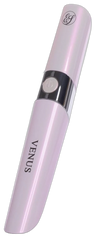
At home, the methods with the best evidence are daily broad-spectrum SPF, a retinoid or peptide eye treatment, hyaluronic acid for surface hydration, and consistent red-light (LED) therapy on the eye area. None of these relaxes the muscle the way Botox does, and none matches the depth of an in-office laser. What they can do, used steadily over 8 to 12 weeks, is soften the look of fine lines and support the skin's own collagen. For the eye area specifically, a periorbital LED and sonic device such as the EvenSkyn Venus is built to deliver red light safely close to the lash line.
What the evidence says, in six lines
Crow's feet are partly dynamic (caused by muscle movement when you smile or squint) and partly static (etched in by collagen loss and sun damage). The cause shapes the fix.
Botulinum toxin (Botox and similar) is the most effective single treatment for the dynamic part. In the pivotal crow's feet trials, 66.7% of treated people reached none-or-mild lines at day 30 versus 6.7% on placebo, with results lasting around four months.
Topical retinoids and peptides have real, if gentler, evidence for the eye area. A randomized study found a stabilized retinoid beat both placebo and plain retinol on periorbital wrinkles, and a 2025 trial showed a peptide and retinol both measurably reduced crow's feet over eight weeks.
Red-light therapy has controlled-trial support for fine lines and collagen density, including a periocular study that recorded roughly a 30% drop in wrinkle volume around the eyes.
Hyaluronic acid does not erase lines, but topical low-molecular-weight HA improved hydration, elasticity and, in some studies, the depth of periocular wrinkles. Delivery matters, which is where dissolving microneedle patches come in.
At-home care is a long game measured in weeks and consistency, not days. It is best framed as prevention plus maintenance, with clinic treatments reserved for lines you want gone faster or more completely.
What crow's feet actually are
Crow's feet, known medically as lateral canthal lines, are the small creases that radiate outward from the outer corner of each eye. Dermatologists split them into two types, and the distinction is the single most useful thing to understand before you spend a dollar.
Dynamic lines appear when you make an expression. Smile, squint into the sun, laugh at a friend, and the ring of muscle around the eye (the orbicularis oculi) contracts and folds the thin skin above it. In your twenties and thirties these lines vanish the moment your face relaxes. Static lines are the ones that stay put even when your face is at rest. They are the long-term result of those same folds happening tens of thousands of times, layered on top of sun damage and the gradual thinning of the skin.
The eye area shows this first for a simple structural reason: the skin around the eye is among the thinnest on the body, with few oil glands and little fat padding underneath. There is not much cushion between the muscle and the surface, so movement and time register quickly.
Why they form (and what you can change)
Three forces drive crow's feet, and you have real influence over two of them.
Repeated movement. Every smile and squint folds the skin. You cannot, and would not want to, stop smiling. You can cut habitual squinting: wear sunglasses, get your vision corrected if you are straining to read screens, and stop pushing through glare.
Sun exposure. Ultraviolet light is the largest preventable cause of facial wrinkles. It breaks down collagen and elastin and ramps up the enzymes (matrix metalloproteinases) that degrade the skin's support structure. Daily broad-spectrum sunscreen is the most evidence-backed anti-wrinkle step you can take, full stop, and it is free of the trade-offs that come with most other options.
Time. Collagen is the protein that keeps skin firm and springy, and the body's ability to replenish it is estimated to fall by roughly one percent per year in adulthood. Add a parallel decline in elastin and in the skin's own hyaluronic acid, which starts dropping in your twenties and is roughly halved by fifty, and the skin loses the bounce that once smoothed those expression folds back out. This is the part you slow rather than stop, and it is where collagen-supporting treatments earn their place.
The numbers worth knowing
Three figures that frame your choices
66.7%
of people reached none-or-mild crow's feet at day 30 with onabotulinumtoxinA, versus 6.7% on placebo
Multicenter randomized trial, Dermatologic Surgery, 2014
~30%
reduction in periocular wrinkle volume in a randomized photobiomodulation (red-light) trial
Randomized controlled trial, Photobiomodulation, Photomedicine and Laser Surgery, 2023
~1%
estimated yearly decline in the skin's ability to replenish collagen through adulthood
Clinical review of skin collagen and aging
Botox for crow's feet: what it does, and what it costs
If your crow's feet are mostly dynamic, botulinum toxin type A is the most effective single treatment there is, and it is worth understanding clearly even if you would rather avoid needles. A tiny dose is injected into the muscle at the outer eye. It blocks the nerve signal that tells that muscle to contract, so the skin above it folds less, and the lines soften within a few days to two weeks.
The evidence is strong and specific. Two randomized, placebo-controlled phase 3 studies enrolling more than 1,300 people supported the use of onabotulinumtoxinA for moderate-to-severe crow's feet. In the pivotal crow's-feet trial, about two thirds of treated participants reached none-or-mild lines at day 30, against fewer than 7% on placebo. The typical dose studied was 24 units split across three small injections per side, and the median duration of benefit was around 120 days.
The honest trade-offs: results are temporary, so you are signing up for treatments roughly three to four times a year to maintain them. Cost is commonly reported in the range of about 200 to 400 US dollars per crow's-feet session, depending on your provider and location. Done well by an experienced injector it looks natural; done heavily it can flatten the way your eyes move when you smile. It should be performed by a qualified medical professional, and it is not suitable in pregnancy or with certain neuromuscular conditions. Botox is a registered trademark of its manufacturer and is named here for identification only.
Other clinic treatments, briefly and honestly
Botox addresses muscle movement. For static lines that are visible at rest, clinics reach for treatments that rebuild or resurface the skin itself.
Hyaluronic acid and skin boosters. Fine injectable HA or microdroplet skin boosters can soften etched lines and add hydration around the eye. Some studies pair botulinum toxin with a light HA for the crow's-feet area and report better combined results than toxin alone.
Laser resurfacing. Fractional and ablative lasers remove or heat the upper layers of skin to trigger fresh collagen. They are among the most effective options for established static lines, with the trade-off of real downtime, cost, and care around the delicate eye.
Microneedling and radiofrequency microneedling. Controlled micro-injuries prompt the skin to lay down new collagen. A split-face randomized study measured periorbital wrinkle improvement from microneedling, and adding radiofrequency or active serums tends to improve results. This is collagen-induction therapy, and it is the clinic procedure that the at-home microneedle patch borrows its logic from, at a far gentler intensity.
The honest line on all of these: in-office devices deliver energy or controlled injury at depths and intensities that home tools are not designed to reach. That is the source of their stronger results, and also of their cost, downtime, and need for a trained operator. Treatment names above belong to their respective owners and appear for comparison only.
The thin skin at the eye registers both movement and time faster than anywhere else on the face. That is why the eye area rewards prevention more than rescue.
EvenSkyn Skin Science DeskAt-home topicals that have evidence
This is where most people should start, because the ingredients with the best track record are also the most accessible.
Sunscreen, daily. Not glamorous, but the most proven wrinkle treatment you can buy. A broad-spectrum SPF every morning protects the collagen you still have and stops the single biggest driver of new lines. If you do one thing, do this.
Retinoids. Vitamin A derivatives are the most studied topical for facial wrinkles. The landmark work on prescription tretinoin showed measurable improvement in photoaged skin, and a randomized trial of a stabilized retinoid found it outperformed both placebo and plain retinol specifically on periorbital wrinkles. Around the eye, start low and slow: a pea-sized amount of a gentle retinoid two or three nights a week, kept slightly away from the lash line, with moisturizer to buffer irritation.
Peptides. For people who cannot tolerate retinoids around the eye, certain peptides are a credible alternative. A 2025 randomized trial found that both a cosmetic peptide and retinol measurably reduced the number and area of crow's feet over eight weeks, and an earlier study of a niacinamide-and-peptide eye regimen showed improvement in periorbital wrinkles versus a prescription retinoid comparator.
Hyaluronic acid. Topical HA will not erase a line, but it plumps the surface and improves hydration and elasticity, which makes fine lines look softer. A randomized periocular study found low-molecular-weight HA formulas reduced the depth of crow's feet better than higher-weight versions, likely because the smaller molecules penetrate further.
At-home devices: what each one is good for
Home devices borrow the mechanisms of clinic treatments at lower, eye-safe intensities. None replaces a clinic procedure. Used consistently, several can help the look of crow's feet and, importantly, the eye area is small enough that a focused device is practical.
Red-light (LED) therapy
This has the most controlled-trial support among the home options. Red and near-infrared light is absorbed by the mitochondria in skin-cell fibroblasts, nudging up energy production and collagen synthesis. A 2014 randomized trial measured improved skin roughness and a meaningful rise in intradermal collagen density, and a 2023 periocular trial recorded roughly a 30% reduction in wrinkle volume around the eyes. The catch is dose and consistency: results need several sessions a week across 8 to 12 weeks, and the light has to reach the eye area safely. This is the modality built into the EvenSkyn Venus, a periorbital device that pairs LED light with gentle sonic vibration and is shaped for use right at the orbital bone, with eyes closed.
Microcurrent
Microcurrent devices send a low-level current to stimulate the facial muscles, marketed for lift and tone. The honest read on the evidence: most studies are small, and the clearest effects are on muscle tone and contour across the wider face (jawline, cheeks) rather than on fine lines at the eye specifically. A microcurrent tool such as the EvenSkyn Phoenix can be a sensible part of a whole-face routine, but treat its crow's-feet benefit as supportive rather than proven.
Dissolving microneedle patches
These hydrogel patches carry tiny, dissolving cones of hyaluronic acid (and sometimes peptides) that deliver actives into the upper skin layers more directly than a cream sitting on the surface. They are the at-home echo of clinic collagen-induction therapy, at a fraction of the intensity, and they target the practical problem that the thin eye-area skin can be hard to treat topically. EvenSkyn's under-eye micro-infusion patches are designed for this. They are best thought of as a hydration-and-delivery step that complements an LED device, not a substitute for one.
Derma rollers and at-home microneedling
Handheld rollers exist, but the eye area is the one place we would steer you away from aggressive at-home microneedling. The skin is too thin and the eye too close. If collagen-induction is your goal here, the gentler patch route or a clinic visit is the wiser path.
The buying criteria that matter
If you are choosing an at-home approach for crow's feet, judge it against these, not against marketing.
Built for the eye
The orbital area needs a tool or product designed to be used safely near the eye, with eyes closed and no harsh actives migrating in. General face devices are not all eye-appropriate.
A mechanism with evidence
Favor approaches with controlled-trial support for fine lines or collagen: SPF, retinoids, peptides, hyaluronic acid, and red-light therapy. Be skeptical of bold claims with thin data.
Honest about timelines
Home methods work over 8 to 12 weeks of consistent use. Anything promising overnight erasure of established lines is overpromising.
Realistic on outcome
Home care softens the look of lines and helps prevent new ones. It does not freeze muscle like Botox or resurface like a laser. Pick tools whose claims match that.
At-home versus clinic, side by side
| Approach | What it targets | Evidence | Downtime | Commonly reported cost |
|---|---|---|---|---|
| Daily SPF | Prevention (sun-driven aging) | Strong | None | Low, ongoing |
| Retinoid eye treatment | Static lines, texture | Strong (facial), good (periorbital) | Possible irritation | Low to moderate, ongoing |
| Peptide eye cream | Fine lines, gentler option | Moderate | None | Low to moderate, ongoing |
| Hyaluronic acid / microneedle patches | Hydration, surface smoothing | Moderate | None | Low to moderate, ongoing |
| Red-light (LED) device Eye-area pick | Fine lines, collagen support | Good (controlled trials) | None | One-time device (Venus from $149.99) |
| Microcurrent device | Whole-face tone and contour | Limited, mostly small studies | None | One-time device |
| Botulinum toxin (clinic) | Dynamic lines | Strong | Minimal | ~$200 to $400 per session, repeated |
| Laser resurfacing (clinic) | Static lines, resurfacing | Strong | Days to weeks | High, per session |
| Microneedling / RF (clinic) | Collagen induction | Good | Short | Moderate to high, per session |
Costs are commonly reported ranges and vary by provider, region, and product. Verify current pricing before you buy. Clinical-treatment and brand names belong to their respective owners and appear for comparison only.
Where an eye device fits, honestly
Put the evidence together and a sensible at-home plan for crow's feet looks like this. Protect with daily SPF. Treat with a retinoid or peptide and a hyaluronic acid step most nights. And give the skin a collagen-supporting nudge with red-light therapy several times a week. The first two are products you already understand. The third is the step a purpose-built eye device handles, because getting red light onto the thin skin at the orbital rim, safely and consistently, is exactly the practical problem a general face tool struggles with.
That is the logic behind the Venus: not a replacement for Botox or a laser, but the eye-specific LED-and-sonic step in an otherwise topical routine. We design and sell it, so weigh that, and weigh it against the criteria above rather than against our enthusiasm.
The honest verdict on the Venus
Best for
- Fine, early, or mostly preventive crow's feet
- People who want to avoid needles
- Anyone building a consistent, eye-safe routine
Not the best fit for
- Deep, long-set static lines you want gone fast
- Strongly dynamic lines (Botox does more)
- People who will not use it regularly
How to use an eye-area LED device well
- Cleanse and dry the skin. Apply a thin layer of a compatible serum or the conduction step if your device uses one.
- Close your eyes and rest the device along the orbital bone, moving slowly across the outer corner where crow's feet sit. Keep light away from open eyes.
- Run the recommended session length from the manual. Longer is not better; consistency is.
- Follow with your hyaluronic acid or peptide step, and always finish your morning routine with SPF.
- Aim for the frequency your device specifies across at least 8 to 12 weeks before you judge results.
Who should be cautious
Skip or get medical advice first if you have an active eye infection, have had recent eye surgery, take medication that increases light sensitivity, have a history of light-triggered seizures, or are pregnant. When in doubt, ask your doctor or eye-care professional. Follow the contraindications in your device manual, and stop if you notice irritation.
A note on gifting
An eye device or a set of microneedle patches makes a thoughtful gift for a milestone birthday, Mother's Day, or someone treating themselves after a big year. One gentle suggestion: frame it as a treat and a bit of self-care, not as a fix for a flaw. The kindest version of this gift is the one that says here is something nice for you, not here is something to correct.
Our pick for the eye area
EvenSkyn Venus
For at-home crow's-feet care, the Venus is the device we would reach for, because it does the one thing a general face tool does poorly: it delivers red-light therapy and gentle sonic stimulation safely and precisely at the orbital rim, where the lines actually are. Pair it with daily SPF, a retinoid or peptide, and a hyaluronic acid step, and you have a complete, evidence-aligned routine for under $200.
What it will not do
It will not relax the muscle the way Botox does, so strongly dynamic lines will respond less. It will not resurface skin like a clinic laser, so deep, long-established static lines will need more than light. And it does nothing if it sits in a drawer: results depend entirely on consistent use over weeks.
Build the eye-area step into your routine
The Venus brings red-light therapy and sonic vibration to the delicate skin around the eyes, designed for safe, eyes-closed use. It is the device step in the at-home plan above.
See the EvenSkyn VenusTreating the whole face too? The Lumo+ and Venus bundle pairs the eye device with broader coverage for cheeks, jawline and neck.
Frequently asked questions
What are crow's feet?
Crow's feet are the fine lines that fan out from the outer corners of the eyes, known medically as lateral canthal lines. They come in two forms: dynamic lines that show when you smile or squint, and static lines that stay visible even when your face is relaxed. They develop from repeated muscle movement, sun exposure, and the loss of collagen and elastin that comes with age.
What causes crow's feet to appear?
Three forces combine. Repeated expressions such as smiling and squinting fold the thin eye-area skin. Ultraviolet light from the sun breaks down collagen and elastin, the proteins that keep skin firm. And with age the skin makes less collagen and less of its own hyaluronic acid. Sun and squinting are the parts you can most influence, which is why sunglasses and daily sunscreen matter.
How do you get rid of crow's feet at home?
You soften their look and slow new ones rather than erasing them. The evidence-backed at-home steps are: daily broad-spectrum SPF, a retinoid or peptide eye treatment most nights, hyaluronic acid for hydration, and consistent red-light (LED) therapy on the eye area over 8 to 12 weeks. Results are gradual and depend on sticking with the routine.
Can you get rid of crow's feet without Botox?
You can meaningfully improve their appearance without Botox, especially for fine or early lines, using SPF, retinoids or peptides, hyaluronic acid, and red-light therapy. What home care cannot do is relax the muscle that creates strongly dynamic lines, which is the specific thing Botox does. For deep dynamic lines, non-Botox options soften rather than remove.
Does Botox work for crow's feet, and how many units does it take?
Yes. Botulinum toxin type A is the most effective single treatment for dynamic crow's feet, supported by large randomized trials. The dose studied in the pivotal crow's-feet trials was 24 units total, split across three small injections per side, though your injector tailors this to your anatomy. Results appear within days to two weeks and last around four months.
How much does Botox for crow's feet cost?
Commonly reported pricing is roughly 200 to 400 US dollars per crow's-feet session, varying by provider, region, and the number of units used. Because the effect is temporary, plan for treatments about three to four times a year to maintain it. Verify current pricing with your provider.
Does Botox for crow's feet change the shape of your eyes?
Done conservatively by an experienced injector, it softens the lines while keeping natural movement. Overtreatment can flatten how the eyes crinkle when you smile or affect the position of the lower eye area. Choosing a qualified medical provider and a measured dose is the main safeguard.
Do eye creams really work on crow's feet?
The right ingredients do help, modestly and over time. Retinoids have the strongest evidence for facial and periorbital wrinkles, peptides are a gentler alternative with growing support, and hyaluronic acid improves hydration and the look of fine lines. A cream will not match a clinic treatment, but a consistent, well-formulated eye routine produces real, gradual improvement.
Can red-light therapy reduce crow's feet?
There is controlled-trial evidence that red and near-infrared light improves fine lines and increases collagen density, and a periocular study found roughly a 30% reduction in wrinkle volume around the eyes. It works gradually and depends on consistent sessions over weeks. For the eye area, use a device designed for safe, eyes-closed use near the orbital bone.
Do under-eye microneedle patches help crow's feet?
Dissolving hyaluronic acid microneedle patches deliver hydrating actives into the upper skin layers more directly than a surface cream, which can soften the look of fine lines around the eye. They are a hydration-and-delivery step rather than a standalone cure, and they pair well with an LED device and a nightly retinoid or peptide.
How can you prevent crow's feet?
Prevention is the highest-return strategy. Wear broad-spectrum sunscreen daily, put on sunglasses outdoors to cut squinting, correct your vision if you strain to see screens, do not smoke, and start a gentle retinoid or peptide eye routine in your late twenties or thirties. These habits protect existing collagen and delay the lines from setting in.
How long until at-home treatments show results?
Plan on 8 to 12 weeks of consistent use before judging topicals or a red-light device, and longer for the fullest benefit. The eye area responds gradually because its skin is thin and delicate. If you want faster or more dramatic change, that is the signal to consider a clinic treatment alongside your home routine.
How we put this together
This guide was written by the EvenSkyn Skin Science Desk. Every clinical claim was checked against peer-reviewed studies or major medical sources at the time of writing, and the references are listed below. We separate verified science from manufacturer claims: statements about how the Venus is built and intended to be used are EvenSkyn's own product claims, while statements about treatment outcomes are drawn from the cited literature. EvenSkyn designs and sells at-home skincare devices and earns from their sale, which is disclosed above. Independent medical review of this article is pending; a reviewer credit will be added only once a qualified clinician has reviewed it. This article is educational and is not medical advice. For treatment decisions, see a qualified dermatologist or eye-care professional.
References
- Efficacy and safety of onabotulinumtoxinA for the treatment of crow's feet lines: a multicenter, randomized, controlled trial. Dermatol Surg. 2014. PMID: 25347451. pubmed.ncbi.nlm.nih.gov/25347451
- OnabotulinumtoxinA for treatment of moderate to severe crow's feet lines: a review. Aesthet Surg J. 2016;36(5). PMID: 26979457. pubmed.ncbi.nlm.nih.gov/26979457
- Weiss JS, Ellis CN, Headington JT, et al. Topical tretinoin improves photoaged skin: a double-blind vehicle-controlled study. JAMA. 1988;259(4):527-532. PMID: 3336176. pubmed.ncbi.nlm.nih.gov/3336176
- Improvement in skin wrinkles from the use of photostable retinyl retinoate: a randomized controlled trial. Br J Dermatol. 2010;162(3):497-502. PMID: 19849696. pubmed.ncbi.nlm.nih.gov/19849696
- Novel cyclized hexapeptide-9 outperforms retinol against skin aging: a randomized, double-blinded, active- and vehicle-controlled clinical trial. J Cosmet Dermatol. 2025. PMCID: PMC12207714. ncbi.nlm.nih.gov/pmc/articles/PMC12207714
- Wunsch A, Matuschka K. A controlled trial to determine the efficacy of red and near-infrared light treatment in patient satisfaction, reduction of fine lines, wrinkles, skin roughness, and intradermal collagen density increase. Photomed Laser Surg. 2014;32(2):93-100. doi:10.1089/pho.2013.3616. PMCID: PMC3926176. ncbi.nlm.nih.gov/pmc/articles/PMC3926176
- Photobiomodulation reduces periocular wrinkle volume: a randomized controlled trial. Photobiomodul Photomed Laser Surg. 2023. doi:10.1089/photob.2022.0114. liebertpub.com/doi/10.1089/photob.2022.0114
- Efficacy of microneedling plus human stem cell conditioned medium for skin rejuvenation: a randomized, controlled, blinded split-face study. Ann Dermatol. 2014;26(5):584-591. doi:10.5021/ad.2014.26.5.584. PMCID: PMC4198585. ncbi.nlm.nih.gov/pmc/articles/PMC4198585
- Efficacy of cream-based novel formulations of hyaluronic acid of different molecular weights in anti-wrinkle treatment. J Drugs Dermatol. 2011;10(9):990-1000. PMID: 22052267. pubmed.ncbi.nlm.nih.gov/22052267
- Efficacy of a new topical nano-hyaluronic acid in humans. J Clin Aesthet Dermatol. PMCID: PMC3970829. ncbi.nlm.nih.gov/pmc/articles/PMC3970829
- Clinical review noting an estimated ~1% per year decline in skin collagen replenishment with age. PMCID: PMC11254459. ncbi.nlm.nih.gov/pmc/articles/PMC11254459
Published by EvenSkyn (evenskyn.com). Educational content, not medical advice. Brand and clinical-treatment names are the property of their respective owners and are used here for identification and comparison only. Product specifications and prices are current at publication and may change; verify on the product page.



اترك تعليقًا
تخضع جميع التعليقات للإشراف قبل نشرها.
This site is protected by hCaptcha and the hCaptcha Privacy Policy and Terms of Service apply.