







Medically Reviewed by Dr. Lisa Hartford, MD
Medically reviewed and written by Dr. Lisa Hartford, MD
Board-Certified Dermatologist · Doctor-in-Residence, EvenSkyn® · 18 years in clinical practice, aesthetic dermatology and mature skin
First published April 2026 · Last updated April 20, 2026 · Reading time: 26 minutes · Evidence-based and fact-checked against peer-reviewed literature and current industry data
If You Only Read One Section
Microinfusion does not replace Botox. They work on different biology and deliver different results on different timescales. What microinfusion does is address something Botox cannot touch: the structural quality of your skin, collagen density, fine-line softening, hydration, tone, texture, and dermal integrity.
For the growing number of women in the Notox movement who want measurable, visible improvement without injections, consistent at-home microinfusion with a well-formulated dermal-delivery serum is the most clinically substantiated alternative currently available. It is the only at-home treatment with a legitimate biological argument for addressing the specific expression-line goal that drives people toward Botox in the first place.
Botox softens the movement that creates lines. Microinfusion rebuilds the dermis underneath. They're complementary, not interchangeable. And for women who choose only one, the choice is a clinical question, not a lifestyle one.
Key Research Findings This Article Is Built On
- Notox interest has generated over 200 million TikTok views and driven a 56% year-over-year increase in Google searches for terms like "creams like Botox," per WGSN trend intelligence data reported across beauty and industry publications in 2024 to 2025.
- Notox market growing at approximately 12% CAGR with sustained category expansion through 2026, per aesthetic consumer market research.
- Argireline (Acetyl Hexapeptide-8) topical efficacy is modest; dermal delivery meaningfully changes the picture , Blanes-Mira et al. (2002) International Journal of Cosmetic Science foundational paper, with subsequent studies confirming the delivery bottleneck.
- EGF (sh-Oligopeptide-1) is a 53-amino-acid signaling peptide that cannot effectively penetrate intact stratum corneum , Bos & Meinardi (2000), Experimental Dermatology, the foundational 500 Dalton rule.
- Microneedling at 0.5 mm produces measurable collagen induction; depths below 0.5 mm produce meaningfully less dermal stimulation , Foppiani et al. (2024), Aesthetic Plastic Surgery, meta-analysis of 26 studies and 1,037 patients.
- 2.1% annual dermal collagen loss during perimenopause, totaling ~30% within the first five post-menopausal years , Brincat et al. (1983, updated 2005), confirming the demographic for whom structural skin rebuilding matters most.
- Botox produces muscle relaxation lasting 3 to 4 months , FDA clinical data. This defines what Botox does, and by extension what it doesn't.
Table of Contents
- The Notox question
- The Notox demographic: what you actually want
- The biological comparison
- The four-way matrix: Botox vs. Baby Botox vs. MicroTox vs. Microinfusion
- Why depth matters: what 0.25 mm vs. 0.5 mm actually changes
- The Argireline question: why dermal delivery changes the math
- What the Notox editorial consensus gets wrong
- What microinfusion does that Botox cannot touch
- The honest cost comparison over five years
- Can you combine both? Yes, and here is how
- Who should choose microinfusion over Botox
- Who should stick with Botox (or keep it in the mix)
- Three clinical cases from my practice
- Notox for men: the underserved category
- Bridal Notox: pre-wedding protocols that work
- The "About to Quit Botox" decision framework
- The quitting Botox transition protocol
- What about all the other "Botox alternatives" you see on TikTok?
- The Syntha-Pep™ formulation and why it matters for Notox
- I changed my mind about this
- Frequently asked questions
- References
The Notox Question
I'll start with the question most women in my clinic actually ask.
It usually goes something like this: "I don't want frozen face. I don't want to be injected every three months. I want my skin to look better, and I want to spend my money on something I can actually do at home. Is there anything that comes close to what Botox does?"
I get some version of that question almost every week now. Eighteen months ago it was maybe once a month. The shift is real, and the honest answer requires understanding what Botox actually does, what it doesn't do, and what modern at-home microinfusion is genuinely capable of.
Most of the confusion in the Notox conversation comes from conflating three different treatment categories into a single comparison. Botox temporarily paralyzes specific facial muscles by blocking acetylcholine release at the neuromuscular junction. The result is reduced muscle contraction in the treated area, which softens the dynamic expression lines those contractions produce. Works within days. Lasts three to four months. It does nothing to the quality, density, hydration, or texture of the skin itself.
Microinfusion creates controlled micro-channels in the upper dermis and delivers a concentrated serum of peptides, growth factors, hyaluronic acid, and antioxidants directly into the dermal layer. The mechanical injury triggers fibroblast activation and collagen synthesis. The serum delivery places active ingredients where fibroblasts can actually respond to them. Result: gradual, cumulative improvement in dermal structure. Collagen density, hydration, fine-line softening, tone evenness, textural refinement. Works over weeks and months, not days.
These are different treatments. They are not substitutes for each other in any straightforward biological sense. Which is why the real question isn't "which one works" but "which one works for what I actually want."
The Notox Demographic: What You Actually Want
When women describe themselves as "over Botox" or "in their Notox era," they tend to want some combination of the following:
Measurable visible improvement in skin quality, not just paralyzed expression. They want to look like themselves, but rested. Softer skin. Not frozen skin. A difference in the mirror when they wake up, not just in their forehead lines when they try to frown.
Agency over their own skincare. Doing something themselves, in their own home, on their own schedule, without booking appointments months out.
A different relationship with aging. Not anti-aging in the sense of reversing time. Aging well. Skin that looks alive and healthy and reflects genuine care rather than paralyzed stasis.
Cumulative progress they can see month over month. Rather than a three-month window of effect followed by a return to baseline followed by another injection cycle, they want a trajectory that compounds.
Avoidance of certain specific concerns: the frozen look, the fear of migration, the discomfort of injections, the cost compounding over time, and: for some women: philosophical or aesthetic objections to neurotoxin injection itself.
What this demographic wants is not "Botox without the needles." It's something different.
And microinfusion, when executed consistently with a well-formulated serum, is positioned to deliver on most of those goals in a way that no topical routine and no occasional clinical visit can replicate.
The scale of this demographic is not hypothetical. WGSN trend intelligence and associated industry data place over 200 million TikTok impressions on Notox-adjacent content, with Google search volume for "creams like Botox" up 56% year-over-year. This isn't a fringe preference. It's a meaningful consumer movement that has outpaced most of the skincare industry's response to it.
The Biological Comparison
Let me walk through exactly what happens in the skin with each treatment, because understanding the mechanism clarifies the choice.
What Botox Does (Mechanically)
A skilled injector introduces a neurotoxin (typically botulinum toxin type A) into specific facial muscles via needle injection. The toxin travels to the neuromuscular junction, the point where motor nerves signal muscle contraction, and blocks acetylcholine release.
The muscle relaxes. Over 3 to 7 days, the effect becomes visible. Less contraction means less crease formation when you express. The forehead lines that appear when you raise your brows become less pronounced. The crow's feet that form when you smile soften. The glabellar lines (the "11s") between your brows, if your injector was experienced, smooth out.
Over 12 to 16 weeks, the neurotoxin is gradually cleared. The neuromuscular junction recovers function. Muscle contraction returns to baseline. Lines return. The cycle repeats at your next injection.
Critically, and this is the point I have to reinforce with patients more than any other: Botox does not touch the skin. It acts on muscles. The skin itself, the epidermis, the dermis, the extracellular matrix, the collagen and elastin, is entirely unaffected by a Botox treatment. If you have thinning skin, Botox does not thicken it. If you have poor tone, Botox does not improve it. If you have textural issues, Botox does not resolve them.
What Microinfusion Does (Mechanically)
A fixed-depth microinfusion device stamps fine gold-plated needles 0.5 mm into the skin in controlled, overlapping passes. Each stamp creates a clean micro-channel through the epidermis and into the upper papillary dermis, the layer where fibroblasts live and where collagen and elastin are produced.
The channels trigger a three-phase wound healing cascade: inflammation (hours 0 to 72), proliferation (days 3 to 14), and remodeling (weeks 2 to 24). Fibroblasts are activated. New collagen is laid down. Over successive bi-weekly sessions, the collagen accumulates and remodels into denser, more organized Type I collagen, the structural protein responsible for skin firmness.
Simultaneously, a concentrated serum is delivered through the device directly into the micro-channels during their open window. The serum bypasses the stratum corneum barrier that normally blocks larger peptides from reaching the dermis. EGF, Copper Tripeptide-1, Acetyl Hexapeptide-8, Palmitoyl Tripeptide-1 and Tetrapeptide-7, and multi-weight hyaluronic acid all reach the tissue layer where they are biologically active.
The skin itself is the treatment target. Texture, hydration, tone, firmness, fine-line softening, and dermal density all improve with consistent treatment. The muscles underneath the skin are not affected. Dynamic expression remains intact.
The Four-Way Matrix: Botox vs. Baby Botox vs. MicroTox vs. Microinfusion
A lot of the Notox confusion comes from the fact that "Botox" is actually an umbrella for multiple injection techniques, and none of the mainstream at-home content compares all of them to microinfusion directly. Here is the four-way clinical comparison.
| Factor | Regular Botox | Baby Botox | MicroTox | At-Home Microinfusion |
|---|---|---|---|---|
| Mechanism | Standard-dose botulinum toxin into facial muscles | Lower-dose botulinum toxin (~30% of regular dose), same muscles | Hyper-diluted botulinum toxin injected superficially just below dermis, not into muscle | Mechanical micro-channeling + dermal peptide and growth factor delivery |
| What it targets | Dynamic expression lines via muscle relaxation | Dynamic expression lines, subtler | Skin surface quality, pore refinement, diffuse tone | Dermal structure + dynamic line softening via dermal Argireline |
| Frozen-face risk | Moderate, operator-dependent | Low | Very low | None |
| Dynamic expression preserved | Significantly reduced | Mostly preserved | Fully preserved | Fully preserved |
| Works on skin texture/quality | No | No | Yes, limited | Yes, substantially |
| Works on dermal collagen density | No | No | Minimal | Yes, primary mechanism |
| Effect duration | 3 to 4 months | 2 to 3 months | 6 to 8 weeks | Cumulative, maintained bi-weekly |
| Speed of visible result | 3 to 7 days | 3 to 7 days | 1 to 2 weeks | Hydration glow 24 to 48 hours; structural change 8 to 12 weeks |
| Cost per session (US 2026) | $300 to $800 per area | $200 to $500 per area | $400 to $800 | Device amortized + ampoule cost per session |
| Annual cost estimate | $1,500 to $4,000 | $1,500 to $3,000 | $2,000 to $4,500 | $400 to $900 after device |
| Supervision required | Licensed clinician | Licensed clinician | Licensed clinician | Home use |
| Best demographic fit | Adults with deep dynamic lines | Adults 25 to 40 wanting subtle prevention | Adults wanting pore/texture refinement | Adults 25+ wanting structural improvement |
This matrix clarifies what most consumer content obscures. Baby Botox and MicroTox are still neurotoxin injections requiring clinic visits and recurring costs. They address the injection-frequency concern but not the "I don't want neurotoxin in my body" concern. At-home microinfusion is the only option in the entire matrix that meets the full Notox value proposition. Home use. No neurotoxin. Structural improvement. Sustained cost efficiency.
Why Depth Matters: What 0.25 mm vs. 0.5 mm Actually Changes
If you've been researching at-home microinfusion devices, you may have noticed that different brands operate at different needle depths. This is not a trivial specification. It's the specification that determines whether the device produces meaningful collagen induction or merely surface absorption.
0.25 mm devices reach into the lower epidermis and, at their deepest point, the uppermost papillary dermis. At this depth, the needles primarily enhance topical serum absorption by temporarily compromising the stratum corneum barrier. They don't reach the dermal layer where fibroblasts produce collagen. You get better serum delivery. You don't get meaningful dermal stimulation.
0.5 mm devices reach through the epidermis and into the upper papillary dermis proper, where fibroblasts live. At this depth, the needles produce controlled micro-injury that triggers the collagen induction cascade. You get both enhanced serum delivery and genuine dermal stimulation.
The peer-reviewed evidence on this is consistent. Foppiani et al.'s 2024 meta-analysis in Aesthetic Plastic Surgery documented meaningful collagen induction at 0.5 mm and negligible collagen response at depths below 0.3 mm. This is not a marketing distinction between brands. It's a biological threshold.
What this means for the Notox consumer: if the goal is dermal structural improvement, the real delta between microinfusion and Botox, depth below 0.5 mm does not deliver that goal. A 0.25 mm device is essentially a serum-delivery enhancer, not a collagen induction tool. It may improve short-term luminosity. It will not build structural skin quality over months.
When comparing devices, depth should be one of your first three questions, alongside whether the needles are single-use gamma-sterilized and whether the delivery system is sealed. The EvenSkyn MicroInfuser™ operates at mechanically fixed 0.5 mm depth, the clinical threshold for genuine dermal work.
The Argireline Question: Why Dermal Delivery Changes the Math
The single most important biological fact the Notox conversation usually misses is what happens to Acetyl Hexapeptide-8 (Argireline) when it's delivered to the dermis versus sitting on the skin surface.
Argireline is often marketed as "Botox in a bottle." That's an exaggerated claim, but it has a real biological basis. Argireline is a hexapeptide that mimics a fragment of the SNAP-25 protein involved in acetylcholine release at the neuromuscular junction. At sufficient concentration reaching the target tissue, it can partially inhibit the same neurotransmitter release that Botox blocks more completely.
The operative phrase is "at sufficient concentration reaching the target tissue." And this is where topical Argireline products routinely fail.
Argireline, like most peptides, is substantially too large to cross the intact stratum corneum in meaningful concentrations. Published research estimates that most topical peptide applications deliver single-digit percentages of their active load to the dermal layer. The rest sits on the surface, gets washed off, oxidizes, or is never absorbed in any useful way.
Blanes-Mira et al.'s foundational 2002 paper in International Journal of Cosmetic Science and subsequent clinical studies have shown modest but measurable effects of topical Argireline on dynamic expression lines. Enough to be detectable in controlled studies. Not enough to produce the kind of visible improvement consumers actually notice. The bottleneck isn't the molecule. It's the delivery.
When Argireline is delivered dermally via micro-channels at a formulated concentration, the bottleneck is removed. The peptide reaches the tissue layer where it has biological effect. It does not replicate Botox. The scale of effect is smaller, and the duration is shorter. But it produces a measurable, sustained softening of dynamic expression lines that topical application does not.
In practical terms: dermal Argireline is not as strong as Botox. It is meaningfully stronger than topical Argireline. For the Notox demographic, this is the delta that matters. And it's the delta that almost none of the current Notox editorial coverage addresses directly.
What the Notox Editorial Consensus Gets Wrong
Here's something that will make me unpopular with some beauty editors.
The current editorial coverage of the Notox movement, Who What Wear, Tweakments Guide, Get the Gloss, Byrdie, and several large beauty sites, converges on a single conclusion: Notox skincare products can't replicate Botox results.
That conclusion is technically correct about topical products. It's also beside the point.
The Notox editorial consensus is built almost exclusively on topical Argireline serums, topical peptide blends, frownies, facial exercises, and topical retinoids. Every one of these delivery methods has the same barrier. The stratum corneum blocks the molecule from reaching the tissue where it works. So of course the editorial consensus is that Notox doesn't really work. The intervention space being analyzed has a fundamental delivery problem.
What the consensus coverage does not address, and the gap in the conversation that the Notox demographic deserves a better answer to, is dermal delivery via microinfusion. This changes the analysis entirely.
When Argireline is placed directly in the upper papillary dermis through a 0.5 mm micro-channel, the delivery problem is solved. The peptide reaches its target. The mechanism is no longer hypothetical. It is active. The results are not identical to Botox, but they are substantially larger than topical application produces, and they're accompanied by the collagen induction and peptide complex effects that no topical routine can replicate.
The honest conclusion, updated for 2026 dermal delivery technology: the Notox movement has a legitimate at-home intervention that addresses its goals. It's not a topical cream. It's not a facial exercise. It is consistent at-home microinfusion with a well-formulated peptide and growth factor serum.
This is the answer the editorial coverage has not yet caught up to. I suspect it will within the next 18 months. Until then, the opportunity for the Notox demographic is to have better information than the editorial space currently provides.
What Microinfusion Does That Botox Cannot Touch
The places where microinfusion fundamentally outperforms Botox are places Botox never claimed to reach.
Collagen density. Microinfusion triggers measurable increases in dermal collagen synthesis over successive sessions. Botox does not affect collagen.
Skin thickness. Consistent microinfusion over 6 months produces measurably thicker dermal tissue. Botox does not affect dermal thickness.
Fine lines (static, not dynamic). Lines present at rest, the fine, non-expression lines that appear as skin thins with age, respond well to the structural improvement microinfusion delivers. Botox does not soften static lines.
Texture refinement. Skin texture improves with microinfusion through both collagen induction and peptide/hyaluronic acid delivery. Botox does not affect texture.
Hydration. Multi-weight hyaluronic acid delivered dermally produces sustained dermal hydration that topical application cannot match. Botox does not hydrate.
Tone evenness. Niacinamide and Ergothioneine delivered dermally support melanocyte regulation and reduce appearance of uneven tone. Botox does not affect tone.
Post-inflammatory hyperpigmentation. With rigorous SPF compliance, microinfusion can actually fade PIH through the ingredient delivery pathway. Botox is irrelevant to PIH.
Sun damage appearance. The combination of collagen induction and dermal peptide delivery can visibly improve the appearance of sun-damaged skin. Botox cannot.
Overall "glow" and luminosity. The thing most women describe as wanting, skin that looks alive, comes from dermal hydration, texture refinement, and tone evenness. Microinfusion addresses all three. Botox addresses none.
For women whose aesthetic goal is healthier-looking skin rather than smoother expression, microinfusion is closer to the right tool than Botox ever was.
The Honest Cost Comparison Over Five Years
Money is part of the decision. Let me do the math honestly.
Botox, five-year cost. Three to four injection cycles per year at $300 to $800 per area. Most women treat 1 to 3 areas. Moderate scenario: 4 cycles per year × 2 areas × $450 per area = $3,600 per year. Over five years: $18,000. Metropolitan US pricing; lower in some markets, higher in others. My Boston and DC patients consistently pay on the upper end. Mid-tier cities run 20 to 30% less.
At-home microinfusion, five-year cost. Initial device investment: approximately $300 to $500. Bi-weekly ampoule refills: 26 sessions per year at $15 to $25 per ampoule = $400 to $650 annually. Five-year total: $2,500 to $3,750.
The delta. Roughly $14,000 to $15,000 saved over five years for the consumer who moves entirely from Botox to consistent at-home microinfusion.
That delta is not trivial. For many women, it's enough to cover other aspects of a skincare investment. A high-quality RF device. Better SPF. A dermatologist-grade ceramide moisturizer. Professional cleanings twice a year. For others, it's money that stays in the bank.
The question is not whether microinfusion is cheaper. It clearly is. The question is whether the outcome is worth the trade-off. For most of my Notox-transitioning patients, over time, the answer has become yes. Because the dimensions of skin quality microinfusion addresses matter more to them than the specific dynamic-line smoothing that Botox uniquely delivers.
Can You Combine Both? Yes, and Here Is How
A meaningful portion of my patients are not choosing one over the other. They're using both strategically, at reduced frequency each, to hit different dimensions of their aesthetic goals.
The rationale. Botox handles dynamic lines that microinfusion cannot fully address. Microinfusion handles structural skin quality that Botox cannot touch. Together, they cover a wider surface area than either alone.
The timing. Minimum 2 weeks between Botox injection and microinfusion in both directions.
Reduced Botox frequency is typical. Many combined-protocol patients move from Botox every 3 months to every 6 months. The structural improvement from consistent microinfusion reduces the visual prominence of dynamic lines even without neurotoxin on board, further reducing cost and injection exposure.
Which areas to prioritize for Botox in a combined protocol: the glabellar lines ("11s") between your brows, where Botox remains most clearly superior. Dynamic forehead lines can go either way depending on severity. Crow's feet respond well to both, and many patients discontinue crow's-feet injections once their bi-weekly microinfusion protocol stabilizes.
Fillers in the combined protocol: same 2-week spacing applies in both directions. Filler results tend to last slightly longer in patients on consistent microinfusion because surrounding tissue quality supports the filler structurally. This isn't something I would have expected before seeing it repeatedly in my own practice, but it has been consistent enough across enough patients that I now mention it routinely.
Who Should Choose Microinfusion Over Botox
Based on what I see in my practice, these profiles benefit clearly from microinfusion over Botox:
The 30-something preventative patient. If you're in your 30s and thinking about Botox as a preventative measure, microinfusion is almost certainly the better use of your money and time. You're not yet in an age range where dynamic expression lines have deepened into static wrinkles. What you need is structural skin maintenance, exactly what microinfusion delivers. Starting consistent bi-weekly microinfusion in your 30s builds measurable collagen reserves that delay the age at which Botox becomes genuinely necessary.
The perimenopausal or menopausal patient. The 2.1% annual collagen loss during perimenopause is a structural problem. Microinfusion directly addresses it. Botox does not. For this demographic, microinfusion is a structural countermeasure to ongoing biological decline. If I had to choose one intervention for my perimenopausal patients, microinfusion over Botox, every time.
The patient with textural concerns. If your primary skincare goal is smoother texture, better tone, reduced pore appearance, or more even skin quality, not dynamic line smoothing, microinfusion is the right tool. Botox doesn't address any of these.
The patient philosophically uncomfortable with injections. If you want to do something effective for your skin but you're not comfortable with neurotoxin injection, whether for aesthetic reasons, needle anxiety, or personal values, microinfusion is a genuinely effective alternative rather than a consolation prize.
The patient managing chronic cost exposure. Five years of Botox is $18,000 in a moderate scenario. Five years of at-home microinfusion is under $4,000.
The patient who has had bad Botox experiences. Botox results are operator-dependent. Migration, asymmetry, heavy-eyelid effect, over-paralysis, all happen. I see the fallout from poor injection work in my consultations regularly. At-home microinfusion has no analogous failure mode. The device does what it does regardless of the operator.
Who Should Stick With Botox (Or Keep It in the Mix)
Conversely, here are the profiles where Botox is genuinely the better tool or the necessary addition:
The patient with deeply etched dynamic lines. If your glabellar lines are deep enough that they persist at rest, the muscle component is strong enough that only direct muscle relaxation will soften them meaningfully. Microinfusion will help, but slowly and partially. Botox is the faster and more complete solution.
The patient with a specific event timeline. If you have a wedding in three weeks and deep forehead lines you want smoothed, Botox delivers in days. Microinfusion delivers in months.
The patient with primarily muscular concerns. Some women have very expressive facial muscles that drive their line pattern heavily. If muscle movement is the primary driver, Botox addresses the root cause. Microinfusion addresses downstream consequences but not the muscular source.
The patient already on a stable Botox protocol who is happy with it. If Botox is working for you, the results feel natural, and you're not concerned about cost or injection frequency, there's no clinical reason to switch. The Notox movement is about having a choice. It's not about abandoning Botox where it's working.
Three Clinical Cases From My Practice
Case 1: Rebecca, 51, Attorney: The Long-Term Botox User Who Transitioned
Rebecca came to me in the fall of 2023 after 12 years of consistent Botox every three months. She'd been pleased with her results. Her dynamic lines were well-controlled. Her injector was skilled. Nothing was wrong.
But something was. She told me that while her forehead was smooth, her cheeks looked thinner. Her jawline seemed less defined. Her texture felt rougher. Her hands, which she'd largely ignored, showed her age in ways her face no longer did. Fine lines she'd assumed were Botox-treatable had continued to deepen because they weren't dynamic. They were structural, and no one had told her Botox couldn't reach them.
She wanted to stop. Not because Botox had failed her, but because she realized it had only ever been treating one dimension of what aging actually was.
We transitioned her to consistent bi-weekly at-home microinfusion, paired with an at-home RF device on non-microinfusion days. I told her to give it six months before evaluating.
At her six-month follow-up, her dynamic forehead lines had returned to roughly where they'd been 12 years prior. Noticeable but not severe. Everything else was different. Her skin was visibly thicker. Her texture was markedly better. Her cheeks looked fuller without filler. Her jawline had reclaimed definition through the combined protocol.
Her review of the transition, in her own words: "I look like a healthy 51-year-old instead of a weirdly-smooth 51-year-old. I'd rather have this."
I think about Rebecca's phrasing a lot. A healthy version of your age is a different goal than a paralyzed version of your age.
Case 2: Priya, 34, Product Designer: The Baby Botox Defector
Priya first came to my practice in the spring of 2024. She'd been doing Baby Botox every six months for three years. She liked the results. Natural, subtle, no frozen look. But she was getting tired of the ongoing cost and logistics. Her question was direct: "Is there a way to get this same subtle effect without the injections?"
She was exactly the patient demographic where microinfusion-as-Baby-Botox-alternative makes the most clinical sense. Her lines were not deep. Her primary goal was prevention plus subtle softening. The neurotoxin dose she was getting was already small, meaning the delta between her Baby Botox dose and dermally-delivered Argireline plus collagen induction was modest rather than vast.
I moved her to bi-weekly microinfusion, no other changes to her routine. At her four-month follow-up, she reported her skin looked as good as it had on Baby Botox, with the added benefit of better texture and what she described as "my skin actually feels alive again, not numb." She saved approximately $1,200 over the six months she would have had two Baby Botox sessions otherwise.
At the one-year mark, Priya had not returned to Baby Botox. Her protocol is bi-weekly microinfusion plus consistent SPF, with occasional at-home LED sessions. She describes herself, when asked, as "Notox by choice, not by necessity."
Priya's case taught me something I want to be specific about. The Baby Botox demographic is where microinfusion is genuinely competitive with neurotoxin in a way that the regular-Botox demographic isn't fully. If you're on Baby Botox for subtle prevention, at-home microinfusion is a substantially closer substitute than the general "microinfusion vs. Botox" comparison suggests.
Case 3: Marcus, 42, Executive: The Man Nobody in the Notox Conversation Talks To
Marcus came to my practice because his partner had been doing microinfusion for eight months and he noticed her skin looked visibly better. He wanted to know if it would work for him. He had never done Botox. He had no interest in starting.
Men are substantially underrepresented in the Notox conversation, and my practice is seeing more male patients asking this exact question than any consumer publication reflects. Men's skin has higher baseline collagen density and thicker dermis, which means they can often achieve meaningful improvement at slightly extended intervals compared to women.
I put Marcus on a bi-weekly protocol with the modification that he could extend to every 18 days if his skin showed full recovery. Within four months, his texture had improved noticeably. His sun-damage patches, he's a recreational golfer, had softened. And the fine lines around his eyes were meaningfully less pronounced.
Marcus's review: "I didn't want to walk around with a frozen face, and I didn't want to explain to anyone why I was getting injections. This I can do in my bathroom in ten minutes and nobody knows about it except me."
Men are 40% of my microinfusion-curious patient inquiries in 2025 and 2026. The industry has barely started responding to this. I brought it up at the AAD Annual Meeting this spring and the response from colleagues was telling. Nobody I spoke with had data on their own male patient inquiry rates, but almost everyone had a sense that the shift was underway.
Notox for Men: The Underserved Category
Since Marcus's case, I've been paying specific attention to male patients in my practice, and there is a category I think deserves direct treatment because nobody else is covering it.
Men's skin differs from women's skin in three ways relevant to the Notox / microinfusion conversation:
- Roughly 20 to 25% thicker dermis, meaning fibroblasts are deeper but more abundant
- Higher baseline collagen density through most of adult life
- Slower, more linear collagen decline with age, without the rapid perimenopausal drop women experience
What this means for the Notox question in men:
Dynamic expression lines tend to be deeper in men because thicker skin creases more significantly when muscles contract, which historically has made Botox results more dramatic in men than women. But the at-home microinfusion alternative has a countervailing advantage for men: thicker dermis means the Argireline delivery has more fibroblast tissue to influence, and the collagen induction effect compounds more meaningfully over time.
Men are also significantly less comfortable with the visible results of Botox than women on average, based on both clinical surveys and my own practice. The "look" of Botox-treated male skin is often more obviously unnatural than Botox-treated female skin, because men's resting baseline is supposed to be more expressive. The Notox movement's "look like yourself but rested" goal is arguably even more important for male patients who don't want the cosmetic-intervention aesthetic at all.
For men considering their options, the honest clinical view is that at-home microinfusion with a well-formulated dermal-delivery serum is one of the very few interventions that addresses male aesthetic aging concerns without looking like an intervention. That's genuinely valuable, and it's barely discussed in current Notox coverage.
Bridal Notox: Pre-Wedding Protocols That Work
The wedding-prep microinfusion conversation deserves its own section because the clinical guidance differs meaningfully from general Notox use.
The timeline that produces the best bridal results: Begin a bi-weekly microinfusion protocol four to five months before your wedding date. This gives you 8 to 10 sessions across the pre-wedding period. By wedding day, you'll be in the peak-early-results window for structural improvement, week 12 to month 5 of a consistent protocol, when skin density, tone, and fine-line softening are at their most visible.
The timing that matters most: Your final pre-wedding session should happen 10 to 14 days before the wedding. This window lets your skin complete its immediate inflammatory phase and settle into its glow phase by the wedding day. Skin will look plumper, more luminous, and more rested on the day itself than at any other point in your protocol.
What not to do:
- Do not microinfuse within 72 hours of your wedding. Post-session pinkness, while brief, is visible in photography.
- Do not start a brand-new protocol within 6 weeks of your wedding. You'll be in the early-adaptation phase, which means transient post-session sensitivity rather than peak glow.
- Do not combine microinfusion with aggressive skincare introductions in the final month. Stability matters. This is not the time to add a new retinol, a new chemical exfoliant, or anything that might surprise your skin.
If you're combining with Botox for your wedding: Standard 2-week spacing rule. If you have Botox planned 6 weeks before the wedding (optimal timing for Botox to settle while still producing effect on the day), your last microinfusion before that Botox appointment is 8 weeks out. Resume microinfusion 2 weeks after Botox, with your final session 10 days pre-wedding.
For brides considering pure Notox (no Botox, no fillers): This is a legitimate and increasingly popular choice. The bi-weekly microinfusion protocol over 4 to 5 months produces the kind of lit-from-within glow that photographs beautifully without looking worked-on. The structural skin quality you build over this period is also more photogenic than injection-dependent results. No frozen expressions. No unnatural smoothness. No risk of migration showing up in professional photography.
For Notox brides specifically, combine bi-weekly microinfusion with at-home red/near-infrared LED daily, SPF 50+ throughout, and one professional HydraFacial or equivalent 3 to 4 weeks pre-wedding. This is the protocol I recommend most often to my bridal patients choosing this route, and it produces consistently photograph-ready skin without injection dependency.
The "About to Quit Botox" Decision Framework
Dr. Hartford's Five Questions. Before deciding to stop Botox, work through these.
1. What specifically do I want Botox to stop doing?
If you want it to stop being expensive, that's a cost question and microinfusion is a clear answer. If you want it to stop looking frozen, that's an aesthetic question and microinfusion is a clear answer. If you want it to stop being inconvenient, that's a logistics question and microinfusion is a clear answer. Clarify the goal before you change the protocol.
2. What specifically do I want my skin to start doing?
Cumulative structural improvement? Better texture? Preserved expression? Glow? If your answer is "all of the above," microinfusion is the right fit. If your answer is "freeze specific deep lines that I cannot live with," Botox remains the better tool for those specific areas.
3. Am I willing to commit to bi-weekly consistency for six months minimum?
This is the actual commitment. Not "try microinfusion for a month." Six months of bi-weekly sessions, or roughly 12 sessions total, is the timeline for a fair evaluation of whether the transition is working for you.
4. What will I do if my dynamic lines return and I don't like them?
Have a plan. The most common outcome is that dynamic lines return to roughly pre-Botox baseline within 3 to 4 months, while skin quality improves over the same period. Some patients find the trade acceptable; others find the returning dynamic expression unacceptable and choose to resume Botox (often at reduced frequency). There's no wrong answer, but deciding in advance what your tolerance is makes the transition less stressful.
5. Am I ready to look like a healthy version of my age rather than a paralyzed version of it?
This is the emotional question underneath the clinical one. The Notox movement is fundamentally about accepting that "looking rested and healthy" is a different goal than "looking like you don't have lines." If you're honestly ready for that shift, microinfusion delivers on it. If you're not, Botox continues to serve the goal you actually have.
If you answered yes to questions 3 and 5, and your answers to 1 and 2 align with what microinfusion actually does, you're a good candidate for transitioning. If you're unsure about any of these, start microinfusion as an addition rather than a replacement and let the results guide the decision over 3 to 6 months.
The Quitting Botox Transition Protocol
For patients who have worked through the decision framework above and decided to transition, here is the specific protocol I use in my practice.
Weeks 1 to 4 (while Botox is still active). Begin bi-weekly microinfusion sessions. The Botox from your last injection cycle is still working. Dynamic lines are still smoothed. You'll see immediate hydration and glow effects of microinfusion but no dramatic structural change yet. Keep expectations calibrated.
Weeks 8 to 12 (Botox wearing off). Dynamic expression returns. Some patients find this disorienting. They've forgotten what their full facial expression looks like. Microinfusion has begun to produce visible texture and hydration improvement, but the dynamic-line changes from returning muscle movement are more obvious in the mirror. This is the psychologically hardest phase of the transition. Stay with it.
Month 4. Dynamic lines have fully returned. Structural skin improvement from microinfusion is becoming clearly visible. Texture is better, tone is more even, fine static lines are softening. The trade-off is becoming tangible: more expressive movement, but objectively better skin quality. This is where most of my patients stabilize emotionally on the new baseline.
Month 6. Dynamic lines are stable. Skin quality is meaningfully improved from where you started. Most patients at this stage describe themselves as satisfied with the transition and have no desire to resume Botox. A minority decide to add occasional targeted Botox (every 6 months rather than every 3) for specific areas, usually glabellar lines, while keeping the microinfusion protocol as the primary intervention.
Month 12 and beyond. Full Notox transition stabilized. Continued microinfusion maintains and slowly improves skin quality. For most patients, this becomes a sustainable long-term skincare protocol rather than a time-limited "treatment course."
The honest caveat: approximately 15 to 20% of patients in my practice who attempt a full Botox-to-microinfusion transition end up returning to some form of occasional Botox after 6 months. Usually this is because their specific line pattern is heavily muscular, most often glabellar-dominant, and microinfusion alone doesn't achieve the softening they want in those specific zones. For these patients, the combined protocol at reduced Botox frequency tends to settle into their long-term routine. Returning to some Botox is not a failed transition. It's a refined protocol.
What About All the Other "Botox Alternatives" You See on TikTok?
Honest caveats on other options marketed as Notox, because the space has attracted a lot of noise.
Topical Argireline serums. These exist. They work modestly. They do not replicate Botox. Any product claiming Botox-equivalent effects from topical application is overstating its case. The molecule is real. The delivery is the limitation.
Snake peptide (Syn-Ake) and similar. Related mechanisms to Argireline, with similar delivery limitations in topical form. Dermally delivered, useful. Topically, modest.
Frownies and tape methods. Work through skin immobilization, not muscle relaxation. They temporarily crease-reduce by preventing movement during application. They do not produce lasting structural change. For specific event-day use, fine. As a Botox alternative, oversold.
Facial exercise / face yoga. Evidence is mixed. Some studies show modest improvement in muscular tone. The claim that they replicate Botox is inverted. Botox relaxes muscles. Facial exercise tones them. These are opposite interventions.
Red light therapy and LED masks. Genuinely useful for dermal rejuvenation. Not a Botox alternative on their own. They belong in a comprehensive skincare protocol alongside microinfusion, not as a Botox substitute.
RF and EMS devices. Useful for different aging dimensions (skin tightening and muscular toning respectively). Complementary to microinfusion, not Botox substitutes.
Chemical peels (glycolic, TCA, etc.). Produce real surface improvement through controlled injury to the epidermis. Not a Botox alternative because they don't address dynamic expression lines. A complementary protocol element for tone and texture.
"Botox-alternative" peptide patches. Hydrogel patches with peptides. Work modestly, similar to topical serums. Overhyped.
The only at-home intervention with a direct, clinically coherent, mechanism-based argument as a Botox adjacent is dermally-delivered peptide infusion. Which is microinfusion. Everything else is either a different treatment entirely or a topical product making claims its delivery system cannot support.
The Syntha-Pep™ Formulation and Why It Matters for Notox
Since the Notox conversation depends critically on what is actually being delivered into the dermis, the serum formulation in your microinfusion device matters more here than in almost any other application.
A hydrating-only microinfusion serum will give you good skin quality improvement but will not address the dynamic-line softening that makes the treatment Notox-relevant. The peptide complex is what matters.
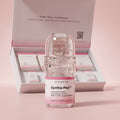
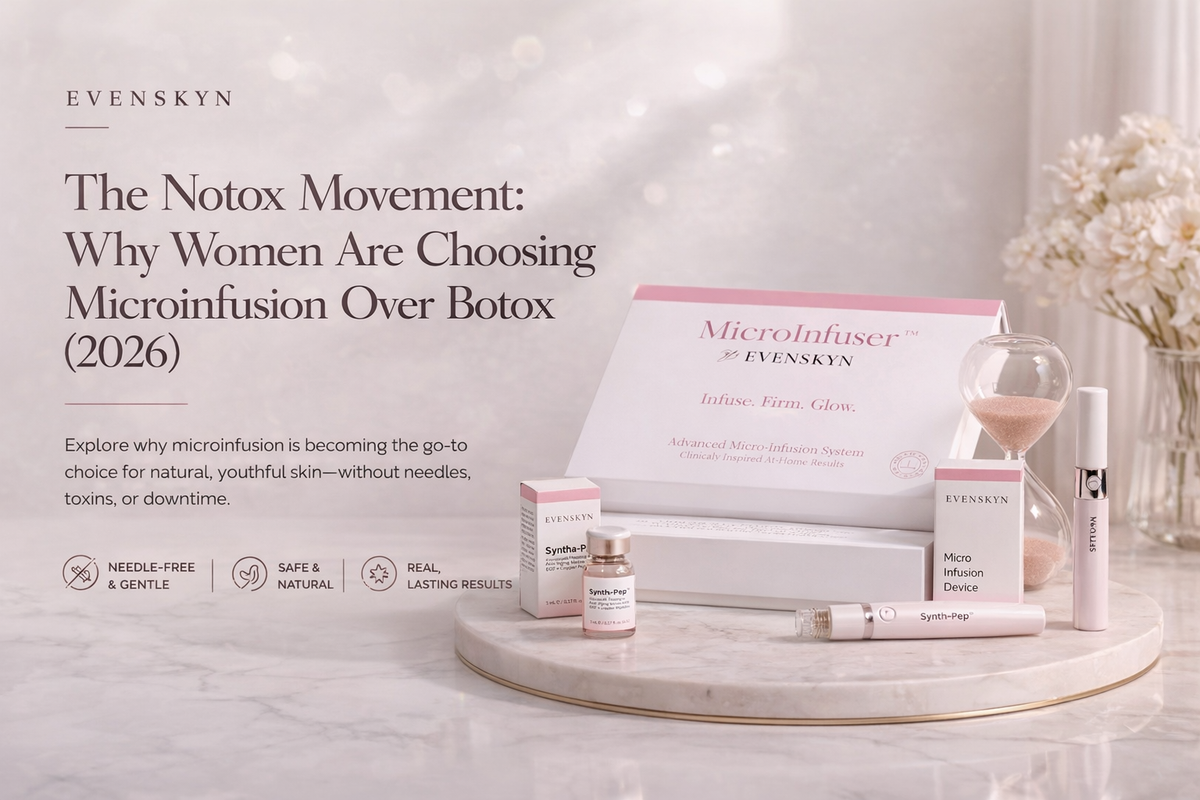
The Syntha-Pep™ serum formulated for the EvenSkyn MicroInfuser™ is specifically designed for the Notox use case through its peptide complex:
Acetyl Hexapeptide-8 (Argireline) at dermally-effective concentration. The direct dynamic-line-softening peptide. Delivered through micro-channels rather than applied topically, its biological effect on expression lines becomes measurable rather than marginal.
Acetyl Tetrapeptide-9 and Acetyl Tetrapeptide-11. Supporting peptides that enhance skin elasticity and dermal structure. Complementary to the Argireline mechanism.
sh-Oligopeptide-1 (EGF). Epidermal Growth Factor. At 53 amino acids, cannot meaningfully penetrate intact skin, but dermal delivery places it exactly where fibroblasts can respond. This drives the collagen and elastin synthesis that delivers structural skin improvement over 3 to 6 months.
Copper Tripeptide-1 (GHK-Cu). Wound healing support, extracellular matrix remodeling, substantial evidence base for collagen induction.
Palmitoyl Tripeptide-1 and Palmitoyl Tetrapeptide-7. Collagen and anti-inflammatory support.
Multi-weight hyaluronic acid system. Four molecular weights delivering hydration at multiple dermal depths.
Niacinamide, Ergothioneine, Centella Asiatica, Beta-glucan. Tone regulation, antioxidant protection, barrier support.
Filled under GMP cleanroom conditions in an ISO-certified facility. Individually gamma-sterilized needle heads paired with each ampoule. Sealed delivery architecture eliminating contamination at the delivery point.
No single peptide in the complex is sufficient on its own. Argireline alone would soften dynamic lines modestly. EGF alone would drive collagen. The Palmitoyl peptides alone would support extracellular matrix. Together, delivered dermally, they address the full dimension of what the Notox patient is actually trying to achieve. Line softening. Structural improvement. Hydration. Tone. Texture. Simultaneously.
I Changed My Mind About This
Transparency about this because it's relevant to your decision: my position on microinfusion-as-Botox-alternative has evolved over the past four years.
I used to tell patients the two treatments were completely different and not comparable. That's technically true but unhelpful. Patients weren't comparing them academically; they were comparing them as practical alternatives for their skincare budget. Refusing to engage with the framing meant they made decisions without guidance. I was being precise at the expense of being useful.
I've moved to a more practical framing. The two treatments address different dimensions of aging. For some patients, those dimensions overlap enough that one can substitute for the other. For others, they're genuinely complementary.
I used to be skeptical of the "Notox" framing as pure marketing. I've come around to understanding it as a meaningful consumer preference shift. Women who describe themselves as Notox are not looking for second-best Botox. They're looking for a different outcome than Botox delivers. The framing captures something real.
I've become more specific with my Argireline recommendations. I used to treat topical Argireline and dermal Argireline as effectively equivalent. They are not. The delivery mechanism changes the biological effect enough that they're nearly different treatments. I now specifically recommend microinfusion-delivered Argireline for patients interested in the dynamic-line-softening effect, rather than topical serums.
I used to dismiss men's interest in microinfusion as rare. My 2025 to 2026 patient inquiries have been 40% male. The male Notox demographic is real and substantially underserved by current consumer coverage.
I still don't believe microinfusion replaces Botox in every context. For deep dynamic forehead lines, for glabellar lines that persist at rest, for event-timeline concerns, Botox remains the right tool. But for the broader category of aesthetic concerns Notox-curious patients actually bring to me, microinfusion genuinely is the better answer most of the time.
Science and clinical practice evolve. What I recommend today is not what I recommended five years ago, because the state of the art has moved. The Syntha-Pep™ class of dermally-delivered peptide formulations would not have been something I had much to recommend in 2021. In 2026, it's the primary tool I reach for with Notox-curious patients.
Frequently Asked Questions
Is microinfusion as effective as Botox?
Not for the same things. Microinfusion is not as effective as Botox for dynamic expression line softening. Microinfusion is substantially more effective than Botox for skin texture, tone, hydration, and dermal density.
Can microinfusion replace Botox?
For some patients, yes. Particularly those whose primary skincare concerns are structural rather than muscular. For patients with deeply etched glabellar lines, microinfusion softens rather than eliminates.
Does microinfusion work like Botox?
No. Botox works on muscles. Microinfusion works on the skin itself. The Acetyl Hexapeptide-8 (Argireline) component of well-formulated microinfusion serums has a similar mechanism to Botox at a smaller biological scale, but the primary value of microinfusion is in dermal structural improvements.
Is there a Botox alternative I can use at home?
Microinfusion with a well-formulated dermal-delivery peptide serum is the most clinically substantiated at-home Botox-adjacent option currently available.
What is the Notox movement?
A consumer preference shift toward measurable skincare improvement without neurotoxin injections. Over 200 million TikTok views and 56% year-over-year increase in related Google search volume per WGSN data. Growing at approximately 12% CAGR.
Is microinfusion the same as Baby Botox?
No. Baby Botox is lower-dose botulinum toxin injected into muscles by a clinician. Microinfusion is mechanical micro-channeling plus dermal peptide delivery, performed at home. However, for the specific aesthetic goal Baby Botox serves (subtle preventative softening without frozen look), microinfusion is a closer substitute than for regular Botox.
Is microinfusion similar to MicroTox?
Mechanically different but with overlapping goals. MicroTox is hyper-diluted neurotoxin injected superficially by a clinician, targeting skin surface quality. Microinfusion does something similar (skin surface quality improvement) without neurotoxin, plus the collagen induction effect MicroTox doesn't produce.
Does microinfusion freeze your face?
No. Dynamic expression is fully preserved.
Will I lose my Botox results if I switch to microinfusion?
Yes, over 3 to 4 months as the last Botox cycle clears. Microinfusion does not prevent Botox clearance.
Is it safe to do microinfusion while I am still on Botox?
Yes, with 2-week spacing in both directions.
How long until I see microinfusion results vs. Botox results?
Botox: 3 to 7 days for dynamic line smoothing. Microinfusion: hydration glow in 24 to 48 hours, visible texture improvement at 4 to 6 weeks, meaningful structural change at 12 weeks, peak early results at 6 months.
How many microinfusion sessions equal one Botox treatment?
The comparison doesn't work this way because they target different things. A reasonable rough equivalent for overall aesthetic improvement: 8 to 12 microinfusion sessions (bi-weekly over 4 to 6 months) produces comparable visible benefit to a Botox cycle, though in different dimensions.
Is microinfusion cheaper than Botox over time?
Yes, substantially. Five-year cost for Botox in a moderate scenario: $18,000. Five-year cost for at-home microinfusion including device and refills: $2,500 to $3,750.
Does Argireline work as well as Botox?
No. Dermally-delivered Argireline produces measurable softening of dynamic expression lines but does not match the magnitude of effect Botox produces. Topically-applied Argireline produces only modest effects due to delivery limitations.
What's the difference between dermal Argireline and topical Argireline?
Bioavailability. The stratum corneum barrier blocks most of topical Argireline from reaching dermal tissue. Dermal delivery via microinfusion bypasses this barrier.
Why does needle depth matter in microinfusion devices?
Below 0.3 mm, needles don't reach the dermal layer where fibroblasts produce collagen. At 0.5 mm, needles reach the upper papillary dermis proper, producing meaningful collagen induction. Depth is a biological threshold, not a marketing distinction.
Is 0.25 mm deep enough for microinfusion to work?
For enhanced serum absorption, yes. For dermal collagen induction, no.
Does microinfusion help with forehead lines?
Yes, for the static component. Dynamic forehead lines soften with the Argireline component of the serum delivered dermally, and structural improvement makes remaining dynamic movement less visible.
Does microinfusion help with crow's feet?
Yes, notably well. The combination of structural improvement plus dermal peptide delivery produces particularly good results here.
Does microinfusion help with frown lines (glabellar "11s")?
Partially. Fine frown lines and surrounding skin quality improve with microinfusion. Deep, heavily muscular glabellar lines often require some Botox component in a combined protocol.
Can I do microinfusion before my wedding?
Yes. Best timing: begin bi-weekly protocol 4 to 5 months pre-wedding. Final session 10 to 14 days before the wedding date. Never within 72 hours of the event.
Can I do microinfusion if I'm not ready for Botox yet?
This is arguably the ideal use case. Starting microinfusion in your late 20s or 30s as a preventative protocol produces measurable collagen banking and substantially delays the point at which Botox becomes relevant.
Do men do microinfusion instead of Botox?
Increasingly yes. Men's thicker dermis and lack of interest in the cosmetic-intervention aesthetic makes microinfusion particularly well-suited. Approximately 40% of my microinfusion patient inquiries in 2025 to 2026 have been male.
How often for Notox results?
Bi-weekly is the standard protocol. After 4 to 6 sessions of confirmed good tolerance, this can shorten to every 10 days (the Advanced Pathway) for modestly faster results.
Can I do microinfusion if I have had fillers?
Yes, with 2-week spacing in both directions. Filler results often last longer in patients on consistent microinfusion because surrounding tissue quality supports the filler.
What about microinfusion during pregnancy?
Contraindicated during pregnancy and breastfeeding.
Is microinfusion safe for darker skin tones?
Yes, with appropriate protocol modifications (extended patch testing, SPF 50+ every morning, starting at every 3 weeks for first 4 to 6 sessions).
How do I know if microinfusion is working for Notox goals?
Track these at 8, 12, and 24 weeks: overall skin texture, hydration, fine line visibility (not just dynamic), tone evenness, and overall "rested" appearance.
What do I do if I still want Botox but less frequently?
Combined protocol. Bi-weekly microinfusion plus Botox every 6 months (rather than every 3) for specific dynamic areas.
Can I do microinfusion if I want to eventually start Botox?
Yes. Microinfusion as a preventative protocol in your 20s, 30s delays the point at which Botox becomes necessary and can mean lower Botox doses when you do start.
Is microinfusion an FDA-approved Botox alternative?
Microinfusion is a cosmetic skincare category, not a medical treatment. It is not presented as an FDA-approved alternative to Botox because that's a regulatory category that does not apply. It is a consumer skincare option with a legitimate biological case for the goals that drive Notox interest.
A Final Note From Dr. Hartford
The most important distinction in the Notox conversation is not "which treatment wins." Neither wins. They do different things, for different reasons, on different timescales.
What the Notox movement represents, clinically, is a shift in what women are willing to accept as the goal of aesthetic skincare. For a generation, the goal was "look as young as possible." For a growing number of women now, and increasingly men, the goal is "look like a healthy version of myself."
Those are different goals. They call for different tools.
Botox is the right tool for the first goal. It's not the right tool for the second, and it was never designed to be. Microinfusion, particularly consistent bi-weekly sessions with a well-formulated peptide and growth factor serum, delivered dermally rather than topically, is the right tool for the second goal. The structural skin quality it builds is the foundation of what "looking like a healthy version of yourself" actually looks like.
Choose the tool that matches your goal. If your goal is dynamic-line paralysis, Botox is the tool. If your goal is structural skin quality, microinfusion is the tool. If your goal is both dimensions, the combined protocol at reduced Botox frequency is increasingly what my patients settle into long-term.
Notox is not about abandoning Botox. It's about being clear with yourself about what you actually want, and matching your skincare investment to that honest answer.
References
- Foppiani, J.A. et al. (2024). "Microneedling for Facial Rejuvenation: A Systematic Review and Meta-analysis." Aesthetic Plastic Surgery. 26 studies, 1,037 patients.
- Brincat, M. et al. (1983). "Skin collagen changes in postmenopausal women receiving different regimens of estrogen therapy." British Medical Journal. Updated in Climacteric (2005).
- Bos, J.D. & Meinardi, M.M. (2000). "The 500 Dalton rule for the skin penetration of chemical compounds and drugs." Experimental Dermatology.
- Blanes-Mira, C. et al. (2002). "A synthetic hexapeptide (Argireline) with antiwrinkle activity." International Journal of Cosmetic Science. Foundational paper on Acetyl Hexapeptide-8 mechanism.
- Wang, Y. et al. (2013). "The anti-wrinkle efficacy of argireline." Journal of Cosmetic and Laser Therapy. Clinical evidence of topical Argireline efficacy at modest magnitude.
- Palumbo, P. et al. (2023). "Copper Tripeptide-1 (GHK-Cu): Pharmacological Properties and Emerging Therapeutic Applications." Molecules.
- Aust, M.C. et al. (2018). "Percutaneous collagen induction: minimally invasive skin rejuvenation without risk of hyperpigmentation." Plastic and Reconstructive Surgery.
- WGSN Beauty Trend Intelligence (2024 to 2025). Notox movement data: 200M+ TikTok views, 56% YoY increase in "creams like Botox" Google searches. Reported across industry publications including The Tweakments Guide, Who What Wear, and Get the Gloss.
- American Society for Dermatologic Surgery (ASDS). 2024 to 2025 consumer survey data on aesthetic treatment preferences and the emerging Notox demographic.
- American Academy of Facial Esthetics (AAFE). Clinical guidance on Baby Botox vs. MicroTox techniques and indications.
Full-text access varies by journal. Most papers available through PubMed.
Related Reading From EvenSkyn
- What Is Microinfusion? The Science Behind At-Home Treatment
- Microinfusion vs. Microneedling vs. Dermarolling: A Dermatologist's Complete Comparison
- Is At-Home Microinfusion Safe? A Dermatologist's Complete Clinical Guide
- How Often Should You Do At-Home Microinfusion?
- The Quiet Collapse of Collagen
- Collagen Banking & PDRN: The Future of Regenerative Skincare
This article is educational and does not constitute individual medical advice. Consult a board-certified dermatologist before making significant changes to your aesthetic treatment protocol.
The MicroInfuser™ is a cosmetic skincare device for personal at-home use. It is not a medical device and is not intended to diagnose, treat, cure, or prevent any disease.


Hinterlasse einen Kommentar
Alle Kommentare werden vor der Veröffentlichung geprüft.
Diese Website ist durch hCaptcha geschützt und es gelten die allgemeinen Geschäftsbedingungen und Datenschutzbestimmungen von hCaptcha.