




Medically Reviewed by Dr. Lisa Hartford, MD
Last reviewed April 18, 2026 by Dr. Lisa Hartford, MD (Johns Hopkins, Mayo Clinic). Written by the EvenSkyn editorial team with input from product engineering. Links and pricing were checked on August 26, 2026; no clinical re-review accompanied that update.
At a glance
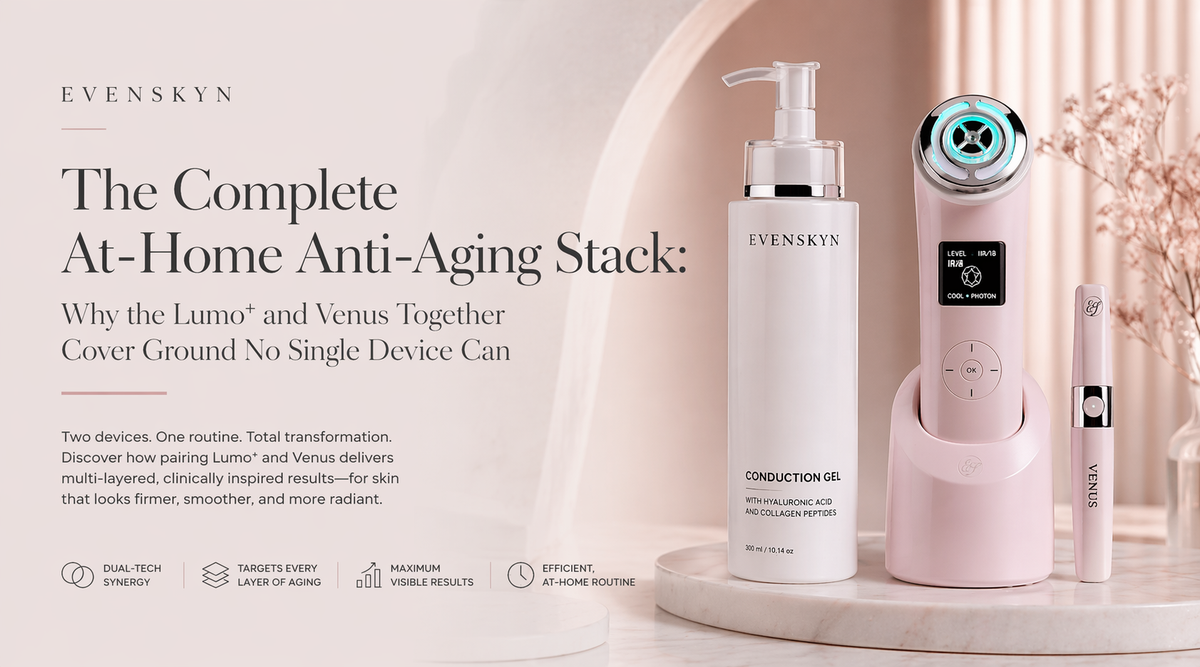
The single biggest failure mode in at-home anti-aging is treating the face as one surface. It isn't. Eyelid skin is roughly a quarter the thickness of cheek skin, and the device calibrated for one is wrong for the other. Most buyers end up either under-treating the face (because they dropped the intensity to be safe around the eyes) or avoiding the eye area entirely (and watching it age faster than the rest). The solution that actually works is two devices, calibrated separately, running on complementary schedules. That's what the Lumo⁺ and Venus do together, and it's why we designed them as a pair rather than trying to pretend a single handset could handle both zones safely.
If you're in a hurry: RF on the face at 60°C dermal temperature (Lumo⁺), fractional RF on the eye area at 42°C surface temperature (Venus), three sessions each per week on alternating days, 8 to 12 weeks before you see the structural changes. The bundle runs $594.99 at standard pricing. NuFACE Trinity+ Complete Set is $595 for microcurrent only (no RF anywhere). CurrentBody's LED Face + Eye Perfector stack runs $750 for LED only (no RF, no EMS). If you want calibrated RF on both face and eye at under $1,000, the Lumo⁺ and Venus pairing is the only stack that gets there.
What's in this article
The case for two devices instead of one. What the Lumo⁺ actually does. What the Venus actually does, and why fractional RF matters for eyelid skin. The honest comparison against NuFACE, CurrentBody, Shark CryoGlow, and TriPollar. A weekly protocol that treats the face, jawline, neck, and eye area without overlap. When this bundle is wrong for you (yes, there are cases). How to decide between this and clinical alternatives like Ultherapy or Thermage. FAQ covering hooded eyes, jowls, nasolabial folds, and the upgrade question we get most.
The problem nobody in this category wants to name
Here's something that bothers me about how most at-home device brands talk about the eye area: they don't, really. They sell you a face device, maybe include a vague line in the manual about "avoiding the immediate eye area," and leave the reader to figure out the rest. Or they sell you an entirely separate eye gadget with a different technology stack that doesn't coordinate with their main device. Either way, the user gets stuck stitching together a protocol that nobody actually engineered to work together.
This matters because eye-area aging shows up first. Crow's feet, upper-lid laxity (what gets called hooded eyes when it progresses), lower-lid crepiness, persistent under-eye puffiness, dark circles that don't respond to sleep or topical caffeine, these tend to appear five to ten years before most people notice meaningful change on the cheek or jawline. Treating the rest of the face while ignoring the eyes is a losing strategy because the eyes are where your friends, your coworkers, and your own reflection register age first.
And the tissue isn't the same. Eyelid skin averages 0.3 to 0.8mm thick. Cheek skin averages around 2mm. The stratum corneum is thinner, the dermis has less collagen per unit volume, the fat pad anatomy is completely different, and the orbital globe sits millimeters behind the tissue you're treating. Every clinical aesthetic brand acknowledges this. Thermage sells a Thermage Eye Tip that's physically different from the face tip. Ultherapy uses distinct transducers for brow and periorbital zones. Sofwave has a separate parameter set. The clinical world gets this right. The at-home device category mostly pretends it doesn't apply.
What the Lumo⁺ is actually doing when you use it
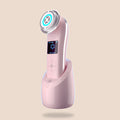
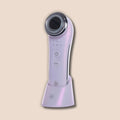
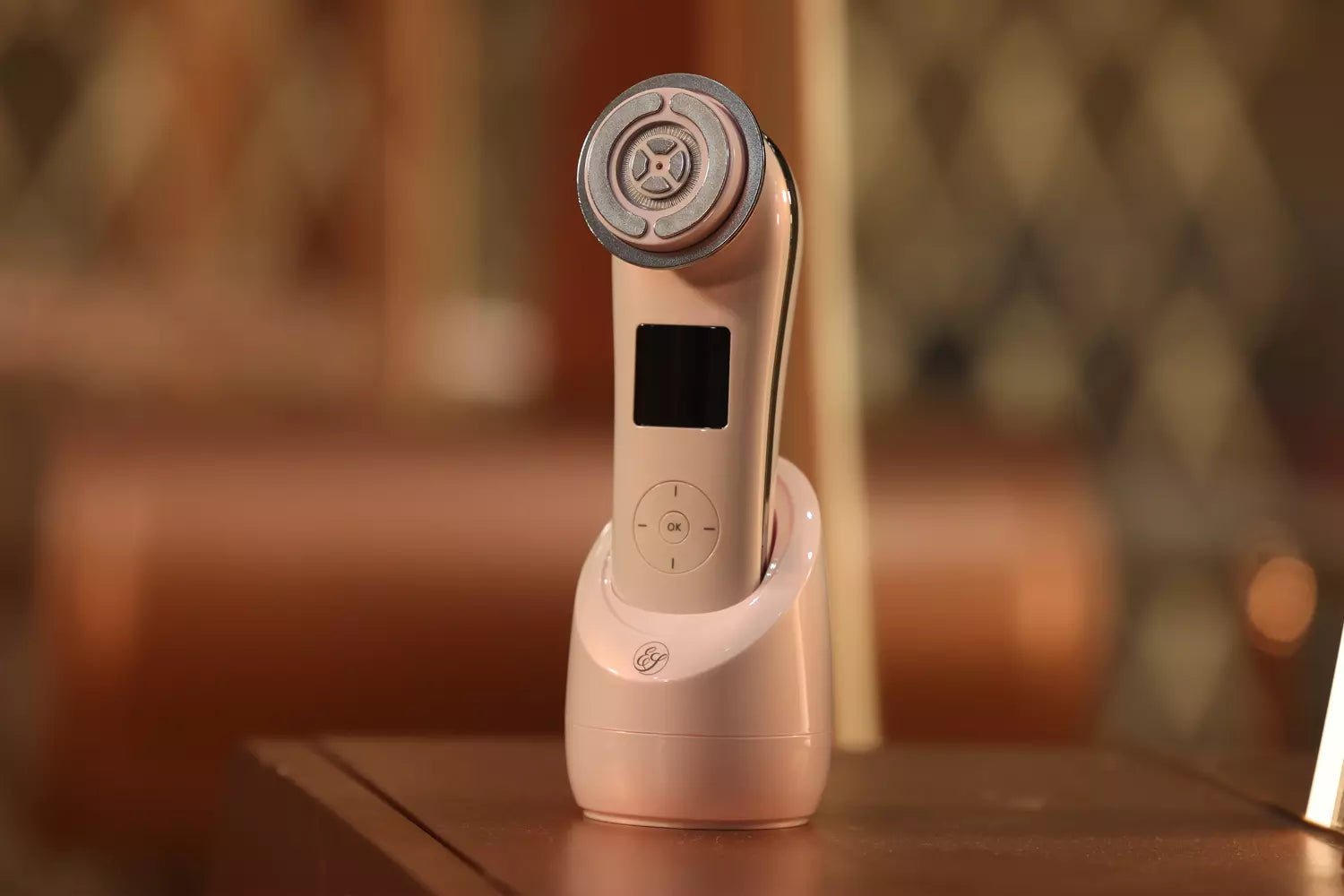
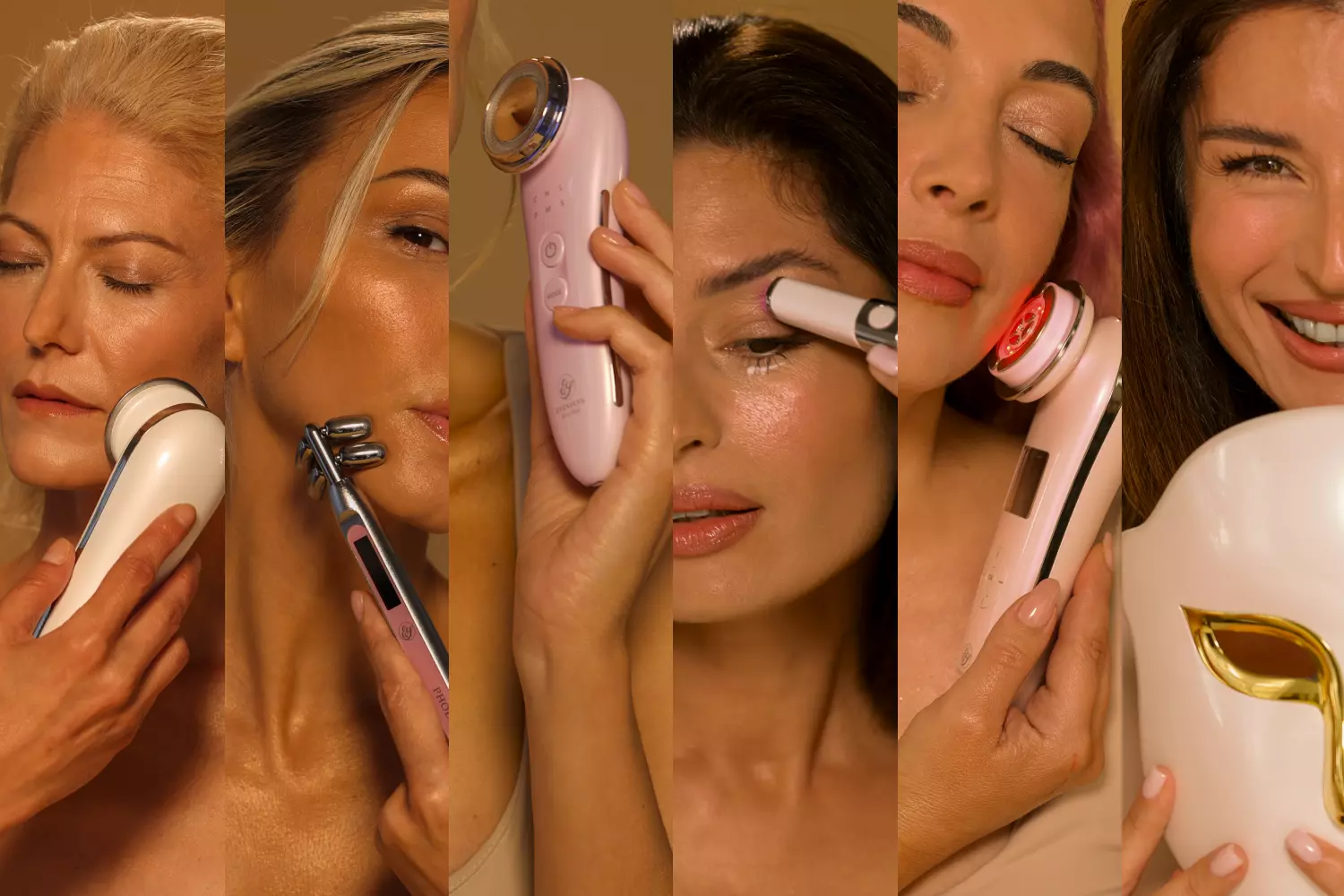
The Lumo⁺ is a five-modality face, neck, and décolletage device built for tissue that's past the prejuvenation stage. The specs matter here, so I'll give them without hedging.
Radiofrequency at 1 MHz bipolar, calibrated to push dermal temperature to roughly 60°C (140°F). This is the mechanism that matters most. RF at this frequency and temperature denatures existing collagen fibrils, triggers a fibroblast wound-healing response, and drives new collagen synthesis over the following 90 to 180 days. It's the same underlying physics clinical devices like Thermage run, operating at a lower intensity appropriate for at-home safety. The Shu and colleagues 2022 randomized split-face trial in Dermatology and Therapy (PubMed 35249173) documented measurable improvements in skin laxity and wrinkle depth from consistent home RF use, which is the clinical evidence base for this category.
EMS at approximately 3 mA. This is an order of magnitude higher than what microcurrent-only brands like NuFACE deliver (the NuFACE Trinity+ runs around 335 microamps, or 0.335 mA). For users with visible laxity, the higher current produces a meaningful muscle-lifting effect in a way that microcurrent cannot. Microcurrent has its place, which we'll get to. But for Stage 2 and Stage 3 tissue, EMS is the modality that moves the jawline visibly.
Red LED at 623 nm. Absorbed by cytochrome c oxidase in mitochondria, drives ATP production, upregulates fibroblast collagen synthesis. The Wunsch and Matuschka 2014 trial (PMC 3926176) is the controlled-trial evidence base, documenting intradermal collagen density increases across an 8-week protocol.
Blue LED at 465 nm. Antimicrobial against Cutibacterium acnes in the epidermis. Not everyone in their forties and fifties still deals with breakouts, but for those who do, this is the modality that handles it.
Active ionisation enhances topical absorption during treatment, useful for pushing peptide serums and hyaluronic acid deeper than topical application alone achieves.
Running these five modalities in concert across the cheek, jawline, neck, forehead, and décolletage produces a multi-mechanism stimulus. But every intensity in the Lumo⁺ is wrong for the eyelid, which is the whole reason the Venus exists as a separate device.
What the Venus does, and why fractional RF matters here
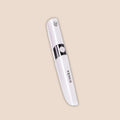
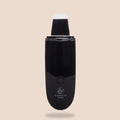
The Venus handles everything inside the orbital bone. Upper lid, lower lid, inner canthus (tear duct area), outer canthus (crow's feet zone), and the brow-to-lid transition. The specs, again without hedging:
Fractional RF at 1 MHz with constant surface temperature of 42°C (107°F). The word "fractional" does real work here. Instead of delivering continuous bulk heating like the Lumo⁺'s full-power mode does on the cheek, fractional RF distributes the energy across micro-zones across the treatment head. This is safer architecture for thin tissue: you stimulate the fibroblasts without the bulk thermal stress that eyelid skin doesn't tolerate well. The 42°C target is deliberately chosen from the fibroblast thermal-response curve. Temperatures in the 40 to 45°C range consistently upregulate collagen synthesis without triggering the higher-temperature inflammatory cascade.
Red LED at 623 nm and blue LED at 465 nm, identical wavelengths to the Lumo⁺ but calibrated at lower irradiance for the thinner periorbital skin and the proximity to the eye.
Sonic vibration at audible frequencies for lymphatic drainage. The periorbital lymphatic system is shallow and responds well to gentle mechanical stimulation. This is the mechanism most users notice first (puffiness reduction after the morning session is immediate, not cumulative like the collagen work).
Active ionic uptake for enhanced eye-cream and serum absorption. Apply your peptide or caffeine-based eye product first, run the Venus in its two-mode sequence, and the product reaches deeper than topical application alone.
The Venus tops out at five sessions per week with total session time under ten minutes for both eyes combined. That's the tissue tolerance ceiling. More than that doesn't produce better results and does risk irritation. The Lumo⁺ by contrast is a two-to-three sessions per week device because the higher intensity RF and EMS need longer tissue recovery between treatments. These different cadences actually make the two devices easier to integrate into one weekly routine than most people expect, because they never compete for the same night.
What I'll give the competitors credit for
I'm going to be honest about something most brand content avoids: the competitors in this space all do some things well, and pretending otherwise makes our own case weaker, not stronger.
NuFACE is excellent at what it does. The Trinity+ has been the gold-standard home microcurrent device for close to two decades. For users whose primary concern is muscle tone and facial contour, without structural laxity, microcurrent at 0.335 mA delivered consistently produces a genuinely visible lift. If you're 38, have no real collagen decline yet, and you want a jawline and cheekbone lift for Zoom calls and camera angles, the NuFACE Trinity+ is a legitimately good choice. It's just the wrong choice once structural laxity has set in, because microcurrent at that intensity doesn't drive the dermal remodelling RF does.
CurrentBody's LED work is legitimately clinical-grade. Their Series 2 LED mask is probably the best at-home LED product on the market. The wavelength selection is clinically supported, the irradiance is high, and their clinical trial data is real. For users whose concern is skin texture, tone, uneven pigmentation, and early fine lines, LED alone will do meaningful work. It just won't do structural work. No LED device at any consumer price point can rebuild the collagen layer the way RF can, because LED doesn't heat the dermis. The mechanism is different.
TriPollar's RF is legitimately strong on the face. The STOP Vx Gold 2 is a capable RF device, competitive with the Lumo⁺ on the cheek and forehead. Where TriPollar falls short is the eye area: they don't have a dedicated periorbital device in their at-home lineup, so users end up either avoiding the eye zone entirely or buying a third-party eye gadget that doesn't coordinate with the TriPollar protocol.
Shark CryoGlow's cryo eye pads are a clever idea. The cooling effect on morning puffiness is real and immediate. It's not collagen work, it's lymphatic and vascular, and the effect fades within hours. But for users whose concern is daily appearance rather than long-term structural change, it's a reasonable product.
Every one of these devices has a use case where it's the right answer. None of them cover the full face plus eye structural work the Lumo⁺ and Venus pairing does. That's the honest framing.
Side-by-side: what each stack actually delivers
This is the table I'd want to see if I were buying. No marketing language, just what each option technically does.
| Stack | Total (USD) | RF on face | RF on eye area | EMS intensity | LED | Sonic/lymphatic | Eye area specifically engineered |
|---|---|---|---|---|---|---|---|
| Lumo⁺ and Venus bundle | $594.99 | Yes, 1 MHz bipolar, 60°C target | Yes, fractional RF, 42°C target | ~3 mA (Lumo⁺) | Red 623 nm, blue 465 nm, both devices | Sonic on Venus | Yes, fractional RF calibrated for 0.4 mm skin |
| NuFACE Trinity+ Complete Set | $595 | No | No | 0.335 mA microcurrent only | Red LED attachment only | No | Same microcurrent, smaller probes (ELE attachment) |
| CurrentBody Face + Eye LED Kit | ~$750 | No | No | None | Red 633 nm + NIR 830 nm | No | Separate LED eye device, same mechanism |
| Shark CryoGlow + separate eye device | ~$500+ | No | No | None | Red + blue + NIR | Cryo pads only | Cooling pads, not collagen work |
| TriPollar STOP Vx + third-party eye device | ~$700-900 | Yes, RF | Depends on whatever third-party device you add | No | Limited | No | Not engineered as a system |
| Thermage (clinical) + Thermage Eye (clinical) | $2,500-5,000/yr | Yes, clinical-grade | Yes, clinical-grade | N/A | N/A | N/A | Yes, separate tip |
The comparison isn't "the bundle is best at everything." It's that the bundle is the only option under $1,000 that delivers calibrated RF on both zones. If your concern is mild and you only need one modality, one of the cheaper single-purpose devices might be the better call. If your concern is across the whole face including the eye area and you're past prejuvenation, the bundle architecture is the only one that covers it coherently.
The weekly protocol that actually works
A realistic schedule looks like this. I'm not going to pretend it's ten minutes a day, because it isn't. But it isn't an hour either.
Monday, Wednesday, Friday: Lumo⁺, 20 to 25 minutes. Full face (avoiding the orbital zone), jawline, neck, décolletage. Apply EvenSkyn Conduction Gel in sections, slow upward strokes during the RF and EMS portions, finish with the LED modes. Don't rush the jawline or the submental zone, that's where the visible work happens over the 90-day arc.
Tuesday, Thursday, Saturday: Venus, 8 to 10 minutes. Upper lids, lower lids, inner corners, outer canthus. Red mode first (4 to 5 minutes for both eyes), blue mode second (3 to 4 minutes). Any water-based or oil-based eye serum works; peptide and caffeine serums tend to respond best to the ionic uptake mode.
Sunday: rest day. Tissue recovery matters. I know the instinct is to do more, but the research on energy-based treatments is consistent that recovery days produce better long-term outcomes than daily stimulation.
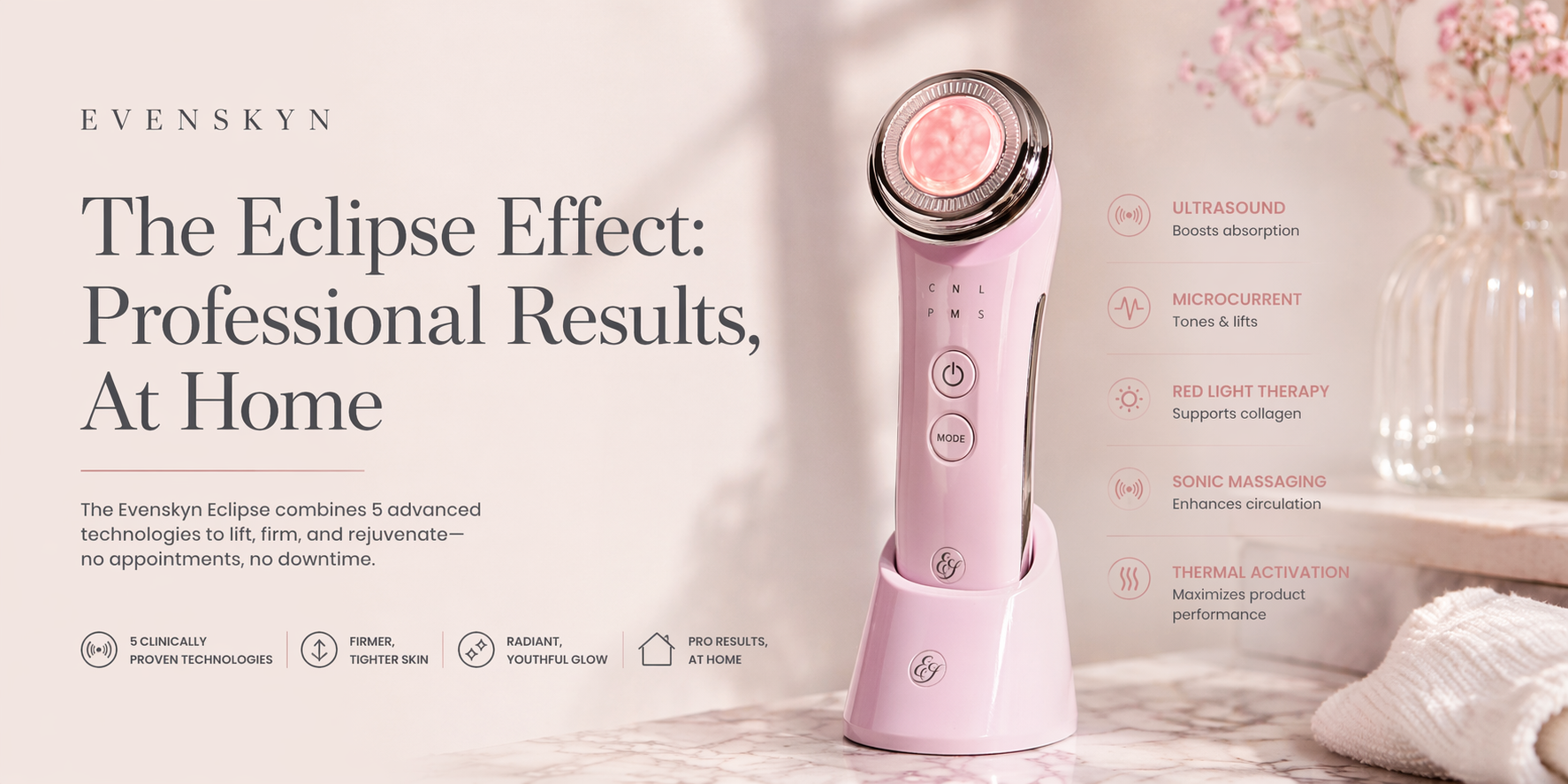
Optional stack-on: Eclipse daily, 5 to 10 minutes. If you already own the Eclipse from your prejuvenation era, keep it in the rotation for cleansing, serum absorption, and everyday maintenance. It doesn't compete with the Lumo⁺ or Venus, it supplements them.
Expect to see puffiness reduction and hydration improvements within the first two to four weeks. The structural changes driven by RF take longer: 6 to 8 weeks to visible change on the Lumo⁺ side, 8 to 12 weeks on the Venus side (periorbital tissue starts with lower collagen density so the remodelling timeline is slightly slower). Full trajectory continues for 90 to 180 days.
Dr. Hartford on what she actually sees in practice
I asked Dr. Hartford what she wishes patients understood before they buy an at-home device. Her answer, slightly condensed:
"Three things, if I had to pick. First, the eye area is not a 'light version' of the rest of the face. It's a biologically different tissue type that needs its own calibration. I've treated patients who bought a powerful face device, tried to use it cautiously around their eyes, and ended up either irritating the skin or just avoiding the eye zone for years until it had progressed well past what the device could have helped with earlier. Second, consistency matters more than intensity. People buy high-powered devices and use them twice then give up, and they'd have gotten better results with a moderate device used three times a week for six months. Third, match the device to where you actually are in the aging trajectory, not where you worry you might be. A 34-year-old using a Lumo-tier RF device isn't getting more benefit, she's overpowered for her tissue. A 54-year-old using a microcurrent-only device is underpowered. The Lumo-plus-Venus pairing solves the calibration problem for people who need real structural work across the whole face. That's the specific use case.", Dr. Lisa Hartford, MD, Chief Dermatology Advisor at EvenSkyn
Who this bundle is right for
Concretely: people dealing with visible jawline softening, early jowls, nasolabial fold deepening, upper-lid laxity (hooded eyes starting to set in), crow's feet at rest, persistent under-eye hollows, or neck skin that's lost firmness. If several of those describe you, the bundle architecture is calibrated for your tissue. Usually that maps to users in their mid-forties and later, earlier if perimenopausal changes have accelerated the trajectory (which, based on the literature, typically means noticeable collagen decline around five years before and after menopause).
People who want to avoid or delay clinical intervention. A single Thermage plus Thermage Eye session runs $2,500 to $5,000, with results lasting 12 to 24 months. Ultherapy is in similar territory. The bundle, used consistently for a year, approximates meaningful portions of what those treatments do, on your own schedule, with no clinic visits. It doesn't fully replace them for severe laxity, but it substantially narrows the gap.
Who should skip it (honestly)
Early thirties, no visible laxity. The bundle is overpowered for your tissue right now. The Eclipse is the right Stage 1 device. You save money, use the right tool, and upgrade when your biology actually calls for it.
Active dermatological issues. Rosacea flares, active dermatitis, open acne, recent chemical peels within two weeks, active shingles. Get the skin to a stable baseline first.
Pregnancy or breastfeeding. Dermatological consensus is to wait.
Implanted electronic medical devices (pacemakers, neurostimulators, cochlear implants). Consult your physician before any RF or EMS device.
Very recent injectables. Wait at least two weeks after any filler or neurotoxin placement. For superficially placed filler specifically, consult your injector.
Common questions we get
Do I really need two devices? Can't I just use the Lumo⁺ carefully on my eyes?
No, and I'd push back harder than usual on this one. The Lumo⁺'s RF is calibrated for 2mm-thick cheek skin. Using it on 0.4mm eyelid skin isn't a "be careful" situation, it's a mismatch. The Venus is a separate device because the tissue is different. Think of it the way clinics use different Thermage tips for face and eye, not optional, structural.
How does this beat the NuFACE Trinity+ Complete Set at $595?
It doesn't beat NuFACE on what NuFACE does. NuFACE is genuinely excellent at microcurrent muscle toning. But the Trinity+ Complete Set has no RF anywhere in the stack, and for structural anti-aging (visible laxity, jowls, hooded eyes, neck skin), RF does work microcurrent cannot replicate. These are different product categories serving different use cases. If you're 38 with great skin and want a contour lift, NuFACE. If you're 48 with visible laxity, the Lumo+Venus bundle.
How does this compare to CurrentBody's LED stack?
CurrentBody's LED devices are very good at what LED does, which is supporting fibroblast metabolism and addressing texture. But LED alone doesn't heat the dermis, which means it can't drive the collagen remodelling that RF can. For mild-to-moderate concerns and maintenance, CurrentBody's face plus eye LED stack works. For visible laxity, LED alone tends to disappoint, because you're asking a mechanism that doesn't reshape tissue to reshape tissue.
Is this a good at-home Ultherapy alternative?
Partial yes. Ultherapy uses micro-focused ultrasound to reach the SMAS layer at 4.5mm depth, which is deeper than any at-home device can safely target. For deep structural lifting, Ultherapy is in a category the at-home market doesn't reach. But for the dermal collagen work that drives most of the visible improvement from Ultherapy (firmness, texture, fine lines, modest lifting), consistent Lumo⁺ and Venus use delivers a meaningful portion of the benefit at a fraction of the lifetime cost. Not equivalent. Not replacement. Substantial overlap on the outcomes most users actually care about.
Will this help with hooded eyes?
For early and moderate hooded eyes (upper-lid laxity that's starting to show, loss of tautness, the eyelid starting to rest lower than it used to), the Venus is specifically calibrated for this tissue and is one of the better at-home options for this concern. For severe hooded eyes with significant excess skin, no at-home device will fully correct it: that's blepharoplasty territory. The Venus helps at the earlier-stage end of this spectrum.
What about nasolabial folds and marionette lines?
Yes, directly. The Lumo⁺'s RF and EMS working on the mid-face (cheek and perioral zone) addresses both. The nasolabial fold deepens as the cheek fat pad descends and the dermal support around the mouth declines. RF collagen remodelling plus EMS muscle toning in that region over a 90-day protocol produces visible softening for most users. Not elimination. Softening.
Jawline definition and early jowls?
This is probably the Lumo⁺'s strongest zone. The mandibular border, the pre-jowl sulcus, and the submental area (under the chin) all respond well to consistent RF plus EMS. Of all the concerns the bundle addresses, jawline work is where the visible improvement tends to show up fastest, usually in the 6 to 8 week range.
Does this help with neck skin and décolletage?
The Lumo⁺ is rated for face, neck, and décolletage. The neck specifically benefits from the RF because neck skin thins and loses collagen faster than facial skin in many users, and the structural stimulus the Lumo⁺ provides is calibrated for that tissue. Don't skip the neck in your protocol: it's where the first visible aging shows up for a lot of people and it's the zone that's easiest to neglect.
Safe for darker skin tones?
Yes. RF, EMS, and the LED wavelengths used are all chromophore-independent, meaning they don't interact with melanin differently across Fitzpatrick skin types. Unlike IPL and some laser technologies (which can carry risk for darker skin because they target melanin), RF operates on water in the dermis. Safe for Fitzpatrick I through VI.
Can I use these devices with Botox or fillers?
Wait at least two weeks after any injectable. For superficially placed filler, check with your injector first. The RF intensities in both devices are below the thermal thresholds that would affect most modern hyaluronic acid fillers, but placement varies by practitioner and patient.
How long until I see results?
Puffiness, hydration, and tone changes: 2 to 4 weeks. Structural changes driven by the RF remodelling process: 6 to 8 weeks on the face, 8 to 12 weeks around the eyes. Full trajectory continues compounding for 90 to 180 days. If you're not seeing changes by week 6 on a consistent protocol, check the technique before giving up: conductor application, device contact, session length, and consistency are the most common failure modes.
What's the upgrade path from the Eclipse?
If you started with the Eclipse in your mid-thirties as a prejuvenation tool, the typical transition point is when you notice visible laxity that the Eclipse's gentle modalities aren't addressing. For most users this is somewhere in the mid-forties, sometimes earlier with perimenopausal onset. You don't replace the Eclipse: you add the Lumo⁺ and Venus to it. The Eclipse keeps handling daily cleansing, serum absorption, and supportive LED. The Lumo⁺ handles structural face and neck work three times a week. The Venus handles periorbital work three times a week. Three devices, one integrated protocol.
Where this bundle sits in the wider EvenSkyn library
Three companion reads frame this pairing. Our 10-device at-home RF comparison ranks the Lumo⁺ against nine competitors on frequency, thermal control and evidence, including the rows where competitors win. The plain-language guide to radio frequency skin tightening at home covers the mechanism, the safety profile and the honest limits behind everything claimed here. And the weekly sequencing protocol shows how RF, microcurrent, LED and micro-infusion slot into one calendar without overlapping.
One more route deserves naming, because it answers a different priority. The Lumo⁺ and Venus bundle extends the energy layer to the eye area. If your priority is pushing actives deeper rather than eye-area coverage, the other Lumo⁺ pairing is the Lumo⁺ plus MicroInfuser duo at $589.99, which adds a fortnightly 0.5 mm micro-channel serum session to the weekly RF work; we compare that stack against clinic RF microneedling, candidly, in the Morpheus8-at-home guide.
How we evaluated this
For full transparency about our editorial methodology: when EvenSkyn develops article recommendations, we look at three things. Published peer-reviewed research on the relevant mechanisms (RF tissue response, microcurrent effects, LED photobiomodulation, sonophoresis). Device specifications across the at-home category, including direct competitor specs pulled from their public technical documentation. And our own aggregated customer feedback from post-purchase surveys and customer service contacts. Dr. Hartford reviews technical claims before publication. We don't take affiliate commissions from competitor devices, so comparisons don't have a "direct us toward this other brand" incentive. Where we've been honest about competitor strengths in this article, it's because we think users deserve accurate information about the whole category, not just our own products.
Disclosures
EvenSkyn designs, manufactures, and sells the Lumo⁺, Venus, Eclipse, and related products referenced in this article. Product links in this article point to our own product pages. Competitor mentions (NuFACE, CurrentBody, Shark, TriPollar, Thermage, Ultherapy, Sofwave) are informational and do not generate affiliate revenue for EvenSkyn. Clinical references are to publicly accessible peer-reviewed literature. This article is informational, not medical advice. Consult your dermatologist or healthcare provider before beginning any energy-based at-home treatment if you have specific medical conditions, implanted devices, or are pregnant. Individual results vary.
References
RF and collagen remodelling
- Shu X, Liu Z, et al. Effectiveness of a Radiofrequency Device for Rejuvenation of Aged Skin at Home: A Randomized Split-Face Clinical Trial. Dermatology and Therapy, 2022
- Hantash BM, Ubeid AA, Chang H, Kafi R, Renton B. Bipolar fractional radiofrequency treatment induces neoelastogenesis and neocollagenesis. Lasers in Surgery and Medicine, 2009;41(1):1-9.
LED photobiomodulation
Microcurrent mechanism
Home device efficacy framework
Periorbital tissue and perimenopausal skin change
About the medical reviewer
Dr. Lisa Hartford, MD graduated with honors from Johns Hopkins University School of Medicine and completed her dermatology residency at the Mayo Clinic. She spent more than a decade in clinical dermatology and pharmaceutical dermatology research before joining EvenSkyn in 2020 as Chief Dermatology Advisor. She reviews clinical claims, formulation decisions, and product engineering across the EvenSkyn range.



Hinterlasse einen Kommentar
Alle Kommentare werden vor der Veröffentlichung geprüft.
Diese Website ist durch hCaptcha geschützt und es gelten die allgemeinen Geschäftsbedingungen und Datenschutzbestimmungen von hCaptcha.