





Medically Reviewed by Dr. Lisa Hartford, MD
Medically reviewed by Lisa Hartford, MD, Chief Dermatology Advisor and Doctor-in-Residence at EvenSkyn. Board-certified dermatologist; graduate of Johns Hopkins University School of Medicine; dermatology residency at Mayo Clinic. Last clinically reviewed: May 8, 2026.
The short version
After 45, your face starts changing in ways you'll see in photos before you see them in the mirror. The mistake most articles about the non-surgical facelift make is treating "facial aging" as one problem (loose skin) when it's actually four problems happening at once, in four different anatomical layers, on four different timelines.
The skin loses collagen and elastin and gets thinner and more lax. The fat that gives your cheeks their roundness shifts and shrinks, leaving hollows in some places and pillows in others. The muscles in the SMAS layer (the connective tissue scaffold under the fat) lose tone and let the whole structure droop. And the bone underneath all of it actually resorbs. The maxilla retrudes. The mandible loses its prejowl support. The orbital rim opens up. Your face has less skeletal structure to drape over.
This matters because each of those four layers needs a different mechanism to address it. Skin tightening tools work on layer one. Microcurrent and EMS work on layer three. Fillers replace lost volume in layer two. Bone-graft procedures and structural fillers work on layer four. A single-mechanism device, by definition, treats one layer and ignores the others.
For most people after 45, what actually works is a combination. At-home tools that address two or three layers simultaneously, run consistently over months. Selective in-clinic procedures for the layers your at-home routine can't reach. And surgery considered only when laxity has progressed past what either tier can match.
This guide walks through what's happening at each of the four layers, what genuinely treats each one, and how to build a 90-day at-home routine that addresses more than one layer at a time. Whether your specific concern is wrinkles, sagging skin around the jawline, hollowing in the cheeks, or all of the above, the layer model gives you a way to match treatment to cause.
Key takeaways
- Facial aging happens in four layers, not one. Skin (collagen and elastin loss), fat (compartment shrinkage and shifting), muscle (SMAS and mimetic muscle decline), and bone (skeletal resorption of the maxilla, mandible, and orbital rim). Each one needs a different treatment mechanism.
- Single-modality devices only address one layer at a time. A device that's only RF treats skin but not muscle. A device that's only microcurrent treats muscle but not collagen. Multi-modality devices that combine RF, EMS, and LED address three of the four layers in parallel.
- Surgery (deep-plane facelift) addresses all four layers at once and remains unmatched for significant laxity. It's also the most expensive and most invasive option, and it's a one-shot decision.
- In-clinic procedures address layers individually: Botox for muscle, fillers for fat and bone, RF microneedling and HIFU for skin and SMAS, thread lifts for soft-tissue repositioning.
- After 45, layered aging usually wants layered treatment. An at-home routine that addresses three layers, plus selective in-clinic procedures for the rest, outperforms any single intervention by itself.
- Perimenopause and rapid weight loss accelerate everything. Estrogen withdrawal speeds collagen loss. GLP-1-related weight loss unmasks underlying laxity that was hidden by facial fat. Both are increasingly common drivers of accelerated visible aging after 45.
Treatment options at a glance
Quick comparison of the main approaches discussed in this guide. Costs reflect typical North American ranges and vary by region, provider, and product brand.
| Approach | Where | Best for | Visible results in | Effect lasts | Typical cost |
|---|---|---|---|---|---|
| Skincare + lifestyle (SPF, retinoids, peptides) | At home | Prevention, very early aging | 12+ weeks | While maintained | Under $200/year |
| Multi-modality device (RF + EMS + LED) | At home | Mild to moderate layered aging | 8 to 12 weeks | While maintained | $300 to $700 one-time |
| Botox / neuromodulators | In-clinic | Muscle layer (lines, subtle brow lift) | 5 to 14 days | 3 to 4 months | $400 to $800 per visit |
| Hyaluronic acid filler | In-clinic | Volume restoration (cheek, temple, lateral brow) | Immediate | 9 to 18 months | $700 to $1,500 per syringe |
| RF microneedling (Morpheus8, Genius RF) | In-clinic | Deeper skin remodeling, mild laxity | 8 to 12 weeks | 12 to 18 months | $1,000 to $2,500 per session |
| HIFU (Sofwave, Ultherapy) | In-clinic | SMAS lifting, mild to moderate sagging | 8 to 12 weeks | 12 to 24 months | $1,500 to $5,000 per session |
| Thread lift (PDO, PLLA) | In-clinic | Soft tissue repositioning | Immediate | 12 to 18 months | $1,500 to $4,000 |
| Deep-plane facelift | Surgery | Severe laxity, all four layers | 6 to 12 weeks | 7 to 15 years | $25,000 to $50,000 |
What's in this guide
- Why "facial aging" is actually four problems, not one
- Layer 1: Skin (the surface)
- Layer 2: Fat (volume and compartments)
- Layer 3: Muscle (the SMAS and the mimetic muscles)
- Layer 4: Bone (the foundation underneath all of it)
- Why single-mechanism treatments miss most of what's happening
- The three treatment tiers, and what each can reach
- What treats each layer at each tier
- Building a layered at-home routine for after 45
- A realistic 90-day protocol
- When at-home isn't enough
- Value comparison: at-home, in-clinic, and surgery
- Frequently asked questions
- References
1. Why "facial aging" is actually four problems, not one
Open almost any article about non-surgical facelift options, and you'll find the same framing: skin gets loose, devices tighten skin, problem solved. That framing is comforting because it's simple. It's also wrong, in the same way "the engine is broken" is wrong about a car that won't start.
The face ages across four anatomical layers, and each one changes for different reasons, on a different timeline, with different consequences for how your face looks. Address only one layer and the other three keep going. That's why people often invest in a single-purpose device or a single in-clinic treatment, see modest improvement, and then feel like the result didn't quite match what they were promised. The result didn't fail. It worked exactly as designed. It just wasn't designed to address the other three things happening simultaneously.
Below, each layer in turn. The technical details aren't optional reading. Understanding which layer is driving your specific concern is the difference between picking a tool that helps and a tool that disappoints.
2. Layer 1: Skin (the surface)
This is the layer most people think of when they think about facial aging, because it's the only one you can see directly. Facial skin thickness varies meaningfully across the face: roughly 0.5 mm at the eyelid, 1 to 2 mm at the cheek and jawline, up to 3 mm on the forehead. It's made up of an epidermis (the visible surface, about 0.1 mm) and a dermis (the structural layer underneath that holds collagen, elastin, and the matrix that makes skin firm).
What changes with age. Collagen production declines roughly 1 percent per year after the mid-20s, and accelerates during perimenopause as estrogen withdraws. Elastin (which gives skin its bounce-back quality) doesn't get replaced once it's damaged. The dermal matrix thins. The skin becomes more lax and more fragile, and over time it starts to show the changes underneath: every pillow that shifts, every bone that resorbs, every muscle that loses tone is now visible through skin that no longer hides them. Visible wrinkles and sagging skin appear as the cumulative result of these changes, not as the cause.
Sun damage is the largest single accelerator of skin-layer aging. UV breaks down collagen, elastin, and the structural matrix faster than the body replaces them. Photoaging accumulates over decades, and the cumulative damage often shows up as visible change after 45, even if recent sun exposure has been moderate.
What addresses the skin layer. Anything that triggers fibroblast activation and new collagen synthesis. The clinical evidence is strongest for radiofrequency, both in-clinic and at-home. Alster and Tanzi's 2004 Dermatologic Surgery study established that non-ablative RF produced measurable improvement in neck and cheek laxity in a controlled setting. More recent multi-center studies including Fitzpatrick et al. (Lasers in Surgery and Medicine, 2003) and Carruthers and Carruthers (Dermatologic Surgery, 2007) extended these findings across periorbital and facial applications. A separate split-face study by Nahm et al. (Dermatologic Surgery, 2004) treated only one half of the face with volumetric RF and documented objective changes in jowl surface area and brow position relative to the untreated side, providing controlled evidence that RF produces measurable structural change rather than only subjective improvement. Red light therapy (photobiomodulation) supports collagen synthesis through a different mechanism that's been comprehensively reviewed by Hamblin (AIMS Biophysics, 2017). For a more detailed walkthrough of the cellular mechanisms, our piece on how RF generates dermal heat and triggers fibroblast activity goes deeper into the science.
What doesn't address the skin layer effectively, despite marketing claims. Microcurrent (which works on muscle, not collagen). Most "lifting" creams without specific evidence-supported actives. Anything that doesn't either generate dermal heat or trigger photobiomodulation at therapeutic wavelengths.
3. Layer 2: Fat (volume and compartments)
Underneath the skin, your face has discrete fat compartments. They aren't randomly distributed. Each compartment has anatomical boundaries, septal walls, and its own behavior with age. The seminal anatomical work on this came from Rohrich and Pessa's 2007 paper in Plastic and Reconstructive Surgery, which mapped out the superficial and deep fat compartments and changed how plastic surgeons think about facial aging.
What changes with age. Fat compartments don't all shrink or shift uniformly. The deep medial cheek fat tends to atrophy, which is why so many people develop hollowing under the cheekbone and a flatter midface after 50. The superficial nasolabial fat slides downward and forward, contributing to the deepening of the nasolabial fold. The jowl fat compartment expands and descends along the jawline as the supporting ligaments weaken. The temple hollows as the temporal fat pad shrinks.
The net effect is what's sometimes called the "ogee curve" reversing. In youth, the cheek has a soft convex profile that sweeps from the lower lid down to the jawline. With age, that smooth curve breaks into separate zones: a hollowed undereye, a flatter cheek, a deepening fold, and a heavier jowl. Skin laxity makes this visible. Fat redistribution is what's actually creating it.
What addresses the fat layer. Volume restoration with hyaluronic acid filler is the most direct intervention. Placed in the deep medial cheek, the temple, and along the lateral brow and zygomatic arch, structural filler rebuilds the support that age has taken away. Results last 9 to 18 months depending on product and placement. Calcium hydroxylapatite (Radiesse) and poly-L-lactic acid (Sculptra) work through different mechanisms (collagen stimulation rather than direct volume) and last longer in some cases.
What does not address the fat layer. Skin tightening. RF, microcurrent, red light, ultrasound, and topicals don't replace volume that's been lost. They tighten the wrapper. They don't refill what's underneath. This is why many people who do everything right with at-home devices still feel like their face looks "tired" or "deflated" after 50: they're addressing the skin, but the volume change underneath is what's actually creating the impression.
Significant rapid weight loss accelerates volume-layer aging dramatically. With the rise of GLP-1 medications, this is increasingly common. The "Ozempic face" effect describes exactly this phenomenon: the underlying laxity and volume loss were already there, but the facial fat was hiding them. Lose the fat quickly and the underlying changes become visible all at once.
4. Layer 3: Muscle (the SMAS and the mimetic muscles)
Below the fat sits the superficial musculoaponeurotic system (the SMAS), first described by Mitz and Peyronie in 1976. The SMAS is a continuous fibromuscular layer that wraps around the face like a connective tissue stocking, linking up the platysma in the neck with the muscles of the upper face. Embedded within and beneath the SMAS are the mimetic muscles (the ones that produce facial expression: orbicularis oculi, zygomaticus major, levator labii superioris, depressor anguli oris, and many others).
What changes with age. The SMAS itself loses tension and elasticity. The mimetic muscles undergo a kind of slow-motion strain pattern: the elevators (the muscles that lift) gradually lose tone, while the depressors (the muscles that pull down) stay strong or even hypertrophy from chronic use. The result is a face where the downward pull of expression progressively wins out over the upward lift. The corners of the mouth turn down. The cheeks flatten. The jawline blurs as the platysma below pulls everything south.
This is the layer most consumer beauty content underplays. Skin laxity is visible and easy to talk about. SMAS laxity is invisible until you understand it, but it's responsible for a huge fraction of what people perceive as "my face looks tired" or "my expression looks sad even when it's not." When the muscle layer fails, the skin and fat above it are working from a weakened foundation, and no amount of skin tightening or volume restoration alone can fully compensate.
What addresses the muscle layer. Botox is the standard in-clinic intervention, used selectively to weaken depressor muscles (so the elevators have a freer pull) or to soften specific lines that hyperactive muscles create. Done well, this produces a subtle lift, not a frozen face. Effects last 3 to 4 months.
For at-home work on the muscle layer, the relevant technology is electrical muscle stimulation (EMS, sometimes called neuromuscular electrical stimulation or NMES) and microcurrent. A 2024 review of home beauty devices for facial rejuvenation, published in Clinical, Cosmetic and Investigational Dermatology (Bu et al., PMC10929553), summarized one randomized controlled trial that used an at-home microcurrent device five times weekly over 12 weeks: the treatment group showed an 18.7 percent increase in measured facial muscle thickness at weeks 5 to 6 compared to baseline, while the control group showed no significant change. Skin radiance and wrinkle scores improved in parallel. The mechanism is direct muscle stimulation combined with cellular ATP support that helps muscles maintain tone.
The most-overlooked nuance: EMS and microcurrent are not the same thing. Microcurrent uses very low amperage (under 500 microamperes typically) that works at a cellular signaling level. EMS uses higher amperage (commonly 1 to 5 mA in consumer devices) that produces visible muscle contraction. Both have a place. EMS is more effective for visible muscle lifting; microcurrent is better tolerated for daily use and supports cellular function broadly. Devices that offer both modes (typically labeled EMS for the stronger contraction setting and ION or microcurrent for the gentler setting) cover more of the muscle-layer territory than single-mode devices. For a closer look at how electrical stimulation actually trains facial muscles at the cellular and neurological level, see our piece on the science of microcurrent therapy and its effects on facial muscles.
From Dr. Hartford: "The most underrecognized fact about non-surgical facelift work after 45 is that the muscle layer matters as much as the skin layer, sometimes more. I see patients who have invested in good RF treatment and seen genuine collagen improvement, and they're still not happy with the result, because the SMAS underneath is going slack and pulling everything down. If you're addressing aging seriously, you have to address muscle, not just skin. The honest answer is that skin tightening alone, by any method, has a ceiling on what it can achieve once muscle laxity is part of the picture."
5. Layer 4: Bone (the foundation underneath all of it)
This is the layer most people are surprised exists at all. Bone resorbs with age. The face you had at 25 is built on a different skeletal foundation than the face you have at 65, and the difference is more dramatic than most people realize until they look at side-by-side imaging.
The 2012 paper by Mendelson and Wong in Aesthetic Plastic Surgery (PMC3404279) is the standard reference here. Using standardized CT measurements, they documented specific patterns of facial bone resorption with age. The maxilla (the upper jaw bone that supports the midface and the upper teeth) retrudes by an average of about 10 degrees between people under 30 and people over 60. The mandible loses height in the prejowl area, which is one of the structural drivers of jowl formation. The orbital rim opens up at the superomedial and inferolateral aspects, contributing to the appearance of upper-eyelid hollowing and tear-trough deformity.
What this means in practice. Even if your skin is perfect, your fat is intact, and your muscles are toned, your face still looks older at 60 than at 25 because the skeletal frame holding it all up has lost projection. The bones are smaller and less forward. Every soft tissue layer above is now draped over a smaller, less supportive scaffold.
What addresses the bone layer. At home, nothing. This needs to be stated clearly. No device, topical, or supplement reverses bone resorption in the face. Bisphosphonate medications and resistance exercise affect overall bone density but don't restore facial skeletal projection.
In-clinic, the dominant intervention is structural filler placement designed to compensate for lost bone projection rather than fill soft tissue. This is a different technique from cosmetic filler placement. Calcium hydroxylapatite or hyaluronic acid placed deep against the bone (the "supraperiosteal" plane) at the lateral cheekbone, the pyriform aperture, the prejowl sulcus, and the chin can restore some of the projection that bone resorption has taken away. Done well, this is one of the most transformative non-surgical interventions available, and it's underused because most patients don't know to ask for it.
Surgical options for advanced cases include facial implants (chin, cheek, mandibular angle) and bone-grafting procedures, both of which are within plastic surgery and oral and maxillofacial surgery rather than dermatology.
6. Why single-mechanism treatments miss most of what's happening
If the four-layer model is right, then any treatment that addresses only one layer is, by definition, addressing roughly a quarter of facial aging. That's not a value judgment about specific tools. It's a structural observation about what's anatomically possible.
A microcurrent-only device works exclusively on layer three. It does that well. It also leaves layers one, two, and four unaddressed, which is fine if the person using it is 35 and dealing primarily with early muscle-layer changes, and increasingly inadequate as the person enters their 50s and the other layers start contributing meaningfully to how their face looks.
A radiofrequency-only device works exclusively on layer one. It also does that well. The same problem applies in reverse: it doesn't help muscle tone, doesn't replace volume, doesn't address bone.
A red-light-only mask supports layer one through a different mechanism (photobiomodulation rather than thermal stress). Useful, gentle, slow. Same single-layer limitation.
None of these tools are wrong choices. They're correct choices for their specific use case. The mistake is treating them as complete solutions to a multi-layer problem.
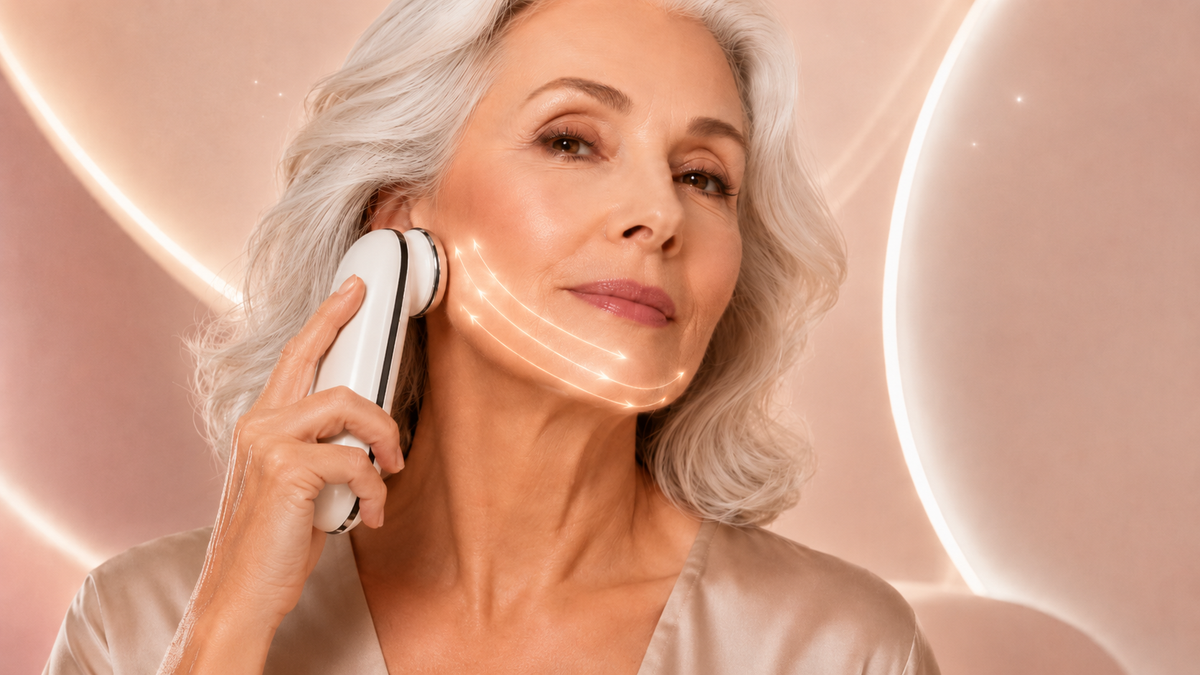
The case for multi-modality at-home devices is exactly here. A device that delivers RF (skin), EMS (muscle), and LED (skin via photobiomodulation) addresses three of the four layers in a single session. It doesn't reach layer four, because no at-home tool does. But for soft-tissue layered aging, multi-modality covers a much larger fraction of the territory than any single-modality alternative.
Several devices fit this profile. EvenSkyn's Lumo+ is the multi-modality option in our own range, combining 1 MHz radiofrequency, EMS at 100 Hz, red and blue LED, and iontophoresis in a single handset. The relevant point for this section isn't a specific product. It's that the multi-modality category exists, and after 45, it's usually the right at-home tier choice over single-mechanism devices.
7. The three treatment tiers, and what each can reach
Same hierarchy that applies to every cosmetic concern. Three places treatment lives: surgery, in-clinic non-surgical, and at-home.
Surgery sits at the top. A deep-plane facelift addresses all four layers in one operation: it tightens skin, repositions and sometimes augments fat, lifts the SMAS, and can incorporate bone-supporting elements like chin or cheek implants. This is the only intervention that achieves dramatic, durable correction across all four layers. It's also the most invasive, most expensive ($25,000 to $50,000 in major US markets), and a one-shot decision: you're committing to a permanent change, with surgical risk, and downtime measured in weeks.
In-clinic non-surgical procedures sit in the middle. Each procedure typically addresses one layer well and the others not at all. RF microneedling and HIFU work primarily on layer one. Botox works primarily on layer three. Filler addresses layers two and four. Thread lifts mechanically lift soft tissue. The result is that an effective non-surgical treatment plan at this tier usually involves three or four different procedures over time, in some sequence, building on each other. The cost adds up. Maintenance is required. Each procedure has its own downtime.
At-home devices sit at the bottom of the power scale. By regulatory design (FDA, Health Canada, CE), consumer device output is capped for safety because at home you don't have a trained provider monitoring tissue response in real time. This is not a quality gap. It's a safety mandate. The trade is that home devices need to be used more frequently and consistently to produce visible change, in exchange for dramatically lower side-effect risk and a one-time cost.
The right answer for most people after 45 isn't one tier. It's a combination. A solid at-home routine running three to five times a week, in-clinic procedures a couple of times a year for the layers home tools can't reach, and surgery considered only when laxity has progressed past what either tier can match.
8. What treats each layer at each tier
| Layer | At-home (Tier 3) | In-clinic (Tier 2) | Surgery (Tier 1) |
|---|---|---|---|
| Skin (collagen, elastin, surface) | RF, red light, retinoids, peptides, vitamin C, daily SPF | RF microneedling, HIFU, fractional laser, chemical peels, professional retinoid programs | Skin excision (part of facelift) |
| Fat (compartments, volume) | No direct option (lifestyle-related fat changes only) | HA filler in deep medial cheek and temple, calcium hydroxylapatite, poly-L-lactic acid (Sculptra), fat grafting | Fat repositioning, fat grafting (often combined with facelift) |
| Muscle (SMAS, mimetic) | EMS, microcurrent | Botox (selective relaxation of depressors), neuromodulators | SMAS imbrication / SMAS plication, deep-plane facelift |
| Bone (skeletal projection) | No direct option | Structural filler placed deep on bone (supraperiosteal) | Facial implants (chin, cheek, mandibular angle), bone grafting |
The pattern that emerges from the table: at home, you can address two of the four layers (skin and muscle) effectively with a multi-modality device, plus support for the skin layer with topicals and lifestyle. In clinic, you can address all four. With surgery, you can address all four at once and most dramatically.
9. Building a layered at-home routine for after 45
The goal of an at-home routine after 45 is to address layer one (skin) and layer three (muscle) consistently, while acknowledging that layers two (volume) and four (bone) are out of reach without in-clinic work.
The routine that does this looks roughly like the following.
For the skin layer (layer one), the daily basics are non-negotiable. Daily SPF 30+ is the single highest-leverage skin-layer intervention, because it stops the largest source of ongoing collagen damage. A retinoid (tretinoin by prescription, or retinol over the counter) at night, started slowly, produces measurable improvement in fine lines and texture over months. Vitamin C in the morning supports collagen synthesis and free-radical defense. Peptides in serum or eye-cream form provide modest support and are well-tolerated.
On top of that, RF treatment two to three times a week is the most evidence-supported home intervention for collagen remodelling. Sessions of 15 to 25 minutes covering the full face, jawline, and neck, with a conduction gel that allows the energy to deliver evenly across the skin. The Lumo+ runs at 1 MHz, with RF energy targeted to penetrate approximately 3 millimeters into the dermis where collagen synthesis happens. Its two-tier dermal heating system delivers thermal energy that briefly reaches 60°C in the dermal layer, which sits in the clinical range studied for collagen remodeling at home.
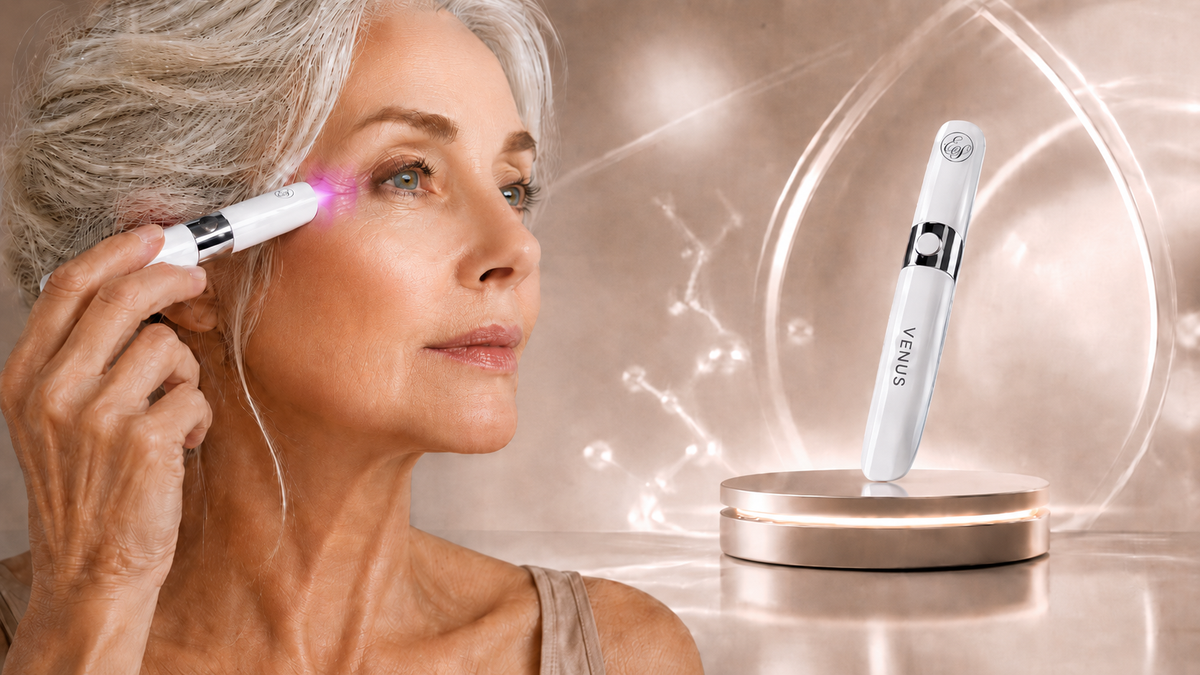
For the eye area specifically, the eyelid skin is too thin for full-face RF intensity and needs a fractional, lower-depth tool. The EvenSkyn Venus is the eye-area device in our range and pairs cleanly with the Lumo+ if eye work is part of the goal, though it isn't strictly necessary for someone working only on jawline and cheek tightening.
Red light therapy two to three times a week, with eyes closed, supports collagen synthesis through photobiomodulation. A full-face LED mask covers the periorbital region in 10-minute sessions. Slow-acting, but cumulatively useful, and effectively zero side-effect risk when used as directed.
For the muscle layer (layer three), EMS or microcurrent two to three times a week, in alternating sessions with the RF work or in parallel during the same session if the device supports it. The Lumo+'s EMS mode runs at 100 Hz with 3 mA average power, which sits in the range that produces visible muscle contraction rather than sub-perceptual cellular stimulation. According to manufacturer reporting, the post-session muscle effect persists for 72 to 96 hours, which is consistent with the EMS literature and means the practical use frequency is twice or three times per week, not daily.
On the days between device sessions, a dedicated microcurrent tool can provide gentler cellular support for daily use without the higher-amperage muscle contraction. EvenSkyn's Phoenix microcurrent bar covers this when it's in stock; lighter at-home microcurrent rollers from various brands are also reasonable for daily-use cellular work, though they don't deliver the structural muscle training that EMS does.
For the volume layer (layer two), your at-home options are essentially limited to lifestyle factors that affect facial fat: hydration, adequate dietary protein, and avoiding rapid weight loss without medical supervision. None of this restores volume that's already been lost. It just doesn't accelerate further loss. If volume restoration is the goal, that's a Tier 2 conversation with a board-certified dermatologist or facial plastic surgeon.
For the bone layer (layer four), no at-home intervention. Resistance exercise and adequate dietary calcium and vitamin D support overall bone density, which has long-term value but doesn't restore facial skeletal projection that's already been lost.
10. A realistic 90-day protocol
What this looks like in practice, mapped to days of the week.
Daily, every day. Cleanse morning and night. SPF 30+ in the morning. Vitamin C serum (morning, after cleansing, before SPF). Retinoid at night, two to three nights weekly to start, building up to nightly over six to eight weeks. Eye cream with peptides if you're using one. Sleep on your back if you can, side if you must, never face-down. Drink water.
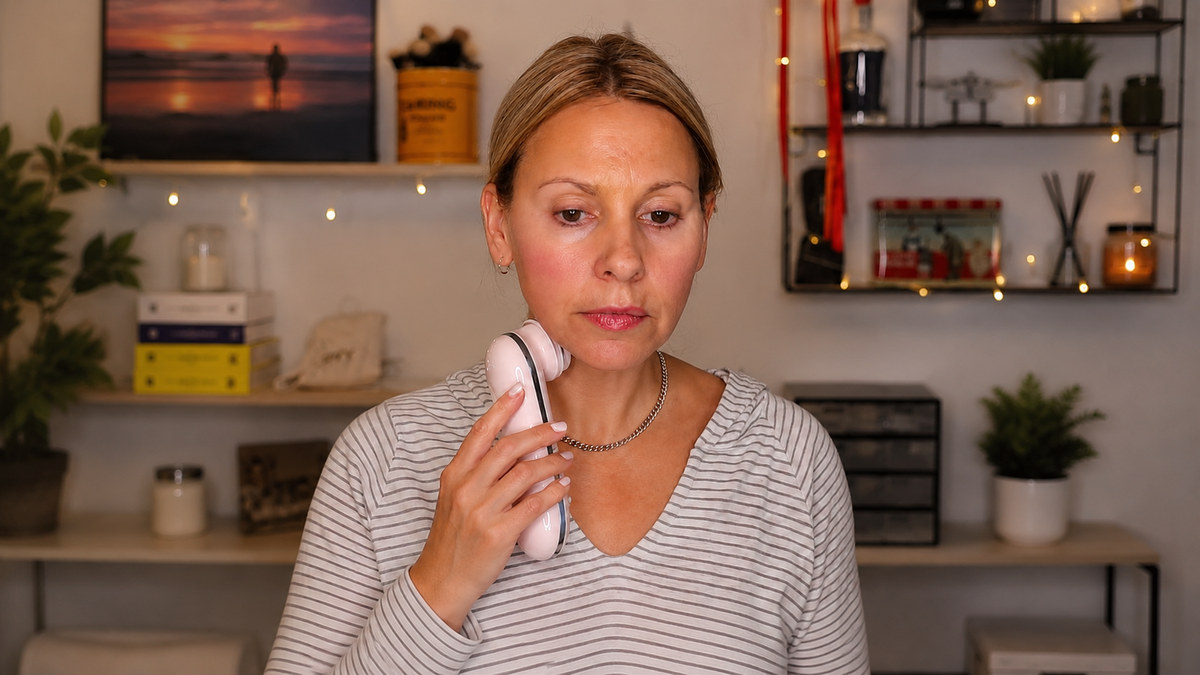
Three sessions of focused device work per week. Two of those should be Lumo+ (or another multi-modality device) sessions of 5 to 8 minutes covering the forehead, cheeks, jawline, and neck: RF mode first for the skin layer, then EMS mode for the muscle layer. Conduction gel throughout. The third session can be the device again, or a red light therapy mask session, depending on whether you want more structural work or more skin-quality maintenance.
The days between device sessions. Skip the device entirely. Tissue needs recovery time. Continue the daily skincare. If you have a Phoenix microcurrent bar, you can do gentle 5-minute sessions for circulation and lymphatic drainage on rest days, but you don't need to. Most people overuse devices, not underuse them.
What happens over the 90 days. Weeks 1 and 2: no visible structural change. You may notice mild adaptation effects, transient pinkness after RF, mild dryness from the retinoid. Both normal. Weeks 3 to 4: skin texture starts improving. Hydration and softness become more apparent. Weeks 6 to 8: earliest period for visible firmness improvement. Some people start seeing changes in the jawline definition. Weeks 10 to 12: peak collagen-remodeling response window. Reduction in fine lines becomes visible. Photo comparisons at 90 days are usually where clear before-and-after differences emerge.
Realistic ceiling for this protocol on layered aging after 45: visible improvement in skin firmness, texture, and tone. Modest to moderate improvement in apparent jowl definition where the muscle layer is responsive. No effect on volume that's been lost or bone that's resorbed. Your face will look better. It won't look like it did at 30. Anyone selling you "look 10 years younger in 30 days" is selling you something.
11. When at-home isn't enough
At-home routines have a ceiling, and any honest non-surgical facelift guide has to acknowledge that. If your face is showing significant volume loss in the cheeks and temple, your at-home tools aren't going to refill that volume. If your jowls have descended past the inferior mandibular border, no amount of skin tightening will pull them back to a youthful position. If your bone has retruded enough that your midface has lost its forward projection, no device will rebuild that projection.
The signs that your at-home work has hit its ceiling include: You've been running a consistent multi-modality routine for at least 90 days and you're not seeing meaningful improvement in your specific concern. Your concern is volume-related (sunken temples, flat midface, hollow cheeks) rather than skin or muscle related. Your concern is bone-related (loss of jawline definition that the underlying mandible no longer supports). You have significant skin laxity that drapes well past the natural contours.
The right move in any of these cases is a consultation with a board-certified dermatologist or facial plastic surgeon. They'll identify which layers are driving your specific concern and recommend the appropriate Tier 2 or Tier 1 intervention. Most reputable providers offer paid evaluation consultations, and the answer to "what's actually happening with my face" is worth the consultation fee even if you don't proceed with their treatment. For more on the surgical end of the spectrum and where it fits relative to non-invasive options, our piece on facelift procedures and whether you can avoid surgery covers it in more depth.
12. Value comparison: at-home, in-clinic, and surgery
This section addresses the comparison most readers planning a non-surgical facelift are silently making.
Power and the safety trade-off. In-clinic procedures use machines that operate at substantially higher energy output than at-home devices. Morpheus8 RF microneedling, Sofwave HIFU, and Ultherapy all run at energies impossible to replicate at home. The difference is intentional, not a quality gap. Regulatory bodies cap consumer device output for safety because at-home users don't have a trained provider monitoring tissue response. The consequence is that at-home devices need more frequent, more consistent use to produce comparable cumulative effect. The upside is that severe burns, hyperpigmentation, fat atrophy, and other documented complications of high-energy in-clinic devices have effectively zero risk at consumer power levels when devices are used as directed.
What things actually cost. A single Morpheus8 RF microneedling session typically runs $1,000 to $2,500. Three sessions are standard, with maintenance every 12 to 18 months. Sofwave or Ultherapy runs $1,500 to $5,000 per session, repeating every 12 to 24 months. Botox runs $400 to $800 per visit, every 3 to 4 months, so $1,600 to $3,200 per year if you stay on schedule. HA filler runs $700 to $1,500 per syringe, refilled every 9 to 18 months. A deep-plane facelift in major US markets runs $25,000 to $50,000.
Compare to at-home. The Lumo+ at $499.99 is a one-time purchase that covers face, neck, and décolletage. It's roughly one-fifth the cost of a single Morpheus8 session, one-third the cost of one Sofwave session, and pays for itself relative to a year of Botox in just under three months. The Mirage LED mask at $399.99 covers the full face for indefinite use. The Venus at $149.99 covers the eye area. Total at-home stack across all three devices runs about $1,050. That's less than one in-clinic Sofwave session.
What this comes down to: per-result-magnitude, in-clinic procedures are more efficient. Per-dollar-spent-over-three-years, at-home is dramatically more cost-efficient for the layered work that needs consistency over time anyway.
Why ownership compounds over years
One structural difference between the tiers that few articles make explicit. After a clinic appointment, you walk out with the result. That's it. Your next session needs another booking, another fee, another spot on your calendar. When the result fades, you're back to baseline unless you go again.
An at-home device works differently. You buy it once. If results are good and you want to maintain them, you keep using it. No additional cost beyond electricity and occasional replacement parts. The device travels with you, sits ready when life gets busy, and waits without billing you. There's no booking pressure, no scheduling friction, no monthly question of whether you can afford it this month.
For layered after-45 work that needs consistent treatment over years anyway, ownership transforms the math. The device becomes a fixed investment producing benefit for a long time, instead of a recurring expense producing episodic results.
The combined approach is what most people actually do. A multi-modality at-home routine running three to five times per week. In-clinic procedures a couple of times a year for the layers home devices can't reach (Botox for muscle work, filler for volume restoration). Surgery considered only at advanced laxity. This is also what most board-certified dermatologists recommend for patients in their 40s and 50s who want to address facial aging seriously without committing to surgery.
13. Frequently asked questions
What's the difference between RF, EMS, and microcurrent? RF (radiofrequency) generates heat in the dermis to stimulate collagen synthesis. It works on the skin layer. EMS (electrical muscle stimulation) uses higher-amperage current to produce visible muscle contraction, training facial muscles toward better tone. Microcurrent uses very low amperage that supports cellular function and provides gentler muscle work. EMS and microcurrent both work on the muscle layer but at different intensities. The mechanisms don't overlap with RF.
Can at-home devices actually replace a facelift? For mild to moderate facial aging that's primarily in the skin and muscle layers: at-home devices can produce meaningful improvement and may delay the need for surgery by years. For significant aging that involves all four layers (skin laxity, volume loss, muscle slack, bone resorption): no. A deep-plane facelift addresses all four layers at once in a way no non-surgical tool matches. What's actually accurate is that at-home devices are best understood as prevention, early-stage support, and ongoing maintenance, not as facelift substitutes.
Why are at-home devices weaker than in-clinic ones? By regulatory design. The FDA, Health Canada, and CE all cap consumer device output for safety, because at-home users don't have professional supervision. The mechanism is the same. The energy output is lower. What that buys you is more frequent use over a longer period for comparable cumulative effect, in exchange for dramatically lower side-effect risk.
How long does it take to see results from at-home RF and EMS? Most users notice initial textural improvement at 4 to 6 weeks of consistent use. Visible firmness changes in the 8 to 12 week window. Photo comparisons at 90 days usually show the first clear before-and-after differences. Maintenance use is required to keep the gains, because dermal collagen continues to turn over.
Is it safe to use RF and EMS on the same area in the same session? Yes, when the device is designed to deliver them sequentially or in alternating cycles. Single-handset multi-modality devices are engineered specifically to handle this safely. The combination treats two different tissue layers (RF for dermal collagen, EMS for muscle) and there's no clinical evidence of interference between them when used as directed.
Can I use Lumo+ if I have dental implants or facial fillers? Per the manufacturer, the Lumo+'s RF energy penetrates approximately 3 to 4 mm into the dermis, which generally clears most dental implant locations. EMS conduction can be a consideration if metal hardware is shallow. The standard advice applies: consult with the medical practitioner who placed your implants or filler about your specific anatomy. For HA fillers placed within the past 4 weeks, most clinicians recommend waiting until the filler has fully integrated before using thermal devices on the area.
Will losing weight on a GLP-1 medication make my face look older? Often, yes, in the short term. This is what's been popularly called "Ozempic face." Significant rapid weight loss reduces facial fat across multiple compartments simultaneously, which unmasks underlying laxity that was previously hidden. The underlying tissue change isn't new; it just becomes visible. Layered at-home device work, plus selective filler in deep volume areas, is the standard approach.
How often should someone over 45 use a multi-modality device? For Lumo+ specifically, the manufacturer guidance is two to three RF sessions per week on the face, with total RF time capped at 25 minutes per week including any neck work. EMS sessions can be added to the same sessions or done on alternating days. The ceiling is dictated by tissue recovery time between thermal sessions, not by how much benefit is available. More frequent isn't better.
Does perimenopause make all of this worse? Yes. Estrogen supports collagen synthesis, dermal hydration, and skin barrier function. The estrogen withdrawal of perimenopause and menopause accelerates collagen loss across all skin, with the face often where it shows up first and most. This is one reason many women see facial aging "speed up" in their late 40s and early 50s, even when they hadn't previously seen rapid change. Layered intervention during this window has higher leverage than at any other time.
Will at-home devices reduce both wrinkles and sagging skin, or only one?
Both, but through different mechanisms and at different timelines. RF and red light primarily address the skin layer: they reduce fine wrinkles and improve overall texture and tone. EMS addresses the muscle layer underneath: it's what produces the visible firming and lifting effect that helps with sagging skin around the jawline and lower face. A multi-modality device that delivers RF, EMS, and LED in one session works on both at the same time, which is part of why it tends to outperform single-mechanism tools for layered aging. Volume loss (which contributes to a flat or hollow midface) is a separate problem that at-home devices can't directly address, and structural sagging from significant bone resorption requires in-clinic intervention.
What's the biggest mistake people make trying to address facial aging at home? Picking a single tool and expecting it to address everything. The 4-layer model means most after-45 faces have changes in three or four layers simultaneously, and a single-mechanism tool addresses one. The second biggest mistake is overuse. Tissue needs recovery between sessions. More is not better. Consistent moderate use beats intermittent intense use every time.
Is a multi-modality device really worth it over buying separate single-purpose devices? For most people after 45, yes, primarily because of compliance. Three separate devices means three separate routines, three separate gels or activators, three separate charging schedules, three separate places on your bathroom counter. Compliance drops with each added complexity. A single-handset device that does RF, EMS, and LED in one session has dramatically higher real-world adherence, which is what actually drives results over time. The cost math also generally favors a single multi-modality device over three single-purpose ones at the same total quality level.
About this guide
This article was researched and drafted by the EvenSkyn editorial team and clinically reviewed by Lisa Hartford, MD before publication. Every cited reference has been verified against its primary source. The four-layer model of facial aging draws from the standard anatomical literature in dermatology and facial plastic surgery (Mendelson and Wong, Rohrich and Pessa, Mitz and Peyronie). Treatment recommendations follow standard practice as of May 2026. Where the article mentions specific in-clinic procedures, costs, or timelines, the figures reflect typical North American market ranges and may vary by region and provider. Product specifications and pricing for any EvenSkyn devices mentioned were verified against current product pages on the date of last review. Competitor at-home devices are not named or compared in this piece, in keeping with our editorial policy on brand-site comparison content.
14. References
- Mendelson B, Wong CH. Changes in the Facial Skeleton With Aging: Implications and Clinical Applications in Facial Rejuvenation. Aesthetic Plastic Surgery. 2012;36(4):753-760. PMCID: PMC3404279.
- Rohrich RJ, Pessa JE. The fat compartments of the face: anatomy and clinical implications for cosmetic surgery. Plastic and Reconstructive Surgery. 2007;119(7):2219-2227.
- Mitz V, Peyronie M. The superficial musculo-aponeurotic system (SMAS) in the parotid and cheek area. Plastic and Reconstructive Surgery. 1976;58(1):80-88.
- Alster TS, Tanzi E. Improvement of Neck and Cheek Laxity With a Nonablative Radiofrequency Device: A Lifting Experience. Dermatologic Surgery. 2004;30(4 Pt 1):503-507. PMID: 15056138.
- Carruthers J, Carruthers A. Shrinking upper and lower eyelid skin with a novel radiofrequency tip. Dermatologic Surgery. 2007;33(7):802-809. PMID: 17598845.
- Fitzpatrick R, Geronemus R, Goldberg D, Kaminer M, Kilmer S, Ruiz-Esparza J. Multicenter Study of Noninvasive Radiofrequency for Periorbital Tissue Tightening. Lasers in Surgery and Medicine. 2003;33(4):232-242.
- Nahm WK, Su TT, Rotunda AM, Moy RL. Objective changes in brow position, superior palpebral crease, peak angle of the eyebrow, and jowl surface area after volumetric radiofrequency treatments to half of the face. Dermatologic Surgery. 2004;30(6):922-928. PMID: 15171772.
- Bu P, Duan R, Luo J, Yang T, Liu N, Wen C. Development of Home Beauty Devices for Facial Rejuvenation: Establishment of Efficacy Evaluation System. Clinical, Cosmetic and Investigational Dermatology. 2024;17:553-563. doi: 10.2147/CCID.S449599. PMID: 38476342. PMCID: PMC10929553.
- Hamblin MR. Mechanisms and applications of the anti-inflammatory effects of photobiomodulation. AIMS Biophysics. 2017;4(3):337-361. PMID: 28748217. PMCID: PMC5523874.
This article is informational and is not medical advice. Facial aging has multiple underlying causes, some of which warrant in-person evaluation by a board-certified dermatologist or facial plastic surgeon. The right treatment plan depends on your specific anatomy, medical history, and goals. Consult a qualified provider for individualized assessment.
Authored by the EvenSkyn editorial team and clinically reviewed by Lisa Hartford, MD, our Chief Dermatology Advisor and Doctor-in-Residence. Treatment recommendations reflect peer-reviewed clinical evidence as of the publication date. Product mentions throughout are EvenSkyn devices; competitor devices are not named or compared. Readers are encouraged to research multiple options and make decisions based on their individual circumstances and consultations with qualified healthcare providers.
For readers building an at-home routine around the layered model in this guide, the multi-modality device in our range is the Lumo+, which addresses three of the four layers (RF for skin, EMS for muscle, and LED for skin via photobiomodulation) in one handset. Layer four still needs an in-clinic conversation. All EvenSkyn devices ship with a 60-day return window.

Hinterlasse einen Kommentar
Alle Kommentare werden vor der Veröffentlichung geprüft.
Diese Website ist durch hCaptcha geschützt und es gelten die allgemeinen Geschäftsbedingungen und Datenschutzbestimmungen von hCaptcha.