

Medically Reviewed by Dr. Lisa Hartford, MD
What To Use After Microneedling at Home: The One Decision That Matters More Than the Serum
Key Takeaways
- What to use after microneedling at home: a medium-weight hyaluronic acid serum and a fragrance-free barrier cream right after the session, with broad-spectrum SPF 30 or higher every morning. Hold off on retinoids, vitamin C, and exfoliating acids for 48 to 72 hours.
- Microneedling works by creating controlled micro-injuries that trigger the skin's own wound-healing cascade, raising collagen and elastin output over the weeks that follow.
- Those same needles open temporary microchannels that briefly raise skin permeability. Human studies show these channels begin resealing within roughly 30 minutes and largely close within several hours when skin is left unoccluded.
- For the first 24 to 72 hours your skin is a high-absorption surface, so every product decision carries more weight than usual. Gentle, fragrance-free hydration helps. Active irritants do not.
- The most consequential serum decision is not what you apply afterward, but when the serum enters relative to the needles. Rollers and pens deliver serum to open, air-exposed channels after the fact, whereas micro-infusion delivers it sealed, during the pass.
- Reintroduce actives on a schedule, not a guess: retinoids and exfoliating acids after 72 hours, vitamin C after 48 hours, and broad-spectrum SPF 30 or higher every single morning.
- The single most common aftercare mistake is reintroducing actives too early, because skin can look recovered on the surface while the barrier is still rebuilding underneath.
- Hygiene is not optional. Open channels plus unwashed hands, gym sweat, or a reused needle head is the most reliable way to turn a good session into a breakout.
- This guide is built on 20 peer-reviewed references verified at PubMed, and is reviewed by a board-certified dermatologist.
At a Glance
The Short Version
| Question | Short Answer |
|---|---|
| What should I put on skin right after microneedling? | Nothing harsh. A medium-weight hyaluronic acid serum and a fragrance-free barrier cream. Skip everything else until the next day. |
| How long until I can use retinol or acids again? | Retinoids and AHA or BHA acids after 72 hours. Vitamin C after 48 hours. Reintroduce one at a time. |
| When can I wear makeup? | Avoid it for at least 24 hours. If unavoidable the next day, use a clean mineral formula for sensitive skin. |
| When can I work out? | No sweating for 24 hours. Sweat carries bacteria into channels that have not fully closed. |
| What is the real difference between a roller, a pen, and micro-infusion? | Mostly when the serum enters. A roller drags serum across the surface. A pen needs serum applied into open channels. Micro-infusion delivers it sealed, during the pass. |
| Is at-home microneedling safe? | At conservative depths and with single-use sterile heads, yes for most people. Hygiene and contraindication screening do most of the safety work. |
Evidence Behind This Guide
| What the research supports | Source type | Reference |
|---|---|---|
| Microneedling stimulates collagen and elastin through the wound-healing cascade | Comprehensive review | Ref 1 |
| Microneedling produces a transient rise in skin permeability and a measurable barrier-recovery phase | Narrative review, 70 studies | Ref 2 |
| Microchannels begin resealing within about 30 minutes and largely close within hours when unoccluded | Human impedance study | Ref 6 |
| Channel closure is slower under occlusion and slower in deeper skin tones | In vitro imaging; human study, 111 subjects | Ref 7, Ref 9 |
| PDRN supports fibroblast activity and tissue repair through adenosine A2A receptor signaling | Systematic review; clinical trial | Ref 10, Ref 12 |
| Copper tripeptide-1 and EGF-class peptides influence collagen synthesis and skin remodeling | Controlled studies; reviews | Ref 13, Ref 14, Ref 15 |
| Most microneedling adverse effects are mild and transient; pigment risk rises with depth and phototype | Systematic review | Ref 18 |
Five Things Worth Knowing Before You Read On
First, almost every aftercare guide you will find shares one buried assumption, that the serum decision happens after the needles, and this guide questions that, because the timing of serum delivery turns out to matter more than the serum itself.
Second, the open-channel window is real but short. The window is not a multi-day vulnerability but mostly a same-day event, and human data puts most of the resealing inside the first several hours, with full barrier recovery generally inside a day or two.
Third, your skin tone matters to your timeline. Research in 111 subjects found that micropores stay open measurably longer in deeper skin tones, which has real implications for both absorption and pigment risk.
Fourth, at-home depths are conservative by design, and a fixed 0.5 mm depth behaves very differently from the 1.0 to 2.5 mm depths used in clinical motorized pens, so the aftercare scales accordingly. Fifth, the biggest risks at home are not the needles but hygiene shortcuts and impatience with actives, and both of those are entirely within your control.
Limitations & Methodology
This guide synthesizes peer-reviewed dermatology and drug-delivery literature, much of which studies clinical-depth microneedling or controlled microneedle drug delivery rather than at-home cosmetic devices specifically. Channel-closure figures come from human and in vitro models and vary with needle length, occlusion, and individual skin. Phototype-specific timing is drawn primarily from one well-designed study and should be read as directional. None of this is a substitute for the instructions of a clinician who has seen your skin. Where evidence is genuinely uncertain, this guide says so rather than rounding up.
If you are searching for what to use after microneedling, you are asking a good question. You are also asking it a step too late. The result your skin keeps is decided less by the cream you reach for afterward and more by how, and when, the serum reached the layers that matter.
There is a particular moment, maybe an hour after an at-home microneedling session, when most people stand at the bathroom mirror with a faintly pink face and a cabinet full of serums, trying to decide what to put on. It feels like the important decision, and it is a reasonable one. It is just not the decision that did most of the work. By the time you are standing there, the channels your needles opened are already closing, and the question of what gets delivered deep has largely been answered. This guide will still tell you exactly what to apply, hour by hour and day by day, because that genuinely matters for comfort, barrier recovery, and pigment safety. But it will also reframe the question, because understanding the timing changes what you do at every step, and it changes which tools are worth owning in the first place.
Quick Answers
How long does microneedling take to heal?
Visible recovery from a conservative at-home session is usually short, with redness and a warm, tight feeling tending to settle within a few hours to a day, and light flaking, if it happens at all, fading over the following days. The deeper work, collagen remodeling, continues quietly for weeks, while clinical-depth sessions run longer, often several days of visible recovery.
What should I never put on skin after microneedling?
For the first 24 to 72 hours, keep away from retinoids, vitamin C in low-pH L-ascorbic form, AHAs and BHAs, benzoyl peroxide, strong brightening agents, added synthetic fragrance, high-strength essential oils, and alcohol-heavy toners. On freshly treated skin, anything that tingles or exfoliates under normal conditions will behave more aggressively.
Can I use hyaluronic acid right after microneedling?
Yes. A medium-weight hyaluronic acid serum is one of the safest and most useful things to apply in the first hours and days. It draws water into the upper layers and eases the tightness that follows treatment, without irritation.
When can I use retinol after microneedling?
Wait at least 72 hours, then reintroduce slowly rather than at full strength, because retinoids thin the stratum corneum and raise sensitivity, so starting too early stacks irritation on a barrier that is still rebuilding.
Why does my skin feel tight or slightly sticky afterward?
Tightness is mild dehydration, common in the first day, and resolves with a fragrance-free hydrating cream and more water. A faintly tacky finish usually means a peptide- and humectant-rich serum is still drawing in moisture. It settles overnight.
Do I really need sunscreen if I am staying inside?
Yes. Freshly treated skin is more vulnerable to UV, and UV exposure on it is a leading driver of post-treatment hyperpigmentation. Apply broad-spectrum SPF 30 or higher every morning, with particular attention to the 72 hours after a session.
A Note on Why We Wrote This, and Who We Are
EvenSkyn is a Canadian at-home anti-aging device brand. We make micro-infusion tools, including the Under-Eye MicroInfuser patches and the MicroInfuser stamping device. That is a commercial interest, and you should read this guide knowing it. We have tried to earn your trust the only way that works, which is by being accurate, citing real research, and telling you plainly where the evidence is thin.
This article is part of a connected set of EvenSkyn pieces. If you want the full picture of how the technique works and what to look for in a kit, read our at-home micro-infusion guide. The safety and hygiene deep-dive lives in is at-home micro-infusion safe. Our piece on what is micro-infusion covers the science and benefits, while micro-infusion vs microneedling vs derma rolling handles how the techniques compare. And for cadence, see how often to micro-infuse at home. This guide stays in its own lane, which is recovery and serum timing, and points you to those for the rest.
The Serum Timing Map
Here is the idea this whole guide turns on. Three at-home techniques all involve fine needles and a serum. What separates them is not mainly the needles, but the moment the serum enters relative to the channels, and the state those channels are in when it does. Read this table as the spine of everything that follows.
| Factor | Derma Roller | Microneedling Pen | Micro-Infusion (Sealed Stamp) |
|---|---|---|---|
| When the serum enters | Applied to the surface before or after rolling | Applied after the pass, into channels already open | Delivered during the pass, through the needle head itself |
| Channel state at serum entry | Largely intact surface, needles entering at an angle | Open channels, already exposed to air and fingertips | Channels forming and receiving serum in the same motion |
| Contamination exposure | High if the roller is reused; serum sits in open air | Channels exposed to air, hands, and external serum chamber | Lowest in a sealed single-use ampoule-to-head system; serum never meets open air or fingers |
| Depth the serum reaches | Mostly superficial; angled entry is inconsistent | Variable, depends on user-set depth | Consistent at a fixed shallow depth; serum follows the channel inward |
| Channel consistency | Uneven; angled needles can drag | Even if technique is good; user error is common | Even; vertical stamping at a locked depth |
| How much aftercare anxiety remains | High. The serum decision and the open window are both still ahead of you | High. You are applying product into an open, exposed channel and hoping it is the right one | Lower. The high-value payload is already in, sealed; what is left is surface comfort, not a gamble |
Read this as the spine of the guide. Italicized cells flag where the aftercare burden actually lands.
Notice what the last row is doing. With a roller or a pen, the open-channel window is a liability you have to manage carefully, and the serum question is still unanswered when you are standing at the mirror, whereas with sealed micro-infusion, the most valuable serum decision was made before the needles ever touched skin, because the serum and the channel are created in the same sealed motion. The window still exists. It is just no longer the part you are anxious about. That is the reframe, and the rest of this guide gives you the full aftercare playbook anyway, because comfort, barrier recovery, and pigment safety are real, and then it shows you why the playbook gets shorter when the delivery is sealed.
Post-Treatment Wait-Time Chart
This is the reference most people actually came for. These intervals assume a conservative at-home session at a shallow fixed depth. If your skin is sensitive, if you treated deeper, or if you are in a deeper phototype, lean toward the longer end. When uncertain, wait longer rather than shorter.
| Ingredient or activity | Stop before | Resume after | Why |
|---|---|---|---|
| Retinoids (retinol, tretinoin, retinaldehyde) | 48 hours | 72 hours | They thin the stratum corneum and raise sensitivity. Starting on already-sensitized skin stacks irritation. |
| AHAs (glycolic, lactic, mandelic) | 48 hours | 72 hours | Chemical exfoliation overlaps with channel formation and barrier rebuild. |
| BHAs (salicylic acid) | 48 hours | 72 hours | Same reasoning as AHAs. |
| Vitamin C (L-ascorbic acid) | 24 hours | 48 hours | Low pH can sting freshly treated skin. |
| Physical exfoliants and scrubs | 24 hours | 48 hours | Mechanical friction is too aggressive on healing skin. |
| Benzoyl peroxide | 24 hours | 48 hours | Drying and potentially irritating during barrier recovery. |
| Added synthetic fragrance, strong essential oils | Same day | 48 hours | Common post-treatment irritants on a permeable barrier. |
| Hyaluronic acid serum | Not required | Same day is fine | Hydrates without irritation. An ideal companion ingredient. |
| Fragrance-free barrier cream | Not required | Same day is fine | Seals moisture and supports the rebuilding barrier. |
| Makeup | Same day | 24 hours, mineral only if sooner | Pigments and brushes introduce particles and bacteria into closing channels. |
| Sweating, gym, hot yoga | Same day | 24 hours | Sweat carries bacteria into channels that have not fully resealed. |
| Pools, saunas, steam, hot tubs | Same day | 24 to 48 hours | Chlorine, additives, and heat all irritate freshly treated skin. |
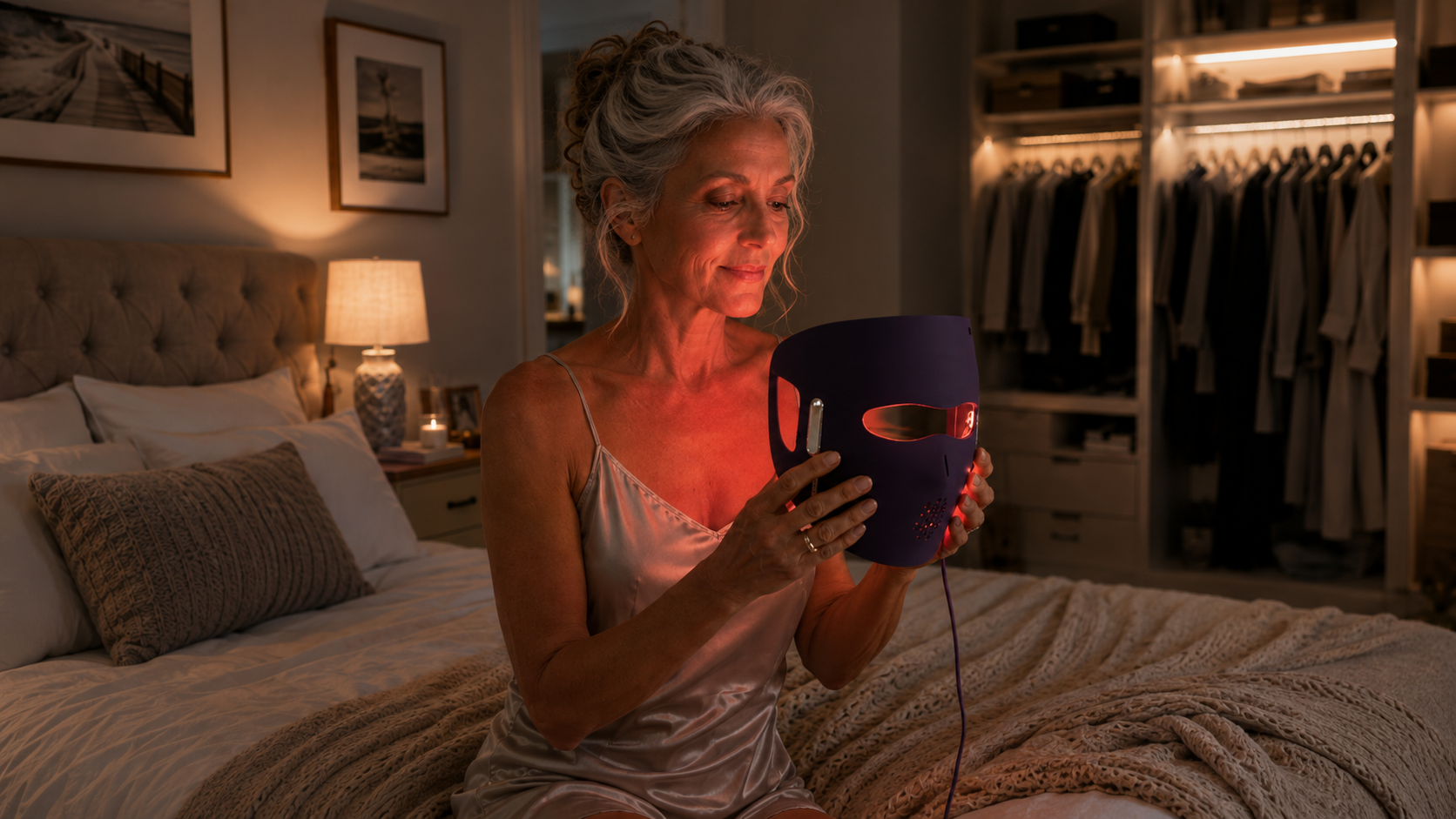
| Red and near-infrared LED mask (such as the EvenSkyn Mirage) | Not required | 24 hours | Non-thermal and widely used after needling. A 24-hour wait lets the initial inflammatory phase settle, after which red and near-infrared light is one of the gentler ways to support the recovery phase. |
| At-home RF, ultrasound, or EMS device | Same day before is fine | 24 hours minimum | Heat, vibration, or current on freshly treated skin can amplify redness. Use these before a session, not right after. |
| Direct sun exposure | Reduce beforehand | Protect for at least 72 hours | UV on freshly treated skin is a leading driver of post-treatment hyperpigmentation. |
Conservative at-home depths assumed. Italicized cell flags the timing exception. Deeper phototypes lean longer.
The Aftercare Product Checklist
If you want a plain shopping list rather than a discussion, this is it. Five things cover almost everyone for the first week after a session, and most people already own three of them, so the goal is a short routine, because every extra product is another chance to introduce something the skin did not need.
What to have ready before you treat
- A gentle, fragrance-free, pH-balanced cleanser. Used from the morning after the session onward. Nothing foaming, nothing exfoliating, nothing with added scent.
- A medium-weight hyaluronic acid serum. The single most useful thing to apply in the first hours and days. It hydrates without irritation and eases the post-session tightness.
- A fragrance-free barrier cream or moisturizer. Look for glycerin, ceramides, panthenol, or squalane. Its job is to seal hydration in while the barrier rebuilds.
- A broad-spectrum SPF 30 or higher. Non-negotiable every morning, indoors or not, with particular attention to the 72 hours after a session. Mineral formulas are a fine default for sensitive post-treatment skin.
- A fresh pillowcase and clean hands. Not a product, but the cheapest and most effective items on the list.
Optional, genuinely useful extras
- A plain hydrating sheet mask. Within the first hour after a session it is a comfortable way to flood the skin with hydration. Choose one with a short, fragrance-free ingredient list.
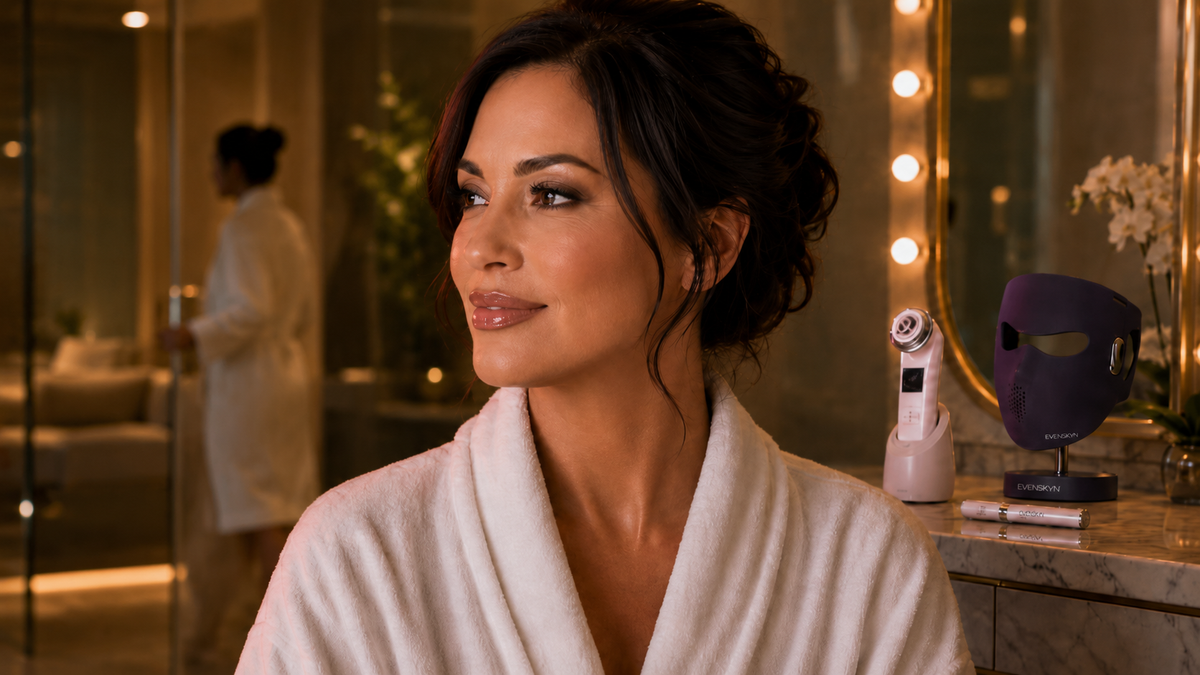
- A red and near-infrared LED mask. From 24 hours onward, a non-thermal LED mask such as the EvenSkyn Mirage is a low-risk way to support the recovery phase across the middle days of the protocol.
What to leave in the cabinet for now
For the first 24 to 72 hours, set aside retinoids, vitamin C in its low-pH form, AHAs and BHAs, benzoyl peroxide, physical scrubs, strong brightening agents, anything with added synthetic fragrance, high-strength essential oils, and alcohol-heavy toners. None of these are bad products. They are simply the wrong tools for a barrier that is rebuilding, and the wait-time chart above says exactly when each one comes back.
How to Choose a Microneedling Serum
A microneedling serum is whatever you put on skin whose barrier you have just deliberately opened, and the selection rules are not the same as for ordinary skincare. The single question that decides it is whether an ingredient is safe to have inside a channel rather than on top of one. Everything below follows from that, and it is why the wait-time chart above matters more than any individual product.
What belongs in the open-channel window
- Low-molecular-weight hyaluronic acid. Humectant, no low pH, no fragrance, no irritant potential. The default safe answer.
- Peptides. Signal molecules that benefit from a delivery route, without the sting of an acid or the oxidation risk of vitamin C.
- Barrier and soothing agents. Panthenol, beta-glucan, allantoin, Centella Asiatica. These support the recovery the channels just triggered.
- Sterile, single-dose packaging. The point people skip. A jar or a part-used dropper bottle is a contamination route straight into the dermis.
What does not, whatever the label says
- Vitamin C at low pH, which stings badly on freshly treated skin and offers nothing the channels improve.
- Retinoids, AHAs and BHAs, which compound the barrier disruption you have already created.
- Added fragrance and high-strength essential oils, the most common cause of a reaction that gets blamed on the needling.
- Anything not formulated for channel delivery. A serum designed for intact skin has been tested on intact skin.
The packaging test most buyers skip
Ask how the serum reaches the needles. A sealed single-use ampoule that connects directly to the head has no exposure point between the factory and your skin. A serum you decant, or apply from a bottle you opened last month, has several. That is a design difference rather than an ingredient difference, and it is the one that separates a controlled session from a gamble. The sealed system we build is the EvenSkyn MicroInfuser, which pairs one fresh ampoule with one fresh sterile head per session.
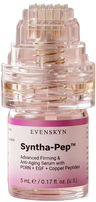
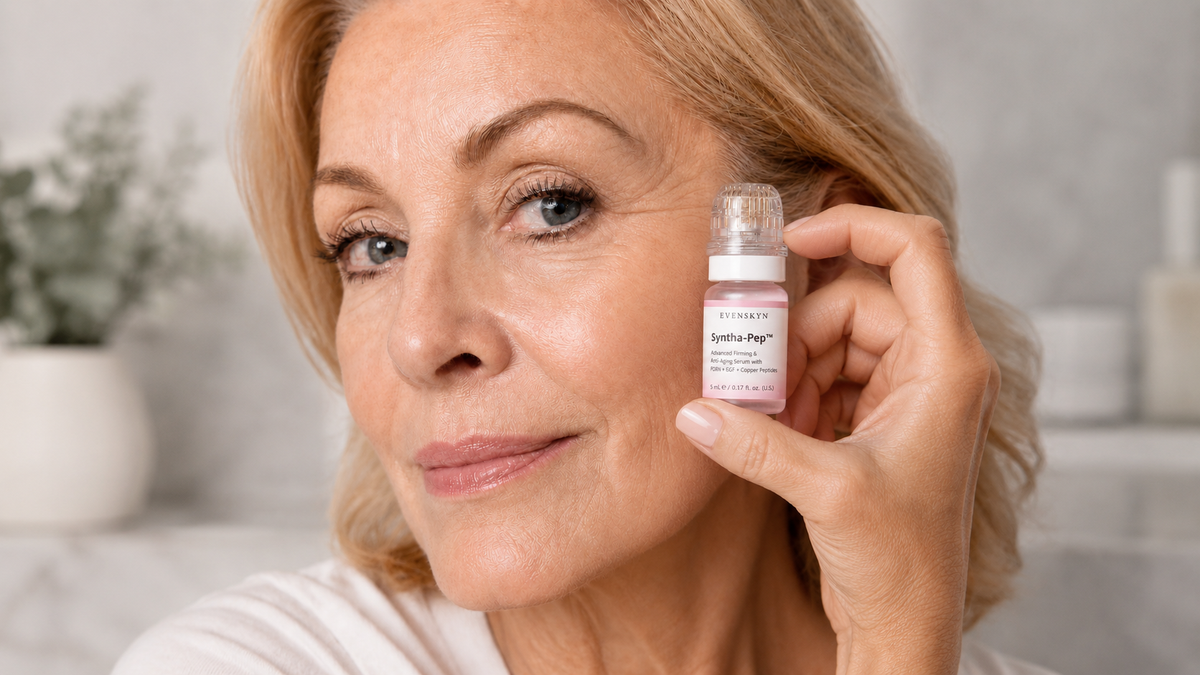
On sourcing, one honest note. Our Syntha-Pep serum uses PDRN of biosynthetic origin, produced through a controlled biosynthetic manufacturing process rather than derived from salmon. Its ingredient declaration lists two collagen entries; our source letter covers only the Soluble Collagen, which is yeast-fermented rather than extracted from animal sources, and we hold no origin document for the separate Collagen entry. Because that entry is undocumented, the serum is not suitable for anyone with a fish or shellfish allergy. The full ingredient breakdown is at what is actually in Syntha-Pep.
How Microneedling Actually Works
It helps to start broad, because the aftercare only makes sense once you understand what the needles set in motion. Microneedling, also called percutaneous collagen induction, is a minimally invasive procedure that uses fine needles to create thousands of controlled micro-injuries in the skin. A comprehensive 2024 review of microneedling applications and outcomes describes the core mechanism plainly: those micro-injuries trigger the body's natural wound-healing processes, which raises production of collagen and elastin, the proteins that keep skin firm and elastic.
The injury itself is deliberate, because your body does not distinguish between a cosmetic micro-injury and an accidental one, and it responds to both with the same orchestrated repair sequence that begins the moment the needles withdraw. Blood components arrive at the new channels and the early inflammatory signals fire, and fibroblasts, the cells that build the dermal matrix, are recruited and activated over the hours that follow. Over the following days and weeks they lay down fresh collagen and elastin, and the skin remodels. A 2025 narrative review that pooled 70 studies on the physiology of microneedling identified the main mechanisms as collagen and elastin production, angiogenesis or new blood vessel formation, a transient rise in skin permeability, and, notably, improved epidermal barrier function once the recovery phase completes.
That last point is worth pausing on, because the barrier does not just return to baseline. The wound-healing response, run well and not over-stimulated, tends to leave the barrier in better shape than it found it, which is also why depth and frequency are not virtues in themselves. A separate literature review of percutaneous collagen induction for non-atrophic scars frames the mechanism as a pattern of non-confluent puncture wounds that produces a regenerative effect precisely because it is controlled and non-ablative. Push past controlled, and you are no longer doing collagen induction. You are doing damage. The conservative fixed depths used in well-designed at-home tools are not a limitation. They are the entire safety case.
Microneedling has a real evidence base across acne scarring, photoaging, fine lines, and texture, and a 2025 systematic review has extended the documented uses into conditions like melasma and other non-cosmetic dermatology. None of that evidence, though, separates the technique from its aftercare, because the procedure opens a door, and what happens next is what decides whether the result is the smooth, even skin you wanted or a flare of irritation and pigment you did not.
The Open-Channel Window
Here is the part almost every aftercare article gestures at without quite explaining. When needles create microchannels, they briefly disrupt the stratum corneum, the outermost barrier layer that normally blocks most of what you put on your skin, and for a limited window, the skin becomes far more permeable than usual. That is the mechanism behind enhanced serum absorption, and it is also the mechanism behind every aftercare warning you have ever read.
The good news is that this window is short and well characterized. Gupta, Gill, Andrews, and Prausnitz, working in human subjects and published in the Journal of Controlled Release in 2011, used electrical impedance to track how quickly skin reseals its barrier after microneedle insertion, and found that in the absence of occlusion, treated sites recovered their barrier properties quickly, on the order of a couple of hours. An imaging study in an animal model, characterizing microchannels created by metal microneedles, found pores closing by roughly 12 hours for shorter 370 micrometer needles and around 18 hours for longer 770 micrometer needles, with closure delayed significantly when the skin was occluded. A broader 2023 review of microneedle-mediated delivery put the overall range of reported pore-closure times from a few hours up to 72 hours, depending heavily on skin type, needle dimensions, occlusion, and formulation.
Two practical lessons fall out of this. The first is that the open-channel window is not a multi-day vulnerability but mostly a same-day event, with full barrier recovery generally inside a day or two for conservative depths left unoccluded, which means the aftercare rules that stretch to 72 hours are not claiming your channels are gaping for three days. They are giving the barrier margin to fully rebuild and the early inflammatory phase to resolve before you reintroduce anything aggressive.
The second lesson is that the window is not the same for everyone. Ogunjimi, Carr, Lawson, Ferguson, and Brogden, in a 2020 study in Scientific Reports with 111 subjects, found that micropore lifetime was significantly longer in deeper skin tones, and that objectively measured skin color predicted closure time better than self-identified race. A longer open window means a longer absorption window, which can be an advantage for delivery, but it also means a longer period of vulnerability and, paired with the known link between inflammation and pigment, a reason for anyone in Fitzpatrick types IV through VI to be particularly attentive to sun protection and to lean toward the longer end of every wait interval in the chart above.
So the open-channel window is real, useful, and manageable, but notice the framing every conventional guide uses, where the window is something that happens to your skin and aftercare is the defensive response. That framing made sense when the only tools were rollers and pens, and it makes less sense once you look at what delivery timing can do.
Why Delivery Timing Changes Everything
This is the section the rest of the internet skips. Every microneedling aftercare guide answers the question what do I put on after, but none of them stop to ask the prior question, which is when should the serum have entered in the first place, and once you ask it, the whole aftercare conversation reorganizes.
Consider the three timing models in the Serum Timing Map. With a derma roller, the serum is, in practice, a surface event, because the needles enter and exit at an angle as the drum rolls, the channels are inconsistent, and the serum largely sits on top of skin that is mostly intact. Whatever absorption advantage exists is modest, and the bigger story with rollers is hygiene, because a reused drum carries whatever it picked up last time back into the skin.
With a motorized pen, the serum decision is genuinely a post-treatment decision, because you make your passes, channels open, and then you apply a serum into those open channels. This is where the conventional aftercare anxiety is entirely rational, since you are choosing a product, in your bathroom, to apply into an open, air-exposed, fingertip-adjacent channel, and the quality and sterility of that choice is on you. The enhanced-absorption window is working, but it is working on whatever you happened to pick, and drug-delivery research is blunt about how powerful that window is, because the same microchannels that carry a hyaluronic acid serum will carry a fragrance, a preservative, or a contaminant just as efficiently.
Micro-infusion changes the timing. In a sealed micro-infusion system, the serum is housed in an ampoule that connects directly to the needle head, and it travels through the needle head into the channel in the same motion that creates the channel. The serum is not chosen at the mirror, because it was chosen before the session, it never meets open air or fingertips, and it reaches a consistent shallow depth because it follows the channel inward. The open-channel window is still there, but the highest-value payload has already used it, under controlled and sealed conditions, before that window was ever exposed.
Think about what that does to the aftercare burden. With a pen, the question what do I put on after is loaded, because the most important delivery is still ahead of you and you are about to make it with an open channel and a bathroom cabinet, whereas with sealed micro-infusion, the question is genuinely lighter, because the deep delivery is done and what is left to manage afterward is surface comfort and barrier support, which is a much smaller and much safer job. This is not a claim that micro-infusion needs no aftercare, since it needs the same gentle, hydrating, sun-protected window everything in this guide describes. The claim is narrower, that the anxious part of aftercare, the did I just deliver the wrong thing into open skin part, is largely designed out when delivery is sealed and simultaneous.
That is the unique answer to the question this guide is named after. What should you use after microneedling. The honest answer is: a hydrating serum, a barrier cream, and sun protection, on the schedule below. But the better answer, the one that actually changes outcomes, is that the most important serum decision is not an after decision at all. That decision happens before the session, and the tool you choose is what makes it for you.
What the Serum Does Once It Is In
If timing decides whether the serum gets where it needs to go, the formulation decides what happens once it arrives. This matters for aftercare because it tells you what the deep work is, and therefore what your surface routine needs to support rather than duplicate. EvenSkyn's micro-infusion serum, Syntha-Pep, is built around a small set of well-studied actives, so it is a useful worked example of what a delivery-matched formula is trying to do.
Polydeoxyribonucleotide and the repair signal
Polydeoxyribonucleotide, usually shortened to PDRN, is a low-molecular-weight DNA fragment that has become one of the more researched regenerative ingredients in skin science. A 2021 review in the journal Pharmaceuticals describes its core mechanism: PDRN binds adenosine A2A receptors on skin cells, which signals fibroblasts toward collagen synthesis, helps resolve acute inflammation, and supports granulation tissue formation. A separate 2020 systematic review of PDRN in wound healing and tissue regeneration, drawing on 34 eligible studies, reached the same conclusion about the salvage pathway and A2A receptor activation, and on the clinical side, Squadrito and colleagues ran a randomized, double-blind, placebo-controlled trial of PDRN in chronic diabetic foot ulcers and found meaningfully higher complete-healing rates in the PDRN group. The relevance here is mechanistic, not a promise about your face, because PDRN is, by design, a repair-signaling molecule, and a microchannel is the delivery pathway that lets it reach the cells it signals.
Copper tripeptide-1 and the remodeling peptides
Copper tripeptide-1, or GHK-Cu, is a copper-binding peptide with roughly five decades of research behind it. Badenhorst and colleagues, in a 2016 study, reported that GHK-Cu increased both collagen and elastin production in human dermal fibroblasts and shifted the expression ratio of tissue inhibitors of metalloproteinases relative to the metalloproteinases themselves, which is the direction associated with building matrix rather than breaking it down. Pickart and Margolina's 2018 review in the International Journal of Molecular Sciences catalogues the wider picture, including clinical work in which a GHK-Cu facial cream applied over 12 weeks improved skin density, firmness, and the look of fine lines, and GHK-Cu is one disclosure-worthy case, which is covered in the disclosures section below.
Epidermal growth factor and the cell-renewal signal
The third hero molecule is sh-Oligopeptide-1, a bioengineered peptide with a sequence identical to human epidermal growth factor, or EGF, and a 2023 review in PMC on the use of EGF in dermatological practice summarizes its role across wound healing and skin aging. The honest read on EGF is mixed and worth stating, because a systematic review and meta-analysis of EGF-containing topicals after laser surgery found only a limited, temporary effect on post-inflammatory hyperpigmentation and no significant effect on erythema or barrier repair, although patient satisfaction was higher. So EGF is a plausible cell-renewal signal with a real mechanism, not a guaranteed pigment shield, and a randomized controlled trial of microneedling combined with topical growth factors did report improvements in skin parameters with no adverse effects, which supports the pairing of needling and growth-factor delivery while stopping well short of overpromising.
The supporting cast: hyaluronic acid and Centella
Around those three sit a multi-weight hyaluronic acid system and a barrier-repair complex anchored by Centella asiatica. Hyaluronic acid is the workhorse hydrator, and it is the one ingredient nearly every source agrees you should also be applying topically during recovery, while Centella asiatica earns its place too. Shen and colleagues, in a 2019 study, showed that madecassoside, a major Centella compound, both calmed inflammatory signaling and improved skin hydration markers, including hyaluronan production by dermal fibroblasts, and a 2024 review of topical Centella in wound healing reinforces the collagen-synthesis and anti-inflammatory mechanisms. The point of the supporting cast is calm. Deep actives drive the repair signaling, while the barrier complex keeps the skin comfortable as that happens.
For aftercare, the takeaway is this. If the deep delivery has already happened, your surface routine is not trying to push more actives through a closing channel. Its job is to keep the barrier hydrated and calm while the delivered actives do their work underneath. That is why the playbook below is gentle on purpose. It is not underpowered, just correctly scoped.
The Recovery Environment: Barrier, Inflammation, and Pigment
The last piece of mechanism is the environment your skin is in for the few days after a session, because that is what your aftercare choices are actually steering. Three things are happening at once: the barrier is rebuilding, an early inflammatory phase is running its course, and your pigment-producing cells are more reactive than usual.
The barrier rebuild is the clock everything else runs on, and as covered above, conservative depths left unoccluded recover barrier function quickly, generally inside a day or two. While that rebuild is underway, the skin loses water faster than usual, which is why tightness and mild dryness are the most common sensations people report, and the correct response is hydration and a fragrance-free occlusive-leaning moisturizer, not actives. Glycerin, hyaluronic acid, ceramides, panthenol, and squalane are the kind of ingredients that support a barrier rather than challenge it.
The inflammatory phase is normal and, in moderation, is the treatment working. A 2021 systematic review of the potential adverse effects of microneedling, covering 51 studies and 1,029 patients across roller, stamp, pen, and radiofrequency devices, concluded that microneedling, regardless of the device used, is a relatively safe procedure with minimal adverse effects, the expected ones being redness, pain, mild swelling, and temporary skin irritation. The serious complications described in the wider literature cluster around aggressive technique, deep settings, poor sterility, or treating over the wrong skin, such as active acne or inflamed lesions, which means the adverse-event picture is mostly a technique-and-hygiene picture, and that is reassuring, because both are controllable.
Pigment is the part to take most seriously, especially in deeper skin tones, because inflammation and UV exposure are both drivers of post-inflammatory hyperpigmentation, and as the channel-closure research showed, deeper phototypes hold an open, reactive window longer. The EGF meta-analysis is a useful reality check here, since topical growth factors are not a reliable pigment shield. The reliable pigment strategy is unglamorous and consists of three things. Keep inflammation low by treating gently and not over-stamping. Keep UV off freshly treated skin with diligent broad-spectrum SPF 30 or higher. And if you have a history of melasma or post-inflammatory hyperpigmentation, treat conservatively, patch test, and consider a conversation with a dermatologist before you start.
Put those three together and the aftercare logic is no longer a list of arbitrary rules. It is a single objective: keep the barrier hydrated, keep the inflammation low, and keep the UV off, for as long as the window stays open. Everything in the protocol below is just that objective, expressed day by day.
A Realistic 14-Day Recovery Protocol
This is what a real recovery looks like for a conservative at-home session, mapped across the two-week interval most at-home routines use between sessions. It is written for an evening treatment, because evening lets the skin recover overnight, away from sun and makeup.
Day 1, the night of treatment
Treat in the evening on clean skin, and if you are layering devices, any RF, ultrasound, or microcurrent tool goes before the needling session, never after. Immediately after, your skin may look lightly pink and feel warm and tight, so apply a medium-weight hyaluronic acid serum, then a fragrance-free barrier cream, and a plain hydrating sheet mask within the first hour is an excellent option if you want one. Do not wash your face again that night, skip all actives, all fragrance, and all makeup, and sleep on a fresh pillowcase.
Day 2
Cleanse in the morning with only lukewarm water and a gentle, pH-balanced, fragrance-free cleanser, and pat dry rather than rub, then hydrate generously, morning and night, with a fragrance-free peptide or hyaluronic acid moisturizer. Apply broad-spectrum SPF 30 or higher, even if you do not plan to go outside, and skip actives, exfoliation, and makeup if you can avoid it. No sweating, no pools, no saunas, no hot showers, and hands off your face.
Days 3 to 4
Continue the gentle routine, and any mild flaking, if it appears at all, is normal cell turnover, so do not pick it. From around day 3, a red or near-infrared LED mask such as the EvenSkyn Mirage is a reasonable companion if you have one, since it is non-thermal and widely used after needling, and from day 4 onward you can begin reintroducing actives, but slowly and one at a time, following the wait-time chart. Vitamin C can come back around the 48-hour mark, while retinoids and exfoliating acids wait until 72 hours have passed.
Days 5 to 14
By now your skin should feel essentially normal on the surface, so resume your regular anti-aging routine on its usual schedule, reintroducing any remaining actives gradually. RF, ultrasound, or EMS devices can return to their normal cadence from 24 hours post-session onward, and using them across these middle days is exactly what builds the cumulative benefit of a layered routine. Keep the SPF non-negotiable, because the collagen remodeling set off on day 1 is still running quietly underneath, and will keep running for weeks.
Day 15
This is the next session, and the start of the next cycle. Consistency across cycles is the single biggest predictor of a visible result. One session of anything produces a modest, short-lived effect. A steady bi-weekly rhythm, supported by gentle aftercare, is what compounds.
One honest note on timelines. A hydrated glow can show up within a day or two, texture and tone shifts build over the first few weeks, and firming from genuine collagen remodeling is a 6 to 8 week story at the earliest and keeps deepening over 3 to 6 months. Treating more often does not accelerate the underlying biology, it just raises your irritation risk, so patience is part of the protocol.
Where Micro-Infusion Fits
If the argument of this guide has landed, the practical implication is straightforward. The tool that makes the most important serum decision a before decision rather than an anxious after decision is a sealed micro-infusion system. EvenSkyn's Under-Eye MicroInfuser patches apply this principle to the delicate under-eye area, where direct stamping is not appropriate, and the MicroInfuser stamping device extends it to the full face with a sealed ampoule-to-needle-head architecture, a fixed conservative depth, and a single-use sterile head and serum ampoule for every session. The serum in question, Syntha-Pep, is the delivery-matched formula described in the mechanism sections above. The point is not that you need a particular device. Rather, once you understand serum timing, a sealed system is simply the design that takes the gamble out of the open-channel window, and that is worth knowing before you buy anything. The sealed system we build is the EvenSkyn MicroInfuser, and the sections below apply whichever kit you own.
One companion worth a mention, because it answers a question this guide gets often. From 24 hours after a session, a red and near-infrared LED mask is among the calmest ways to support the recovery phase, since it is non-thermal and works entirely at the surface. The EvenSkyn Mirage LED mask is built for exactly this kind of pairing, slotting into the middle days of the protocol below without touching the channels or the barrier. It is a support act, not a substitute for gentle hydration and sun protection, but it is a genuinely low-risk one.
Six Common Aftercare Mistakes
Reintroducing actives too early
This is the most common one, and it happens because skin can look recovered on the surface while the barrier is still rebuilding underneath, so a face that looks normal on day 4 is not a signal that retinol is safe on day 4. Follow the wait-time chart, not the mirror, and bring actives back one at a time so you can see how your skin responds to each.
Treating hygiene as optional
Open or closing channels plus unwashed hands, an unsanitized work surface, gym sweat the next morning, or a reused needle head is the most reliable way to turn a good session into a breakout or worse. Wash your hands. Sanitize your surface. Use a new sterile head every time. This is not fussiness. Hygiene does the core of the safety work.
Skipping sunscreen because you are staying inside
UV on freshly treated skin is a leading driver of post-treatment hyperpigmentation, and indoor light and window exposure still count, so broad-spectrum SPF 30 or higher goes on every morning for at least the 72 hours after a session, indoors or not. For deeper skin tones, this is the single highest-value habit in the entire routine.
Stacking treatments too close together
More inflammation is not more result, and doing microneedling on top of a recent chemical peel, or running heat-based devices in the 24 hours right after a session, overstimulates a barrier that is trying to rebuild. Space modalities out, use heat-based tools before a session rather than after, and give your skin steady, repeatable treatments instead of one big reaction.
Pressing harder for better results
At a conservative fixed depth, pressing harder does not deepen the benefit, it just raises irritation and can compromise the barrier, so light, controlled contact is the whole technique. If a session drags, scratches, or genuinely hurts, that is feedback that the pressure is wrong, not that it is working.
Overcomplicating the recovery routine
The instinct after an active treatment is to do more, but the barrier wants the opposite, and a gentle cleanser, a hyaluronic acid serum, a fragrance-free barrier cream, and mineral sunscreen will carry almost anyone through the first week. A ten-step routine on freshly treated skin is not thoroughness. Every added step is another chance to introduce an irritant.
Frequently Asked Questions
How long after Botox should I wait to microneedle or micro-infuse at home?
Wait at least 2 weeks after a neurotoxin treatment before microneedling, and at least 2 weeks after microneedling before receiving Botox, so the skin barrier can fully re-establish around the injection sites. Your injecting practitioner may advise a longer interval based on your specific treatment, and their guidance overrides a general chart.
How long after dermal filler can I use an at-home microneedling or micro-infusion device?
Wait about 2 weeks after filler so it has fully settled, which reduces the risk of bruising and migration, and wait 1 to 2 weeks after a microneedling session before receiving filler. As with Botox, defer to the practitioner who performed the injectable.
Can I use my NuFACE, FOREO, or other microcurrent device after microneedling?
Use microcurrent, RF, and ultrasound devices before a microneedling session, not in the 24 hours right after, because used beforehand they warm tissue and prime circulation, while used on freshly treated skin, the current, heat, or vibration can amplify redness and disturb the early healing window. From 24 hours post-session onward they return to their normal schedule.
What is the single best thing to apply right after microneedling?
A medium-weight hyaluronic acid serum, followed by a fragrance-free barrier cream. Hyaluronic acid hydrates without irritation, and the barrier cream seals that hydration in while the skin rebuilds.
Does microneedling at home actually do anything, or do you need a clinic?
At-home microneedling at a conservative fixed depth produces real, if more gradual, improvements in hydration, texture, and over time fine lines, and the evidence base for the underlying technique is solid. Clinical motorized pens go deeper and can produce more dramatic results for concerns like deep scarring, but they also carry more downtime and demand a stricter sterile environment, so at-home and in-clinic are different tools for different jobs, not better and worse versions of one thing.
Is it normal for my skin to be red after microneedling?
Mild redness and a warm, tight feeling for a few hours up to a day are normal and expected for a conservative session. What is not normal is redness that worsens after 48 hours, swelling that increases rather than decreases, or any sign of infection such as warmth, pus, or fever, and those warrant stopping and contacting a healthcare provider.
Can I exfoliate after microneedling?
Not for a while. Physical exfoliants and scrubs wait at least 48 hours, and chemical exfoliants, the AHAs and BHAs, wait 72 hours. Exfoliation on a barrier that is still rebuilding is one of the fastest routes to over-irritation.
When can I wash my face after microneedling?
Leave your face unwashed for the rest of the day of treatment so the serum can absorb overnight. The next morning, cleanse with lukewarm water and a gentle, fragrance-free, pH-balanced cleanser, and pat dry.
How long do the microchannels stay open?
For conservative depths left unoccluded, human and in vitro research puts most of the resealing inside the first several hours, with full barrier recovery generally inside a day or two. Occlusion slows it down, and deeper skin tones tend to hold the window open longer.
Why do aftercare rules say 72 hours if the channels close faster than that?
The 72-hour figure is not a claim that channels are open for three days. The extra time is a margin that gives the barrier room to fully rebuild and the early inflammatory phase room to resolve before you reintroduce anything aggressive.
Can I use vitamin C after microneedling?
Wait 48 hours before reintroducing vitamin C in its low-pH L-ascorbic acid form, because the low pH can sting freshly treated skin. After that it returns on its normal schedule.
Is at-home microneedling safe for darker skin tones?
It can be, with extra care. Deeper phototypes hold the open-channel window longer and carry a higher post-inflammatory hyperpigmentation risk, so treat gently, never over-stamp, be diligent with broad-spectrum SPF, lean toward the longer end of every wait interval, and patch test first. If you have a history of melasma or hyperpigmentation, speak with a dermatologist before starting.
Can I use a red light LED mask after microneedling?
Yes, from about 24 hours after a session. Red and near-infrared LED is non-thermal, so unlike RF or ultrasound it adds no heat to skin that is still settling, and the 24-hour wait simply lets the initial inflammatory phase pass first. From there, an LED mask such as the EvenSkyn Mirage is one of the gentler companions to a microneedling or micro-infusion routine, because it works at the surface without disturbing the channels or the barrier. It does not replace the gentle hydration and sun protection in this guide, it sits alongside them.
What should I do if I break out a few days after a session?
Breakouts usually trace back to a hygiene gap or to active ingredients reintroduced too early. Review your hygiene for next time, confirm you followed the wait-time chart, let the skin fully recover, and consider extending the gap before your next session until things settle.
Can I treat my neck and chest the same way as my face?
Use more caution. Skin on the neck and chest is thinner and more prone to post-inflammatory hyperpigmentation, so use lighter pressure, reduce coverage relative to the face, and extend the interval between treatments. Anyone with deeper skin tones or a pigmentation history should be especially conservative here.
Is the serum being injected into my skin?
No. This is a common misconception. The needles do not inject serum the way a syringe does. They create temporary microchannels that let serum be drawn into the upper layers more efficiently than topical application alone, without any pressure-injection mechanism.
Can I apply a sheet mask or moisturizer after my session?
Yes, and it is encouraged. Hydrating sheet masks, peptide creams, barrier creams, and hyaluronic acid serums all work at the surface and do not interfere with deeper delivery. The only exception is the actives list: no retinol, vitamin C, AHAs, BHAs, fragrance, or alcohol for the first 24 to 72 hours.
How is micro-infusion different from a microneedling pen for aftercare?
The aftercare window itself is similar, gentle and hydrating either way. The difference is upstream. A pen has you apply serum into open, exposed channels after the pass, so the serum decision and its risks are part of your aftercare. A sealed micro-infusion system delivers the serum during the pass, in a closed system, so the highest-value delivery is already done and your aftercare is just surface comfort.
Can I do microneedling if I am pregnant or breastfeeding?
Pause it until a physician confirms it is appropriate to resume. Hormonal shifts can change how skin reacts, and some serum ingredients have not been specifically studied for use during pregnancy. Defer to your obstetrician or dermatologist. Our safety and contraindications guide lists everyone who should wait or get medical clearance first.
How soon will I see results, and how long do they last?
A hydrated glow can appear within 24 to 48 hours, texture and tone improvements build over the first weeks, and genuine collagen-driven firming becomes visible from around 6 to 8 weeks and continues deepening over 3 to 6 months. Results are sustained by a consistent schedule, and if sessions stop, the hydration and glow fade over months while collagen-driven gains persist longer.
Is the breakout after microneedling purging or a real breakout?
Genuine purging, in the sense of accelerated cell turnover bringing congestion to the surface faster, is mostly discussed with exfoliating actives, not needling, so a breakout in the days after a microneedling session is more often a hygiene issue, bacteria introduced through closing channels by unwashed hands, an unsanitized device, gym sweat, or makeup applied too soon, or a reaction to actives reintroduced too early. Treat it as a signal to tighten hygiene and respect the wait-time chart next time, let the skin fully settle, and consider extending the gap before your next session.
How do I clean my microneedling device between sessions?
Hygiene is the core of the safety case, so it is worth doing properly. For any reusable handle, follow the manufacturer's instructions exactly, which typically means cleaning the body and using a fresh sterile needle head or cartridge for every single session, never a reused one. A sealed micro-infusion system simplifies this by design, since the needle head and the serum ampoule are single-use and sterile, so there is no head to disinfect and no serum chamber to contaminate, and whatever the device, you should wash your hands and sanitize your work surface before you start.
How soon does the microneedling glow appear, and is it real?
The early glow people describe within 24 to 48 hours is real, but it is mostly a hydration and light-reflection effect, not collagen. Freshly treated skin that has been well hydrated simply reflects light more evenly. The deeper, structural improvements from collagen remodeling are a slower story that builds from around 6 to 8 weeks and keeps developing over 3 to 6 months. Both are worth having. Just do not mistake the fast glow for the finished result.
Can I use my LED face mask on the same day as microneedling?
It is better to wait about 24 hours. Red and near-infrared LED is non-thermal and gentle, but the first 24 hours are when the initial inflammatory phase is most active, and the simplest approach is to let that settle before adding anything, even something as low-risk as light. From day 2 onward, an LED mask such as the EvenSkyn Mirage fits comfortably into the routine and can be used through the middle days of the recovery protocol.
Do I need to take supplements or change my diet to heal faster?
The fundamentals do more than any supplement: adequate water, decent sleep, and not over-treating, and staying well hydrated genuinely helps with the post-session tightness. Beyond that, there is no aftercare shortcut that outperforms a gentle routine and patience.
Methodology
This guide was built by synthesizing peer-reviewed dermatology and transdermal drug-delivery literature, prioritizing comprehensive reviews, systematic reviews, and human studies over single case reports. Every one of the twenty references was located and verified against its PubMed or PMC record, with the first author, journal, publication year, and study scope checked against the source before any claim was written, and the identifiers in the reference list let any reader trace a statement back to its origin. Where a claim rests on in vitro or animal data rather than human cosmetic studies, the text says so, and where a study sits in a deeper skin tone or a non-cosmetic context, that is named rather than glossed. The wait-time chart reflects conservative at-home depths and is presented as a general guideline that individual healing speed, skin sensitivity, phototype, and prior procedures can shift. The Serum Timing Map is a conceptual framework comparing delivery mechanics across roller, pen, and sealed micro-infusion tools, not a head-to-head clinical trial. Numerical claims, including wait intervals and channel-closure ranges, were cross-checked for internal consistency across the matrix, the mechanism sections, the protocol, the quick answers, the FAQs, and the key takeaways before publication.
Disclosures
Commercial relationship. This article is published by EvenSkyn, which sells at-home micro-infusion devices, including the Under-Eye MicroInfuser patches and the MicroInfuser stamping device, and the Syntha-Pep serum. The author is EvenSkyn's Doctor-in-Residence. Readers should weigh this guide accordingly. We have aimed for accuracy over persuasion and have flagged uncertain evidence rather than smoothing over it.
Conflicts in cited research. Several cited sources have relevant commercial context. The PDRN diabetic foot ulcer trial studied a registered pharmaceutical preparation. The growth-factor microneedling trial evaluated a specific commercial growth-factor product. Lennart Pickart, an author of the GHK-Cu gene-data review, holds intellectual property related to copper peptides. None of this invalidates the mechanisms described, but it is the kind of context worth knowing.
Phototype limitation. Much of the channel-closure and adverse-event literature is weighted toward lighter phototypes, and phototype-specific timing draws heavily on a single well-designed study. People with Fitzpatrick types IV through VI should treat the timing in this guide as directional and conservative, and consider professional input.
Not medical advice. This guide is educational and does not diagnose, treat, or replace personalized care from a qualified clinician.
Related Reading
References
Twenty peer-reviewed references. Each was verified against its PubMed or PMC record during research, with author, journal, year, and study scope confirmed before this guide was drafted. Identifiers are included so any claim can be traced to source.
- Jaiswal S, Jawade S. Microneedling in Dermatology: A Comprehensive Review of Applications, Techniques, and Outcomes. Cureus. 2024;16(9):e70033. PMID 39449889; PMCID PMC11499218.
- Tehrani L, Tashjian M, Mayrovitz HN. Physiological Mechanisms and Therapeutic Applications of Microneedling: A Narrative Review. Cureus. 2025;17(3):e80510. PMID 40225445; PMCID PMC11993440.
- Atiyeh BS, Abou Ghanem O, Chahine F. Microneedling: Percutaneous Collagen Induction (PCI) Therapy for Management of Scars and Photoaged Skin, Scientific Evidence and Review of the Literature. Aesthetic Plastic Surgery. 2021;45(1):296-308. PMID 32875437.
- Microneedling for Non-cosmetic Dermatologic Conditions: A Systematic Review of Efficacy and Safety. 2025. PMID 40995236; PMCID PMC12456936.
- Iosifidis C, Goutos I. Percutaneous Collagen Induction (Microneedling) for the Management of Non-Atrophic Scars: Literature Review. Scars, Burns & Healing. 2019;5:2059513119880301. PMID 31807320; PMCID PMC6880027.
- Gupta J, Gill HS, Andrews SN, Prausnitz MR. Kinetics of Skin Resealing After Insertion of Microneedles in Human Subjects. Journal of Controlled Release. 2011;154(2):148-155. PMCID PMC3164267.
- Kalluri H, Kolli CS, Banga AK. Characterization of Microchannels Created by Metal Microneedles: Formation and Closure. The AAPS Journal. 2011;13(3):473-481. PMCID PMC3160154.
- Nguyen HX, Nguyen CN. Microneedle-Mediated Transdermal Delivery of Biopharmaceuticals. Pharmaceutics. 2023;15(1):277. PMID 36678906; PMCID PMC9864466.
- Ogunjimi AT, Carr J, Lawson C, Ferguson N, Brogden NK. Micropore Closure Time Is Longer Following Microneedle Application to Skin of Color. Scientific Reports. 2020;10:18963. DOI 10.1038/s41598-020-75246-8; PMCID PMC7609754.
- Galeano M, Pallio G, Irrera N, et al. Polydeoxyribonucleotide: A Promising Biological Platform to Accelerate Impaired Skin Wound Healing. Pharmaceuticals. 2021;14(11):1103. PMID 34832885; PMCID PMC8618295.
- Colangelo MT, Galli C, Guizzardi S. The Effects of Polydeoxyribonucleotide on Wound Healing and Tissue Regeneration: A Systematic Review of the Literature. Regenerative Medicine. 2020;15(6):1801-1821. PMID 32757710.
- Squadrito F, Bitto A, Altavilla D, et al. The Effect of PDRN, an Adenosine Receptor A2A Agonist, on the Healing of Chronic Diabetic Foot Ulcers: Results of a Clinical Trial. The Journal of Clinical Endocrinology and Metabolism. 2014;99(5):E746-E753. PMID 24483158. Commercial context: studied a registered PDRN pharmaceutical preparation.
- Badenhorst T, Svirskis D, Merrilees M, Bolke L, Wu Z. Effects of GHK-Cu on MMP and TIMP Expression, Collagen and Elastin Production, and Facial Wrinkle Parameters. Journal of Aging Science. 2016;4(2):166.
- Pickart L, Margolina A. Regenerative and Protective Actions of the GHK-Cu Peptide in the Light of the New Gene Data. International Journal of Molecular Sciences. 2018;19(7):1987. PMID 29986520; PMCID PMC6073405. Commercial context: author holds copper-peptide intellectual property.
- Shin SH, Koh YG, Lee WG, Seok J, Park KY. The Use of Epidermal Growth Factor in Dermatological Practice. International Wound Journal. 2023;20(6):2414-2423. PMID 36584669; PMCID PMC10333026.
- An Assessment of Microneedling with Topical Growth Factors for Facial Skin Rejuvenation: A Randomized Controlled Trial. Journal of Clinical and Aesthetic Dermatology. 2020. PMCID PMC7716740. Commercial context: evaluated a specific commercial growth-factor product.
- The Role of Epidermal Growth Factor-Containing Topical Products on Recovery and Post-Inflammatory Hyperpigmentation Prevention After Laser Surgeries: A Systematic Review and Meta-Analysis. Journal of Cosmetic Dermatology. 2024. PMID 37853844.
- Gowda A, Healey B, Ezaldein H, Merati M. A Systematic Review Examining the Potential Adverse Effects of Microneedling. The Journal of Clinical and Aesthetic Dermatology. 2021;14(1):45-54. PMID 33584968; PMCID PMC7869810.
- Shen X, Guo M, Yu H, Liu D, Lu Z, Lu Y. Propionibacterium acnes Related Anti-Inflammation and Skin Hydration Activities of Madecassoside, a Pentacyclic Triterpene Saponin from Centella asiatica. Bioscience, Biotechnology, and Biochemistry. 2019;83(3):561-568. PMID 30452312.
- Topical Application of Centella asiatica in Wound Healing: Recent Insights into Mechanisms and Clinical Efficacy. Pharmaceutics. 2024. PMID 39458583; PMCID PMC11510310.
May 2026, Edition 1. Initial publication. Twenty peer-reviewed references individually verified against PubMed and PMC records, with first author, journal, year, and study scope confirmed. Internal consistency audit completed across all wait-time figures. Clinically reviewed by Dr. Lisa Hartford, MD, May 2026.
If you want to act on this
The ingredient science is only half the story; delivery is the other half. Our MicroInfuser pairs a 0.5 mm fixed-depth, single-use needle head with a sealed Syntha-Pep ampoule (PDRN, an EGF analog, GHK-Cu) so actives reach past the skin barrier instead of sitting on it. It is our own product, results build over consistent sessions rather than overnight, and the safety and contraindication list is worth reading before a first session.

Hinterlasse einen Kommentar
Alle Kommentare werden vor der Veröffentlichung geprüft.
Diese Website ist durch hCaptcha geschützt und es gelten die allgemeinen Geschäftsbedingungen und Datenschutzbestimmungen von hCaptcha.