Best At-Home RF Microneedling Devices in 2026: The Honest Guide
42 min read
At-home devices
By the EvenSkyn editorial team. Updated 11 October 2026. First published 13 April 2026 and rebuilt 20 August 2026. This guide has not been through clinical review. EvenSkyn makes and sells at-home skin devices, including three of the twelve products ranked here: the Lumo+, the MicroInfuser and the duo that pairs them. Where that matters, it is flagged in the text. Prices verified 22 September 2026. EvenSkyn prices are also read from our store each time this page loads; every other price was read from the brand's own product page that day.
The short version
You cannot do RF microneedling at home, and as of October 2025 the FDA has said so in writing. What you can do at home is one of two different things, and choosing between them is what this guide is actually for.
RF microneedling is a clinic procedure. Insulated needles go below the surface and release radiofrequency at the tip. The FDA calls it a medical procedure, not a cosmetic treatment, and says these devices should not be used at home.1
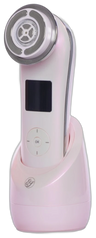
At-home radiofrequency, such as the EvenSkyn Lumo+, is needle-free. It warms tissue from surface electrodes. That is why it can be sold for home use at all. The published evidence is real but modest, and mostly tests devices other than the one you are buying.23
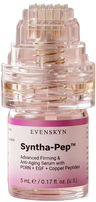
At-home micro-infusion, such as the EvenSkyn MicroInfuser, opens fixed 0.5 mm channels and carries a serum through them, with no radiofrequency. It is a delivery tool, not a firming tool.4
The devices that genuinely do both are professional machines sold into the consumer channel, priced around $1,200 to $1,700. Mainstream consumer products do one or the other, and several brands, EvenSkyn among them, sell an RF device alongside a separate needle product.
If you want the clinic result, book the clinic. This guide will tell you when that is the smarter spend.
Twelve devices and kits are ranked below. Ten are honest home products: needle-free radiofrequency, needles without radiofrequency, or the two sold as separate steps. Two put radiofrequency through needles and are sold for home use, the kind of device the FDA says should not be used at home, so they are ranked last. See the ranking.
Deciding today? The answer for each goal
You want firmer-looking skin. Use a needle-free RF handset. Ours is the EvenSkyn Lumo+: bipolar radiofrequency at 1 MHz with EMS and red light, sensor-held at 40 to 42 degrees Celsius, $499.99, 2-year warranty, 60-day money-back guarantee.
You want serum to get past the barrier. Radiofrequency is the wrong tool. Use a fixed-depth micro-infusion kit. Ours is the EvenSkyn MicroInfuser with Syntha-Pep PDRN serum: a mechanically locked 0.5 mm head, sealed single-use ampoules, four treatments per kit, $119.99 today against a $189.99 list price.
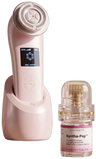
You want an at-home RF and microneedling kit. Two-step kits pair a needle-free RF device with a separate needle product, and none of them sends radiofrequency through the needles. A two-step kit built on a micro-infusion stamp, such as the EvenSkyn Lumo+ and MicroInfuser duo, pairs the Lumo+ with the MicroInfuser in one purchase: $589.99 against $619.98 bought separately at today's prices, a saving of $29.99. Patch-based kits pair an RF-only device with dissolving microneedle patches.
You want both halves: the channel and the energy. The Lumo+ and MicroInfuser duo is the closest at-home route to the two mechanisms of RF microneedling, and it is not that procedure: two devices, two mechanisms, and no radiofrequency ever passes through the needles. Run them in the order the manual sets: the Lumo+ first as a warm up, then the MicroInfuser session, then at least 24 hours before any further RF, EMS or ultrasound. Micro-infusion runs every two weeks, and the Lumo+ keeps its own schedule in between.
What none of these do: RF microneedling. Nothing here places energy below the surface. Deep scarring, pronounced laxity or significant jowling belong in a clinic, and the section "What we would tell a friend" says when. Prices checked 22 September 2026 and refreshed from the store as this page loads.
What the FDA actually said, and when
On 15 October 2025 the US Food and Drug Administration issued a safety communication about radiofrequency microneedling devices. Its language is unusually direct. RF microneedling is "a medical procedure, not a cosmetic treatment," and "these devices should not be used at home." The risks it names are burns, scarring, fat loss, disfigurement and nerve damage.1 Each of those, what the FDA's own adverse event reports show, and what to ask a clinic before you book are covered in our guide to RF microneedling side effects.
Why this matters more than it sounds.
No RF microneedling device holds FDA clearance for home use. The professional systems are cleared for use by trained operators: InMode's Morpheus8, for instance, holds clearance for soft tissue contraction in fractional radiofrequency microneedling, which is a clinical indication, not a consumer one.5 So when a listing offers you an "at-home RF microneedling machine", it is either a professional machine being sold into the consumer channel, or it is not RF microneedling.
That single fact reframes the whole search. The useful question is not which at-home RF microneedling device is best. It is what can I actually do at home, and which of those two things do I want.
Status as of 22 September 2026
Is any at-home RF microneedling device FDA cleared? No RF microneedling device holds FDA clearance for home use. The FDA's safety communication of 15 October 2025 calls RF microneedling "a medical procedure, not a cosmetic treatment" and says "these devices should not be used at home."1 The professional systems are cleared for use by trained operators, a clinical indication rather than a consumer one.5 So an "at-home RF microneedling machine" is either a professional machine sold into the consumer channel, or not RF microneedling.
Three different things get called the same name
The confusion is mechanical, so here is the mechanism. Each column below is the same slice of skin treated three ways.
Figure 1. What each approach physically does. Clinic RF microneedling drives insulated needles through the surface and releases energy at the tips. At-home radiofrequency, such as the EvenSkyn Lumo+, has no needles at all: current passes between surface electrodes and warms the tissue in between, held at 40 to 42 degrees Celsius. At-home micro-infusion, such as the EvenSkyn MicroInfuser, opens fixed 0.5 mm channels and carries serum through them, with no radiofrequency involved. Diagram is schematic and not to scale.
The reason a home device cannot simply be a smaller version of the clinic one is that the clinic version works because the energy is released at the needle tips, inside tissue, where you cannot see or feel the damage until it is done. Take the needles away and you have a fundamentally different treatment. That is a trade, not a compromise: needle-free means no numbing cream, no downtime, and none of the injuries in the FDA notice.
From patch to clinic, one rung at a time
The market is a ladder, not one category. Each rung below is a different mechanism, and only the top rung puts energy through needles.
Rung
What makes the channel
Nominal needle length
Energy
Who does it
Dissolving microneedle patch
Tiny needles that dissolve in the skin, often made of hyaluronic acid
Not always published
None in the patch
You
Micro-infusion stamp, such as the EvenSkyn MicroInfuser
Solid needles that open channels and withdraw while a serum goes through them
Fixed: 0.5 mm, mechanically locked, on the MicroInfuser
None
You
Two-step kit, such as the EvenSkyn Lumo+ and MicroInfuser duo
A separate stamp or patch
As the stamp or patch
Radiofrequency from a separate needle-free handset, never through the needles
You, as two steps
Clinic microneedling
A pen or roller in a practitioner's hand
Set by the practitioner
None
A practitioner
Clinic RF microneedling
Insulated needles that release radiofrequency at the tip
Set by the operator, below the surface
Radiofrequency through the needles
A trained operator. The FDA says these devices should not be used at home
Not a patch, and not a single combined handset. A dissolving patch is a sheet of tiny needles that melt in place; it is made for small zones such as under the eyes or the forehead, and the patch itself is the payload. A micro-infusion stamp, such as the EvenSkyn MicroInfuser, is solid needles at a fixed 0.5 mm that open channels and withdraw while a sealed 5 mL ampoule delivers serum through them. In a clinic, a practitioner sets the depth and holds the pen. No mainstream consumer device combines micro-channels and radiofrequency in one pass, and the FDA says devices that do should not be used at home. What a home routine can do is run each mechanism separately, on its own schedule.
What is actually on the market
Specifications audited August 2026 from each brand's own published product information; named prices re-read from each brand's product page on 22 September 2026. The columns are the ones that decide whether a product is what its listing says it is.
Product
RF?
Needles?
One device or two?
Sold for home use?
Price
Clinic systems (Morpheus8 and similar)
Yes
Yes, insulated
One
No. Trained operator
Per treatment
CurrentBody Skin RF & Microneedling Kit
Yes
Dissolving patches
Two items in a kit
Yes
GBP 349.99 / USD 459.99
EvenSkyn Lumo+ and MicroInfuser duo
Yes
Separate 0.5 mm stamp
Two devices in one purchase
Yes
$589.99
Dr. Pen RF device + microneedling pen
Yes
Yes, separate product
Two, bought separately
Yes
Varies
Lazzy Beauty at-home RF microneedling machine
Yes
Yes, 0.5 to 7 mm
One
Marketed for home and clinic
USD 1,198.95
Mico Aes 3-in-1 RF microneedling machine
Yes
Yes, 0.5 to 3.0 mm
One
Marketed for home and clinic
USD 1,699
EvenSkyn Lumo+
Yes
No
One
Yes
$499.99
TriPollar, NEWA, Silk’n, AMIRO, Medicube RF
Yes
No
One
Yes
Varies
NuFACE, Solawave
No
No
One
Yes
Varies
EvenSkyn MicroInfuser
No
Yes, fixed 0.5 mm
One
Yes
$119.99 today, $189.99 list
Qure, Seranova, Glov micro-infusion
No
Yes, 0.5 mm
One
Yes
Varies
Specifications as published by each brand, audited August 2026 except where noted; named prices re-read on 22 September 2026, and all subject to change. Seranova does not publish a needle depth; the 0.5 mm figure in that row applies to Qure and Glov, which do. Three rows are EvenSkyn products. The CurrentBody kit pairs an RF handset with dissolving microneedle patches rather than a needling device, which is why it appears as two items rather than one. The EvenSkyn duo pairs an RF handset with a separate micro-infusion kit. In both kits, no radiofrequency passes through the needles.
Read down the RF and Needles columns and the market splits cleanly in two. No genuine consumer device in the table puts radiofrequency through needles: each one does radiofrequency, needles or neither, or sells the two as separate items in one purchase. The products that put radiofrequency through the needles are professional machines in the consumer channel, at roughly two to three and a half times the price of the Lumo+, in the exact category the FDA warned about.
The two-step kits, side by side
Two rows in the table sell a radiofrequency device and a separate needle product in one purchase, and neither puts radiofrequency through the needles. Here is how they differ, read from each brand's product page on 22 September 2026, with the rows each one wins stated plainly.
EvenSkyn Lumo+ and MicroInfuser duo
CurrentBody Skin RF & Microneedling Starter Kit
What is in it
The Lumo+ radiofrequency handset and the MicroInfuser micro-infusion kit
An RF device, RF gel, and 8 eye and 8 forehead microneedle patches
How the channel is made
Solid needles that open channels and withdraw
Dissolving microneedle patches, infused with hyaluronic acid
Nominal needle length
0.5 mm, fixed and mechanically locked
Not published
Needles
24 karat gold-plated, single use, individually gamma-sterilised
The patch is the payload, infused with hyaluronic acid
Radiofrequency
1 MHz bipolar, sensor-held at 40 to 42°C, plus EMS at 3 to 15 mA and red and blue light
1 MHz; heating switches off at 40 to 41°C; radiofrequency only, as listed
Order of use
Lumo+ first as a warm up, then the MicroInfuser, then at least 24 hours before any further RF, EMS or ultrasound
Patches first, worn up to 2 hours or overnight, then the RF device
Warranty
Lumo+ 2 years; MicroInfuser applicator 1 year
Not stated on the product page
Price
$589.99
USD 459.99
Where it wins
A fixed, locked 0.5 mm depth; gamma-sterilised single-use heads; a sealed ampoule with published ingredients; one handset with RF, EMS and light
A lower price; an established retail brand; patches are a gentler first step than a needle stamp
EvenSkyn makes the duo. CurrentBody figures are from its US product page, currentbody.us; the patch needle length, needle count and sterility are not published there. Neither kit is RF microneedling.
How we ranked these twelve, and what we did not do
Every entry was read from the brand's own product page on 22 September 2026: what it is, what it says it does, and what it costs. EvenSkyn prices are read from our store each time this page loads. We ranked on what each brand publishes, not on a hands-on trial of each device. The clinic systems are the benchmark rather than entries, because they are not sold for home use.
What counted, and how much:
Mechanism honesty, 35 percent. Does it do what its name says, and does its page say what it does not do?
Evidence and published specification, 25 percent. What evidence exists for this kind of device, and does the brand publish what you would need to judge it: frequency, held temperature, needle length, sterilisation?
Safety under the FDA's October 2025 communication, 20 percent. Anything that puts radiofrequency through needles and is sold for home use goes to the bottom, whatever else it does well.
Usability, 10 percent. A fixed or user-set depth, a held temperature or none, sterile single-use heads or cartridges you sterilise yourself.
Cost of ownership, 10 percent. The price today and what it takes to keep using it.
The safety weight sets the last group, and the weights set the order inside each group. We did not reduce any product to a single score, and each entry says which rows decided its place.
What we did not do. We did not measure delivery depth: no brand in this category publishes how far a serum travels on its product, and EvenSkyn does not either. We did not rank on star ratings or reviews. We did not rank the clinic systems, and nothing here should be read as a substitute for one.
Our interest, stated. EvenSkyn makes three of the twelve, each marked "EvenSkyn makes this": the duo, the Lumo+ and the MicroInfuser, and the duo is the other two sold together. We ranked them on the same criteria as everything else, and you should weigh that. Where a competitor wins a row, its entry says so.
The twelve, ranked and fact-checked
Four groups, in order: two mechanisms as two steps, needle-free radiofrequency, needles without radiofrequency, and radiofrequency through needles sold for home use. The group order follows what people searching for RF microneedling are after: both halves first, then the firming half on its own, then the delivery half on its own, and last the machines in the category the FDA warned about. Prices are in US dollars.
Rank
Product
Radiofrequency
Needles
Price
1
EvenSkyn Lumo+ and MicroInfuser duo
1 MHz bipolar from surface electrodes, held at 40 to 42°C; never through the needles
Separate stamp, 0.5 mm fixed and locked
$589.99
2
CurrentBody Skin RF & Microneedling Starter Kit
1 MHz from a surface head; switches off at 40 to 41°C
Dissolving patches; length not published
USD 459.99
3
EvenSkyn Lumo+
1 MHz bipolar, held at 40 to 42°C, plus EMS and light
None
$499.99
4
AMIRO R1 Pro
1 to 2 MHz, surface around 42°C, plus EMS, infrared and LED
None
USD 199.99
5
Dr. Pen Bio Pen T6
1 MHz, no temperature control stated, plus EMS and blue light
None
USD 719.20
6
Medicube RF Ultra Tune 40.68
No frequency or temperature stated, plus microcurrent
None
USD 350.00
7
EvenSkyn MicroInfuser
None
0.5 mm fixed and locked; gamma-sterilised, single use
$119.99
8
AMIRO PDRN Micro-Infusion System
None
0.5 mm; sterile, single-use tips
USD 107.99 for two sessions
9
ReGlow Micro Infusion System
None
0.295 mm; sterile, single-use heads
From USD 49.00
10
Dr. Pen M8 microneedling pen
None
0 to 2.5 mm, set by you; cartridges sterilised by you
USD 139.30
11
Mico Aes 3-in-1 RF microneedling machine
Through insulated needles
0.5 to 3.0 mm
USD 1,699.00
12
Lazzybeauty At-Home RF Microneedling Machine
Through the needles
0.5 to 7 mm, set by you
USD 1,198.95
Read from each brand's own product page on 22 September 2026; EvenSkyn prices are read from our store as this page loads. "Not published" and "not stated" mean we could not find it on the product page that day.
Two mechanisms, as two steps
EvenSkyn Lumo+ and MicroInfuser duo
EvenSkyn makes this
What it is
A two-step kit: the EvenSkyn Lumo+ needle-free radiofrequency handset and the EvenSkyn MicroInfuser micro-infusion kit, sold together.
What it actually does
The Lumo+ passes bipolar radiofrequency at 1 MHz between surface electrodes, with EMS at 3 to 15 mA and red (623 nm) and blue (465 nm) light, and holds the skin at 40 to 42 degrees Celsius after a brief warm up. The MicroInfuser opens fixed 0.5 mm channels with 24 karat gold-plated, single-use, gamma-sterilised needles and carries Syntha-Pep serum through them from a sealed 5 mL single-use ampoule. No radiofrequency passes through the needles.
Price
$589.99, against $619.98 for the two bought separately. Read from our store as this page loads.
Best for
Someone who wants both halves at home, the channel and the energy, and will run them as two steps in the manual's order.
Not the best fit for
Anyone who wants one session that does both at once, which nothing sold for home use does safely, or who wants the lowest entry price in this group.
Verdict
The closest at-home route to the two mechanisms of RF microneedling, and not that procedure. Ranked above the CurrentBody kit because it publishes more of what decides the choice: a locked needle length, stated sterilisation and a sealed ampoule with a published ingredient list. See the duo.
CurrentBody Skin RF & Microneedling Starter Kit
What it is
CurrentBody's needle-free RF device sold in a kit with RF gel and dissolving microneedle patches, 8 for the eyes and 8 for the forehead. CurrentBody sells it as "RF Microneedling Treatment".
What it actually does
The RF device works at 1 MHz from a surface head, and its heating switches off automatically when skin reaches 40 to 41 degrees Celsius. The patches are dissolving microneedles infused with hyaluronic acid, worn first, for up to 2 hours or overnight, before the RF treatment. The needles carry no radiofrequency. The product page does not publish the patches' needle length.
Price
USD 459.99 on currentbody.us, read 22 September 2026.
Best for
A first two-step kit: it costs less than the duo, it comes from an established retail brand, and a patch is a gentler first step than a needle stamp.
Not the best fit for
Anyone who wants a published needle length or a sterility statement, or EMS and light in the RF device.
Verdict
A genuine two-step patch kit, and not RF microneedling, though its product page is headed "RF Microneedling Treatment". It wins on price and on a gentler start. The duo wins on a fixed, locked 0.5 mm needle, gamma-sterilised single-use heads, a sealed serum ampoule with published ingredients, and a handset that adds EMS and light.
Needle-free radiofrequency
EvenSkyn Lumo+
EvenSkyn makes this
What it is
A needle-free radiofrequency handset.
What it actually does
Bipolar radiofrequency at 1 MHz between surface electrodes, EMS at 3 to 15 mA, and red (623 nm) and blue (465 nm) light in one handset. A brief sensor-controlled warm up, then a steady 40 to 42 degrees Celsius for the rest of the session. Sessions of about 5 minutes, 2 to 3 times a week. 2-year warranty and a 60-day money-back guarantee.
Price
$499.99, read from our store as this page loads.
Best for
Firming as the goal, with radiofrequency, EMS and light in one handset and a published temperature band.
Not the best fit for
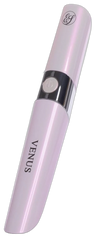
Getting actives into skin, where radiofrequency is the wrong tool; eyelid skin, which is what the separate Venus is for; deep scarring or pronounced laxity, which belong in a clinic.
Verdict
A needle-free handset that publishes its frequency, current range, wavelengths and held temperature. Not RF microneedling. It sits above the AMIRO R1 Pro on published specification and a two-year warranty, a narrow margin against a much lower price and a longer, 90-day money-back guarantee. See the Lumo+.
AMIRO R1 Pro
What it is
A needle-free radiofrequency handset.
What it actually does
Radiofrequency at 1 to 2 MHz, with a stated power of 15 W, plus EMS, infrared and red and yellow LED. The page describes a smart temperature control that keeps the skin surface around 42 degrees Celsius. 1-year warranty and a 90-day money-back guarantee. We found no EMS current or light wavelengths on its product page.
Price
USD 199.99 on amirobeauty.com, listed down from USD 299.99, read 22 September 2026.
Best for
The lowest price in this group for a handset that combines radiofrequency, EMS and light.
Not the best fit for
Anyone who wants a longer warranty, or the full current and wavelength specification on the product page.
Verdict
An honest needle-free handset and the value choice in this group. It offers a comparable set of modalities to the Lumo+ at well under half the price. If price decides it, start here.
Dr. Pen Bio Pen T6
What it is
A needle-free radiofrequency device from Dr. Pen, a brand better known for microneedling pens. Despite the name, it has no needles.
What it actually does
Radiofrequency at 1 MHz from a probe head, with EMS at five levels, blue light at 455 nm and rotary massage modes. The page describes it for clinical settings and home users, at 1 to 2 sessions a week. 1-year warranty. The product page states no temperature control.
Price
USD 719.20 on us.drpen.co, listed down from USD 899.00, read 22 September 2026.
Best for
Someone who wants radiofrequency with EMS and blue light from the Dr. Pen range.
Not the best fit for
Anyone expecting needles from a device called a pen, or wanting a published held temperature.
Verdict
An honest needle-free RF device, priced above both handsets ranked ahead of it, and placed below them because its page states no temperature control.
Medicube RF Ultra Tune 40.68
What it is
A needle-free radiofrequency device with a microcurrent mode, also sold as the Age-R Ultra Tune 40.68.
What it actually does
Radiofrequency and microcurrent in one device. The product page does not state an operating frequency, a temperature range or a warranty, and it does not explain the 40.68 in the name.
Price
USD 350.00 on medicube.us, listed down from USD 530, read 22 September 2026.
Best for
Someone who wants radiofrequency and microcurrent in one device at a mid-range price.
Not the best fit for
Anyone who wants to check a frequency, a held temperature or a warranty before buying.
Verdict
Honest about its mechanism, but it publishes the least of the four handsets here, which is why it sits last in this group.
Needles without radiofrequency
EvenSkyn MicroInfuser
EvenSkyn makes this
What it is
An at-home micro-infusion kit with Syntha-Pep serum.
What it actually does
Opens fixed 0.5 mm channels, mechanically locked so pressing harder cannot drive the needles deeper, with 24 karat gold-plated, single-use, individually gamma-sterilised needles. Each session uses a fresh head and a sealed 5 mL single-use ampoule of Syntha-Pep serum, and the full ingredient list is published. Four treatments per kit, one session every two weeks. No radiofrequency.
Price
$119.99 for a kit of four treatments, so the per-treatment cost is the kit price divided by four. Read from our store as this page loads.
Best for
Getting actives past the barrier, with a fixed depth and a fresh sterile head every session.
Not the best fit for
Firming by heat, since it has no radiofrequency, and anyone with the contraindications on our micro-infusion safety page, such as a history of keloid scarring or isotretinoin in the past six months.
Verdict
A delivery tool, not a firming tool. Placed above the other stamps because it publishes the most: locked depth, needle plating, sterilisation, ampoule volume and the full ingredient list. See the MicroInfuser.
AMIRO PDRN Micro-Infusion System
What it is
A micro-infusion stamp with PDRN serum, sold separately from the AMIRO R1 Pro.
What it actually does
0.5 mm needles with 24K gold-plated, single-use, sterile tips, and one set of freeze-dried microspheres and hydrating solution per session. The page does not say whether the depth is fixed or locked, or state the serum volume. No radiofrequency.
Price
USD 107.99 for two sessions or USD 159.99 for four, as one-time purchases on amirobeauty.com, with subscriptions from USD 97.19, read 22 September 2026.
Best for
A 0.5 mm gold-plated stamp from the same brand as the R1 Pro, if you already own one.
Not the best fit for
Anyone who wants a stated locked depth or serum volume on the product page.
Verdict
An honest single-mechanism stamp, and the closest competitor to the MicroInfuser on needle length and plating.
ReGlow Micro Infusion System
What it is
A micro-infusion stamp with serum.
What it actually does
24K gold-plated micro tips at 0.295 mm, on sterile single-use applicator heads, with the serum in 4 mL vials. No radiofrequency.
Price
From USD 49.00 for one treatment to USD 209.00 for a six-month supply on getreglow.com, read 22 September 2026.
Best for
A low-cost first try of micro-infusion, with the shortest published needle length in this ranking.
Not the best fit for
Anyone who wants a 0.5 mm needle length.
Verdict
An honest, shallow stamp at a low entry price.
Dr. Pen M8 microneedling pen
What it is
An automatic microneedling pen. No radiofrequency.
What it actually does
Adjustable needle depth from 0 to 2.5 mm. The box includes nano cartridges only; 11, 16 and 36-pin cartridges are sold separately. The product page says cartridges must be sterilised before each use.
Price
USD 139.30 on us.drpen.co, listed down from USD 199.00, read 22 September 2026.
Best for
Experienced users who want to set their own depth.
Not the best fit for
A first-timer: depth and cartridge sterilisation are both left to you, and there is no built-in serum delivery.
Verdict
Plain microneedling, not micro-infusion and not RF. Last of the honest options, because the two things that most affect safety at home, depth and sterility, are left to the user.
Radiofrequency through needles, sold for home use
Mico Aes 3-in-1 RF microneedling machine
What it is
A professional RF microneedling machine, sold online and marketed for professional and at-home use.
What it actually does
Insulated needles release radiofrequency at the tip, at depths of 0.5 to 3.0 mm depending on the area. Its specification lists an output frequency of 2 to 4 MHz (written "2-4M") and output power of 10 to 200 W.
Price
USD 1,699.00 on micoaes.com, read 22 September 2026.
Best for
No one at home.
Not the best fit for
Home use. RF microneedling is, in the FDA's words, "a medical procedure, not a cosmetic treatment," and "these devices should not be used at home."1
Verdict
Do not buy for home use. It stands for a wider group of professional machines sold online direct to consumers.
Lazzybeauty At-Home RF Microneedling Machine
What it is
An RF microneedling machine sold for home use.
What it actually does
Radiofrequency through needles, with a depth of 0.5 to 7 mm adjustable in its specifications; its product title says up to 8 mm. Marketed for home and studio use. No operating frequency is stated.
Price
USD 1,198.95 on us.lazzybeauty.com, read 22 September 2026.
Best for
No one at home.
Not the best fit for
Home use, for the same reason: the FDA says these devices "should not be used at home."1 Its needles also go deeper than anything else in this ranking.
Verdict
Do not buy for home use. Last, because it combines needle-borne radiofrequency, the deepest adjustable range on this list and a home-use pitch.
So which one do you actually want?
Route finder
Three questions. Nothing is stored or sent anywhere.
1. What are you mainly trying to change?
2. Realistically, how often will you use it?
3. Is downtime acceptable?
Answer all three to see a route.Nothing is submitted anywhere. This runs in your browser.
RF microneedling vs microneedling vs micro-infusion
Three treatments share a word and not much else. The difference is energy, and whose hand is on the device.
RF microneedling
Microneedling
Micro-infusion
What it does
Insulated needles go below the surface and release radiofrequency at the tip
Needles make channels in the skin, with no energy
Fixed shallow needles open channels and carry a serum through them, with no energy
Depth
Set by the operator, below the surface
Set by the practitioner or, on a home pen, by you: the Dr. Pen M8 adjusts from 0 to 2.5 mm
Set by the needle length: 0.5 mm on the EvenSkyn MicroInfuser, fixed and locked, and on the AMIRO system; 0.295 mm on ReGlow
Energy
Radiofrequency, released inside the tissue
None
None
Serum
A separate step, if any
A separate step, if any
Built in: the serum goes through the channels the needles open
Where
A clinic, with a trained operator. The FDA says these devices should not be used at home
A clinic, or a consumer pen at home
At home
Downtime
Numbing and downtime
Depends on depth
No numbing cream; gentle skincare for about three days afterwards on the MicroInfuser's two-week cycle
At-home radiofrequency: real, small, and mostly not about the device you are buying
The strongest single study is a randomised split-face trial of a home-use bipolar RF device with red light, in 33 women aged 35 to 60 over 12 weeks. It found a significantly greater reduction in crow's feet roughness on the treated side at every timepoint, and increased skin thickness from week 4.2
Three things about it should be said in the same breath. The comparator was an anti-aging cosmetic rather than a sham device. Elasticity showed no significant difference between the two sides at any timepoint, and neither did hydration. And the publication fee was paid by the device manufacturer, which also supplied the devices.2 A 2024 systematic review of 18 studies concluded home devices can improve the appearance of skin aging to a degree, while noting that only 5 of the 18 were randomised controlled trials and the longest follow-up was 12 weeks.3
What that licenses: a reasonable expectation of modest, gradual change in the look of firmness and fine lines over about three months of consistent use. What it does not license: a claim that any specific handset, ours included, has been proven to do this.
Micro-channel delivery: the best-established mechanism here
Passive absorption through intact skin generally suits molecules in the 100 to 500 dalton range, and then only with moderate lipophilicity.4 Microneedles create transient channels that let considerably larger molecules through. Those channels are short-lived. Reported closure ranges from a few hours to 72 hours depending on device and skin; for one measured microneedle patch, pores were about 25 percent closed within 30 minutes and essentially closed by 6 hours.4
This is why delivery-route arguments matter more than ingredient lists in this category. Polydeoxyribonucleotide, the ingredient half of the market is now built around, runs to roughly 50 to 1,500 kilodaltons. A narrative review in 2026 put it plainly: topicals "may have limited penetration and, hence, are less efficacious than injections."6 A serum that cannot cross the barrier does not become effective by being concentrated.
What that licenses: the mechanism. What it does not: a dose. No brand in this category, ours included, publishes how much of anything reaches a given depth on their product.
Our own product testing, and its limits
Between January and June 2026 we ran a six-month internal study of the MicroInfuser with our Syntha-Pep serum. Adults were randomised in equal numbers to use the device every two weeks with either the serum or an identically presented water-only ampoule. Participants did not know which they had, though study staff and our affiliated dermatologist did.
Both arms used the device. Only the ampoule differed, so a comparison between arms isolates the serum rather than the MicroInfuser.
Why there are no percentages here. We have not published how the outcomes were measured or the results for both groups, and nobody outside the company has checked them. Without the method beside them, we are not printing the numbers. What is on record is in the study section of our Transparency Lab.
Read this with its limits. Company-sponsored internal study, not independently verified, published or peer-reviewed. Participant-blinded rather than double-blind: outcomes were assessed by people who knew the allocation, which is a bias risk on subjective measures. No statistical testing is reported, and we make no claim of statistical significance. Control participants were removed from the analysis after randomisation to balance group sizes, which is a departure from analysing everyone as randomised. It tested the MicroInfuser with Syntha-Pep only: it did not test the Lumo+ and it did not test the two devices together. Individual results vary.
What results look like, and when
A home routine changes things slowly, and the honest clock is months, not sessions. The published home-RF trials run on 12-week timelines, and the one randomised split-face study found skin-thickness change from week 4, with wrinkle-roughness change measurable throughout.2 A clinic course and a home routine are different treatments producing different magnitudes of change, which is why the calculator below says nothing about results.
For micro-infusion, our own six-month internal study is set out above with its limits: company-sponsored, not independently verified or peer-reviewed, and it tested the MicroInfuser with Syntha-Pep only. Our guide to micro-infusion before and after, and what is realistic in 12 weeks, explains why before-and-after photographs set the wrong clock. If you are weighing a clinic procedure instead, our Morpheus8 at home decoder sets out what each clinic platform is and what a home routine can and cannot match.
Side effects, fat loss and burns
The injuries in the FDA's October 2025 communication, burns, scarring, fat loss, disfigurement and nerve damage, are risks of RF microneedling itself, where needle depth, energy level and placement over nerves decide the outcome.1 Our guide to RF microneedling side effects takes the complications one at a time, with the FDA's own report data and the questions to ask a clinic before you book.
The home routes sit in a different risk class, and they are not risk-free. Needle-free radiofrequency heats tissue, so misuse can burn, which is why a held temperature and a hard cut-off matter. Micro-infusion opens channels through the skin barrier, so it has real contraindications, from isotretinoin in the past six months to a history of keloid scarring. Read who should not use micro-infusion before you buy.
The cost arithmetic, with your own numbers
Cost is the argument people reach for and almost nobody works out. Put your own figures in. Defaults are the Lumo+ price today, one conductive gel a year and a mid-range clinic estimate.
Clinic versus at-home, over time
Clinic$0
At home$0
What this does not measure. Cost per session is not a measure of result. A clinic course and a home routine are different treatments producing different magnitudes of change, and this calculator deliberately says nothing about that.
About the defaults. The clinic figure is a placeholder, not a quote: prices vary widely by provider and region, so replace it with a real one. The at-home defaults describe a needle-free RF routine, where the only consumable is conductive gel. A micro-infusion routine costs considerably more to run: a two-month kit is $119.99 at today's price ($189.99 list), and a fortnightly routine needs about six and a half kits a year, roughly $780 at today's price and about $1,235 at list, because there is currently no separate refill product. Put that figure in the consumables box if you are pricing that route.
Running two mechanisms at home: the sequence
If you run both, the order matters more than the devices. The protocol in the MicroInfuser manual, as set out on the duo's product page, runs a two-week cycle:
Day 1. The Lumo+ first, as a warm up, then the full MicroInfuser session, then a hydrating mask or peptide cream.
Day 2. Rest: gentle cleanser, moisturiser and SPF only.
Days 3 and 4. Gentle skincare. Active ingredients come back from day 4.
Days 5 to 14. The Lumo+ returns to its normal schedule, sessions of about 5 minutes, 2 to 3 times a week. The next micro-infusion session starts the following cycle.
The rule that matters most: after a micro-infusion session, wait at least 24 hours before any further radiofrequency, ultrasound or EMS. That is the manual's floor, and our guide to running RF and micro-infusion together recommends 48 hours, and three days if your skin runs sensitive. If you use other devices too, our at-home anti-aging stack sets out the spacing across all of them.
By concern: where to go next
Jowls and the lower face. Radiofrequency is the home route. Our guide to jowls without surgery covers the at-home routine.
Under the eyes and the eyelids. The Lumo+ is not designed for eyelid skin; the Venus is the separate device for that. For the needle route, our guide to under-eye microneedle patches sets out what they can and cannot do.
Loose skin after weight loss. Face and neck laxity after weight loss has its own at-home guide.
Deep scarring, pronounced laxity, significant jowling. Book the clinic. Our Morpheus8 decoder explains what each clinic platform does, and our at-home device spec register lists what 26 home devices publish, the Lumo+ among them.
What we would tell a friend
Recommendation
If your goal is firmness, start with a needle-free RF handset and give it twelve weeks. Ours is the EvenSkyn Lumo+ at $499.99, which combines bipolar radiofrequency at 1 MHz, EMS and red and blue light, held by a sensor at 40 to 42 degrees Celsius. What it will not do: it does not perform RF microneedling, it places nothing below the surface, and it is not designed for eyelid skin, which is what the separate Venus exists for.
If your goal is getting actives in, radiofrequency is the wrong tool and no amount of it will help. Ours is the MicroInfuser at $119.99, a fixed and mechanically locked 0.5 mm head with a sealed single-use ampoule. What it will not do: it delivers no radiofrequency and does no thermal firming. Our guide to choosing a micro-infusion system compares it against Qure, Seranova and Glov, including where it scores worse.
If you want both, they are two devices on two schedules, not one machine. The Lumo+ and MicroInfuser duo is $589.99 against a combined list price of $839.98. Bought separately at today's prices you would pay $619.98, so the duo saves $29.99 today. The prices on this page are read from the store when it loads, so they move when the store does. Run RF on its own schedule and micro-infusion every two weeks, leaving at least 24 hours after a micro-infusion session before any further energy treatment.
And if you have deep scarring, pronounced laxity or significant jowling, book the clinic. No at-home device closes that gap, and we would rather say so than sell you the wrong thing.
EvenSkyn makes and sells the Lumo+, the MicroInfuser and the duo. This section is a product recommendation from the brand that makes them. The comparison table above is drawn from each brand's own published information and includes competitors we do not sell. Before buying, read who should not use micro-infusion. 60-day money-back guarantee on devices. The MicroInfuser comes with a 60-day money-back guarantee on unused treatments: every sealed treatment you send back is refunded at 25% of the kit price. The Duo comes with a 60-day money-back guarantee: the Lumo+ is covered as a device, and each unused, sealed MicroInfuser treatment is refunded at 25% of the MicroInfuser's price.
The product behind this page
Want the needle-free route?
The EvenSkyn Lumo+ is bipolar radiofrequency at 1 MHz with EMS and red and blue light, in one handset, sensor-held at 40 to 42 degrees Celsius. No needles, so no numbing cream and no downtime. We publish the frequency, the held temperature and what the device does not do, which is more than most of this category prints.
$499.99 · 2 year warranty · 60-day money-back guarantee on the device
What it will not do. It does not perform RF microneedling and it places nothing below the surface. It is not designed for eyelid skin; the Venus is the separate device for that. Do not use it over a pacemaker or other implanted electronic device, or during pregnancy. If you want delivery rather than firming, the MicroInfuser is the other half of the answer, and the duo pairs them at $589.99.
Questions people actually ask
Can you do RF microneedling at home? No. The needle-plus-RF combination is a clinic procedure, and in October 2025 the FDA stated in writing that these devices should not be used at home.1 What you can do at home is needle-free radiofrequency, such as the EvenSkyn Lumo+, or needle-based micro-infusion without radiofrequency, such as the EvenSkyn MicroInfuser. The twelve options are ranked above.
What is the best at-home RF microneedling device? Strictly, there is not one: RF microneedling puts energy through needles, and the FDA says those devices should not be used at home.1 The useful question is which home route you want. For both halves, the channel and the energy, the closest at-home route is a two-step kit such as our EvenSkyn Lumo+ and MicroInfuser duo, which is not RF microneedling. All twelve options are ranked above.
Is there an FDA-cleared RF microneedling device for home use? No. No RF microneedling device holds FDA clearance for home use, and the FDA's October 2025 safety communication says these devices should not be used at home.1 The professional systems are cleared for use by trained operators, which is a clinical indication, not a consumer one.5 The dated status note above sets this out.
Is there an at-home Morpheus8? No. Morpheus8 is a professional system cleared for use by trained operators.5 Consumer machines advertising the same capability are professional-grade units sold into the consumer channel, priced between about $1,200 and $1,700, and they sit inside the category the FDA warned about. The honest at-home alternative path, and exactly what it can and cannot match, is mapped in our Morpheus8-at-home comparison.
What about the kits that pair an RF device with microneedle patches? They are real products and they are not RF microneedling. CurrentBody sells an RF handset with dissolving microneedle patches; the RF and the needles are used separately and the needles carry no radiofrequency. Our EvenSkyn Lumo+ and MicroInfuser duo takes the two-step approach with a fixed 0.5 mm micro-infusion stamp and a sealed serum ampoule in place of patches, and again no radiofrequency passes through the needles. The side-by-side table shows where each kit wins.
What is the difference between RF microneedling and microneedling? Energy. Microneedling uses needles alone to make channels in the skin. RF microneedling uses insulated needles that release radiofrequency at the tip, below the surface, which is why it is a clinic procedure. Micro-infusion is a third thing: fixed shallow needles that carry a serum through the channels they open, with no energy. The versus table sets the three side by side.
What is the best microneedling device for at-home use? For most people at home, a fixed-depth micro-infusion stamp with single-use sterile heads is more forgiving than an adjustable pen, because you cannot set it too deep. Ours, the EvenSkyn MicroInfuser, is fixed and mechanically locked at 0.5 mm, with gamma-sterilised single-use needles and sealed 5 mL ampoules. Adjustable pens such as the Dr. Pen M8, at 0 to 2.5 mm, leave depth and cartridge sterilisation to you.
Do at-home RF devices actually work? Within limits. The strongest single trial, a randomised split-face study of a home-use bipolar RF device with red light, found a significantly greater reduction in crow's feet roughness over 12 weeks and increased skin thickness from week 4, though elasticity did not differ, and the device maker paid the publication fee.2 A 2024 review of 18 studies found home devices can improve the look of skin aging to a degree.3 Expect modest, gradual change.
How long before anything shows? The published home-RF trials run on 12-week timelines, and the one randomised split-face study found skin-thickness change from week 4 with wrinkle-roughness change measurable throughout.2 If you stop at four weeks you have not tested it.
Are at-home RF devices worth it? For mild to moderate laxity and the look of firmer skin, yes, with two conditions. The published trials of consumer RF devices show real but modest change after eight to twelve weeks of consistent use, and the effect fades if you stop. The split-face trial cited here used five sessions a week; most home protocols, the Lumo+ included, are lighter. So a device is worth it if you will actually use it for three months and your expectation is "a little firmer", not a facelift. It is not worth it for deep scarring, heavy laxity or pronounced jowling, where a clinic course is the honest spend.
What is the best RF device for home use? It depends on what "best" means. For firming with published specifications, a frequency you can check, a held temperature and no needles, our pick is the Lumo+, and our guide to the best at-home RF skin tightening devices compares ten devices on price, frequency, temperature control and warranty. If your goal is getting actives into skin, an RF device is the wrong category altogether; a fixed-depth micro-infusion kit is the right one.
Is RF good for a saggy neck? For mild to moderate laxity it is a reasonable thing to try, on the terms that apply to the face: modest, gradual change over about three months of consistent use, which fades if you stop. The home-RF trials cited in this guide measured facial skin, not the neck. Pronounced laxity or banding is a clinic question. Our guide to tightening neck skin at home covers the routine.
Does an at-home RF device hurt or need numbing? No. There are no needles, so there is nothing to numb. The sensation is warmth. That is the entire point of the needle-free trade.
Is at-home radiofrequency safe? Needle-free RF does not involve the sub-surface needle penetration those FDA reports describe. That is not the same as risk-free: any device that heats tissue can burn it if misused, which is why a held temperature and a hard cut-off matter. It is still not for everyone: do not use it over a pacemaker or implanted electronic device, or during pregnancy, and speak to a doctor first if you are unsure.
Can I use RF and micro-infusion together? Yes, as two steps in one order. On a micro-infusion day, radiofrequency goes first as a warm up, then the micro-infusion session. After that, wait at least 24 hours before any further radiofrequency, ultrasound or EMS; our pairing guide recommends 48. They are complementary schedules, not a combined treatment.
Do the cheap RF devices work? We cannot tell you, and neither can they. The honest test is whether a brand publishes what its device actually does: frequency, temperature range, whether a sensor holds that temperature. Most in that segment do not.
Why do plastic surgeons and the FDA warn about RF microneedling? Because the procedure's safety depends on operator control. The FDA's October 2025 communication describes reports of burns, scarring and nerve injury associated with certain uses of RF microneedling devices, and the variables behind those outcomes, needle depth, energy level, placement over nerves, are exactly the ones a trained operator manages in a clinic.1 That is the reason the procedure is clinic-only, and the reason needle-free home RF, which never puts energy below the surface, sits in a different risk class. Our guide to RF microneedling side effects goes through the five complications one at a time, with the FDA's own report data and the questions to ask before you book.
Glossary
RF microneedling
A clinic procedure in which insulated needles go below the surface and release radiofrequency at the tip.
Needle-borne radiofrequency
Radiofrequency delivered through needles inserted into the skin, rather than from electrodes on the surface. It is what separates RF microneedling from needle-free home radiofrequency.
Fractional radiofrequency
Radiofrequency delivered through an array of small points, pins or needles, rather than one continuous surface, leaving untreated skin between the points.
Bipolar radiofrequency
Radiofrequency that passes between two electrodes on the same head, so the current runs through the tissue between them. The EvenSkyn Lumo+ is bipolar, at 1 MHz.
Sensor-held temperature
A device that measures skin temperature and adjusts its output to stay within a set band. On the Lumo+, 40 to 42 degrees Celsius after a brief warm up.
Bulk heating
Heat that builds up across a volume of tissue rather than staying where the energy is delivered. It is one of the variables a trained operator manages during clinic RF microneedling.
Micro-infusion
Fixed, shallow needles that open channels and deliver a serum through them in the same pass, with no energy. A delivery method, not a firming one.
Microneedling
Needles that make channels in the skin, with no energy. In a clinic the practitioner sets the depth; on a home pen, you do.
Dissolving microneedle patch
A patch of tiny needles made of a material, often hyaluronic acid, that dissolves in the skin. The patch itself is the payload.
Two-step kit
A needle-free RF device sold with a separate needle product, patches or a stamp, used as separate steps. No radiofrequency passes through the needles.
Nominal needle length
How long the needle is as made. It does not tell you how far a serum travels, and no brand in this category, EvenSkyn included, publishes that.
EMS
Electrical muscle stimulation: current in the milliamp range that makes muscle contract. The Lumo+ uses EMS at 3 to 15 mA.
Microcurrent
Current in the microamp range, a thousandth of the milliamp range EMS works in. It is a different technology from EMS; the Lumo+ works in the milliamp range, which is EMS.
References
US Food and Drug Administration. Potential Risks with Certain Uses of Radiofrequency (RF) Microneedling: FDA Safety Communication. 15 October 2025. fda.gov
Shu X, Wan R, Huo W, Li Z, Zou L, Tang Y, Li L, Wang X. Effectiveness of a Radiofrequency Device for Rejuvenation of Aged Skin at Home: A Randomized Split-Face Clinical Trial. Dermatology and Therapy 2022;12:871-883. doi:10.1007/s13555-022-00697-y. The journal Rapid Service Fee was supported by Ecolite Wellbeing (GD) Co., Ltd., which also supplied the devices.
Bu P, et al. Development of Home Beauty Devices for Facial Rejuvenation: Establishment of Efficacy Evaluation System. Clinical, Cosmetic and Investigational Dermatology 2024;17:553-563. 18 studies, of which 5 were randomised controlled trials; longest follow-up 12 weeks.
InMode. Morpheus8 receives FDA clearance for soft tissue contraction in fractional radiofrequency microneedling. Company announcement, 17 July 2024.
Arora G. Polynucleotides and polydeoxyribonucleotides in dermatology: a narrative review. Journal of Cutaneous and Aesthetic Surgery 2026;19(1):17-28. doi:10.25259/JCAS_65_2025
This guide is for information and is not medical advice. Consult a qualified healthcare professional before starting any device-based treatment, particularly if you are pregnant or breastfeeding, have an implanted electronic device, or have a history of keloid scarring. EvenSkyn devices are cosmetic devices. They are not medical devices, they are not FDA-cleared, and they are not intended to diagnose, treat, cure or prevent any disease or condition. Product specifications and prices are accurate at the time of writing and may change; verify current details on each product page. Competitor information is drawn from each brand's own published material, audited August 2026, with prices and ranking details re-read on 22 September 2026.
Nine brands, one shared depth ceiling, and a set of differences that sit in the hygiene design rather than the marketing. We compare Seranova, Qure, Glov and the EvenSkyn MicroInfuser on single-use...
Every microneedling aftercare guide tells you what to put on after. This one answers that in full, then reframes the question: the result your skin keeps depends less on the cream you...
Leave a comment
All comments are moderated before being published.




Leave a comment
All comments are moderated before being published.
This site is protected by hCaptcha and the hCaptcha Privacy Policy and Terms of Service apply.