








Medically Reviewed by Dr. Lisa Hartford, MD
Published April 2026 · Medically reviewed by Dr. Lisa Hartford, MD, board-certified dermatologist (Johns Hopkins, Mayo Clinic), Chief Dermatology Advisor at EvenSkyn since 2020.
We've shipped over 100,000 devices since our launch, and the single most common question we get from customers after their first month isn't about forehead lines or crow's feet. It's: "Can I use this on my neck?"
The answer is yes. But the neck isn't just another facial zone. It ages differently, responds differently to treatment, and requires a protocol most brands never bother explaining. This guide is everything we've learned about neck rejuvenation from building the devices, testing the competitors, and listening to what actually works for real people over real timelines.
Why your neck ages faster than your face
You probably already know this intuitively. You look in the mirror and your face looks fine, maybe even great, but your neck tells a different story. That's not your imagination. It's not because you've been lazy. It's structural.
Neck skin is thinner than cheek or forehead skin. It has significantly fewer sebaceous glands, so there's less natural oil production and less built-in hydration. The subcutaneous fat layer is thinner too, meaning less cushioning between the dermis and the muscle underneath. And the platysma, that broad flat muscle running from your collarbone to your jawline, weakens and separates with age in a way that no facial muscle really does.
Then factor in sun damage. Most people stop their SPF at the jawline. That means the neck gets unprotected UV exposure year after year, while the face gets daily protection. It's not a fair fight.
And then there's the modern accelerator. The average adult spends 3 to 4 hours a day looking at a phone. That repeated downward tilt folds the neck skin along the same horizontal lines, thousands of times a day, year after year. Dermatologists call the result "tech neck lines," and they're showing up in patients 10 to 15 years younger than the traditional onset of neck aging. A 2023 survey published in the Journal of Cosmetic Dermatology found that over 70% of dermatologists reported an increase in patients presenting with horizontal neck creases they attributed to device use.
If your neck looks older than your face, that's not a personal failure. The neck was always going to age faster. The question is what to do about it.
The technologies that actually tighten neck skin (ranked by evidence)
A lot of devices and creams claim to fix sagging neck skin. Some work. Most don't, or at least not for the reasons they claim. Here's how each modality stacks up for the neck specifically.
Radiofrequency: the strongest option for neck laxity
RF delivers electromagnetic energy into the dermis, heating the tissue to a temperature that triggers two responses. First, immediate collagen fiber contraction (you feel tighter right after a session). Second, long-term neocollagenesis, where your body builds new collagen over the following weeks and months.
For the neck, RF is the standout because the core problem is dermal collagen loss, and that's precisely what RF targets. A randomized, controlled split-face trial published in Aesthetic Plastic Surgery followed 33 women aged 35 to 60 over 12 weeks using a home-use RF device. The RF-treated side showed statistically significant improvements in wrinkle depth, skin elasticity, and dermal thickness compared to the control side. A separate 2025 systematic review covering 15 clinical studies and 1,230 participants found RF improved skin firmness in 52.9% to 100% of patients.
What matters for neck treatment specifically is power and penetration depth. The dermis on the neck sits at approximately 1 to 2mm depth. A device needs to reach and sustain therapeutic heat at that depth to trigger collagen remodelling. Warming just the surface does nothing structurally. Many inexpensive devices produce RF output insufficient to reach the dermis at all, which is why results vary so dramatically across the category.
Microcurrent and EMS: for the muscle underneath
Here's something most neck tightening guides miss entirely. The neck doesn't just have a skin problem. It has a muscle problem.
The platysma weakens and splits with age, creating visible vertical bands and contributing to the general "looseness" people notice in the mirror. No amount of collagen stimulation in the skin will fix a weakened platysma. You have to stimulate the muscle directly.
Microcurrent and EMS (electrical muscle stimulation) do exactly that. Low-level electrical currents cause involuntary muscle contractions that improve tone over time. Same principle behind the EMS devices used in physical therapy and sports recovery. For the neck, consistent EMS helps restore tone to the platysma, which physically lifts the overlying skin.
The best results come from combining RF for the skin with EMS for the muscle in the same protocol. Doing one without the other is half the job.
Red light therapy: helpful, but not a standalone fix
We get asked this constantly. Does red light therapy tighten neck skin?
The honest answer: red light (630 to 660nm) and near-infrared (830nm) support collagen production at a cellular level by stimulating mitochondrial activity. There's solid evidence for improvements in skin texture, mild firmness, and overall skin quality. A 2014 study in Photomedicine and Laser Surgery found that subjects treated with red and near-infrared light showed significant improvements in skin complexion, collagen density, and skin roughness.
But red light alone is not going to reverse meaningful neck sagging. It doesn't generate the deep dermal heating that RF does. It doesn't cause muscle contraction like EMS. What red light does well is accelerate the collagen-building process when used alongside those primary treatments. Think of it as a force multiplier, not the main force.
If you want to go deeper on this topic specifically, we've written a separate guide on how red light therapy works for neck and chest tightening.
Lymphatic drainage: the underrated prep step
The neck and jawline are dense with lymph nodes. When lymphatic flow gets sluggish (from dehydration, lack of movement, or just normal aging), fluid accumulates and blurs the jawline-to-neck contour. You wake up puffy. The jawline looks soft. The neck appears thicker than it actually is.
That's not really "aging." It's fluid retention. But fixing it dramatically improves how the neck looks, and it also creates better conditions for RF and EMS to penetrate effectively. Moving lymph before a treatment session clears congestion, boosts circulation, and opens up the tissue.
You can do this manually with firm upward massage strokes from the collarbone to the jaw. A device-assisted approach adds gentle electrical stimulation to amplify the effect.
What doesn't work for neck tightening
Neck creams alone. Peptides and retinoids can modestly improve texture, and they're worth using as part of a broader routine. But no cream penetrates deep enough to reverse structural collagen loss or strengthen the platysma. Supporting cast, not the lead.
Jade rollers and gua sha. They feel nice. They can temporarily move some fluid. Zero clinical evidence for collagen stimulation, tightening, or anything lasting. If you enjoy the ritual, keep it up. Just don't confuse it with treatment.
Generic sub-$150 devices. We've tested many of these in our lab. The pattern is always the same: they advertise "RF" on the box, but the actual output is so low the device barely warms the skin surface. In our measurements, several popular marketplace devices produced less than 1W of real RF output. That's nowhere near enough to trigger collagen remodelling in the dermis.
Turkey neck vs. tech neck: same area, different problems
Not all neck aging looks the same. The treatment approach changes depending on what you're actually dealing with.
Turkey neck (vertical banding and sagging)
This is the classic age-related change. The platysma separates into two visible vertical bands running from the collarbone to the jaw. The skin between them loses elasticity and sags. Contributing factors include genetics, weight fluctuation, and years of collagen degradation.
What works: RF for collagen tightening combined with EMS for platysma toning. Slow upward strokes from collarbone to jawline, 3 to 4 minutes per side, 3 to 5 times per week. The RF rebuilds collagen in the skin while the EMS restores muscle tone underneath.
Worth being direct about: mild to moderate banding responds well to consistent at-home treatment over 12 or more weeks. Severe turkey neck with significant skin excess is a surgical conversation. No at-home device replicates a neck lift. If you're unsure where you fall, a consultation with a dermatologist or plastic surgeon will help you set realistic expectations.
Tech neck (horizontal lines and creases)
These are the etched horizontal lines across the front of the neck, formed by years of looking down at phones and laptops. They're repetitive-motion wrinkles. The neck folds along the same crease thousands of times until the collagen breaks down along that line and the crease becomes permanent.
What works: RF directly on the crease lines, with slow horizontal strokes running perpendicular to the creases. The goal is rebuilding collagen density along the fold lines specifically. Red light therapy after the RF session supports the collagen rebuild. And behavioral change matters too: raising your phone to eye level and adjusting monitor height won't erase existing creases, but it slows the formation of new ones.
Shallow tech neck lines (visible in certain lighting) respond well to 8 to 12 weeks of consistent treatment. Deep creases that have been forming for a decade will improve, but may not vanish without professional intervention like Morpheus8 or fractional CO2 laser.
Don't stop at the neck: your chest is aging too
While we're here, the upper chest deserves its own mention. The decolletage (the area from the collarbone down to the top of the breasts) is exposed to the same sun damage and collagen loss as the neck. Often worse, actually, because clothing leaves it exposed while the neck at least gets partial shade from the chin.
Crepey chest skin, vertical sleep wrinkles from side-sleeping, and sun spots are among the most common complaints we hear from customers over 40.
The same RF and red light protocols that work on the neck work on the chest. If you're already treating your neck, adding 2 to 3 minutes of treatment on the upper chest area in the same session is the simplest extension you can make. Red light is particularly effective on chest skin for texture improvement. And yes, it does help with that sun-damaged, thin quality that develops over time.
SPF on the chest is critical and chronically overlooked. If you're treating chest skin with RF and leaving it unprotected in the sun, you're actively working against yourself.
A real neck tightening protocol (10 minutes, 3 to 5x per week)
This is the protocol we recommend based on several years of customer feedback and refinement.
Step 1: Lymphatic prep (2 minutes). Firm upward strokes from the collarbone to the jaw, either with your hands or a device designed for lymphatic drainage. Focus on the sides of the neck where lymph nodes concentrate. This clears fluid, reduces puffiness, and preps the tissue for better energy penetration.
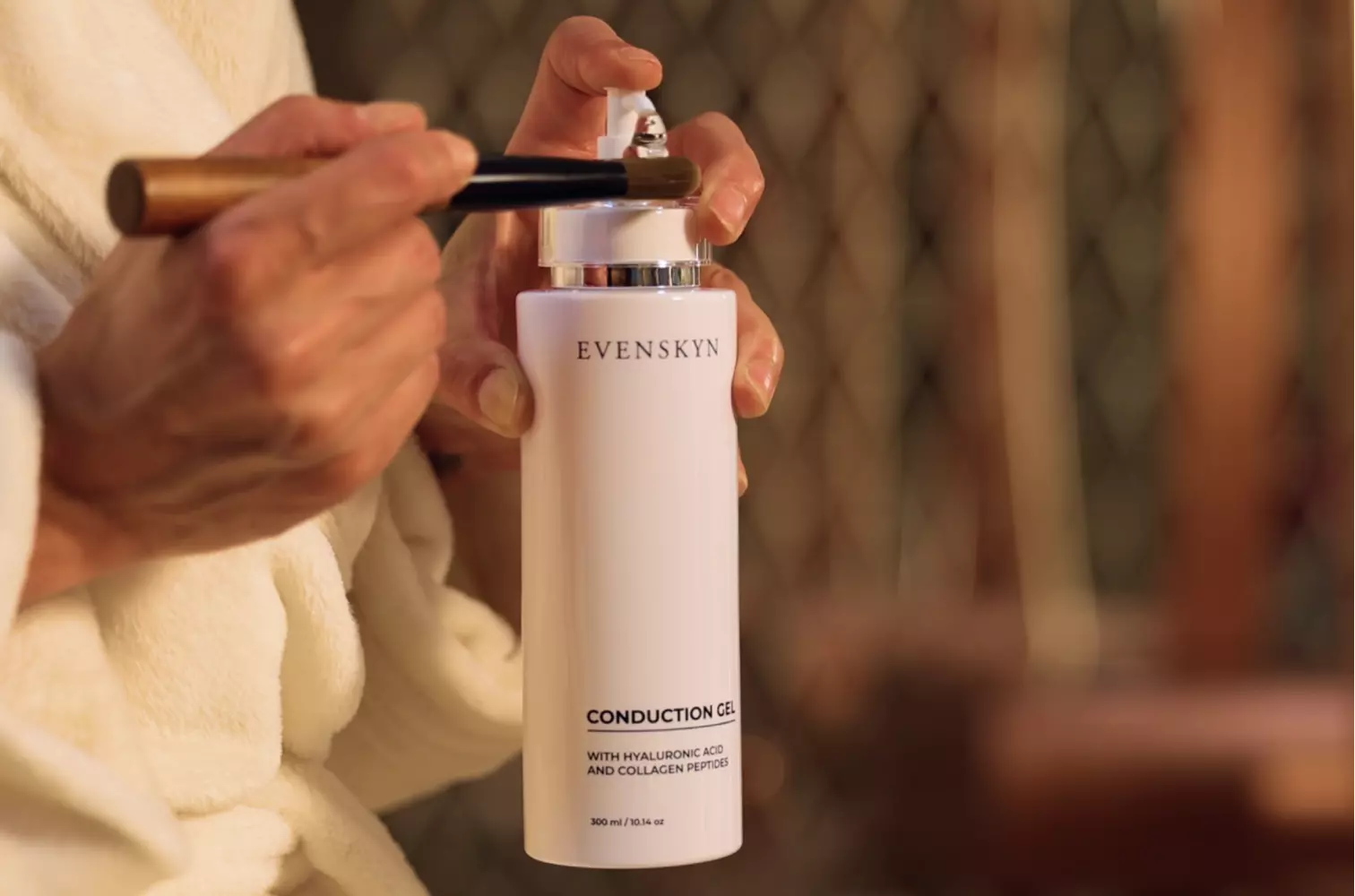
Step 2: Apply conductive gel. Cover the entire neck and upper chest generously. Hyaluronic acid-based gel works best. The neck is a larger surface area than you'd think. Don't be stingy.
Step 3: RF treatment (4 to 5 minutes). Treat the neck in four zones: right side, left side, front (lighter pressure here, and skip the thyroid area at the base of the front center of the neck), and decolletage. Slow, continuous upward strokes. About one minute per zone. You should feel warmth building in the skin.
Step 4: EMS treatment (2 to 3 minutes). Same zones, same upward direction. This targets the platysma directly. Start at the lowest intensity and increase as tolerated. The sensation is different from RF. Instead of warmth, you'll feel gentle muscle contractions.
Step 5: Post-treatment. Remove gel. Apply a hydrating serum (hyaluronic acid or peptide-based) while the skin is still warm. Absorption is significantly enhanced in the 10 to 15 minutes after energy-based treatment. Finish with moisturizer. In the morning, SPF 30+ on the neck and chest. No exceptions.
When to expect results on the neck
The neck responds slower than the face. This is the single most important thing to understand before you start, because the number one reason people give up on at-home neck treatment is impatience.
The reason is biology. Neck skin starts with lower collagen density and fewer fibroblasts per square centimeter than facial skin. The raw materials for collagen rebuilding are thinner on the ground, so the construction takes longer.
Here's what our customers typically report.
Weeks 1 through 3 are the "feels better but doesn't look different" phase. Skin feels tighter and smoother right after each session, but that's temporary collagen contraction, not new collagen. Texture may improve. Puffiness around the jawline often decreases noticeably, especially if you're doing lymphatic prep.
Weeks 4 through 8 are when real structural changes begin. Crepey texture starts to smooth out. Shallow horizontal lines soften. The jawline-to-neck transition begins to look cleaner.
Weeks 8 through 12 are the "okay, this is actually working" window. Skin laxity visibly improves. Tech neck lines are noticeably softer. Platysma banding appears less prominent if you've been consistent with EMS. This is usually when other people start noticing.
Month 4 through 6 is peak results, with continued slow improvement as long as you keep up the protocol.
If you quit at week 3 because nothing dramatic happened, you left before the results showed up.
Individual results vary based on age, skin condition, genetics, and consistency of use. These timelines reflect patterns from our customer base and are not guaranteed outcomes.
What we build for the neck (and why)
We held off on product mentions until here deliberately. Everything above applies regardless of what device you own. But since we manufacture the devices and understand why specific engineering decisions matter for neck treatment, here's how our lineup fits.
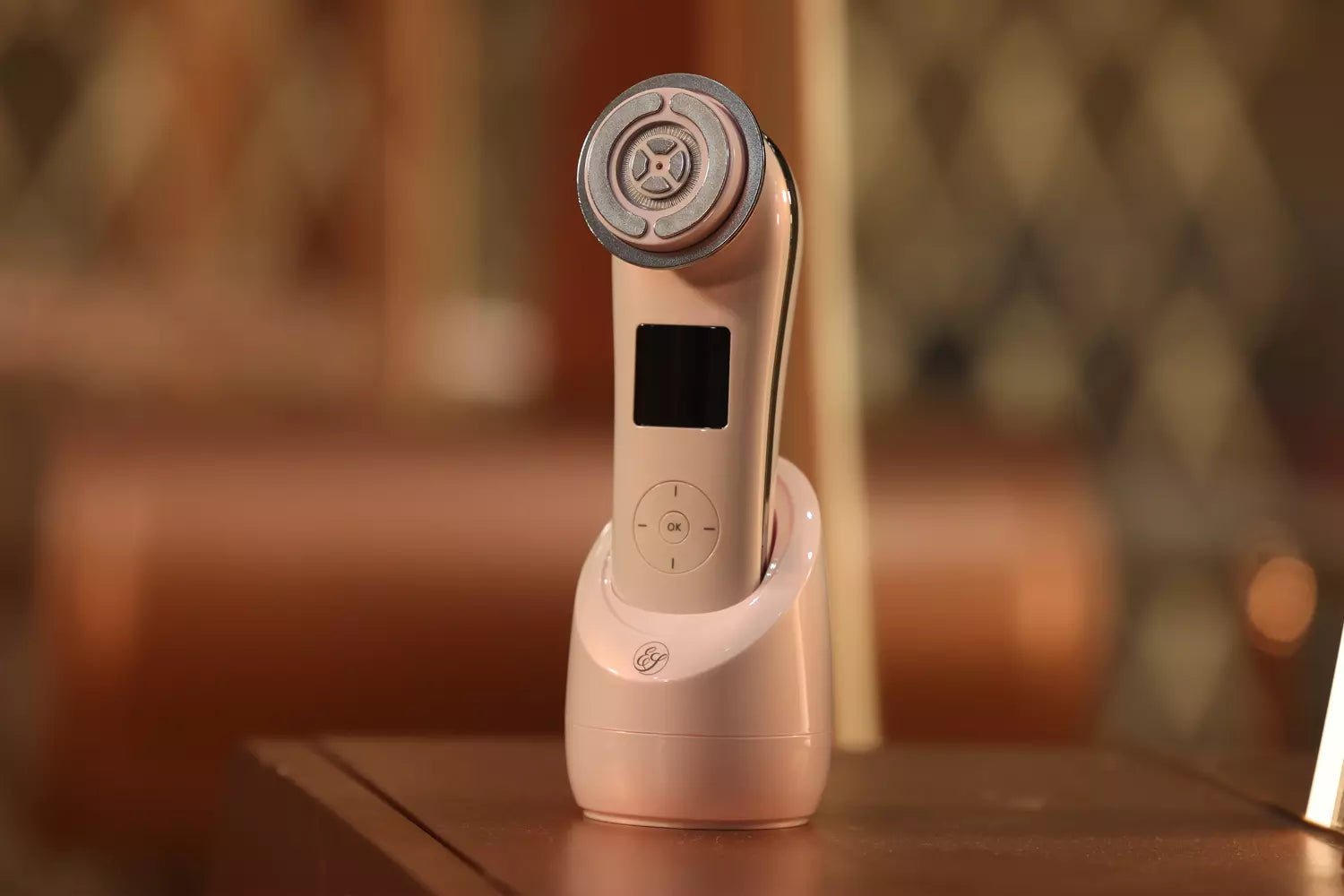
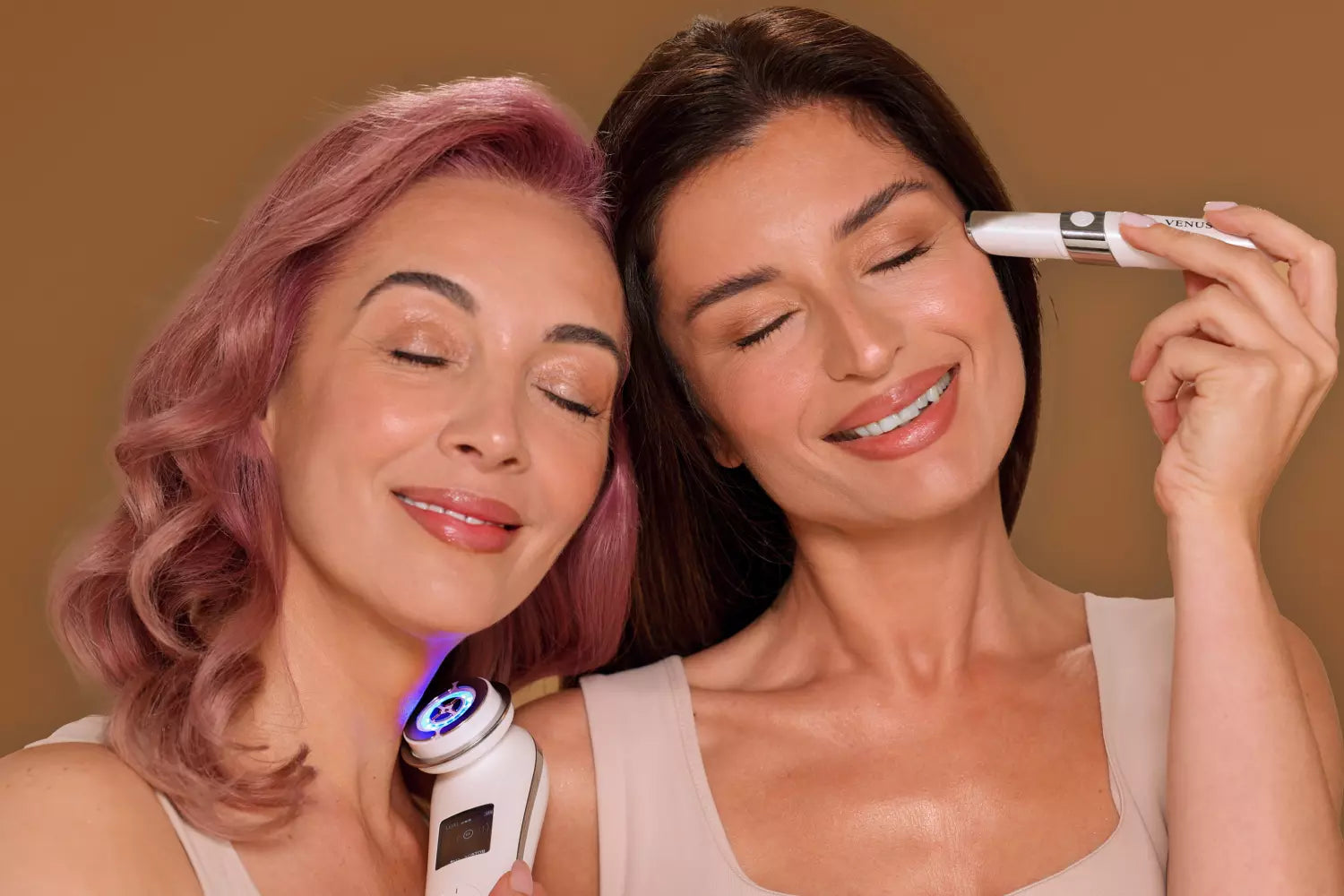
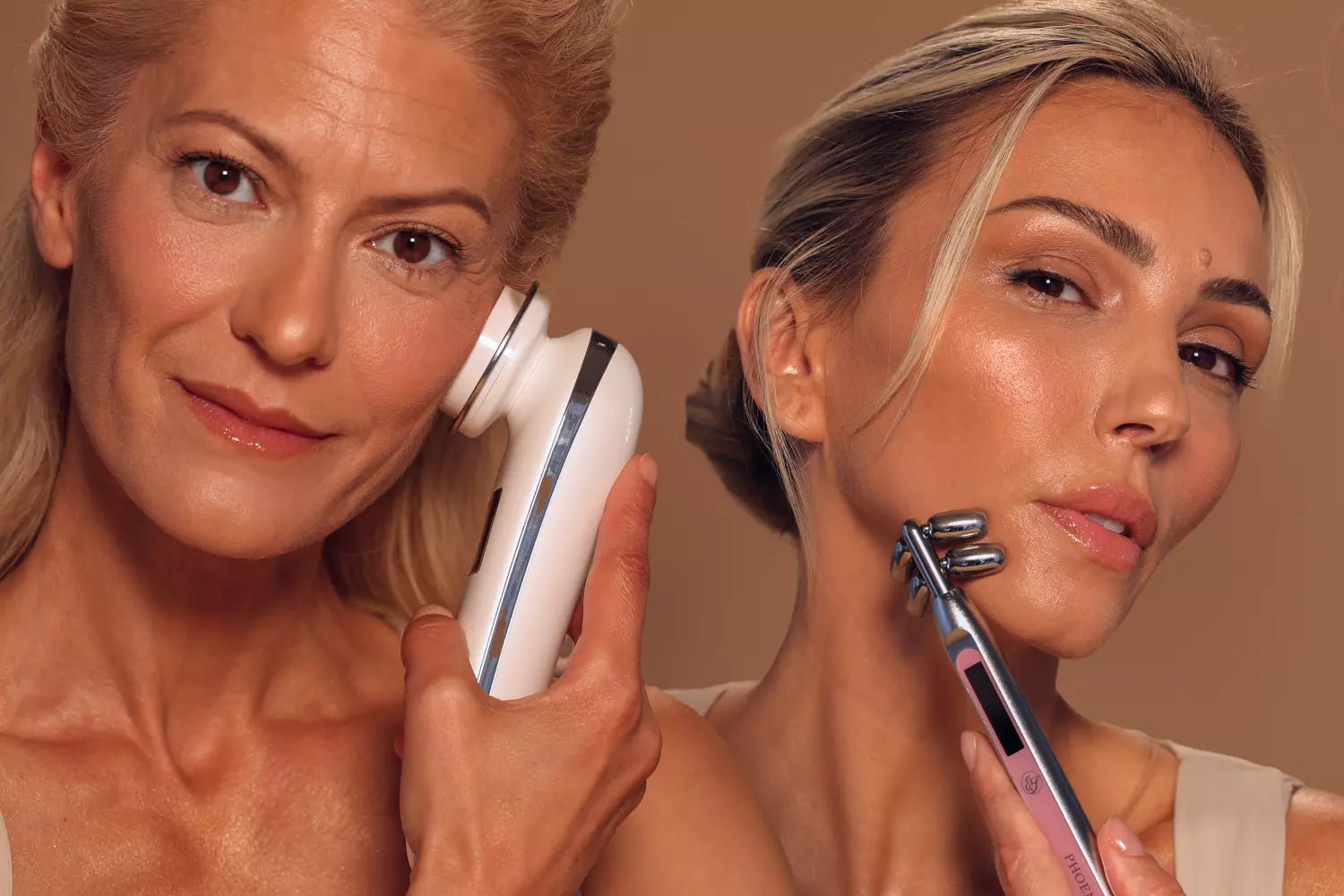
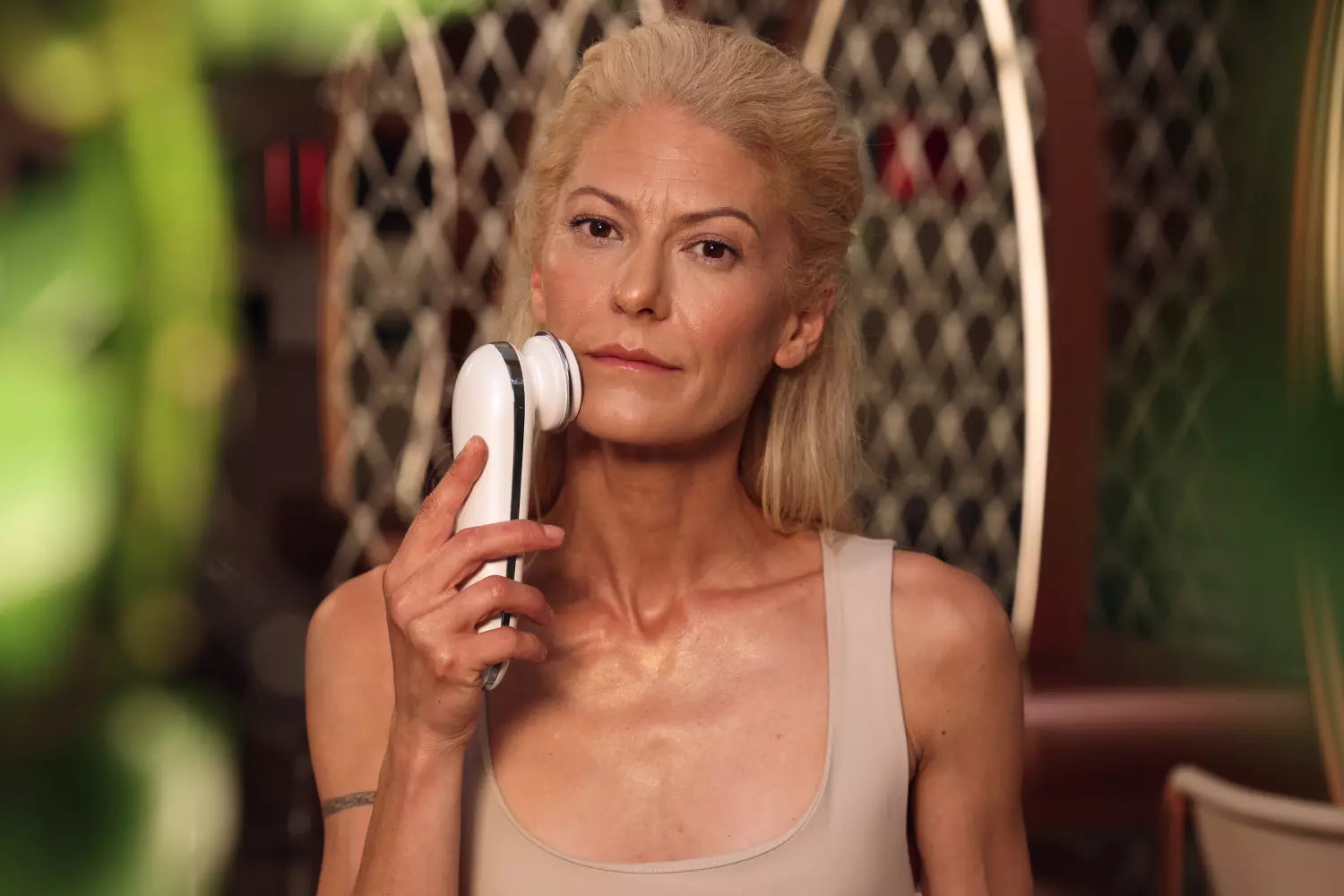
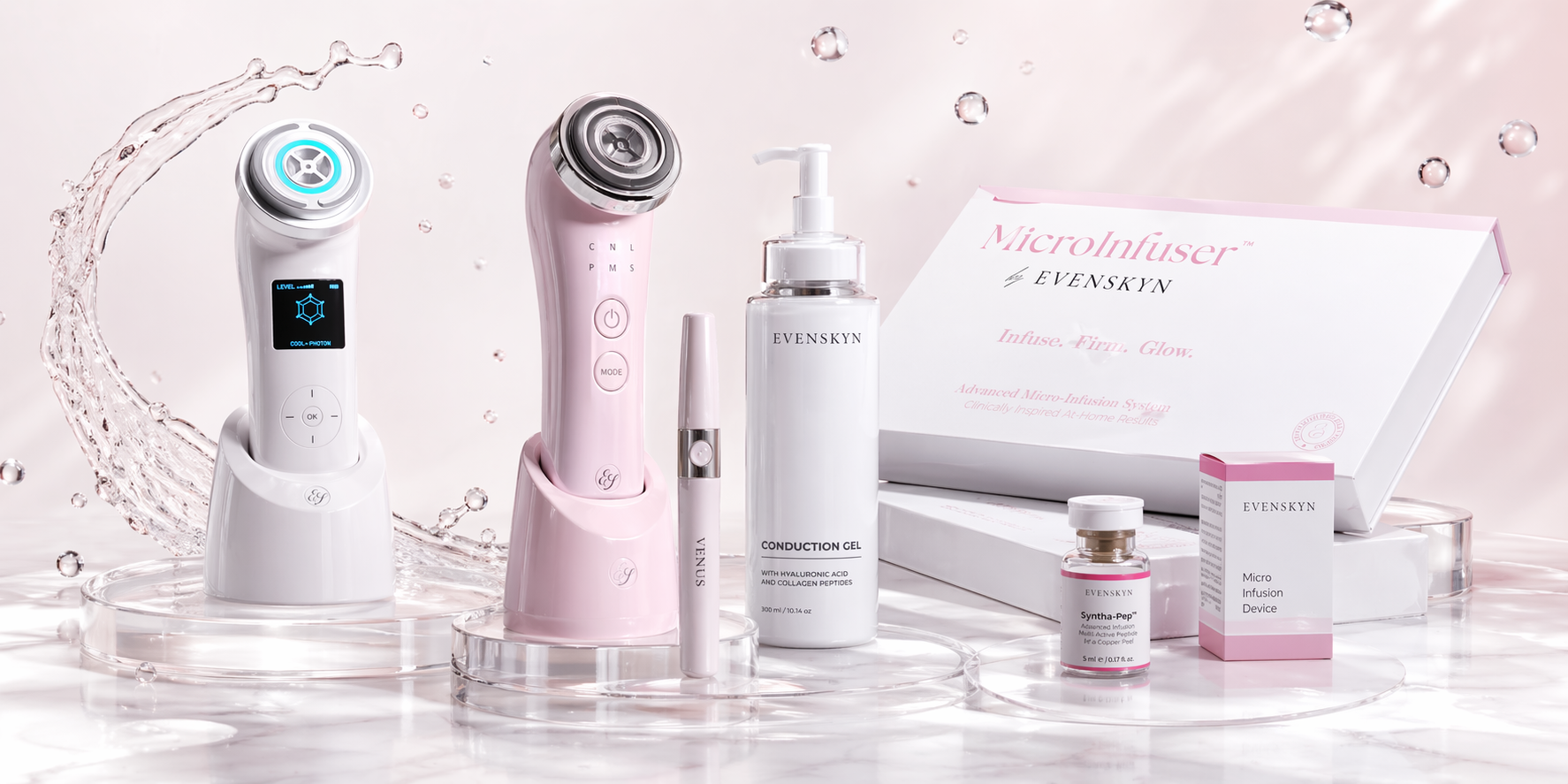
The EvenSkyn Lumo+ is a 5-in-1 handset (RF, EMS, red light, blue light, ionic) that was designed from the start to treat face, neck, and decolletage. Not just the face. A few specs that matter specifically for the neck: the RF penetrates to approximately 3mm and heats dermal tissue up to 140F, well into the collagen-producing zone of neck skin. The EMS operates at 100 Hz with 3mA average power for platysma stimulation. The treatment head is broad enough to cover neck tissue efficiently. And the semiconductor-based active cooling plus temperature sensor prevent overtreatment on the more sensitive front-of-neck area. It comes with a 60-day money-back guarantee and 2-year warranty, enough to complete a full neck protocol and evaluate results before committing.
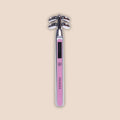
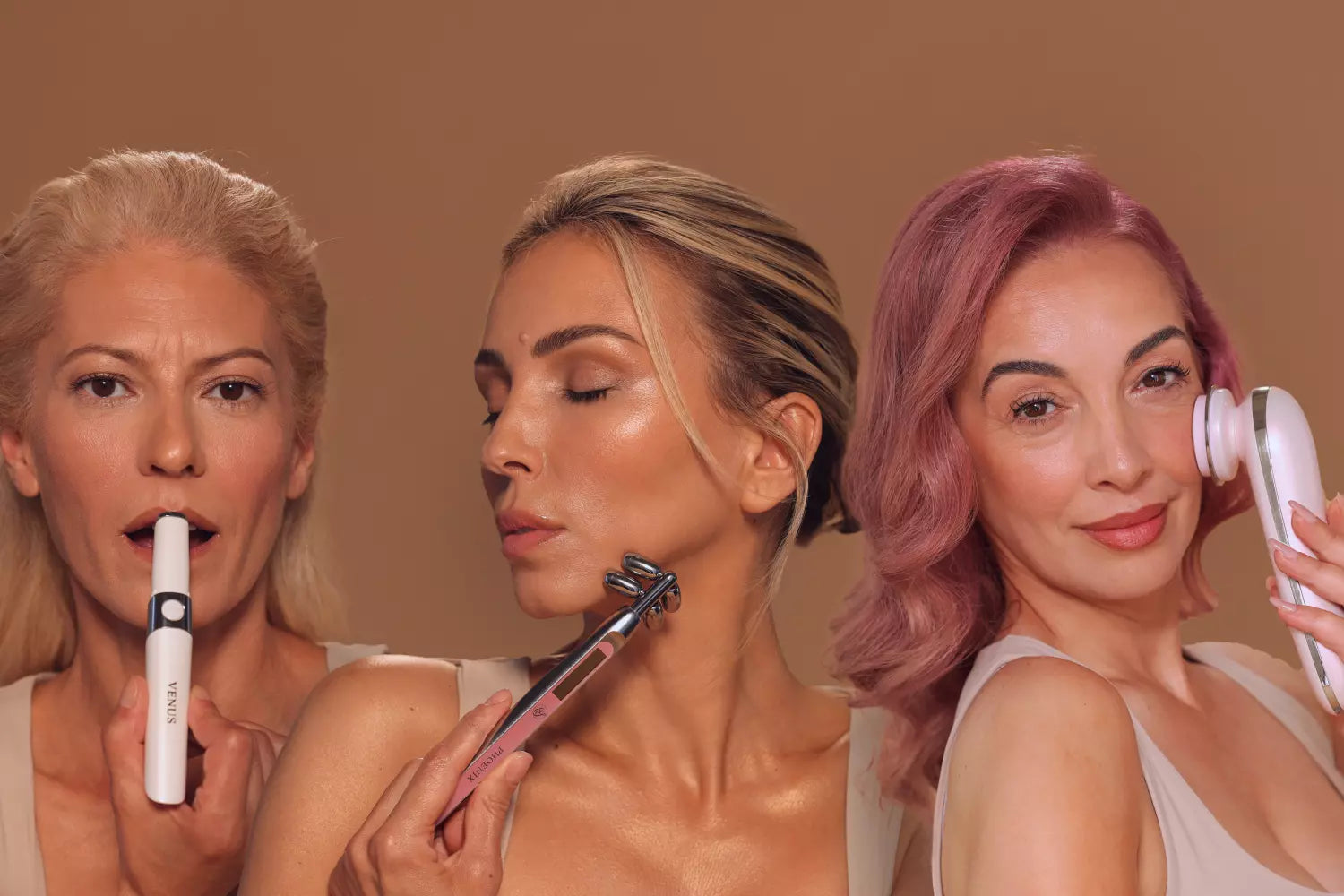
The EvenSkyn Phoenix is our pick for the lymphatic prep step. It's a microcurrent bar built for contouring, toning, and circulation. Paired with the Lumo+, it covers the full "prep and treat" protocol described above.
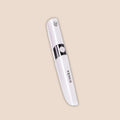
The EvenSkyn Venus is not for the neck. It's calibrated for eyelid skin at 42C (107F), far too gentle for neck tissue. We mention it because most people treating their neck are treating their full face too, and the eye area needs its own device for safety reasons.
If you want the complete system, the bundles page shows all the pairings. The Lumo+ and Phoenix bundle is the most neck-focused option. The complete three-device bundle adds eye treatment for full coverage.
You can see real customer before-and-after results, including neck outcomes, and read more about how our specs compare to competitors.
Topicals that help alongside device treatment
Your device creates the collagen stimulus. Topicals protect and support what the device builds. A few specifics for neck skin.
Use retinol on the neck, but start lower than you would on the face. Neck skin is more reactive. Begin at 0.25% and work up slowly. Apply on non-treatment evenings.
Vitamin C serum in the morning gives you antioxidant protection against the UV damage that accelerated your neck aging in the first place. Extend it below the jawline every single day.
SPF on the neck and chest is non-negotiable. This is the single highest-impact habit you can adopt for long-term neck aging prevention. If you're spending time on RF treatment and then leaving your neck exposed to sun, you're working against your own results.
Peptide serums applied right after treatment take advantage of the enhanced absorption window. The skin is warm, briefly more permeable, and active ingredients penetrate more effectively during those first 10 to 15 minutes.
Frequently asked questions
Does at-home neck tightening actually work? For mild to moderate sagging, crepey texture, and early banding, yes, with consistent use of a device that has adequate RF power and EMS capability. Peer-reviewed studies support RF for collagen remodelling and EMS for muscle toning. Severe laxity with significant skin excess is a surgical conversation.
How long does it take to tighten neck skin at home? Typically 8 to 12 weeks of consistent use (3 to 5 times per week) before visible structural changes. The neck responds slower than the face because the skin is thinner and starts with less collagen. Don't evaluate results before week 8.
Does red light therapy tighten neck skin? Red light supports collagen production and improves texture, but on its own it's not powerful enough to reverse meaningful sagging. It works best as a complement to RF. We go deeper on this in our red light therapy for neck and chest guide.
What about red light therapy for turkey neck specifically? Red light helps with texture and mild firmness but won't reverse platysma banding or significant laxity on its own. Turkey neck needs both RF (for the skin) and EMS (for the muscle) to address both layers of the problem.
Can I treat my neck and chest in the same session? Absolutely. The decolletage responds to the same RF and red light protocols. Add 2 to 3 minutes to cover the upper chest. Most of our customers treat both areas in a single sitting.
Is RF safe to use on the neck? Yes, with a device that has integrated temperature control and auto-shutoff. Avoid the thyroid area at the front center of the lower neck. Do not use if you have a pacemaker, metal implants in the treatment area, or during pregnancy. Talk to your doctor if you have concerns.
What's the best at-home device for tightening the jawline and neck? Look for something that combines RF with EMS or microcurrent. The neck needs both modalities. Adequate RF power (penetrating to at least 2 to 3mm), temperature control, and a treatment head sized for the neck's larger surface area are what separate devices that work from devices that don't.
Do neck creams work? They support a routine but can't reverse structural changes on their own. Retinol and peptide creams improve texture and mild firmness. Think of them as maintenance between device sessions, not replacements for device treatment.
What are the best sagging neck solutions without surgery? In order of evidence strength: radiofrequency devices for skin tightening, EMS or microcurrent for muscle tone, red light therapy for texture and collagen support, and consistent topical retinol plus daily SPF. Combining multiple modalities produces better results than any single approach.
Can I use red light therapy on my chest? Yes. Red light is effective for improving crepey texture, sun damage, and collagen density on the decolletage. Treat the chest in the same session as the neck.
The bottom line
The neck is where anti-aging routines fall apart. Not because the technology doesn't work, but because people forget to use it below the jawline. Every modality that tightens facial skin works on the neck. The neck just needs more patience (8 to 12 weeks instead of 4 to 6 for the face) and a slightly adjusted technique: upward strokes, lighter pressure on the front, skip the thyroid.
Start with the habit before the device. Take your SPF, your retinol, and your serums past your jawline to your collarbone tonight. If you do nothing else from this guide, that single change is worth more than any product we sell.
When you're ready for device treatment, the protocol above works. Consistency wins over intensity. Twelve weeks of showing up beats one heroic session. The neck, the part most people give up on, is often where consistent treatment produces the most dramatic visible difference. Precisely because it's been neglected for so long, there's more ground to gain.
This guide is for informational purposes and does not constitute medical advice. Reviewed for dermatological accuracy by Dr. Lisa Hartford, MD, board-certified dermatologist and Chief Dermatology Advisor at EvenSkyn. Consult a qualified healthcare professional before starting any device-based treatment. Product specifications and availability may change.



Leave a comment
All comments are moderated before being published.
This site is protected by hCaptcha and the hCaptcha Privacy Policy and Terms of Service apply.