

Medically Reviewed by Dr. Lisa Hartford, MD
Radiofrequency skin tightening has become one of the most clinically validated approaches to non-invasive facial lifting — and for good reason. Decades of peer-reviewed research confirm that controlled RF energy can meaningfully stimulate collagen remodelling, improve skin laxity, and restore structural firmness in a way that most topical treatments simply cannot replicate. What has changed in recent years is the technology's accessibility: professional-grade RF energy delivery is no longer confined to dermatology clinics, and the gap between clinical and at-home devices has narrowed considerably.
This guide explains how radiofrequency skin tightening works at the cellular level, what results you should realistically expect, how it compares to other at-home modalities, and what to look for in a device if firming and anti-aging results are the goal.
What Is Radiofrequency Skin Tightening?
Radiofrequency skin tightening is a non-invasive procedure that uses electromagnetic energy in the radiofrequency spectrum — typically between 0.3 MHz and 10 MHz — to generate controlled thermal activity within the dermis. Unlike ablative laser treatments or microneedling, RF energy passes through the epidermis largely unimpeded and delivers heat precisely to the deeper layers of the skin where collagen and elastin fibres reside.
The thermal stimulus triggers two distinct biological responses. Immediately, existing collagen fibres contract — which accounts for the subtle tightening effect that is sometimes perceptible after a single session. Over the following weeks and months, the controlled thermal injury activates fibroblasts, the cells responsible for synthesising new collagen and elastin. This secondary, regenerative response is the primary mechanism behind the longer-term improvements in skin firmness, texture, and definition that make RF one of the most studied non-surgical skin tightening approaches available.
The Science Behind RF-Induced Collagen Remodelling
Collagen is the skin's primary structural protein, and its degradation is one of the central mechanisms of skin ageing. After the age of approximately 25, the body produces roughly 1% less collagen per year. By the time visible laxity appears — typically in the mid-30s onward — cumulative collagen loss is significant. Topical ingredients such as retinol and peptides can modestly support collagen synthesis from the outside, but they cannot access the deeper dermal layers where structural remodelling actually occurs.
Radiofrequency energy addresses this directly. When RF waves penetrate to the dermis and hypodermis, the electrical resistance of dermal tissue converts that energy into heat. Studies have shown that maintaining target tissue temperatures between 40°C and 45°C for a sufficient duration activates the wound-healing cascade without causing cell death. This cascade includes:
- Immediate collagen fibre contraction, which produces a short-term tightening effect
- Upregulation of heat shock proteins, which act as cellular repair signals
- Fibroblast activation and proliferation, driving new collagen and elastin synthesis
- Increased production of extracellular matrix components, which restore dermal volume and resilience
The result, over a consistent treatment course, is measurably denser, firmer dermis — visible as reduced skin laxity, improved jawline definition, and smoother skin texture. Research published in peer-reviewed dermatology journals has documented these structural changes using ultrasound imaging and histological analysis, confirming that the improvements reflect genuine tissue remodelling rather than temporary surface effects.
What Results Can You Realistically Expect from At-Home RF Skin Tightening?
Managing expectations accurately is important. At-home radiofrequency devices operate at lower energy outputs than professional clinic equipment — this is a safety requirement, not a design flaw — which means the treatment timeline is different rather than the mechanism.
In the first two to four weeks, most users notice a mild improvement in skin tone and texture. The immediate collagen contraction response begins with early sessions, and cumulative use accelerates this.
Between weeks four and eight, the regenerative phase becomes more apparent. Many users report improved facial contour, reduced appearance of fine lines, and firmer skin along the jawline and neck. RF skin tightening before and after comparisons at this stage often show measurable changes in photos, particularly with consistent use. Users of the EvenSkyn Lumo — which combines RF with microcurrent and red light in a single session — typically report this phase arriving earlier, consistent with the multi-modal stimulation accelerating the regenerative response.
Beyond two to three months, with regular treatment — typically two to three sessions per week as recommended for most consumer devices — the collagen remodelling process continues to compound. This is the stage at which changes become more pronounced and longer-lasting.
A few honest caveats apply. RF skin tightening does not replicate the single-session results of clinical procedures performed at medical-grade energy levels. It also does not address severe structural laxity, deep volume loss, or dynamic wrinkles caused by muscle movement. What it does do — reliably, and with an extensive evidence base — is slow the rate of collagen degradation, stimulate meaningful new collagen synthesis, and improve skin firmness over a sustained treatment course.
At-Home RF vs Clinical RF: Understanding the Difference
Clinical RF devices — such as Thermage, Profound, and monopolar and bipolar RF systems used in dermatology practices — operate at significantly higher energy levels and are administered by trained practitioners with real-time temperature monitoring. A single clinical session may cost between $1,000 and $4,000 and typically requires minimal repeat treatment within a 12-month period due to the intensity of the energy delivered.
At-home RF skin tightening machines work on identical biophysical principles but at lower energy densities designed for safe consumer self-application. The practical implication is that results require a longer treatment window and more frequent sessions — but the cumulative biological effect is the same: dermal heating, fibroblast activation, collagen remodelling.
The economics are compelling. A well-designed at-home RF device used consistently over three to six months can approximate the collagen-stimulating benefit of one to two professional sessions at a fraction of the cost, with the additional advantage of maintenance treatments being entirely accessible on an ongoing basis.
How RF Compares to Other At-Home Skin Tightening Technologies
Understanding where RF fits within the wider landscape of at-home anti-aging technologies helps in choosing the right approach — and in understanding why combining technologies can produce superior results.
Radiofrequency vs Microcurrent
Microcurrent therapy delivers ultra-low-level electrical current that mirrors the body's own bioelectrical signals. Its primary mechanism is neuromuscular — microcurrent re-educates and tones the facial muscles that provide structural lift to overlying tissue. This is fundamentally different from RF, which works on the dermis and collagen matrix rather than muscle tissue.
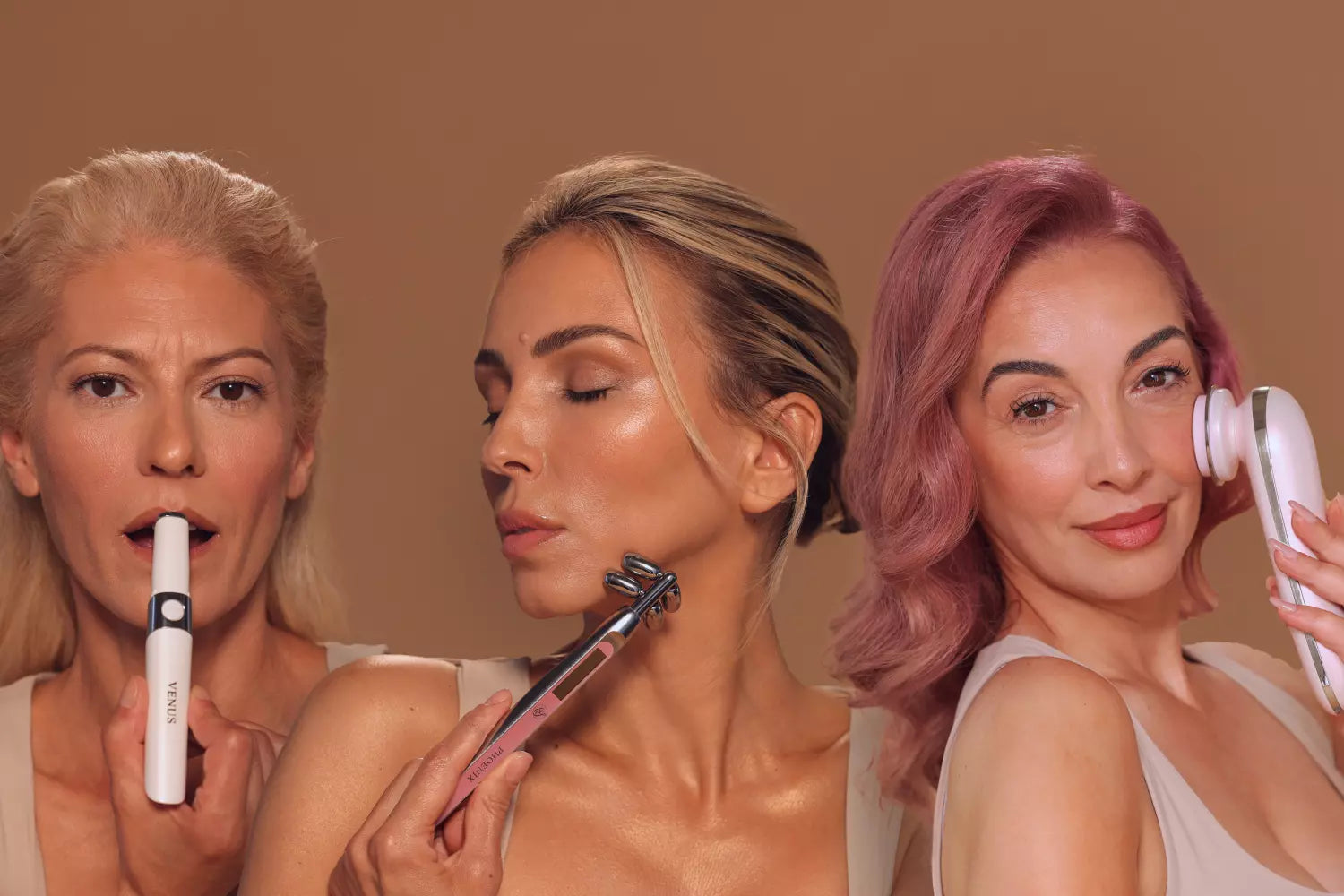
When comparing microcurrent vs radio frequency, the clearest distinction is depth of effect: microcurrent acts on the muscular layer, RF on the dermal and subdermal collagen layer. Both contribute to a firmer, more lifted appearance, but through different anatomical mechanisms. Used together, they address the two primary anatomical components of facial ageing — collagen loss in the dermis and muscle atrophy/laxity in the facial musculature — which is why combination devices and treatment protocols are increasingly favoured by dermatologists and aestheticians. For the periorbital zone specifically, the EvenSkyn Venus applies this dual-modality approach with a treatment head sized precisely for the delicate skin around the eyes.
Radiofrequency vs Ultrasound Skin Tightening
High-intensity focused ultrasound (HIFU) penetrates even deeper than RF, targeting the SMAS (superficial muscular aponeurotic system) layer that facial surgeons address during facelifts. Consumer-grade ultrasound skin tightening devices deliver less focused energy than clinical HIFU systems, but they can still reach subdermal depths beyond typical RF penetration. The tradeoff is that HIFU-style energy can be less comfortable to apply at home, and consistent use requires careful technique. RF and ultrasound are complementary rather than competing — RF excels at broad dermal collagen remodelling across the face, neck, and décolleté, while ultrasound addresses deeper structural tightening.
Radiofrequency vs Red Light Therapy
Red and near-infrared light therapy (photobiomodulation) does not generate heat in the dermis. Its mechanism is photochemical rather than thermal — light energy is absorbed by mitochondrial chromophores, stimulating cellular energy production and supporting collagen synthesis as a secondary effect. Red light therapy can meaningfully support skin health, reduce inflammation, and complement collagen-stimulating treatments. Does red light therapy tighten skin? Evidence suggests modest improvements in skin quality and texture, but it is a gentler modality than RF for structural tightening. The two technologies are highly complementary and can safely be used in the same treatment protocol — RF for structural firming, red light for enhanced cellular recovery and overall skin quality.
What to Look for in an At-Home RF Skin Tightening Device
Not all consumer RF devices are equivalent. The following factors determine whether a skin tightening machine will deliver meaningful results or simply occupy space in a bathroom cabinet.
RF frequency and electrode configuration. Monopolar RF delivers energy deeper but requires a grounding pad and is less common in home devices. Bipolar RF — where both electrodes are on the treatment head — is the dominant configuration in consumer devices and delivers targeted heating to the dermis at safe energy levels. Multipolar configurations combine multiple electrode pairs for broader, more even heating.
Integrated skin-contact sensing. A quality device should include contact detection that prevents energy delivery when the head is not properly coupled with the skin. This is both a safety feature and a results feature — inconsistent contact produces uneven heating and reduced efficacy.
Complementary modalities. Standalone RF devices exist, but the most effective at-home skin tightening machines combine RF with supportive technologies. Red light therapy alongside RF allows simultaneous collagen stimulation via two mechanisms. Microcurrent or EMS in the same device allows both dermal and muscular anti-aging work in a single treatment session. For those who prefer dedicated tools for each layer, pairing an RF device with a purpose-built microcurrent bar like the EvenSkyn Phoenix addresses the full anatomical picture.
Clinical validation. Look for devices that reference independent testing or clinical studies demonstrating measurable skin parameter improvements — elasticity, collagen density, or laxity scores.
Ease of use and treatment head design. A device that is physically awkward or requires a precise technique that is difficult to maintain consistently will produce inconsistent results regardless of its specifications. Ergonomic design and intuitive intensity controls matter for adherence, and adherence is everything with RF.
EvenSkyn Devices for RF and Anti-Aging Treatment
EvenSkyn Lumo: Multi-Technology RF for Full-Face Tightening
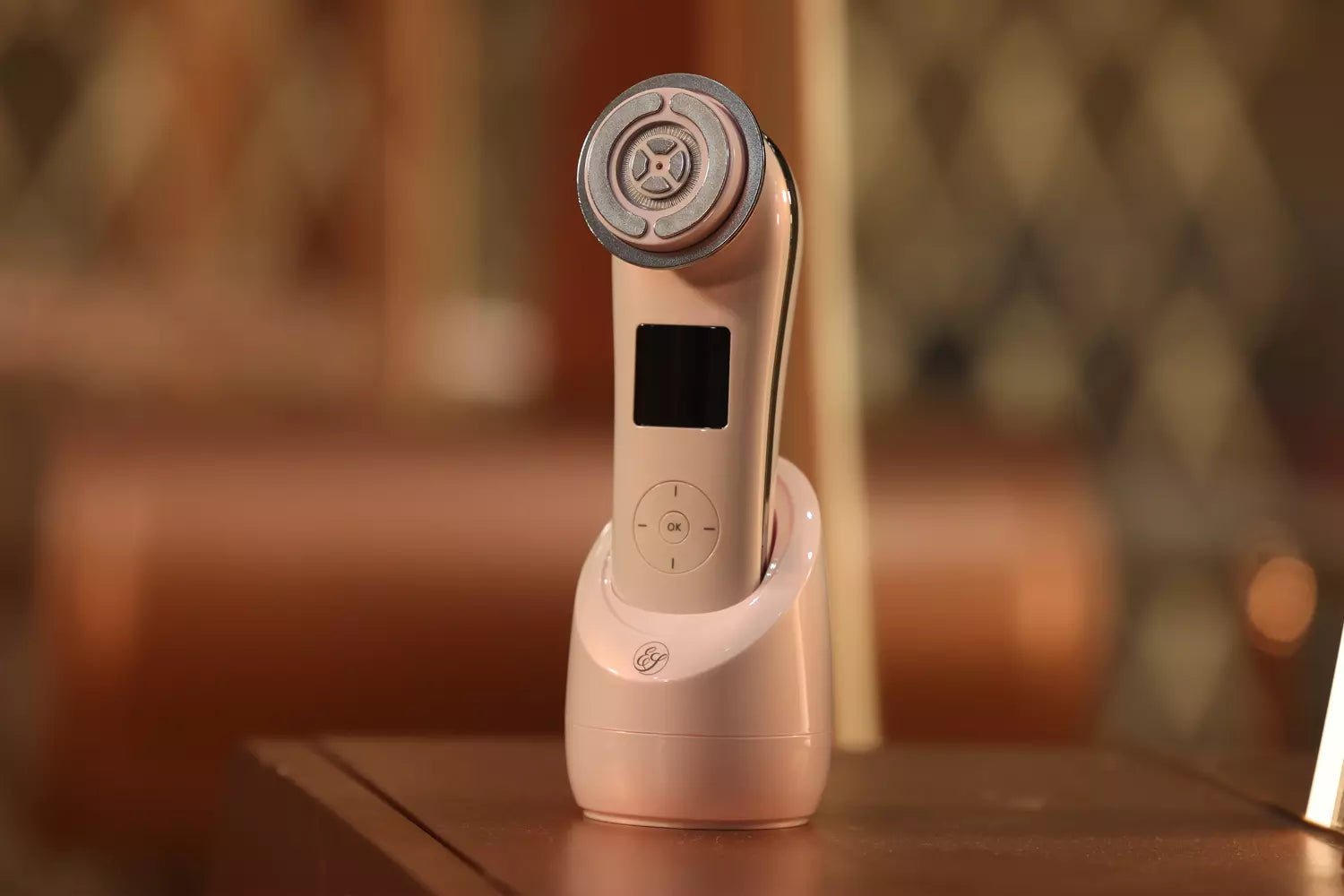
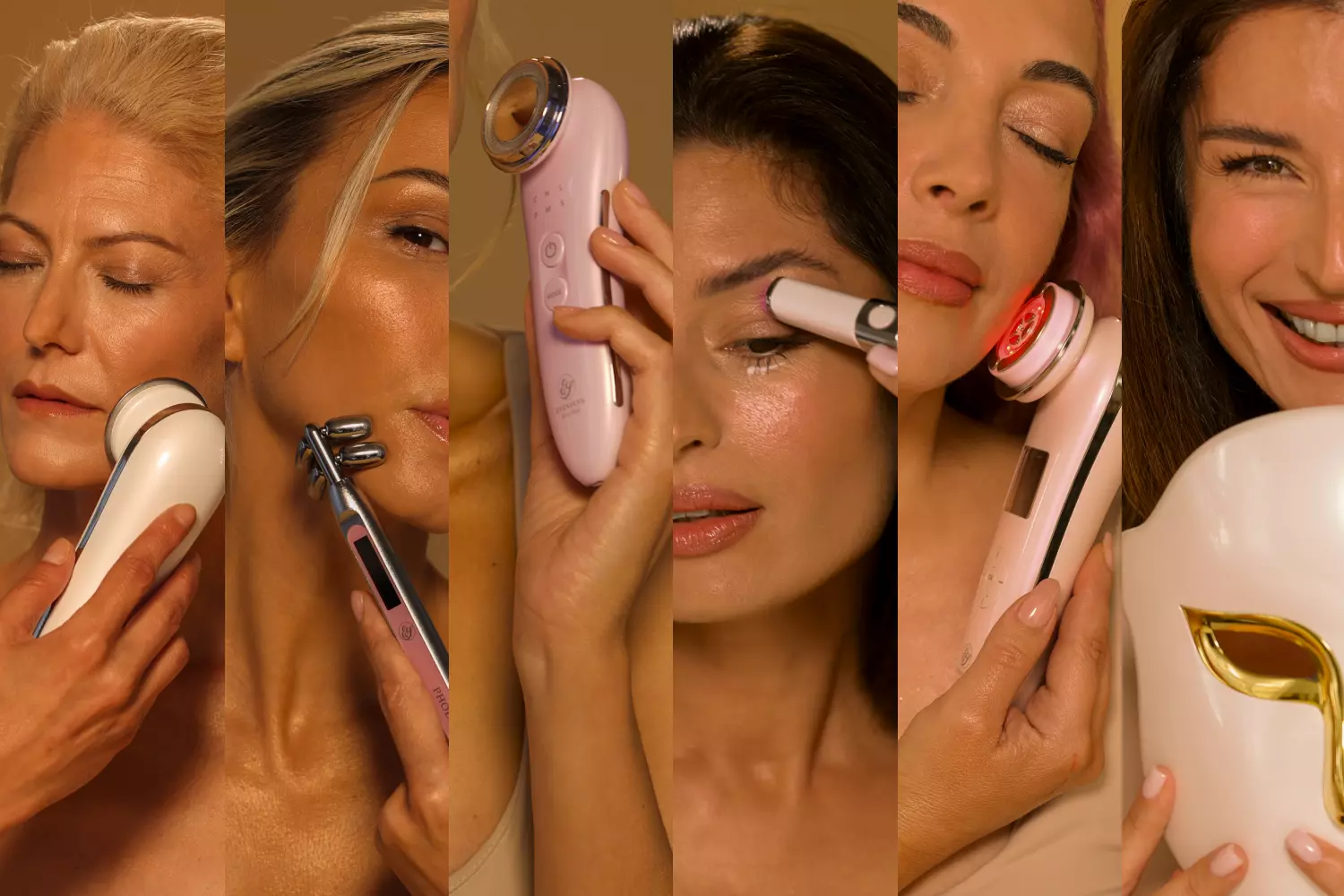
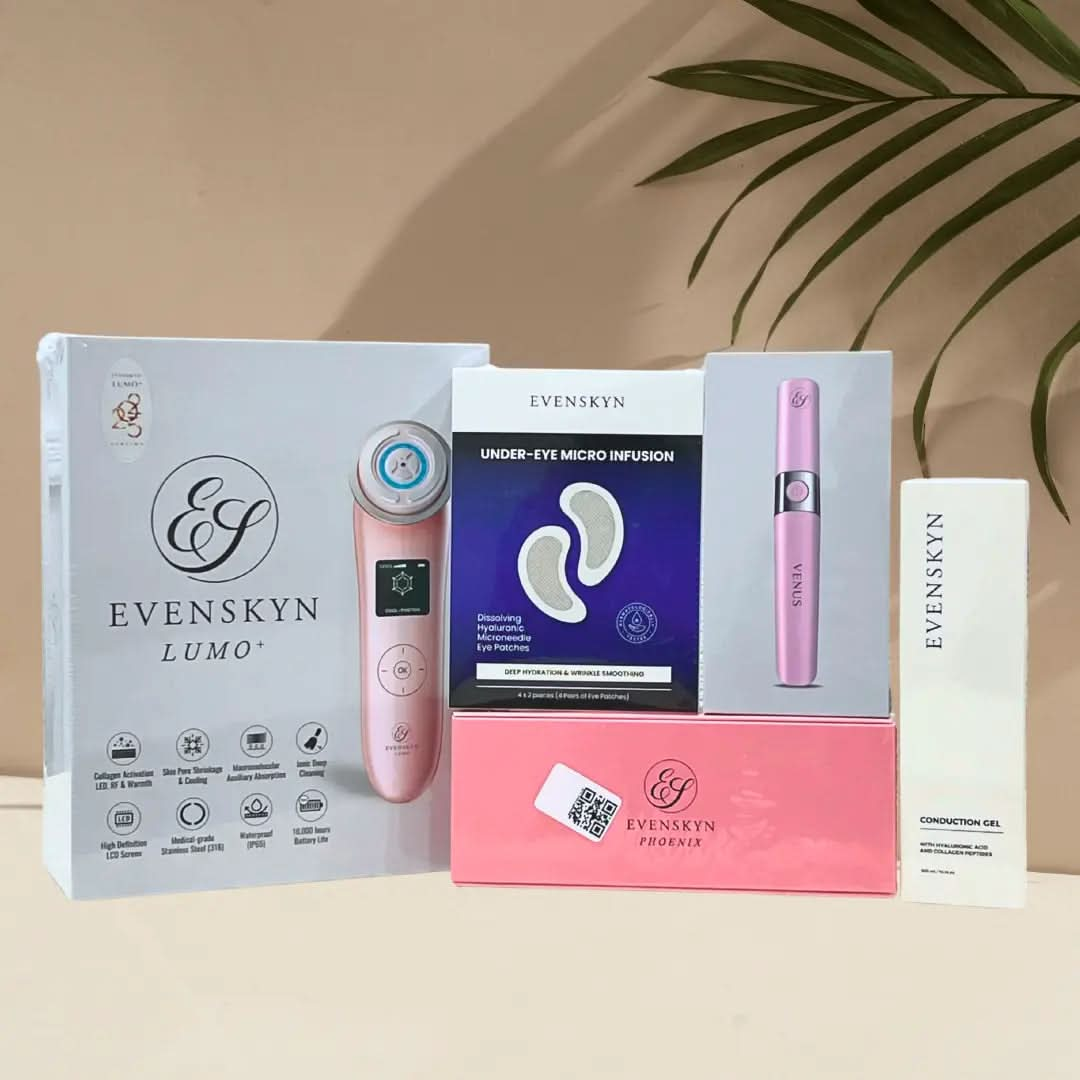
The EvenSkyn Lumo is our primary at-home RF skin tightening device, combining bipolar radiofrequency, microcurrent, and red light therapy in a single treatment head. This multi-modality approach directly addresses the clinical evidence that combination protocols — targeting dermal collagen, cellular energy metabolism, and neuromuscular tone simultaneously — produce better outcomes than single-modality treatment.
The Lumo is designed for use across the full face, neck, and décolleté, making it suitable for addressing the broad collagen remodelling needs of the mid-face, jawline, and neck — the areas where RF skin tightening before and after results are typically most visible. With consistent use two to three times per week, users work through the initial collagen contraction phase and into the deeper regenerative remodelling phase that produces lasting structural improvements.
The 2025 Lumo Plus builds on this with updated RF delivery parameters and refined treatment head ergonomics, representing the current generation of the device.
EvenSkyn Venus: Targeted RF and Microcurrent for the Eye and Periorbital Zone
The delicate periorbital area — the eyelids, under-eye zone, and crow's feet region — presents a specific challenge for RF treatment. The skin here is significantly thinner than the rest of the face, requiring lower energy delivery and a treatment head precisely sized for the contours of the eye area.
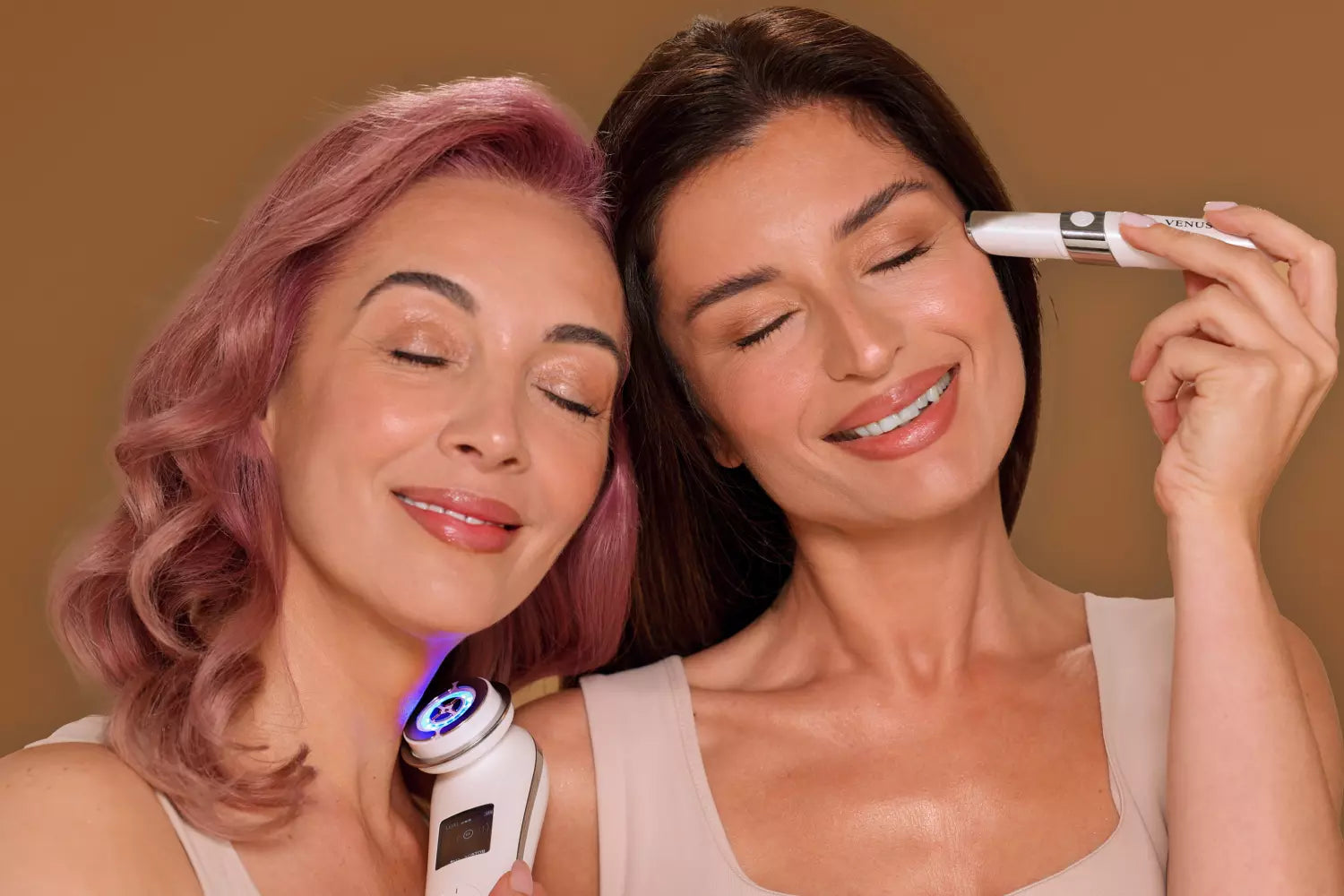
The EvenSkyn Venus is purpose-designed for this zone, using targeted RF and microcurrent to address the fine lines, crepiness, and laxity that characterise periorbital ageing. As an anti-aging wand, it complements full-face Lumo treatments by addressing the eye area with the precision and energy levels appropriate to that skin zone — something a general RF device cannot safely or effectively do.
EvenSkyn Phoenix: Microcurrent for Facial Contouring and Lift
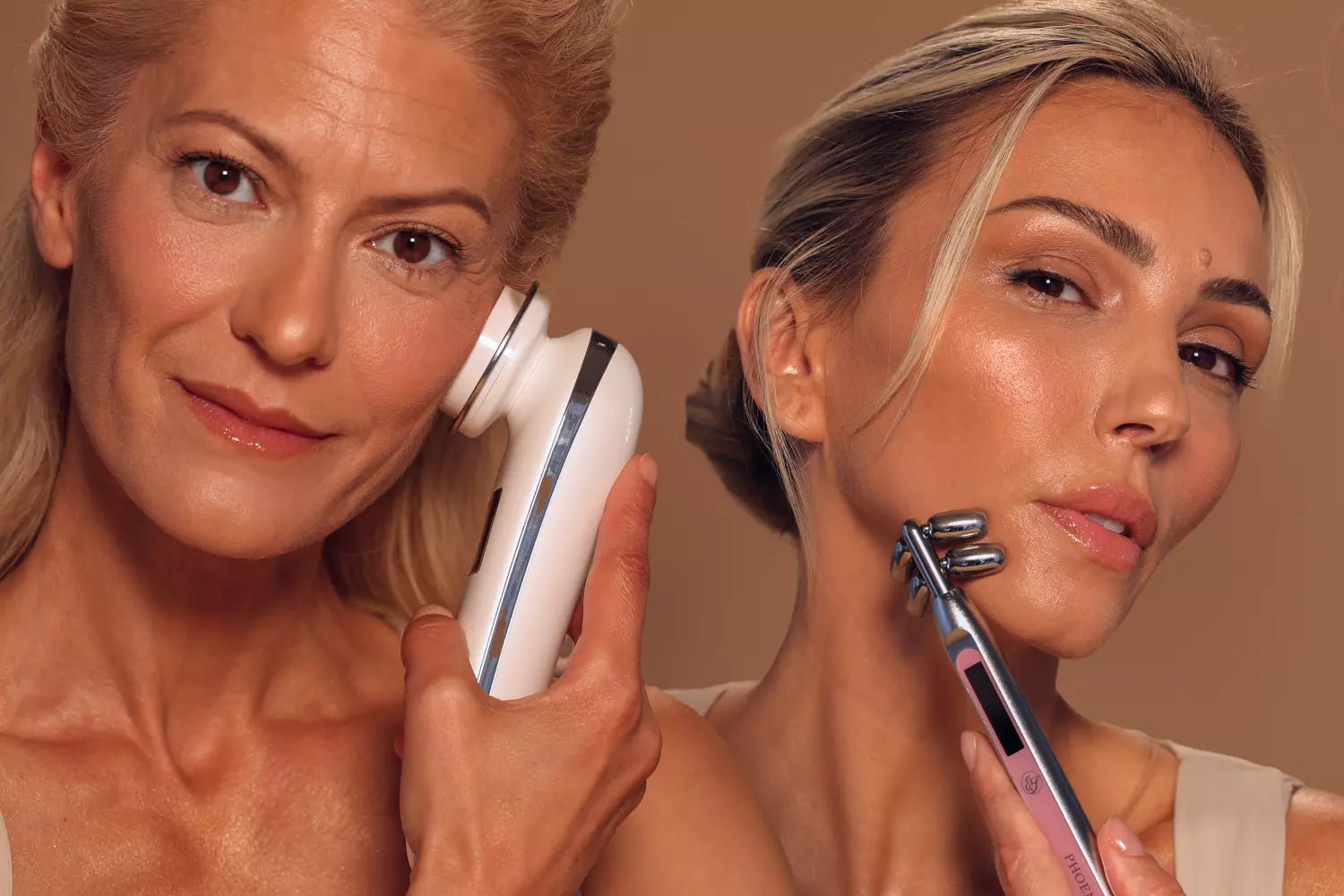
The EvenSkyn Phoenix is a dedicated microcurrent bar, working at the neuromuscular level to restore lift and definition to the facial muscles underlying the skin. As noted above, microcurrent and RF address different anatomical structures. The Phoenix is particularly effective for restoring jawline definition and addressing the muscular component of jowling — an area where RF alone has limited impact, but where the combination of RF-driven dermal tightening (Lumo) and microcurrent-driven muscular re-education (Phoenix) produces synergistic results.
Starting With a Complete Anti-Aging Protocol
For those building a full at-home anti-aging routine from the outset, combining devices into a single protocol produces consistently better outcomes than any single modality. The Lumo + Venus Anti-Aging Bundle pairs full-face RF tightening with targeted periorbital treatment, covering the two zones where skin laxity is most visible and most searched. The Lumo + Phoenix Lift and Tighten Bundle combines dermal RF remodelling with muscular microcurrent lift — addressing collagen loss and muscle atrophy simultaneously.
For a complete protocol covering all three anatomical layers — dermal collagen, periorbital delicacy, and facial musculature — the Lumo + Venus + Phoenix Anti-Aging Bundle brings all three devices together. This is the closest home equivalent to a full multi-modality clinical treatment, and the approach most consistent with the combination-protocol evidence that underpins professional aesthetic practice.
How to Use an At-Home RF Device for Best Results
Consistent technique matters as much as device quality. The following protocol reflects best practices for at-home RF skin tightening.
Preparation. Begin with clean, dry skin free of active skincare products. Conductive gel — typically provided with or recommended for RF devices — improves energy coupling between the device head and the skin, ensuring more even thermal delivery. Apply a thin, even layer to the treatment area.
Technique. Move the device head in slow, upward and outward strokes following the natural lift lines of the face. Avoid staying stationary on any single area for more than a few seconds at lower intensities — this is the primary cause of discomfort and uneven results. The goal is consistent, overlapping passes that build uniform thermal energy across the treatment zone.
Intensity progression. Begin at a lower intensity setting and progress over the first two to three weeks as skin tolerance builds. Most users find a comfortable working intensity by the third or fourth session and maintain it consistently thereafter.
Frequency. Two to three sessions per week is the established protocol for at-home RF skin tightening during an active improvement phase. After three months, maintenance of one to two sessions per week is typically sufficient to sustain results.
Post-treatment care. Avoid active exfoliants (AHAs, BHAs, retinol) immediately following RF treatment. Hydration and SPF protection support the skin's recovery and protect the compromised surface barrier.
Frequently Asked Questions
How long does it take to see results from radiofrequency skin tightening at home?
Initial changes in skin tone and texture are often perceptible within two to four weeks of consistent use. More significant improvements in skin firmness and facial contour typically become visible between weeks six and twelve, corresponding to the collagen synthesis cycle. The most pronounced results are usually seen after three to four months of regular treatment.
How often should I use an at-home RF skin tightening machine?
Two to three times per week during the active treatment phase (the first three months) is the standard recommendation. After that, once or twice weekly is typically sufficient for maintenance. Overuse does not accelerate results and may cause skin sensitivity.
Can I use RF skin tightening on my neck and body, not just my face?
Yes. The neck and décolleté respond well to RF skin tightening and are among the areas where visible results are often most apparent, since the skin in these zones tends to show early laxity and is frequently undertreated. Many users extend full-face treatment sessions to include the neck and upper chest as part of the same protocol.
Is RF skin tightening safe for all skin tones?
Radiofrequency energy is not chromophore-dependent — it does not target melanin the way laser or IPL technologies do. This makes RF safe and effective across all Fitzpatrick skin types, including darker skin tones that require more caution with light-based treatments.
Can I combine RF with other at-home treatments?
Yes, and combination protocols are generally more effective than single-modality approaches. RF works well alongside microcurrent (addresses different anatomical layers), red light therapy (enhances cellular recovery and supports collagen synthesis via photobiomodulation), and ultrasound treatments. Standard topical skincare — hyaluronic acid serums, growth factor formulations, peptides — can be applied after treatment to support recovery.
Does radiofrequency skin tightening hurt?
At appropriate at-home device settings, RF treatment should feel like a warm massage — comfortable and not painful. A mild heating sensation is normal and indicates effective energy delivery. If you experience sharp discomfort or prolonged heat, reduce the intensity setting.
How does at-home RF skin tightening compare to professional treatments?
At-home devices operate at lower energy levels than clinical systems, requiring a longer and more consistent treatment schedule to achieve comparable cumulative collagen stimulation. The advantage is cost — professional RF treatments typically range from $1,000 to $4,000 per session — and the ability to maintain results with ongoing home treatment rather than expensive clinic visits.
EvenSkyn devices are designed for at-home use by adults. If you have a history of skin conditions, active implants, or are pregnant, consult a healthcare professional before beginning RF treatment.


اترك تعليقًا
تخضع جميع التعليقات للإشراف قبل نشرها.
This site is protected by hCaptcha and the hCaptcha Privacy Policy and Terms of Service apply.