





Clinic procedures, explained
The short version
- On 15 October 2025 the US Food and Drug Administration published a safety communication on radiofrequency microneedling. It named "burns, scarring, fat loss, disfigurement, and nerve damage" as reported serious complications, and said in plain words that "RF microneedling is a medical procedure, not a cosmetic treatment, and these devices should not be used at home."1
- The complications are real, they are uncommon, and nobody can give you a reliable rate. The reports come from a voluntary database that does not record how many treatments were done. Anyone quoting a percentage risk is guessing.
- The mechanism behind the worst outcomes is not mysterious. RF microneedling puts heat below the surface on purpose. Put too much heat in, too deep, too often, or in the wrong place, and the tissue that gets damaged is the tissue that was never meant to be treated: fat, nerves and the deeper dermis.
- Most of the risk sits with three things you can check before you book: who is holding the handpiece, what device it is, and what depth and energy plan they have for each area of your face.
- Home devices cannot cause these injuries, because they do not put energy where these injuries happen. They also cannot produce the procedure's results. Both halves of that sentence are true, and this article ends with them. Our guide to what can and cannot be done at home covers the device side in full.
1. What the FDA said, and what it did not say
The communication is titled "Potential Risks with Certain Uses of Radiofrequency (RF) Microneedling" and it is short. Three things in it matter to anyone deciding whether to have the procedure.1
It named the complications. Patients were told to be aware of reports of serious complications such as "burns, scarring, fat loss, disfigurement, and nerve damage" with the use of RF microneedling devices for dermatologic and aesthetic skin procedures.
It set the standard for who should do it. The advice is to "seek care from a licensed health care provider with training and experience on the use of RF microneedling devices."
It closed the home-use question.
"RF microneedling is a medical procedure, not a cosmetic treatment, and these devices should not be used at home."
US Food and Drug Administration, safety communication, 15 October 2025
Two things it did not do, and it is worth knowing they are missing. It did not publish a count of reports, and it did not name devices, depths or energy settings. It says the agency is working with manufacturers to evaluate the issue, and it asks patients and clinicians to report problems through MedWatch. So the communication tells you that a category of harm exists and is serious enough for a federal warning. It does not tell you how likely it is, or which machine or setting is safest. The rest of this article fills in what it left out, from sources you can open yourself.
The next day the American Academy of Dermatology issued a statement under its president, Dr. Susan C. Taylor. It pointed to the "rigorous medical education and specialized training in facial anatomy, including nerves and muscles" that board-certified dermatologists have, said that expertise lets them "minimize risks and effectively manage any complications that may arise," and encouraged anyone considering a cosmetic treatment to "consult a board-certified dermatologist."2 The American Society for Laser Medicine and Surgery published its own statement, which reads: "When used or supervised by an appropriately trained, board certified physician, RFMN can be performed safely and effectively for a variety of dermatologic applications in all skin types and races."3 Neither body walked the procedure back. Both put the weight on who performs it.
2. The five complications, one at a time
RF microneedling drives fine needles into the skin and releases radiofrequency energy from the needle tips, so the heat is delivered below the surface rather than on it. That is the whole point of the procedure, and it is also the source of every item on the FDA's list. Here is what each one is, in plain terms.
Burns. The energy is meant to warm the dermis into a band where collagen remodels. If the energy per pulse is too high, if passes overlap too much, or if the skin is not given time to cool between passes, the heat accumulates instead of dissipating. Dr. Kachiu Lee, a dermatologist interviewed by Dermatology Times on the communication, stressed, in the magazine's words, that bulk heating underneath the skin can occur if these treatments are performed by untrained or poorly trained individuals, and added: "if too many passes are done over the skin or without enough time for the skin to cool between passes, patients can experience serious adverse events."4 Burns from this procedure range from superficial marks that resolve to deeper dermal injury that scars.
Scarring. A burn that reaches deep enough leaves a scar. Scarring after RF microneedling can be raised or, more often in the reports, depressed, and one specific pattern is a visible grid of marks that follows the needle array. A 2017 conference abstract in the Journal of the American Academy of Dermatology documented a prolonged inflammatory reaction after fractional radiofrequency microneedle treatment, a reminder that the reaction to this procedure does not always settle on the timetable the brochure gives.8
Fat loss. This is the complication that drives more searches than any other, and it has its own section below. The short version: the layer under the dermis is fat, fat cells are sensitive to heat, and heat delivered too deep or in too great a quantity can cause the fat in that area to shrink. On a face, that shows up as hollowing, most often at the temples, the cheeks and under the eyes, where the fat layer is thin to begin with.
Disfigurement. The FDA's word covers the visible outcome of the three above when they are severe: asymmetry, hollowing, textural change and scarring that alters how a face looks.
Nerve damage. The face carries sensory and motor nerves close to the surface in places. Heat or needle injury to a sensory nerve produces numbness or altered sensation; injury to a motor branch can affect movement. The reports describe numbness and altered sensation. This is rare, and it is also the reason the AAD's statement leads with anatomy training.
And one the FDA did not list, but the literature does: pigmentation. Any injury to skin can trigger post-inflammatory hyperpigmentation, and the risk rises as skin tone deepens. Two sources give the honest picture. A 2023 review in Dermatologic Surgery of 35 studies in Fitzpatrick types III to VI found a low risk of scarring or hyperpigmentation in skin of colour, with transient post-inflammatory hyperpigmentation noted in seven studies and one report of permanent scarring, while cautioning that many of the studies were of weak quality.7 A 2026 analysis of the FDA's adverse event reports, on the other hand, found pigmentary alteration to be the second most common complication reported, at 18.3 percent of events.5 Trials run by experienced operators on conservative settings see little of it; the reports that reach the FDA see a lot of it. If you have a history of dark marks after acne or injury, that is a conversation to have before the consultation ends, not after the first session.
3. Why "Morpheus8 ruined my skin" is one of the most searched phrases in this category
Google's own advertising data puts that exact phrase at roughly 3,600 searches a month in the United States. We are not going to repeat anyone's individual account here, because an anonymous story with no record of the device, the settings, the operator or the follow-up cannot tell you anything about your own risk. What we can do is explain the mechanism that sits behind the phrase, because the mechanism is well understood.
The procedure puts heat where fat lives. Morpheus8 is one brand of fractional RF microneedling. Like the others (Sylfirm X, Potenza, Vivace, Secret RF, Genius, Exion, Virtue, Scarlet, Pixel8, Agnes, which our procedure decoder sets out one by one), it is built to deliver energy at a depth the operator selects, and on several of these platforms that depth can be set to reach the subcutaneous layer. That is a feature: some treatments are intended to remodel fat, on a jawline or a neck for example. It becomes an injury when the same energy reaches fat that was meant to stay, on a part of the face that has very little of it.
Heat accumulates. Each pass adds energy. Overlapping passes, short intervals between passes and high energy settings stack heat in the tissue faster than blood flow carries it away. That is the bulk heating Dr. Lee warned about. It is also why a session that feels fine in the chair can produce a change that only becomes visible weeks later, as the affected fat is resorbed.
Thin areas are unforgiving. The temples, the area just below the cheekbone and the under-eye have thin fat layers over bone. A depth and energy that is appropriate for a jowl is not appropriate there, and a plan that treats the whole face on one setting is the pattern the experts quoted above were warning about.
Training decides the plan. This is why the FDA, the AAD and the ASLMS all put the weight on the operator. The device does what it is set to do. The setting, the depth map for each zone, the pass count, the cooling interval and the decision to stop are all human choices.
What the FDA's own reports show, and what they cannot show.
A 2026 review in Dermatologic Surgery went through every RF microneedling report in the FDA's MAUDE database from January 2013 to October 2025. It found 114 reports describing 224 separate events. Textural change was the most common (56 events, 25.0 percent), then pigmentary alteration (41, 18.3 percent), fat loss (26, 11.6 percent), inflammatory reactions (18, 8.0 percent), burns (14, 6.3 percent) and pain (12, 5.4 percent). The face, neck and abdomen were the areas most often treated.5 A second cross-sectional analysis of the same database was published the same year.6
The 224 reported events, by category. Shares of events, not rates.
Read those numbers for what they are. They are shares of the events that someone chose to report, not rates. MAUDE is a voluntary system: it does not record how many treatments were performed, so it cannot tell you the chance of any of this happening to you, and it cannot tell you which operators, devices or settings were behind most reports. What it does establish is the shape of the harm: when this procedure goes wrong, it goes wrong in the ways the FDA listed, and fat loss is a real share of it. Treat any headline that says "X percent of patients" with suspicion until you can see where the denominator came from.
4. What you can control before you book
Most of the risk described above is decided before the needles touch skin. Here is what to check, and what to ask.
| Check | Why it matters | What to ask |
|---|---|---|
| Who is operating the device | The FDA's advice is a licensed provider with training and experience on RF microneedling specifically. The AAD's is a board-certified dermatologist. | "Who will be performing my treatment, what is their licence, and how many RF microneedling treatments have they done on my skin type?" |
| Which device | The named clinic platforms are cleared medical devices with published depth ranges and manufacturer training. Unbranded or grey-market machines are not. | "Which device is this, and can I see the depth and energy range you plan to use?" |
| The depth plan by area | A single setting for the whole face is the pattern behind hollowing in thin areas. | "What depth will you use at my temples, under my eyes and over my cheekbones, and why is it different from the jawline?" |
| Passes and cooling | Bulk heating comes from stacking energy faster than it dissipates. | "How many passes per area, and how long between them?" |
| Your skin type | Deeper skin tones carry a higher pigmentation risk and need more conservative parameters. | "How do you adjust for my skin type, and what is your plan if I develop dark marks?" |
| A test area | A small treated patch reveals how your skin responds before the whole face is committed. | "Will you do a test spot first?" |
| What happens if something goes wrong | Complications are managed, not wished away. | "What is your protocol for burns, pigmentation or hollowing, and who do I call?" |
| The consent form | It should list the complications the FDA named. | If it does not mention fat loss, ask why. |
None of this is a reason not to have the procedure. It is a reason to have it done by someone who can answer every row of that table without looking anything up. Dr. Lee's own list of questions for patients, in the same interview, runs along the same lines: when the device was last serviced, what training the operator has on that specific device, how many passes, and what depth.4
Take these questions to the consult
Tick each one once you have an answer you are satisfied with. Nothing is stored or sent anywhere; this runs in your browser.
5. What normal recovery looks like, day by day
The following is what clinics and the published trials commonly describe for a standard facial session on a cleared device at moderate settings. A 2026 systematic review of 41 studies summarised the typical picture in one line: "erythema, edema, and transient pain predominated; post-inflammatory hyperpigmentation was infrequent and self-limited."9 Your practitioner's aftercare sheet overrides all of this.
-
Day 0
Redness and warmth across the treated area, like a sunburn. Some swelling, often more the next morning. A fine grid of marks where the needles entered is normal and expected. Numbing cream is usually applied before treatment, so most discomfort is in the first hours after it wears off.
-
Days 1 to 2
Redness and swelling peak and begin to settle. The grid marks darken slightly and may feel rough. Most people are back at work by day two; clinics commonly quote one to three days of recovery.
-
Days 3 to 5
Dryness and light flaking as the treated surface turns over. This is the window where sun protection matters most, especially in deeper skin tones.
-
Weeks 1 to 2
The surface looks settled. Any remaining pink fades. The collagen response the procedure is designed to trigger has barely started; it builds over the following two to three months.
-
Months 1 to 3
This is when the intended result develops, and it is also the window in which unintended fat loss becomes visible if it has occurred. Persistent hollowing, texture change, numbness, or pigmentation that is not fading by the end of month one belongs in front of your practitioner, not in a search bar.
What is not normal: blistering, open or weeping areas, pain that increases after day two rather than decreasing, spreading redness or heat, numbness that persists beyond a few days, or new hollowing. Each of those is a same-day call to the clinic.
6. Where home devices sit in this
Disclosure: EvenSkyn makes the two devices named in this section.
Every one of the complications above has the same root: energy delivered below the surface of the skin. That is what the procedure is, and it is what no device sold for unsupervised home use does. Our device-category reference sets out the three categories side by side.

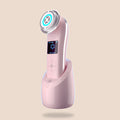
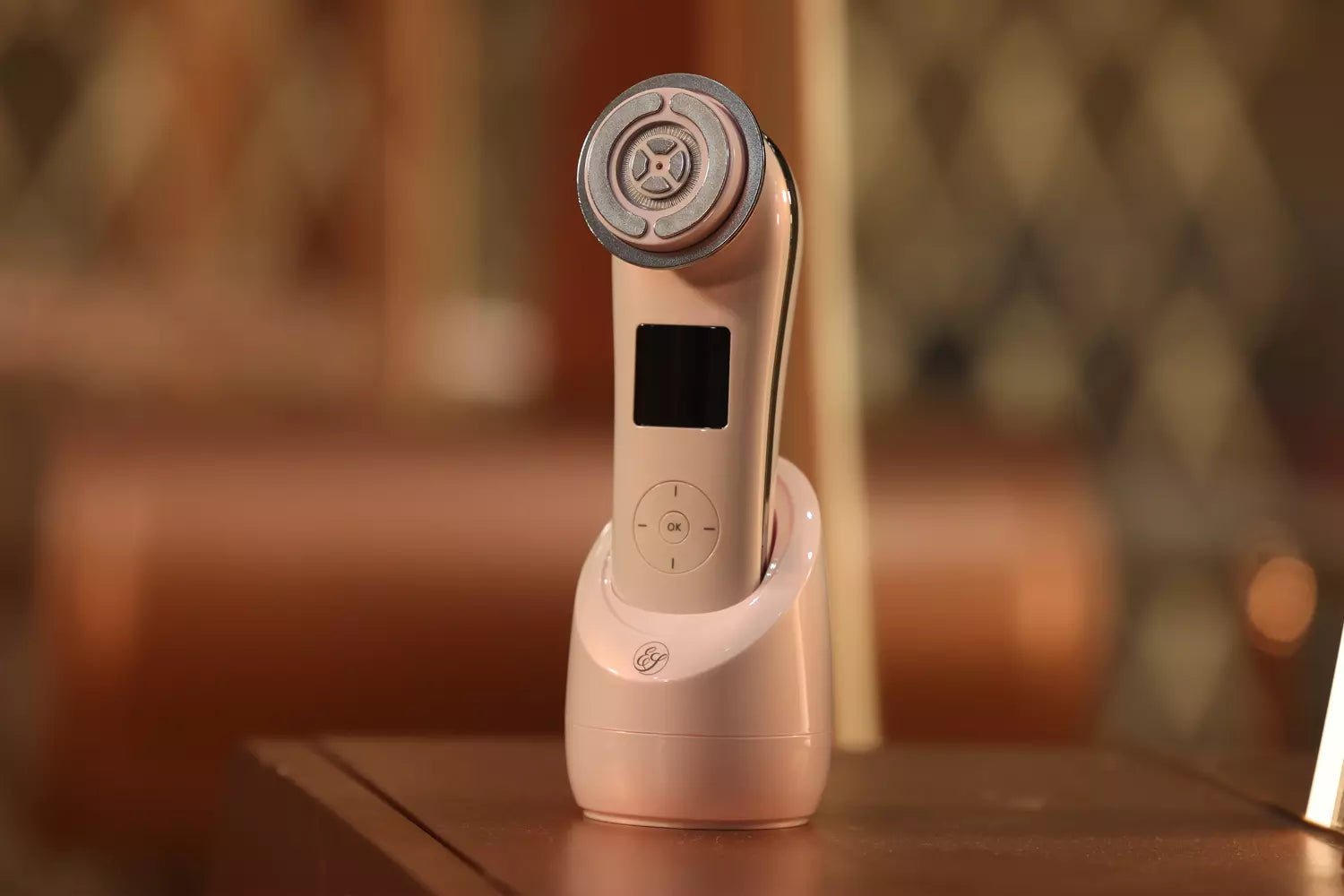
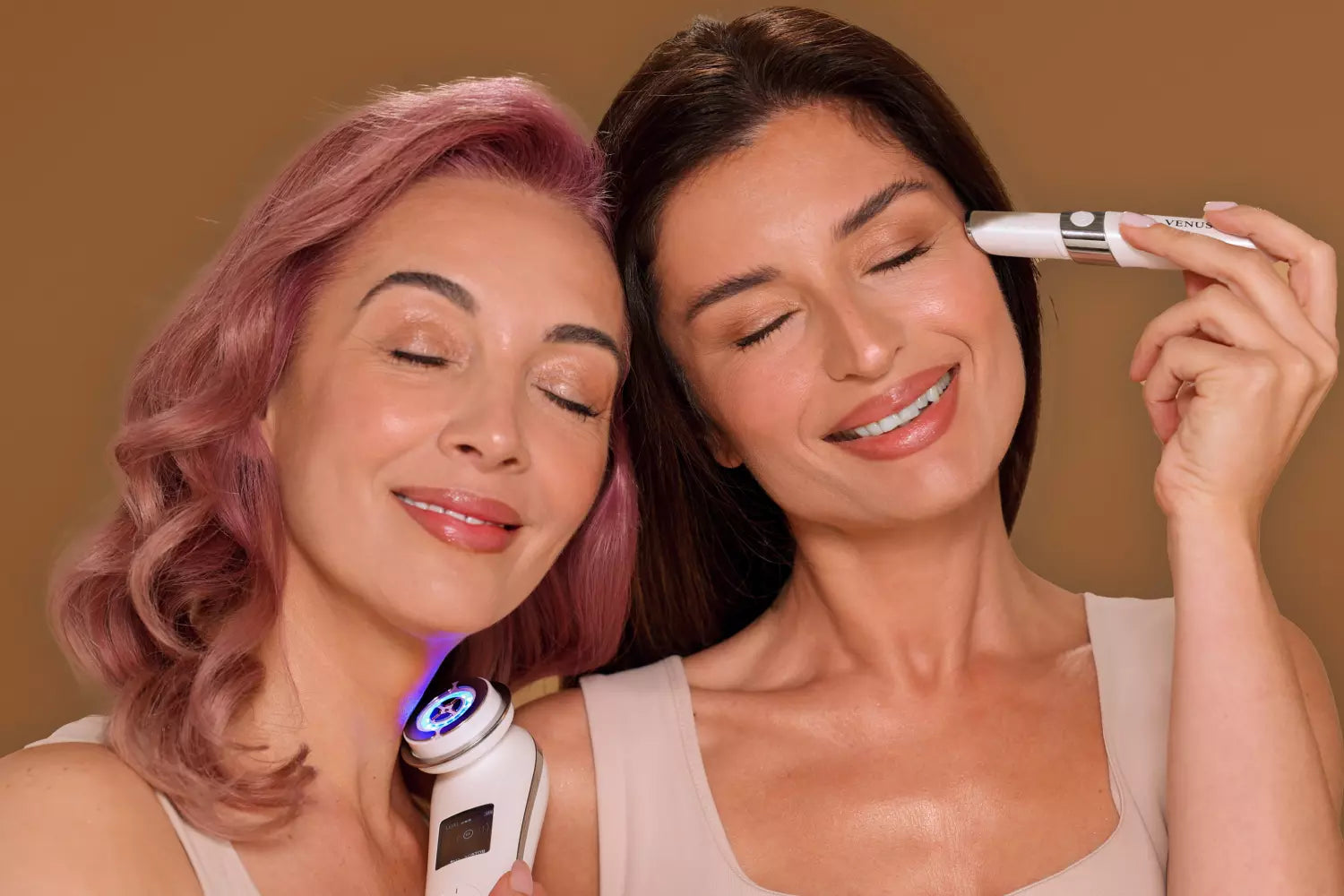
A needle-free RF handset warms the skin from surface electrodes. The EvenSkyn Lumo+, for example, is a 1 MHz bipolar radiofrequency handset with a sensor that holds the treated skin at 40 to 42°C for the session. It does not break the skin, and there is no needle carrying energy anywhere in it. It cannot deliver heat to the fat layer, so it cannot cause the hollowing described in section 3. For the same reason, it cannot produce what a clinic session produces. It is a cosmetic device that supports the look of firmer skin over weeks of consistent use, and its results fade if use stops.
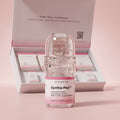
A micro-infusion stamp makes shallow channels and delivers a serum through them, with no energy at all. The EvenSkyn MicroInfuser uses a 0.5 mm needle head that is mechanically locked at that depth, single use and gamma-sterilised, and a sealed 5 mL ampoule. A 0.5 mm nominal needle length cannot reach the fat layer, and there is no heat to accumulate. It is not a clinic microneedling session and it is not a substitute for one. Nominal needle length is not delivery depth, and nobody in this category, including us, has measured how far a given molecule travels.
Together, the Lumo+ and MicroInfuser duo runs the two mechanisms a clinic pairs in one procedure as two separate devices on two separate schedules: the RF session first, then the micro-infusion session, then at least 24 hours before radiofrequency is used again. That sequence exists precisely because running heat across freshly punctured skin is the thing the clinic procedure is engineered to do under supervision, and a home routine is engineered not to do at all. It is the closest an at-home routine gets to the two halves of the procedure. It is not the procedure, it is not equivalent to it, and the FDA's line about home use does not apply to it because no radiofrequency ever passes through the needles. The specifications of both devices sit in our at-home device spec register beside 25 other devices, dated and sourced.10
If you have read this far because a clinic result frightened you off the procedure, that is a reasonable place to land. If you have read this far because you want the procedure's result, the answer is a well-trained operator, a cleared device, and the questions in section 4.
If the at-home route is where you land

The closest an at-home routine gets to the two halves
The Lumo+ and MicroInfuser duo pairs a needle-free 1 MHz radiofrequency handset, sensor-held at 40 to 42°C, with a 0.5 mm micro-infusion kit whose sterile single-use heads click onto sealed 5 mL Syntha-Pep ampoules. Two devices on two schedules: Lumo+ first, the MicroInfuser session after, then at least 24 hours before radiofrequency again. Nothing here places energy below the surface, which is the whole reason it can be sold for home use and the whole reason it is not the procedure this article is about.
$589.99 as the duo · $622.98 bought separately · 60-day money-back guarantee on the devices
What it will not do. It is not RF microneedling and it is not equivalent to a clinic procedure: no radiofrequency passes through a needle, and the result is the look of firmer, smoother skin over weeks of consistent use rather than a clinic's change per session. Both are cosmetic devices, not medical devices, and neither is FDA-cleared. Also sold separately as the Lumo+ and the MicroInfuser. Prices are read from the store as this page loads. EvenSkyn makes both, and this box is the brand's recommendation, not part of the evidence above.
7. Questions people ask
What did the FDA warn about RF microneedling? On 15 October 2025 the FDA published a safety communication on radiofrequency microneedling. It told patients to be aware of reports of serious complications, naming burns, scarring, fat loss, disfigurement and nerve damage, advised seeking care from a licensed health care provider with training and experience on these devices, and stated that RF microneedling is a medical procedure, not a cosmetic treatment, and that the devices should not be used at home. It did not publish a count of reports and it did not name devices or settings.
Is RF microneedling safe? In trained hands, on a cleared device, with a depth and energy plan matched to each area of the face, the published trials report it as generally well tolerated: a 2026 systematic review of 41 studies found that redness, swelling and transient pain predominated and that post-inflammatory hyperpigmentation was infrequent and self-limited. The FDA's October 2025 communication exists because that is not always the setting in which the procedure is performed. Safety here is a property of the operator and the plan more than of the procedure.
Does RF microneedling cause fat loss? It can, when energy is delivered too deep, too intensely or too repeatedly into areas with thin fat layers. The FDA named fat loss among reported serious complications, and fat loss made up 11.6 percent of the events in a 2026 analysis of the FDA's adverse event reports. There is no reliable published rate, because those reports have no denominator. The risk is reduced by a zone-by-zone depth plan, conservative passes with cooling intervals, and an experienced operator.
Does RF microneedling hurt? Topical numbing is standard. Most people describe heat and pressure rather than sharp pain during treatment, and a sunburn-like feeling for a day or two afterwards. Pain that gets worse after day two is not normal and belongs in a same-day call to the clinic.
How long is the downtime? Clinics commonly quote one to three days of visible recovery, with a further few days of dryness and flaking. Sun protection matters throughout, and especially in deeper skin tones.
Can I do RF microneedling at home? No. The FDA said in writing in October 2025 that these devices should not be used at home. Machines sold online as at-home RF microneedling, with adjustable needles that carry radiofrequency, are the devices that statement is about. What can be done at home is needle-free radiofrequency, or micro-infusion, as separate steps. Our Lumo+ and MicroInfuser duo is the pairing we make for that. Neither step is RF microneedling and neither is a substitute for it.
Why do people search "Morpheus8 ruined my skin"? Because fat loss and scarring after fractional RF microneedling, though uncommon, are visible, distressing and slow to appear, and because the procedure is often performed outside dermatology offices. Section 3 of this article explains the mechanism. Individual accounts online cannot tell you your own risk; the questions in section 4 can reduce it.
Is RF microneedling safe for darker skin? It can be, with conservative parameters and an operator experienced in treating deeper skin tones. A 2023 review of 35 studies in Fitzpatrick types III to VI found a low risk of scarring or hyperpigmentation, with transient post-inflammatory hyperpigmentation in seven studies and one report of permanent scarring. Pigmentary change was still the second most common complication in the FDA's adverse event reports, so the risk needs to be planned for, not discovered.
References
- US Food and Drug Administration. Potential Risks with Certain Uses of Radiofrequency (RF) Microneedling: FDA Safety Communication. 15 October 2025. fda.gov
- American Academy of Dermatology. Statement on the FDA Safety Briefing about Radiofrequency Microneedling Risks. Susan C. Taylor, MD, FAAD, President. 16 October 2025. aad.org
- American Society for Laser Medicine and Surgery. FDA Safety Communication on RF Microneedling. 2025. aslms.org
- Bosslett M. FDA Alerts Clinicians to Serious Complications with Radiofrequency Microneedling Devices. Dermatology Times, 16 October 2025, with commentary from Kachiu Lee, MD, MPH, FAAD, and Zoe Diana Draelos, MD. dermatologytimes.com
- Chou M, Myers B, Avram MM. Analysis of US Food and Drug Administration Data on Radiofrequency Microneedling Device Complications. Dermatologic Surgery, published online 18 March 2026. doi:10.1097/DSS.0000000000005080. PMID 41886649. MAUDE reports January 2013 to October 2025: 114 reports, 224 events.
- Safety Considerations and Complications With Radiofrequency Microneedling: A Cross-Sectional Analysis of the US FDA MAUDE Database. 2026. PMID 42430734.
- Syder NC, Chen A, Elbuluk N. Radiofrequency and Radiofrequency Microneedling in Skin of Color: A Review of Usage, Safety, and Efficacy. Dermatologic Surgery 2023;49(5):489-493. doi:10.1097/DSS.0000000000003733
- Prolonged inflammatory reaction after fractional radiofrequency microneedle treatment. Abstract. Journal of the American Academy of Dermatology 2017;76(6, Supplement):AB206. doi:10.1016/j.jaad.2017.04.803
- Kumar N, Kim HM, Nishikawa A, Heo CY, Wu WTL, et al. Effectiveness of Radiofrequency Microneedling in the Treatment of Dermatological Conditions: A Systematic Review. Aesthetic Plastic Surgery 2026;50(13):5282-5317. doi:10.1007/s00266-026-05834-y. 41 studies, of which 15 were randomised controlled trials.
- EvenSkyn. At-Home Device Spec Register and Product Guide, Edition 2026, for the Lumo+ and MicroInfuser specifications quoted in section 6.
This article is for information and is not medical advice. It describes a clinic procedure that EvenSkyn does not perform or sell. Consult a qualified healthcare professional before any cosmetic procedure, and contact your practitioner directly if you are recovering from one and something does not look right. EvenSkyn devices are cosmetic devices. They are not medical devices, they are not FDA-cleared, and they are not intended to diagnose, treat, cure or prevent any disease or condition. Sources were read on 10 September 2026.



اترك تعليقًا
تخضع جميع التعليقات للإشراف قبل نشرها.
This site is protected by hCaptcha and the hCaptcha Privacy Policy and Terms of Service apply.