Morpheus8 at Home: The Risks, the Costs, and the Honest Alternative
31 min read
EvenSkyn Research · Skin Science Desk
There is no at-home Morpheus8, and anyone selling you one is selling trouble. Here is what the clinical treatment really involves after the FDA's 2025 warning, what it costs, how Sylfirm X differs, and what a gentler at-home route can and cannot deliver.
By the EvenSkyn Skin Science Desk · Published May 26, 2026 · Substantially revised and re-reviewed August 16, 2026 · Clinical review: pending (reviewer to be added) · Next scheduled review: November 2026
12 cited sourcesFDA warning coveredSylfirm X comparedPublished by EvenSkyn
Quick answer
Is there an at-home alternative to Morpheus8? Short answer: no single at-home device matches Morpheus8, because it is a clinical combination procedure (insulated microneedles delivering radiofrequency deep into the skin in one pass) that the FDA says belongs with licensed, trained providers. What exists at home is a different, gentler route: two separate devices used in one order. Non-invasive RF with EMS (the Lumo+) goes first as a warm up, then cosmetic-depth micro-infusion (EvenSkyn's MicroInfuser, 0.5 mm fixed depth) on the same day, every two weeks, with the Lumo+ on its own schedule in between. Same two ideas, microchannels and heat, at consumer energies; results build over weeks rather than per session, and severe laxity still belongs in a clinic.
Executive summary
1
Morpheus8 is real medicine, not a gadget: adjustable needles to several millimeters deep, radiofrequency heat delivered under the skin, cleared as a Class II device and operated under clinical supervision.[1]
2
In October 2025 the FDA formally warned that RF microneedling has been associated with burns, scarring, fat loss, disfigurement and nerve damage, told patients to choose licensed, trained providers, and explicitly advised against attempting home use of these devices.[2]
3
Priced honestly, a typical course is a real investment: about $1,870 per session on average, three or more sessions usually recommended, roughly $5,600 for a course, with annual maintenance after, and a 64% "Worth It" score from patients who did it.[6] Our microneedling cost calculator sets clinic totals against at-home totals over 12 and 24 months.
4
The "$99 to $1,699 Morpheus 8 machine" listings flooding marketplaces are unregulated clones combining needles and heat with none of the engineering, sterility or oversight. They are the one product category this article tells you to avoid without qualification.[2]
5
The honest at-home route is not a copy of the clinical machine. It is a sequenced pair of gentler tools, fixed-depth micro-infusion plus non-invasive RF and EMS, with peer-reviewed category evidence and gradual, maintenance-dependent results. We price it, score it, and state its limits below.[9][10]
6
Sylfirm X is the other name patients weigh: pulsed-wave RF microneedling, gentler on pigment-prone skin, usually $1,000 to $1,700 per session across 3 to 6 sessions. There is no at-home Sylfirm X either; the same alternative logic applies.[7]
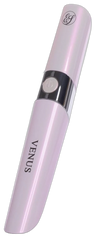
Who is telling you this: this guide is published by EvenSkyn, and the at-home devices discussed in the alternative section are ours. We have no affiliation with InMode (Morpheus8) or Benev (Sylfirm X), we cite every load-bearing claim, and we tell you plainly when the clinic is the better answer. EvenSkyn is a Canadian at-home beauty-device company that designs and manufactures anti-aging devices including the Lumo+ (radiofrequency, EMS and light therapy), the Venus eye device, the MicroInfuser, and the MatureSmile LED whitening kit.
$1,870
average cost of a single Morpheus8 session (range $549 to $4,000)
RealSelf, 2025 [6]
Oct 2025
FDA safety communication: burns, scarring, fat loss, nerve damage reported with RF microneedling
FDA.gov [2]
64%
of Morpheus8 patients rate it "Worth It", meaning roughly one in three do not
RealSelf, 2025 [6]
What Morpheus8 and Sylfirm X actually are
Morpheus8 is fractional radiofrequency microneedling: a clinical device that drives insulated gold-coated needles into the skin and releases RF heat at depth, remodeling the dermis and, with the deeper tips, the fat layer beneath it. Needle depth is adjustable from fractions of a millimeter to several millimeters depending on the tip and treatment area. That subdermal reach is the entire point, and the entire risk profile.[1]
A peer-reviewed overview in the Journal of Cosmetic Dermatology describes the mechanism plainly: controlled micro-injury plus thermal stimulus, triggering collagen and elastin remodeling over the following months.[1] Treatments run as a series, usually three or more sessions a month apart, with one to three days of social downtime after each: redness, swelling, pinpoint bleeding, occasionally scabbing.[6] Best-fit candidates have texture concerns, acne scarring, or mild laxity; it is not a facelift and honest providers say so.
Sylfirm X is the same category with a different engine: it adds an ultra-short pulsed-wave mode alongside continuous-wave RF, which targets abnormal vessels and pigment with gentler tissue heating. In practice that makes it the pick derms reach for on melasma, rosacea and sensitive or pigment-prone skin, while Morpheus8's deeper reach keeps it the choice for heavier laxity and jowls. Sylfirm X downtime typically runs under 24 hours, against one to three days.[7]
The clinic platforms, decoded
Morpheus8 is the name people know, but a clinic quoting you for "RF microneedling" may be holding any of a dozen machines, and they are not interchangeable. They differ in how deep the needles go, whether the needle shaft is insulated so that heat is released only at the tip, what frequency the RF runs at, and what the maker has actually cleared the device for. Those differences decide both the result and the risk profile described in the next sections. Every value below was read from the maker's own product page or brochure on 10 September 2026; where a maker does not publish a figure, the cell says so rather than guessing.
Platform
Maker
Energy
Needles
Depth range
Marketed for
Regulatory status, as stated by the maker
Morpheus8
InMode
1 MHz
Coated pins: 12-pin Prime, 24-pin Resurfacing, 24-pin Morpheus8, 40-pin Body tip
Face tips programmable up to 4 mm; Body tip 7 mm pin depth plus a 1 mm thermal profile, 8 mm in total
Fractional remodelling of face and body by "coagulating the fat and contracting connective tissue"; InMode calls it a subdermal adipose remodelling device
FDA cleared, including the Body handpiece (2020) and soft tissue contraction in fractional RF microneedling (2024) [16]
Sylfirm X
Viol, distributed in the US by Benev
2 MHz; pulsed wave (30 to 60 ms) and continuous wave (120 to 300 ms) modes
25-pin (5 by 5) non-insulated electrodes, Standard and XE tips
0.3 to 4.0 mm
Skin laxity and pigmentation; the pulsed mode targets "the basement membrane and vessels"
FDA cleared (K213612) for electrocoagulation and hemostasis in dermatology and general surgery [17]
Potenza
Cynosure Lutronic
Monopolar and bipolar; 1 or 2 MHz
Semi-insulated Tiger Tip and insulated tips in 16, 25 and 49 needles; single insulated needles for targeted work
0.5 to 4.0 mm on the multi-needle tips; 0.08 to 0.15 mm on the single needles
Wrinkles, acne scars, skin laxity, neck, blemishes and sebaceous hyperplasia
CE marked per the distributor; US status not stated on the page read [26]
Three things to take from the table. First, "FDA cleared" for these platforms usually means cleared for electrocoagulation and hemostasis, a general surgical indication, not a clearance that the device treats wrinkles or laxity; the maker's marketing claims and its cleared indication are different documents. Second, the platforms that reach 4 mm and beyond, and the ones designed to coagulate fat on purpose, are exactly where the fat-loss complications in the next section come from when depth and energy are misjudged. Third, per-session prices exist in this article only for Morpheus8 and Sylfirm X, in the cost section below; for the other platforms we found no reliable published US figures, so they are UNKNOWN and we have not estimated them.
Why there is no true at-home Morpheus8
No at-home Morpheus8 exists because the treatment's active ingredients (needles at depth, radiofrequency energy strong enough to remodel tissue, and the judgment to aim both safely) cannot be sold over the counter. Consumer devices are capped in energy and needle depth by design; clinical RF microneedling is defined by exceeding those caps under supervision. Remove the supervision and you have not made the clinic affordable. You have made it dangerous.
The FDA said this directly in its October 2025 communication: patients should seek "licensed and appropriately trained" providers for RF microneedling, and should not attempt home use of these devices.[2] Professional bodies pushed back on panic, not on principle: the joint ASLMS/ASDS response defended the procedure's safety record specifically in trained, board-certified hands, which is a defense of supervision, not a rebuttal of it.[5]
So the word "alternative" in this article's title means what it says: a different, gentler route toward the same goals. It does not mean the same machine, cheaper. Any product implying otherwise, and the marketplaces are full of them, has told you everything you need to know about its maker.
"Morpheus8 ruined my skin": what goes wrong, and for whom
Search data shows thousands of people every month typing some version of "Morpheus8 ruined my skin," and the complaints behind that phrase are documented, not imagined. The FDA's 2025 communication lists the serious end of the spectrum: burns, scarring, subcutaneous fat loss, disfigurement, and nerve damage, some requiring surgical repair.[2] Dermatology trade coverage of the alert highlighted fat loss "particularly around the eyes and cheeks", precisely the volume a post-weight-loss face cannot spare.[3] Our guide to RF microneedling side effects goes through each of those complications, with the FDA's own adverse event report data and the questions to ask a clinic before you book.
Adverse-event reports filed with the FDA's MAUDE database describe it in patients' own words; one 2023 report cited "unwanted permanent fat loss, changes in my face structure, and indentations" after a Morpheus8 treatment.[4] Skin of color carries an additional documented risk of post-inflammatory hyperpigmentation with RF microneedling when settings and aftercare are not matched to skin type.[12]
The fair reading is not that Morpheus8 is a scam: 64% of patients still call it worth it, and thousands of treatments go well every week.[6] The fair reading is that outcomes concentrate in operator skill: energy settings, depth choices, candidate selection, aftercare. If you book it, you are not buying a machine; you are hiring the person driving it. Vet board certification, ask how many of these treatments they perform monthly, ask to see their complication protocol. And if a treatment has already gone wrong for you: photograph everything with dates, request your treatment records including device settings, contact the provider in writing, and see a board-certified dermatologist independent of the clinic that treated you.
What Morpheus8 really costs
Budget for the course, not the session. Morpheus8 averages about $1,870 per session in the US, with a documented range of $549 to $4,000 depending on city, provider and treatment area, and most plans recommend three or more sessions a month apart, roughly $5,600 for a typical face course, before numbing fees, add-ons, or the annual maintenance session most clinics advise.[6][8]
Line item
Commonly reported figure
Notes
Morpheus8, single session
~$1,870 average; $549 to $4,000 range
Face-only sessions cluster $700 to $1,500 at many clinics [6][8]
Touch-ups every 6 to 12 months are standard advice [8]
Sylfirm X, single session
~$1,004 to $1,714
3 to 6 sessions typical; plans $1,800 to $3,500 [7]
At-home stack (for scale)
$589.99 one-time (Lumo+ and MicroInfuser duo, price read from the store as this page loads)
About a third of one average Morpheus8 session; consumables extra; different power class entirely
Commonly reported US figures from RealSelf and aesthetic pricing guides, 2025 to 2026; quotes vary by market and change; verify locally. Morpheus8, Sylfirm X, Ultherapy and Sofwave are trademarks of their respective owners, named for identification and honest comparison only.
The $99 "Morpheus 8 machine" problem
Search "morpheus8 at home" and the shopping results offer portable "Morpheus 8" machines from $99 to $1,699, shipped from marketplace sellers with product photos borrowed from clinics. These are not Morpheus8: InMode's actual device is a supervised clinical platform, and used professional units trade for tens of thousands of dollars. Nor are they regulated home devices. They are clones that combine the two highest-risk ingredients, needles and electrical heat, with no verified energy calibration, no sterility chain, and no one accountable when a cheek burns or pits.
This is the specific scenario the FDA's advisory addressed when it told consumers not to attempt home use of RF microneedling devices.[2] A simple sorting rule: legitimate home devices are proudly non-invasive (no needles with their heat, capped energies, cosmetic-depth needling sold separately and shallow); clones advertise clinical depth at consumer prices. If a listing uses a trademarked clinic name for a $130 gadget, the name is the counterfeit part.
The honest at-home route: micro-infusion + RF/EMS, sequenced
The workable at-home approach borrows the clinical treatment's two ideas, microchannels and heat, as two separate, gentler tools used one after the other, never combined into one pass. That separation is the safety design: each tool stays inside consumer energy and depth limits, the heat comes before the needles and never after them, and the combination lives in the order of use and the schedule instead of the hardware. Our ranked guide to at-home RF microneedling devices and kits puts this route next to eleven alternatives.
Here is the sequence, with the specifications from our own product pages, stated plainly:
EVERY 2 WKS EVENING
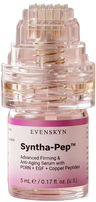
Micro-infusion pass (MicroInfuser): start with a short Lumo+ session as a warm up, then the micro-infusion session on the same day. A sterile, single-use, 24-karat-gold-plated needle head clicks onto a sealed 5 mL ampoule of Syntha-Pep (PDRN, EGF-analog, GHK-Cu, multi-weight hyaluronic acid). Needle depth is fixed and mechanically locked at 0.5 mm, so pressing harder cannot drive it deeper. One head, one ampoule, one session, every two weeks. It is a cosmetic device, not a medical one, and we label it that way.
2 to 3× WEEK 5 MIN
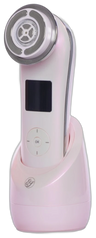
RF + EMS pass (Lumo+): between micro-infusion sessions, and as the warm up before one, sensor-controlled bipolar radiofrequency warms skin to a held 40 to 42°C alongside EMS muscle stimulation and red LED: short sessions, two to three times a week per the device guide, with conduction gel.
ALWAYS
Separation rule: never run the energy device over freshly needled skin. RF goes before micro-infusion, never after it; once a micro-infusion session is done, wait at least 24 hours before any further RF, EMS or ultrasound (the manual's floor; our pairing guide recommends 48 hours), and follow the micro-infusion safety and contraindications list before a first session.
WEEK 8 to 12
Judge on photos: the published home-device trials ran about 12 weeks before scoring results; hold yourself to the same standard before deciding it works or does not.[9]
The evidence for the parts, briefly and honestly: a randomized split-face trial of home bipolar RF found significant wrinkle and elasticity improvements at 12 weeks with zero adverse events[9]; a 108-woman controlled trial of facial EMS measured 18.6% greater muscle thickness with 80% of users reporting firmer, lifted skin[10]; and microneedling's collagen-induction mechanism is among the better-documented ideas in cosmetic dermatology, with microchannels also multiplying how much of an applied active clears the skin barrier.[11] None of those trials tested this exact pairing, and no home protocol has been tested head-to-head against Morpheus8; we state that plainly rather than imply otherwise. If you lost the volume quickly, our guide to loose skin after weight loss covers the fuller face-and-neck program this stack slots into.
7.6/ 10
Verdict: the at-home stack, scored honestly
As an alternative path for people who would otherwise wait, save, or risk a clone, not as a Morpheus8 substitute
Safety and downtime9.5
Cost per year9.5
Category evidence quality7.0
Effort required (the honest weak spot)6.0
Per-session power vs clinical RF microneedling3.5
Best for
Mild to moderate laxity and skin quality, face and neck
People priced out of $1,900-a-session treatment courses
Prevention-minded users, including during GLP-1 weight loss
Anyone tempted by a marketplace clone (this is the safe version of that instinct)
Not the best fit for
Deep acne scarring or heavy jowling, where clinical RF microneedling genuinely outperforms
Anyone wanting visible change from a single session
Hanging skin after massive weight loss (surgical territory)
Anyone who will not sustain a weekly routine for months
How the other marketed at-home routes compare: Medicube's Booster Pro, CurrentBody's kit, and single devices
Most people researching an at-home Morpheus8 alternative are not choosing between a clinic and nothing. They are choosing between a handful of heavily marketed home routes that look interchangeable in an ad feed and are not interchangeable in mechanism. The three you will meet most often are Medicube's AGE-R Booster Pro family, CurrentBody's RF Microneedling Treatment kit, and single-purpose devices such as a microcurrent bar or an LED mask. A reminder before the table: EvenSkyn manufactures one of the routes below, so read our rows with the same skepticism you would read anyone's. Every specification here comes from the named brand's own product page, with the read date in the references.[13][14][15]
Route
Thermal RF
EMS
LED
Needle-based serum delivery
Energy through a needle
Published needle depth
Upfront cost
Clinic RF microneedling (Morpheus8, Sylfirm X class)
Yes, at depth
No
No
Some protocols add topicals
Yes, the defining feature
Adjustable, fractions of a millimeter to several millimeters [1]
Single-device routes (microcurrent bar only, LED mask only)
No
Microcurrent only, on some
LED only, on some
No
No
Not applicable
Varies widely
Two readings of that table are fair, and we will state both. First: among the home routes compared here, the Lumo+ plus MicroInfuser pairing is the only one that combines thermal radiofrequency, EMS and LED with physical needle-based serum delivery. That is a statement about modality coverage, not a results claim, and no head-to-head trial of these routes exists. Second: every home row shares one cell. None passes energy through a needle, ours included. The clinic column keeps that feature to itself, which is the entire reason this article calls the home stack an alternative path rather than a substitute.
The Medicube Booster Pro and Booster Pro X2, on their own published terms
The AGE-R Booster Pro is the device most readers of this page already own or have been served ads for, and it deserves an accurate description rather than a dismissive one. It is a $230, six-mode handset; the newer Booster Pro X2, at $229, moves to seven modes with a dual head Medicube states carries twice the power output and twice the electrodes, app connectivity, and new Dual and Mask modes.[13][14] Its lead mode, Booster, is an absorption feature: Medicube describes it as enhancing "the absorption of active ingredients," and its Air Shot mode as "creating tiny pathways on the skin's surface to help ingredients absorb more effectively." The company publishes test results from the Global Institute of Dermatological Sciences, including a "+763.3% Boost in Skin Absorption Efficiency" figure for the Pro and a "76.3%" 24-hour hydration increase for the X2, without a published sample size for either, and pairs the devices with its own PDRN and collagen serum lines.[13][14]
What the spec sheets do not list matters just as much here. Neither device lists a radiofrequency mode, and neither ships a needle head: the box contents are the device, a manual and a charging cable, and the recommended cadence for most modes is one to three sessions daily, which tells you these are routine-layer tools rather than treatment-day tools.[13][14] So the Booster Pro is not an alternative to Morpheus8 in mechanism, and to Medicube's credit its own pages do not claim it is. It competes on a different question: how to get more of your skincare through the barrier, daily and needle-free. On that question its needle-free approach and a micro-channel system like the MicroInfuser are different answers with different trade-offs: one runs daily over whatever serum you choose, the other runs fortnightly with a sealed single-use ampoule through physical channels at a locked 0.5 mm. If your actual concern is laxity rather than absorption, note which column the Booster Pro shares with the clinic machines: none. Skin-tightening energy, whether clinic-grade needle RF or consumer surface RF, is the modality it does not carry, which is why a Booster Pro owner researching Morpheus8 usually ends up shopping for a thermal device to sit alongside it. Our guide to choosing a micro-infusion system covers the needle-delivery half of that decision, including where our own kit is weaker.
The CurrentBody kit, briefly
CurrentBody sells a $459.99 kit under the name RF Microneedling Treatment: dissolving microneedle patches for two facial zones, worn for two hours or more, followed by a surface RF device, with patch top-ups at $69.99 for six and the needle depth not published.[15] It is the same two-idea architecture as the stack in this article, needles and heat kept separate, arranged patch-first rather than energy-first, and it is honest to say it is the closest structural rival to our pairing. Its per-needle-session consumable cost, about $23.33, is lower than our $30.00 at today's price, and we have published that comparison in full, along with where each kit is more transparent than the other, in our Lumo+ vs CurrentBody RF vs NuFACE comparison. The one thing it is not, on either brand's kit, ours or theirs, is RF microneedling: in both, the needle step and the energy step never meet.
Figure: depth is only half the story; the clinic row is also the only one delivering energy through the needle, which is what the FDA's 2025 communication addresses.[2]
Sylfirm X at home? Same question, same honest answer
There is no at-home Sylfirm X either: no consumer version exists, and no home device delivers pulsed-wave RF through needles. Sylfirm X earns its following in clinics for something specific: its ultra-short pulsed mode treats melasma, rosacea, redness and pigment-prone skin more gently than continuous-wave systems, at $1,000 to $1,700 per session across a 3 to 6 session plan, usually with under a day of downtime and a 78% "Worth It" score.[7]
Choosing between the two clinical names is mostly a candidacy question: pigment, redness and sensitive skin lean Sylfirm X; deeper laxity, jowls and scarring lean Morpheus8; plenty of practices offer both and will steer you in consultation. The at-home question resolves identically for either: the alternative is not a home version of the machine, it is the gentler sequenced stack above, plus patience. If your primary concern is pigment or redness rather than laxity, say that in a consult before buying anything, clinical or consumer; it changes the right answer.
Morpheus8 (clinic)
Sylfirm X (clinic)
At-home stack (Lumo+ + MicroInfuser)
What it is
Needles + RF in one pass, to several mm deep
Needles + pulsed/continuous RF, 0.3 to 4 mm
Two separate gentler tools: 0.5 mm fixed micro-infusion; non-invasive RF/EMS
Transient redness; user-error if instructions ignored [9]
Sources as cited; costs are commonly reported ranges, not quotes. This table compares different power classes; it is a decision aid, not an equivalence claim.
When the clinic is simply the right answer
Some readers should close this tab and book a consultation, and we would rather say so than sell you patience you do not have. Choose clinical RF microneedling, with a carefully vetted provider, if you have deep acne scarring, pronounced jowling or laxity that photographs from across the room, a fixed deadline like a wedding, or eight weeks of home-protocol photos showing no change. Bring the FDA communication to your consult and ask how the practice addresses it; a good provider will answer without flinching, and the ones who bristle have answered a different question.[2] For the fuller decision tree across every option from drugstore to surgery, our Laxity Ladder guide prices every rung.
Budget honesty box
If you can comfortably afford a $5,600 course and your concern is significant, clinical treatment with a skilled provider is the stronger tool and we have said so throughout. The at-home stack exists for the much larger group who cannot, or whose concern does not yet justify it. Matching the tool to the severity and the budget is the entire game.
The gentler route
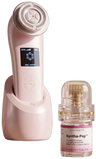
MicroInfuser for the fortnightly micro-infusion pass, Lumo+ for the RF and EMS sessions in between, gel and safety list linked above. The duo is $589.99 today ($619.98 bought separately, prices read from the store as this page loads), a fraction of a typical $5,600 clinical course, and honest about being a different power class.
FAQ: Morpheus8, Sylfirm X, and the at-home question
Can I buy a Morpheus8 machine?
Technically yes, and you should not: used professional Morpheus8 platforms trade for tens of thousands of dollars and legally require trained operation, while the $99 to $1,699 "Morpheus 8" machines on marketplaces are unregulated clones combining needles and heat with no calibration or sterility chain. The FDA explicitly advises against home use of RF microneedling devices. If you want an at-home path, use tools designed and capped for home use instead.
Does Morpheus8 actually tighten skin?
Morpheus8 measurably improves skin texture, acne scarring and mild-to-moderate laxity by remodeling collagen with needle-delivered radiofrequency heat; peer-reviewed reviews document the mechanism and results over a multi-session course. It is not a facelift: patients with heavy jowling or hanging skin see modest change, which is one reason its patient satisfaction sits at 64% rather than higher.
Is Morpheus8 worth it?
About 64% of RealSelf reviewers say Morpheus8 was worth it, meaning roughly a third say it was not, usually because results underwhelmed relative to the roughly $5,600 course cost, or because downtime and discomfort exceeded expectations. Worth-it odds improve sharply with the right candidacy (texture, scarring, mild laxity) and an experienced, board-certified provider.
How much does Morpheus8 cost in 2026?
Commonly reported US pricing puts Morpheus8 at about $1,870 per session on average, within a $549 to $4,000 range depending on city, provider and area treated. Most plans recommend three or more sessions, so a typical face course runs $2,000 to $5,600 or more, plus annual maintenance sessions of $500 to $1,900. Verify locally; prices move.
What is comparable to Morpheus8?
In clinics, the closest comparables are other RF microneedling platforms (Sylfirm X, Vivace, Potenza, Profound) plus focused ultrasound (Ultherapy, Sofwave) for lifting without needles. At home, nothing is directly comparable in power; the honest alternative is a sequenced pair of gentler tools: cosmetic-depth micro-infusion plus non-invasive RF with EMS, used consistently for months.
Is Morpheus8 better than regular microneedling?
Morpheus8 generally outperforms standard microneedling for laxity and deep scarring because the added radiofrequency heat remodels tissue deeper than needles alone, at correspondingly higher cost and risk. For surface texture, glow and product absorption, standard or cosmetic-depth microneedling holds its own at a fraction of the price, which is why depth-limited micro-infusion remains the defensible home version of the idea.
Can I do RF skin tightening at home?
Yes: non-invasive home radiofrequency (no needles) is a legitimate, studied category: a randomized split-face trial of a home bipolar RF device found significant wrinkle and elasticity improvements over 12 weeks with no adverse events. Expect gradual, maintenance-dependent change at consumer energies. What you cannot safely do at home is RF microneedling, needles plus heat, which the FDA specifically warns against.
Is there an at-home Sylfirm X?
No at-home Sylfirm X exists. Sylfirm X is a clinical pulsed-wave RF microneedling platform, and no consumer device delivers needle-based RF of any kind safely at home. People drawn to Sylfirm X for pigment or redness concerns should consult a provider about the clinical treatment; people drawn to it for mild laxity can consider the gentler non-invasive home stack this guide describes.
What did the FDA say about RF microneedling?
In an October 15, 2025 safety communication, the FDA said RF microneedling devices used for cosmetic skin treatment have been associated with serious complications including burns, scarring, fat loss, disfigurement and nerve damage, told patients to seek licensed, trained providers, and advised against home use of the devices. Professional societies responded that the procedure remains safe in properly trained hands, a defense that reinforces, rather than contradicts, the supervision requirement.
Did Morpheus8 really ruin people's skin?
Documented cases exist: FDA adverse-event reports describe permanent fat loss, facial indentations, burns and nerve injury after RF microneedling treatments, and media investigations found under-reporting of such events before 2023. These outcomes are rare relative to treatment volume and concentrate in operator error and poor candidate selection. They are a reason to vet providers hard, and to refuse needle-plus-heat gadgets at home; not proof the clinical treatment fails everyone.
How long do Morpheus8 results last?
Results from a Morpheus8 course typically mature over about three months after the final session and are commonly maintained with a touch-up every six to twelve months, since new collagen still ages with you. Home-device results run on a different clock: smaller change, built over 8 to 12 weeks, sustained only with ongoing use.
What if my loose skin came from rapid weight loss?
Rapid weight loss, GLP-1-assisted or otherwise, causes facial volume loss plus skin laxity, and the right response depends on severity: prevention and home care for mild change, clinical energy or filler for moderate, surgery for hanging skin. Our complete guide to loose skin after weight loss maps that whole ladder, and our Ozempic face guide covers the GLP-1-specific version.
Is the Medicube Booster Pro an alternative to Morpheus8?
Not in mechanism. The Booster Pro and Booster Pro X2 list no radiofrequency mode and ship no needles; their published modes are absorption boosting, EMS-based definition, sonic vibration and LED, used as often as daily. Morpheus8 is needle-delivered RF heat at depth in a clinic. The Booster Pro competes on daily absorption and glow, not on skin-tightening energy, and Medicube's own pages do not claim otherwise.
Medicube Booster Pro vs EvenSkyn MicroInfuser: what is the actual difference?
Delivery mechanism and cadence. The Booster Pro is needle-free: electrical and sonic modes used up to daily over whatever serum you choose, at $230 with no consumable heads. The MicroInfuser creates physical micro-channels at a locked 0.5 mm and pushes a sealed single-use 5 mL ampoule through them once a fortnight, at $30.00 per session in consumables at today's price. Neither carries the other's job: one is a routine-layer absorption tool, the other is a treatment-day delivery system, and neither one is a skin-tightening energy device on its own.
Does the CurrentBody RF Microneedling Treatment kit do real RF microneedling?
No, and neither does any home kit, ours included. CurrentBody's $459.99 kit runs dissolving microneedle patches first, then a surface RF device afterwards, so the energy never passes through a needle; its patch depth is not published. That two-step architecture mirrors the stack in this guide with the order reversed. Clinical RF microneedling, where needles deliver the heat at depth, remains clinic-only, which the FDA's 2025 communication underlines.
About this guide / methodology
Written by the EvenSkyn Skin Science Desk, the in-house research team of EvenSkyn, which manufactures the at-home devices named in the alternative section; we have no affiliation with InMode or Benev. Originally published May 26, 2026; substantially revised August 16, 2026 to cover the FDA safety communication, current pricing, Sylfirm X, and updated product specifications drawn from our live product pages. Peer-reviewed sources verified against PubMed/publisher records; clinic prices are commonly reported ranges from cited consumer platforms, not quotes. A clinical reviewer slot is open for this article. On August 26, 2026 we added the route-comparison section covering Medicube's Booster Pro and Booster Pro X2 and CurrentBody's RF Microneedling Treatment kit, with every specification read from the named brand's own product page on the date cited; no clinical review accompanied that update. Educational content, not medical advice.
References
Hendricks AJ, Farhang SZ. Dermatologic facial applications of Morpheus8 fractional radiofrequency microneedling. Journal of Cosmetic Dermatology. 2022;21(S1):S11-S19. PMID: 35916259.
US Food and Drug Administration. Potential Risks with Certain Uses of Radiofrequency (RF) Microneedling Devices: FDA Safety Communication. October 15, 2025.
Dermatology Times. FDA alerts clinicians to serious complications with radiofrequency microneedling devices. October 2025.
The Capitol Forum. InMode: company only recently began submitting required malfunction and injury reports to FDA. March 10, 2023 (citing FDA MAUDE reports).
American Society for Laser Medicine and Surgery / American Society for Dermatologic Surgery. Joint statement on the FDA safety communication on RF microneedling. December 8, 2025.
RealSelf. Morpheus8 guide: cost, Worth It rating, downtime. Accessed August 2026 (realself.com/nonsurgical/morpheus8).
RealSelf. Sylfirm X guide (realself.com/nonsurgical/sylfirm-x); GlassyIndex Sylfirm X price index, 74 price reports. Accessed August 2026.
Shu X, et al. Efficacy and safety of a home-use bipolar radiofrequency device for facial rejuvenation: randomized controlled split-face trial, 12 weeks. Dermatology and Therapy. 2022;12(4). PMC9021338.
Kavanagh S, et al. Use of a neuromuscular electrical stimulation device for facial muscle toning: randomized controlled trial. Journal of Cosmetic Dermatology. 2012;11(4):261-266. PMID: 23174048.
Aust MC, et al. Percutaneous collagen induction therapy. Plastic and Reconstructive Surgery. 2008;121(4):1421-1429. PMID: 18349665; Hamed R, et al. Microneedle-mediated transdermal delivery of cosmeceutical actives. Cosmetics. 2024;11(2):51.
Post-inflammatory hyperpigmentation risk with microneedling RF in skin of color: case series and review. PMC. 2024 (PMC11619162); review, PMID: 36826381 (2023).
Medicube US. AGE-R Booster Pro product page: modes, usage guidance and published test claims (medicube.us/products/age-r-booster-pro). Read August 26, 2026.
Medicube US. Booster Pro X2 product page: seven-mode specification, dual-head claims and published test claims (medicube.us/products/booster-pro-x2). Read August 26, 2026.
CurrentBody US. RF Microneedling Treatment kit product page: contents, patch-then-RF protocol and top-up pricing. Read August 25, 2026.
InMode. Morpheus8 specifications (inmodeshop.co.uk/morpheus8): 1 MHz, coated 24-pin tips, pin length up to 4 mm programmable; and InMode press release, "InMode Introduces the Morpheus8 Platform and the Morpheus8 Body Fractional Technology," 13 August 2020: 40-pin Body tip, 7 mm pin depth plus 1 mm thermal profile, FDA clearance. Read 10 September 2026.
BENEV. Sylfirm X Ultimate Edition product page (benev.com/sylfirmx): 2 MHz, pulsed and continuous wave modes, 25-pin non-insulated tips, 0.3 to 4.0 mm, K213612. Read 10 September 2026.
Cynosure. Potenza RF Microneedling System brochure (cynosurelutronicapac.com): monopolar and bipolar, 1 or 2 MHz, Tiger Tip semi-insulated and insulated tips in 16, 25 and 49 needles, 0.5 to 4.0 mm. Read 10 September 2026.
Aesthetics Biomedical. Vivace physician brochure (2017): 36 insulated or non-insulated gold-tipped needles, 0.5 to 3.5 mm, 30 to 70 W, red or blue LED; and UltraVision product page (aestheticsbiomedical.com/ultra-vision): indication wording and ultrasound mapping. Read 10 September 2026.
Cutera. Secret RF product brochure (pages.cutera.com): 2 MHz, 25 non-insulated, 25 semi-insulated and 64 semi-insulated tips, 0.5 to 3.5 mm; and Secret PRO product page (cutera.com/products/secret-pro): clearance wording. Read 10 September 2026.
BTL. Exion platform page (bodybybtl.com/solutions/exion): Fractional RF indication wording with non-insulated tips; Exion Face and Exion Body applicators. Read 10 September 2026.
Cartessa Aesthetics. VirtueRF product page (cartessaaesthetics.com/products/virtuerf): 36-needle SmartRF and DeepRF, single-needle ExactRF, 0.5, 1 and 2 MHz; and announcement of FDA clearance for the DeepRF and ExactRF handpieces, 1 December 2021. Read 10 September 2026.
Viol. Scarlet S product page (violmedical.com/products/scarlets): 2 MHz, 25-pin tip, 0.5 to 3.5 mm in 0.1 mm steps. Read 10 September 2026.
Rohrer Aesthetics. Pixel8-RF product page (rohreraesthetics.com/pixel8): 4 MHz, 25, 49 and 64-pin insulated and non-insulated tips, 0.1 to 4.0 mm. Read 10 September 2026.
Alisis Group (distributor). Agnes RF product page (mediallisis.com/product/agnes): 1 MHz monopolar, single-pin and 3-pin insulated needles, F3A needle with a 2.00 mm insulated portion, indications, CE certificates. Read 10 September 2026.
Originally published May 26, 2026 · Substantially revised August 16, 2026 · Route comparison added August 26, 2026 · Clinic platform decoder and live pricing added September 10, 2026 · Next scheduled review: November 2026. Prices, FDA status and specifications re-verified at each review.
Nine brands, one shared depth ceiling, and a set of differences that sit in the hygiene design rather than the marketing. We compare Seranova, Qure, Glov and the EvenSkyn MicroInfuser on single-use...




اترك تعليقًا
تخضع جميع التعليقات للإشراف قبل نشرها.
This site is protected by hCaptcha and the hCaptcha Privacy Policy and Terms of Service apply.