


Three of the most-searched at-home anti-aging devices, compared on what they actually do, what the trials actually show, and which reader each is genuinely the right tool for. With the marketing held at arm's length.
Key takeaways
- These three devices are not interchangeable, and the marketing language that blurs them costs people money. Lumo+ combines radiofrequency, EMS and LED in one handset. CurrentBody Skin RF is a radiofrequency-only device with a tightly controlled thermal protocol. NuFACE Trinity+ is a microcurrent-only device focused on muscle-driven contouring. They address different layers of skin and require different expectations. If the Medicube Booster Pro is also on your list, see how the Lumo+ compares with the Medicube Booster Pro.
- For collagen-led firming at home on a single budget, the multi-modality device (Lumo+) covers the most bases for the price. For radiofrequency done with the most consistent thermal feedback control, the dedicated radiofrequency device (CurrentBody Skin RF) is the more conservative pick. For muscle-led contouring that lifts the look of the jawline and brow rather than tightening the dermis, NuFACE Trinity+ is the longest-established option.
- Most published "X percent improvement" headline numbers in this category come from small, open-label, single-arm, manufacturer-sponsored studies. I name these patterns in the methodology section and grade every claim by evidence class.111317
- None of these three devices is a substitute for in-office procedures (Thermage, Pellevé, fractional radiofrequency, fractional laser, focused ultrasound) for moderate to severe skin laxity. If that is your problem, the honest call is the clinic, not a handset. I make that referral in plain language before any product appears in this article.
- The October 2025 FDA Safety Communication on radiofrequency microneedling matters to this category even though none of these three devices are radiofrequency microneedling devices. Buyers searching "RF at home" deserve to understand the regulatory line between non-microneedle home radiofrequency, which is a cosmetic category, and radiofrequency microneedling, which the FDA now classifies as a medical procedure not authorized for at-home use.18
- EvenSkyn sells Lumo+. I am EvenSkyn's Chief Dermatology Advisor. The disclosure precedes any product recommendation in this article, and the case against my own recommendation is included by design.
At a glance
| Question | Short answer | Evidence class |
|---|---|---|
| Which device gives the most modalities per dollar? | EvenSkyn Lumo+. Radiofrequency, EMS and LED in one handset at a single device price. | Spec |
| Which has the most controlled thermal feedback for radiofrequency? | CurrentBody Skin RF, which holds skin temperature near a target through resistance feedback. | Spec |
| Which is the longest-established microcurrent device? | NuFACE Trinity+. The brand has FDA clearance dating to the mid-2000s and the most consistent microcurrent product line. | Human outcome |
| Which one tightens deep collagen? | None of the three reach the depth or thermal profile of clinic radiofrequency. Home radiofrequency works on superficial dermis, gradually. | Mechanism |
| Which one lifts the muscles? | NuFACE Trinity+ targets muscle directly. Lumo+ works the muscle with EMS as part of a multi-modality protocol. CurrentBody Skin RF does not. | Mechanism |
| How long until I see something? | Hydration and a temporary plumping look within the first treatment. Measurable wrinkle and elasticity gains, where they happen, build over eight to twelve weeks of consistent use. | Human outcome |
| Do these replace a clinic visit? | No, especially for moderate to severe laxity, deep wrinkles, or a structural facelift result. The clinic devices reach depths and thermal profiles home devices cannot. | Human outcome |
| Are these FDA-cleared? | NuFACE Trinity+ is FDA-cleared. Lumo+ and CurrentBody Skin RF are marketed under cosmetic-device regulatory pathways with manufacturer-commissioned clinical work. The clearance status is not a measure of effect size. | Regulatory |
Evidence classes are applied throughout the article. Human outcome means controlled studies in living people. Mechanism means the biological pathway is established but the specific home-device outcome at this exact setting is inferred, not directly measured. Lab / animal means the evidence is from cell culture or animal work and should not be read as a proven cosmetic result in people.
How EvenSkyn assessed this
This comparison is built from three layers of evidence, deliberately kept separate so a reader can see where each claim came from. First, the primary mechanism literature on radiofrequency, microcurrent, and light-emitting diode photobiomodulation in skin, prioritizing controlled human trials over mechanism-only or animal data, and labeling every claim by its evidence class. Second, the device-specific clinical evidence that each manufacturer points to in support of its own product, opened in full so the design (randomized or not, sham-controlled or not, single-arm or comparator, peer-reviewed or commissioned, sponsor affiliation) can be reported next to the headline number rather than hidden behind it. Third, the regulatory context, including the United States Food and Drug Administration Safety Communication on radiofrequency microneedling published 15 October 2025, which sits adjacent to this category in the search results buyers encounter and which sets a boundary readers deserve to see drawn.18
Throughout, I have tried to honor a discipline I impose on myself before publishing in any commercial context: clinic-device outcome numbers stay attached to clinic devices, home devices are described qualitatively unless a home-specific trial exists, and where a home-specific trial does exist its sample size, control structure, sponsorship, and methodological caveats are stated next to the result rather than smoothed over. The pattern that recurs across this category, and that buyers should know about by default, is that several of the most-cited "it works at home" supports are small open-label trials, intraindividual control designs without sham, or manufacturer-commissioned dermatological studies that are well-instrumented but never peer-reviewed.59111317 That does not make the data worthless. It makes it data of a particular class, and class matters when you are deciding whether to spend three or six hundred dollars on a tool that has to earn its place in your routine across months.
I read each reference at its primary identifier, recorded study type and any funding or affiliation flag, and have included the affiliation flags in the reference list itself so a reader can audit my reading rather than trust it.
What home RF skin tightening actually is
Radiofrequency in cosmetic dermatology is alternating electrical current at a frequency high enough that the skin's natural resistance to that current generates controlled heat in the dermis. The heat does the work. At target temperatures in the range of roughly 40 to 45 degrees Celsius at the dermal layer, sustained for a working interval, two things happen. Existing collagen fibers contract and reorganize, which produces a small immediate tightening effect that fades over days. New collagen is laid down over the weeks that follow as the dermal fibroblasts respond to the thermal signal, which produces a smaller but more durable change that builds across an eight to twelve week course.12423
Clinic radiofrequency devices, such as Thermage, Pellevé, EndyMed Pro, Alma Accent, and the fractional microneedle radiofrequency systems used in dermatology offices, deliver substantially higher power densities, deeper depth profiles, and tighter temperature control than any home device, with operator training and skin-cooling adjuncts that home use cannot replicate. That is the structural reason a single clinic course can produce a more visible tightening result than months of home use. It is also the reason that clinic-device outcome numbers do not transfer to home devices, and why this article will not quote those numbers in support of any home device. Mechanism
Home radiofrequency devices, by contrast, work at lower power densities, shallower depths, and longer cumulative exposure times. The trade is gentler heat, deliberately, so the device is safe for a layperson to use unsupervised. The reasonable expectation is a more modest version of the dermal collagen response, building gradually with consistent use, on a longer timeline than a clinic course. That is what the home-device literature reports in the cleanest available trials, with the caveats above on sample size and design.569
Why this comparison matters now
Three things have changed the buyer's landscape in the last year and a half. First, the at-home device category has matured to the point where the same three or four devices keep appearing in the consideration set of someone deciding between a home tool and a clinic appointment, and Lumo+, CurrentBody Skin RF, and NuFACE Trinity+ are the trio that dominates that consideration set for the premium home segment. Second, the editorial review ecosystem that previously dominated this comparison space (PureWow, NewBeauty, the larger affiliate-driven lifestyle outlets) has converged on a familiar shortlist that omits several of the strongest devices and gives surprisingly little space to the question of mechanism match. Third, on 15 October 2025 the FDA issued a Safety Communication on radiofrequency microneedling, classifying that procedure as a medical procedure not authorized for at-home use and citing reports of burns, scarring, fat loss, nerve damage, and disfigurement.1820 That communication does not target any of the three devices compared here, none of which are radiofrequency microneedling devices, but it does change the way responsible writers ought to treat the at-home RF category. A buyer searching "radiofrequency at home" deserves a clear line between non-microneedle home radiofrequency, which is the actual subject of this comparison, and radiofrequency microneedling, which is not a home category at all.19
The third change matters in a way that is worth pausing on. The terminology drift in this market over the last several years has been almost entirely in the direction of borrowing words from medical procedures and applying them to cosmetic ones. A consumer who reads "professional-grade" and "clinical-strength" and "microneedling-like results" on a foil sachet or a handheld device is being walked toward an expectation the device cannot meet, and is being walked away from an expectation it can. My job in this article is to put the words back where they belong, so the comparison you are about to read is between devices doing what they actually do, not between marketing claims doing what they were written to do.
Three mechanisms, three jobs
The single most useful thing this article can do is keep three different mechanisms separated, because every interesting honest answer in this comparison depends on a reader being clear about which one is the right tool for which problem.
Radiofrequency: thermal collagen signal in the dermis
Alternating current generates resistance heat in the dermis. The dermal fibroblasts respond to that thermal signal by contracting existing collagen (small immediate effect) and by laying down new collagen across the weeks that follow (larger gradual effect). Human outcome for clinic radiofrequency. Mechanism for home radiofrequency, with the small-N home-device studies in support.156 Target organ: the dermis. What changes: skin tightness, fine lines, modest firmness gains. What does not change: muscle tone, structural facial volume, dark pigment.
The schematic in Figure 1 shows where each modality does its work in the layered tissue of the face, with depths drawn for clarity rather than to scale.
Microcurrent: low-level current to facial muscle
Microcurrent is sub-sensory electrical current at intensities low enough that you barely feel it. The current passes through skin and elicits a response in the facial musculature underneath. The acute effect is a transient increase in muscle resting tone, which looks on the surface like a small lift. The proposed longer-term effect is on adenosine triphosphate production in skin cells and on collagen and elastin synthesis at the cell-culture level, with the cleanest cosmetic outcome data being a 2012 randomized trial of thirty subjects showing roughly 18 to 21 percent improvement in measured wrinkle scores after 10 sessions.11 Human outcome for the small-N trial. Lab / animal for the cell-culture mechanism findings, which come from in vitro work on fibroblast cell lines and animal tenocyte studies that should not be read as a guaranteed cosmetic effect in your face.1214 Target organ: facial musculature primarily, with secondary skin-level effects. What changes: the look of the jawline, the brow, and the cheek with consistent use. What does not change in any meaningful structural sense: the dermal collagen layer.
LED photobiomodulation: light into skin cells
Specific wavelengths of red and near-infrared light, in the rough ranges of 630 to 670 nanometers and 810 to 850 nanometers respectively, are absorbed by mitochondrial chromophores in skin cells and modulate cellular signaling. The cleanest human-outcome data is a series of controlled trials showing modest gains in fine lines, skin tone, and intradermal collagen density after eight to twelve weeks of consistent red and near-infrared use, with strong safety and well-tolerated short sessions.1516 Human outcome. Target organ: skin cells in the epidermis and superficial dermis. What changes: surface tone, redness, fine lines, hydration metrics. What does not change: deep collagen contraction (LED is non-thermal at cosmetic doses), muscle tone, or pigment driven by melanin biology rather than inflammation.
A terminology clarifier, said once, clearly
Three words share enough surface area in the consumer market that the conflation sells products and confuses readers. Radiofrequency is the alternating-current thermal modality described above, available in clinic and at home. Radiofrequency microneedling adds physical needles that drive radiofrequency energy into the deeper dermis through electrode tips. As of 15 October 2025 the FDA classifies radiofrequency microneedling as a medical procedure not authorized for at-home use.18 Microneedling alone, without the radiofrequency, is mechanical needling at a clinic or, in a much milder form, at home with a derma roller or a dissolving microneedle patch, which I have written about separately.
None of the three devices in this comparison is a radiofrequency microneedling device. Lumo+ and CurrentBody Skin RF are non-microneedle radiofrequency devices. NuFACE Trinity+ is a microcurrent device that uses no needles and no thermal radiofrequency. If your search history has been mixing these terms (and most do), this paragraph is the map. The rest of the article assumes you have it.
My disclosed bias and scope
EvenSkyn employs me as its Chief Dermatology Advisor. EvenSkyn manufactures and sells the EvenSkyn Lumo+, one of the three devices compared in this article. I have contributed to internal clinical protocol documentation at EvenSkyn. A reasonable reader should assume I have a commercial interest in your taking the home-device category seriously and in your considering Lumo+ specifically. The way I try to earn the right to be read anyway is by stating the case against my own recommendation explicitly later in the article, by labeling every claim with its evidence class, and by telling you directly when CurrentBody Skin RF, NuFACE Trinity+, or a clinic visit is the better match for your goal. None of those redirections are hypothetical. I make them in the recommendation section below.
The scope of this article is non-microneedle, non-laser, home-use anti-aging devices intended for face and neck, with a focus on the three devices that dominate consumer comparison searches in the premium segment. The article does not cover hair removal, body contouring, scalp devices, or in-office procedures, except to draw the line. It is written for an adult reader with normal healthy skin, not as medical advice for an individual case. Anyone with a history of facial implants, pacemakers or active electronic implants, current pregnancy, active skin infections or recent injectable treatments in the area should clear use with their treating clinician before purchase.
What the clinic procedure does, and the honest no
If you have moderate to severe skin laxity (visible jowling, a fallen midface, neck banding, a deep nasolabial fold that no longer responds to topical care), no home device in this comparison will resolve it. The category that does is in-office radiofrequency at therapeutic power, by name and intent: Thermage FLX, Pellevé, EndyMed Pro, and the fractional microneedle radiofrequency platforms (Morpheus8, Vivace, Genius, Sylfirm X), plus focused ultrasound (Ultherapy) for deeper SMAS-layer effects. Those procedures deliver thermal energy at depths and power densities that home devices are deliberately built not to reach. The reason home devices are safe for unsupervised use is exactly the reason they cannot do what those clinic devices do. Skipping the clinic visit when the clinic visit is the right tool is the most common and most expensive mistake I see in this category. Make the consultation, then decide.
The honest no is not a hedge. It is the structural reason the rest of this comparison is useful. Home devices, used as designed, deliver a more modest version of the dermal collagen response on a longer timeline than a clinic course, plus optional modality stacking (microcurrent, LED) that the clinic radiofrequency devices generally do not combine. The right reader for a home device is the reader for whom the clinic is overkill, the reader who wants to maintain a clinic result between professional visits, or the reader whose skin laxity is mild enough that the smaller cumulative home effect is genuinely sufficient. The wrong reader for a home device is the reader buying it because the clinic feels expensive or scary, when the clinic is the matching tool. Both readers exist. I have served them both. The first is well served by what follows. The second is not.
Two more honest nos worth surfacing while we are here. If your primary concern is melasma or post-inflammatory hyperpigmentation, none of these devices is your first-line tool, and radiofrequency in particular can occasionally worsen pigmentation in darker skin types, which is why skin-tone considerations matter on the safety page. If your primary concern is dynamic wrinkles from repeated muscle movement (the crow's feet that appear when you smile, the frown line that deepens when you concentrate), the procedural tool with the strongest evidence base is botulinum toxin, not any of these devices, although microcurrent can offer a partial cosmetic complement on different terms.21
The single deciding factor
If you read nothing else in this article, read this sentence. The deciding factor between these three devices is not which has the best marketing or the highest user-survey number. It is which mechanism actually matches the change you want to see in the mirror. Pick the mechanism first. Pick the device second. The order matters, because reversing it is how the at-home device category produces its largest pool of disappointed buyers.
The three changes home devices realistically deliver, in their own categories of effect, are these. A dermal collagen response that gradually firms skin and softens fine lines over weeks (radiofrequency). A muscle-driven shift in the apparent contour of the face that produces a temporary lifted look and, with consistent use, a more sustained one (microcurrent). A surface-level improvement in tone, redness, and fine-line texture from cellular-level light absorption (LED). A device that covers more than one of those mechanisms covers more than one of those changes. A device that covers one mechanism does that one thing more single-mindedly.
What that means in practice is the question that decides which of the three devices is for you. If you want collagen-led firming and you want it on a single budget, the multi-modality handset (Lumo+) is the answer. If you want radiofrequency done with the most consistent thermal feedback control and you do not need the other modalities, CurrentBody Skin RF is the answer. If you want muscle-driven contouring as your primary goal and the dermal collagen response is a secondary consideration, NuFACE Trinity+ is the answer. The recommendation section at the end of the article restates this in extractable form for the device that fits the most readers.
Figure 2 below sets out the same idea visually: each modality occupies a region of a two-axis map (tissue layer, time horizon), and a multi-modality device covers more of that map than a specialist device while doing each region less single-mindedly.
EvenSkyn Lumo+ profile
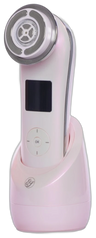
Lumo+ is the multi-modality device of the three, combining radiofrequency, EMS and red and blue LED in a single handset designed for a five to eight minute facial session two or three times per week (one to two if you are under 40). EvenSkyn positions it as a 5-in-1 device on the basis of radiofrequency, EMS, red LED, sonic massage, and a thermal heating channel that holds the radiofrequency exposure at the targeted dermal temperature for the working interval. The handset uses conduction gel as the contact layer for radiofrequency and EMS, in line with the standard of care for both modalities in clinic and home settings.
What the spec says it does
The two design choices that matter most for buyer evaluation are the two-tier dermal heating profile and the EMS strength. The two-tier heating channel is engineered to hold the radiofrequency thermal effect at a sustained working temperature in the upper dermis rather than spiking and dropping, which is the part of the radiofrequency dose-response that most reliably drives the fibroblast collagen signal. Mechanism The EMS channel runs at 3 to 15 mA, far above the microamp output of at-home microcurrent devices, which makes it a muscle-contraction mode rather than a microcurrent one. Spec
What I will not do, by my own rule, is quote a number for skin tightness or wrinkle reduction attached specifically to Lumo+, because there is no peer-reviewed published trial on Lumo+ at the time of writing, and the home-radiofrequency evidence I am willing to extrapolate from is from other devices at other power densities. The honest read is that Lumo+ should produce the modest, gradual, weeks-to-months home radiofrequency effect described in the home-radiofrequency literature for any well-designed device at this depth and power range, plus the small additional benefits of the EMS and LED channels on their own published evidence bases.569111516
Where it earns its place
The single argument for Lumo+ that the other two devices cannot answer is the modality stacking inside one budget. A reader who would otherwise be considering one radiofrequency device, one microcurrent device, and one LED mask is looking at a price stack approaching or exceeding fifteen hundred US dollars across three brands. Lumo+ at five hundred US dollars covers the three mechanisms within one device. That is not an argument that Lumo+ does each mechanism as single-mindedly as a specialist device. It is an argument that for the reader whose budget supports one device and whose skin concerns span more than one mechanism, the multi-modality math is genuinely favorable.
Where it does not
For a reader who only wants radiofrequency, who values the most consistent thermal feedback control available in the home category, and who does not need EMS or LED, Lumo+ is doing more than they need them to and the specialist device is the cleaner choice. For a reader whose primary goal is muscle-driven contouring and who has tried microcurrent before, the dedicated microcurrent device with its longer brand history and more developed protocol app may produce a better felt experience even if Lumo+'s EMS channel runs at a higher current. Both of those are real readers, both of those redirections are honest, and the rest of the comparison serves them.
CurrentBody Skin RF Series profile
CurrentBody Skin RF is the dedicated radiofrequency device in the comparison, doing one job at one depth with one mechanism. CurrentBody is the most established at-home device retailer in the segment, with a 17-year operating history and a substantial portfolio of clinically commissioned device studies including the Series 2 LED Face Mask Eurofins dermatological efficacy study (2025), the Intertek hair regrowth device study, and the radiofrequency device clinical work CurrentBody points to in its own claim that 89 percent of trial subjects saw an improvement in skin tightness after eight weeks.17 Human outcome with affiliation flag (manufacturer-commissioned, well-instrumented, single-center, not peer-reviewed).
What the spec says it does
The notable design choice is what CurrentBody markets as Skin Sense Technology: a continuous skin-temperature feedback loop that holds the contact area at roughly 104 degrees Fahrenheit (40 degrees Celsius) and adjusts power to compensate as the skin's resistance changes during use. The thermal target sits in the range of the dermal collagen signal window I described earlier, and the feedback control is the part of the design that makes this device feel more like a clinic radiofrequency handpiece than a generic home device. Mechanism
Treatment protocol runs five minutes per zone, signalled by the device's own indicator light turning from green to orange, which works out at roughly seventy minutes to cover a full face. CurrentBody publishes the operating frequency as 1 MHz with a stated tolerance of 0.05 MHz, which more of this category should do and most does not. The published course is once a week for eight weeks and then a top-up every four to eight weeks. Conduction gel is required.24
Where it earns its place
For a reader who has already decided that radiofrequency is the mechanism they want, who values single-purpose engineering over feature stacking, and who is willing to spend the per-session minutes that the longer protocol requires, CurrentBody Skin RF is the most conservative pick of the three for the radiofrequency job specifically. The temperature feedback is the closest analog in the home category to the thermal control that defines the clinic-device experience, and the brand's evidence ecosystem (Eurofins, Intertek) is the most thoroughly instrumented in the consumer space, even given the affiliation caveat that these studies are brand-commissioned rather than peer-reviewed.17
Where it does not
It is a radiofrequency device only. It does not address muscle-driven contouring, and it does not deliver LED photobiomodulation. A reader whose goals span more than one mechanism is paying a CurrentBody Skin RF Series price for one of those mechanisms only, and is either stacking with other CurrentBody devices (LED mask, microcurrent device if added to range) or with a multi-modality handset like Lumo+. The two readers it does not serve well are the budget-conscious reader trying to cover all three mechanisms on a single device and the muscle-led contouring reader whose primary goal is not the dermal collagen response at all.
NuFACE Trinity+ profile
NuFACE Trinity+ is the dedicated microcurrent device of the three. The brand has the longest microcurrent home-device pedigree in the consumer market, with FDA clearance dating to the mid-2000s and a continuous product line refined across multiple generations. The clinical evidence NuFACE points to centers on the ENGAGE Clinical Study, a single-center single-arm non-randomized trial of fifty-six subjects using Trinity+ once daily for sixty days, with photographic clinical grading at 30 and 60 days.13 Human outcome with affiliation flag (manufacturer-sponsored, single-arm, no comparator).
What the spec says it does
Trinity+ delivers microcurrent at three selectable frequencies and intensities, with a Boost Button that increases power by up to 25 percent and a companion app that walks through guided treatment sequences. The 3-Depth Technology that NuFACE markets is the multi-frequency capability, designed to target different layers from skin to underlying musculature. Treatment time is short, in the range of five minutes per session, used daily or near-daily. Microcurrent activator gel is required.Spec
Where it earns its place
For a reader whose goal is muscle-driven contouring (a lifted look at the jawline, the brow, the cheekbone region) and who values the most refined microcurrent protocol and app ecosystem in the consumer market, NuFACE Trinity+ is the strongest single-purpose choice. The brand-history advantage is real: two decades of iteration on one mechanism produces a more polished daily-use experience than newer entries can usually match in their first generations, and the app-guided protocols address the single biggest reason home-device users stop using their devices, which is forgetting how to use them.
Where it does not
It is a microcurrent device. The dermal collagen response that radiofrequency drives is not what Trinity+ does, and a reader buying it for collagen-led firming is going to be disappointed for structural reasons that have nothing to do with the device's quality. NuFACE's red light therapy attachment adds an LED channel for an additional cost, but the radiofrequency mechanism is not in the product line. A reader who wants RF must look elsewhere.
Which reader are you
The honest comparison resolves quickly once a reader can describe their actual goal in plain language. Five reader profiles cover most of the buying decisions I see in clinic, and the rest of the article works better if you have picked one before reading the matrix.
Reader A: collagen-led firming, one budget, more than one mechanism
You want measurable firming over the next three to six months, you want a single device that hits more than one mechanism, and your budget supports one purchase. The multi-modality math favors Lumo+ here.
Reader B: radiofrequency only, single-purpose engineering, longest sessions
You have already decided radiofrequency is the mechanism. You value single-purpose engineering and tight thermal feedback. You are willing to commit to longer per-session times. CurrentBody Skin RF.
Reader C: muscle-driven contouring as the primary goal
The change you are chasing is a more lifted look at the jawline, brow, or cheekbone area on a daily or near-daily five-minute routine. The dermal collagen response is a secondary consideration at best. NuFACE Trinity+.
Reader D: maintenance between clinic visits
You see a dermatologist or aesthetician for procedural anti-aging work and you want a home tool that holds the gain. Any of the three works as a maintenance tool, with the choice driven by which mechanism your clinic procedure does not already cover. If you do clinic radiofrequency, microcurrent (NuFACE) or multi-modality (Lumo+) extends the result. If you do botulinum toxin, microcurrent is a complementary daily tool. If you do filler, an LED-equipped device addresses the surface-level tone work that filler does not.
Reader E: not ready to commit, wants to start small
Skin concerns are mild, you are in your thirties or early forties, and you are buying a habit as much as a device. NuFACE Mini+ (the lower-priced sibling) or a stand-alone red light therapy mask is a more proportional entry point than any of the three full-price devices in this comparison. Come back to this comparison in twelve months if mild becomes moderate.
The three-way comparison matrix
| Dimension | EvenSkyn Lumo+ | CurrentBody Skin RF | NuFACE Trinity+ |
|---|---|---|---|
| Primary mechanism | Radiofrequency, EMS, LED (multi) | Radiofrequency only | Microcurrent only |
| Target tissue | Dermis, muscle, epidermis (combined) | Dermis | Facial musculature |
| Thermal feedback control | Two-tier dermal heating (manufacturer spec) | Skin Sense, holds approximately 40°C / 104°F | Not applicable (no thermal) |
| Per-session time | Five to eight minutes | Roughly twenty minutes per area | About five minutes |
| Frequency | Two to three times per week (one to two under 40) | Two to three times per week | Five to seven times per week |
| Conduction gel required | Yes | Yes | Yes (activator gel) |
| FDA status | Cosmetic device pathway | Cosmetic device pathway | FDA-cleared, microcurrent class |
| Evidence base (own brand) | Manufacturer materials, no peer-reviewed Lumo+ trial | Eurofins / Intertek brand-commissioned studies17 | ENGAGE single-arm trial, N=5613 |
| Mechanism-level evidence | Home RF literature plus microcurrent and LED literatures51115 | Home RF literature569 | Microcurrent literature1112 |
| Price (US, primary device) | $499.99 sale, $649.99 regular | Approximately $349 to $449 | $325 starter, up to $595 with attachments |
| Best for the reader who wants | Multi-mechanism on one budget | Single-purpose radiofrequency with tight thermal control | Muscle-driven contouring as primary goal |
| Less well-matched for | Single-modality purists | Multi-concern budgets | Collagen-led firming as primary goal |
By the numbers, read carefully
The numbers worth taking seriously in this category sit in a small group of properly designed clinical trials and a slightly larger group of brand-commissioned dermatological studies, with everything else either inherited from clinic-device data or generated by in-house perception panels that should not be allowed to do the heavy lifting they often do. The two reading rules below apply to every figure that appears in any consumer comparison content on home devices, including the manufacturer materials for all three devices here.
Reading rule one. An "X percent improvement" headline number is interpretable only with three pieces of context: how many subjects, who controlled the comparison, and who paid for the study. A 67 percent reduction in fine lines after 30 days, taken from a single-arm thirty-subject study with no comparator and a manufacturer sponsor, is a different claim from a 67 percent reduction in fine lines from a 224-subject randomized evaluator-blind trial with an active comparator. The first deserves the label "promising in this design" and very little more. The second deserves the label "credible, with the caveats of the comparator choice." A consumer comparing across brands has to make this distinction or be made fools of by it.1011
Reading rule two. An outcome number measured on a clinic device does not transfer to a home device, regardless of how similar the marketing makes them sound. The clinic radiofrequency literature, including Fitzpatrick's foundational periorbital tightening work and the Alexiades fractional radiofrequency studies, is a literature about devices with substantially higher power densities, deeper depth profiles, and tighter operator control than any home device delivers.23 That work is genuinely useful for understanding the radiofrequency mechanism. It is not a basis for predicting what a home device at one-fifth the power density will do over a season of consistent use. The honest home-device expectation is the modest gradual change reported in the home-device-specific trials, not the larger change reported for the clinic procedures.
Figure 3 below maps the evidence position of each device qualitatively across three source classes, so a reader can see at a glance which devices have which kinds of supporting work behind them.
Where the rest of the field sits
Three other devices come up often enough in the same buyer-consideration set that they belong in this article briefly, not as a fourth matrix row but as adjacent context for a reader who has heard one of these names and is unsure whether it changes the answer.
Tripollar Stop X (and the earlier Stop V model) is the closest direct competitor to Lumo+ in the multi-electrode home-radiofrequency category, with a published peer-reviewed home-device trial that is one of the better small-N supports in the home RF literature.7 Premium price point, single-modality (radiofrequency with the proprietary Dynamic Muscle Activation feature, which adds a low-frequency channel). If a reader has narrowed the choice to single-purpose home radiofrequency and is open to a non-CurrentBody alternative, Tripollar Stop X is the most credible competitor.
FOREO BEAR 2 is the most-marketed direct competitor to NuFACE in the microcurrent category. Distinctive design, app-led protocol, lower price point than NuFACE Trinity+. The evidence base for BEAR 2 is brand-led rather than peer-reviewed, similar in structure to NuFACE's, but the brand has substantially less microcurrent product history than NuFACE. For a reader specifically deciding between microcurrent options, FOREO BEAR 2 is the price-aware alternative; NuFACE Trinity+ is the longer-history option.
LYMA Laser sits in a different mechanism category (cold low-level laser, not radiofrequency, not microcurrent, not photobiomodulation in the same dose range as the LED masks in this category) and is mentioned here only because it surfaces in the same consumer searches. The clinical evidence for LYMA-class cold laser at cosmetic skin endpoints is thinner than the radiofrequency and microcurrent evidence bases, and the price is at the very top of the home category. It is not a substitute for any of the three devices in this comparison, and a reader choosing between Lumo+, CurrentBody Skin RF, and NuFACE Trinity+ should not let LYMA pull them sideways unless they have a specific reason to be in the cold-laser category.
The decision tree in Figure 4 sets the same logic out in extractable form, so a reader can map themselves quickly to the device that fits their primary goal, or to the clinic referral when no home device is the right tool.
The two kits that add a needle, and why neither is RF microneedling
Everything above compares three devices that use energy and nothing else. Since this article was first published, the question readers actually arrive with has shifted, because both EvenSkyn and CurrentBody now sell a kit that pairs a radiofrequency device with a separate needle-based step. One of them is sold under the name of a clinic procedure. Neither of them performs that procedure. This section exists because a reader comparing those two kits deserves the mechanism explained precisely rather than inferred from a product name.
One of the two kits in this section is ours. Every CurrentBody figure below is taken from CurrentBody's own published product pages with the date I read them, and every EvenSkyn figure from ours on the same date. Where a brand does not publish something, the cell says so rather than being filled with an estimate, and that test is applied to EvenSkyn on the same terms. No customer complaint, forum post or review-site anecdote about either brand appears anywhere in this section.
What is actually in each kit
Read from each company's own US product page on 25 August 2026.
| CurrentBody Skin RF Microneedling Treatment | EvenSkyn Lumo+ and MicroInfuser Duo | |
|---|---|---|
| Kit price | $459.9924 | $589.9927 |
| Energy device included | CurrentBody Skin RF, radiofrequency only. Sold alone at $385.99 direct26 | Lumo+, radiofrequency plus EMS plus light therapy. Sold alone at $499.99 |
| Needle step included | 8 under-eye and 8 forehead dissolving microneedle patches24 | MicroInfuser applicator with sterile single-use heads, plus 4 serum ampoules27 |
| Needle depth published? | Not published on the treatment page or either patch page2425 | 0.5 mm, mechanically locked, not adjustable |
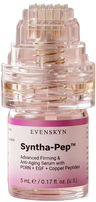
| What goes into the skin | The patch material itself as it dissolves. Full formula published per patch product | A 5 mL Syntha-Pep ampoule: biosynthetic-origin PDRN, sh-Oligopeptide-1, GHK-Cu, a four-form hyaluronic acid system, niacinamide |
| RF operating frequency | 1 MHz, stated tolerance 0.05 MHz24 | Not published |
| Skin temperature target | About 104 degrees Fahrenheit (40 degrees Celsius), held by its own feedback loop | Not published as a held target |
| Energy session length | 5 minutes per zone, roughly 70 minutes for a full face24 | Per the Lumo+ protocol, shorter per zone |
| Published course | Once a week for 8 weeks, then every 4 to 8 weeks24 | Micro-infusion every two weeks, Lumo+ on its own schedule27 |
| Consumable route after the kit | Top-up kit $69.99 per 3-week supply, RF gel $39.99 per 100 mL24 | No refill product is published. See the cost section below |
The order of operations is the whole story
A clinic radiofrequency microneedling device does one thing that neither of these kits does: it puts an insulated needle into the dermis and discharges radiofrequency energy from the needle tip while the needle is still in the skin. The needle is the electrode. That is what the name describes, and it is why the FDA classifies the procedure as a medical one that is not authorized for use at home.18
In both consumer kits the needle and the energy are separated in time, and they never touch. CurrentBody's own instructions put the patch on first and leave it there for at least two hours, ideally overnight, and only then is the gel applied and the radiofrequency device used.24 The EvenSkyn protocol runs the opposite way round: energy first as a warm-up, micro-infusion after it on the same day, and then a minimum of 24 hours before any further radiofrequency, ultrasound or EMS.27 Opposite orders, both correct for their own design, and in neither case is energy travelling down a needle.
How deep anything actually goes
Depth is the number that decides what a needle can and cannot do, and it is the number this category is least willing to print. The ladder below places every figure that is published, and marks the ones that are not.
That last entry deserves a sentence of its own, because it is the genuine safety story in this category and it is not either of the two kits above. A machine advertising an adjustable 0.5 to 7 mm needle depth is sold direct to consumers at $1,198.95 with no radiofrequency frequency disclosed, marketed in the same breath to homes, spas, salons and clinics, and captioned as not a medical device. Its own listing title says a maximum of 8 mm while its specification says 7 mm, which is a two-figure contradiction on the single number that matters most.28 The FDA's October 2025 communication on radiofrequency microneedling is about exactly this: burns, scarring, fat loss, nerve damage and disfigurement, reported from a procedure performed at depth.18 A shallow locked device and an adjustable 7 mm machine are not the same category of object and should not be shopped from the same search results page.
The refusal to publish is itself the answer
Needle depth, mechanism, operating frequency and full ingredient lists are cheap to state and none of them is commercially sensitive. A brand that omits all four is not protecting a secret, it is avoiding a commitment. Applied to the two kits here, the test cuts both ways and it is worth being plain about which way.
CurrentBody publishes its radiofrequency frequency and its thermal target and does not publish a needle depth for either patch. That is a real gap on a product sold under the word microneedling, and I could not find the figure on the treatment page, the under-eye patch page or the forehead patch page.2425
EvenSkyn publishes its needle length and its full serum formula and does not publish a radiofrequency operating frequency or a held skin-temperature target for the Lumo+. On the two specifications CurrentBody discloses and we do not, CurrentBody is the more transparent of the two, and a reader for whom thermal control is the deciding factor should weigh that accordingly.
What a needle session costs, on each brand's own published prices
Hardware price is the number people compare and the consumable is the number they live with. Both figures below come from each brand's own published prices, divided by the number of treatments those prices buy.
| Line item | CurrentBody kit | EvenSkyn duo |
|---|---|---|
| Kit, once | $459.99 | $589.99 |
| Needle sessions included | 8 under-eye and 8 forehead patches | 4 serum ampoules |
| Published way to buy more | Top-up kit, $69.99 per 3-week supply24 | None. No refill product is listed |
| Cost per needle session | About $23.33 ($69.99 across 3 weekly sessions) | About $30 ($119.99 across 4 treatments, current price) |
| Energy-side consumable | RF gel, $39.99 per 100 mL | Conduction gel, $49.99 per 300 mL |
| Needle sessions in the first year, on each published protocol | About 16: weekly for 8 weeks, then every 4 to 8 weeks | About 26: every two weeks, continuously |
On published prices the CurrentBody patch session is roughly half the cost of an EvenSkyn micro-infusion session, and CurrentBody's protocol calls for fewer sessions a year. On the consumable line, CurrentBody is the cheaper kit to run and it is not close.
Two things have to be said next to that, and neither of them cancels it. The first is that a dissolving patch and a serum ampoule are not the same treatment priced differently. One is a hydrogel patch that dissolves into the upper skin over hours. The other is a 5 mL ampoule of a named formula driven through channels made by a locked 0.5 mm stamp. Cost per session is a fair comparison of what you spend and a poor comparison of what you get, and I would not want a reader to take the first as settling the second.
The second is a straightforward failing on our side. EvenSkyn does not publish a serum or needle-head refill product at all. On the catalogue as it stands on 25 August 2026, the only published route to more ampoules is to buy the whole MicroInfuser kit again, applicator included, which is why the per-treatment figure above is the kit price divided by four rather than a lower refill price. CurrentBody's top-up route is the better-designed one and a reader planning a long course should know that before buying either.
Honest about what neither kit will do
Neither kit performs radiofrequency microneedling, whatever the packaging says. Neither reaches the depth at which a clinic device works, and neither is supervised. The Lumo+ does not drive energy through a needle and the MicroInfuser does not deliver radiofrequency; they are two devices doing two jobs that happen to be sold together. The same is true of CurrentBody's pairing in the opposite order. Moderate to severe laxity, deep static lines, acne scarring and anything structural remain clinic work, and a reader in that position should read the honest no earlier in this article rather than choose between these two kits.
For the procedure itself, and for what is genuinely available at home under that name, the fuller treatment is in our guide to at-home RF microneedling. Anyone considering the needle half of either kit should read who should not use a needle-based device at home first, because the contraindication list is real and it rules some people out entirely.
Which kit, if either
If the reason you are here is radiofrequency and the patches are a bonus you may or may not keep buying, the CurrentBody kit is the lower entry price, the shorter per-session commitment, the cheaper consumable and the brand with far more independent coverage behind it. It also publishes the two engineering specifications we do not. That is four advantages and they are real.
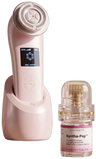
If the reason you are here is the delivery step, and you want a needle length you can actually read, a named formula rather than a patch material, a refillable ampoule format and a device that is doing more than one thing on the energy side, the Lumo+ and MicroInfuser duo is the kit built for that reader, and the micro-infusion half is the only half of either kit with an internal study behind it, unpublished and participant-blinded though that study is. Buying the two separately is also legitimate: at the time of writing the MicroInfuser and the Lumo+ cost more bought on their own than the duo does; the size of the saving moves with the MicroInfuser's price, so check the duo page for today's figure.
If neither reason describes you, and what you actually want is the clinic procedure, then the answer is the clinic. That has not changed since the first version of this article and no kit sold under that name changes it.
A protocol that matches the evidence
Whichever of the three devices you choose, a protocol that respects the evidence base looks similar in structure across all three, with the per-session details adjusted to the device. The trial literature converges on an eight to twelve week initial course as the window in which measurable changes appear, followed by a maintenance phase that holds the gain. Less than that is not enough time for the dermal collagen response or the microcurrent muscle adaptation to register. More than that, in the same session, is not better; the dose-response is not linear, and excessive single-session time is a path to irritation rather than to a bigger effect.
- Course phase, weeks one through twelve. Two to three sessions per week for radiofrequency or multi-modality devices (Lumo+, CurrentBody Skin RF), with the Lumo+ starting at once a week for the first two weeks and staying at one to two a week if you are under 40. Five to seven sessions per week for dedicated microcurrent (NuFACE Trinity+), in five-minute sessions. Conduction gel each session. Clean dry skin before, light moisturizer after.
- Maintenance phase, week thirteen onward. One to two sessions per week for radiofrequency and multi-modality. Two to four sessions per week for microcurrent. The maintenance frequency is the one most users get wrong, sliding to once a month and then to never, at which point the gain quietly reverses over a season. Build it into a recurring calendar before week twelve.
- What to track. Photographs in consistent light at week zero, week four, week eight, and week twelve. Subjective fit of clothing across the jawline and the neckline. Not creep-prone self-assessment immediately after a session, when the temporary hydration and microcurrent acute effect read larger than the durable change.
- What to avoid. Stacking strong actives (retinoid, glycolic, salicylic) on the same evening as a radiofrequency session, which raises the chance of irritation. Using radiofrequency over fresh injectables for the first two weeks. Using microcurrent over recent botulinum toxin in the same area for the first ten to fourteen days, by precaution, until your clinician signs off on resuming.
My recommendation, extractable
The honest one-sentence answer is the one I would give a patient who handed me three product pages and asked which to buy.
For most readers comparing these three specifically, EvenSkyn Lumo+ is the strongest single-device pick because it covers radiofrequency, EMS and LED in one handset at the lowest single-device price; choose CurrentBody Skin RF if you have already decided that radiofrequency alone is the mechanism you want and you value the tightest thermal feedback control in the home category; choose NuFACE Trinity+ if your primary goal is muscle-driven facial contouring rather than collagen-led firming.
The case against this recommendation is in the next two sections, including the readers for whom none of the three is the right tool and the clinic situations in which a home device is the wrong answer regardless of brand.
A realistic timeline
The single most important expectation to set, because it is the one most often violated by marketing language, is the timeline. Home-device anti-aging effects are real and they are gradual. The realistic timeline below is what I tell patients before they buy, and it is the same regardless of which of the three devices they pick, with small differences in the early acute response that the marketing tends to amplify.
- Day one to day three. An acute visible effect from the session itself: temporary plumping from increased hydration retention, a small immediate tightening from radiofrequency-induced collagen contraction in the upper dermis, or a small lifted look from microcurrent-induced muscle tone change. This is real and it is also temporary. Photographs taken at this stage overstate the durable result. The marketing knows this and uses it.
- Week one to week three. Skin texture and tone improvements that are subjective but consistent. The radiofrequency-driven dermal response has not yet built measurably. Microcurrent adaptation is starting but has not stabilized.
- Week four to week eight. Measurable changes start to appear in the cleaner home-device trials. Fine lines soften. Elasticity scores improve modestly, as measured by Cutometer-style instruments in the home-device literature.8 The jawline contour begins to look slightly more defined with consistent microcurrent use. This is the window in which you decide whether the device is earning its place.
- Week eight to week twelve. The largest of the durable gains the trial literature reports tends to appear here, plateau, and stabilize.5913 If you have not seen what you wanted to see by week twelve of consistent use, more weeks at the same protocol will not change the verdict; the verdict is what you have at week twelve.
- Week thirteen onward. Maintenance. The gain reverses on the same timeline if you stop: weeks for microcurrent-driven contour effects, months for radiofrequency-driven dermal effects.
Cost framing, honestly
The honest cost framing for any of these three devices is the per-month equivalent of using it as designed for at least one full course year. A five hundred dollar device used for one full year of the recommended protocol is roughly forty dollars a month. That is roughly the cost of a single mid-tier serum, or one in-office facial every six weeks, or three months of a typical retinoid prescription. The math compares favorably to most alternatives if the device is actually used. The math compares unfavorably if it gets used for two weeks and lives in a drawer, which is the failure mode that drives the largest pool of buyer regret in this category.
What the cost math does not include and should: conduction or activator gel as a recurring consumable (roughly fifty to a hundred dollars per year of active use, varies by device and gel choice), the implicit cost of the time spent (which adds up faster than most buyers expect), and the opportunity cost of not investing those same dollars in a clinic course that may produce a larger result in less total time if your skin laxity has moved into the territory where a home device is undersized for the problem. None of these three devices is cheap. None of them is unreasonable for the work it does, if the work it does is the work you actually want done.
One framing I find helpful for patients on the fence: the appropriate question is not "is this device worth it," it is "is the mechanism this device delivers worth twelve weeks of consistent five-to-ten-minute sessions for me, given what I am trying to change about my face." The device is the cheap part. The discipline is the expensive part. A reader who knows they will not keep the discipline should not buy the device. A reader who knows they will should buy the device that matches the mechanism that matches the goal, not the device with the strongest marketing.
Five-year cost of ownership, honestly compared
The single-device price tag is the wrong unit of comparison, because none of these three devices is used for one session and put away. The honest unit is the cost of ownership across the time horizon over which a buyer is actually committing, and that horizon is several years if the device is going to do what its design protocol intends. The five-year math below assumes consistent use at the recommended protocol, includes the device itself and the consumables it requires, and excludes the implicit cost of time (which is real but harder to monetize without making the table dishonest in the other direction).
| Line item | EvenSkyn Lumo+ | CurrentBody Skin RF | NuFACE Trinity+ |
|---|---|---|---|
| Device (year one) | $499.99 sale, $649.99 regular | $349 to $449 depending on bundle | $325 starter to $595 with attachments |
| Conduction or activator gel, year one | About $90 (one to two 200ml bottles) | About $90 (one to two bottles) | About $120 to $180 (more frequent gel use due to daily protocol) |
| Gel, years two through five | About $360 to $400 across four years | About $360 to $400 | About $480 to $720 |
| Replacement parts (probes, attachments, cables) | Modest, occasional | Modest, occasional | App-connected; attachment replacement at user discretion |
| Estimated total over five years | About $950 to $1,150 | About $800 to $950 | About $925 to $1,495 |
| Monthly equivalent (five-year basis) | About $16 to $19 | About $13 to $16 | About $15 to $25 |
For perspective, a single in-office Thermage FLX session typically runs $1,500 to $3,500 depending on geography and area treated, with a typical course expected to last 12 to 24 months before considering retreatment. A single Ultherapy treatment typically runs $2,500 to $5,000 with similar durability. A single Morpheus8 session typically runs $800 to $1,500 with a recommended course of three treatments. The home-device math is favorable on raw dollars over a five-year horizon. The home-device math is also undersized for the structural concerns the clinic devices address, which is the point of the honest no.
Fitzpatrick skin type guidance
Fitzpatrick skin type is the dermatological classification used to describe the skin's response to ultraviolet exposure and, by extension, its susceptibility to thermal and inflammatory complications from energy-based devices. Type I burns easily and rarely tans; type VI is deeply pigmented and rarely burns. The classification matters here because radiofrequency in particular carries a small additional consideration for darker skin types regarding post-inflammatory hyperpigmentation risk, and the device-by-device guidance below reflects that.
| Fitzpatrick type | EvenSkyn Lumo+ (RF + EMS + LED) | CurrentBody Skin RF (RF only) | NuFACE Trinity+ (microcurrent only) |
|---|---|---|---|
| I to II (very fair, fair) | Generally safe; start at lowest intensity, escalate gradually over two to three weeks | Generally safe; standard protocol | Generally safe; standard protocol |
| III to IV (medium to olive) | Generally safe; standard escalation | Generally safe; standard protocol | Generally safe; standard protocol |
| V to VI (brown to deeply pigmented) | Lower starting intensity for the radiofrequency channel; gradual escalation; watch for any post-treatment darkening of the contact area and pause if it appears; the EMS and LED channels carry no additional skin-type consideration | Lower starting intensity; longer escalation period; watch for any post-treatment darkening and pause if it appears; consult a dermatologist if any history of melasma or post-inflammatory hyperpigmentation in the face | No additional skin-type consideration; microcurrent is non-thermal |
| Active melasma in any skin type | Consult a dermatologist before starting the radiofrequency channel; the EMS and LED channels are generally compatible | Consult a dermatologist before starting | Generally compatible with active melasma |
The radiofrequency-specific consideration is not unique to these devices or to home devices in general. It applies to clinic radiofrequency as well, where dermatologists routinely adjust power densities and treatment intervals for darker skin types. The home-device version of that adjustment is a more conservative starting intensity, a longer escalation window, and a tighter eye on any post-treatment color change in the contact area.1
Returns and warranty comparison
The returns and warranty policies on these three devices are reasonable across the board, with one structural advantage worth knowing about. EvenSkyn offers a 60-day money-back guarantee on the Lumo+, which is the longest of the three. CurrentBody operates a 60-day guarantee on its own-branded devices (including the Skin RF Series) in most markets where they ship direct, with regional variation. NuFACE operates a 30-day return window on devices in most direct-to-consumer markets. The longer return window matters precisely because the protocol literature converges on an eight to twelve week course before a buyer can decide whether the device is working for them, and a 30-day return window does not cover the full evaluation period the protocol requires.
| Policy | EvenSkyn Lumo+ | CurrentBody Skin RF | NuFACE Trinity+ |
|---|---|---|---|
| Return window (direct purchase) | 60 days money-back guarantee | 60 days, market-dependent | 30 days, market-dependent |
| Standard warranty | Two years against manufacturing defects | Two years on the device, one year on accessories | One year on the device |
| International shipping | Free US and Canada shipping included | Available across most markets via 17 regional sites | Available US direct; international varies by retailer |
| App or software support | Treatment guidance via documentation | App-supported protocols | NuFACE Smart App with guided protocols |
Always confirm policy at point of purchase, since direct-from-brand policies can differ from third-party retailer (Amazon, Sephora, department store) policies, and international policies can differ from US policies.
Three reader scenarios, briefly
These are composite scenarios assembled from patterns I see in clinic, not specific patients. The scenarios are intended to make the device-to-goal match concrete, not to constitute medical advice for any individual.
Scenario one: the 42-year-old maintaining a recent clinic result
A 42-year-old patient with skin type III completed a single Thermage FLX session four months ago. The clinic result is visible but starting to soften at the lower face. The patient wants a home tool to extend the gain between annual clinic visits and is not asking the home tool to deliver a clinic-level outcome on its own. The match: a multi-modality device (Lumo+) or a dedicated radiofrequency device (CurrentBody Skin RF), used two to three times per week at maintenance frequency. Microcurrent alone (NuFACE Trinity+) would be a less direct match for the dermal collagen maintenance job, though it would add useful muscle-tone work as a complement if budget allows two devices.
Scenario two: the 52-year-old wanting muscle-driven contouring
A 52-year-old patient with skin type II is bothered primarily by jowling and a softening jawline. The patient has not had clinic procedures and is hesitant about them. The patient asks specifically about the lifting effect they have seen friends describe. The match: NuFACE Trinity+, daily five-minute protocol, with a realistic twelve-week expectation that the durable effect will be modest but visible. If the laxity becomes more advanced, the clinic conversation moves up in priority and the home device shifts to a maintenance role.
Scenario three: the 38-year-old just starting
A 38-year-old patient with skin type IV has minimal visible aging changes and wants to start early. The motivation is more about building a habit than chasing a specific result. The match: a lower-priced entry tool such as a stand-alone LED mask or NuFACE Mini+, not the premium-tier devices in this comparison. The patient's premium-device decision is genuinely premature; the budget is better spent on sunscreen, a retinoid, and consistent sleep, with the device decision revisited in three to five years.
Glossary of terms used in this article
- Collagen
- The most abundant structural protein in skin. Produced by dermal fibroblasts. Provides tensile strength. Declines with age, particularly accelerated by chronic ultraviolet exposure.22 The target of every dermal heat-based skin tightening modality discussed in this article.
- Dermal fibroblast
- The cell in the dermis responsible for producing collagen, elastin, and other extracellular matrix proteins. Fibroblast number and function decline with age.21
- Elastin
- A protein in the dermal extracellular matrix that gives skin its recoil and elasticity. Roughly 1 to 2 percent of skin dry weight, but disproportionately important for the springy quality of young skin.
- Fitzpatrick skin type
- A six-point dermatological classification of how skin responds to ultraviolet exposure, used to anticipate susceptibility to pigmentation and thermal complications from light- and energy-based treatments.
- Microcurrent
- Low-level electrical current, in the microampere range, at intensities below sensory threshold, used to elicit response in facial musculature and at a cellular level in skin cells.
- Photobiomodulation
- The biological response of skin cells to specific wavelengths of light, typically red (around 630 to 670 nm) and near-infrared (around 810 to 850 nm), absorbed by mitochondrial chromophores. The mechanism behind LED phototherapy.1516
- Radiofrequency (RF)
- Alternating electrical current at a frequency high enough that the skin's resistance to that current generates controlled heat in the dermis. The thermal effect drives a collagen response in the dermal fibroblasts.1
- Radiofrequency microneedling
- A medical procedure that combines mechanical microneedling with radiofrequency energy delivered through electrode tips into the dermis. Classified by the FDA as a medical procedure not authorized for at-home use as of October 2025.18 Distinct from the non-microneedle radiofrequency devices in this comparison.
- SMAS
- Superficial musculo-aponeurotic system. A connective tissue layer between the skin and the underlying facial muscles. The structural plane addressed by surgical facelifts and by focused ultrasound treatments (Ultherapy).
- Sham control
- In a clinical trial, a device or treatment designed to mimic the experience of the active treatment without delivering the active mechanism, used to control for placebo effect. Several home-device trials in this category use ultrasonic-coupler or vehicle controls rather than fully sham-controlled designs, which is a methodological caveat worth knowing about.10
- Single-arm trial
- A clinical trial in which all participants receive the active treatment, with no comparator group. Useful for early-stage safety assessment but limited in its ability to demonstrate efficacy because there is no comparison for the placebo effect, regression to the mean, or natural variation. Several home-device studies in this category are single-arm.13
- Stratum corneum
- The outermost layer of the skin, composed of flattened dead cells and lipids, approximately 10 to 20 microns thick. The primary barrier to topical absorption.
Editorial standards, conflicts of interest, and the publishing process for this article
Author and reviewer credentials
Dr. Lisa Hartford, MD is a board-certified dermatologist and EvenSkyn's Chief Dermatology Advisor. Her clinical interests include cosmetic dermatology, energy-based devices, and the translation of clinical-grade modalities to the home-use category. She authors EvenSkyn's clinician-reviewed editorial content and serves as the medical reviewer of record for this article. Author and reviewer are the same clinician in this case, by design and by disclosure; the schema modeling reflects this by sharing a single Person identifier across the author and reviewedBy fields.
Conflicts of interest, stated in full
EvenSkyn employs Dr. Hartford as its Chief Dermatology Advisor. EvenSkyn manufactures and sells the EvenSkyn Lumo+, one of the three devices compared in this article. EvenSkyn does not manufacture or sell CurrentBody Skin RF or NuFACE Trinity+. Dr. Hartford has contributed to EvenSkyn's internal clinical protocol documentation. The article's structural recommendation includes Lumo+ for the largest reader segment, and the article includes explicit redirections to CurrentBody Skin RF and NuFACE Trinity+ for the reader segments those devices serve better. The case against the recommendation is included by design. No payments, samples, or promotional considerations were received from CurrentBody or NuFACE for inclusion in this article. EvenSkyn pays Dr. Hartford for her editorial and advisory time on its publishing schedule.
How references were verified
Every reference cited was opened at its primary identifier (PubMed PMID, journal DOI, ClinicalTrials.gov NCT number, FDA Safety Communication URL, or American Academy of Dermatology statement URL) before this article was drafted. Study design, sample size, sponsorship, and any manufacturer affiliation were recorded next to the headline finding. Affiliation flags appear on the reference line so a reader can audit the synthesis rather than trust it. References were re-verified at the line-by-line review pass that preceded publication.
Evidence class labeling
Every scientific sentence in this article carries an evidence-class badge. Human outcome denotes controlled studies in living people with the outcome of interest measured. Mechanism denotes that the biological pathway is established but the specific outcome at the specific device parameters is inferred rather than directly measured. Lab / animal denotes evidence from cell culture or animal work that should not be read as a proven cosmetic effect in people. The labeling is the work; the reader can audit our claims against their source class without relying on our summary.
Update cadence and corrections
This article is reviewed at least quarterly and on a non-scheduled basis whenever a material change in the device specifications, the clinical evidence base, or the regulatory framing of any of the three categories occurs. Update entries are recorded in the update log at the foot of the article with the date and substance of the change. Material corrections are made in place with a dated update log entry. Readers who identify a factual error, a misattributed citation, or a study design described inaccurately are invited to write to EvenSkyn's editorial team via the support desk linked in the site navigation. Substantive corrections are reflected within ten business days of confirmation.
Search strategy used for this article
Databases searched: PubMed, Cochrane Central Register of Controlled Trials, ClinicalTrials.gov, and the U.S. Food and Drug Administration and American Academy of Dermatology official communications channels. Date range: 2003 through 22 May 2026. Language: English. Search terms combined the device category (radiofrequency, microcurrent, photobiomodulation, light-emitting diode), the indication (skin tightening, facial rejuvenation, periorbital wrinkles, skin laxity), the setting (home-use device, in-clinic device), and the brand and device names for each of the three devices in this comparison. Inclusion criteria: controlled human trials, foundational mechanism studies, regulatory communications, and brand-commissioned dermatological studies disclosed as such. Exclusion criteria: in-house perception panels not described with sufficient methodological detail; consumer testimonials; opinion pieces without primary data; non-English language studies that could not be verified at the original source.
Safety: normal, not normal, do not use
Each of these three devices is safe for healthy adult skin used as designed. That said, the safety profile of an at-home anti-aging device is the place where home use most often goes wrong, because the user is the operator and the clinician is not in the room. The structure I use in clinic to set safety expectations covers three categories: what is normal and means nothing is wrong, what is not normal and means you should stop and rest, and the contraindications that mean you should not use the device at all without specific clinical sign-off.
Normal during or just after a session
Mild pink flush during or just after radiofrequency, lasting up to a couple of hours. Mild warmth in the contact area during radiofrequency, peaking at the device's target temperature. A faint tingle during microcurrent, or visible muscle contractions during EMS, at higher intensities. A brief light pulsing sensation under LED arrays at higher output. Mild residual hydration plumping in the immediate post-session look. None of these mean the device is doing damage. They mean the device is doing what it was designed to do.
Not normal, stop and rest
Sharp pain at any single point during use (radiofrequency on a gel-poor area can occasionally focus heat). Persistent redness lasting beyond several hours after a session. Localized swelling or blistering at any single point. A bruise-like dark spot in the radiofrequency contact area. A rash or itch that develops in the hours after a session. Any of these means stop using the device for at least seven days, restart at a lower intensity setting, and if the symptom recurs, stop and consult a clinician before continuing.
Do not use without clinical sign-off
Active electronic implants in or near the use area (pacemaker, implantable cardioverter-defibrillator, neurostimulator). Pregnancy. Active facial infection, including herpes outbreak or impetigo. Recent in-office injectables (filler, botulinum toxin) within the last two weeks in the use area. A history of cardiac arrhythmia or seizure disorder. Metal facial implants in the use area (the radiofrequency interaction is the issue). Active rosacea flare. Melasma in darker skin types, where radiofrequency in particular can occasionally worsen pigmentation. Severe acne with open lesions in the use area.
None of the three devices compared here is a radiofrequency microneedling device, and the safety framing above applies to non-microneedle home radiofrequency. On 15 October 2025 the FDA issued a Safety Communication regarding radiofrequency microneedling, classifying it as a medical procedure not authorized for at-home use, and citing reports of burns, scarring, fat loss, nerve damage, and disfigurement.18 The American Academy of Dermatology reinforced this classification the following day.19 If you encounter any handheld device marketed for "at-home radiofrequency microneedling," the regulatory status of that category is clear and the answer is the clinic, not the handset.
How EvenSkyn evaluates an at-home device
The criteria below are how I read any new device in this category, the same way regardless of brand. They are the criteria I apply to Lumo+, to CurrentBody Skin RF, to NuFACE Trinity+, and to every device that lands on my desk for a clinical opinion. A reader who internalizes this list can usefully audit my own conclusions in this article and audit any future device on the same terms.
- What is the primary mechanism, named in proper biological terms (radiofrequency thermal effect, microcurrent muscle stimulation, LED photobiomodulation), not in marketing language?
- What depth or layer of tissue does the device act on, named anatomically, not by feature name?
- What is the home-device-specific evidence base, separated cleanly from the parent mechanism literature and the clinic-device extrapolation?
- Who paid for the studies the manufacturer cites, and what was the design (randomized or not, sham-controlled or not, peer-reviewed or commissioned)?
- What is the dose-response logic of the protocol, and does the recommended session time and frequency match the published evidence at this depth and power?
- What is the failure mode if a user does not follow the protocol, and what is the safety profile of that failure mode?
- What is the reasonable expectation at twelve weeks, stated in plain language without commercial superlatives?
- What does the device not do, stated by name, so a buyer is not buying it for the wrong reason?
When I apply that list to the three devices in this comparison, the recommendation that emerges is the one I have given in the decision block above. When the same list applied to a different combination of devices would produce a different recommendation, I would write that comparison instead of this one. The list is the durable thing. Any single comparison is downstream of it.
Mistakes and myths
The five mistakes I see most often in clinic, in the order I see them.
- Buying for the wrong mechanism. A reader whose primary concern is muscle-driven contouring buys a radiofrequency device, or vice versa. Six months later the device is in a drawer and the buyer concludes the category does not work. The category works. The match did not.
- Stopping at week four. The dermal collagen response and the microcurrent adaptation are real and they are slow. Stopping at week four is stopping just before the trial literature says measurable changes begin.
- Skipping conduction gel. Both radiofrequency and microcurrent require a conductive contact layer between the device and the skin. Skipping the gel is the single most common cause of poor session performance and the second most common cause of session-level discomfort.
- Stacking too many actives. Layering a tretinoin or strong acid session on top of a radiofrequency session on the same evening is a path to irritation, not to a bigger effect. Space the device session and the active-skincare session by at least a day.
- Expecting a clinic result from a home device. The honest no exists for a reason. The clinic devices reach depths and power densities home devices do not. A home device is a tool for mild to moderate skin concerns and for maintenance. A reader with moderate to severe laxity should book a consultation.
The three myths it is worth retiring.
- "FDA-cleared" means proven effective. FDA clearance for a cosmetic device demonstrates substantial equivalence to a predicate device on safety grounds. It is not a measure of effect size, and a cosmetic-device clearance is not a clinical efficacy endorsement. NuFACE Trinity+ is FDA-cleared on this basis. That is a meaningful signal about a quality standard. It is not a clinical trial result.
- "X percent of users saw improvement" means most users will see improvement. User-survey percentages from single-arm studies tend to inflate against any controlled comparator. The number is not nothing. It is also not a clinical effect size, and a buyer should treat it as the floor of a generous reading rather than the ceiling of a conservative one.
- "At-home microneedling" is a category. The handheld radiofrequency microneedling devices being marketed to consumers in some channels are operating in regulatory space that the FDA addressed directly in October 2025. The deeper procedure is a medical procedure. The dissolving cosmetic patches are a different and unrelated category I have written about separately. The conflation is the marketing's, not the mechanism's.
The case against my own recommendation
Lumo+ is the recommendation for most readers in this comparison, and it is wrong for several readers, by design and by structural logic, and the article is more honest if I name them.
Lumo+ is the wrong device for a reader whose only goal is the dermal radiofrequency response and who values the most single-purpose engineering and the tightest thermal feedback control in the home category. That reader is better served by CurrentBody Skin RF. The multi-modality stack inside Lumo+ is paid for by the reader regardless of whether they use the EMS and LED channels, and a reader who does not need those channels is paying for them anyway.
Lumo+ is the wrong device for a reader whose primary concern is muscle-driven facial contouring and who is buying the device specifically to lift the jawline, the brow, and the cheekbone through repeated muscle adaptation rather than to firm the skin through dermal collagen response. That reader is better served by NuFACE Trinity+. Lumo+'s EMS channel is competent, but a reader whose entire goal is the microcurrent response should buy the device that does microcurrent single-mindedly and has the longest brand history doing it.
Lumo+ is the wrong device, and so is every other device in this comparison, for a reader with moderate to severe skin laxity, deep wrinkles, or a structural facelift goal. That reader should be in a clinic, and the choice between Lumo+, CurrentBody Skin RF, and NuFACE Trinity+ is irrelevant to them until the procedural work is done.
Lumo+ is the wrong device for a reader who is not going to use it consistently for twelve weeks and into maintenance, regardless of which mechanism they need. So is every other device in this article. The discipline of consistent use is the expensive part of any home-device protocol. A reader who knows they will not keep that discipline should not buy any of these three.
Finally, the disclosure binds the recommendation. EvenSkyn employs me, and a reader who weights my recommendation accordingly is doing what a thoughtful reader should do. The structural advantages I argue for Lumo+ are real and are visible to anyone who runs the same multi-modality math, but the choice between the three devices in any individual case is a choice the reader makes, not a choice I can make on their behalf.
What would change this verdict
The recommendation in this article would change in any of the following circumstances. A peer-reviewed published clinical trial on Lumo+ specifically would let me describe the device with quantified outcome claims rather than the qualitative-only treatment I have used here. A new generation of CurrentBody Skin RF or NuFACE Trinity+ with substantially altered specifications would change the comparison structure. A peer-reviewed direct comparison of the three devices in the same trial would supersede the current state of the literature, which forces a synthesis from separate mechanism literatures and brand-commissioned single-device studies. A change in the FDA regulatory framing for non-microneedle home radiofrequency would shift the safety calculus.
The update log at the foot of the article records material changes to this article when any of those things happen, with the date and the substance of the change. The home-device category is moving fast enough that a comparison article that does not commit to an update discipline becomes stale within a year. This one will not.
Frequently asked questions
Can I use Lumo+, CurrentBody Skin RF, or NuFACE Trinity+ together?
You can use any of the three together in a single weekly protocol if your skin tolerates it, but the marginal benefit of stacking is rarely worth the time. The cleaner approach is to choose the one whose mechanism matches your primary goal, use it on the recommended protocol, and add a second mechanism only if your goal expands. The exception is a maintenance reader who already has one device and is filling in a gap (LED on top of radiofrequency, microcurrent on top of LED). In that case the second device fills a specific gap and the protocol is straightforward.
How often should I use each device?
Lumo+ and CurrentBody Skin RF: two to three sessions per week during the twelve-week course, then one to two per week for maintenance. NuFACE Trinity+: daily or near-daily five-minute sessions during the course, then two to four times per week for maintenance. More than the recommended frequency is not better. Skin needs days between sessions to respond, particularly with radiofrequency.
Will I see results in a week?
You will see a temporary plumping and a small immediate tightening or lifted look after the first session. That is not the durable result, and photographs from week one will overstate the durable change. The measurable improvements that appear in the home-device trials build over four to twelve weeks. Plan the timeline accordingly.
Can I use radiofrequency if I have facial filler?
Avoid radiofrequency over fresh filler for at least two weeks after injection, and ideally longer for hyaluronic acid filler in the perioral and periorbital areas, which is more thermally sensitive than the cheek and jawline. After the integration window, radiofrequency over filler is generally safe but should be cleared with the clinician who placed the filler. The clinical concern is not that radiofrequency dissolves filler in any meaningful way at home settings, but that thermal exposure can occasionally alter the cosmetic placement and that any change near fresh filler is best avoided.
Can I use microcurrent if I have botulinum toxin?
By precaution, wait ten to fourteen days after botulinum toxin in the same area before resuming microcurrent on that area. The clinical concern is theoretical rather than well-documented in trials, and many clinicians clear earlier resumption. Confirm with your treating clinician for your specific case.
Is this safe during pregnancy?
I do not recommend starting any of these three devices during pregnancy without your obstetric clinician signing off, and several home-device clinical trials explicitly exclude pregnant participants from enrollment. The conservative call is to pause device use during pregnancy and lactation and return to it afterward.
Do I need conduction gel for every session?
Yes for radiofrequency and microcurrent. The gel is not a luxury accessory; it is the contact layer that lets the current pass safely and evenly into the skin. Skipping the gel is the most common single cause of poor session performance and the second most common cause of session-level discomfort.
Can I use the device on my neck and chest?
Yes for all three, with attention to the thinner skin on the front of the neck for radiofrequency (use a lower intensity setting and watch for warmth more carefully than on the cheek). The neck and chest are often where the most visible aging shows first, and including them in the protocol substantially raises the visible benefit of consistent use.
What gel should I use?
Each manufacturer sells a compatible gel and recommends it for thermal and conductivity consistency. EvenSkyn sells a microcurrent and radiofrequency conduction gel; CurrentBody and NuFACE sell their own. Third-party ultrasound gel works mechanically but is not formulated for skin, so confirm dermatological tolerance if you use it. Aloe gel is not an adequate substitute for conductivity reasons.
What about darker skin types?
All three devices are generally safe on darker skin tones. Radiofrequency has a small additional consideration for Fitzpatrick V and VI skin types regarding post-inflammatory hyperpigmentation risk, particularly if irritation occurs, which is one of the reasons the lower-intensity setting is the right starting point and gradual escalation is the right approach. If you have a personal history of melasma or post-inflammatory hyperpigmentation, discuss with a dermatologist before starting radiofrequency.
How do I know when to stop using a device?
Three reasons to stop. The device produces a persistent or worsening adverse effect (rash, burn, pain that does not resolve, hyperpigmentation appearing in the use area). You have not seen what you wanted to see at week twelve of consistent use at the recommended protocol. You are no longer using it consistently and the device is sitting in a drawer. The first reason requires a clinician visit. The second means the device or the mechanism was not the right match. The third means returning the device if the window allows, donating it if not, and freeing the budget for whatever is more likely to fit your life.
Is the CurrentBody RF Microneedling Treatment actually RF microneedling?
No, and neither is the EvenSkyn duo. Radiofrequency microneedling means an insulated needle is placed in the dermis and radiofrequency is discharged from the needle tip while the needle is still in the skin. In the CurrentBody kit the dissolving patch is worn for at least two hours, often overnight, and the radiofrequency device is used on the surface afterwards. In the EvenSkyn duo the energy runs first and the micro-infusion follows, with a minimum of 24 hours before energy is used again. In both kits the needle and the energy are separated by hours and the energy never travels through a needle. The FDA classifies the actual procedure as a medical one that is not authorized for use at home.
How deep do the CurrentBody microneedling patches go?
CurrentBody does not publish a needle depth. I could not find the figure on the RF Microneedling Treatment page, the under-eye patch page or the forehead patch page as read on 25 August 2026. Dissolving microneedle patches as a class sit in the upper skin rather than the dermis, and EvenSkyn publishes about 0.25 mm for its own under-eye patch, but that is our figure and not a statement about CurrentBody's. Depth is cheap to publish and it is the single number that decides what a needle-based product can do, so its absence is worth weighing.
Which of the two kits is cheaper to run?
CurrentBody, on published prices, and not by a small margin. Its top-up kit is $69.99 for a three-week supply, which works out at about $23.33 per weekly patch session, and its published protocol calls for roughly sixteen needle sessions in the first year. The EvenSkyn MicroInfuser is $119.99 for four treatments at its current price, about $30 each, on a fortnightly protocol of about twenty six sessions a year. The offsetting point is that a dissolving hydrogel patch and a 5 mL serum ampoule delivered through a locked 0.5 mm stamp are not the same treatment at different prices, so the per-session figure compares spend rather than what is delivered.
Can I buy the EvenSkyn serum ampoules on their own?
Not as the catalogue stands on 25 August 2026. There is no published refill product for either the Syntha-Pep ampoules or the needle heads, so the only listed route to more treatments is to buy the MicroInfuser kit again, applicator included. That is why the per-treatment figure in this article is the kit price divided by four rather than a lower refill price, and it is a genuine design gap against a competitor that does publish a top-up route.
Methodology in full
The literature search for this article followed the same discipline I use for any cosmetic-device comparison. I searched PubMed and Cochrane Central Register of Controlled Trials, plus ClinicalTrials.gov for ongoing and recently completed trials, using radiofrequency, microcurrent, microcurrent electrical stimulation, home-use device, facial rejuvenation, periorbital, skin tightening, photobiomodulation, and the brand-and-device-specific names for each of the three devices in this comparison. I included articles in English from 2003 to 2026, prioritizing controlled human trials in healthy adults for the cosmetic endpoints of interest. I read each candidate reference at its primary identifier, recorded study type and any funding or affiliation flag, and assigned an evidence class label before the article was drafted.
The standing-catch pattern in this category, said once cleanly so a reader can recognize it elsewhere too: the most-cited "it works at home" supports across the consumer beauty-device segment frequently rest on small open-label studies, intraindividual control designs without sham, or manufacturer-commissioned dermatological studies that are well-instrumented but never peer-reviewed.59111317 Several "it works" home-device claims also rest on clinic-device data extrapolated without isolated home-device trials at equivalent power densities. That makes the data interpretable, not worthless, but only with the design caveats stated next to the headline number, which is the discipline this article has tried to keep.
Affiliation flags. Lumo+ is manufactured by EvenSkyn, which employs me as Chief Dermatology Advisor and which I have disclosed in the disclosure section above. CurrentBody Skin RF's primary clinical evidence is commissioned through independent contract research organizations (Eurofins, Intertek) but sponsored by the manufacturer.17 NuFACE's primary clinical evidence is the manufacturer-sponsored ENGAGE single-arm study.13 The clinic-device foundational radiofrequency literature includes studies with device-manufacturer affiliations historically.23 Several home-device studies cited carry similar manufacturer affiliations.5710 All affiliation flags are repeated on the relevant reference lines so a reader can audit my synthesis.
Limits. There is no peer-reviewed published trial specifically on EvenSkyn Lumo+ at the time of writing, and the home-radiofrequency literature I extrapolate from is from other devices at other power densities. There is no published head-to-head trial comparing any two of the three devices in this article, let alone all three. The recommendation that emerges here is the best honest synthesis available with current literature. A direct trial would supersede it, and the update log would record that.
References and update log
Every reference below was opened at its primary identifier before this article was drafted. Affiliation flags are stated where I am aware of one; absence of a flag does not guarantee none exists, only that I did not find one in good faith on the documentary record. M denotes a manufacturer-sponsored or manufacturer-affiliated study. C denotes brand-commissioned dermatological work outside peer review.
- Weiss RA. Noninvasive radio frequency for skin tightening and body contouring. Seminars in Cutaneous Medicine and Surgery. 2013;32(1):9-17. PMID 24049924. Narrative review of the radiofrequency category. M
- Fitzpatrick R, Geronemus R, Goldberg D, Kaminer M, Kilmer S, Ruiz-Esparza J. Multicenter study of noninvasive radiofrequency for periorbital tissue tightening. Lasers in Surgery and Medicine. 2003;33(4):232-242. DOI 10.1002/lsm.10225. Foundational ThermaCool clinic-device study. M
- Alexiades M, Berube D. Randomized, blinded, 3-arm clinical trial assessing optimal temperature and duration for treatment with minimally invasive fractional radiofrequency. Dermatologic Surgery. 2015;41(5):623-632. DOI 10.1097/DSS.0000000000000347. PMID 25915628. Clinic fractional RF. M
- Rohrich RJ, Schultz KP, Chamata ES, Bellamy JL, Alleyne B. Minimally invasive approach to skin tightening of the face and body: systematic review of monopolar and bipolar radiofrequency devices. Plastic and Reconstructive Surgery. 2022;150. Systematic review of clinic-device radiofrequency.
- Ai L, et al. Efficacy and safety of a noninvasive, home-based radiofrequency device for facial rejuvenation: an open-label, intraindividual controlled trial. Journal of Cosmetic Dermatology. 2024. DOI 10.1111/jocd.16076. Single-center, open-label, intraindividual (split-face). Home device ABF202 (AMIRO). M
- Cohen M, Austin E, Masub N, Kurtti A, George C, Jagdeo J. Home-based devices in dermatology: a systematic review of safety and efficacy. Archives of Dermatological Research. 2021. DOI 10.1007/s00403-021-02231-0. PMC8918178. PRISMA-guideline systematic review identifying 37 trials (19 randomized controlled trials, 16 case series, 2 non-randomized controlled trials) of home-use dermatologic devices. Recommends low-power radiofrequency for rhytides and wrinkles.
- Gold M, Biron J. Improvement of wrinkles and skin tightening using TriPollar radiofrequency with Dynamic Muscle Activation (DMA). Journal of Cosmetic Dermatology. 2020;19(9):2282-2287. PMID 32424915. DOI 10.1111/jocd.13620. Home-device evidence relevant to the Tripollar Stop X reference in the rest-of-the-field section. M
- Erkiert-Polguj A, Algiert-Zielinska B, Zdunska K, Markiewicz A, Skubalski J, Rotsztejn H. The evaluation of elasticity after nonablative radiofrequency rejuvenation. Journal of Cosmetic Dermatology. 2019;18(2):511-516. DOI 10.1111/jocd.12689. Pre-post Cutometer study, modest sample.
- Safety, efficacy, and usage compliance of home-use device utilizing RF and light energies for treating periorbital wrinkles. Journal of Cosmetic and Laser Therapy. PMID 27910259. N=33, 21 sessions over 6 weeks, each subject acted as own control. M
- ClinicalTrials.gov NCT06441799 and NCT06565884. Multicenter randomized evaluator-blind trial of home radiofrequency cosmetic instrument, N=224, 12-week protocol, ultrasonic coupler control. M
- Saniee F, Hamid Reza Y. Consider of microcurrent's effect on variation of facial wrinkle trend: randomized clinical trial study. Life Science Journal. 2012. N=30, reported 18.37 percent immediate and 21.18 percent one-month wrinkle reduction. Widely cited by manufacturers; small journal, methodologically light. M
- Konstantinou E, Zagoriti Z, Pyriochou A, Poulas K. Microcurrent stimulation triggers MAPK signaling and TGF-β1 release in fibroblast and osteoblast-like cell lines. Cells. 2020 Aug 19;9(9):1924. PMID 32825091. PMC7564311. DOI 10.3390/cells9091924. In vitro cell-culture study; demonstrated microcurrent activation of ERK 1/2 and p38 MAPK signaling and TGF-β1 release leading to collagen synthesis pathway activation. Authors declared no conflict of interest.
- NuFACE ENGAGE Clinical Study, study number BCS 11-029, completed 2018. N=56, single-center, non-randomized, single-arm. Trinity+ used once daily for 60 days, clinical grading via Canfield VISIA-CR. M
- Lin YL, Moolenaar H, van Weeren PR, van de Lest CHA. Effect of microcurrent electrical tissue stimulation on equine tenocytes in culture. American Journal of Veterinary Research. 2006;67(2):271-276. PMID 16454633. Animal lab work cited in the microcurrent literature chain.
- Lee SY, Park KH, Choi JW, Kwon JK, Lee DR, Shin MS, Lee JS, You CE, Park MY. A prospective, randomized, placebo-controlled, double-blinded, and split-face clinical study on LED phototherapy for skin rejuvenation: clinical, profilometric, histologic, ultrastructural, and biochemical evaluations and comparison of three different treatment settings. Journal of Photochemistry and Photobiology B: Biology. 2007;88(1):51-67. PMID 17566756. DOI 10.1016/j.jphotobiol.2007.04.008. N=76 randomized into 633nm, 830nm, combined, and sham groups; foundational human-outcome LED study.
- Wunsch A, Matuschka K. A controlled trial to determine the efficacy of red and near-infrared light treatment in patient satisfaction, reduction of fine lines, wrinkles, skin roughness, and intradermal collagen density increase. Photomedicine and Laser Surgery. 2014;32(2):93-100. PMID 24286286. DOI 10.1089/pho.2013.3616. Controlled LED trial with collagen density endpoint and 136 participants.
- CurrentBody Series 2 LED Face Mask Eurofins Dermatological Efficacy Study, 2025. N=30 female subjects aged 40 to 55, single-center, 56-day protocol, instrumented assessment. C
- U.S. Food and Drug Administration. Potential risks with certain uses of radiofrequency (RF) microneedling: FDA Safety Communication. Published 15 October 2025. fda.gov. Classifies RF microneedling as a medical procedure not authorized for at-home use; cites reports of burns, scarring, fat loss, nerve damage, and disfigurement.
- American Academy of Dermatology. Statement on the FDA safety briefing about radiofrequency microneedling risks. Published 16 October 2025. aad.org. Reinforces medical-procedure classification.
- U.S. Food and Drug Administration. Microneedling devices regulatory page. fda.gov/medical-devices/aesthetic-cosmetic-devices/microneedling-devices. Updated 15 October 2025.
- Quan T, Fisher GJ. Role of age-associated alterations of the dermal extracellular matrix microenvironment in human skin aging: a mini-review. Gerontology. 2015;61(5):427-434. PMID 25660807. DOI 10.1159/000371708. Background on skin aging biology and dermal collagen loss with age.
- Kang S, Fisher GJ, Voorhees JJ. Photoaging: pathogenesis, prevention, and treatment. Clinics in Geriatric Medicine. 2001;17(4):643-659. PMID 11535421. DOI 10.1016/s0749-0690(05)70091-4. Background on photoaging biology.
- Lyu JJ, Liu SX. Radiofrequency in facial rejuvenation. International Journal of Dermatology and Venereology. 2022;5(2):94-100. DOI 10.1097/JD9.0000000000000193. Review of radiofrequency for skin rejuvenation including clinic, home, and microneedle radiofrequency systems; cites the home unipolar RF (DermaWand, ICTV Brands) double-blind eyebrow-lifting study. M
- CurrentBody Skin RF Microneedling Treatment product page. currentbody.us. Read 25 August 2026. Source for the $459.99 kit price, the kit contents (radiofrequency device, radiofrequency gel, 8 under-eye and 8 forehead dissolving microneedle patches, travel bag, cable, adapter, manual), the treatment protocol and its order of steps, the stated operating frequency of 1 MHz with a tolerance of 0.05 MHz, the five-minute-per-zone session length, the once-weekly-for-eight-weeks course with a top-up every four to eight weeks, the $69.99 three-week top-up kit and the $39.99 radiofrequency gel. No needle depth is published on this page.
- CurrentBody Skin Under Eye Microneedling Patches product page. currentbody.us. Read 25 August 2026. Source for the $74.99 eight-week starter and $34.99 three-week top-up pricing, the two-patches-per-packet format, the stated wear time of at least two hours and preferably overnight, and the once-a-week cadence. No needle depth or needle material is published on this page.
- CurrentBody Skin Radio Frequency Device listing and Google Shopping product panel. Read 25 August 2026. Source for the $385.99 direct price on currentbody.us and the $448.99 price on the alternate CurrentBody storefront, and for the device-only configuration being sold separately from the kit.
- EvenSkyn Lumo+ and MicroInfuser Firming and Micro-Infusion Duo product page. evenskyn.com. Read 25 August 2026. Source for the $589.99 duo price, the kit contents, the fixed 0.5 mm nominal needle length, the Syntha-Pep ampoule formula, the pairing protocol of energy first and micro-infusion second, and the minimum 24-hour interval before further radiofrequency, ultrasound or EMS. EvenSkyn is the publisher of this article. M
- Lazzybeauty At-Home RF Microneedling Machine product page. us.lazzybeauty.com. Read 25 August 2026. Source for the $1,198.95 price, the specification stating a needle depth of 0.5 to 7 mm adjustable against a listing title stating a maximum of 8 mm, the absence of any published radiofrequency operating frequency, the marketing to homes, spas, salons and clinics, and the stated caption that the product is not a medical device.


Leave a comment
All comments are moderated before being published.
This site is protected by hCaptcha and the hCaptcha Privacy Policy and Terms of Service apply.