


Buying guide
Best At-Home RF Microneedling Devices in 2026: The Honest Guide
Which at-home RF microneedling devices are real, what the FDA warned about home use in 2025, and the needle-free route that works instead.
صُمّم في كندا
شحن مجاني إلى الولايات المتحدة وكنداضمان استرداد المبلغ خلال 60 يومًاالأدلة والدعم بالإنجليزية
Compared

Buyer's guide / At-home micro-infusion
Nine brands, one shared depth ceiling, and a set of differences that sit in the hygiene design rather than the marketing.
Seranova, Qure, Glov, Elixa, Alqemi, Glamory, Rewind Glow, the Dr. Pen MIS20 kit and EvenSkyn all sell at-home micro-infusion stamps that open a shallow grid of channels and push serum through them. This guide is published by EvenSkyn, which makes one of the devices compared here, so treat the recommendation as a manufacturer's argument and check the reasoning rather than the conclusion. Every one of these kits sits at or below a ceiling of half a millimetre, so the differences that matter are not depth. They are whether anything is reused between sessions, how the serum reaches the needles, and what is dissolved in it. On those three, our pick among the nine is the EvenSkyn MicroInfuser. If you want a broader look at the category rather than a head-to-head, our guide to choosing an at-home micro-infusion system covers the full buying decision.
Most readers arrive weighing these two. Every cell below is what each brand states on its own pages, on the date shown. The full nine-kit table is further down.
| Criterion | Seranova | Qure |
|---|---|---|
| Stated needle depth | No figure on seranova.com as of 31 August 2026. It stated 0.5 mm in July 2026, and a separate Amazon listing title states 0.05 mm. | 0.5 mm, stated consistently on its product page and safety guide. |
| Needles | Described as ultra-fine, medical-grade stainless steel. Count not published. | 20 needles, 24K gold-plated. |
| Sterilisation method named | No. Heads are called sterile with no method stated. | Yes. Ethylene oxide. |
| How serum reaches the needles | Open fill. You open the device, pour in the serum, then attach the head. | The main product page has you attach the head straight onto the opened vial. Its FAQ and safety guide still say to fill the device. |
| Serum | One formula: hyaluronic acid, a peptide complex including Matrixyl 3000, and niacinamide. | Two, chosen at purchase: dark spots (tranexamic acid, niacinamide, panthenol) or wrinkles (beta-glucan, sodium hyaluronate, niacinamide, panthenol). |
| Stated cadence | Every two weeks. | Every two weeks. |
| Cost per session | About $21 to $39, from Seranova's own displayed pricing, depending on kit and subscription. | Not published. A 1 Month Bundle showed $119.00 on 23 August 2026, with the number of treatments not stated. |
| Money-back terms | A 90-day results guarantee through support, and a 30-day window for unopened returns. | A 90-day and a 30-day money-back guarantee both appear on the same page. |
| What it has tested on its own kit | A customer survey (an image description on the product page cites 401 customers) and a Dermatest badge. No method published. | A 30-person user study and a 31-subject dermatologist safety-in-use evaluation. |
The short version. Seranova is the cheaper of the two per session. Qure publishes its specification more consistently and names its sterilisation method. Neither has published a controlled efficacy trial of its own kit. If you want a sealed serum path and a disclosed controlled study, that is the case for the EvenSkyn MicroInfuser, which is company-run and unpublished, so weigh it accordingly. The longer comparison is in Seranova vs Qure: which is better? below.
Composite score
7.8 / 10
Best for: someone who wants clinic-style hygiene discipline at home, cares where their PDRN comes from, and has realistic expectations about a shallow device.
Not the best fit for: deep or boxcar acne scarring, established melasma, anyone on isotretinoin within six months, or anyone hoping to reproduce an in-clinic needling result.
What it costs: $119.99 for a kit of four sessions, about $30 a session.
See the EvenSkyn MicroInfuser kit
Before you click: what each of the four brands in the title has actually tested on its own kit, ours included.
An at-home micro-infusion kit is a hand-held stamp fitted with a small array of fine needles and a reservoir of serum. Pressing it against the skin opens temporary micro-channels through the outer layer, and serum travels down those channels instead of sitting on the surface. The mechanical injury is deliberate and small: it is meant to prompt the skin's ordinary repair response while giving actives a shorter route in. Nothing is injected under pressure, which is the most common misunderstanding about the category.
That description covers every kit here. The differences between brands are not in the physics. They are in how the serum reaches the needles, whether anything is reused between sessions, what is dissolved in the serum, and how honestly the packaging describes what half a millimetre can do.
Before comparing brands, it helps to know where these devices sit on the depth scale, because depth is what separates a home cosmetic device from a clinic procedure. We use a simple screen we call the Depth Ceiling Test: find the device's fixed depth, then ask whether the outcome you want has ever been demonstrated at that depth. If the answer is no, the device is not the wrong purchase, but the expectation is the wrong expectation.
Stratum corneum. The dead outer barrier. Serums applied by hand mostly stop here.
Upper papillary dermis. Every home kit in this guide. Deep enough to open a delivery channel and provoke a repair signal. Shallow enough that pinpoint bleeding is uncommon and downtime is measured in hours.
Clinic needling depth. Where most of the published scar and wrinkle trials were run. One registered trial protocol we reviewed specifies a 2 mm depth for treating atrophic acne scars.
Energy-assisted and ablative procedures. Different mechanism, different risk profile, professional supervision.
The honest consequence: a 0.5 mm home device and a 2 mm clinic pen are not the same treatment at different price points. They are different treatments. Anyone marketing a home kit as equivalent to a clinic system is overselling, and that includes any brand named on this page.
The category's real question is not which kit goes deepest. They all stop in the same place. It is which kit gets a sterile needle and a fresh serum to that place without contaminating either.
These are the criteria we compared all nine brands on, ranked by how much they change the outcome or the risk. Price is deliberately absent: at this depth, the difference between a well-designed kit and a poorly designed one is a hygiene and formulation difference, not a spending difference.
This is the criterion with the clearest safety literature behind it. The FDA's guidance on microneedling devices instructs users not to reuse a needle cartridge, warning that reuse could transfer infectious agents, and a 2024 review in Cosmetics notes that reusing needle cartridges can cause or spread infection. A kit that pairs one sterile head with one sealed serum dose per session removes that pathway by design. A kit with a refillable chamber does not.
Pouring serum into an open chamber exposes it to fingers, air and whatever was in the chamber last time. A sealed path from ampoule to needle head keeps that contact from happening. This matters more than it sounds, because the channels you are about to open are the shortest route bacteria will ever have into your dermis.
Most PDRN on the market is extracted from fish. A 2022 review describes PDRN as consisting of DNA fragments mainly extracted from the sperm cells of salmon trout or chum salmon. Fermentation-derived PDRN is made in a bioreactor instead. Both are PDRN. The sourcing question is about what else arrives with it and whether the brand will tell you.
A manual that lists isotretinoin, anticoagulants, keloid history, active infection and pregnancy as reasons to stop is a manual written by someone who expected the device to be used by adults with medical histories. A manual that only lists benefits is a marketing document.
Every figure below was read on 28 July 2026 from the manufacturer's own published material: our own manual and product page for the MicroInfuser, and each brand's own website for the others. Where a brand publishes different numbers in different places, we have printed both rather than picking the one that suits us.
| Criterion | EvenSkyn MicroInfuser | Seranova | Qure | Glov | Elixa | Alqemi | Glamory | Rewind Glow | Dr. Pen MIS20 |
|---|---|---|---|---|---|---|---|---|---|
| Stated needle depth | 0.5 mm, mechanically fixed at the head. | No depth figure on seranova.com as of 31 August 2026; the page stated 0.5 mm when read on 28 July 2026. A separate Amazon listing title states 0.05 mm. | 0.5 mm, stated on Qure's own site and safety guide. | 0.25 mm, stated on the main Glov product page as of 31 August 2026. Two Glov product pages stated 0.5 mm when read on 28 July 2026, so the brand's published figure has changed. | Not published. Absent from every Elixa page we read. | 0.5 mm. | 0.5 mm, stated consistently across three of its own pages. | Not published. No millimetre figure appears anywhere on the site. | 0.25 mm. |
| Needle count and finish | Gold-plated microneedles. | Described as ultra-fine, medical-grade stainless steel, as of 31 August 2026. Count not published. | 20 needles, 24K gold-plated. | 24K gold. Hollow needles. Count not published. | 24K gold-plated. Count not published. | 30 needles per head, 24K gold-plated titanium. | 24K gold. Count not published. | 24K gold-plated. The brand calls them touchpoints and avoids the word needle. Count not published. | 20 needles in a plum-blossom array, 24K gold-plated stainless steel. |
| Single-use needle head | Yes. Reuse prohibited in the manual. | Yes. Stated in Seranova's FAQ and user manual. | Yes. A head is attached per treatment. | Yes. Glov states each head is single use per treatment. | Yes. Elixa states the sterile heads are single use only. | Yes for the needle head. The handle is built for repeated use. | Unclear. The product page says to discard the roller after one application and also to replace the roller head after 6 to 8 uses (read 23 September 2026). | Stated single use in the FAQ. The one-month kit ships two applicators against six serums, which does not divide evenly. | Yes. Instructed to dispose of the head after each treatment. |
| How serum reaches the needles | Sealed ampoule clicks directly onto the head. No pouring, no open chamber, no finger contact. | User opens the device and fills it with serum, then attaches the head. | Twist the cap off the serum vial and attach the needle head straight onto it, per the main product page read on 23 September 2026. Its FAQ page and safety guide still say to fill the device with an ampoule. | Device has a chamber the user fills. Glov states the device bottle can be used indefinitely. | Sealed pre-filled vial. Peel the seal, remove the rubber stopper, attach the head to the bottle. The same page also carries a second guide that pours the serum into a device chamber (read 23 September 2026). | Open fill. Serum ships in 5 mL bottles that you decant into the tool reservoir. | Sealed pre-filled vial. Break the seal, remove the rubber stopper, twist on the head. Now sold as a roller rather than a stamp (read 23 September 2026). | Open fill. You twist the system open, pour in a full serum, then rest it upside down for two minutes. | Ships 5 mL ampoules and single-use stamp heads. Dr. Pen's UK listing says the ampoules snap directly onto the device with no pouring; the Australian listing shows direct ampoule insertion in an image (read 23 September 2026). |
| Priming step | Rest needles-down for one to two minutes. | Turn upside down for one to two minutes. | Turn upside down for one to two minutes. | Not published in the pages we read. | Not published in the pages we read. | The powdered exosome serum has to be reconstituted before use. | Not published in the pages we read. | Rest upside down for two minutes after filling. | Not published in the pages we read. |
| Stated cadence | Every two weeks. | Every two weeks. | Every two weeks, stated on the product page as of 31 August 2026. The brand earlier described the depth as gentle enough for weekly use. | Every two weeks. | Sold as two treatments per month on the one-month plan. | Refill kits ship six heads. No fixed interval published. | Sold in packs of one, three, six or nine treatments. No fixed interval published. | Every two weeks. | Every two weeks, described as four sessions across eight weeks. |
| Serum actives named | Biosynthetic PDRN, sh-Oligopeptide-1, Copper Tripeptide-1, fermentation-derived soluble collagen. | Hyaluronic acid, a peptide complex including Matrixyl 3000, and niacinamide, as listed on 31 August 2026. A separate version names tranexamic acid and alpha arbutin. | Serum sold by concern, including wrinkle and dark-spot versions. | Hyaluronic acid and other actives in the included anti-aging serum. | Salmon-derived PDRN, listed as Sodium DNA, with niacinamide, panthenol, trehalose, madecassoside and soluble collagen. | EGF, hyaluronic acid and Replexium peptides in the base serum. Salmon-derived PDRN is a separate purchase. | No PDRN. Niacinamide, sodium hyaluronate and peptides, though two Glamory pages list different formulas. | No PDRN. Oligopeptide-1, Acetyl Hexapeptide-8, carnosine, sodium hyaluronate and Tremella extract. Serum name and volume not published. | Two formulas. An anti-aging ampoule listing Sodium DNA, hyaluronic acid, Syn-Ake peptide and adenosine, and a brightening ampoule listing glutathione, vitamin C and niacinamide. The source of the Sodium DNA is not stated. |
| Eye area | Stay outside the orbital bone. | Seranova's manual says to avoid the area directly around the eyes. | Not published in the pages we read. | Glov markets the system as suitable around eyes, lips and neck. | Not published in the pages we read. | Not published in the pages we read. | Not published in the pages we read. | Not published in the pages we read. | Not published in the pages we read. |
| Sterilisation method named | Yes. Individually gamma-sterilised, stated on our product page. | No. Heads are called sterile and sterilized for your safety, with no method named. | Yes. EO-sterilised, meaning ethylene oxide, stated on three of its own pages. | No method named. As of 31 August 2026 the product page calls the needles sterilized without naming a method; on the four pages read on 28 July 2026 neither a method nor the word sterile appeared. | No. Heads described as sterile, with no method named. | No. Individually sterilized and wrapped, with no method named. | No. The vials are called pre-sterilized and nothing is said about the head. | No. Nothing on sterility appears on the pages we read. | No. Heads called single-use sterile, with no method named. |
| Company you can identify | The weakest entry in this row. Our terms name only EvenSkyn and Canada, with no registered entity, number or address. | Valentine Brands LLC, a Wilmington Delaware suite, an Austin Texas unit and a phone number. No registration number. | Qure Skincare Pty Ltd, named only inside the SMS clause. No address and no registration number. Its policies pages block crawlers. | Glov Beauty LLC in two policies, though the terms name tryglov instead. A Las Vegas street address and a phone number. No registration number. | ELIXA Skincare, a Sydney address, New South Wales law. No registration number. | Platinum Skin Care, Inc., a Michigan business address and a phone number. The most complete disclosure in this row. | TryGlamory only, with a Tucson mailbox-format address. No entity and no registration number. | RewindGlow only, governed by Singapore law. No entity, no number, no address. | eShopping Group Pty Ltd, ABN 23 606 860 806, Welshpool Western Australia. The only registration number in this row. |
Read from each manufacturer's own published material on 28 July, 11 August and 13 August 2026. Specifications and prices change without notice, so verify on the brand's live listing before buying. Brand names are used only to identify the products discussed. Absorption and results figures published by other brands are their claims, not ours, and we have not independently tested them.
This comparison started at four systems, went to seven, and now covers nine. Elixa, Alqemi and Glamory earned columns in August. Rewind Glow and the Dr. Pen MIS20 kit earned columns on 13 August 2026, and we added two new rows at the same time: whether the brand names a sterilisation method, and whether you can identify the company behind the product. We keep this list here rather than quietly updating the table, because a comparison that changes without saying so is not a comparison you can check.
Rewind Glow is in the table as the transparency floor. It is a genuine open-fill micro-infusion system, and it publishes no needle count, no needle depth, no serum name, no serum volume and no sterilisation information. Its own material avoids the word needle, calling them touchpoints. Its one-month kit ships two applicators against six serums while the FAQ says each head is single use, and those two statements do not reconcile.
Dr. Pen MIS20 needs a caveat that belongs in the open. Dr. Pen is known for motorised microneedling pens, and drpen.com sells pens, not this. The MIS20 stamp kit is sold by the brand's Australian distributor, eShopping Group Pty Ltd, and it is the only product in this table whose seller publishes a company registration number. It is stated at 0.25 mm rather than 0.5 mm, which made it the shallowest kit here until Glov's own published figure moved to 0.25 mm (31 August 2026).
Five other names come up constantly in searches for this category and none of them belong in the table. We are naming them because a shopper comparing them side by side with the nine above is comparing two different tools.
Worth separating two things people conflate: under-eye microneedle patches are a separate category from the micro-infusion stamps compared here, because the needles dissolve into the skin instead of delivering a separate serum, and we compare those brands in their own guide.
If what you actually want is a patch rather than a stamp, that is a reasonable thing to want, and it is a different purchase with a different technique. We keep a separate guide on how to use under-eye patches correctly, including the counterintuitive part about applying them to dry skin.
Depth is the specification buyers use to rank these kits, and it is the one the category discloses least consistently. When we read each brand's own published material in July 2026, the headline finding was that these systems are closer together than the marketing suggests. When that material was read, Seranova, Qure, Glov, Alqemi, Glamory and the MicroInfuser all published 0.5 mm somewhere on their own sites. Elixa and Rewind Glow publish no depth at all, and the Dr. Pen MIS20 kit was the single outlier at 0.25 mm. Two of those figures have since moved: as of 31 August 2026 Glov's main product page states 0.25 mm and Seranova's product page no longer states a depth.
The complication is that two of them publish more than one number. Seranova's own product pages state 0.5 mm, while an Amazon listing title for the same system states 0.05 mm, a tenfold difference that we think is a listing error rather than a second product. Glov stated 0.5 mm on two product pages and 0.25 mm on a third when read in July, and its main product page states 0.25 mm as of 31 August 2026. Qure is the most consistent of the three, stating 0.5 mm on both its product content and its safety guide.
We are flagging this rather than scoring it, because we cannot measure a competitor's needles and we will not build a ranking on a number a brand may have mistyped. If depth is your deciding factor, ask the brand directly and get the answer in writing.
Once you set depth aside, the difference between these nine kits is not how deep they go. It is what the serum touches on its way to the needles.
That is where they genuinely diverge, and it is verifiable from their own instructions. Seranova has the user open the device and fill it before attaching a head. Glov uses a chamber the user fills, with a device bottle the brand says can be used indefinitely. Alqemi and Rewind Glow are open fill as well. Five systems now attach the head straight onto a sealed vial with nothing poured: the MicroInfuser, Qure, Elixa, Glamory and the Dr. Pen MIS20 kit. Two of those brands contradict themselves, read on 23 September 2026: Qure's FAQ page and safety guide still say to fill the device with an ampoule, and Elixa's product page carries a second guide that pours the serum into a chamber. We are not the only sealed system here and we should not be read as claiming otherwise. Against Elixa and Glamory, the MicroInfuser ampoule clicks onto the head without a peel-and-stopper step; against Qure and the Dr. Pen kit the path is now much the same. Either way, that is a smaller difference than the gap between sealed and open fill.
To be fair to every open-fill brand here: all of them specify single-use needle heads, which is the part that matters most for infection risk and the part the safety literature is clearest about. The reused component in a pour-and-fill design is the chamber, not the needles.
The evidence for micro-infusion splits cleanly in two, and conflating the halves is how this category gets oversold. Needling itself has real trial support at clinic depths. The specific proposition of a shallow home stamp paired with a peptide serum does not, and no brand in this comparison can honestly claim otherwise.
On the strong side: a 2021 systematic review in the International Wound Journal examined nine randomised controlled trials and found microneedling effective for atrophic acne scars, whether used alone or alongside other treatments, with no serious adverse effects reported across the included studies. A 2022 meta-analysis in Aesthetic Plastic Surgery pooled twelve randomised trials covering 414 participants and found a statistically significant improvement in objective scar scores for microneedling without radiofrequency. A 2017 systematic review in the Journal of Plastic, Reconstructive and Aesthetic Surgery reached a similar direction of travel while being direct about the methodological weaknesses in the underlying trials.
On the thin side: PDRN. The mechanism is well described. PDRN binds the adenosine A2A receptor and engages nucleotide salvage pathways, which in laboratory and animal models supports fibroblast activity, angiogenesis and an anti-inflammatory response. But a 2026 narrative review in Cureus states the limitations plainly, listing a lack of randomised controlled trials in human aesthetic cohorts, small sample sizes, variability between formulations, and an absence of long-term follow-up. Most of the clinical PDRN literature also concerns injected or post-procedure use, not a cosmetic serum delivered through half-millimetre channels at home.
What this means for you. Buy a micro-infusion kit for better serum delivery and a modest, cumulative improvement in the look of texture and fine lines. Do not buy one expecting the scar outcomes reported in clinic trials. If deep scarring is the reason you are shopping, that is a dermatologist conversation, and a home device at this depth is not a substitute for it.
Most pages in this category cite studies. Very few say what those studies fail to establish. Here is the honest boundary, and it constrains what we are willing to claim about our own kit as much as anyone else's.
There is no published trial of any at-home micro-infusion kit. Not ours, not Seranova's, not Qure's. Every published randomised trial in this field used clinic-depth needling, generally at 1.5 mm and above. When we or a competitor cite acne-scar meta-analyses, we are citing a deeper procedure than the one being sold. What brands have run on their own kits is a different and weaker kind of evidence, and it is set out brand by brand in the next section.
No study establishes the depth at which collagen induction starts. The nearest available evidence is a chain of inference: the epidermis is roughly 0.07 to 0.10 mm thick, needles insert well short of their nominal length at light pressure, collagen-related genes were upregulated at a 1.0 mm setting in a laboratory skin model, and 2.5 mm outperformed 1.5 mm in the one human split-face comparison. That is a reasoned argument, not a measured threshold, and we label it as such.
No study compares reused against single-use needle heads. The case for single use rests on a review's stated reasoning that disposables reduce cross-contamination, plus a public-health investigation of a spa with no autoclave on the premises where presumptive HIV transmission occurred. Both are worth taking seriously. Neither is a controlled comparison, and we will not pretend otherwise.
No study shows topical PDRN reproducing injected results. The systematic review evidence for polynucleotides in aesthetic medicine covers injections, and rates its own underlying studies as low to moderate quality. Applying PDRN through a 0.5 mm stamp is a different exposure entirely.
The only quantified delivery advantage we could verify is modest. A vibrating microneedle device raised vitamin C exposure by about 1.35 to 1.44 times against the gel alone, in rats. If you have seen a brand claim absorption hundreds of times higher, that number is not supported by anything we could find and read.
No study measures whether deeper means proportionally riskier. The one human depth comparison reported efficacy only. So "deeper is more effective" has some support; "deeper is proportionally more dangerous" does not, in either direction.
There is one adverse-event finding that deserves more attention than it gets, because it is the strongest argument for using the serum a device was designed around. In a case series in JAMA Dermatology, three women developed facial granulomas after microneedling, and tissue cultures came back negative. The reaction was not to a contaminated needle. It was to the topical product itself being driven into the dermis, where a moisturiser was never meant to go. A later systematic review reaches the same practical conclusion, advising caution when microneedling is used together with products not approved for intradermal use.
This is also why the serum question is not a minor accessory decision. A micro-infusion device is a delivery mechanism, and it is indifferent to whether what you load into it belongs under your skin.
The studies above are about needling in general. This is the narrower question most buyers are really asking: what has each company run on the kit it is selling you? We read the own pages of the four brands in this guide's title and sorted what each cites by the kind of evidence it is, starting with our own.
| Brand | What the brand cites | What kind of evidence that is | What it cannot tell you |
|---|---|---|---|
| EvenSkyn MicroInfuser | One six-month internal study of the MicroInfuser used with Syntha-Pep, compared with the same device and a water-only ampoule. Participants did not know which ampoule they had. Our staff and the people who assessed the results did. | A company-run comparative study, randomised and participant-blinded. Unpublished and not peer reviewed. | Anything you can check from outside. The method and full results are not published, and nobody independent has verified them. What is on record about it. |
| Qure | Results percentages captioned "Based on a user study of 30 participants aged 25-65", and an independent dermatologic safety-in-use evaluation that 31 subjects completed with no adverse reactions reported. | A self-reported user survey for results. A safety and tolerance evaluation by a board-certified dermatologist. | Whether the kit changes skin compared with not using it. The page gives no comparison group, length or method for the survey. The safety evaluation asks whether the kit was tolerated, not whether it works. |
| Seranova | A customer survey. An image description on the product page cites a survey of 401 customers. Also "Dermatologically Tested" and "Tested by Dermatest" badges. | A customer satisfaction survey. Skin-compatibility testing, with no report linked. | Whether the kit changes skin compared with not using it. The survey's questions, dates and method are not published, and there is no comparison group. |
| Glov | Three percentages that its home page attributes to "an independent consumer perception study", and a product-page claim that the kit increases serum absorption by 300%. | A consumer perception survey. A performance figure with no source given. | How many people were asked, how, or for how long. No report or source is published for either figure. |
Read on 10 October 2026 from qureskincare.com/pages/microinfusion, seranova.com/products/the-micro-infusion-kit, glovbeauty.com and glovbeauty.com/products/glov-micro-infusion-system. Brands change their pages, so check the live one. What the other five kits in the main table say about testing is logged, with dates, in our disclosure ledger.
How to read that. We have found no published, peer-reviewed trial of any of the four kits. Qure, Seranova and Glov cite surveys of what customers or participants noticed, which measure satisfaction, not change. Ours is the only one of the four whose page describes a comparison group. Its results were assessed by people who knew which group each person was in, and we have not published the scale they used. It is also our own study, described on our own page, with no outside check. Weigh all of that.
If a published trial is what matters most to you, no kit in this category can give you one today. If you would rather buy on what can be checked now, compare what each brand is willing to put in writing: the depth, the sterilisation method, the full ingredient list and the concentrations. That is the table further up this page.
Most people arrive at this comparison with Seranova in mind. Three questions come up more than any others: whether it works, how it stacks up against Qure, and what to make of its reviews. Short answers first, detail after. The full company record, complaint file and pricing are on our Seranova reviews page; this section is about how Seranova sits against the other eight kits.
Seranova's micro-infusion system does what every kit in this comparison does. A stamp of very short needles opens temporary microchannels in the skin, and a serum is applied through them so the actives land below the outer barrier instead of sitting on top of it. That delivery mechanism is established: microneedle-assisted delivery increases how much of a topical reaches living skin, and channels this shallow close within hours.
What is not established is the specific result of Seranova's kit. Seranova's published outcomes are survey figures: 80% of surveyed customers said their skin appeared firmer, 78% said it looked younger, 77% reported brighter tone. An image description on its product page cites a survey of 401 customers (read 10 October 2026). The questions, dates and method are not published, and as of October 2026 it had not published a controlled study of its own kit. That is the norm in this category rather than a Seranova failing. No at-home micro-infusion brand has peer-reviewed trial evidence for its own product.
So the honest answer has two halves. Yes, in the sense that the method delivers actives more effectively than applying them by hand, and improvement in hydration, texture and the look of fine lines over eight to twelve weeks of consistent use is a reasonable expectation. No, in the sense that it will not reproduce a clinic microneedling result at 0.5 mm, and no home kit will. The differences that actually separate Seranova from the alternatives are in the hygiene design, the serum path and what is in the serum, which is what the table above compares.
They are closer than either brand's marketing suggests. Both stamp at a stated 0.5 mm, both sell a serum-plus-needle-head consumable, and both are used roughly every one to two weeks. Where they differ:
Verdict. If your priority is the lowest price per session and you are comfortable with an open-fill step, Seranova. If your priority is a published specification you can rely on, Qure is the stronger of the two. If you want a sealed serum path plus a disclosed controlled study, that is the case for the MicroInfuser, and the verdict section above says what it will not do.
Seranova shows 4.8 out of 5 from more than 7,700 reviews collected on its own site and carries a Trustpilot "Excellent" badge. Its Better Business Bureau file recorded 269 closed complaints over three years, 263 of them in the most recent twelve months, with product issues the largest category. Both things are true, and neither is evidence of efficacy. On-site ratings describe satisfaction among people who chose to review; a complaint file describes fulfilment, billing and support. Neither measures skin change.
If you are reading reviews to decide, the useful questions are the ones reviews cannot answer: what depth the kit actually stamps at, whether any part is reused between sessions, how the serum reaches the needles, and what the brand has published. We have read Seranova's company record, complaint file, pricing and specifications in full on the Seranova reviews page. This article is where those specifications sit against eight other kits.
PDRN is a mixture of DNA fragments, and the category norm is to extract it from fish. A 2022 review in the anti-aging literature describes PDRN as fragments mainly extracted from the sperm cells of salmon trout or chum salmon, which is where the popular name for the treatment comes from. Biosynthetic PDRN is made in a bioreactor instead.
EvenSkyn's Syntha-Pep serum uses biosynthetic PDRN. EvenSkyn makes no vegan claim, because no formula-level attestation is on file. Supplier documentation reviewed in August 2026 records the PDRN (Sodium DNA) as biosynthetic and not derived from salmon, and the Soluble Collagen as produced by yeast fermentation rather than extracted from animal sources. Those declarations cover those two ingredients only. The full ingredient declaration is published in the Syntha-Pep Transparency Lab.
Cost in this category is commonly reported as the sum of the device and its consumables, since every session consumes a head and an ampoule. Rather than quote figures that change, the useful arithmetic is per-session frequency: on a fortnightly schedule you use roughly twenty-six heads and twenty-six ampoules a year, and any kit sold with a subscription is priced against that number. Compare kits on the consumable cost per session, not the entry price of the handset.
Time cost is small. A full session on our device runs about five to ten minutes from assembly to the final pat-down, plus the evening afterwards with no makeup, no gym and no actives.
The EvenSkyn MicroInfuser earns our recommendation on the two criteria we can document rather than assert: nothing is reused between sessions, and the serum never meets open air, fingers or a shared chamber before it reaches your skin. Its PDRN is biosynthetic. Its manual is specific about who should not use it.
What it will not do: it will not flatten deep or boxcar acne scars, it will not treat melasma, it will not match a clinic needling result, and it has no published or independently verified trial of its own. What it has is one internal study, and what is on record about that study, including what we have not published, is on our Transparency Lab page. And it is not an under-eye tool: the stamp should never be used inside the orbital bone, where the Under-Eye Micro-Infusion Patches are the right format instead.
Technique changes the result more than brand choice does, and most disappointing outcomes trace back to one of three errors: pressing too hard, sliding instead of stamping, or skipping the pause that lets serum reach the needles. The sequence below follows our own manual.
Stop and speak to a clinician before buying if any of the following apply. This list is drawn from our own manual and applies broadly across the category.
People with deeper skin tones should introduce treatment conservatively and watch for early pigment change, since post-inflammatory hyperpigmentation is the risk that shows up most often when a shallow device is used too aggressively.
All nine are shallow stamping systems. Four of the nine are stated at half a millimetre, Glov (as of 31 August 2026) and the Dr. Pen MIS20 kit are stated at 0.25 mm, and Seranova (which stated 0.5 mm until August 2026), Elixa and Rewind Glow do not currently publish a needle depth on their own sites. They differ on whether the needle head and serum dose are single use, whether the serum travels a sealed path or sits in an open chamber, and where the PDRN comes from. On those three points the EvenSkyn MicroInfuser is our pick, and we make it, so weigh that accordingly.
It works in the narrow sense that opening micro-channels improves how much serum gets past the skin barrier, and needling at clinic depths has randomised trial support for scar improvement. It does not work in the sense of matching a clinic result. No at-home micro-infusion kit has published randomised trial evidence of its own, including ours.
Not in a published, peer-reviewed trial of the kit itself, as far as we have found. As of October 2026, Qure cites a 30-person user study and a 31-subject dermatologist safety evaluation, Seranova cites a customer survey, and Glov cites a consumer perception study with no sample size or method published. EvenSkyn has run one six-month internal study against a water-only ampoule; it is company-run, unpublished and not independently verified. The published trial evidence is for deeper, in-clinic needling.
Home kits in this category sit around 0.5 mm, which reaches the upper papillary dermis. On the EvenSkyn MicroInfuser that depth is mechanically fixed at the head, so pressing harder does not push the needles deeper. Clinic needling trials typically used depths of 1 mm to 2 mm.
Once every two weeks is the standard schedule for our device. A shorter ten-day interval is an option only after four to six sessions with no irritation. More frequent stamping at 0.5 mm does not improve collagen induction and can compromise the skin barrier.
It is reasonably safe for healthy adult skin when the device has a fixed shallow depth, nothing is reused, and the contraindication list is respected. The main risks are infection from reused or contaminated parts, irritation from over-treatment, and pigment change in deeper skin tones. The FDA's microneedling guidance is explicit that reusing a needle cartridge could transfer infectious agents.
Seranova's own product pages state 0.5 mm microneedles. An Amazon listing title for the same system states 0.05 mm. Those cannot both describe the same needle, and we think the Amazon figure is a listing error. We have not measured the device, so if depth is your deciding factor, ask Seranova directly and get the answer in writing before buying.
Both publish a 0.5 mm depth and both use single-use needle heads, so they are closely matched on the two specifications buyers ask about first. The serum path is now close as well. Qure's main product page has the user twist the cap off the serum vial and attach the needle straight onto it, although its FAQ page and safety guide still say to fill the device, and the MicroInfuser's ampoule clicks onto the head with nothing poured. The remaining differences are the serum and the named sterilisation method: ethylene oxide for Qure, gamma for the MicroInfuser. Qure also sells serums by concern, which is an advantage if you want to switch actives between sessions.
Better is the wrong frame. The published PDRN literature is built mostly on fish-extracted material, so fermentation-derived PDRN is not the better-evidenced option. What it offers is a known, controlled origin that supplier documentation records as not derived from salmon. That is a sourcing preference, not a proven performance advantage.
EvenSkyn makes no vegan claim, because no formula-level attestation is on file. Supplier documentation reviewed in August 2026 records the PDRN (Sodium DNA) as biosynthetic and not derived from salmon, and the Soluble Collagen as produced by yeast fermentation rather than extracted from animal sources. Those declarations cover those two ingredients only. The full ingredient declaration is published in the Syntha-Pep Transparency Lab.
No. Stay outside the orbital bone entirely. The skin inside that margin is too thin for a stamp at this depth. For the under-eye area, dissolving microneedle patches are the appropriate format.
Shallow atrophic scars may soften gradually with consistent sessions once skin is calm. Deep, boxcar or ice-pick scars will not resolve at 0.5 mm. The randomised evidence supporting needling for scars comes from clinic-depth treatment, so deep scarring is a dermatologist conversation.
A hydration-driven glow shows up within a day or two and is largely a surface effect. Texture changes build over the first month. Anything collagen-driven is slower still, and the honest framing is months of consistency rather than weeks.
No. Home sterilisation does not match the gamma sterilisation used in manufacturing, and reuse blunts the needle tips as well as raising infection risk. One head and one ampoule per session, then both are discarded.
Before the session is fine and can help prime the skin. Afterwards, wait at least 24 hours before resuming any radiofrequency, ultrasound or EMS device, because heat and electrical stimulation on freshly treated skin can prolong redness and disturb early healing. Our ranked guide to at-home RF microneedling sets out the full two-step order.
This guide compares the EvenSkyn MicroInfuser, Seranova, Qure, Glov, Elixa, Alqemi, Glamory, Rewind Glow and the Dr. Pen MIS20 kit. Each is a hand-held applicator with a replaceable microneedle head and a serum delivered through it (all stamps, except Glamory, which now sells a roller), which makes them genuinely comparable. Specifications for the first four were read from each brand's own site on 28 July 2026, the next three on 11 August 2026, and the last two on 13 August 2026. The serum-path details for Qure, Elixa, Glamory and the Dr. Pen kit were re-read on 23 September 2026.
No. Both sell dissolving microneedle under-eye patches, where the needles are made of hyaluronic acid and melt into the skin. There is no stamp and no serum vial. They appear in micro-infusion searches, but they are a different product solving a different problem, so we excluded them from the comparison table rather than comparing unlike things.
No study has compared the two architectures directly, so this is a design argument rather than a proven safety difference. The reasoning is simply that a sealed ampoule that clicks onto the needle head has fewer moments at which air, fingers or a work surface can reach fluid that is about to cross the skin barrier. Alqemi uses open fill and is also one of the most transparent brands here on published specifications, so the two qualities are unrelated.
For scarring, the limited human evidence points that way: a split-face study found 2.5 mm outperformed 1.5 mm for atrophic acne scars over six sessions. That is well beyond what any at-home kit here offers. It is also worth knowing that needles insert less deeply than their stated length when pressed lightly, so technique affects real depth. No study has measured whether deeper settings carry proportionally more risk.
Two of the nine. EvenSkyn states that the heads are individually gamma-sterilised, and Qure states that its needles are EO-sterilised, meaning ethylene oxide. The other seven either use the word sterile without naming a method, or in Glov's case say nothing about sterility at all on the four pages we read. The distinction matters because sterile is a claim, while gamma irradiation and ethylene oxide are validated processes with a dose, a cycle and a record behind them. Naming the method is the cheapest possible proof, and most of this category does not do it.
Not easily, and that includes us. Only the Australian distributor behind the Dr. Pen MIS20 kit publishes a company registration number. Platinum Skin Care, which sells Alqemi, publishes a full United States business address and a telephone number, and is the most complete disclosure here. Seranova and Glov name an LLC and give an address. Qure names Qure Skincare Pty Ltd only inside an SMS clause and publishes no address at all. Rewind Glow, Glamory and EvenSkyn publish a trading name and little else. Our own disclosure is the weakest entry in that row of the table. We are not going to argue our way around that, and we are correcting it.
The delivery method works: 0.5 mm microchannels carry a serum below the skin's outer barrier more effectively than applying it by hand, and hydration, texture and the look of fine lines commonly improve over eight to twelve weeks of consistent use. What is not established is Seranova's specific result. Its published outcomes are customer-survey percentages; an image description on its product page cites a survey of 401 customers, with no method published. It has not published a controlled study of its own kit. No at-home micro-infusion brand has.
Qure publishes its 0.5 mm depth consistently, as the EvenSkyn MicroInfuser does, and Qure has a 31-person dermatologist safety evaluation; Seranova has listed 0.5 mm and 0.05 mm in different places and relies on survey figures. Seranova is cheaper per session, roughly $21 to $39 against Qure's higher price and $30 for the EvenSkyn MicroInfuser. Seranova uses an open-fill serum step; the EvenSkyn MicroInfuser uses a sealed ampoule and is the only one of the three with a disclosed controlled study, company-sponsored and unpublished.
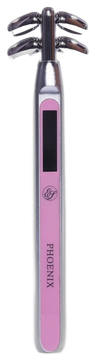
Ownership disclosure and methodology. This guide is written and published by EvenSkyn, which manufactures the MicroInfuser named as our pick. It is our own expert guide, not independent editorial, and it should be read that way. EvenSkyn is a Canadian at-home beauty-device company that designs and manufactures anti-aging devices including the Lumo+ (radiofrequency, EMS and light therapy), the Phoenix microcurrent bar, the Venus eye device, the MicroInfuser, and the MatureSmile LED whitening kit.
Method: specifications for the MicroInfuser and Syntha-Pep were taken from the EvenSkyn MicroInfuser User Manual, Edition 1 (2026), and the live product page, both read on 28 July 2026. Clinical claims are sourced to the peer-reviewed literature listed below and were located during this revision. Competitor specifications were read from each brand's own published material on 28 July 2026 and are attributed to the brand that published them. Where a brand publishes conflicting figures we print both rather than choosing one. We have not physically measured any device, including our own. Scores reflect our assessment against the four stated criteria and are not a laboratory measurement. The section on what each brand has tested was added on 11 October 2026 from each brand's own pages as read on 10 October 2026; our own entry describes an internal study whose method and full results have not been published. Nothing here is medical advice. Speak to a dermatologist or your doctor about your own skin.
Micro-infusion
Buying guide
Which at-home RF microneedling devices are real, what the FDA warned about home use in 2025, and the needle-free route that works instead.
Routine
How to use PDRN at home: pairing it with micro-infusion, what to apply before and after a session, and why delivery method decides results.
Routine
Every microneedling aftercare guide tells you what to put on after. This one answers that in full, then reframes the question: the result your skin keeps depends less on the cream you...


اترك تعليقًا
تخضع جميع التعليقات للإشراف قبل نشرها.
This site is protected by hCaptcha and the hCaptcha Privacy Policy and Terms of Service apply.