
Medically Reviewed by Dr. Lisa Hartford, MD
Hooded Eyelids: What's Actually Happening, What Treatments Work, and How to Pick the Right One (2026)
The short version
Most articles about hooded eyes get the first part wrong. They write as if hooding were a single thing. It isn't. There are at least three different problems that all look pretty much identical when you glance in a mirror: too much skin on the upper eyelid (called dermatochalasis), an eyebrow that has dropped down out of position (brow ptosis), and a weakened muscle that's supposed to lift the eyelid itself (blepharoptosis). And honestly, most people who walk into an oculoplastic surgeon's office for evaluation have some mix of all three.
This matters because each one needs a different fix. If you spend $300 on an at-home device for a problem that's actually true muscle ptosis, the device won't do anything, and you'll spend three months wondering why you wasted the money. So before we go anywhere, getting the diagnosis right is the highest-value step.
Here's the broad shape of what works. Mild hooding from skin laxity responds, slowly, to consistent at-home work. Radiofrequency three to five times a week, red light, a few well-chosen topicals. You'll start seeing the difference around the two-month mark. Moderate hooding wants in-clinic procedures: RF microneedling, HIFU, a Botox brow lift, sometimes filler placed up in the temple. Significant hooding (especially when it's pushing into your visual field) wants surgery, and there's no real substitute. The rest is delay.
This guide walks through each tier honestly. We'll explain what each can and can't do, so you can pick a path that actually fits your situation.
Key takeaways
- "Hooded eyes" is not one condition. It's at least three different anatomical problems (excess upper eyelid skin, a dropped eyebrow, or a weakened eyelid-lifting muscle), and each needs a different fix. Identifying which one (or combination) you have is the highest-value first step.
- Mild hooding (Grade 1) responds to consistent at-home work over 8 to 12 weeks: fractional radiofrequency, red light, peptides, retinoids.
- Moderate hooding (Grade 2) typically wants in-clinic procedures: Botox brow lift, RF microneedling, HIFU, lateral brow filler.
- Significant hooding (Grade 3 to 4) needs surgery. Upper blepharoplasty, often with a brow lift, is the only intervention that produces dramatic, durable correction. Everything else is delay.
- At-home devices are weaker than clinic equivalents by regulatory design, not by quality. The trade is more frequent use over more weeks for dramatically lower side-effect risk and a one-time cost instead of recurring fees.
- See a doctor right away if hooding is sudden, asymmetric, or comes with double vision, headache, weakness, or other neurological symptoms. Cosmetic treatment in those cases delays correct diagnosis.
What's in this guide
- The three treatment tiers, and what each one really delivers
- What hooded eyelids actually are
- The four conditions people lump together (and why getting this right matters)
- What causes hooding
- By the decade: 30, 40, 50, 60, 70+
- When to skip the cosmetic stuff and see a doctor
- Self-assessing severity
- Treatments mapped to severity
- Tier 3 in detail: at-home options that work (and ones that don't)
- Tier 2: the in-clinic landscape
- Tier 1: surgery
- The honest value comparison
- What to expect, week by week
- When to see a specialist
- FAQ
- References
1. The three treatment tiers
There are basically three places hooded-eyelid treatment lives. Worth getting your bearings before reading anything else.
Surgery sits at the top. Upper blepharoplasty removes excess skin physically. A brow lift repositions a descended brow. Results last seven to fifteen years, sometimes longer. The cost is real money, between $3,000 and $8,000, plus one to two weeks of visible recovery, plus surgical risk, plus a permanent change you can't undo if you don't like the result.
In-clinic non-surgical procedures sit in the middle. Botox brow lift, hyaluronic acid filler in the temple and lateral brow, RF microneedling (Morpheus8 and similar), HIFU (Sofwave, Ultherapy), Plasmage, thread lifts. These use higher-energy machines than anything you can buy for home use, and they're delivered by trained providers. Results from a single session are real. They also fade. You're back in the clinic every few months for Botox, every nine to eighteen months for filler, every twelve to twenty-four months for energy-based devices.
At-home devices and topicals sit at the bottom of the power scale. The reason isn't that the technology is worse. It's that regulators (the FDA in the US, Health Canada, CE in Europe) cap consumer device output for safety, because you don't have a trained provider watching the tissue response in real time. The mechanism inside a Lumo+ is the same radiofrequency mechanism inside a clinical Thermage. The energy ceiling is just much lower. Which makes home devices safer, but also means you need to use them more often, more consistently, and over more weeks before you see a structural change.
That last point is worth saying directly. Lower power isn't a flaw. It's the design constraint that lets the device sit on your bathroom shelf and get used three times a week without supervision. The trade is consistency over time. If you'll use it, it works. If you won't, it doesn't.
The right answer for most people isn't just one tier. A reasonable long-term plan looks like at-home work daily or weekly, in-clinic a couple of times a year, and surgery considered only at advanced severity. We'll come back to this near the end.
2. What hooded eyelids actually are
A hooded eyelid is what you see when a fold of skin drapes over the natural crease of the upper lid, partly covering the eyelid platform when your eyes are open. The skin doesn't usually obscure the cornea itself. It just visually shrinks the visible eyelid space, and it can read as heavy or tired.
Some people are born with hooded eyes. It's a normal anatomical variant, common across many ethnic groups, and it doesn't worsen with age the way age-related hooding does. Other people develop hooding gradually as the structures around the eye lose support. In age-related hooding, several things happen at once. Dermal collagen and elastin diminish. The orbital septum weakens. Fat pads shift. The lateral brow drops. The bony orbital rim subtly resorbs. Sometimes the muscle that lifts the lid stretches at its tendon. None of these alone is dramatic. Together they produce the look most people recognize.
Eyelid skin is roughly half a millimeter thick. About a quarter of cheek skin and an eighth of skin on the back. This thinness is why the eye area is usually the first place visible aging shows up. It's also why eyelid skin is genuinely responsive to gentle, well-targeted intervention, and at the same time vulnerable to harm from anything calibrated for thicker tissue. Both things are true.
3. The four conditions people confuse with hooded eyelids
This is the most clinically important part of the guide, and the part almost no consumer article handles well. "Hooded eyes" is a colloquial umbrella term that covers four distinct things. They look similar from outside, but they have different causes and different appropriate treatments.
Dermatochalasis (the excess-skin one)
When most people say "I have hooded eyes," this is what they're describing. The skin gets loose. It piles up along the upper lid, sometimes the lower lid too, and it sits over the natural eyelid crease the way a curtain sits over a window. Sun damage drives a lot of it. So does the slow weakening of the connective tissue underneath. And sometimes a little bit of the fat that's supposed to live behind the eyelid pushes forward and joins the party, which adds to the bulk.
The way you check for dermatochalasis is dead simple. Find a mirror with decent light. Take one fingertip and gently lift the loose skin upward, just enough to clear the eyelid platform. Look at what's underneath. If you see a normal eyelid sitting where it should be, with a clean crease and a clear lash line, you've got dermatochalasis. The eyelid is fine. It's the skin sitting on top of it that's the problem.
Of the four conditions in this section, this is the one most likely to respond to non-surgical treatment, especially if you catch it early.
Blepharoptosis (the muscle problem)
Blepharoptosis (you say it "TOH-sis") is something else entirely. Here, the eyelid margin itself sits lower than it should because the muscle that's supposed to lift it (the levator palpebrae superioris) has weakened, stretched, or come loose from its tendon attachment.
The most common version is aponeurotic ptosis, which is age-related thinning or detachment of that tendon. Other versions include congenital ptosis (present from birth, from incomplete development of the levator), neurogenic ptosis (related to nerve dysfunction, including third nerve palsy, Horner syndrome, and myasthenia gravis), and mechanical ptosis (a mass or scar pulling the lid down).
The tell with true ptosis is that the eyelid margin sits over the upper part of the iris or even over the pupil. It doesn't matter how much skin is above it. Lifting that skin doesn't reveal a normal lid, because the lid itself has dropped.
From Dr. Hartford"True ptosis cannot be corrected by any topical, device, or non-injectable treatment. The mechanism is muscle and tendon, not skin. Patients who chase aesthetic devices for true ptosis are essentially treating the wrong organ — and the result is months of frustration. If you suspect true ptosis, see an oculoplastic surgeon for evaluation before investing in devices or skincare for it. Treatment options are pharmaceutical (oxymetazoline 0.1% drops, brand name Upneeq, which stimulates Müller's muscle for temporary lift) or surgical (levator advancement or resection)."
Brow ptosis (the eyebrow has dropped)
Brow ptosis is descent of the eyebrow from its normal position. Because the eyebrow sits on top of the upper eyelid skin, when it drops, it pushes the eyelid skin downward, mimicking dermatochalasis. The technical name for this is pseudoptosis. The eyelid looks droopy, but the actual problem is brow position.
The StatPearls clinical reference describes brow ptosis as resulting from age-related changes including weakening of the frontalis muscle, loss of bony orbital rim projection, and descent of the periocular fat pads. The lateral (outer) brow drops first and farthest, because it has no direct frontalis support holding it up. Which is why so many people notice their outer brow dropping years before the rest of the face shifts.
There's a quick self-test. Stand at a mirror with a neutral expression. Lift your eyebrows gently with your fingertips. If the hooded look mostly resolves with the brow lifted, your hooding is being driven by brow descent, not by eyelid skin. Different problem, different fix.
The right interventions for brow ptosis are brow lift surgery, Botox brow lift (which weakens the muscles pulling the brow down so the frontalis can elevate it more easily), or volume restoration in the temple and lateral brow with structural hyaluronic acid filler. At home, microcurrent applied along the brow line and forehead is the most rational choice, because it works on muscle, which is what's failing here.
Blepharochalasis (rare, edema-related)
Blepharochalasis is uncommon but worth distinguishing. It's a rare condition, often starting before age 20, where the eyelids go through recurrent painless episodes of swelling that eventually leave the eyelid skin permanently thin and atrophic. It's sometimes linked to autoimmune mechanisms.
If this sounds like what you're dealing with, you need an oculoplastic specialist. At-home treatment isn't appropriate.
Why this distinction is the whole game
Picture a 55-year-old woman in front of a mirror, frustrated with how tired her eyes look. She might be dealing with any of the following.
She might have pure dermatochalasis, which means the eye area itself is fine but there's too much skin on top. That's the version that responds to skin-tightening, or to blepharoplasty when it's bad enough.
She might have pure brow ptosis, where the actual problem is that her eyebrow has migrated south over the years. Different fix entirely. Brow lift, Botox to reposition the brow, or filler to rebuild the volume up in the temple where her face has hollowed out.
She might have pure blepharoptosis, where the muscle that lifts her eyelid has stretched or come unclipped from its tendon. That's the one nothing aesthetic touches. She needs Upneeq drops, or surgery.
Or, and this is honestly the most common situation by far, she has some combination of two or three of these things at the same time, in different proportions, and the right plan addresses each one with a different tool.
The reason this matters: if she walks into the wrong appointment with the wrong diagnosis in her head, she'll waste money on something that isn't going to work for her actual problem. A consultation with a board-certified oculoplastic surgeon, even just a paid evaluation, sorts this out in 30 minutes. If you're heading into moderate-to-severe territory, that consult is the smartest first dollar you can spend.
4. What causes hooded eyelids
For age-related hooding, several mechanisms tend to be working at once.
Collagen and elastin loss is the foundational one. The dermal scaffolding declines about one percent per year after the mid-20s. That rate accelerates during perimenopause as estrogen withdraws. Eyelid skin shows this loss earlier than the rest of the face, because it's so much thinner.
Orbital fat changes contribute too. Periocular fat can prolapse forward (creating puffiness) or atrophy (creating hollowness). Both contribute to the way the eyelid looks.
Then there's the brow situation. The forehead muscle that holds the brow up gradually loses tone. The bony orbital rim subtly resorbs with age. Both remove structural support that used to keep things in position, and the brow drifts down as a result.
Sun damage is the one most people underestimate. UV breaks down collagen, elastin, and the matrix that holds skin together. The eye area rarely gets sunscreen, so it accumulates more cumulative UV damage per square centimeter than most facial skin. If you're going to do one thing, sunscreen on the eye area is probably it.
Mechanical wear matters more than people think. Chronic eye-rubbing (allergies, contact lenses, aggressive makeup removal) physically stretches the thin eyelid tissue. So does sleeping face-down, every night, for decades. Neither feels like it's doing anything. Both are.
Genetics play a role independent of all of this. Some people are born with anatomy that produces hooded eyes: deeper-set orbits, a shorter brow-to-lash distance, thicker upper eyelid fat pads. Not progressive. Just how the bones and tissue formed.
Hormones drive a lot of what changes in your 40s and 50s. Estrogen supports collagen synthesis and skin hydration. The estrogen withdrawal of perimenopause and menopause accelerates collagen loss across all skin, and eye-area changes are often where it shows up first. Pregnancy can also produce transient eyelid changes from fluid retention and hormonal shifts. Those typically resolve postpartum.
Significant weight loss is increasingly relevant. Rapid loss of facial volume can unmask underlying laxity that was hidden by fuller subcutaneous tissue. With the rise of GLP-1 medications, we're seeing more of this.
And finally, thyroid disease can mess with eyelid appearance. Both hyperthyroidism (especially Graves') and hypothyroidism. If hooding shows up alongside palpitations, weight changes, or temperature sensitivity, get your thyroid checked before chasing a cosmetic fix.
5. Hooded eyelids by decade
Twenties and early thirties: Hooding at this age is almost always genetic eye shape, not age-related. If it's been there your whole life, it's structural. It's also a normal variant, not a pathology. Some early dermal change from sun and sleep position may be visible. The right move is preventive. SPF, easing in a retinoid, gentle eye-area products. The least dramatic intervention now prevents the most dramatic intervention later.
Mid-to-late thirties: This is where age-related dermatochalasis tends to show up first, especially for people with significant cumulative sun exposure or genetic predisposition. The eyelid platform starts to feel slightly less smooth. The lateral lid often shows the earliest skin pooling. This is the highest-leverage decade for intervention, because preventing progression is much easier than reversing established laxity.
Forties: Perimenopause begins for many women in the early-to-mid 40s, and estrogen-related collagen loss accelerates everything. Hooding becomes consistently visible in photos. Sweet spot for at-home device adoption combined with selective in-clinic procedures (Botox brow lift, RF microneedling).
Fifties: Menopause-related collagen loss compounds the previous decade. Hooding is often clearly visible at rest. At-home interventions still help with skin quality, but in-clinic procedures or surgery become more relevant for actual structural correction.
Sixties: Hooding is often substantial, sometimes affecting visual field. Many people in this decade benefit meaningfully from upper blepharoplasty. After surgery, at-home maintenance becomes important to support skin quality and slow progression of any residual laxity.
Seventies and beyond: Hooding at this stage is essentially universal. The deciding factor is usually function. Is the skin obstructing your vision, are you constantly raising your brows to compensate, is reading getting harder. When it is, surgery (where medically appropriate) can produce dramatic improvement. At-home support continues to matter for skin quality.
6. When to skip the cosmetic stuff and see a doctor
Most age-related hooded eyelids develop slowly, over years. When the pattern looks different from that, the right move is medical evaluation before any cosmetic treatment.
See a physician promptly if one eyelid suddenly droops over days or weeks. This can mean a third nerve palsy, myasthenia gravis, Horner syndrome, or stroke. None of these are cosmetic situations.
Also see a doctor if one eyelid is significantly more affected than the other and this is new. If hooding shows up alongside double vision, headache, pupil changes, or facial weakness. If the hooding fluctuates during the day, often worse with fatigue. (That pattern suggests myasthenia gravis.) If the eyelid is painful, red, or swelling without a clear cause. If a child or young adult develops hooding. If hooding shows up alongside symptoms of thyroid disease.
The point of this section: any device, cream, or in-office procedure used in any of these situations delays correct diagnosis. That's the actual harm.
7. Self-assessing severity
This isn't a clinical grading. It's a rough framework for thinking about what's realistic. Take a few photos of yourself in consistent lighting, head straight, eyes neutral. Compare your eyes against the descriptions below.
Grade 1, early or mild: The natural eyelid crease is still mostly visible. There's a slight skin fold beginning to overlap the lid, especially toward the outer corner. You notice it most in photos taken from below, or in certain lighting. No effect on vision. Eye makeup is still straightforward.
Grade 2, moderate: The skin fold drapes over a meaningful part of the eyelid platform, especially laterally. The eyelid crease is partially or fully obscured. Eye makeup is harder to apply. No vision impact, but the eyes look heavier or more tired in resting expression.
Grade 3, significant: The skin fold covers most of the eyelid platform. The lateral skin may rest on the eyelashes themselves. There may be early visual field obstruction in the upper outer field. Reading or screen work might feel a little more fatiguing.
Grade 4, severe (functional): The skin fold meaningfully obstructs the upper visual field. People at this grade often raise their brows unconsciously to lift the skin out of the way, which produces forehead lines from the chronic frontalis effort. Insurance may cover blepharoplasty when severity is documented through formal visual field testing.
If you're between grades, assume the lower one and try the lower-tier intervention first. You can always escalate. You can't easily de-escalate from surgery.
8. Treatments mapped to severity
| Severity | Tier 3 (at-home) | Tier 2 (in-clinic) | Tier 1 (surgery) |
|---|---|---|---|
| Grade 1 (mild) | Primary path: fractional RF, red light, peptides, retinoids, microcurrent on brow | Optional, especially light Botox brow lift | Not indicated |
| Grade 2 (moderate) | Adjunctive: maintains skin quality, slows progression | Primary path: RF microneedling, HIFU, Botox brow lift, lateral brow filler, possibly thread lift | Optional, typically not yet needed |
| Grade 3 (significant) | Adjunctive only | Limited benefit; skin volume too great for non-surgical correction | Primary path: upper blepharoplasty, often with brow lift |
| Grade 4 (severe) | Pre/post-surgical maintenance only | Limited benefit | Strongly indicated: blepharoplasty + brow lift if brow component exists |
The principle behind the table: at-home interventions are most effective at preventing progression and producing visible improvement when severity is low. They cannot remove existing excess skin, and they cannot lift a meaningfully descended brow back to baseline. Once tissue has stretched past a threshold, only surgery removes it physically.
9. Tier 3: at-home treatment
This is the longest section in the guide, because it's where most readers actually have decisions to make.
Fractional radiofrequency for the eye area
Fractional RF delivers controlled electrical energy at radio frequencies (between half a megahertz and one megahertz in consumer devices) into the dermis. The dermal tissue resists the current, which produces heat in the 40 to 43°C range. That thermal stress sets off a cascade. Heat-shock proteins activate. Fibroblasts go to work. Over the following 8 to 12 weeks, the dermis remodels and lays down new collagen.
The peer-reviewed evidence base for periorbital RF specifically is solid. Carruthers and Carruthers (Dermatologic Surgery, 2007) ran a prospective pilot study of 20 subjects using monopolar RF on upper and lower eyelid skin and showed measurable tightening across multiple ethnicities. Biesman, Baker, and Carruthers (Lasers in Surgery and Medicine, 2006) replicated and extended these findings in a multicenter trial. Fitzpatrick and colleagues (Lasers in Surgery and Medicine, 2003) had earlier established efficacy of non-invasive RF for periorbital tissue tightening across multiple sites. Nahm and colleagues (Dermatologic Surgery, 2004) used objective photography to measure brow position before and after volumetric RF. They documented an average mid-brow elevation of 4.3 mm and a 1.9 mm rise in the level of the palpebral crease at three months. None of these were at-home consumer devices. They were professional clinical equipment running at much higher energy. Consumer devices use the same underlying mechanism, just capped lower.
For at-home use, the right device for the eye area is one engineered specifically for eyelid skin. Specifically, that means treatment depth capped at about 2 millimeters (so the energy doesn't extend toward the globe), fractional rather than bulk delivery, and surface temperature held to 42°C rather than the higher temperatures used for cheek and jawline skin.
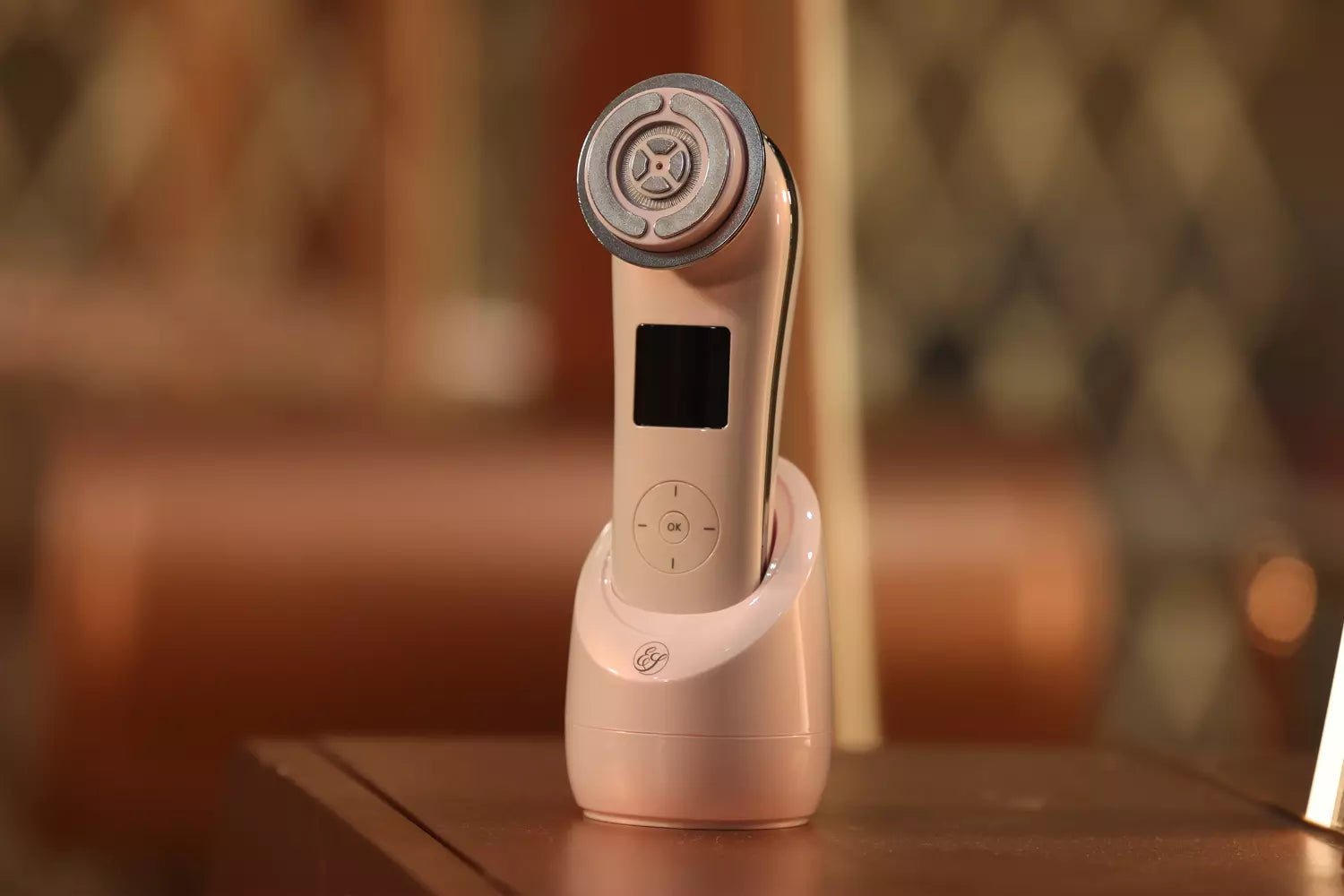
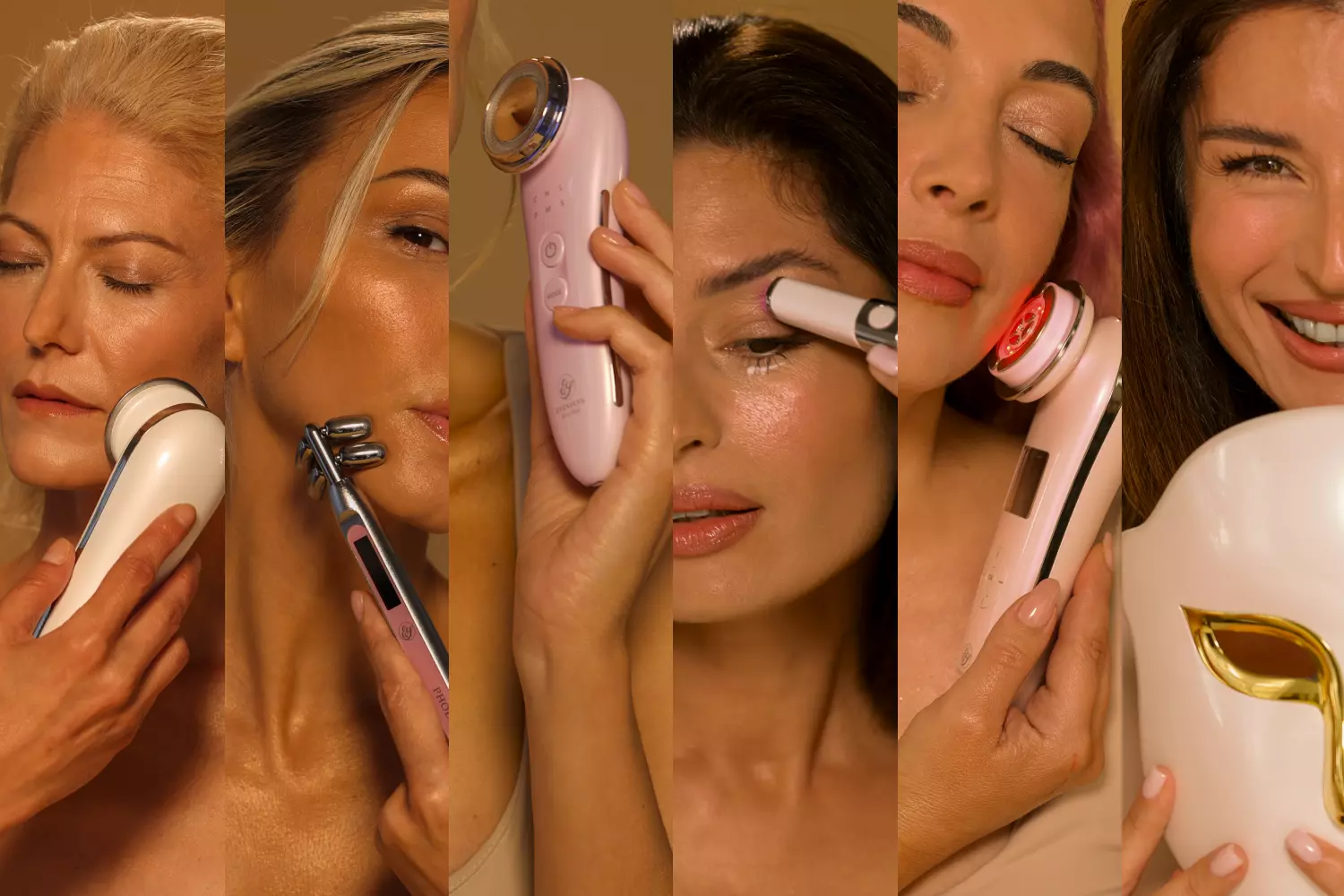
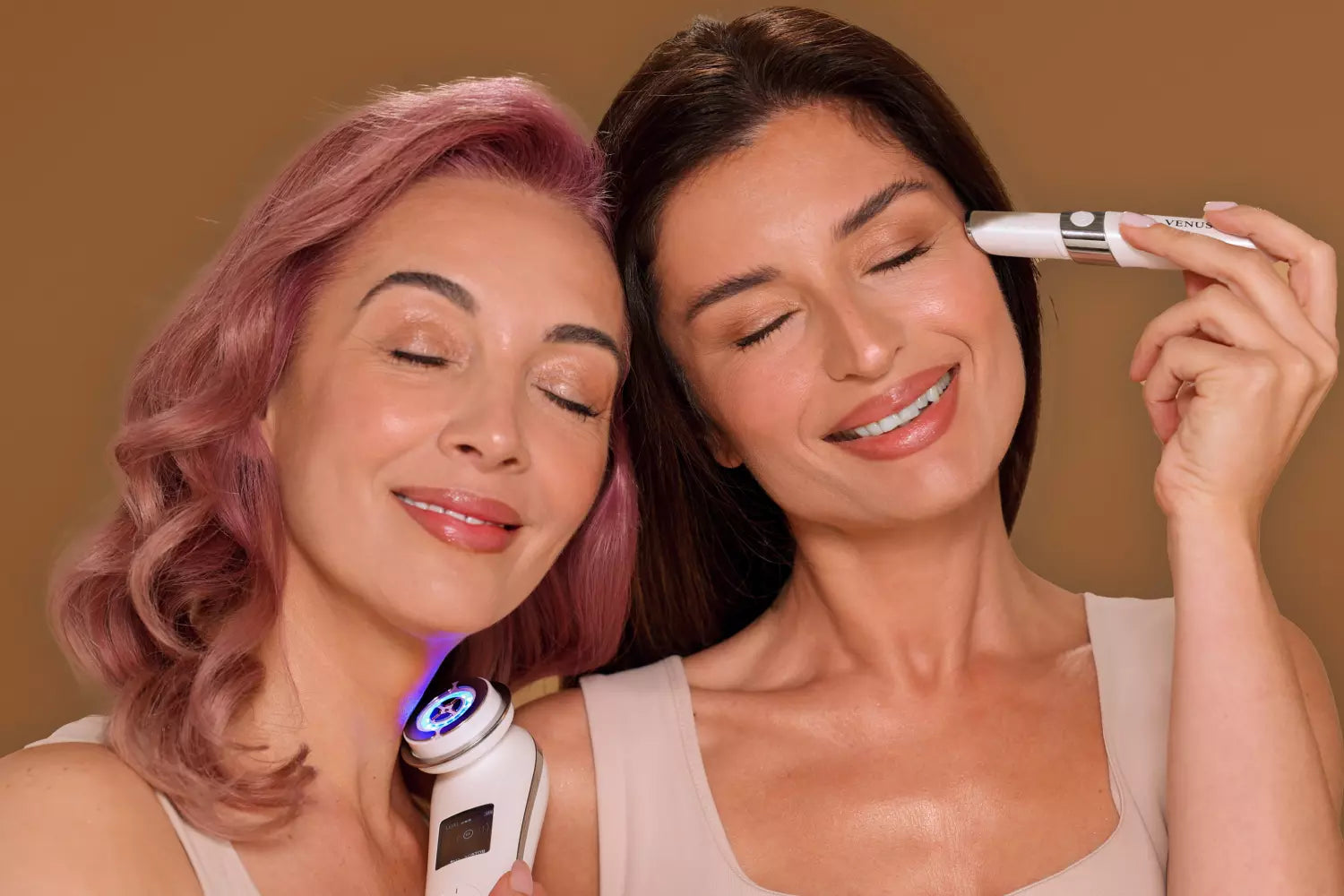
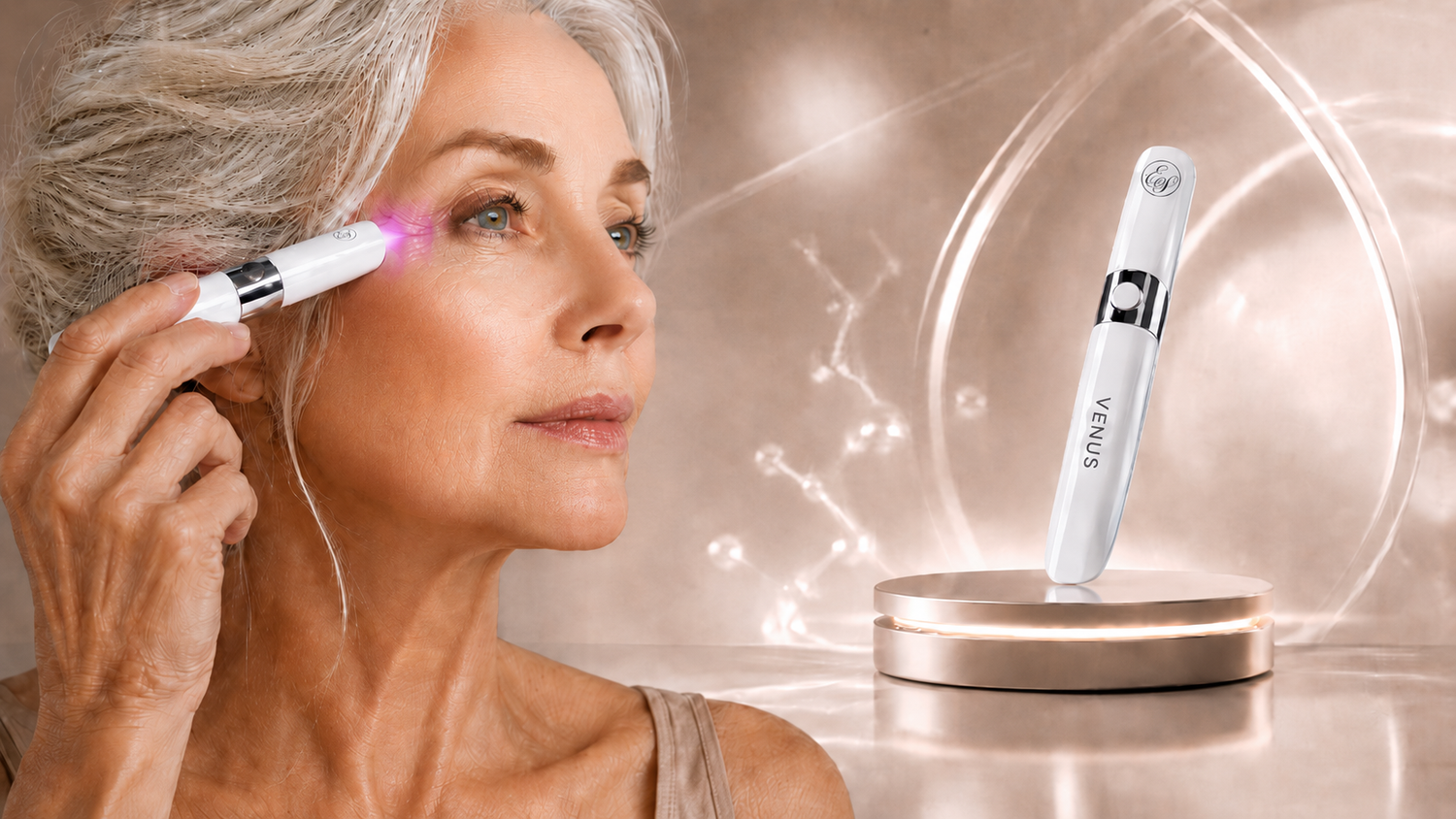
The EvenSkyn Venus ($149.99) is engineered to those constraints. Fractional RF at 1 MHz with surface temperature held at 42°C, paired with red and blue LED, designed specifically around the half-millimeter anatomy of eyelid skin. FDA-cleared, Health Canada approved.
From Dr. Hartford"The most important question with any eye-area RF device is whether it was engineered specifically for the periorbital region, or marketed for it as an afterthought. The eyelid skin is dramatically thinner than cheek skin, the cornea sits millimeters away, and the energy delivery system needs to reflect that. Use the device manufacturers explicitly indicate for the eye area. Never repurpose a face device."
What to expect on Grade 1 hooding: visible firmness improvement at 8 to 12 weeks of consistent use, three to five sessions per week. Some reduction in apparent hooding when the underlying cause is dermal laxity. No effect on true ptosis or significant brow descent. Different mechanism, different problem.
Red light therapy
Red light at wavelengths around 620 to 660 nm, often paired with near-infrared at 830 to 850 nm, gets absorbed by cytochrome c oxidase inside mitochondria. That modestly increases ATP production and supports collagen synthesis. The mechanism is non-thermal, and it's been studied extensively. Hamblin's 2017 review in AIMS Biophysics covers the underlying photobiology in detail.
Red light is the gentlest intervention category in the guide. Side effects when used as directed are essentially nil. The trade is slow accumulation. Most studies report visible texture and tone improvement only after 8 to 12 weeks of near-daily use.
For the eye area specifically, sessions need to be done with eyes closed. Red light at therapeutic intensities is safe through closed eyelids but should never be directed at open eyes. Full-face LED masks like the EvenSkyn Mirage ($399.99) cover the whole face including the periorbital region. For more eye-targeted use, the Venus integrates 623nm red and 465nm blue LED in a smaller treatment head designed for the eye contour.
Realistic outcome on Grade 1 hooding: modest improvement in skin tone, hydration, and barrier quality. Most useful as a daily maintenance layer underneath stronger interventions, not as the lead treatment.
Microcurrent for brow support
Microcurrent delivers very low-amperage electrical current (under 500 microamperes typically) that stimulates facial muscle contraction directly and modestly supports cellular ATP.
Important nuance for hooded eyelids. Microcurrent doesn't stimulate dermal collagen the way RF does. It works on muscle tone, not skin laxity. So for hooded eyelids specifically, microcurrent's role is on the frontalis (the forehead muscle that lifts the brow) and the lateral brow region. Re-engaging that muscle tone can produce subtle brow elevation. Direct microcurrent on the thin eyelid skin offers less benefit.
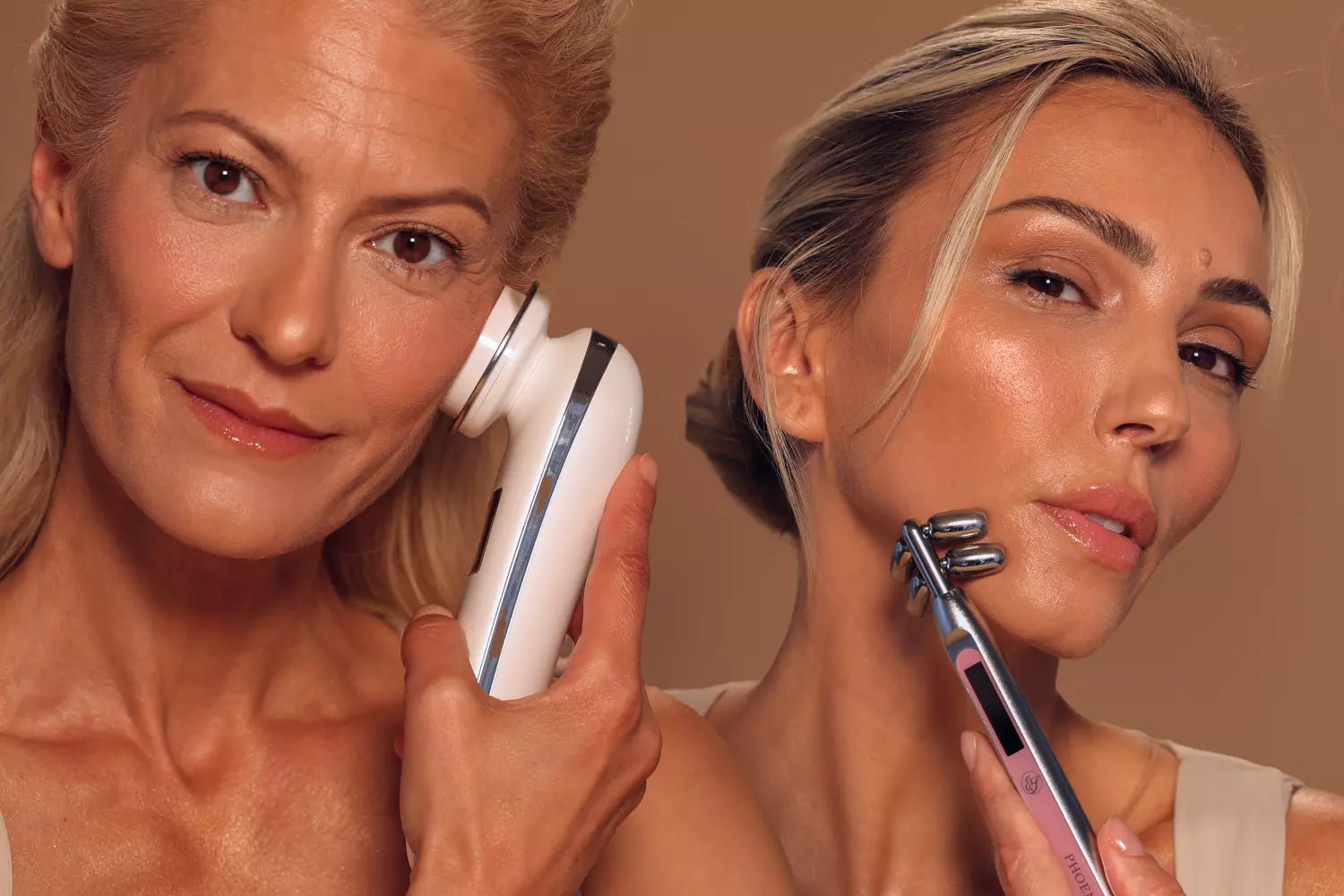
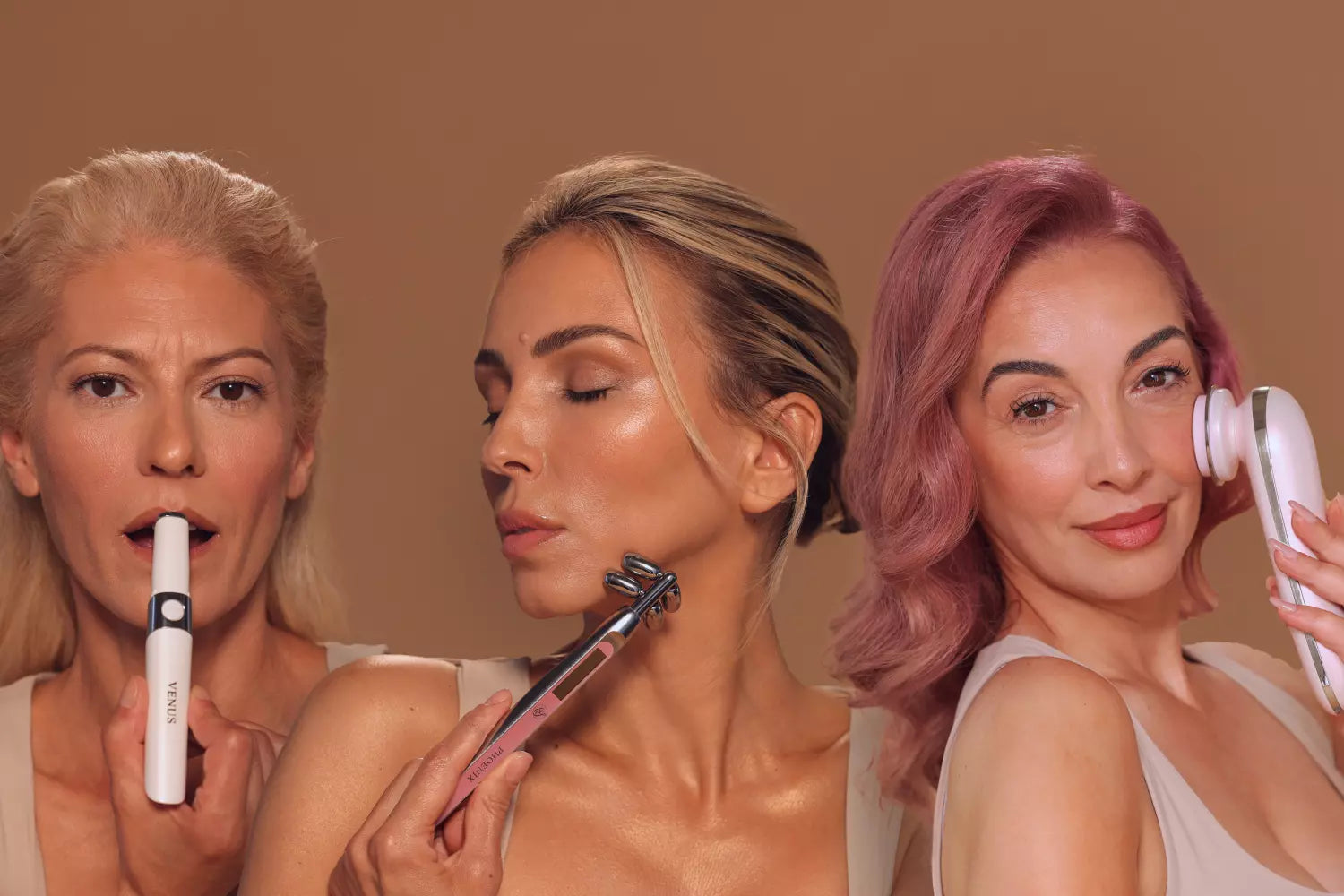
If your self-test (lifting the brow with a fingertip) showed that brow descent is your main driver, microcurrent on the brow and forehead is probably the most rational at-home tool you can pick. The Phoenix microcurrent bar ($119.99 when in stock) is dedicated to this. The EMS modes inside multi-tech devices like the Lumo+ ($499.99) cover similar territory while also addressing the rest of the face. If your hooding is driven by eyelid skin laxity instead, RF and red light are the higher-impact picks.
Topicals: what actually has evidence
Peptides first. Copper peptides (GHK-Cu), Matrixyl (palmitoyl pentapeptide-4), and argireline (acetyl hexapeptide-8) all have published evidence for supporting collagen synthesis and modestly improving fine lines. Their molecular size limits how deep they penetrate on their own. Pairing them with iontophoresis (active product delivery, available in multi-mode devices like Venus and Lumo+) or applying them right after RF treatment, when the skin barrier is briefly more permeable, both improve uptake.
For under-eye specifically, peptide-loaded microinfusion patches sidestep the penetration problem entirely. The EvenSkyn Under-Eye Micro-Infusion Patches ($69.99) deliver peptides, hyaluronic acid, niacinamide, and caffeine through dissolving microneedles directly into the upper dermis. To be clear, this isn't a hooded-eyelid (upper eyelid laxity) treatment. It targets lower-eyelid concerns: fine lines, dark circles, crepiness. But it earns its place in a comprehensive eye-area routine.
Retinoids next. Tretinoin (prescription) and retinol (over the counter) remain the most evidence-supported topical for general skin firming and collagen support. The eye area can tolerate retinoids if introduced carefully, low concentration, gradually. Some irritation is normal during the adjustment phase.
Caffeine constricts blood vessels topically. Reduces visible puffiness for a few hours. Same-day cosmetic effect, not a structural intervention.
Vitamin C (L-ascorbic acid) is a cofactor in collagen synthesis and a free-radical scavenger. Supportive skincare. Not a standalone hooded-eye intervention.
Lifestyle changes that genuinely help
Unglamorous, but real:
- Daily SPF 30+ on the eye area. UV is the largest single accelerator of eyelid skin aging.
- Stop sleeping face-down. Prone sleeping creases and compresses eyelid skin every night.
- Stop chronic eye-rubbing. Common in allergy sufferers and contact lens wearers. Physically stretches eyelid skin.
- Manage allergies medically. Chronic allergic edema accelerates laxity.
- Treat thyroid disease if present.
- Maintain hydration and protein intake. Collagen synthesis needs amino acids.
- Silk pillowcases reduce friction. Back-sleeping is ideal but most people can't actually adopt it.
What doesn't help, despite the marketing
Misinformation in this category is everywhere. None of the following structurally improve hooded eyelids.
Cucumber slices, tea bags, ice cubes on their own. They reduce transient puffiness. They produce zero structural change.
Eye exercises and "face yoga." No published evidence supports facial exercises producing measurable improvement in dermatochalasis. They might marginally help frontalis tone, which can help when brow descent is the issue, but they won't tighten loose skin.
At-home microneedling on the eyelid itself. Not safe. Eyelid skin is too thin and too close to the globe.
DIY eyelid lifting tape. Cosmetic effect for one wear. No structural change.
Generic firming creams without proven actives. If a product's claim isn't tied to a specific evidence-supported ingredient (named peptide, retinoid, growth factor), assume the structural effect is minimal.
Lifting mascaras and eyelid primers. Useful for makeup, irrelevant to hooding.
10. Tier 2: in-clinic non-surgical procedures
These sit between at-home and surgery. They use higher-energy machines or pharmaceutical agents than consumer devices, and they're delivered by trained providers (dermatologists, plastic surgeons, oculoplastic surgeons, qualified injectors).
Botox brow lift. Small doses of botulinum toxin selectively weaken the muscles that pull the brow downward (the lateral orbicularis oculi, the depressor supercilii, the procerus). With those muscles relaxed, the frontalis lifts the brow more easily, and you get a subtle elevation. Results emerge over 5 to 14 days, last 3 to 4 months. Best for early hooding with a brow descent component. Doesn't help dermatochalasis driven purely by excess eyelid skin.
Hyaluronic acid filler in the temple and lateral brow. Volume restoration in this region rebuilds structural support that was lost with age, producing a subtle lateral brow lift. Results are immediate. Effect lasts 9 to 18 months depending on the product and the placement.
RF microneedling (Morpheus8, Genius RF, others). Delivers RF energy through fine needles directly into the dermis. Significantly more powerful than at-home RF. Typical course is three sessions, four to six weeks apart, with results continuing to develop over three to six months. Real downtime, generally one to three days of redness and possible pinpoint scabs.
HIFU (Sofwave, Ultherapy). High-intensity focused ultrasound delivered to controlled depths (typically 1.5, 3.0, and 4.5 mm), heating tissue at the SMAS layer to trigger lifting and tightening. Results develop over 12 weeks and last 12 to 24 months. Generally well tolerated.
Plasmage / plasma fibroblast. Controlled micro-arcs of plasma create tiny carbonized points on the skin surface. The body heals each point, and the surrounding tissue tightens in the process. Useful for upper eyelid skin in some Grade 2 and early Grade 3 cases as a non-surgical alternative to blepharoplasty. Typically one to three sessions with five to seven days of visible scab healing.
Thread lifts. Absorbable PDO, PLLA, or PCL threads inserted under the skin to mechanically lift tissue and stimulate collagen. For hooded eyelids, lateral brow placement can produce visible lift. Results last 12 to 18 months.
Upneeq (oxymetazoline 0.1% drops). Prescription eye drops that stimulate Müller's muscle for temporary upper eyelid lift. Specifically for true blepharoptosis, not dermatochalasis. Effects last hours per dose. Daily use required.
The realistic ceiling for this whole tier: meaningful improvement at Grade 1 and Grade 2, sometimes early Grade 3. Not the magnitude of correction surgery achieves at Grade 3 to 4.
11. Tier 1: surgery
For Grade 3 to 4 hooded eyelids, surgery is the only intervention that produces dramatic, durable correction.
Upper blepharoplasty. Excess upper eyelid skin (and sometimes a small amount of fat or muscle) gets removed through an incision hidden in the natural eyelid crease. Procedure usually takes 45 to 90 minutes under local anesthesia with sedation. Recovery is 1 to 2 weeks of bruising and swelling. Most people are back to work in 7 to 10 days. Results last 7 to 15 years, often longer.
Brow lift (forehead lift). When brow ptosis is the dominant driver, a brow lift repositions the eyebrow back to a higher, more youthful position. There are several techniques (endoscopic, lateral temporal, direct, pretrichial), and the right one depends on your anatomy and goals. Often combined with upper blepharoplasty for comprehensive correction.
Combined upper blepharoplasty + brow lift. For patients with both significant excess eyelid skin and meaningful brow descent. Treats both drivers in one operation.
Costs typically run $3,000 to $7,000 for upper blepharoplasty, $4,000 to $8,000 for brow lift, and somewhat higher for combined procedures. Insurance may cover blepharoplasty when severity is documented through formal visual field testing showing functional impairment.
The honest framing of when surgery makes sense: when at-home and in-clinic options have hit their ceiling and the visible problem is volume of excess skin, not skin quality. Surgery isn't the right first step for early hooding. It's the right and often only effective option for advanced hooding.
12. The honest value comparison
This section addresses the comparison most readers are silently making but few articles discuss directly.
Power, and why the trade-off is intentional
In-clinic procedures use machines that operate at substantially higher energy output than at-home devices. A clinical Morpheus8 RF microneedling system delivers far more energy per session than any at-home RF device. Ultherapy delivers focused ultrasound at energies impossible to replicate at home. Surgical blepharoplasty physically removes tissue.
The difference is intentional, not a quality gap. The FDA, Health Canada, and CE all cap consumer device output specifically for safety, because at-home users don't have a trained provider monitoring tissue response in real time. Same logic applies across consumer aesthetic devices. At-home laser hair removal devices have lower fluence than clinical diode lasers. At-home microcurrent runs at lower amperage than clinical TENS units. And so on. Not because manufacturers can't make them stronger, but because consumer-use safety requires they don't.
This has a real consequence and a real upside. The consequence: at-home devices need more frequent, more consistent use to produce visible improvement. One Morpheus8 session might equal months of at-home RF in cumulative effect. The upside: severe burns, hyperpigmentation, thermal injury to the cornea, and unintended fat atrophy are documented complications of high-energy in-clinic devices when used incorrectly or on the wrong patient. Properly engineered consumer devices have effectively no risk of these outcomes when used as directed.
What things actually cost
Single in-clinic procedures typically cost between $500 and $5,000 each. Most need multiple sessions and ongoing maintenance.
Botox brow lift runs $200 to $600 per session, every 3 to 4 months. About $800 to $2,400 per year if you stay on schedule.
HA filler in the temple or lateral brow runs $600 to $1,500 per syringe, refilled every 9 to 18 months.
RF microneedling runs $1,000 to $2,500 per session, three sessions standard, repeat in 12 to 18 months.
Sofwave or Ultherapy runs $1,500 to $5,000 per session, repeat in 12 to 24 months.
Plasmage runs $500 to $1,500 per session, one to three sessions.
Upper blepharoplasty runs $3,000 to $7,000, one-time but irreversible.
Compare to at-home. Well-engineered devices range from about $150 to $700 as a one-time purchase. The Venus at $149.99 is roughly one-tenth the cost of a single Sofwave session in the eye area, and produces results from a different mechanism (lower-power fractional RF + LED) over a longer timeframe. The Lumo+ at $499.99 covers the entire face, neck, and décolletage for less than the cost of a single in-clinic RF microneedling session.
The honest read: per-result-magnitude, in-clinic is more efficient. Per-dollar-spent-over-three-years, at-home is dramatically more cost-efficient for mild-to-moderate hooding.
What you actually walk away with
Here's the structural difference few articles discuss directly. After a clinic appointment, you walk away with the result. That's it. Your next session needs another appointment, another fee, another spot on your calendar. When the result fades, you're back to baseline unless you go again.
With an at-home device, you walk away owning the device. If results are good and you want to maintain them, you keep using it. No additional cost beyond electricity and occasional replacement parts. Vacation? The device comes with you. Schedule gets busy for six months? The device sits ready when you come back. There's no booking pressure, no scheduling friction, no per-session decision about whether you can afford it this month.
For mild hooding where consistent low-power treatment is the right approach anyway, ownership transforms the unit economics. The device becomes a fixed investment that produces ongoing benefit for years, instead of a recurring expense that produces episodic results.
When each tier is right
Tier 3 (at-home) is right for Grade 1 hooding, prevention, ongoing maintenance, a budget-conscious approach, anyone who prefers privacy and self-direction, and anyone without easy access to specialty clinics.
Tier 2 (in-clinic) is right for Grade 2 hooding when dramatic-per-session improvement matters. Also for people willing to commit to a maintenance schedule, and people who want professional supervision.
Tier 1 (surgery) is right for Grade 3 to 4 hooding. Vision impact. People willing to invest one-time for durable correction.
Combined approach: most people who plan for the long haul use Tier 3 daily or weekly, Tier 2 a few times a year, and consider Tier 1 only at advanced severity. This is the most evidence-supported approach for long-term skin health.
The right answer is rarely just one tier.
13. What to expect, week by week
For consistent at-home device use combined with appropriate topicals on Grade 1 to early Grade 2 hooding, here's a realistic timeline.
Weeks 1 and 2: No visible structural change. You may notice mild adaptation effects: transient pinkness after RF use, mild dryness from a newly introduced retinoid. Both are normal.
Weeks 3 and 4: Skin texture starts to improve. Hydration and softness become more apparent. The eye area looks healthier without dramatic change.
Weeks 6 to 8: Earliest period for visible firmness improvement. Crow's feet may appear softer. The eyelid platform may feel slightly smoother to the touch.
Weeks 10 to 12: Peak collagen-remodeling response window. Reduction in fine wrinkling becomes visible. Modest improvement in firmness. Sometimes a slight perceived lift. This is usually where photo comparisons start showing clear before-and-after differences.
Beyond week 12: Continued maintenance produces continued slow improvement. Effects level off without ongoing stimulus. Maintenance use is required to keep what you've gained, because dermal collagen continues to turn over.
Realistic ceiling: for Grade 1 hooding, expect roughly 15 to 30% visible improvement in the lateral canthal area and modest perceived firmness gains. For Grade 2, the ceiling is lower, perhaps 10 to 20%, because excess skin volume cannot be removed without surgery. For Grade 3 and beyond, at-home treatment is supportive only. The magnitude of change you need at that severity requires Tier 1 or Tier 2 intervention.
14. When to see a specialist
See a board-certified oculoplastic surgeon, ophthalmologist, or dermatologist if any of the following apply:
- Sudden onset of eyelid drooping
- Asymmetric drooping (one eye significantly more than the other)
- Drooping that obstructs your visual field or makes driving difficult
- The eyelid margin itself sits over the iris (suggests true blepharoptosis)
- Persistent eyelid swelling, irritation, or discomfort
- Family history of thyroid eye disease, myasthenia gravis, or relevant conditions
- Any neurological symptoms accompanying the hooding (double vision, headache, weakness)
- You're considering surgery and want a formal severity assessment
- At-home treatment has produced no improvement after 12 weeks of consistent use
A specialist consultation is also worth it just for accurate diagnosis. Many oculoplastic surgeons offer paid consults for exactly this purpose, and the answer to "what's actually going on with my eyelids" can save substantial time and money before any treatment decision.
15. Frequently asked questions
Can hooded eyelids go away on their own?
No. Once dermatochalasis develops, the excess skin doesn't reverse without intervention. Lifestyle changes (sun protection, sleep position, stopping eye-rubbing) can slow progression. At-home treatment can produce visible firmness improvement on early hooding, but it can't remove existing excess skin.
At what age do hooded eyelids typically start?
Genetic hooding is present from young adulthood and doesn't progress the way age-related hooding does. Age-related hooding usually shows up in the late 30s to early 40s and progresses over the following decades, with noticeable acceleration during perimenopause for women.
Can at-home devices replace blepharoplasty?
For mild dermatochalasis: at-home devices can produce visible improvement and may delay the need for surgery. For moderate to severe dermatochalasis: no. Surgery removes excess skin in a way no non-surgical intervention can match. The honest answer is that at-home devices are best understood as prevention and early-stage support, not as surgery substitutes.
Why are at-home devices weaker than in-clinic ones?
Regulatory design. The FDA, Health Canada, and CE all cap consumer device output for safety, because at-home users don't have professional supervision. The mechanism is the same. The energy output is lower. The trade is more frequent use over a longer period for comparable cumulative effect, in exchange for dramatically lower side-effect risk.
Is RF safe to use near my eyes?
Fractional RF devices specifically designed for eyelid skin (with treatment depth capped to avoid the globe) are safe when used as directed. RF devices designed for cheek or jawline skin should not be used directly on the eyelid, because they're calibrated for thicker tissue. Always follow manufacturer-specific guidelines for the device you own.
What's the difference between hooded eyes and droopy eyelids?
Hooded eyes (dermatochalasis) involve excess skin draping over the eyelid; the eyelid itself sits at a normal height. Droopy eyelids (true blepharoptosis) involve the eyelid margin itself sitting lower than normal due to weakness in the levator muscle. They can co-exist, but they need different treatments.
How long does it take for at-home RF to work on hooded eyes?
Most users notice initial textural and firmness improvement at 4 to 6 weeks of consistent use (3 to 5 sessions per week), with peak visible results at 8 to 12 weeks. Maintenance use is required to keep the gains, because dermal collagen continues to turn over.
Will eye exercises lift hooded eyelids?
For true hooding driven by skin laxity, no. Facial exercises don't have peer-reviewed evidence for measurably tightening dermatochalasis. They might marginally improve frontalis muscle tone, which can help in cases driven by brow descent rather than excess skin.
Is Botox a good treatment for hooded eyes?
Botox can produce a subtle brow lift by selectively weakening muscles that pull the brow downward, allowing the frontalis to elevate the brow more freely. Works best for mild hooding with a brow descent component. Effects last 3 to 4 months and require maintenance. Botox cannot help dermatochalasis driven purely by excess eyelid skin.
Can hooded eyelids cause vision problems?
At Grade 3 to 4 severity, yes. The skin fold can obstruct the upper visual field, particularly during driving or reading. When functional vision is affected, blepharoplasty is often partially covered by health insurance after documentation through formal visual field testing.
What's the most cost-effective approach for early hooded eyelids?
At-home fractional RF combined with daily SPF, peptide products, and lifestyle modifications offers the most cost-effective intervention for Grade 1 hooding. Total first-year cost is typically under $400, versus $3,000+ for a course of in-clinic procedures or $5,000+ for surgery. And you keep the device.
Why is one of my eyelids more hooded than the other?
Mild asymmetry is normal. Almost no one has perfectly symmetric eye anatomy. New or worsening asymmetry, especially over weeks or months, warrants medical evaluation to rule out causes like ptosis from levator dysfunction, third nerve involvement, or rare conditions like myasthenia gravis.
Do GLP-1 weight loss drugs cause hooded eyelids?
Significant rapid weight loss can unmask underlying skin laxity that was previously concealed by fuller subcutaneous facial volume. This affects multiple facial areas, including the eyelids. The hooded appearance after major weight loss usually reflects pre-existing laxity becoming visible, not new tissue damage.
Can hormonal changes cause hooded eyelids?
Yes. Estrogen supports collagen synthesis. The estrogen withdrawal of perimenopause and menopause accelerates collagen loss across all skin, with eye-area changes often among the most visible. Pregnancy can produce transient eyelid changes from fluid retention and hormonal shifts; these typically resolve postpartum.
Are hooded eyelids genetic or age-related?
Both, depending on the person. Some people are born with hooded-eye anatomy as a normal feature; this isn't progressive and doesn't reflect aging. Others develop hooding as part of age-related collagen and elastin loss. Many people have a combination of the two: a baseline genetic predisposition that becomes more pronounced with age.
16. References
- Carruthers J, Carruthers A. Shrinking upper and lower eyelid skin with a novel radiofrequency tip. Dermatologic Surgery. 2007;33(7):802–809. PMID: 17598845.
- Biesman BS, Baker SS, Carruthers J, Silva CA, Holcomb JD. Monopolar radiofrequency treatment of human eyelids: a prospective, multicenter, efficacy trial. Lasers in Surgery and Medicine. 2006;38(10):890–898.
- Fitzpatrick R, Geronemus R, Goldberg D, Kaminer M, Kilmer S, Ruiz-Esparza J. Multicenter Study of Noninvasive Radiofrequency for Periorbital Tissue Tightening. Lasers in Surgery and Medicine. 2003;33(4):232–242.
- Alster TS, Tanzi E. Improvement of Neck and Cheek Laxity With a Nonablative Radiofrequency Device: A Lifting Experience. Dermatologic Surgery. 2004;30(4 Pt 1):503–507. PMID: 15056138.
- Nahm WK, Su TT, Rotunda AM, Moy RL. Objective changes in brow position, superior palpebral crease, peak angle of the eyebrow, and jowl surface area after volumetric radiofrequency treatments to half of the face. Dermatologic Surgery. 2004;30(6):922–928. PMID: 15171772.
- Lim YK, Jung CJ, Lee MY, Moon IJ, Won CH. The Evaluation of Efficacy and Safety of A Radiofrequency Hydro-Injector Device for the Skin around the Eye Area. Journal of Clinical Medicine. 2021;10(12):2582. PMID: 34208109. PMCID: PMC8230740.
- Hamblin MR. Mechanisms and applications of the anti-inflammatory effects of photobiomodulation. AIMS Biophysics. 2017;4(3):337–361. PMID: 28748217. PMCID: PMC5523874.
- EyeWiki — American Academy of Ophthalmology. Dermatochalasis. 2024.
- StatPearls — Brow Ptosis. National Center for Biotechnology Information, 2024.
- StatPearls — Blepharoptosis. NCBI, 2024.
- American Society of Plastic Surgeons. Blepharoplasty Procedural Guidance. 2024.
This article is informational and is not medical advice. Hooded eyelid appearance can have multiple underlying causes, some of which need medical evaluation. Consult a board-certified oculoplastic surgeon, ophthalmologist, or dermatologist for individualized assessment, particularly for sudden eyelid changes, asymmetric drooping, or vision impact.
Authored by the EvenSkyn editorial team and clinically reviewed by Lisa Hartford, MD, our Chief Dermatology Advisor and Doctor-in-Residence. Treatment recommendations reflect peer-reviewed clinical evidence as of the publication date. Product mentions throughout are EvenSkyn devices; competitor devices are not named or recommended. Readers are encouraged to research multiple options and make decisions based on their individual circumstances and consultations with qualified healthcare providers.
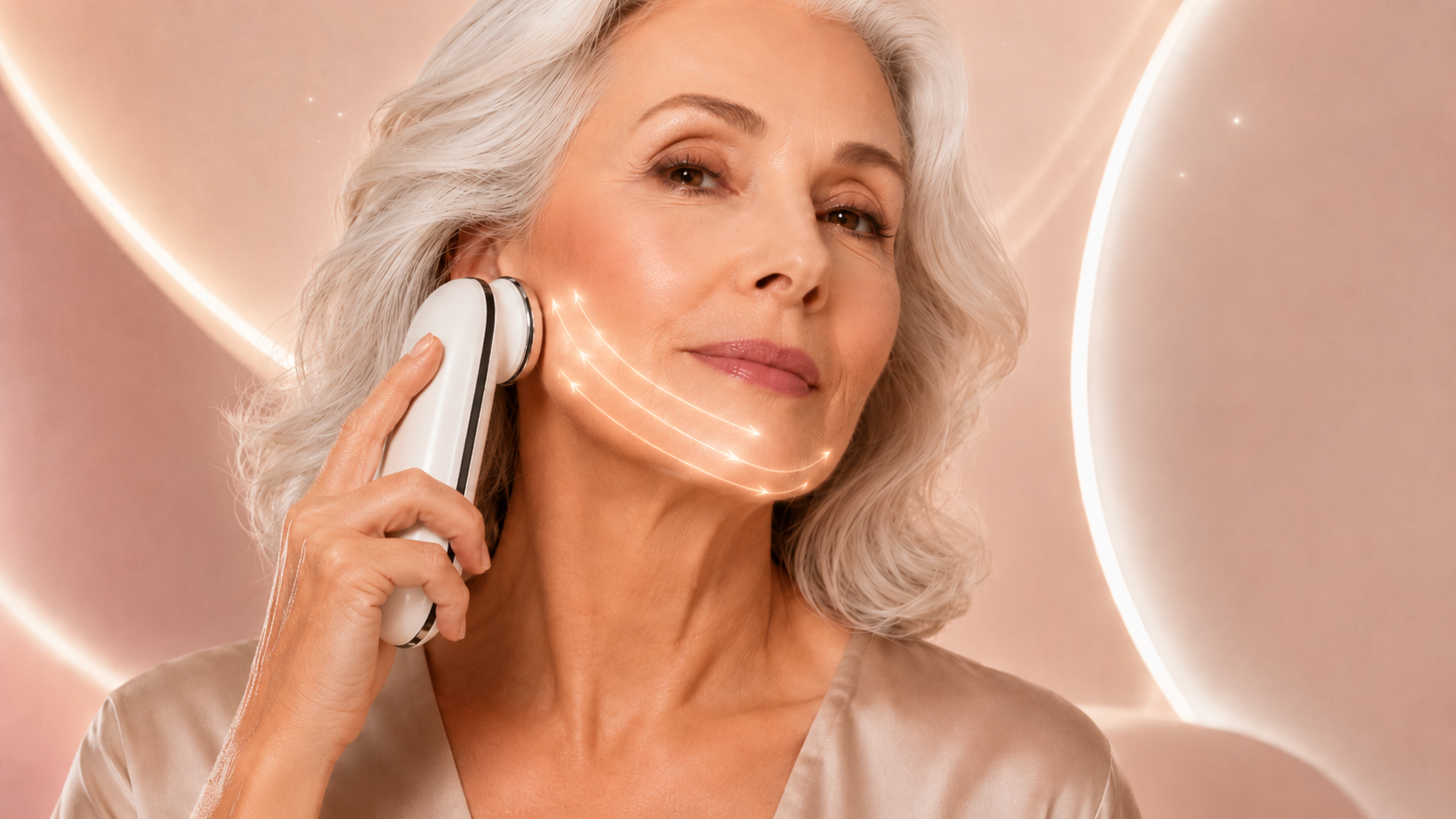
If at-home device options for early-stage hooded eyelids fit where you are, the Venus was engineered specifically for eyelid skin (fractional RF, 2mm depth cap, integrated red and blue LED). For broader full-face treatment that supports the brow and forehead muscle groups, the Lumo+ combines RF, EMS, and LED in a single handset. All EvenSkyn devices are FDA-cleared, Health Canada approved, and ship with a 60-day money-back guarantee.



Leave a comment
All comments are moderated before being published.
This site is protected by hCaptcha and the hCaptcha Privacy Policy and Terms of Service apply.