



An honest 2026 guide to what at-home eye-area devices can, and cannot, do for the most delicate skin on your face.
The eye area is usually where you notice change first
For many people, the skin around the eyes is where the early signs of aging become visible before anywhere else on the face. Puffiness in the morning, finer lines when you smile, a slightly crepey texture, shadowing or darkness, and a heavier upper lid can all show up here first.
The skin around the eyes is thin and mobile, so small changes are easy to see. That visibility can make the area feel like a bigger problem than it is. In most cases these are normal, common changes rather than a medical concern. The goal of this guide is to explain, calmly and honestly, what is actually going on and what an at-home eye-area device can and cannot realistically do.
Why under-eye concerns happen
Under-eye and eyelid concerns are rarely caused by one single thing. They usually come from a mix of factors, and that mix is different for every person. Common contributors include:
The practical takeaway is simple. Because the causes are mixed, no single device, cream or treatment resolves every type of under-eye concern. Knowing your main cause matters more than picking the strongest-sounding gadget.
What an at-home eye-area device can realistically help with
Used consistently and as directed, a well-designed at-home eye-area device may help improve the appearance of firmness, smoothness and texture in the eye area for some users, depending on the technology, the person, and the underlying cause.
It is honest to set expectations clearly. A device may help the look of fine lines and crepey texture over weeks of regular use. It may help the look of mild puffiness, particularly fluid-related morning puffiness, through gentle stimulation of the area. It is a support tool, not a medical procedure, and it does not replace a dermatologist, an ophthalmologist or a surgical option for significant concerns.
Results are gradual, individual, and not guaranteed. Some people respond well, some respond modestly, and some see little change. Maintenance matters, because improvements in appearance are not permanent and tend to fade if use stops. There is no such thing as wrinkle-free skin from an at-home device, and no at-home device reverses aging or permanently lifts tissue. Any source promising that is overpromising.
“Knowing your main cause matters more than picking the strongest-sounding gadget.”
Radiofrequency near the eyes, explained simply
Radiofrequency devices work by delivering energy that gently warms the deeper layer of the skin. Controlled warmth in the skin can prompt a natural repair and collagen-supporting response over time, which is the mechanism behind the firmer, smoother appearance some users report with consistent use.
The important part for the eye area is this. The skin around the eyes is much thinner and more delicate than the cheeks or jawline. An eye-area RF device should be specifically designed for the eye area, with a small treatment head, controlled and limited heat, and clear instructions for the lids and under-eye zone. A full-face RF device is not automatically appropriate for the eyelids.
Never use any device directly on the open eye or eyeball, and keep the eyes gently closed when treating the upper lid as instructed.
Follow the manufacturer time and frequency limits. More heat and longer sessions are not better and can irritate thin skin.
Do not use over active rashes, broken skin, sunburn, eczema or dermatitis in the area, or if you have reduced heat sensation in the skin being treated.
Speak with a healthcare professional before use if you are pregnant, have an implanted electronic device, have had recent eye-area procedures, or have a medical condition affecting the eyes or skin.
Stop and seek advice if you experience pain, lasting redness, swelling or any vision change.
RF, microcurrent, LED and topical skincare: how they differ
These approaches are not competitors so much as different tools that do different things.
No single category is best for everyone, because the right choice depends on your main concern. Pigment-led dark circles, for example, respond more to pigment-focused skincare and sun protection than to any device alone.
Puffy eyes: temporary versus structural
Puffiness is not all one thing. Some puffiness is temporary and fluid-related. It comes and goes with sleep, salt, alcohol, allergies, hormones or crying, and it is often worse in the morning. A gentle eye-area device may help the look of this kind of puffiness for some people as part of a routine. Patches are another common at-home option, and our guide to using under-eye patches step by step explains where they fit.
Other puffiness is structural. As tissues around the eye weaken with age, fat can move forward into the lower lid and create a more permanent bag-like appearance. An at-home device may soften how this looks slightly, but it does not remove structural fat pads, and it is honest to say so.
Persistent, one-sided, painful or rapidly changing swelling, swelling with vision changes, or sudden new puffiness should be assessed by a healthcare professional, because puffiness can occasionally signal a medical issue rather than a cosmetic one.
Dark circles: be honest about the cause
Dark circles are one of the most multifactorial eye concerns there is. They can be pigment-based, from extra melanin and more common with certain skin tones, sun exposure or rubbing from allergies. They can be vascular, where vessels under thin skin create a bluish or purple appearance. They can be shadow-based, created by the contour of the face or a heavy lid rather than skin color at all. And they can be structural, from thinning skin and volume loss.
Here is the honest part. A device may help the appearance of texture and firmness, which can modestly improve shadow-related darkness for some people. But a device is not a reliable fix for true pigment-based dark circles, which generally respond better to targeted skincare, daily sun protection and, in some cases, in-clinic treatment guided by a dermatologist. If your dark circles do not change at all when you gently stretch or lift the skin, they are more likely pigment or vascular, and a device alone is unlikely to resolve them.
Hooded eyelids and lid heaviness
A hooded or heavier upper lid is very common with age and is often partly genetic. At-home eye-area devices may support the appearance of firmer, smoother lid skin with consistent use, and some users find the area looks more refreshed.
It is important to be clear. An at-home device does not replace surgery or medical procedures for significant lid heaviness. Meaningful, lasting correction of pronounced hooding or excess lid skin is a medical or surgical question, and that route should be discussed with a qualified professional. An at-home device is best understood as appearance support and maintenance for mild concerns.
Where the EvenSkyn Venus fits
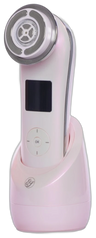
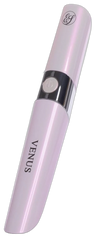
The EvenSkyn Venus is positioned specifically as an eye-area device, which is the distinction that matters most here. Many at-home RF devices are built for the broader face, the cheeks, jawline and neck. Venus uses fractional radiofrequency designed for the delicate eye and eyelid zone, with a small treatment head intended for that area. That eye-area focus, rather than full-face coverage, is the meaningful difference for someone whose main concern is the lids and under-eye skin.
How Venus works, in plain terms. It applies a controlled, constant warmth of about 42°C (107.6°F) to the eyelid skin, which is gentle low-level heat rather than an aggressive thermal treatment. It pairs that with LED phototherapy, using a red light mode and a soothing blue light mode, with ion-assisted absorption to help eye-care products absorb, and a gentle sonic massage function. It has two modes: an active collagen-support mode shown by the red light, and a soothing nutrient and firming mode shown by the blue light.
What to expect, honestly. Used as directed, about five minutes per session, three to five times a week, with an eye cream or conduction gel, Venus is designed to support the appearance of firmness, smoothness and a more refreshed-looking eye area over weeks of consistent use. It is not a medical treatment. It does not remove structural eye bags, resolve pigment-based dark circles, or replace a surgical lid procedure. Results are gradual and individual, and the look is maintained with continued use rather than being permanent.
A note on safety and suitability. The Venus is water-resistant but not waterproof. Avoid use over eczema or dermatitis around the eyes or temples, over sunburned skin in that area, or if you have reduced heat sensation there. Keep your eyes gently closed during use, never use the device on the open eye, and where possible check with a healthcare professional that it is suitable for you before you start.
Most at-home RF devices are designed for the broader face. The EvenSkyn Venus uses fractional radiofrequency designed for the delicate eyelid and under-eye zone, with a small treatment head and two modes built for that area. Used consistently and as directed, it is designed to support the appearance of firmness, smoothness and a more refreshed-looking eye area. It is not a medical treatment and does not remove structural eye bags, resolve pigment-based dark circles, or replace a surgical lid procedure.
Discover the EvenSkyn VenusIf you want broader facial coverage too
Some readers are not only treating the eye area. If your main goal also includes the cheeks, jawline, neck or décolletage, the eye area alone is only part of the picture. For broader facial firmness, EvenSkyn pairs the eye-focused Venus with the face-and-neck Lumo through the Lumo plus Venus bundle, which is built so the two devices cover different zones rather than overlapping. This is an option for people who want a fuller routine, not a requirement for treating the eyes.
If your goals also include the cheeks, jawline, neck or décolletage, the eye area is only part of the picture. The Lumo plus Venus bundle pairs the eye-focused Venus with the face-and-neck Lumo so the two devices cover different zones in one routine. It is an option for fuller coverage, not a requirement for treating the eyes.
View the Lumo plus Venus bundleThe honest bottom line
At-home eye-area devices can be a useful, low-risk part of a routine for the appearance of fine lines, texture and mild puffiness, when expectations are realistic and use is consistent. They are not cures, they do not erase wrinkles, and they do not permanently lift or replace medical care for significant concerns. Match the tool to your actual cause, protect the area from the sun, be patient over weeks, and check in with a healthcare professional for anything persistent, painful, one-sided or changing.
Frequently asked
Radiofrequency can be used in the eye area only with a device specifically designed for it. The eye area skin is thin and delicate, so an eye-area device should have a small treatment head, controlled limited heat, and clear instructions for the lids and under-eye zone. A full-face RF device is not automatically appropriate for the eyelids. The EvenSkyn Venus is an example of a device that uses fractional radiofrequency designed for the eye area rather than the broader face. Never use any device on the open eye, follow the manufacturer time limits, and avoid use over broken skin, rashes or sunburn. Speak with a healthcare professional first if you are pregnant, have an implanted electronic device, or have an eye or skin condition.
There is no single best device, because puffiness has different causes. Temporary fluid-related puffiness may respond, in appearance, to a gentle eye-area device used consistently as part of a routine. Structural puffiness from age-related fat shift will not be removed by an at-home device. The best choice depends on your cause, and persistent, painful, one-sided or sudden swelling should be checked by a healthcare professional rather than treated with a device.
An at-home eye-area device may support the appearance of firmer, smoother lid skin with consistent use for mild concerns. It does not replace surgery or medical procedures for significant lid heaviness. Pronounced hooding or excess lid skin is a medical question and should be discussed with a qualified professional.
Not reliably, and it depends on the type. Shadow-related darkness may improve modestly in appearance if texture and firmness improve. Pigment-based and vascular dark circles generally do not resolve with a device alone and respond better to targeted skincare, daily sun protection and, in some cases, in-clinic treatment guided by a dermatologist.
Results from at-home eye-area devices are gradual and individual. Some users notice changes in the look of the area over several weeks of consistent use, others see modest change, and some see little. Improvements in appearance are not permanent and tend to fade if use stops, so the area is treated as ongoing maintenance rather than a one-time fix.
Avoid use over active rashes, broken skin, eczema, dermatitis or sunburn in the area, or if you have reduced heat sensation in the skin being treated. Check with a healthcare professional before use if you are pregnant, have an implanted electronic device, have had recent eye-area procedures, or have a medical condition affecting the eyes or skin. Stop and seek advice if you have pain, lasting redness or swelling, or any change in vision.
American Academy of Ophthalmology. Bags Under Eyes. On how aging tissue, fat shift and fluid contribute to under-eye puffiness and shadowing. aao.org
Freitag FM, Cestari TF. What causes dark circles under the eyes? Journal of Cosmetic Dermatology, 2007. Peer-reviewed overview of the multifactorial causes of periorbital dark circles.
Treatments of Infra-Orbital Dark Circles by Various Etiologies. Annals of Dermatology, 2018. Peer-reviewed review of dark-circle causes including pigment, vascular and structural factors.


1 comment
Under Eye Filler Singapore
Thank you for this article.
Leave a comment
All comments are moderated before being published.
This site is protected by hCaptcha and the hCaptcha Privacy Policy and Terms of Service apply.