

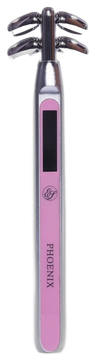

Dark Spots, Post-Acne Marks, and Hyperpigmentation After 40
What is actually happening in your skin, what fades a spot at home, and the one thing that quietly decides whether any of it works.
Most dark spots on mature skin are one of three things: post-acne marks and post-inflammatory hyperpigmentation (the flat brown or grey shadows left after a blemish or irritation), melasma (hormonal, patchy, stubborn), or sun spots (sharp-edged, from years of light). They are not the same problem, and the fix is not the same. At home, the tools with real evidence are niacinamide, which slows the handoff of pigment to skin cells, plus barrier and anti-inflammatory support, plus a delivery method good enough to get those actives past the skin's surface. Sunscreen every single day is the part nobody wants to hear and the part that makes or breaks all of it. What follows is who each approach is for, where an at-home microinfusion kit genuinely fits, and where it does not.
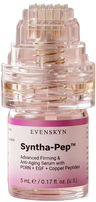
Niacinamide is the most reliable at-home pigment active. In lab co-culture it cut the transfer of melanin-filled melanosomes to skin cells by 35 to 68 percent, and in clinical use it visibly reduced facial hyperpigmentation within four weeks.1 It sits high in the EvenSkyn Syntha-Pep formula.
Post-inflammatory hyperpigmentation is an inflammation story before it is a pigment story. Calm the inflammation and support repair, and the excess melanin has less reason to keep forming. That is where Centella asiatica and PDRN earn their place.9,10
Delivery is the quiet decider. Skin needling has been shown to enhance how well a depigmenting serum penetrates, which is the entire premise of microinfusion versus a serum you simply wipe on.6
Melasma is the exception, and an important one. Needling can help when paired carefully with the right actives, but done wrong it can make melasma worse. This is a proceed-with-caution concern, not a press-harder one.7
For true sun spots, an at-home light-based device is the better-evidenced route. Intense pulsed light cleared 74 to 90 percent of solar lentigines across trials, with a lower rate of rebound pigment than more aggressive lasers.11,12
First, figure out which dark spot you actually have
This sounds basic. It is the step almost everyone skips, and it is why so many people spend a year on the wrong product. Pigment that looks similar on the surface can come from completely different machinery underneath, and the machinery is what determines whether a given treatment helps, does nothing, or backfires.
Post-inflammatory hyperpigmentation (PIH) and post-acne marks. These are the flat spots left behind after something inflamed the skin: a pimple, a scratch, a harsh peel, an ingrown hair, even an aggressive cosmetic treatment. The inflammation nudges melanocytes into overdrive, and they deposit extra melanin that lingers long after the original blemish is gone. PIH is usually tan to dark brown on lighter skin and can be deeper or greyish on richer skin tones. It fades on its own eventually, but "eventually" can mean many months, and every new breakout resets the clock. This is the category where at-home microinfusion has the most honest support, because the same actives that calm inflammation and speed repair also happen to slow pigment formation.
Melasma. Larger, symmetrical, blotchy patches, most often across the cheeks, forehead, and upper lip. It is driven by hormones and light together, which is why it flares in pregnancy, on certain birth control, and every summer. Melasma is not a surface stain you can buff away. It is a chronic, relapsing condition, and it is genuinely temperamental. Some procedural treatments help it; others provoke it. We spend a full section on this below because the wrong move here is worse than doing nothing.
Sun spots (solar lentigines). The sharply defined tan-to-brown spots that show up on the face, hands, chest, and shoulders after decades of accumulated light. These are clusters of pigment in skin that has simply seen too much sun. They respond best to light-based and energy-based treatments that target the pigment directly. Topicals can soften them slowly; the faster, more decisive route is a device built to break up pigment, which is a different EvenSkyn product than the one at the centre of this guide.
If you are not sure which you have, that uncertainty is itself useful information: it is the reason to start with the gentlest, best-tolerated approach rather than the most aggressive one, and it is a good reason to get a professional eye on melasma specifically before treating it.
What "fading a dark spot" actually means
There is no ingredient that reaches down and erases pigment like a stain remover. What effective treatments do is quieter and more mechanical, and it is worth understanding because it explains why patience and consistency beat intensity almost every time.
Melanin is made inside melanocytes, packaged into little parcels called melanosomes, and then handed off to the surrounding keratinocytes, the skin cells that make up most of your visible surface. A dark spot is really a neighbourhood of keratinocytes holding more of those parcels than usual. So there are a few honest levers: make less pigment, slow the handoff of pigment to skin cells, calm the inflammation that keeps signalling for more pigment, and turn skin over so pigment-laden cells move up and out. Most credible topical actives work on one or more of these, not on some magic dissolving step.
Niacinamide is the standout for the handoff lever. In a landmark set of experiments, niacinamide did not touch the pigment-making enzyme directly but interfered with the melanocyte-to-keratinocyte transfer, cutting it by 35 to 68 percent in co-culture, and reduced visible facial pigmentation in people after four weeks of use.1 A separate randomized trial found 4 percent niacinamide produced good-to-excellent improvement in 44 percent of melasma patients, close behind prescription hydroquinone at 55 percent, and it was better tolerated over the long haul.2 Niacinamide sits fourth on the Syntha-Pep ingredient list, ahead of most of the other actives, which is where you want a workhorse ingredient to be.
Centella asiatica, the botanical also called cica or tiger grass, works the calm-and-repair lever. A systematic review of clinical wound-healing studies found it supports repair through angiogenesis and collagen production while lowering inflammatory signals like IL-1 beta, IL-6, and TNF-alpha.9 Its key compound, madecassoside, has also been shown in co-culture to inhibit UV-driven melanin synthesis and melanosome transfer by quieting the same PAR-2 pathway niacinamide's effect is linked to.10 For post-inflammatory marks, where inflammation is the root cause, that dual action is exactly the right shape.
PDRN (polydeoxyribonucleotide) is the regenerative ingredient in the formula, and it is worth being precise about what it does. PDRN is a mixture of DNA fragments that promotes tissue repair through two routes: it feeds a cellular recycling process called the salvage pathway, and it activates the adenosine A2A receptor, which drives new blood vessel formation, collagen synthesis, and a calming of inflammation.3,4 A systematic review of 34 studies concluded it reliably supports physiological tissue repair.5 There is also early laboratory work suggesting PDRN may reduce pigment-making enzyme activity, but that is in-vitro and preliminary, and we are not going to lean on it as a pigment claim.3 PDRN's honest role here is recovery: helping skin heal cleanly after the micro-channels of a microinfusion pass, so the healing itself does not create fresh marks. One note of accuracy that gets muddled in a lot of marketing: PDRN is often salmon-derived, but supplier documentation reviewed in August 2026 records the PDRN in Syntha-Pep as biosynthetic and not derived from salmon. The mechanism is the same regardless of origin.
The delivery problem, and why the method matters
Here is the part that separates results from wishful thinking. All of the actives above have to get past the stratum corneum, the skin's outermost barrier, to do meaningful work in the layers where pigment lives. A serum wiped onto intact skin delivers a fraction of its actives below that barrier. That is not a flaw in the serum; it is physics.
Microinfusion addresses this directly. A grid of very fine, short needles creates temporary micro-channels through the outer barrier, and the serum is delivered into those channels rather than left to seep in on its own. The evidence for this is concrete: in a study of melasma, skin needling was used specifically to enhance the penetration of a depigmenting serum, and it improved the outcome versus the serum alone.6 A broader systematic review of microneedling for melasma found that most successful studies paired the needling with topical actives, reinforcing that the needling is a delivery amplifier, not a standalone eraser.7
This is the honest case for a device over a jar. It is not that the device contains some superior pigment ingredient. It is that the same well-evidenced ingredients do more when a meaningful amount of them actually reaches the tissue. For post-acne marks and PIH in particular, where you are trying to both calm and re-even a patch of skin, getting niacinamide and cica below the surface is a real advantage.
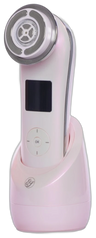
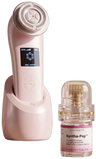
EvenSkyn MicroInfuser PDRN Kit, for pigment
Scored strictly as a tool for post-acne marks and post-inflammatory hyperpigmentation. It is a strong fit for that job and a poor fit for two others. Read the bars before you buy.
Best for
- Flat brown or grey marks left after breakouts
- Post-inflammatory pigment from irritation or past treatments
- Uneven tone and texture on skin that tolerates actives well
- People who want salon-grade delivery without repeat clinic fees
Not the best fit for
- Active, inflamed acne (treat the acne first)
- Melasma without professional guidance
- Deep, sharp sun spots that want a light-based device
- Anyone unwilling to wear daily sunscreen
- A known allergy to a listed ingredient: we hold no allergen testing on the finished formula
How to choose a dark-spot approach that fits
Name the pigment first
PIH, melasma, and sun spots want different tools. Matching the treatment to the type is the single highest-value decision you will make, and it costs nothing.
Match the active to the mechanism
For the pigment handoff, niacinamide. For the inflammation behind PIH, cica and PDRN. For sun pigment, a device that targets melanin directly. Do not ask one ingredient to do every job.
Respect the inflammation paradox
The same controlled injury that helps skin remodel can, if overdone, trigger the exact pigment response you are trying to fade. Gentler and consistent beats harsh and occasional, especially on richer skin tones.
Weight delivery, not just the label
An active that cannot get past the barrier is a label, not a result. This is the honest reason a delivery method earns its keep over a wipe-on serum.
Treat sunscreen as step zero
Every pigment process is fed by light. Without daily broad-spectrum SPF, you are refilling the bucket as fast as you empty it. This is not optional, and no device changes it.
Judge on weeks, not days
Pigment lives in cells that turn over slowly. Set a realistic clock of six to twelve weeks and take standardized photos, not mirror checks, to see real change.
The honest comparison: at-home options for dark spots
| Approach | Best for | Delivery | Honest limitation |
|---|---|---|---|
| Topical niacinamide / vitamin C serum | Mild PIH, maintenance, prevention | Surface only | Slow; much of the active never reaches the pigment layer |
| At-home microinfusion (EvenSkyn MicroInfuser) | Post-acne marks, PIH, tone & texture | Micro-channels below the barrier ✓ | Not for melasma unguided; slower than a device on true sun spots |
| At-home IPL (EvenSkyn Pulsar) | Sun spots, solar lentigines | Light targets pigment directly | Not for melasma; wrong tool for flat post-acne marks |
| At-home microneedling roller/pen alone | Texture, general remodeling | Channels, but no matched serum | Without the right actives, less pigment-specific benefit |
| In-office laser / peel / professional microneedling | Stubborn or deep pigment | Clinical depth and energy | Higher cost per session; PIH risk if aggressive on richer tones |
Brand names belong to their respective owners and appear here for comparison only. Device capabilities, indications, and prices change; verify against the current product listing before purchase. This table describes categories of approach, not a head-to-head clinical trial.
Follow the chain. Post-inflammatory hyperpigmentation is inflammation first and pigment second. The most reliable at-home pigment active, niacinamide, works by slowing the handoff of melanin to skin cells, and it works better when it actually reaches those cells. Microinfusion creates the channels that let it. Alongside it, cica and PDRN address the inflammation and the repair, so the healing after each pass does not seed fresh marks. Put those together and you have a coherent, evidence-linked case for using this specific kit on this specific concern. Notice what the chain does not claim: it does not say this erases melasma, it does not say it out-performs a light device on sun spots, and it does not promise speed. An honest fit is a narrow fit. This one is narrow and real.
Melasma: read this before you needle anything
Melasma deserves its own warning because it behaves unlike other pigment. It is chronic, hormonally driven, and prone to relapse, and it reacts badly to excess inflammation. The evidence on microneedling for melasma is genuinely mixed: a systematic review found most benefit came only when needling was combined with specific topical agents and kept conservative, and it noted a relatively low but real risk of post-treatment dyspigmentation.7 The mechanism that can help melasma, controlled micro-injury plus targeted actives, is the same mechanism that can flare it if the depth or frequency is wrong.
The honest guidance: if you know or suspect you have melasma, this is not a solo project. See a dermatologist, treat it conservatively, and never chase it by needling harder or more often. For melasma specifically, a professional plan will out-perform anything self-directed, and the downside of getting it wrong is a longer, more stubborn problem than you started with.
Sun spots are a different tool: the IPL note
We would rather point you to the right device than sell you the wrong one. For true solar lentigines, the sharp sun spots on faces, hands, and chests, a light-based approach has the stronger evidence. A 2025 systematic review of solar lentigine treatments put intense pulsed light at 74 to 90 percent clearance, among the best of the non-invasive options, and noted that IPL carried a lower rate of post-inflammatory hyperpigmentation than more aggressive lasers.11 An earlier clinical study of IPL on sun spots on the hands reported more than 50 percent improvement in 62 percent of patients and more than 75 percent improvement in 23 percent, with no post-inflammatory pigment or scarring recorded.12
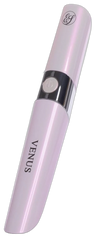
EvenSkyn's light-based device for this job is the Pulsar. If your primary concern is defined sun spots rather than post-acne marks, that is the more logical starting point, and a microinfusion kit becomes a supporting player for tone and texture rather than the lead. We would rather you buy the tool that matches your spot.
The cost picture, plainly
Pigment is rarely a one-session fix in any setting, so cost is really a cost-per-outcome question. The value case for an at-home kit is not that a single treatment is cheaper than a single clinic visit; it is that a reusable device plus a course of serum lets you run the consistent, repeated protocol that pigment actually requires, without paying per visit each time.
| Route | Typical commonly-reported cost | Cadence pigment usually needs |
|---|---|---|
| EvenSkyn MicroInfuser PDRN Kit | $69.99 kit (reusable device + serum course) | Repeatable at home on a set schedule |
| In-office microneedling session | Commonly reported in the low-to-mid hundreds per session | Often a series of several sessions |
| In-office IPL / laser for pigment | Commonly reported in the mid hundreds per session | Multiple sessions plus maintenance |
Figures are commonly-reported ranges for context only and vary widely by region, provider, and treatment area. Verify current pricing directly; treat these as ballpark, not quotes.
EvenSkyn MicroInfuser PDRN Kit
For post-acne marks and post-inflammatory hyperpigmentation on skin that tolerates actives, this is the honest at-home pick: a well-chosen active payload delivered where it can work, with recovery support built in. Here is the balanced view.
What it does well
- Delivers niacinamide and cica below the barrier, not just onto it
- Pairs pigment actives with PDRN and peptides for cleaner healing
- Runs the repeated, consistent protocol pigment genuinely needs
- One reusable device instead of per-session clinic fees
What it will not do
- Will not erase melasma, and should not be self-directed on it
- Will not clear deep sun spots the way a light device can
- Will not work in days: think weeks to months
- Will not hold results without daily sunscreen
- Will not stand in for reading the ingredient list: we hold no allergen testing on the finished formula
How to use it for post-acne marks, step by step
Start on calm, clear skin
Treat marks, not active breakouts. Skin should be clean, dry, and free of open or inflamed lesions before a microinfusion pass. If acne is still active, address that first.
Patch test, then go low and slow
Test a small area first. With any micro-channel delivery, gentler and consistent beats aggressive and occasional, particularly on richer skin tones where the pigment response is more reactive.
Apply the serum as directed and let skin recover
Follow the kit's instructions for serum use and spacing between sessions. The recovery window is when the PDRN and cica do their calming, repairing work, so do not layer strong acids or retinoids immediately after.
Protect relentlessly the next day
Fresh skin is light-sensitive, and light drives pigment. Daily broad-spectrum SPF is not a suggestion here; it is the step that protects everything you just did.
Photograph and give it weeks
Take standardized photos in the same light. Reassess on a six-to-twelve-week horizon. Pigment fades on a cellular clock, not a daily one.
Who should not use this, and when to stop
Skip or seek advice first if you have a known allergy to any listed serum ingredient (we hold no allergen testing on the finished formula), active or infected acne, eczema or a compromised barrier in the area, a history of keloid scarring, or if you are pregnant or breastfeeding. Do not use over moles, raised lesions, or anything changing in size or colour; have those assessed by a professional. If you have melasma, treat it only under guidance. Stop and consult a clinician if you see prolonged redness, worsening pigment, or any sign of irritation or infection.
Frequently asked questions
Does PDRN fade dark spots?
Is microinfusion good for hyperpigmentation?
Can it help my melasma?
What is the difference between post-acne marks and acne scars?
How long until I see a difference?
Do I really need sunscreen if I am treating spots indoors?
Why niacinamide and not hydroquinone?
Can I use retinol or vitamin C with it?
Is it safe for darker skin tones?
Does the serum contain anything allergenic?
Will it help sun spots on my hands and chest?
Is this the same as a clinic microinfusion facial like AquaGold?
References
- Hakozaki T, Minwalla L, Zhuang J, et al. The effect of niacinamide on reducing cutaneous pigmentation and suppression of melanosome transfer. Br J Dermatol. 2002;147(1):20-31. doi:10.1046/j.1365-2133.2002.04834.x
- Navarrete-Solís J, Castanedo-Cázares JP, Torres-Álvarez B, et al. A double-blind, randomized clinical trial of niacinamide 4% versus hydroquinone 4% in the treatment of melasma. Dermatol Res Pract. 2011. PMCID: PMC3142702
- Squadrito F, Bitto A, Irrera N, et al. Pharmacological activity and clinical use of PDRN. Front Pharmacol. 2017;8:224. doi:10.3389/fphar.2017.00224
- Polydeoxyribonucleotide regulation of inflammation. Adv Wound Care. PMCID: PMC7585621
- The effects of polydeoxyribonucleotide on wound healing and tissue regeneration: a systematic review of the literature. Regen Med. 2020. PMID: 32757710
- Fabbrocini G, De Vita V, Fardella N, et al. Skin needling to enhance depigmenting serum penetration in the treatment of melasma. Plast Surg Int. 2011;2011:158241. doi:10.1155/2011/158241
- A systematic review of the efficacy and safety of microneedling in the treatment of melasma. Dermatol Surg. PMID: 32897944
- Al Qarqaz F, Al-Yousef A. Skin microneedling for acne scars associated with pigmentation in patients with dark skin. J Cosmet Dermatol. 2018;17(3):390-395. doi:10.1111/jocd.12520
- A systematic review of the effect of Centella asiatica on wound healing. PMCID: PMC8956065
- Actions and therapeutic potential of madecassoside and other major constituents of Centella asiatica: a review. Appl Sci. 2021;11(18):8475. doi:10.3390/app11188475
- Mardani G, Nasiri MJ, Namazi N, et al. Treatment of solar lentigines: a systematic review of clinical trials. J Cosmet Dermatol. 2025. doi:10.1111/jocd.70133
- Clinical effectiveness of intense pulsed light therapy for solar lentigines of the hands. J Dermatolog Treat / Dermatol Surg. PMID: 22515674


Leave a comment
All comments are moderated before being published.
This site is protected by hCaptcha and the hCaptcha Privacy Policy and Terms of Service apply.