
Medically Reviewed by Dr. Lisa Hartford, MD
Last updated: April 2026. Medically reviewed by Dr. Lisa Hartford, MD, Board-Certified Dermatologist and Chief Dermatology Advisor at EvenSkyn.
The short version
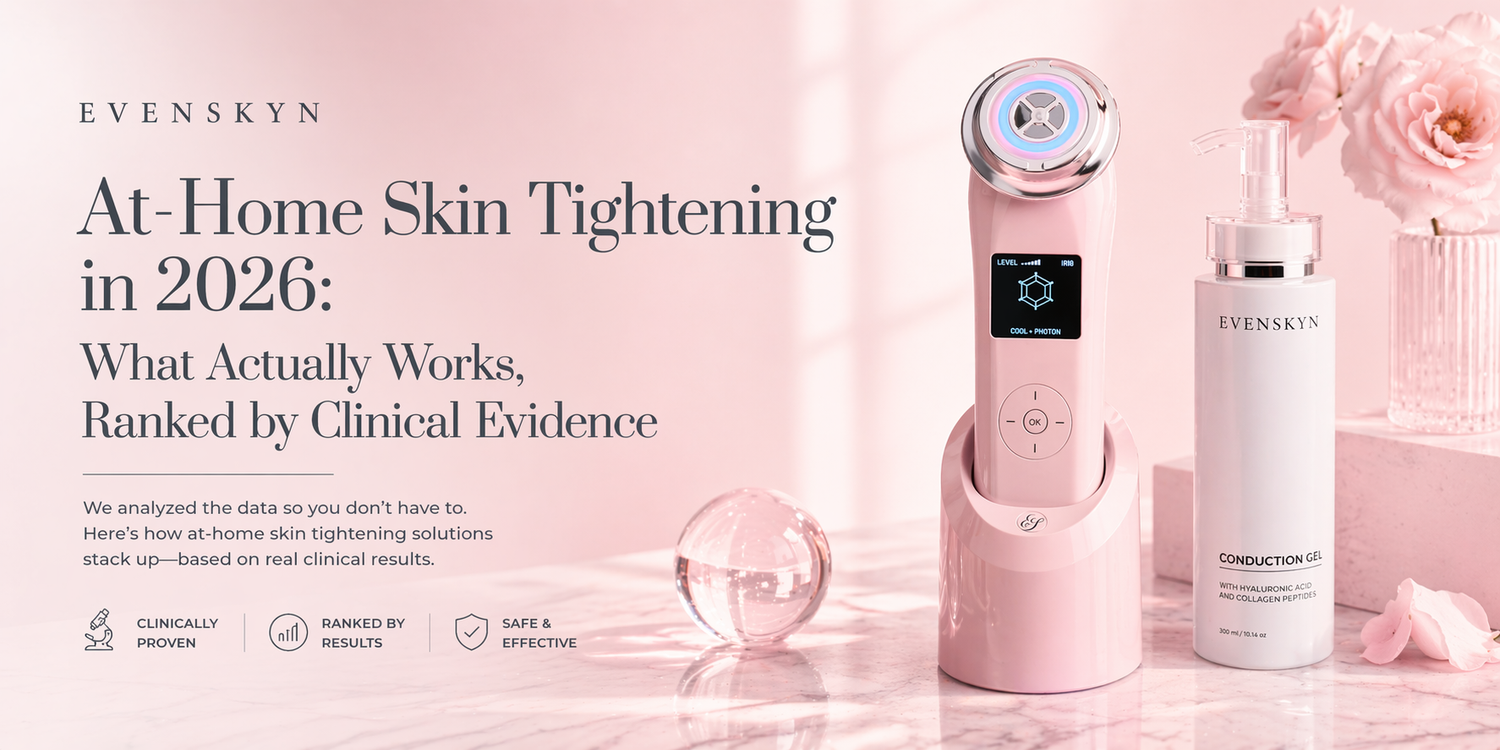
If you are researching at-home skin tightening in 2026, the clinical literature points to a few specific conclusions that most consumer content glosses over. Multi-modal devices, meaning those that combine radiofrequency with microcurrent, EMS, and LED in one handset, consistently outperform single-technology devices in head-to-head trials. Results emerge over a 12-week protocol rather than in a single session, with peak collagen remodeling at around week 12 and continued improvement thereafter. The jawline and neck respond more visibly than any other zone, which matches what most people are actually trying to fix. The cost difference between a sustained at-home protocol and periodic clinical treatment is roughly an order of magnitude, with cumulative treatment hours favoring the at-home approach.
This guide walks through the evidence behind each of those statements, compares the major consumer devices against each other on published specifications rather than marketing language, and ends with a 12-week protocol drawn from what the research actually supports.
Why most skin tightening content online is misleading
Search volume for "at-home skin tightening" and related queries has grown substantially over the past three years. The content ranking against those queries has not kept up. Most of what ranks in the top ten is affiliate-driven listicle content, manufacturer marketing lightly disguised as editorial, or generic "RF vs microcurrent" explainers that list fifteen devices without explaining why any of them work. A consumer spending $400 to $900 on a beauty device deserves better than a listicle.
This guide is written to a different standard. Every claim is tied to peer-reviewed clinical research from journals including Dermatology and Therapy, the Journal of Cosmetic Dermatology, Lasers in Surgery and Medicine, Clinical, Cosmetic and Investigational Dermatology, Aesthetic Surgery Journal, and Dermatologic Surgery. Device specifications come from manufacturer documentation and regulatory filings. Competitive comparisons use published numbers, not marketing adjectives.
The biology you actually need to understand
Three things cause the visible sagging most people see when they look in the mirror in their forties or fifties. Understanding which ones an at-home device can address, and which ones it cannot, is the single most useful framing for buying decisions.
Dermal collagen and elastin depletion. This is the core structural cause of laxity. Skin firmness comes from a matrix of type I and type III collagen and elastin produced by fibroblasts in the dermis. Collagen synthesis peaks in the late twenties and declines at roughly 1% per year through chronological aging. The decline accelerates at specific life stages. A 2025 narrative review in the Journal of Cosmetic Dermatology (Viscomi et al., PMC 12374573) documented that women lose approximately 30% of total skin collagen within the first five years after menopause, then another 2.1% per year over the following fifteen years. For men the decline is more gradual but cumulative, typically visible by the late forties.
Facial muscle tone changes. The zygomaticus, masseter, and platysma all undergo subtle tonal weakening with age. On its own this is minor. Layered underneath a thinning dermis, it becomes visible as softening along the jawline and cheekbones.
Fat pad descent and bone resorption. Superficial fat pads atrophy while deeper fat pads migrate downward. The underlying bone structure undergoes slight resorption around the orbital rim, maxilla, and mandible. The structural scaffold supporting the overlying skin changes shape.
At-home energy-based devices meaningfully address the first two causes. They do not address the third. If your primary concern is lost cheek volume or hollowing around the tear troughs, no amount of RF or microcurrent replaces what filler does for that specific problem. If your concern is loss of firmness, softened jawline, early jowling, crepey neck skin, or fine-to-moderate lines, the device category has real answers. Setting that expectation correctly at the start is the difference between being satisfied with results at twelve weeks and feeling let down.
How each technology actually works, with real data
Four technologies have genuine clinical evidence for skin tightening. Understanding what each one does biologically determines which one is right for your specific concerns.
Radiofrequency (RF): the structural rebuilder
RF delivers controlled electromagnetic energy into the dermis and heats tissue to between 40 and 42°C. Two things happen. Existing collagen fibres contract in response to heat, producing an immediate but mild tightening effect. The thermal stimulus triggers fibroblast proliferation, producing new collagen and elastin over the following weeks to months.
This is the most directly relevant mechanism for skin tightening because it rebuilds the structural protein that actually makes skin firm. A 2025 systematic review in Clinical, Cosmetic and Investigational Dermatology pooled 15 clinical studies covering 1,230 participants and reported that RF treatments improved skin firmness in 52.9% to 100% of patients and skin texture in 71% to 100%. The range reflects differences between protocols, devices, and outcome measures. A 2025 randomized controlled trial in Lasers in Surgery and Medicine concluded that a novel monopolar RF device was "not inferior" to standard clinical RF therapy for skin tightening.
For at-home devices specifically, the most relevant study is a 2022 split-face randomized trial published in Dermatology and Therapy (Shu et al., PubMed 35249173). Thirty-three women aged 35 to 60 used a home RF device with red light on one side of the face and an anti-aging cosmetic on the other for 12 weeks. Statistically significant improvements were documented on the RF-treated side across wrinkle depth (measured by Ra, Rq, Rz, and Rmax surface roughness parameters), skin elasticity, hydration, radiance, and thickness. The cosmetic-only side showed no comparable changes.
RF works across all Fitzpatrick skin types because the energy does not interact with melanin differently. This matters because laser-based treatments can produce post-inflammatory hyperpigmentation on darker skin. RF does not have that risk profile.
Microcurrent and EMS: the muscular layer
Microcurrent uses electrical current in the microampere (μA) range, below the threshold that causes visible muscle contractions. It mimics the body's endogenous bioelectrical signals and operates at a cellular level, influencing ATP production, protein synthesis, lymphatic drainage, and muscular tone. EMS operates at higher intensities in the milliamp range and does produce visible muscle contraction.
A 2024 narrative review on microcurrent therapy (PMC 12357078) documented mechanisms including cellular repair promotion, inflammation modulation, increased ATP production, and blood flow improvement, all without discomfort or muscle fatigue. A 2024 systematic analysis of 18 home facial rejuvenation device studies (PMC 10929553) concluded that microcurrent at low-to-medium frequencies stimulates subcutaneous tissues and muscles, producing effects on contour, firmness, and wrinkle depth.
Here is the part most microcurrent content glosses over. Microcurrent is primarily a muscle toner with secondary dermal benefits. It is not primarily a collagen builder in the way that RF is. If you use a microcurrent-only device like the NuFACE Trinity+ and expect the same structural change RF produces, you will be disappointed. The device is doing what it was designed to do. Your expectation was the category mismatch.
Focused ultrasound (HIFU): the deep clinical approach
HIFU delivers acoustic energy to specific depths in the skin, typically 1.5mm (mid-dermis), 3.0mm, and 4.5mm (the SMAS layer that surgeons address in facelift procedures). The focused nature of the energy lets it bypass the surface and deposit thermal injury precisely at target depth, triggering collagen remodeling without damaging the epidermis above.
A 2025 systematic review in Aesthetic Surgery Journal (Haykal et al., PubMed 40184185) covered 45 clinical trials and cohort studies on HIFU. It documented 18% to 30% improvement in skin laxity in the lower face, neck, and periorbital regions. A 2025 prospective comparative trial in the Journal of Cosmetic Dermatology (Zhao et al., PMC 12365734) directly compared RF and focused ultrasound in 36 patients. At one-month follow-up, HIFU showed superior efficacy in the mid-face (p = 0.004) and lower face (p = 0.046). RF performed comparably in other areas. Both produced significant improvement.
The honest caveat for at-home users: consumer-grade ultrasound devices operate at a small fraction of clinical HIFU energy levels. This is a safety feature, not a flaw, but it means at-home ultrasound devices cannot replicate Ultherapy or Sofwave outcomes. At-home ultrasound works as a supportive modality and can enhance serum penetration. It is not a substitute for clinical HIFU.
LED photobiomodulation: the supportive modality
Red light in the 630 to 660nm range and near-infrared in the 810 to 850nm range penetrate to the dermis and are absorbed by mitochondria, specifically by cytochrome c oxidase. This boosts ATP production and triggers a cascade of cellular responses including increased fibroblast activity and reduced matrix metalloproteinase activity (the enzymes that break down existing collagen).
The 2014 controlled trial by Wunsch & Matuschka published in Photomedicine and Laser Surgery (PMC 3926176) documented that red light at 611 to 650nm increased intradermal collagen density measurably compared to controls. LED works slower and less intensely than RF for structural tightening, but it is the gentlest of the four technologies and the safest for sensitive zones including around the eyes with eye-safe devices. Its best role in a skin tightening protocol is as a supportive modality alongside RF or microcurrent work rather than as a primary tightening tool.
The multi-modal finding that should change how you shop
If you read the clinical literature on at-home skin rejuvenation as a body of work rather than as isolated studies, one finding comes through repeatedly. Multi-modal approaches outperform single-technology approaches. This is true in clinical settings and in at-home use.
A 2024 presentation at the American Society for Laser Medicine and Surgery by Park et al. compared HIFU alone versus HIFU combined with monopolar RF for skin tightening. The combination group showed greater wrinkle reduction than HIFU alone (p < 0.01) and significantly higher patient satisfaction (7.62 vs 6.70 on a 10-point scale, p = 0.034). A 2023 Journal of Cosmetic Dermatology split-face trial (Park et al., PMC 10496459) compared HIFU alone versus HIFU with bipolar RF in 22 Korean adults. The combination group showed enhanced efficacy for pore reduction, eye wrinkle depth, skin elasticity, and moisturization. A 2024 Malaysia retrospective study (PMC 10917599) of 54 patients treated with HIFU plus monopolar RF showed 96.4% clinical improvement on the Global Aesthetic Improvement Scale.
The 2024 systematic analysis of 18 home facial rejuvenation studies concluded directly that multi-modal home devices combining RF with microcurrent, LED, or both produce superior results compared to single-modality devices.
The biological reason is straightforward. Each technology addresses a different layer and mechanism. RF rebuilds dermal collagen. Microcurrent tones the muscular layer beneath. LED supports cellular metabolism across all layers. Stacking them addresses the full anatomical picture. Using one addresses only one layer.
The practical implication for buying decisions: if you are choosing one device and your budget is $400 to $900, choose one that integrates multiple modalities rather than a single-technology tool at a similar price. A dedicated microcurrent device does microcurrent well but only microcurrent. A multi-modal device does RF, microcurrent, and LED, with the clinical evidence suggesting the combination outperforms any individual technology.
The major at-home devices, with real specifications
Most device comparison articles stay vague about numbers. The ones that matter for ranking and comparing devices are frequency, output, penetration depth, and technology integration. Prices reflect US MSRP as of April 2026 and vary by retailer and promotion.
| Device | Technologies integrated | RF frequency | Microcurrent / EMS output | MSRP (USD) | FDA-cleared |
|---|---|---|---|---|---|
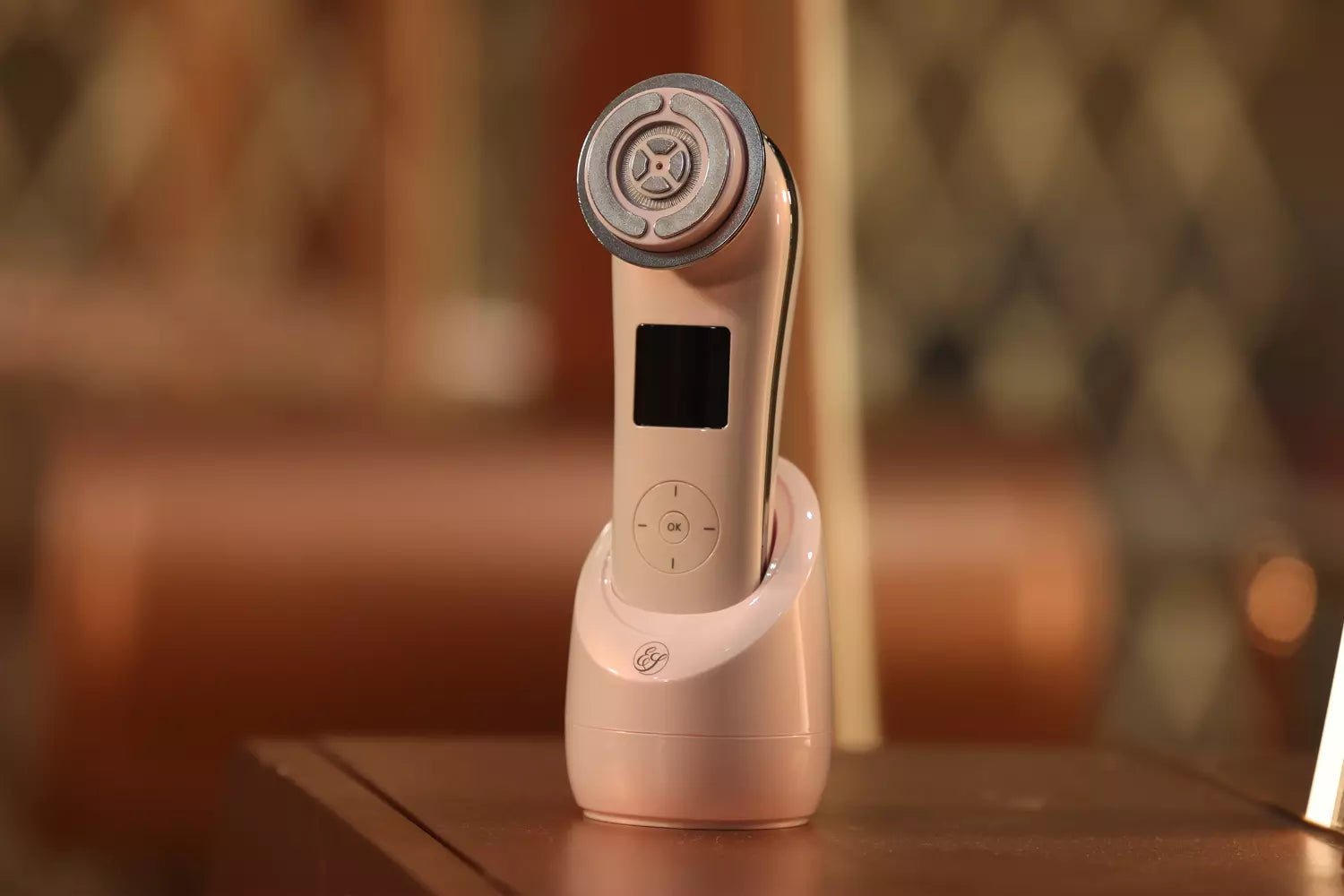
| EvenSkyn Lumo+ | RF + EMS + Red LED + Blue LED + Ionisation | 1 MHz bipolar, up to 140°F / 60°C dermal | EMS at ~3 mA / 100 Hz | $499 | Yes |
| TriPollar STOP Vx / Vx Gold 2 | Multi-RF + DMA | 1 to 1.25 MHz (Multi-RF) | DMA (dynamic muscle activation) | $549 to $899 | Yes |
| NEWA by Endymed | Multipolar RF only | 0.45 MHz | None | $499 | Yes |
| CurrentBody RF Skin Tightening | RF only | ~1 MHz | None | $485 | Yes |
| NuFACE Trinity+ | Microcurrent only (LED/eye attachments sold separately) | None | 335 μA max, +25% boost | $395 to $595 | Yes |
| NuFACE Trinity Pro / Pro+ | Microcurrent only | None | 400 to 500 μA | $429 to $595 | Yes |
| FOREO BEAR Mini | Microcurrent only | None | ~200 μA | $249 | Yes |
| Silk'n Titan | RF + infrared + LED | ~1 MHz | None | $369 | Yes |
| MLAY RF Beauty Machine | RF only | Varies by model | None | $169 to $249 | Yes |
| CurrentBody Skin LED Mask | Red + near-infrared LED only | N/A | N/A | $469 | Yes |
| Omnilux Contour Face Mask | Red + near-infrared LED only | N/A | N/A | $395 | Yes |
| EvenSkyn Mirage | Red + blue + near-infrared LED mask | N/A | N/A | See product page | Yes |
| EvenSkyn Venus | RF + microcurrent + LED + ionisation for eye area | Calibrated for periorbital anatomy | Eye-specific calibration | See product page | Yes |
| EvenSkyn Phoenix | Microcurrent bar for contouring | None | Dedicated contouring output | See product page | Yes |
Reading the table reveals the pattern. RF-focused premium devices cluster in the $485 to $899 range. The Lumo+ sits near the bottom of that range while integrating more modalities in a single handset than any competitor in that band. NuFACE does microcurrent only and does it well, but if the jawline and structural collagen work is the primary concern, microcurrent-only is solving one dimension of a multi-dimensional problem. TriPollar's STOP Vx Gold 2 is the closest direct competitor to the Lumo+ on integrated technology, but retails at roughly 1.8x the price and does not include LED.
NEWA deserves a specific note. It has the most extensive peer-reviewed research of the consumer RF category, often cited as 40+ studies. The RF science is strong. The limitation is that it is RF-only, so it addresses one dimension of skin aging without the muscular tone dimension microcurrent brings or the cellular metabolic dimension LED adds. It is an excellent device within its category. The category itself is narrower than multi-modal.
The jawline problem, which is what most buyers actually care about
Analyzing search query data for at-home skin tightening, the underlying concern is almost always the jawline. The transition from a firm, defined jaw to a softer contour is the single most visible marker of facial aging, and related concerns (early jowling, softening along the mandibular line, loss of neck firmness) share the same anatomy. Three things converge at the jawline.
The first is dermal collagen loss in the skin overlying the mandible. This is RF territory. A device that reaches the 3mm penetration depth where dermal collagen lives, and sustains the thermal stimulus necessary to trigger fibroblast activity, is what addresses this structural cause. The Lumo+ reaches 3mm at 1 MHz bipolar, which aligns with the depth parameters used in most at-home RF clinical trials.
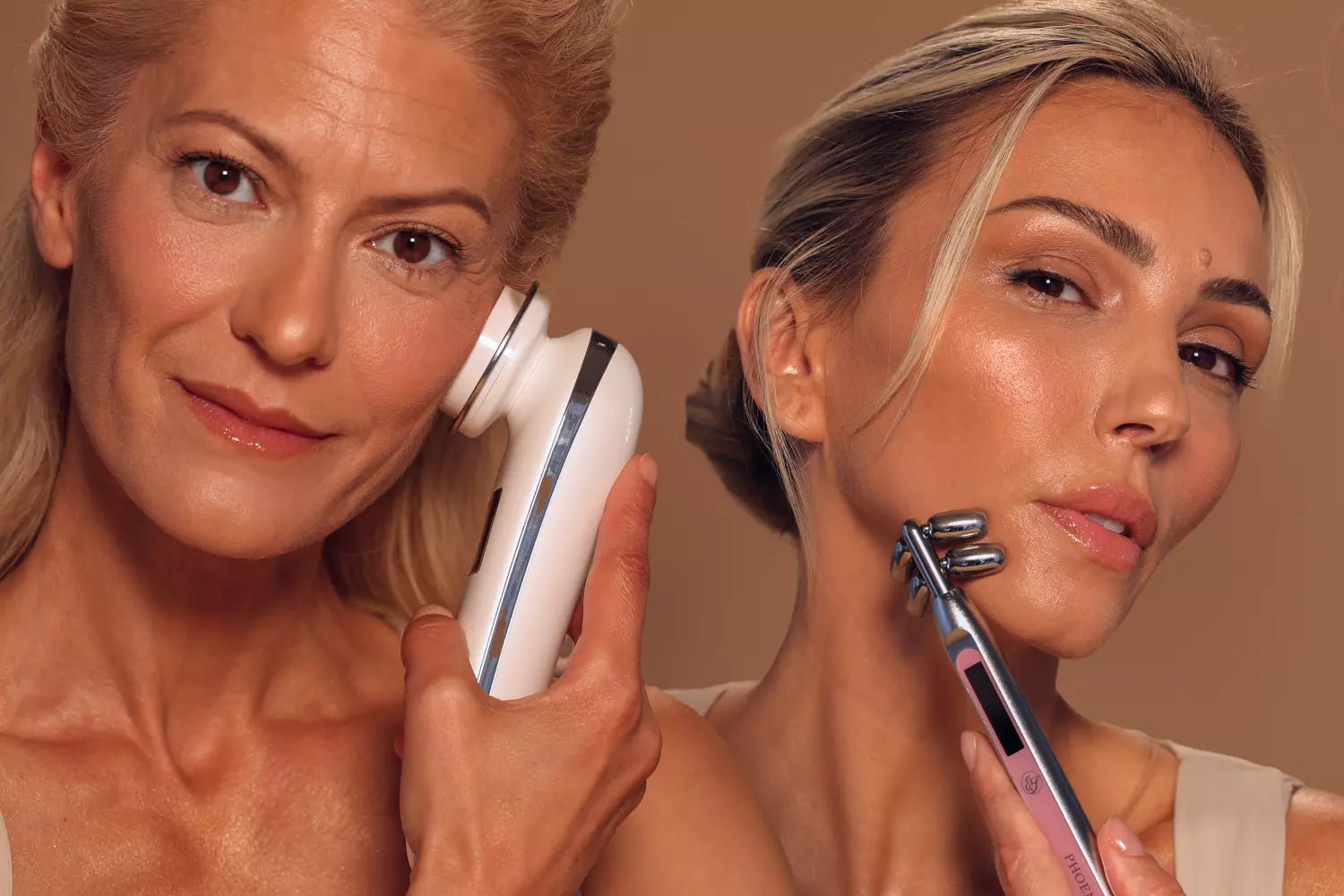
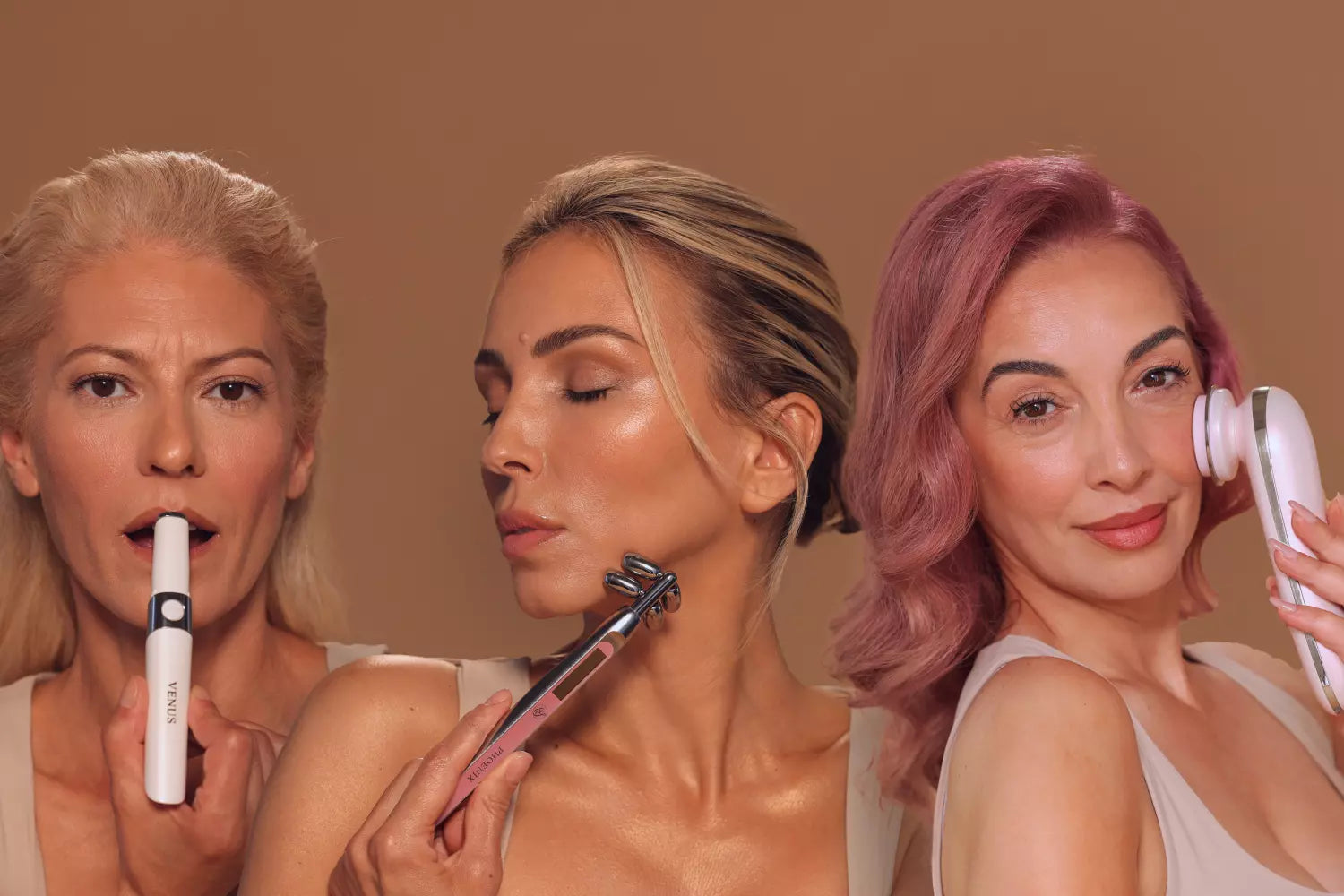
The second is tonal change in the masseter and platysma. This is microcurrent and EMS territory. A device that delivers adequate current through the skin into the underlying musculature, evenly and consistently, produces the muscular support that complements dermal rebuilding. The Lumo+ handles this through its EMS mode. For users who want dedicated microcurrent work in addition, the EvenSkyn Phoenix microcurrent bar is designed specifically for facial contouring and jawline toning, and pairs naturally with Lumo+ in a two-device protocol.
The third is fat pad descent and mild bone resorption along the mandibular line. This dimension is outside what any at-home device can address. A user with significant jowling in their fifties whose concern is primarily volumetric loss will see modest improvement with at-home devices and more dramatic improvement with clinical treatment, filler, or surgical intervention. Setting realistic expectations about this third dimension matters more than which device is chosen.
For a user whose jawline concern is primarily laxity and early jowling, a multi-modal home device used consistently over twelve weeks produces the changes most users are looking for. The before-and-after comparisons most users hope to replicate come from this category of protocol, not from microcurrent alone or LED alone.
The neck, which most people neglect
The neck is typically the most visibly aged part of the body by the time someone reaches their late forties or fifties. The skin is thinner than facial skin, has fewer sebaceous glands, is subject to constant movement, and receives substantially less skincare attention than the face above it. Many users in their fifties have a well-maintained face above a neck that betrays their age immediately.
RF works well on the neck specifically because the mechanism directly addresses what is happening. Dermal collagen stimulation is exactly what a thinning, crepey neck needs. The Lumo+ treatment head is sized appropriately for neck application. The protocol is the same as the face: sweep upward from the collarbone along the jawline, apply conduction gel generously, treat 2 to 3 times per week for 12 weeks, then drop to maintenance.
Users who include the neck in their protocol report visible firmness improvement on the same timeline as face improvement. Users who treat only the face often find the age discrepancy between face and neck becomes more apparent as the face improves, which is not usually the outcome anyone wants.
What Dr. Hartford wants you to know before you buy anything
"The most common mistake I see with at-home device purchases is expecting a single technology to do everything. Microcurrent alone will tone facial muscles beautifully. It will not rebuild dermal collagen in a structurally meaningful way. RF alone will rebuild collagen. It will not tone muscles. Consumers who understand this before they buy are satisfied with their results. Consumers who buy a single-modality device and expect full-spectrum anti-aging outcomes are usually disappointed, and that disappointment is not the device's fault. Matching the technology to the problem is the first decision, and it is more important than the brand."
— Dr. Lisa Hartford, MD, Board-Certified Dermatologist (Johns Hopkins; Mayo Clinic), Chief Dermatology Advisor at EvenSkyn
Dr. Hartford's point is worth internalizing before any purchase decision. The research is clear that multi-modal devices outperform single-modality devices in most clinical settings and in most at-home protocols. If you are buying one device as your primary anti-aging tool, the clinical case for a multi-modal handset is substantially stronger than the case for a microcurrent-only or RF-only tool in the same price range.
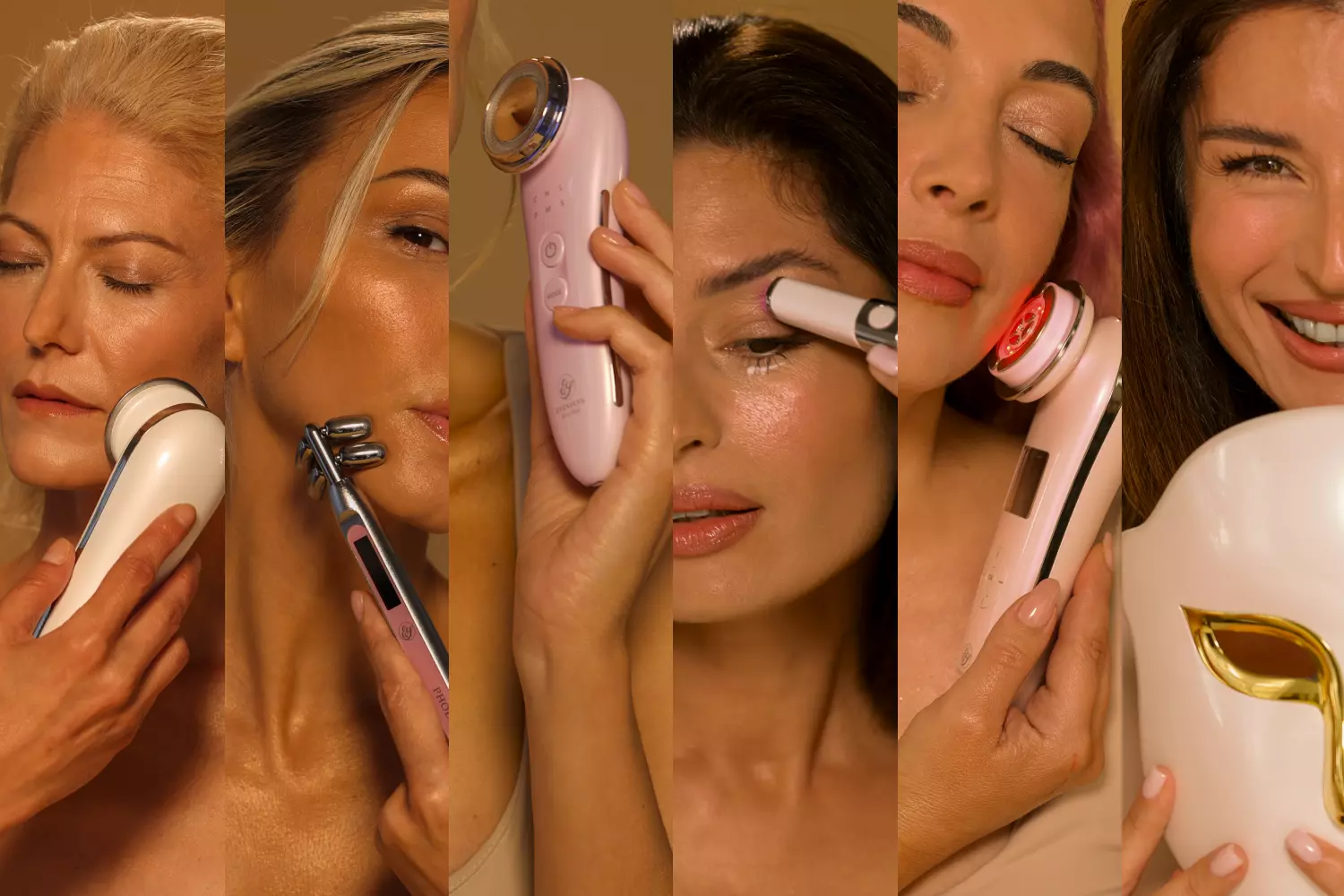
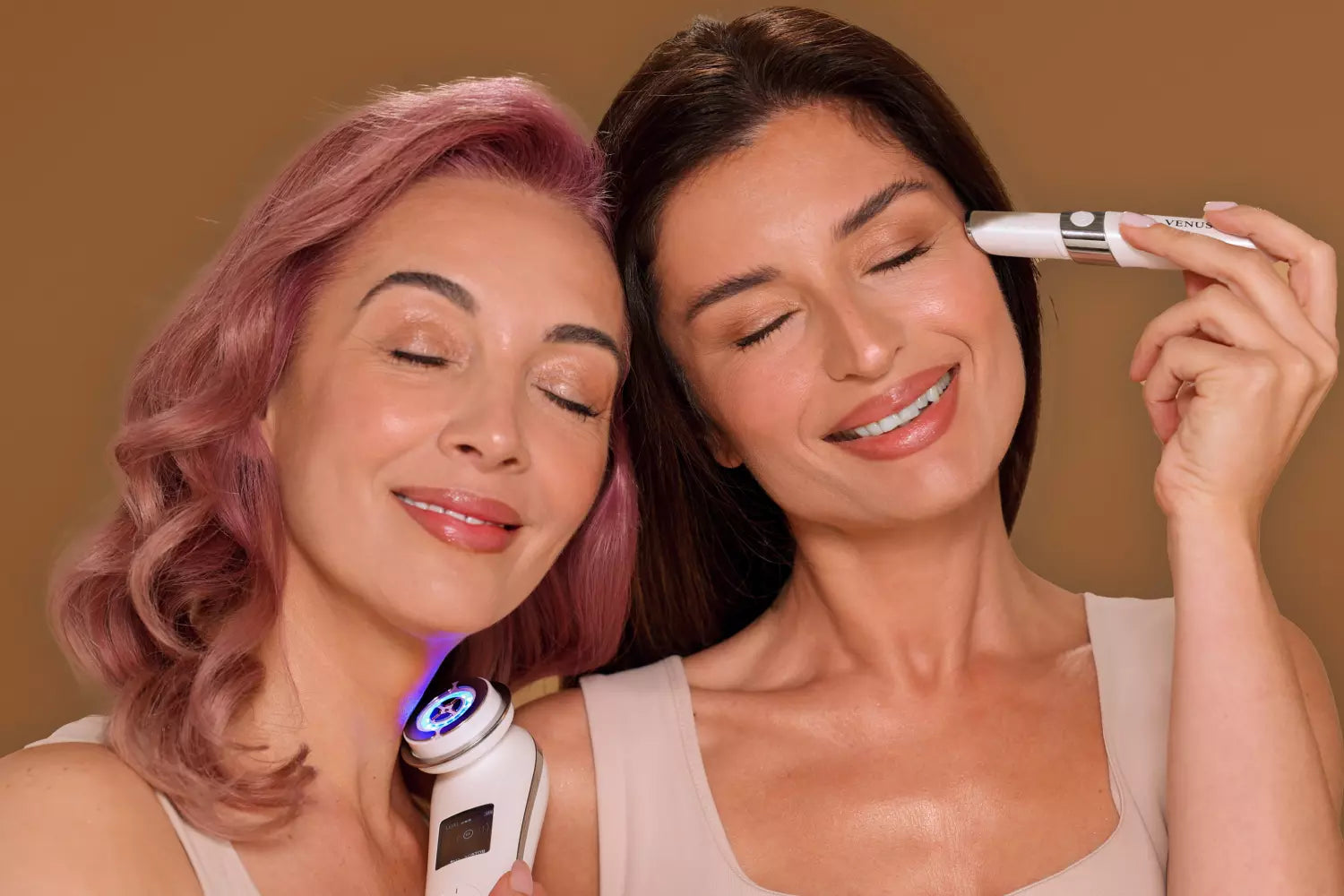
For users with specific narrower goals (microcurrent for muscle toning only, LED for inflammation and radiance, eye-area work) a targeted single-modality device can make sense as part of a stack. The Lumo+ as a primary tool plus the Venus for eye-area work plus the Mirage LED mask for supportive sessions is an example of a layered stack that addresses different zones with appropriately calibrated tools.
The 12-week protocol that the clinical evidence actually supports
Every clinical study on at-home skin tightening that reports statistically significant results runs for at least 8 weeks. Most run 12. There is a biological reason. Collagen synthesis operates on a cellular cycle that cannot be compressed by treating more frequently.
Phase 1, weeks 1 through 12: active rebuilding
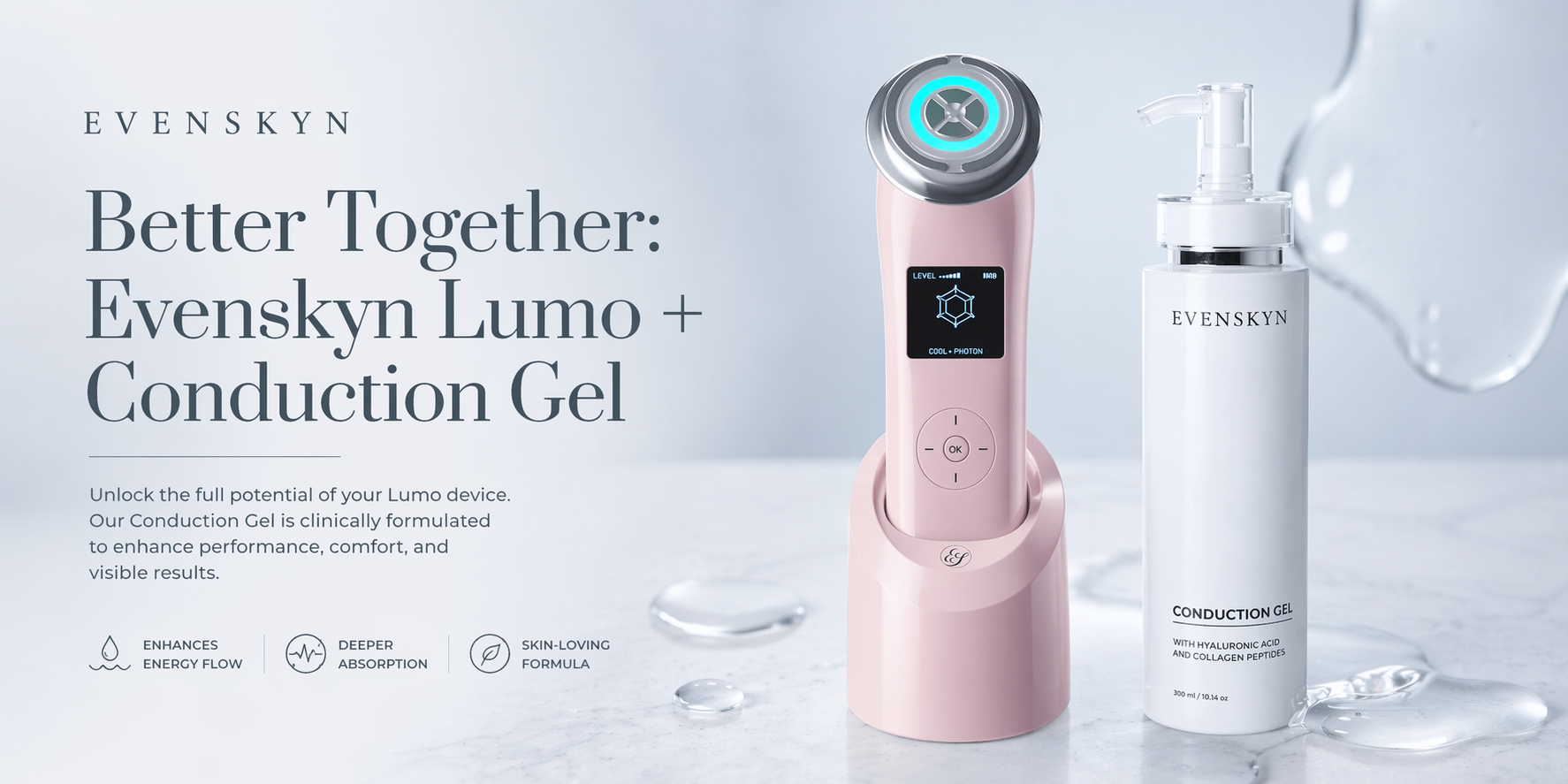
RF sessions. 3 times per week, 15 to 20 minutes per session, covering full face and neck. Apply EvenSkyn Conduction Gel generously on clean skin before each session. Sessions should feel warm but comfortable. If it feels uncomfortably hot, reduce the intensity setting rather than rushing through.
EMS or microcurrent sessions. 2 to 3 times per week. These can be stacked with RF sessions on the same day if you are using a multi-modal device like the Lumo+ that handles both in sequence. If you are using a dedicated microcurrent device like the Phoenix on alternating days, that works equally well. The goal is 2 to 3 microcurrent or EMS sessions per week distributed across the protocol.
LED sessions. 3 to 5 times per week using a dedicated mask like the Mirage, or shorter LED exposure built into your RF sessions if your device includes an LED mode. LED does not require conduction gel since light passes through air without reflection loss the way acoustic and electrical energy do.
Eye area. 2 to 3 times per week with the Venus on alternating days from full-face RF where possible. The periorbital zone has different anatomy and calibration requirements. Do not use your full-face Lumo+ on the eye area; use a dedicated eye device calibrated for the thinner skin and proximity to the eye.
Supporting skincare. Peptide serum and hyaluronic acid serum after RF sessions (the ionisation mode on the Lumo+ enhances penetration). Retinol 2 to 3 evenings per week, not on the same nights as RF treatment. Broad-spectrum SPF every morning without exception. Rebuilding collagen while photodegrading it daily is pointless.
Phase 2, weeks 13 onward: maintenance
RF sessions drop to 1 to 2 times per week. Microcurrent or EMS drop to 1 to 2 times per week. LED continues at 2 to 3 times per week as a supportive maintenance modality. Skincare layer stays the same. Neck treatment continues at the same frequency as face treatment.
What you can actually expect to see, and when
| Weeks | Visible changes | What will not change yet |
|---|---|---|
| 1 to 2 | Tone, hydration, radiance, reduction in puffiness from microcurrent's lymphatic effect | Firmness, contour, fine line depth |
| 3 to 6 | Fine lines softening, skin texture improving, early contour changes along jawline | Deep lines, significant laxity |
| 6 to 8 | Skin firmness visibly improving, people around you start to notice | Volumetric loss, bone-level changes |
| 8 to 12 | Peak collagen remodeling. This is the before-and-after window most clinical studies document. | Volumetric loss (this never changes without filler) |
| Months 3 to 6 | Continued cumulative improvement with maintenance protocol |
The common mistake is abandoning the protocol at week 4 because results are not visible yet. Week 4 is typically the week before the main changes start appearing. Consistency through the full 12 weeks is what separates users who get the clinical-study results from users who conclude their device did not work.
The real cost comparison: at-home versus clinical treatment over three years
The clinical-versus-home-device question comes up constantly. Most consumer content handles it with vague comparisons. Here is what it looks like in actual numbers.
Clinical treatments, average US pricing in 2026:
| Treatment | Per-session cost | Typical course | Durability |
|---|---|---|---|
| Thermage FLX full-face | $2,400 to $4,500 | 1 session | 12 to 24 months |
| Ultherapy full-face | $2,500 to $4,500 | 1 session | 12 to 18 months |
| Sofwave full-face | $2,000 to $3,500 | 1 session | 12 months |
| Morpheus8 (course of 3) | $800 to $1,500 per session | 3 sessions | 12 to 18 months |
| Clinical RF (non-invasive) | $300 to $600 per session | 4 to 6 sessions | 6 to 12 months |
Three-year cost comparison:
| Approach | Upfront cost | Ongoing cost (3 years) | Total 3-year cost |
|---|---|---|---|
| Thermage every 18 months | $0 | $7,200 to $13,500 (2 sessions) | $7,200 to $13,500 |
| Ultherapy every 12 to 18 months | $0 | $5,000 to $13,500 | $5,000 to $13,500 |
| Clinical RF course plus maintenance | $1,800 to $3,600 | $1,800 to $3,600 per year | $7,200 to $14,400 |
| Lumo+ plus conduction gel | $499 | ~$100 per year (gel, consumables) | ~$800 |
| Lumo+ and Venus bundle | ~$660 | ~$150 per year | ~$1,110 |
The comparison is not apples to apples on a per-session basis. A single Thermage session is more intense than a single Lumo+ session. Nobody actually buys one Thermage session and calls it done, though. Over three years of real-world use, the at-home multi-modal approach costs roughly 10 to 15% of the clinical path, and the cumulative treatment hours are substantially higher.
For users whose skin concerns are mild-to-moderate and who want sustained long-term benefit rather than a single dramatic intervention, the math favors home devices heavily. For users with significant laxity who want a dramatic single-session result for a specific event, clinical treatment is the better option. The intensity difference is real.
Durability: will results actually last?
The short answer is: as long as you maintain them.
The longer answer: collagen you build with RF is real collagen. It behaves like the rest of your collagen, subject to the same ongoing age-related decline. Stop treating and the gains do not reverse instantly, but over 6 to 12 months they gradually fade as your natural collagen loss resumes. This is not a device-specific limitation. It is the same pattern you would see after stopping clinical treatments. A year after a Thermage session, the effect is meaningfully diminished unless you book another session.
The advantage of home devices is that maintenance is effectively free after the initial purchase. You are not paying $2,000 per year to maintain what you built. One Lumo+ session per week indefinitely is both affordable and effective for keeping results stable.
Safety, skin types, and what to know before starting
A few specifics most consumer guides skip.
Skin type compatibility. RF energy is chromophore-independent, meaning it does not interact with melanin differently across skin tones. Safe for Fitzpatrick skin types I through VI. This is an important differentiator from laser-based treatments, which can produce post-inflammatory hyperpigmentation on darker skin. LED, microcurrent, and EMS are all similarly pigment-independent.
When to wait before starting a protocol. Wait 2 weeks after Botox injections before treating the same areas. Wait 2 to 4 weeks after dermal filler injections. Wait 2 to 4 weeks after chemical peels or laser treatments. Wait until any active breakout or skin irritation has fully cleared.
When not to use at-home energy-based devices at all. Active implants (pacemakers, defibrillators, neurostimulators). Metal plates or screws in the treatment area. Active skin infection, open wound, or recent surgical incision in the target zone. Pregnancy (out of precaution rather than demonstrated harm, consistent with manufacturer guidance).
The conduction gel question. RF and microcurrent both require a proper coupling medium. Without it, energy transfer across the skin interface is compromised and treatment operates at a fraction of rated efficiency. A purpose-formulated conduction gel is what allows the device's specified output to actually reach your skin. Using generic serums or skipping gel entirely is the single most common reason at-home devices underperform their clinical evidence.
Session frequency. More frequent treatment is not better. Fibroblast-driven collagen synthesis operates on a cellular cycle that cannot be meaningfully compressed by treating daily. The 3 sessions per week during the active phase represents the frequency at which clinical studies document maximum benefit without diminishing returns.
Frequently asked questions
What is the best at-home skin tightening device in 2026?
The clinical evidence points toward multi-modal devices that combine RF with microcurrent, EMS, and LED rather than single-technology devices. Among current options, the EvenSkyn Lumo+ integrates the widest technology stack (bipolar RF at 1 MHz, EMS at approximately 3 mA, red and blue LED, and ionisation) in a single handset at $499, which is one of the reasons it comes up as the recommended choice in evidence-based comparisons. The TriPollar STOP Vx Gold 2 is a close alternative with RF plus DMA but no LED integration, priced near $900. Single-technology devices like the NuFACE Trinity+ are excellent at microcurrent specifically but solve a narrower part of the problem than multi-modal tools. If your primary concern is jawline laxity or neck sagging, a multi-modal RF device is the category supported by the strongest clinical evidence.
Does at-home RF skin tightening really work for sagging skin?
Yes, with substantial clinical evidence. A 2025 systematic review across 15 studies and 1,230 participants found RF improved skin firmness in 52.9% to 100% of patients and texture in 71% to 100%. A 2022 split-face randomized trial documented statistically significant improvements in wrinkle depth, elasticity, hydration, and thickness on the RF-treated side over 12 weeks. Results emerge over weeks rather than in a single session because the mechanism depends on fibroblast-driven collagen synthesis, which operates on a biological timeline that cannot be compressed. Users who complete the full 12-week active protocol report the results the clinical literature predicts. Users who abandon the protocol at 4 weeks often conclude incorrectly that the device did not work.
How long does it take to see results from at-home skin tightening?
Initial changes in tone, hydration, and some puffiness reduction appear at 2 to 4 weeks. Firmness changes and contour improvements emerge at 6 to 8 weeks. Peak collagen remodeling happens around 12 weeks, which is why most clinical studies use the 12-week mark as their primary endpoint. Substantial change in jawline definition typically becomes visible to others around week 6 to 8. Continued improvement through maintenance protocols is documented through 6 months and beyond.
Is at-home skin tightening safe for darker skin tones?
Yes. RF is chromophore-independent, meaning the energy does not interact with melanin differently across skin tones. Safe for Fitzpatrick skin types I through VI. LED and microcurrent are similarly unaffected by pigmentation. This is an important distinction from laser-based treatments, which can carry post-inflammatory hyperpigmentation risk on darker skin. FDA-cleared multi-modal devices like the Lumo+ are indicated as safe across all skin types.
Can I use an at-home device if I get Botox or fillers?
Yes, with appropriate timing. Wait 2 weeks after Botox injections before resuming treatment in the same areas. Wait 2 to 4 weeks after dermal fillers. After the waiting period, at-home energy-based treatments and injectables are complementary. RF and microcurrent do not degrade fillers or Botox and may improve the quality of surrounding skin, which can enhance the perceived longevity of cosmetic injections. Always confirm specific timing with your injector.
How often should I use my RF device for skin tightening?
Research-supported protocols typically prescribe 2 to 3 sessions per week during the initial 12-week active rebuilding phase, dropping to 1 to 2 sessions per week for ongoing maintenance. More frequent treatment does not proportionally speed results and may cause unnecessary tissue stress. The collagen synthesis cycle has a biological timeline that cannot be compressed by treating more often.
Is at-home RF better than Thermage or Ultherapy?
Not in a single-session comparison. Clinical devices operate at substantially higher energy levels and produce more dramatic single-session results. The comparison changes over time. A user consistently using a multi-modal home device 2 to 3 times per week over 18 months accumulates far more treatment time than someone getting one clinical session in the same period, and the cumulative collagen remodeling can approach or match the clinical result at roughly 10 to 15% of the cost. For users seeking long-term anti-aging benefit as a routine rather than a single dramatic intervention, sustained at-home protocols are genuinely competitive with periodic clinical treatment on the evidence and win substantially on cost and compliance.
What is the difference between RF and HIFU for skin tightening?
RF delivers electromagnetic energy that heats the dermis through tissue resistance, triggering fibroblast activity and collagen production. HIFU delivers focused acoustic energy to specific depths (typically 1.5mm and 4.5mm), which allows it to target the SMAS layer at a depth RF cannot reach. In clinical settings, HIFU produces more dramatic single-session results for the lower face specifically. For at-home use, RF is the more developed category with more clinical evidence, more device options, and multi-modal integration that at-home ultrasound cannot match. Clinical HIFU (Ultherapy, Sofwave) is more powerful than any at-home device in a single session, but at-home RF protocols approach or match clinical HIFU results over sustained use.
Can RF at home tighten my neck and jawline specifically?
Yes. The jawline and neck are among the best zones for at-home RF because the mechanism directly addresses the structural cause of visible laxity in those areas, which is dermal collagen loss. The Lumo+ and similar multi-modal devices are designed for full face and neck application. Consistent 12-week protocols typically produce visible jawline definition and neck firmness improvement in most users with mild-to-moderate concerns. For significant jowling or pronounced platysmal bands, clinical treatment is more powerful in a single session, but sustained at-home use produces meaningful results for most cases. The neck specifically is the zone where users report the most dramatic and appreciated change, partly because it is the zone most often neglected in conventional skincare.
How does the EvenSkyn Lumo+ compare to the NuFACE Trinity+?
They are different category devices. The Lumo+ is a multi-modal RF and EMS device that rebuilds dermal collagen and tones facial muscles in a single tool, with red and blue LED integrated. The NuFACE Trinity+ is a microcurrent-only device that tones facial muscles very well but does not rebuild dermal collagen in the way RF does. If the primary concern is loss of firmness, structural laxity, or jawline softening, the Lumo+ is the category supported by the clinical evidence. If the primary concern is facial muscle tone specifically and structural collagen work is not a priority, the NuFACE produces excellent results within its narrower scope. Price points are comparable ($499 for Lumo+ vs $395 to $595 for NuFACE Trinity+ configurations), but the technology integration is substantially wider in the Lumo+.
How does the EvenSkyn Lumo+ compare to the TriPollar STOP Vx?
Both are multi-modal RF devices with muscle stimulation integration, so they compete in the same category. The TriPollar STOP Vx Gold 2 uses Multi-RF at 1 to 1.25 MHz with DMA (dynamic muscle activation), retails at $549 to $899 depending on configuration, and does not include LED integration. The Lumo+ uses bipolar RF at 1 MHz with EMS at approximately 3 mA and includes red and blue LED and ionisation modes, retailing at $499. Both are FDA-cleared. Head-to-head, the Lumo+ integrates more modalities at a lower price point while matching the RF and muscle-stimulation fundamentals. The TriPollar has stronger brand recognition in certain markets and a longer commercial history; the Lumo+ has broader technology integration in a single handset.
Which skin tightening technology is safest for sensitive skin?
LED photobiomodulation is the gentlest modality with the most tolerable safety profile across sensitive skin types. Microcurrent is also generally well-tolerated. RF produces warmth that some users with sensitive skin find uncomfortable at first, though starting at lower intensity and building up is the standard recommendation. HIFU produces the most sensation discomfort of the four. For users with sensitive skin who want to start slowly, beginning with LED through a dedicated mask like the Mirage and then adding RF once skin acclimates is a reasonable progression.
Do I need a separate device for the eye area?
Yes for most users. The periorbital zone has skin that is approximately 0.2mm thick, substantially thinner than the 1 to 2mm of the rest of the face. Most full-face RF and microcurrent devices are not calibrated for this anatomy and should not be used near the eyes. An eye-specific device like the Venus uses RF, microcurrent, LED, and ionisation at calibrations appropriate for periorbital skin, treating crow's feet, under-eye laxity, hooded lids, and tear-trough concerns specifically. Pairing a full-face device like the Lumo+ with a dedicated eye device like the Venus covers the full anatomy appropriately.
Will my results last after I stop using the device?
Partially. Collagen you build with RF is real collagen subject to the same ongoing age-related decline as the rest of your dermis. Stop treating and the gains do not reverse instantly, but they gradually diminish over 6 to 12 months as natural collagen loss resumes. This is not a device-specific limitation; the same pattern occurs after stopping clinical treatments. The advantage of home devices is that maintenance is essentially free after the initial purchase. One or two sessions per week indefinitely keeps results stable, which is a markedly more sustainable protocol than paying for clinical treatment annually.
References
Radiofrequency clinical evidence
- Shu X, et al. Effectiveness of a Radiofrequency Device for Rejuvenation of Aged Skin at Home: A Randomized Split-Face Clinical Trial. Dermatology and Therapy, 2022 (PubMed 35249173)
- Radiofrequency-Based Treatments for Facial Rejuvenation: A Systematic Review. Clinical, Cosmetic and Investigational Dermatology, 2025.
- Wang et al. Long-Term Efficacy and Safety of a Novel Monopolar Radiofrequency Device for Skin Tightening. Lasers in Surgery and Medicine, 2025.
- Suh DH, et al. Comparative histometric analysis of the effects of high-intensity focused ultrasound and radiofrequency on skin. 2015 (PubMed 25723905)
Multi-modality home devices
- Development of Home Beauty Devices for Facial Rejuvenation: Establishment of Efficacy Evaluation System. Clinical, Cosmetic and Investigational Dermatology, 2024 (PMC 10929553)
- Efficacy and safety of a home-use multi-energy-based device for skin tightening: a preclinical study. Journal of the Korean Society of Laser Medicine and Surgery, 2023.
HIFU and RF-ultrasound combination
- Zhao B, et al. Efficacy and Safety of Radiofrequency and Focused Ultrasound in Facial Rejuvenation. Journal of Cosmetic Dermatology, 2025 (PMC 12365734)
- Haykal D, et al. A Systematic Review of High-Intensity Focused Ultrasound in Skin Tightening and Body Contouring. Aesthetic Surgery Journal, 2025 (PubMed 40184185)
- Park E, et al. Efficacy of radiofrequency combined with single-dot ultrasound for skin rejuvenation. Journal of Cosmetic Dermatology, 2023 (PMC 10496459)
- Safety and Efficacy of HIFU and Monopolar Radiofrequency Combination Therapy for Skin Tightening: Malaysia Retrospective Study, 2024 (PMC 10917599)
Microcurrent therapy
LED photobiomodulation
Perimenopause and collagen loss
About the medical reviewer
Dr. Lisa Hartford, MD is the Chief Dermatology Advisor at EvenSkyn. She graduated with honors from Johns Hopkins University School of Medicine and completed her dermatology residency at the Mayo Clinic. Her career spans clinical dermatology, pharmaceutical dermatology research, and formulation work with luxury skincare brands. She joined EvenSkyn in 2020 and advises on device engineering, formulation decisions, and clinical claims across the product line.
This article is informational, not medical advice. EvenSkyn devices are FDA-cleared and Health Canada approved. Consult a healthcare professional before beginning any energy-based treatment if you have active implants, are pregnant, or have specific medical conditions. Individual results vary.


Leave a comment
All comments are moderated before being published.
This site is protected by hCaptcha and the hCaptcha Privacy Policy and Terms of Service apply.