
Medically Reviewed by Dr. Lisa Hartford, MD
Retinol and Red Light Therapy: The Right Order, the Real Timing, and What the Science Actually Says
Most guides repeat the same warning about sun sensitivity. The controlled studies tell a quieter, more useful story. Here is how to run both without wasting either.
Yes. You can use retinol and red light therapy together, and they complement each other well. Run the red light session first, on clean, dry, bare skin. Then wait about 10 to 20 minutes and apply retinol as the last active step of your evening routine.
The reason is practical, not frightening. Anything you layer on first, serum or cream, sits on the surface and blocks light from reaching the cells you are trying to treat. And freshly applied retinol on skin that is already turning over faster can sting if you pile stimulation on top of it. Light first protects the light. Retinol last protects your barrier.
Search "retinol and red light therapy" and you will find a wall of articles that all open the same way: be careful, retinol makes your skin sensitive to light. It is repeated so often that it sounds settled. It is not. When researchers actually measured whether topical retinoic acid lowers the skin's threshold for redness under ultraviolet light, it did not move the needle (5). The redness people blame on "photosensitivity" is usually plain irritation, the dryness and flaking that come with starting a strong active too fast.
That distinction matters, because it changes the advice. If retinol genuinely sensitized you to red light the way some sources imply, the safe move would be to keep the two far apart on different days. It does not, so you can run them in the same evening. The order still matters, just for a different and far more practical reason. Below is the full picture: how each one works, the sequence that keeps both effective, a per-device breakdown for radiofrequency, microcurrent, and micro-infusion, and a weekly schedule you can actually follow.
The five things worth knowing
Red light first, on bare skin. Topical layers physically attenuate light before it reaches the dermis, so clean skin gets the full dose (3).
Retinol last, after a short wait. Around 10 to 20 minutes is enough for most routines. The gap is about comfort, not safety.
Retinol does not measurably raise your sunburn risk. Topical retinoic acid did not lower the skin's minimal erythema dose in controlled testing (5), and a pooled report of four trials found tretinoin neither phototoxic nor photoallergic (6). It goes on at night partly because the molecule itself breaks down in light.
The combination is plausible because the two work on different layers. Retinol drives surface cell turnover; red light feeds the fibroblasts deeper down that build collagen (1, 2).
The timing rules tighten after micro-infusion or microneedling. Open micro-channels make skin far more receptive, so hold retinol for a day or more after those sessions (7).
Three numbers that reframe the question
What each one is actually doing
It helps to picture the two treatments working at different depths, because that is the whole case for combining them.
Retinol: a turnover signal at the surface
Retinol is a form of vitamin A. Once it is on the skin, enzymes convert it in two steps into retinoic acid, the active form that talks directly to receptors in skin cells. That signal speeds up cell turnover, nudges the skin to shed dull surface cells faster, and over months supports collagen in the upper dermis. A 2006 review in Clinical Interventions in Aging walks through the evidence that retinoids improve the look of photoaged skin, and makes a point that gets lost in marketing: tretinoin, the prescription form, is the most potent but also the most irritating, while retinol and retinaldehyde are "considerably less irritating" (1). That is why most over-the-counter products use retinol, and why starting low and slow is standard advice.
The trade-off is the adjustment period. For the first few weeks, retinol can leave skin dry, pink, and flaky while it recalibrates. Dermatologists call it retinoid dermatitis. It is not an allergic reaction and it is not sun damage. It is the cost of speeding things up, and it fades as tolerance builds.
Red light: an energy signal deeper down
Red and near-infrared light works by a different route entirely, called photobiomodulation. Light in roughly the 630 to 660 nanometer range penetrates past the surface and is absorbed by cytochrome c oxidase, an enzyme inside the mitochondria of your cells. That absorption nudges the cell to produce more ATP, its fuel, and sets off a cascade of signaling that can switch on genes tied to repair and collagen synthesis (3). No heat, no peeling, no downtime.
The clinical evidence is more than theoretical. In a 2014 controlled trial published in Photomedicine and Laser Surgery, people treated with red and near-infrared light showed measurably higher intradermal collagen density and smoother skin texture than untreated controls (2). Earlier lab work found that pulsed 660 nanometer light raised type-I procollagen production by about 31 percent in engineered human skin (4). Different mechanism, similar destination: more collagen, firmer skin.
So you have a surface treatment that accelerates turnover and a deeper treatment that fuels collagen. They do not compete for the same target. That is the honest reason the pairing makes sense. The catch is purely logistical.
The order, and why light has to go first
There are two real reasons to do red light before retinol, and neither is the photosensitivity scare.
First, light has to reach the skin to do anything. Serums, oils, and creams form a layer on the surface. That layer scatters and absorbs light before it can get down to the fibroblasts you are trying to energize. If you apply retinol, wait, and then do your light session over the top, you are running the device through a filter. Bare, clean, dry skin gets the full dose. So the light session goes on a freshly washed face, before any product.
Second, do not stack stimulation on freshly applied retinol. Retinol-treated skin is already in an accelerated, slightly more reactive state. Layering it on and then immediately adding energy, warmth, or vigorous massage is how people talk themselves into thinking the combination "burned." Letting the light session happen first, on bare skin, sidesteps that completely. By the time retinol goes on as the final step, the active part of your routine is done.
The wait between them does not need to be long. Ten to twenty minutes is plenty for skin to settle after a light session. Some people simply do the light session, then the rest of their evening routine (cleanse is already done, so: any hydrating serum, then retinol, then moisturizer), and the natural pace of that sequence covers the gap.
The photosensitivity question, answered properly
This is where most articles get it wrong, so it is worth being precise. The claim is that retinol makes your skin more sensitive to light, therefore you should be cautious combining it with red light. The evidence does not support the strong version of that claim.
Sun sensitivity has a standard laboratory measure: the minimal erythema dose, or MED, the smallest amount of ultraviolet light that turns skin pink. If a product made you light-sensitive, your MED would drop. When researchers applied topical all-trans retinoic acid to normal skin and then exposed it to UVB, the MED did not change (5). A separate analysis pooling four controlled clinical trials concluded that tretinoin was neither phototoxic nor photoallergic (6). In other words, the molecule does not turn your skin into a sunburn magnet.
So why is retinol always a nighttime product? Two genuine reasons, neither of which is your skin's safety. The molecule is photo-unstable: retinol and tretinoin break down when exposed to light, which can reduce how well they work, so they have long been recommended for evening use to protect the active. And separately, retinol can leave skin irritated and dry, and irritated skin that then gets sun exposure feels worse, more stinging, more redness. That is discomfort layered on inflammation, not a chemical reaction with sunlight.
Red light, importantly, is not ultraviolet. It does not carry the energy that drives UV damage. So the photosensitivity concern, already weak with sunlight, is weaker still with a red-light device. None of this means you should treat skin carelessly. Daily broad-spectrum sunscreen is non-negotiable when you use retinol, because retinol-renewed skin is younger and you want to protect that investment. But the reason to wear SPF is good skin stewardship, not because red light plus retinol is a dangerous mix.
Five mistakes that quietly sabotage the combination
Most of the trouble people blame on retinol or red light comes down to sequence and pace, not the treatments themselves. These are the ones we see most.
- Applying retinol before the device. This is the big one. Product on the surface blocks light from getting in, and stimulating freshly retinized skin is what makes people think the pairing burned. Device first, on bare skin. Retinol last.
- Trying to do everything every night. Retinol works on a turnover cycle and red light rewards steady repetition. Nightly everything just keeps skin irritated. Alternate, and give your face rest nights.
- Over-restricting because of the photosensitivity myth. Keeping retinol and red light on separate days "to be safe" is based on a fear the evidence does not support. You lose the convenience of one routine for no real benefit.
- Skipping moisturizer and barrier care. Retinol is easier to tolerate when the barrier is intact. Dropping moisturizer to let the retinol "work harder" usually just buys more flaking and a longer adjustment.
- Using retinol too soon after micro-infusion or microneedling. Open channels change everything. Retinol that would be fine on intact skin can sting and over-penetrate on freshly needled skin. Wait at least a day.
A sixth, honorable mention: forgetting morning sunscreen. None of this works if you renew your skin overnight and then leave it unprotected all day.
Retinol with different at-home devices: a timing map
"Red light therapy" is only one of several at-home technologies people layer with retinol, and the timing rules are not identical across them. Radiofrequency adds heat. Microcurrent adds a gentle electrical signal. Micro-infusion physically opens the skin. Each changes how retinol should fit around it. Here is the quick version, then the detail.
| Technology | What it adds | Where retinol fits | Same session? |
|---|---|---|---|
| Red light / LED | Non-thermal light, no downtime | After the session, as the last step | Yes, light first |
| Radiofrequency (RF) | Controlled heat into the dermis | After the session, once skin cools; never on freshly retinized skin | Cautiously, RF first |
| Microcurrent | Low-level current, muscle toning | Retinol on its own nights; serum, not retinol, with the device | Not ideal together |
| Micro-infusion / microneedling | Physical micro-channels into the skin | Hold retinol 24–72 hours after; gentle hydration only | No |
The easy pairing
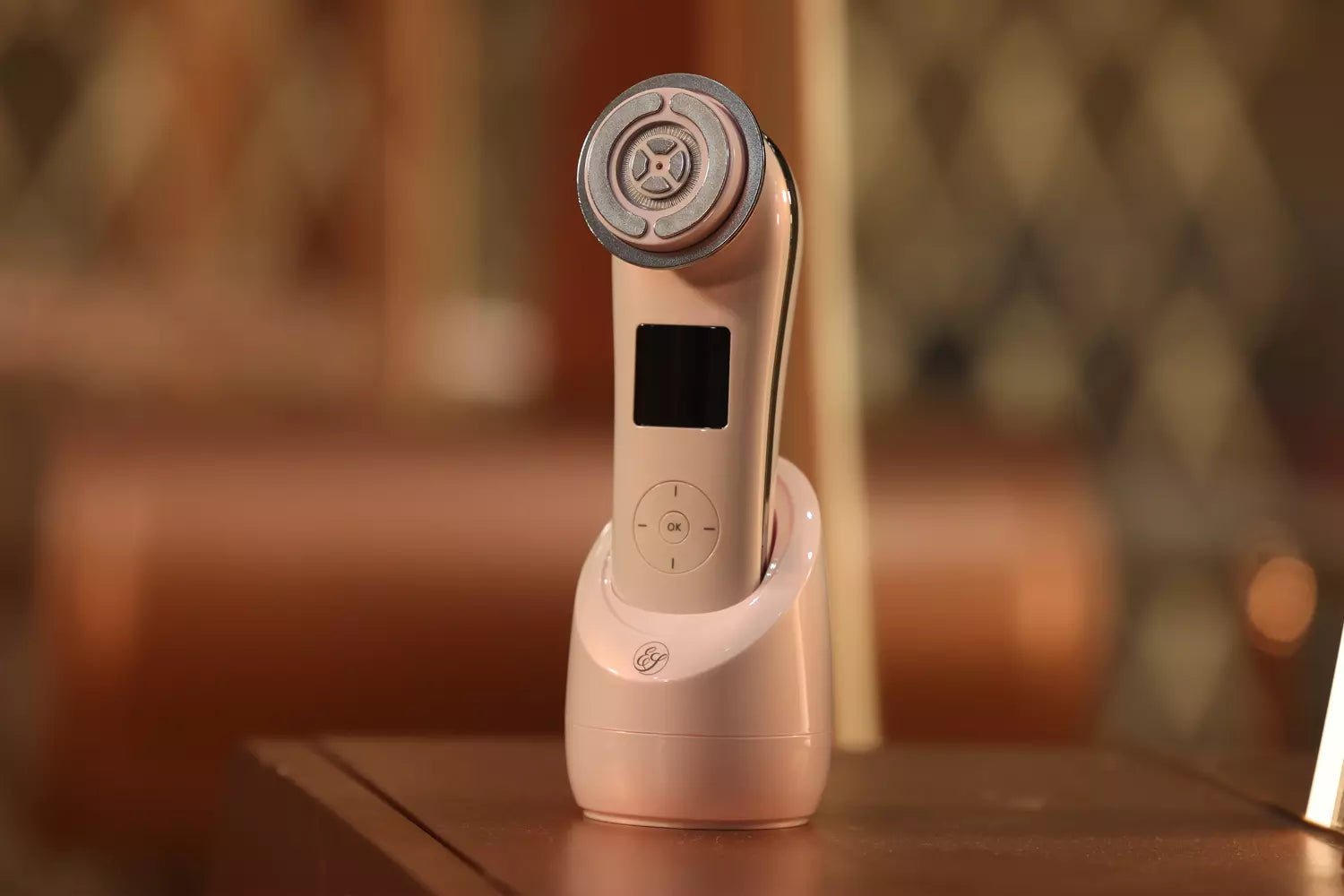
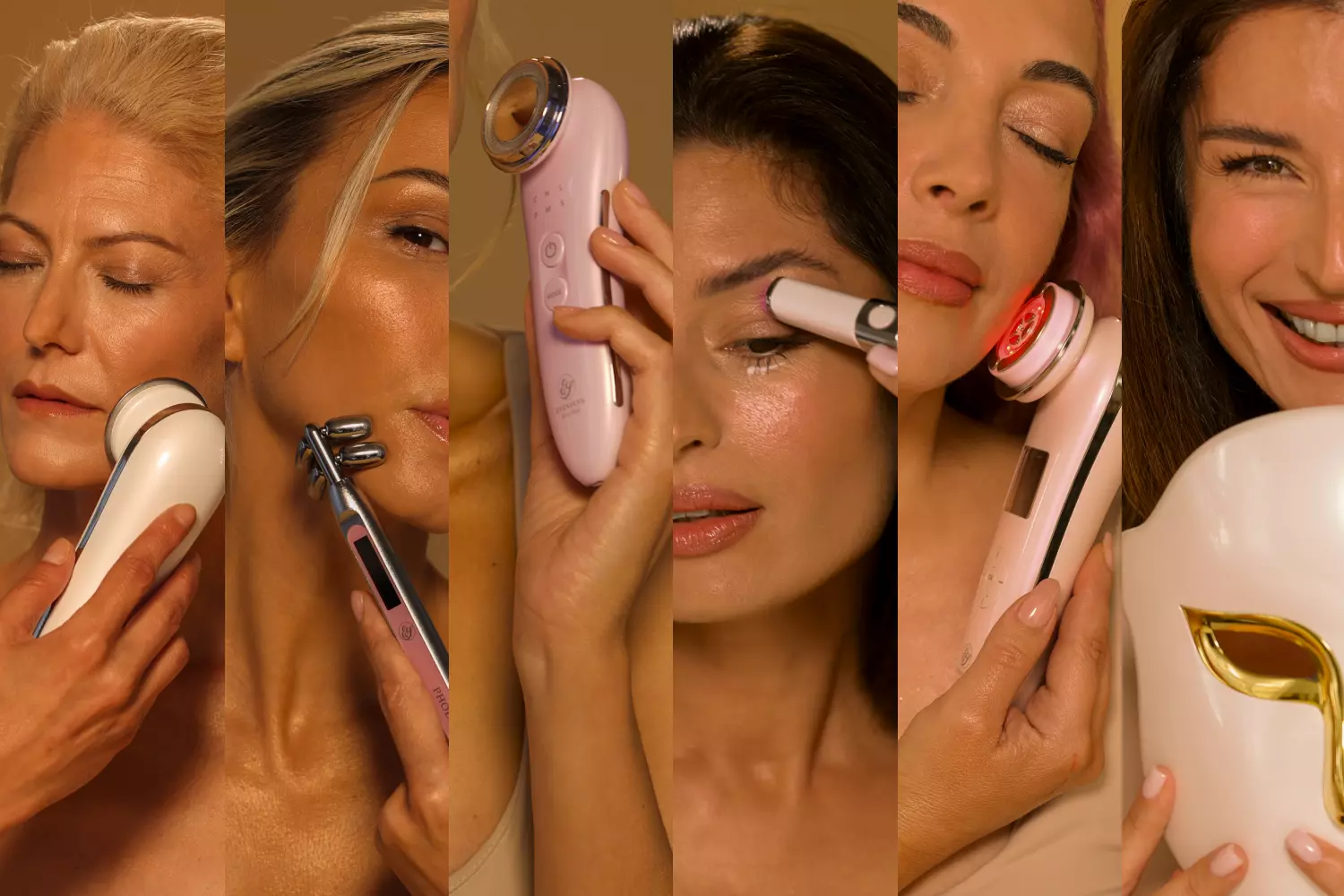
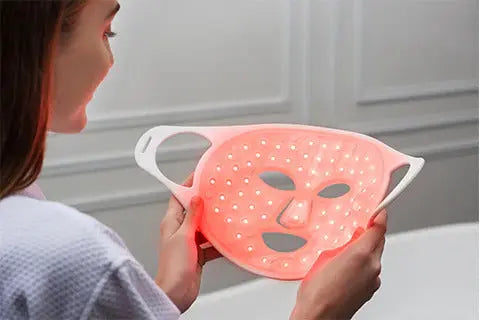
This is the combination with the most headroom. Do the light session on bare skin, wait, then apply retinol last. A multi-modal device such as the EvenSkyn Lumo⁺, which includes red-light LEDs, or a dedicated LED mask, both fit this pattern. If you prefer to keep things very simple, our guide to pairing red light with facial oils covers a gentler, retinol-free version.
Respect the heat
Radiofrequency warms the dermis to prompt collagen, and the Lumo⁺ pairs RF with red light in one handset. Run RF first, on clean skin with the recommended conduction gel, let skin return to a normal temperature, then apply retinol as your final step. Do not apply retinol before an RF pass: warm, freshly retinized skin is the most likely to feel raw. If your skin is mid-adjustment to a new retinol, keep RF to your non-retinol nights for a while. See our note on how often RF is reasonable.
Keep them on separate nights
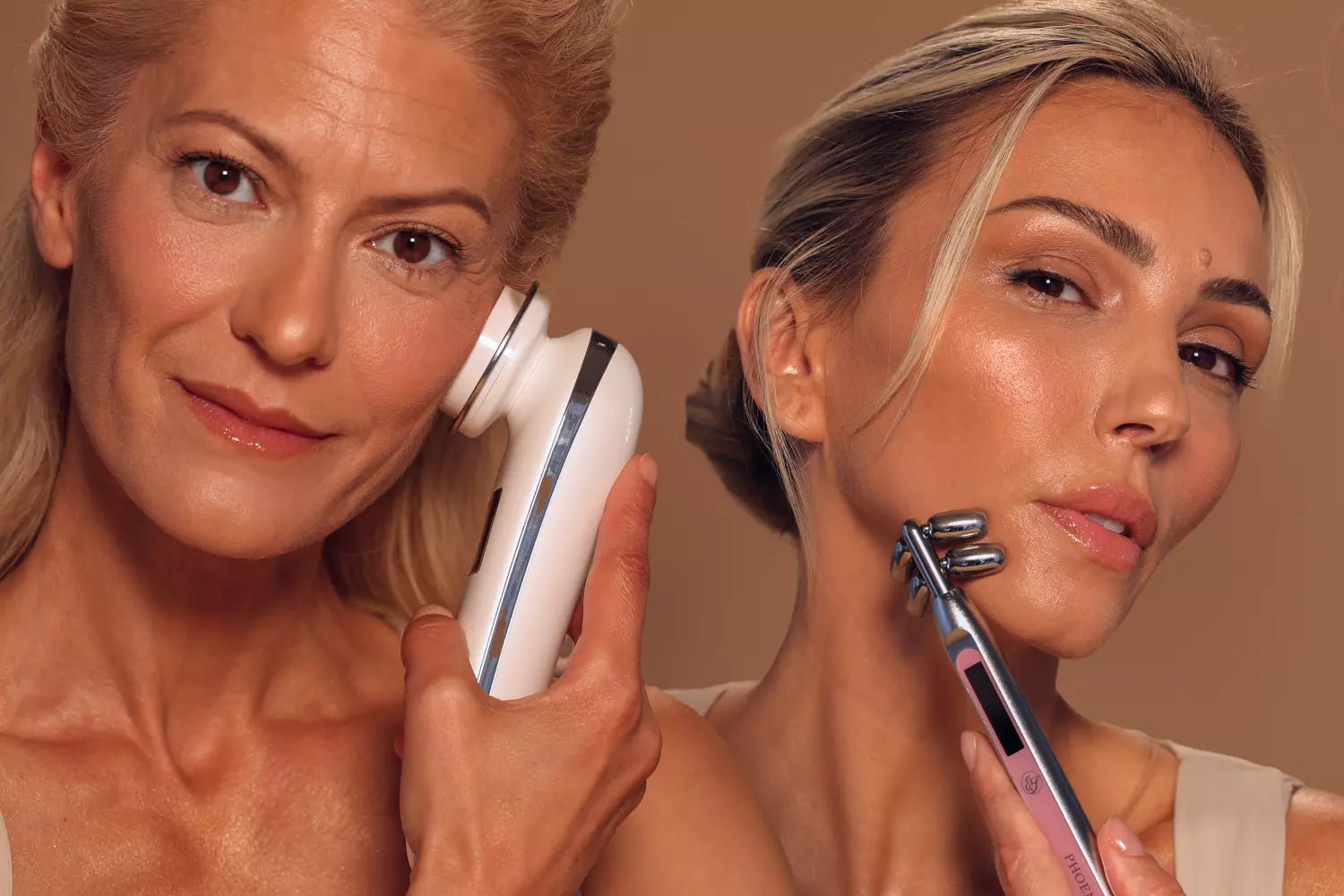
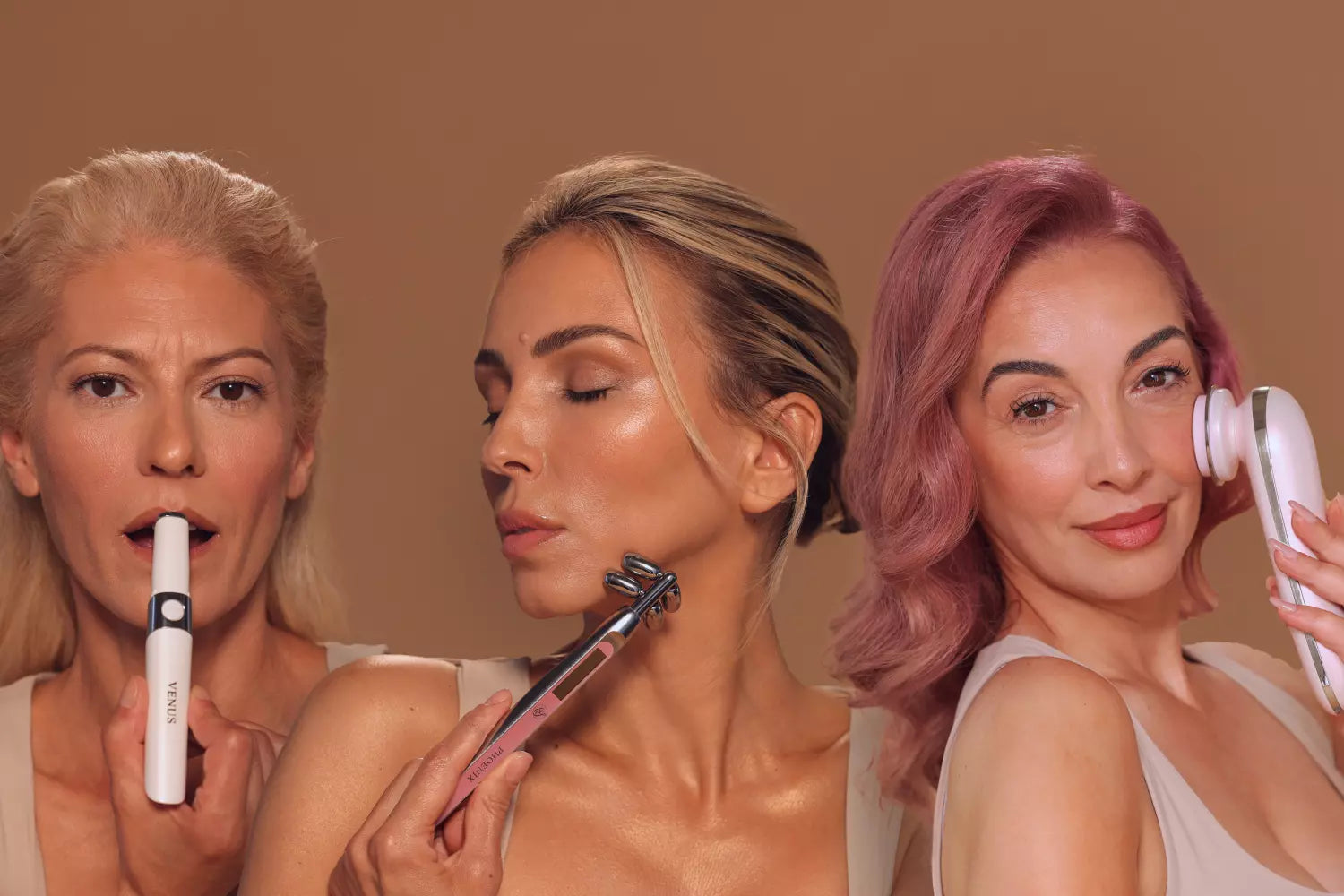
Microcurrent tools such as the EvenSkyn Phoenix glide over the skin and are typically used with a conductive gel or serum, not a treatment active. Retinol is not the right glide medium, and you do not want to massage a strong active deeper while it is at its most irritating. The clean approach: use the microcurrent device with a hydrating serum, and apply retinol on the nights you are not doing a microcurrent session.
The strictest rule
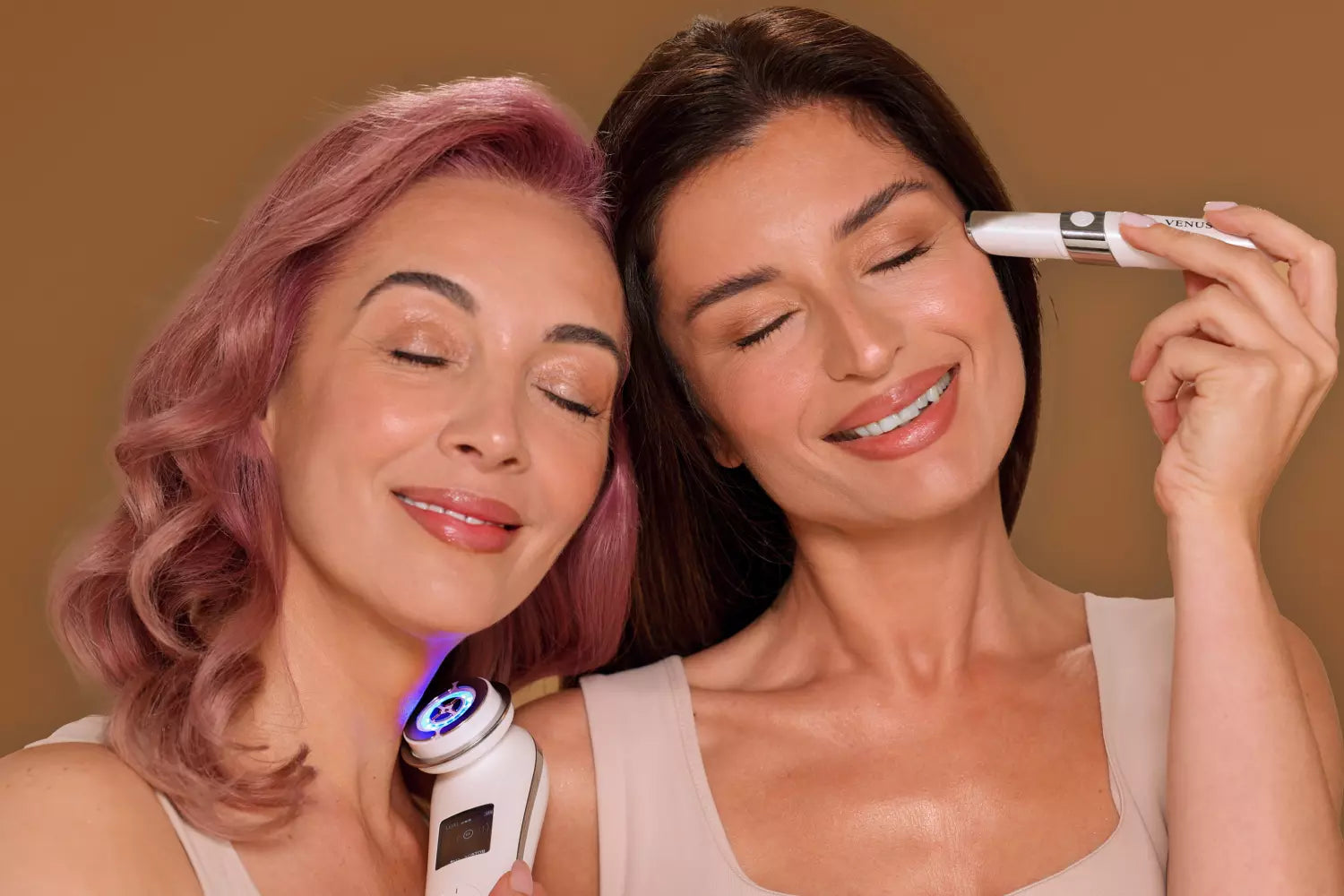
Micro-infusion and microneedling physically create tiny channels in the skin. That is the point, it lets serums penetrate far better, but it also means the barrier is briefly open and far more receptive to whatever you apply (7, 8). Retinol pushed into open channels is a recipe for stinging and over-penetration. After a session with something like the Under-Eye Micro-Infusion patches, stick to gentle hydration, and hold retinol for at least 24 hours, longer if your skin still feels tender. Our at-home micro-infusion guide covers aftercare in full.
A weekly schedule that actually works
The mistake most people make is trying to do everything every night. You do not need to. Retinol works on a turnover cycle, and red light rewards consistency over intensity. Spreading them out is gentler and just as effective. Here is a sane starting template for someone who owns a red-light or multi-modal device and is building retinol tolerance. Adjust to your own skin.
| Evening | On bare skin | After / last step |
|---|---|---|
| Monday | Red light session | Hydrating serum, moisturizer (no retinol) |
| Tuesday | Cleanse only | Retinol, then moisturizer |
| Wednesday | Red light session | Hydrating serum, moisturizer |
| Thursday | Cleanse only | Retinol, then moisturizer |
| Friday | Red light session | Optional retinol after a 15-min wait, once tolerant |
| Weekend | Rest or hydration | Moisturizer, recovery |
Notice that retinol starts at two or three nights a week, not seven. That is deliberate, and it lines up with the standard advice to build tolerance slowly. As your skin adjusts over a month or two, you can move toward doing light and retinol in the same evening more often, light first, retinol after the wait. Every morning, without exception, finishes with broad-spectrum SPF.
How to ease retinol in, so you can combine sooner
The quicker your skin builds tolerance, the sooner you can run a light session and retinol in the same evening without complaints. A few habits speed that along.
- Start low and infrequent. A lower-strength retinol, two nights a week, beats a strong one applied nightly. Build up only as your skin stays comfortable.
- Try the sandwich. For reactive skin, apply moisturizer, then retinol, then moisturizer again. It buffers the strength without canceling the benefit, which makes the early weeks far easier.
- Pair with calming ingredients, not more actives. Niacinamide and hyaluronic acid support the barrier and sit well alongside retinol. Hold off on layering exfoliating acids on the same night while you are still adjusting.
- Apply to dry skin early on. Retinol penetrates harder on damp skin. Wait until your face is fully dry after cleansing before applying, especially in the first few weeks.
- Give it weeks, not days. Tolerance is real and it builds. Most people who push through a slightly flaky first month land somewhere comfortable on the other side.
Why a combined, at-home approach makes sense as we age
Here is the reasoning, laid out as a hypothesis rather than a promise. As skin ages, two things happen at once: surface turnover slows, leaving texture rough and tone uneven, and collagen in the dermis thins, leaving skin less firm. Those are two different problems at two different depths. A single product rarely addresses both well.
Retinol is one of the best-evidenced tools for the surface problem (1). Red light is among the better-evidenced tools for the collagen problem (2). Used together and correctly sequenced, they cover more ground than either alone. That is the logic. It is not a claim that the combination matches a clinical procedure. At-home devices bring convenience and a lower lifetime cost; in-clinic systems deliver energy at depths and intensities a home device is not built to reach. Both can be true. The honest pitch for the at-home route is consistency: the treatment you will actually do three times a week in your bathroom beats the one you book twice a year and skip.
What to realistically expect, and when
Both treatments reward patience, and neither does anything dramatic overnight. Setting the timeline honestly saves a lot of second-guessing.
- Weeks 1 to 4. This is the retinol adjustment window. Some dryness, pinkness, or light flaking is normal and not a sign that anything is wrong. Visible improvement is usually minimal here. Red light, meanwhile, is quietly doing its work with nothing to show for it yet.
- Weeks 4 to 8. Surface changes start to show. Texture looks a little smoother and tone a little more even, as turnover settles into its faster rhythm and the early irritation fades.
- Around 8 to 12 weeks and beyond. This is where firmness changes tend to surface. The 2014 controlled trial on red and near-infrared light measured higher collagen density over a multi-week course of sessions, not after one or two (2). Collagen is slow to build by nature.
- Ongoing. These are maintenance treatments, not one-time fixes. Results depend on staying consistent, and they soften if you stop.
One caveat worth repeating: individual results vary with age, skin type, the strength of your retinol, and how regularly you actually use your device. The pattern above is a general guide, not a promise.
EvenSkyn Lumo⁺
For a retinol-friendly routine, the appeal of the Lumo⁺ is that it puts red light and radiofrequency in one handset, so the "light or energy first, retinol after" sequence covers two of your treatment modes at once. The rating figures above are EvenSkyn's own published customer reviews, not an independent score.
Best for
- People who want red light and RF without buying two devices
- A consistent three-nights-a-week home routine
- Pairing with retinol on a sensible schedule
What it will not do
- Deliver overnight or single-session results
- Replace an in-clinic energy device's depth
- Substitute for retinol; it complements it
What this costs, honestly
Cost is a fair question, and the at-home numbers only look good when you compare them honestly. A quality home red-light or multi-modal device is a one-time purchase, commonly in the few-hundred-dollar range, with no consumable refills beyond an occasional conduction gel. Retinol is inexpensive and lasts months. Against that, a course of in-clinic energy treatments is typically billed per session and repeated, which adds up quickly over a year.
That said, the comparison is not apples to apples, and we will not pretend it is. Clinic devices operate at intensities a home unit does not, so you are not buying the same result at a discount. You are buying a different thing: a lower-intensity treatment you can do often, for years, for a fixed cost. For a lot of people that math works. For someone chasing a dramatic, fast change, a consultation with a professional is the more honest route. Prices and treatment counts vary widely by region and provider, so treat any figure here as a starting point to verify locally.
Who should be careful, or skip it
A few situations call for slowing down or checking with a professional first. This is general information, not medical advice, and it does not replace your own dermatologist or doctor.
If your skin barrier is already compromised, actively peeling, broken out badly, or raw, pause both retinol and any device until it calms. Piling treatments onto distressed skin makes things worse, not faster. If you have a diagnosed skin condition such as rosacea or eczema, talk to a dermatologist before starting retinol at all, since it can flare sensitive skin. If you are pregnant or breastfeeding, topical retinoids are generally advised against, so this is a conversation for your doctor, not a decision to make from a blog. And follow the contraindications in your device's manual. EvenSkyn's microcurrent device, for example, advises that people who are pregnant, have a metal allergy, have implants, or are recovering from surgery should consult a physician first, and that it is not for anyone under the age of majority. As a general rule for any microcurrent or radiofrequency device, anyone with a pacemaker or other active implant should avoid use unless a doctor clears it. When in doubt, introduce one thing at a time so you can tell what your skin is responding to.
Build the routine around consistency
If you want one handset that handles the light and radiofrequency side of this routine, the Lumo⁺ is where most readers start. Pair it with a sensible retinol schedule and protect it all with daily SPF.
See the EvenSkyn Lumo⁺Frequently asked questions
Can I use retinol and red light therapy on the same night?
Yes. Do the red light session first on clean, bare skin, wait about 10 to 20 minutes, then apply retinol as the last step of your routine. There is no need to separate them onto different days.
Should I apply retinol before or after red light therapy?
After. Products applied before a session sit on the surface and block light from reaching the skin, and freshly applied retinol can sting if you add stimulation on top of it. Light goes on bare skin; retinol goes on last.
How long should I wait between red light and retinol?
Around 10 to 20 minutes is enough for most people. In practice, doing your light session and then the rest of your evening routine at a normal pace usually covers the gap on its own.
Does retinol make my skin more sensitive to red light?
Not in a meaningful way. Red light is not ultraviolet, and controlled studies found topical retinoic acid did not lower the skin's threshold for UV redness. The reactivity people notice is usually irritation from the retinol itself, not a reaction to light.
Why is retinol always used at night?
Two reasons, and neither is sun safety in the chemical sense. Retinol degrades when exposed to light, so evening use protects how well it works. And retinol can leave skin irritated, which feels worse with daytime sun exposure. Daily SPF is still essential.
Can I use retinol with a radiofrequency device?
Yes, with care. Run the radiofrequency pass first on clean skin, let your skin cool back to normal, then apply retinol last. Avoid applying retinol before an RF session, and keep RF on your non-retinol nights while your skin is still adjusting to a new retinol.
Can I use retinol with a microcurrent device?
It is cleaner to keep them on separate nights. Microcurrent devices are typically used with a conductive gel or serum, not a treatment active, and you do not want to work a strong active deeper while it is at its most irritating. Use a hydrating serum with the device, and save retinol for other nights.
Can I use retinol after microneedling or micro-infusion?
Not right away. Those treatments open micro-channels that make skin far more receptive, so retinol can over-penetrate and sting. Stick to gentle hydration afterward and hold retinol for at least 24 hours, longer if your skin still feels tender.
How often should I do each one?
A common starting point is red light around three times a week and retinol two to three nights a week, building up slowly. Consistency over time matters more than intensity in any single session.
Will red light therapy break down my retinol?
Apply retinol after your session and this is a non-issue. Retinol is light-sensitive, which is one reason it goes on last and at night, but doing the light first on bare skin keeps the retinol out of the light entirely.
Do I still need sunscreen if I only use these at night?
Yes. Retinol renews the surface of your skin, and newer skin plus daily sun exposure means SPF is essential to protect the results you are working for. Use a broad-spectrum sunscreen every morning.
How we put this together
This guide separates two things that often get blended: verified science and manufacturer description. Claims about how skin and light behave are sourced to peer-reviewed literature, cited below and checked against the original papers. Claims about specific EvenSkyn devices, their modes, ratings, and price, are EvenSkyn's own and are labeled as such in the text. Where the evidence is limited or a comparison is not apples-to-apples, we have said so rather than rounded up. This article is informational and is not a substitute for advice from your own dermatologist, doctor, or other qualified professional.
References
- Mukherjee S, Date A, Patravale V, Korting HC, Roeder A, Weindl G. Retinoids in the treatment of skin aging: an overview of clinical efficacy and safety. Clinical Interventions in Aging. 2006;1(4):327–348. PMID: 18046911. pubmed.ncbi.nlm.nih.gov/18046911
- Wunsch A, Matuschka K. A controlled trial to determine the efficacy of red and near-infrared light treatment in patient satisfaction, reduction of fine lines, wrinkles, skin roughness, and intradermal collagen density increase. Photomedicine and Laser Surgery. 2014;32(2):93–100. doi:10.1089/pho.2013.3616.
- de Freitas LF, Hamblin MR. Proposed mechanisms of photobiomodulation or low-level light therapy. IEEE Journal of Selected Topics in Quantum Electronics. 2016;22(3):7000417. doi:10.1109/JSTQE.2016.2561201.
- Barolet D, Roberge CJ, Auger FA, Boucher A, Germain L. Regulation of skin collagen metabolism in vitro using a pulsed 660 nm LED light source: clinical correlation with a single-blinded study. Journal of Investigative Dermatology. 2009;129(12):2751–2759. doi:10.1038/jid.2009.186.
- Smit JV, de Jong EM, de Jongh GJ, van de Kerkhof PC. Topical all-trans retinoic acid does not influence minimal erythema doses for UVB light in normal skin. Acta Dermato-Venereologica. 2000;80(1):189–190. PMID: 10721847.
- Slade HB, Shroot B, et al. Reappraising the phototoxicity of tretinoin: a report of four controlled clinical trials. Photodermatology, Photoimmunology & Photomedicine. 2009;25(3):146–152. doi:10.1111/j.1600-0781.2009.00433.x. PMID: 19438994.
- Iriarte C, Awosika O, Rengifo-Pardo M, Ehrlich A. Review of applications of microneedling in dermatology. Clinical, Cosmetic and Investigational Dermatology. 2017;10:289–298. doi:10.2147/CCID.S142450. PMID: 28848356.
- Hou A, Cohen B, Haimovic A, Elbuluk N. Microneedling: a comprehensive review. Dermatologic Surgery. 2017;43(3):321–339. doi:10.1097/DSS.0000000000000924. PMID: 27755171.
Published by EvenSkyn, a Canadian at-home beauty device brand. Product details, customer ratings, and pricing are EvenSkyn's own and current as of publication; verify on the live product page. Informational content only; not medical advice. Consult a qualified professional for guidance specific to your skin.


Leave a comment
All comments are moderated before being published.
This site is protected by hCaptcha and the hCaptcha Privacy Policy and Terms of Service apply.