



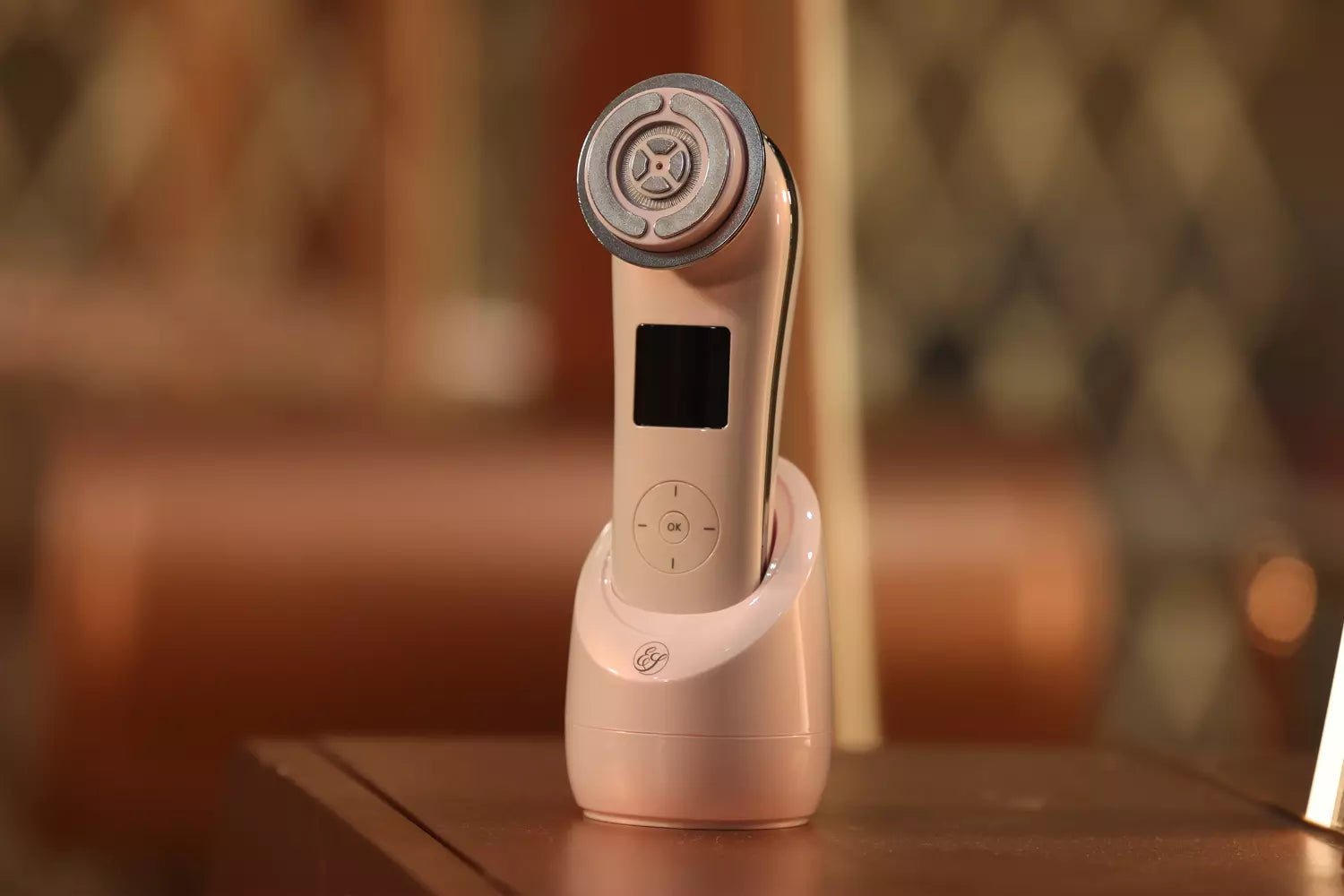

The gentlest way to whiten sensitive teeth is a low peroxide dose, a short session, and a formula that also carries a desensitiser and a remineraliser. Most products sold for sensitive teeth fail at least one of those tests, including two of the biggest names. This page compares nine kits on their declared ingredients rather than their marketing, with every specification checked against a manufacturer declaration, an ADA document, or a live retail listing.
Almost every "best whitening for sensitive teeth" roundup compares the same products on price, star rating and how white the model's teeth look. None of them compare the two things that actually determine whether a kit will hurt you:
- How much oxidant actually reaches your teeth, which is not the number printed on the box.
- Whether the formula contains anything that addresses sensitivity, which several products marketed for sensitive teeth do not.
We sell one of these products. So read the ingredient columns rather than our verdict, and note that we have flagged where competitors beat us.
First, the number on the box is not the number that matters
Whitening gels use one of two peroxides, and the American Dental Association states that carbamide peroxide "releases about one-third of its content as hydrogen peroxide". So the same printed percentage means very different things:
- 35% carbamide peroxide delivers roughly 12% hydrogen peroxide
- 18% carbamide peroxide delivers roughly 6%
- 6% carbamide peroxide delivers roughly 2.1%
- 15% hydrogen peroxide delivers 15%, seven times the oxidant of 6% carbamide, despite looking like a modest step up
Those conversions are our arithmetic applied to the ADA's one-third rule, not manufacturer specifications. The ADA describes the relationship as "about one-third" rather than an exact constant, so treat them as approximations.
Brand names make this worse. Opalescence Go is 10% or 15% hydrogen peroxide. Opalescence PF is 10% to 45% carbamide peroxide. "Opalescence 15%" is genuinely ambiguous, and the two differ roughly three-fold. Always check which word follows the number.
And several brands publish no number at all. Crest, SNOW and Hismile all declare the ingredient but never the concentration. Any roundup quoting a Crest Whitestrips percentage is quoting something Crest has not published.
The comparison
| Product | Active | Approx. HP equivalent | Desensitiser | Remineraliser | Session | Programme | Price (USD)* | ADA Seal |
|---|---|---|---|---|---|---|---|---|
| Crest 3D Whitestrips Sensitive & Gentle | Hydrogen peroxide | Not disclosed | None declared | None declared | 30 min | 18 days | 39.99 (CVS) | Yes** |
| Crest 3D Whitestrips Age Renew | Hydrogen peroxide | Not disclosed | None declared | None declared | 60 min | 21 days | about 80 (Amazon) | Not listed** |
| Opalescence Go 15% | Hydrogen peroxide 15% | 15% | Potassium nitrate | Fluoride | 15 to 20 min | 5 to 10 days | from 62 (opalescence.com, kit strength and size vary) | Not eligible*** |
| SNOW Diamond Series Kit | Hydrogen and carbamide peroxide | Not disclosed | Potassium nitrate | Hydroxyapatite | 9 to 30 min | 21 to 30 days | 59 to 129 (trysnow.com, corded to wireless) | No |
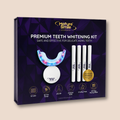
| AuraGlow LED Kit | Carbamide peroxide 35% | ~12% | Not disclosed | Not disclosed | 30 min | 20+ treatments | 60 (Auraglow) | No |
| MySmile LED Kit | Carbamide peroxide 18% or 35% | ~6% or ~12% | Not disclosed | Not disclosed | 10 min | 7 days | 15 to 50 (Walmart, varies widely by SKU) | No |
| Lumineux Whitening Strips | No declared active | None | None declared | None declared | 30 min | 7 days + weekly | 18.99 (Target, 14 strips) | No |
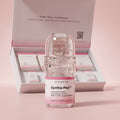
| Hismile PAP+ Kit | PAP (a peroxy acid) | Not applicable | Potassium citrate | Hydroxyapatite | 10 min | 6 applications | see hismileteeth.com | No |
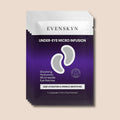
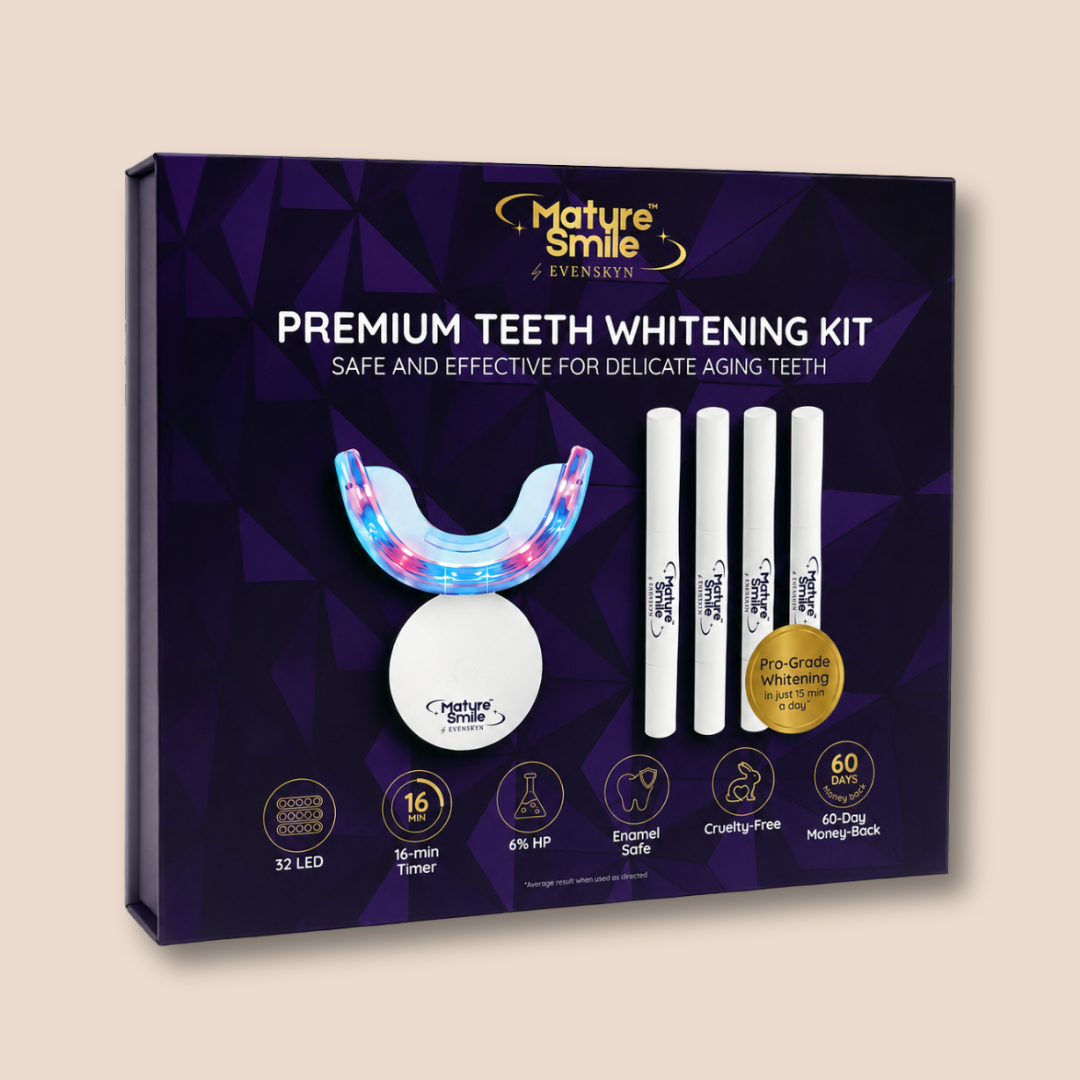
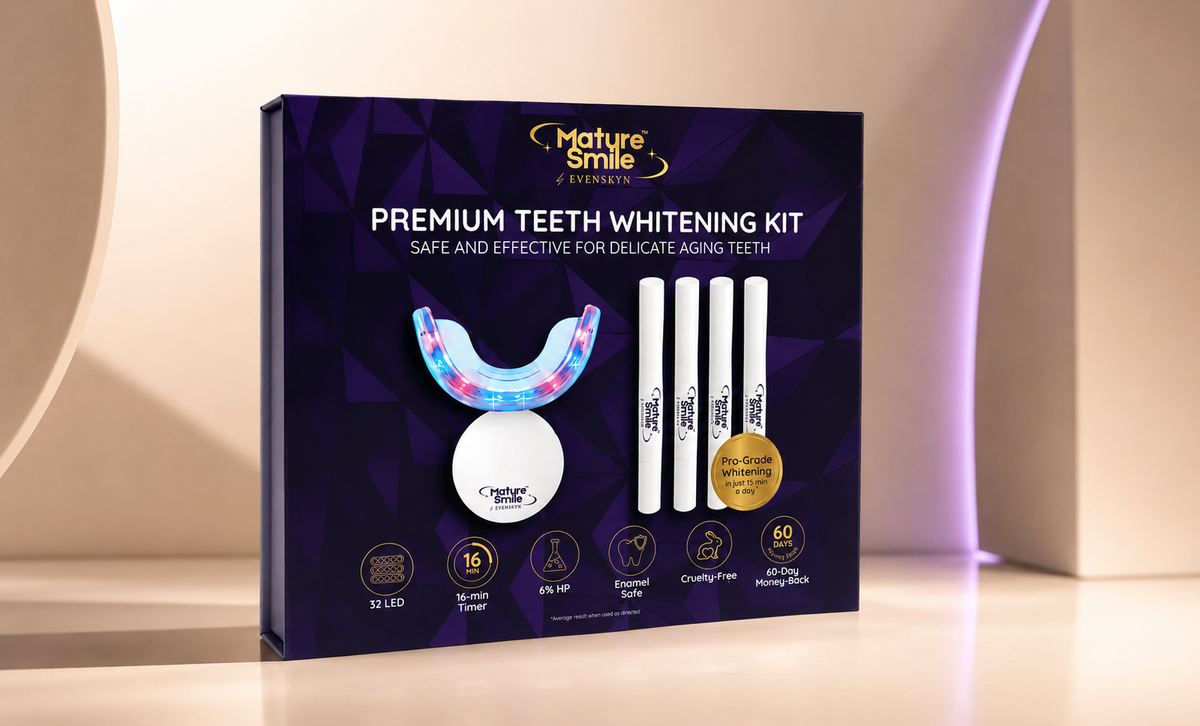
| EvenSkyn MatureSmile™ | Carbamide peroxide 6% | ~2.1% | Potassium nitrate | Sodium fluoride + calcium glycerophosphate | 16 min | 7 days + maintenance | 89.97 (evenskyn.com, list 129.99) | No |
*Prices in USD, checked 29 August 2026 at the named seller. Whitening prices move constantly and vary by pack size, so treat these as reference points, not offers. Where a current price could not be re-verified on the check date, the cell points to the retailer instead of guessing.
**The ADA Seal in at-home bleaching is held by the Crest 3D Whitestrips family, the only at-home bleaching products accepted; the accepted list includes the gentle and sensitive line. Individual SKU coverage changes, so check the ADA Seal product database for the current list.
***Dentist-dispensed take-home products are categorically ineligible for the ADA Seal. Opalescence's absence reflects the product category, not a failed assessment.
What the table shows that the marketing does not
1. Two products sold for sensitive teeth contain nothing that addresses sensitivity
Crest's own declared ingredient list for Sensitive & Gentle is: PVP, water, PEG-8, acrylates copolymer, hydrogen peroxide, sodium hydroxide, sodium saccharin. No potassium nitrate. No fluoride. The same is true of Age Renew.
That does not mean they do not work. A lower peroxide load and a well-designed strip can be gentle on their own, and Crest's approach is to manage sensitivity by dose rather than by additive. But "Sensitive" on the box describes the intended user, not an ingredient doing something about it. Crest is also candid in its own warning: "With all whitening products you may experience tooth sensitivity and/or gum discomfort."
2. Crest Age Renew is not what most people assume
The "Age" refers to the age of the stains, not the age of your teeth. Crest's own wording is "Removes 30 Years of Stains", and the parallel Sensitive SKU says it gently removes 15 years of stains. It is a stain-age claim. Nothing in the product is formulated around older enamel, and at 60 minutes a day for 21 days, confirmed on Crest's own product page, it has the longest contact time of any product here: the opposite of what you want if peroxide contact is what triggers your sensitivity.
3. Lumineux is genuinely peroxide-free, and declares no active at all
Verified across two independent ingredient declarations: glycerin, water, carbomer, carboxymethyl cellulose, coconut oil, dead sea salt, sage oil, lemon peel oil. The peroxide-free claim is true. But there is no identified active whitening ingredient and no concentration, so there is no number to put in the comparison column. If your priority is avoiding peroxide entirely, this is the cleanest option in the group. If your priority is shade change, understand what you are buying.
Worth noting on ratings generally: when checked in August 2026, Lumineux showed 4.7 stars on its own storefront against roughly 4 stars across about 29,000 ratings on Amazon. Where a brand's self-reported rating and its marketplace rating diverge, the marketplace figure is usually the more meaningful one. SNOW's 4.9 stars, for comparison, is self-reported on its own storefront.
4. Hismile's PAP is not peroxide, but it is not non-oxidising either
PAP is phthalimidoperoxycaproic acid, a synthetic organic peroxy acid and a strong oxidiser, used industrially as an alternative to hydrogen peroxide. So "contains no hydrogen or carbamide peroxide" is accurate; "peroxide-free" as a chemical statement is not, and "gentler because it is not an oxidiser" is wrong. PAP+ pairs it with hydroxyapatite and potassium citrate, which is a sensible sensitivity pairing. Concentration is not published.
5. Opalescence Go and SNOW are the genuine formulation peers here, and one of them beats us on a real measure
We will be straight about this. Opalescence Go carries potassium nitrate and fluoride, from a professional dental manufacturer, in a prefilled tray worn 15 to 20 minutes. That is a properly built sensitivity formulation and it is stronger than ours at 15% hydrogen peroxide, which means faster results for people whose teeth tolerate it. If you want a professional-grade product with a full desensitiser package and you do not need the lowest possible oxidant load, it is an excellent choice and we would not pretend otherwise.
SNOW also carries potassium nitrate plus hydroxyapatite, and offers sessions as short as 9 minutes. Its weakness is disclosure: it contains both hydrogen and carbamide peroxide and publishes neither concentration, so you cannot know what dose you are getting.
6. Crest holds the only ADA Seal in this category, and we do not
The Crest 3D Whitestrips family is the only line of at-home bleaching products accepted into the ADA Seal programme, a category the ADA opened in 2017, and the accepted list includes the gentle and sensitive strips. No LED kit, tray, pen or gel from any manufacturer holds the Seal: not SNOW, not AuraGlow, not MySmile, not Lumineux, not Hismile, and not us.
If a third-party safety and efficacy assessment is the thing you weight most heavily, buy the Crest strips. That is a real advantage and it is not one we can currently match.
About the LED light, including the part that does not help our case
Most LED whitening marketing claims the light accelerates whitening. The best current evidence does not support that.
A 2026 umbrella review in the Saudi Dental Journal, which graded 24 systematic reviews and meta-analyses with AMSTAR-2 and GRADE, found that the higher-quality reviews consistently reported limited benefit from light activation of bleaching gels, with no clinically relevant improvement in colour change. A 2018 systematic review of randomised trials reached the same conclusion at both high and low hydrogen peroxide concentrations.
There is a genuine open question. An earlier meta-analysis from 2012 found that with lower-concentration gels, which in that review meant 15 to 20 percent hydrogen peroxide, light activation produced a better immediate colour result, while also finding that light increased the risk of tooth sensitivity and calling for more research. The newer, higher-quality evidence disagrees on the colour benefit. Where the reviews conflict, the more recent and more rigorous work currently favours "light does not add much."
Two scope caveats we would rather state than hide: this evidence is from in-office bleaching, and consumer LED mouthpieces are far lower-powered, which makes a benefit less likely, not more. And the ADA takes no position either way; anyone telling you "the ADA says LED whitening doesn't work" is misrepresenting them.
So what is the light for? In our kit, it is what lets a session finish in 16 minutes rather than an hour. We think shorter contact time is the variable that matters most if discomfort is why you abandoned whitening before. We are not claiming the light makes your teeth whiter.
A note on potassium nitrate, since we lean on it
Potassium ions raise the extracellular concentration around the nerve fibre inside the tooth and reduce its excitability, dampening the pain signal. It is primarily a neural mechanism, not a sealing one. You will see "seals dentinal tubules" written about potassium nitrate across this category, including previously on our own site, and it is not accurate. There is some in vitro evidence of secondary tubule occlusion, so "purely neural" would also be too strong.
Honesty requires one more thing: a Cochrane review of potassium toothpaste trials found a statistically significant effect on objective sensitivity measures such as air blast and tactile testing, but no significant effect on patients' own subjective assessment at six to eight weeks, and concluded the evidence base is small. So this is a well-supported mechanism, not a guaranteed outcome. We go into this further in why your teeth hurt after whitening.
Who should buy what
- You want an independently assessed product above all → Crest 3D Whitestrips Sensitive. Its family holds the only ADA Seal here.
- You want professional-grade with a full desensitiser package and your teeth tolerate a stronger gel → Opalescence Go 15%.
- You want to avoid peroxide entirely → Lumineux, understanding it declares no active.
- You want the fastest, strongest result and price matters → AuraGlow at 35% carbamide peroxide, around USD 60. Expect sensitivity.
- You want the lowest cost per treatment → MySmile, but confirm whether you are buying the 18% or 35% SKU before judging how gentle it will be.
- Peroxide has hurt you before and you have stopped finishing programmes → this is the case the EvenSkyn MatureSmile™ kit is built for: the lowest declared oxidant load in the group, a desensitiser and two remineralising agents, and one of the shortest sessions here. It is also the most expensive product in this comparison at USD 89.97, and it works more gradually than anything above it in the table. That is the trade.
What none of these products will do
None will whiten crowns, veneers or bonding; the ADA is explicit that only natural teeth can be whitened. None will fully correct intrinsic discolouration from age, tetracycline or trauma. Age-related yellowing is dentin showing through thinning enamel, and it responds partially at best. And the ADA notes that temporary tooth sensitivity and gum irritation are the most common side effects of peroxide whitening, whichever product you use. Any brand implying otherwise, including ours, should be read sceptically.
Sensitive teeth whitening FAQ
Can you whiten your teeth if they are sensitive?
Yes, in most cases. The practical route is a lower peroxide dose, shorter contact time, and a formula that carries a desensitiser such as potassium nitrate plus a remineraliser such as fluoride or hydroxyapatite. The American Dental Association notes that temporary tooth sensitivity is among the most common side effects of peroxide whitening, so the goal is to manage the dose, not to expect zero sensation. If you have untreated cavities, cracked teeth, or active gum disease, see a dentist before whitening anything.
Is there a teeth whitening that does not hurt?
No peroxide product can promise zero sensitivity for everyone. The closest options are peroxide-free products such as Lumineux, which declares no active whitening ingredient at all, or low-dose formulas such as a 6% carbamide peroxide gel, which delivers roughly 2.1% hydrogen peroxide and pairs it with potassium nitrate. Lower oxidant load plus shorter sessions is what reduces the odds of the sharp zinger feeling.
Can old or yellow teeth still be whitened?
Often, yes, but with a caveat. Peroxide lifts accumulated surface and near-surface stains from coffee, tea, wine and tobacco at any age. Age-related yellowing that comes from dentin showing through thinning enamel responds only partially, because the colour is coming from inside the tooth. A realistic expectation for mature teeth is a brighter version of your own shade, not a paper-white result.
Which teeth cannot be whitened?
Crowns, veneers, bonding and fillings do not respond to peroxide at all, and the ADA notes that only natural teeth can be whitened. Teeth with intrinsic discolouration from tetracycline, trauma or certain developmental conditions respond partially at best. If you have visible dental work at the front of your mouth, plan the whitening order with your dentist so the natural teeth are matched to the restorations, not the other way around.
What ingredients matter in a whitening kit for sensitive teeth?
Three things: the real oxidant dose (convert carbamide peroxide to its hydrogen peroxide equivalent by dividing by roughly three), a desensitiser such as potassium nitrate, and a remineraliser such as sodium fluoride, calcium glycerophosphate or hydroxyapatite. Several products marketed for sensitive teeth carry none of the second and third categories, so read the declared ingredient list rather than the front of the box.
Does the LED light actually whiten teeth?
The peroxide gel does the whitening. Clinical evidence, including a 2026 umbrella review of systematic reviews, has consistently found little to no added colour change from light activation of bleaching gels. In this comparison, the honest case for an LED mouthpiece is convenience: it structures a short, timed session, which matters if long contact time is what made you quit whitening before. Treat any claim that a consumer LED makes teeth whiter on its own with scepticism.
Do Crest Whitestrips Sensitive contain a desensitiser?
No. Crest's own declared ingredient list for the Sensitive and Gentle strips contains no potassium nitrate and no fluoride. Crest manages sensitivity through a lower peroxide dose and strip design rather than through an added desensitiser, and it holds the only ADA Seal in the at-home bleaching category. Both facts are true at once, which is why the ingredient column and the Seal column in the table above disagree about which product is best.
What is the gentlest whitening option that still uses peroxide?
On declared numbers, the lowest oxidant load in this comparison is 6% carbamide peroxide, roughly a 2.1% hydrogen peroxide equivalent, which is the dose the EvenSkyn MatureSmile kit uses alongside potassium nitrate, sodium fluoride and calcium glycerophosphate. The trade is speed: a low dose works more gradually than a 35% carbamide or 15% hydrogen peroxide product, and no honest brand should tell you otherwise.
How this comparison was made
Ingredient declarations were read from each manufacturer's own published ingredient list or retail declaration in August 2026. Prices were checked on 29 August 2026 at the seller named in the table; cells that could not be re-verified that day point to the retailer rather than carrying a guess. Clinical statements are cited below and were checked against the source on 29 August 2026. Moon Oral Beauty was excluded from the table because its specifications could not be verified from consistent primary sources. We sell the EvenSkyn MatureSmile kit and no other product on this page. No competitor paid to appear here, and no link on this page earns us affiliate revenue.
References
- American Dental Association, Oral Health Topics: Whitening. ada.org
- In-office tooth bleaching protocols: an umbrella review of systematic reviews and meta-analyses on whitening efficacy and tooth sensitivity. Saudi Dental Journal, 2026. PubMed Central
- Maran BM, et al. In-office dental bleaching with light vs. without light: a systematic review and meta-analysis. Journal of Dentistry, 2018. ScienceDirect
- He LB, et al. The effects of light on bleaching and tooth sensitivity during in-office vital bleaching: a systematic review and meta-analysis. Journal of Dentistry, 2012. PubMed
- Poulsen S, et al. Potassium containing toothpastes for dentine hypersensitivity. Cochrane Database of Systematic Reviews. Cochrane
- American Dental Association Seal of Acceptance, product listing: Crest 3D Whitestrips. ada.org
Related reading: does teeth whitening damage enamel? · why your teeth hurt after whitening · sensitive-teeth whitening FAQ · our enamel-safe whitening guide for adults 40+ · teeth whitening after 50 · whitening with crowns and veneers · our sensitive-teeth whitening range


Leave a comment
This site is protected by hCaptcha and the hCaptcha Privacy Policy and Terms of Service apply.