









Teeth Whitening for Sensitive Teeth: Questions Answered
Straight answers to the questions people actually ask before whitening teeth that have become sensitive. Written to be useful whether or not you buy anything from us.
Can I whiten my teeth if they are already sensitive?
Usually yes, but the concentration and the contact time matter more than the brand. Sensitivity during whitening happens when peroxide reaches the dentin through the enamel and irritates the nerve inside the tooth. Lower-concentration gels used for shorter sessions tend to cause less of this than high-concentration gels worn for an hour. If you have untreated cavities, cracked teeth, exposed roots, or active gum disease, see a dentist before whitening anything.
What is the difference between hydrogen peroxide and carbamide peroxide?
Carbamide peroxide breaks down into hydrogen peroxide once it is in your mouth, at roughly a 3:1 ratio. So a 6% carbamide peroxide gel delivers about 2.1% hydrogen peroxide. This matters when comparing products: a kit advertising "35% carbamide peroxide" is delivering around 12% hydrogen peroxide, which is a substantially more aggressive product than the number alone suggests. MatureSmile™ uses 6% carbamide peroxide. There is a full conversion table in does teeth whitening damage enamel?
Does teeth whitening damage enamel?
The research on peroxide whitening at consumer concentrations generally finds surface changes that are minor and reversible, rather than permanent loss of enamel. Risk rises with concentration, contact time, and frequency. It is not accurate for any peroxide whitener to describe itself as having zero effect on enamel, and we do not make that claim. What is reasonable to say is that a lower-concentration gel used for shorter sessions is a gentler proposition than a high-concentration one worn for an hour a day. The longer answer is here.
Why do my teeth hurt after whitening, and what helps?
The sharp, short pain often described as a "zinger" is the tooth nerve responding to peroxide that has reached the dentin. Potassium nitrate, which is in the MatureSmile™ gel, works by calming that nerve signal. Sodium fluoride and calcium glycerophosphate work at the enamel surface. If sensitivity does occur, spacing sessions further apart usually helps more than shortening them. Full explanation, including when the pain means see a dentist.
Does the LED light actually whiten teeth?
The gel does the whitening. The evidence that light meaningfully increases total shade change over gel alone is mixed and still debated. What the LED reliably does is let you get a result in a 16-minute session rather than a much longer one, which matters a great deal if discomfort is the reason you have abandoned whitening before. We would rather tell you that plainly than overstate what the light does. More on how the LED works here.
Will whitening work on crowns, veneers, or bonding?
No. Peroxide does not change the colour of ceramic, porcelain, or composite restorations. If you have restorations in your smile zone, whitening your natural teeth can leave them looking darker by comparison. The usual sequence is to whiten first, let the shade stabilise for about two weeks, and then have restorations matched to the new shade. We cover the sequencing in detail here.
Why do teeth yellow with age?
Two things happen at once. Enamel thins gradually over decades, and the dentin underneath it — which is naturally yellow — darkens. So the colour you see is increasingly the dentin showing through. This is why age-related yellowing is not a sign of poor hygiene, and why surface-abrasive whitening toothpastes tend to disappoint: the colour is not only on the surface. More on whitening after 50.
How many shades should I realistically expect?
Results vary with the type and age of the staining. Surface staining from coffee, tea, wine, and tobacco responds best. Intrinsic discolouration from age, medication such as tetracycline, or trauma responds much less, and sometimes not at all. Anyone quoting a single guaranteed number for every user is overselling.
How often should I use a whitening kit?
The MatureSmile™ schedule is one 16-minute session daily for the first seven days, optional every-other-day use through day 14 for stubborn staining, then one or two top-up sessions a month. More frequent use does not produce proportionally whiter teeth and does increase the chance of sensitivity.
What should I avoid after a session?
Coffee, tea, red wine, and dark sauces for about two hours after each session, while the enamel is most receptive to re-staining. This window matters more than most people expect during the first week.
Is at-home whitening a substitute for the dentist?
Not entirely. Chairside whitening uses much higher concentrations under professional supervision and produces faster results. At-home kits work more gradually at lower concentrations. The trade-off is cost and control. If you have restorations, gum recession, or any untreated dental problem, a dentist should see you first regardless of which route you take.
Which EvenSkyn product does this apply to?
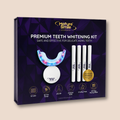
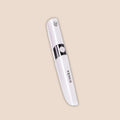
The MatureSmile™ LED Teeth Whitening Kit (6% carbamide peroxide, 16-minute sessions, potassium nitrate and sodium fluoride) and the MatureSmile™ Whitening Pens for refills and touch-ups. Both sit in the teeth whitening for sensitive teeth range.
This page is general information, not dental advice. If you have a specific concern about your teeth or gums, please speak to a dentist.

