



Crepey skin is not the same problem as a wrinkle, and it is not the same problem as sagging. Here is what the collagen science really says, which at-home tools have evidence behind them, and where a clinic still wins.
Crepey skin is thin, finely wrinkled skin that looks like crepe paper, caused mainly by the loss of collagen and elastin from sun exposure, age, hormonal change, and dryness. You cannot fully reverse it at home, but you can visibly improve it. The evidence-backed at-home routine is layered: daily broad-spectrum SPF to stop further damage, a nightly retinoid plus rich moisturizer to rebuild and plump, and a collagen-stimulating device using radiofrequency and red light for firmness over months. For deep or severe laxity, in-clinic radiofrequency microneedling, ultrasound, or a surgical consult still outperforms anything you can do at home.
EvenSkyn Lumo⁺ for crepey skin
Best for
- Mild to moderate crepiness on the neck, chest, and hands
- People who want a one-time buy over ongoing clinic bills
- Anyone who will actually use it several times a week
- All skin tones, including deeper skin
Not the best fit for
- Deep, hanging laxity after major weight loss
- People wanting a result in two weeks
- Anyone with a pacemaker or the other contraindications below
- Those expecting it to remove fat or lift heavy jowls
Scores reflect the EvenSkyn team's assessment against published evidence and the device's own specifications. We publish this guide, which is a bias we disclose plainly below. Read the reasoning, not just the numbers.
Crepey skin is a dermal problem, not a surface one. It comes from thinning collagen and fragmented elastin, so creams that only sit on top can soften the look but cannot rebuild the scaffolding underneath.
Sun is the single biggest driver, which is why the backs of the hands, the chest, and the forearms crepe first. Daily sunscreen is the one step with randomized-trial evidence for slowing it, including on the hands and arms.
Two at-home tools have real dermatology evidence for firmness: a nightly retinoid, and energy devices using radiofrequency or red light that prompt fibroblasts to lay down new collagen.
An at-home device works at shallower depth than a clinic machine. That is a genuine limit. For mild to moderate crepiness it is a sensible, far cheaper path. For deep laxity it is not a substitute for a clinic.
Nothing here is fast. Collagen remodeling runs on a scale of months. The people who see change are the ones who treat it like brushing their teeth, not like a weekend fix.
Crepey skin is a thinning problem, not a wrinkle
Pinch the skin on the back of your hand and let go. In your twenties it snapped back flat. Later it settles slowly, in fine parallel folds, like tissue paper that has been scrunched and smoothed out again. That is crepey skin, and it is worth being precise about, because the word gets used loosely and the fixes are not interchangeable.
A wrinkle is usually a crease worn into one spot by a repeated movement or a fold. Sagging is heavier tissue drifting downward as its deep supports weaken. Crepiness is different. It is a loss of thickness and spring across a whole patch of skin, so the surface goes thin, slack, and finely lined all at once. The Cleveland Clinic describes it as skin that becomes thin and develops a wrinkled, crepe-paper appearance, showing up most on the arms and under the eyes, driven by declining collagen and elastin.
Underneath, two proteins do most of the structural work. Collagen is the dense scaffolding that gives skin its strength and thickness. Elastin is the springy network that lets it recoil. Both are made by fibroblasts, the cells that live in the dermis, the layer beneath the surface you can see. When collagen thins out and elastin frays, the skin loses its cushion and its bounce. Light no longer bounces off a smooth, plump surface, so the same patch reads as papery and dull.
Here is the part that matters for choosing a treatment. Crepiness lives in the dermis. A moisturizer works mainly in and just below the surface layer, the epidermis. It can plump that top layer with water and make crepey skin look markedly better for a day, which is real and worth doing. What it cannot do is rebuild the collagen scaffolding one layer down. For that you need something that reaches fibroblasts and gets them working again, whether that is a retinoid signaling from the surface, an energy device heating the dermis, or an in-clinic treatment.
What actually causes it
Crepey skin is rarely one thing. It is usually several drivers stacking up over years.
Sun, first and worst. Ultraviolet light breaks down collagen and elastin directly, and it drives up the enzymes that chew through them. This is why crepiness appears earliest on the parts of the body that catch the most sun with the least protection: the backs of the hands, the forearms, the chest, and the sides of the neck. Dermatologists call this photoaging, and it is the reason two people the same age can have completely different skin. A 2026 review of radiofrequency for skin aging frames the dermal problem clearly: aged skin accumulates fragmented collagen and depleted collagen levels, and fragmented collagen sets off a feedback loop where fibroblasts make less new collagen and more of the enzymes that break it down.
Time. Independent of the sun, fibroblasts slow with age. They produce less collagen, and the collagen that remains gets more fragmented. Skin gradually thins from the inside. This intrinsic aging is milder than sun damage on its own, which is why skin usually protected by clothing stays smoother for longer.
Hormones. Estrogen supports collagen production, so when it falls at menopause, collagen falls with it, and fast. Reviews of menopausal skin, echoed by the American Academy of Dermatology, put the loss at roughly 30% in the first five years after menopause, then about 2% per year for the next couple of decades. That is why so many women feel their skin change almost overnight in their late forties and fifties, and why crepiness on the chest and neck often accelerates in that window.
Weight change. Skin stretched by weight gain does not always shrink neatly back after weight loss, and the faster the loss, the more likely the skin is left slack and crepey. This has become far more common with the rise of GLP-1 medications, which is a topic we cover separately.
Dryness and a worn skin barrier. After the mid-forties skin makes less of its own protective oils, so it holds less water and looks thinner and more creased. Dryness does not cause the underlying collagen loss, but it makes the same skin look considerably more crepey than it needs to, which is good news, because that layer responds quickly to the right moisturizer.
Smoking, poor sleep, high stress, and a diet short on protein and antioxidants all nudge the same dials in the wrong direction. None of them are the main event next to sun and hormones, but they add up.
Aged skin is largely defined by the accumulation of fragmented collagen and depleted collagen levels, and fragmented collagen initiates a feedback loop where fibroblasts produce less collagen and more of the enzymes that break it down. Paraphrasing Kilmer et al., Lasers in Surgery and Medicine, 2026
Crepey skin reads differently on each part of the body
The cause is the same everywhere, but the fix shifts a little by location, because the skin is thinner or thicker, more or less sun-exposed, and easier or harder to reach. This is also where most guides go quiet, since they only talk about the face.
Neck and décolletage
The neck and upper chest are thin-skinned, sun-exposed, and often skipped when people apply sunscreen and treatment to the face. Add years of looking down at a phone, and the chest picks up vertical creases while the neck goes crepey and slack. This zone responds well to the full stack: daily SPF, a retinoid used cautiously because the skin is delicate, rich moisturizer, and an energy device. It is also the zone where consistency pays off most, because people tend to neglect it for decades and then treat it seriously.
Arms, especially the inner upper arm
Crepey upper arms frustrate people because the obvious lever, exercise, only goes so far. Building the triceps underneath improves the overall look of the arm, and it genuinely helps, but muscle tone does not thicken thin skin. For the skin itself, the levers are sun protection, a body retinol, and heavy hydration. Energy devices can help here too, though a large area like a full arm simply takes more sessions and more patience than a small patch on the face. Be honest with yourself about whether you will put in that time.
Backs of the hands
Hands age fast and hide nothing, because they get relentless sun and almost no one protects them. This is the zone where the sunscreen evidence is most direct: in the randomized trial by Hughes and colleagues, the skin-aging measurements were taken on the back of the hand, and daily sunscreen users showed about 24% less aging over four and a half years. Sunscreen on the hands every morning is the highest-value habit on this entire list. Retinol, hand cream with peptides, and a device pass all layer on top.
Under and around the eyes
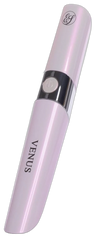
Eyelid and under-eye skin is the thinnest on the body, so it creases early and shows crepiness at the first sign of collagen loss. It is also too delicate for aggressive treatment. This is the one zone where a full-face energy handset is often the wrong tool, and a device designed for the eye area, or simply a gentle eye cream with peptides and good hydration, is the safer choice. We make a dedicated eye-area device, the Venus, for exactly this reason, and we would rather point you to the right tool than oversell the big one.
How to choose an at-home approach that actually does something
Most of what is marketed for crepey skin is a moisturizer with a firming claim. Some of it helps the look, briefly. Very little of it rebuilds anything. Here are the criteria that separate a tool that changes skin from a tool that changes how skin looks until you shower. Judge any product, ours included, against these.
Does it reach the dermis?
Crepiness lives below the surface. A serum that only hydrates the top layer will not rebuild collagen. Look for a mechanism with dermal reach: a retinoid that signals downward, or an energy device that heats or stimulates the deeper layer.
Is there real evidence for the mechanism?
Retinoids, radiofrequency, and red light each have published clinical support for collagen. Many trending ingredients do not, or only have a single company-funded study. Ask what the mechanism is and whether it has been tested by someone other than the seller.
Can it treat the zone you care about?
A face tool is not automatically a body tool. Crepey arms, chest, and hands need something you can comfortably run over a larger, curved area. Check the intended-use zones before you assume one device does everything.
Will you use it long enough?
Collagen change takes months, not days. The best device is worthless in a drawer. Be honest about whether a several-times-a-week routine fits your life. If it will not, a simpler retinoid-and-sunscreen habit beats an abandoned gadget.
Is it safe for your skin and health?
Energy devices have contraindications: pregnancy, pacemakers and implanted electronics, and a few others listed later. A good product states them clearly. Radiofrequency has the advantage of working on all skin tones, since it does not target pigment.
What does it honestly cost over time?
Compare the full picture. A device is a one-time buy that you reuse. A clinic is a better result per session but a repeating bill. A cream is cheap but ongoing and shallow. The right answer depends on your severity and budget, not on the marketing.
What the evidence says about each at-home tool
Four things have enough published support to belong in a serious at-home plan for crepey skin. Here is what each does, and how strong the evidence really is, stated without the usual inflation.
Sunscreen: the only step with randomized-trial proof for prevention
If you do one thing, do this. Sunscreen is not a treatment for existing crepiness so much as a brake on making more, but that brake is powerful and it is the best-evidenced item on the list. In the Nambour trial, published by Hughes and colleagues in the Annals of Internal Medicine, adults randomized to apply broad-spectrum sunscreen daily showed about 24% less skin aging over four and a half years than those who used it at their discretion, measured on the back of the hand. That is a rare thing in skincare: a long, randomized, controlled trial with an aging endpoint. Apply it every morning to the face, neck, chest, and hands, and reapply on long days outdoors.
Retinoids: the best-evidenced topical for rebuilding
Retinoids, the vitamin A family that includes over-the-counter retinol and prescription tretinoin, are the most studied topical for photoaged skin. They speed cell turnover and, more to the point here, prompt the skin to make more collagen over time. The American Academy of Dermatology names retinol and peptides directly as ingredients that can increase collagen in aging skin. Retinol is not only for the face. A body retinol on crepey arms and chest is a legitimate, evidence-aligned move. Start slowly, two or three nights a week, because thin crepey skin irritates easily, and always pair it with moisturizer and daytime sunscreen.
Radiofrequency: heat that prompts new collagen
Radiofrequency devices pass energy into the skin that gently heats the dermis. That controlled warmth does two things: it makes existing collagen contract for an immediate, modest tightening, and it triggers a wound-healing response that lays down new collagen over the following weeks, a process called neocollagenesis. This is well documented for clinic devices, and the mechanism is the same principle scaled down for home use. A 2025 review of radiofrequency for skin rejuvenation notes that bipolar radiofrequency, which penetrates a shallower one to four millimeters, is what enables safer home-use applications, while deeper monopolar systems used in clinics can reach much further into the tissue. That difference in depth is exactly why a home device is gentler, and also why it cannot match a clinic on deep laxity. Radiofrequency has one real advantage worth repeating: because it does not target pigment, it is considered suitable for all skin tones.
Red light: the gentlest evidence-backed option
Red and near-infrared light, also called photobiomodulation, is the most hands-off tool here. Rather than heating or wounding the skin, it is absorbed by the cells and nudges fibroblasts to behave more actively. In a controlled trial by Wunsch and Matuschka, published in Photomedicine and Laser Surgery, 136 participants treated with red and near-infrared light showed measurable improvements in skin roughness and, notably, an increase in intradermal collagen density confirmed by ultrasound rather than by opinion alone. It is slow and gentle, which makes it a good companion to the other tools rather than a standalone miracle. Our fuller write-up of the red light evidence goes deeper into wavelengths and dosing for anyone who wants it.
Microcurrent: real for muscle tone, thinner evidence for crepiness
Microcurrent sends a low-level electrical current that can stimulate facial muscles, and many people like the temporary lifted look it gives. For crepey skin specifically, which is a dermal collagen problem rather than a muscle one, the evidence is thinner than it is for radiofrequency or red light. We would not sell it to you as the fix for crepiness. It earns its place in a combination device as a complement, not as the headline. Saying that plainly matters more to us than the sale.
At-home options versus the clinic, compared
Here is the honest landscape for crepey skin, from a jar of cream to a surgeon. No single row is the right answer for everyone. Match the row to your severity, your budget, and how much time you will actually commit.
| Option | What it does for crepey skin | Evidence | Commonly reported cost | Best for |
|---|---|---|---|---|
| Daily broad-spectrum SPF | Prevents further collagen and elastin breakdown. Does not reverse existing crepiness. | Strong. Randomized controlled trial with an aging endpoint. | Low, ongoing | Everyone, at every severity |
| Retinoid plus rich moisturizer | Rebuilds collagen slowly and plumps the surface, so skin looks less papery. | Strong for retinoids in photoaged skin. | Low to moderate, ongoing | Mild crepiness, and as a base under everything |
| At-home red light device | Gently prompts fibroblasts. Gradual firmness and texture gains. | Moderate. Controlled trials show collagen-density gains. | Moderate, one-time | People wanting a gentle, low-effort add-on |
| At-home RF plus red light device (e.g. Lumo⁺) | Heats the dermis to prompt new collagen, plus light. Firmness over months, face and body. | Moderate. Strong mechanism, home-depth ceiling. | Moderate, one-time (from $499.99) | Mild to moderate crepiness on a budget |
| In-clinic RF microneedling | Deep, controlled dermal injury drives strong neocollagenesis. Noticeable tightening. | Strong for the professional devices. | High, per session, several sessions | Moderate to significant laxity |
| In-clinic ultrasound (e.g. focused ultrasound lifting) | Reaches deeper layers than home tools to lift and tighten. | Strong, though results vary by person. | High, per course | Moderate laxity, especially neck and jaw |
| Surgery (neck lift, arm lift) | Physically removes excess, slack skin. The only option for severe cases. | Definitive for severe laxity. | Highest, one-time, with downtime | Severe, hanging skin, often post-weight-loss |
Brand and device names belong to their respective owners and appear here for comparison only. Costs are commonly reported ranges, not quotes, and change constantly. Verify current pricing and specifications against the live listing or clinic before deciding. This table is educational and is not medical advice.
Why a radiofrequency and red-light device fits this particular problem
Pull the threads together. Crepey skin is, at its core, a shortage of dermal collagen: depleted and fragmented, per the aging literature. The tools with the clearest evidence for firmness all work by getting fibroblasts to make more collagen. Radiofrequency does it with gentle heat. Red light does it by signaling the cells directly. A device that combines them is aimed squarely at the mechanism, not at the symptom.
That is the honest case for the Lumo⁺. It brings radiofrequency, EMS, and red light into one handset you can run over the face, neck, chest, and the backs of the hands. The radiofrequency and red light are doing the real work on crepiness; the EMS is a complement, not the headline. It is the right category of tool for mild to moderate crepey skin, at a fraction of a clinic's running cost.
What it is not: a clinic in a box. This is where we part company with the louder end of the market. A home device delivers energy at a shallower depth than a professional system, by design and for safety. It will not replicate one course of in-clinic radiofrequency microneedling or focused ultrasound on deep laxity. We are not going to tell you it is a scaled-down version of a trademarked clinical machine, because it is not, and that claim would be both wrong and a disservice. What it can honestly do is meaningfully firm mild to moderate crepiness over months of consistent use, on far more of your body than your face, without a standing appointment.
The honest cost picture
Value is where at-home devices make their strongest, fairest case, so let us lay it out without spin. A clinic session generally gives a better single result than a home session. The question is what happens over a couple of years, because crepey skin is a maintenance situation, not a one-and-done.
| Path | Up-front | Ongoing | Two-year picture |
|---|---|---|---|
| At-home device | One purchase (Lumo⁺ from $499.99) | Conduction gel refills | Largely the one-time cost, reused as often as you like |
| In-clinic energy sessions | Per-session fee | Repeat sessions plus maintenance | Typically multiples of a home device, sometimes many multiples |
| Topicals only | Low | Repurchased indefinitely | Cheap per item, but shallow, and it never stops |
Figures are commonly reported ranges and the current EvenSkyn list price, not personalized quotes. Clinic pricing varies widely by region and provider. Confirm all current costs before deciding.
The reasonable read: if your crepiness is mild to moderate and you will use it, a one-time device is the better-value path, and it treats your chest, arms, and hands as well as your face. If your laxity is significant, paying more for a clinic result is money better spent than expecting a home tool to do a job it is not built for.
If you are thinking of it as a gift
Crepey hands and chest often bother people most in the years around a milestone: a big birthday, a retirement, a wedding where the photos linger on hands and necklines. An at-home firming device can be a genuinely thoughtful gift for a parent or partner who has mentioned feeling self-conscious about it, precisely because it is something they can use quietly at home on their own schedule, with no appointment and no fuss.
One tact note: frame it as a treat, not a fix. A device lands warmly when it says here is something nice for you, and lands badly when it reads as a comment on how someone looks. If you are unsure how it will be received, it probably is not the right gift for that person. Skin is personal.
EvenSkyn Lumo⁺
What it does well
- Targets the real mechanism in crepey skin with radiofrequency and red light
- Works on the body, not only the face, so crepey chest and hands are in scope
- One-time cost against a rolling clinic bill
- Suits all skin tones, since radiofrequency does not target pigment
- Gentle enough for at-home use with a clear routine
What it will not do
- Match a clinic device on deep or severe laxity, full stop
- Work in two weeks. Plan on eight to twelve weeks, then keep going
- Remove fat, lift heavy jowls, or fix hanging post-weight-loss skin
- Do anything at all if it lives in a drawer
- Suit people with a pacemaker or the other contraindications below
How to use an energy device on crepey skin
The routine matters as much as the tool. This is the general approach for an at-home radiofrequency and red-light handset. Always follow the specific instructions and treatment times in your own device's manual, which override anything general written here.
- Start with clean, dry skin, free of sunscreen and makeup.
- Apply a conduction gel over the zone you are treating. Radiofrequency and microcurrent need it to pass energy evenly and comfortably into the skin, and it protects the surface.
- Move the device slowly and continuously over the area, keeping it in contact, for the time your manual specifies per zone. Do not park it in one spot.
- Work zone by zone: neck, then chest, then the back of each hand, and so on. Larger areas like the arms take longer, so set realistic expectations for a single sitting.
- Use it on the schedule your manual recommends, typically several times a week, then taper to maintenance once you see change.
- Finish with a rich moisturizer, and use broad-spectrum sunscreen every morning. Sun protection is what protects the collagen you are working to build.
- Give it eight to twelve weeks of consistency before you judge results, and keep a couple of before photos in the same light to compare honestly.
Who should not use one, and when to check first
Energy devices are not for everyone. Skip an at-home radiofrequency or microcurrent device, or speak to a doctor before using one, if any of these apply:
- You are pregnant or breastfeeding
- You have a pacemaker, defibrillator, or any implanted electronic or metal device
- You have active cancer, or are being treated for it
- You have epilepsy or a seizure disorder
- You have metal implants, fillers, or a device in the area you want to treat
- The skin is broken, irritated, sunburned, or has an active rash or infection
- You have a heart condition or another medical condition and are unsure
This is a general list for this class of device. Your Lumo⁺ manual carries the definitive contraindications and treatment guidance for the device itself. If you have any medical condition or doubt, ask your doctor or dermatologist before starting. If crepiness is sudden, patchy, or comes with other skin changes, see a dermatologist rather than reaching for a device.
Crepey skin questions, answered directly
Can crepey skin be reversed?
Not completely, and any product promising a full reversal is overselling. Crepey skin comes from a real loss of collagen and elastin in the deeper layer of skin, and you cannot fully rebuild that at home. What you can do is visibly improve it: firmer, smoother, less papery skin is a realistic goal with consistent sun protection, retinoids, hydration, and collagen-stimulating treatments. Deep or severe laxity needs a clinic or, in the most severe cases, surgery.
What is the single most effective thing I can do at home?
Daily broad-spectrum sunscreen on every exposed area, including the neck, chest, and hands. It is the only step with randomized-trial evidence for slowing skin aging, and sun is the biggest driver of crepiness. It prevents further damage rather than reversing what is there, but it is the highest-value habit on the list, and it protects the collagen every other treatment is trying to build.
Do at-home devices really work for crepey skin, or is it hype?
The honest answer is somewhere in between. The mechanisms behind radiofrequency and red light have real published evidence for stimulating collagen, so a quality device can meaningfully firm mild to moderate crepiness over months. What they cannot do is match a clinic device, which delivers energy far deeper. Treat a home device as a genuine, cost-effective tool for mild to moderate cases and as a maintenance option, not as a replacement for professional treatment on deep laxity.
How long until I see a difference?
For a device, plan on eight to twelve weeks of consistent use before judging, because collagen remodeling is slow. A rich moisturizer can improve the look within days by hydrating the surface, but that is a temporary plumping effect, not structural change. Retinoids take a few months to show their collagen benefit. Patience and consistency are the whole game here.
Is crepey skin the same as wrinkles or sagging?
No. A wrinkle is usually a crease in one spot. Sagging is heavier tissue drifting downward as its deep supports weaken. Crepiness is a loss of thickness and spring across a whole patch of skin, so it goes thin, slack, and finely lined at once. They can appear together, but the distinction matters because the treatments differ. Crepiness responds best to collagen-building approaches across the whole area.
Why are my hands and chest crepey before my face?
Because they get relentless sun and almost no protection or treatment. The face usually gets daily sunscreen and skincare; the hands and chest get neither, for decades. Both areas also have thinner skin than much of the face. Sun exposure over the years is the main reason two people the same age can have very different skin, and it hits the least-protected areas first.
Does drinking more water or taking collagen supplements help?
Hydration and a protein-rich diet support skin health, and staying well hydrated helps skin look its best, but drinking water will not rebuild lost dermal collagen on its own. Collagen supplements have some supportive evidence for skin measures and are low-risk, but they are a modest adjunct, not a substitute for sun protection, retinoids, and in-skin treatments. Treat them as a small bonus, not the main plan.
Can I use a retinoid on my arms and chest, not just my face?
Yes. A body retinol on crepey arms and chest is a legitimate, evidence-aligned move, since retinoids prompt collagen wherever skin can tolerate them. Crepey skin is thin and irritates easily, so start two or three nights a week, layer moisturizer over it, and never skip morning sunscreen, because retinoids can make skin more sun-sensitive.
Will building muscle fix my crepey arms?
It helps the overall look but does not fix the skin itself. Stronger triceps make the whole arm look more toned, which genuinely improves the appearance. But muscle sits under the skin; it does not thicken thin, crepey skin. For the skin, you still need sun protection, a retinoid, heavy hydration, and, if you want, an energy device. Do both for the best overall result.
Is radiofrequency safe for darker skin tones?
Radiofrequency is generally considered suitable for all skin tones because it does not target pigment in the skin, unlike some light-based treatments that can carry a higher risk of pigment changes on deeper skin. That said, follow the device instructions, patch test, and if you have any concern about your skin specifically, check with a dermatologist first.
When should I see a dermatologist instead of treating it myself?
See a dermatologist if the crepiness is significant or hanging, if it appeared suddenly or unevenly, if it comes with other skin changes, or if you simply want the most effective result and are weighing professional treatment. A dermatologist can assess whether in-clinic radiofrequency, ultrasound, or a surgical consult fits your situation. At-home care and professional care are not rivals; many people use home tools for maintenance between or instead of clinic visits, depending on severity.
Which EvenSkyn device is right for crepey skin?
For crepey skin on the face, neck, chest, and hands, the Lumo⁺ is the fit, since it combines radiofrequency and red light, the two modalities that target collagen. If your only concern is crepey eyelids or under-eyes, a dedicated eye-area tool like the Venus, or simply a good eye cream, is the better and cheaper choice. We would rather match you to the right tool than sell you the biggest one.
Firmer skin is a habit, not a purchase
If your crepiness is mild to moderate and you will actually use it, the Lumo⁺ is a sensible, evidence-aligned place to start, on your whole upper body, not just your face. Pair it with daily sunscreen and a little patience.
Explore the Lumo⁺ handsetHow we put this together
This guide reflects published dermatology literature and clinical reviews, cross-checked at the time of writing, alongside EvenSkyn's own experience designing and testing at-home devices. We separate two kinds of claim on purpose. Statements about biology and treatment evidence are grounded in the peer-reviewed sources listed below. Statements about our own product are drawn from its specifications and are labeled as ours, not presented as independent science. Device specifications and prices change; where a specific technical figure is device-dependent, the definitive source is the current product listing and the Lumo⁺ manual. Nothing here is personalized medical advice. For your own skin, see a dermatologist.
Related reading: the at-home red light therapy evidence guide, at-home skin tightening and the clinical evidence, how to tighten neck skin at home, and skin changes on GLP-1 medications.
References
- Hughes MCB, Williams GM, Baker P, Green AC. Sunscreen and prevention of skin aging: a randomized trial. Ann Intern Med. 2013;158(11):781–790. doi:10.7326/0003-4819-158-11-201306040-00002. PMID: 23732711.
- Wunsch A, Matuschka K. A controlled trial to determine the efficacy of red and near-infrared light treatment in patient satisfaction, reduction of fine lines, wrinkles, skin roughness, and intradermal collagen density increase. Photomed Laser Surg. 2014;32(2):93–100. doi:10.1089/pho.2013.3616. PMID: 24286286; PMCID: PMC3926176.
- Glass GE. Photobiomodulation: a review of the molecular evidence for low-level light therapy. J Plast Reconstr Aesthet Surg. 2021;74(5):1050–1060.
- Kilmer S, et al. Monopolar radiofrequency for dermal prejuvenation: scientific rationale and mechanisms of action. Lasers Surg Med. 2026. doi:10.1002/lsm.70087.
- The landscape of radiofrequency technology for skin rejuvenation (review). PubMed Central: PMC12743727.
- Managing menopausal skin changes: a narrative review of skin quality changes and the role of hormone replacement therapy. PubMed Central: PMC12374573.
- American Academy of Dermatology. Caring for your skin in menopause. aad.org.
- Cleveland Clinic. Crepey skin: what’s causing it and how to fix it. health.clevelandclinic.org.


Leave a comment
All comments are moderated before being published.
This site is protected by hCaptcha and the hCaptcha Privacy Policy and Terms of Service apply.