
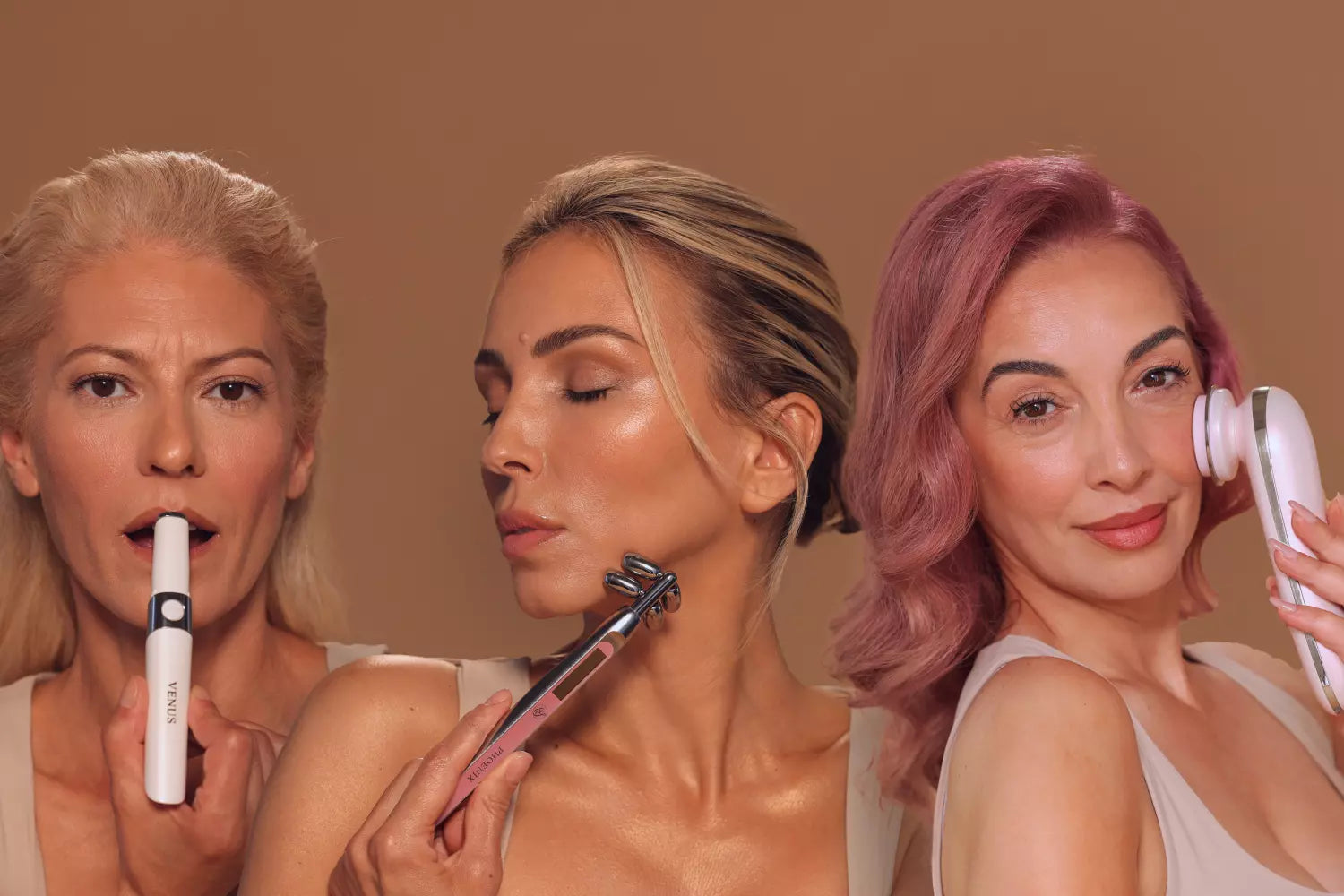

Medically Reviewed by Dr. Lisa Hartford, MD
Tech Neck Wrinkles: A Four-Mechanism Guide to Causes and At-Home Treatment for Screen-Era Neck Aging (2026)
A dermatologist's framework for understanding why tech neck is a four-mechanism problem, not just one, and what each mechanism actually responds to.
Bottom line: Tech neck is the horizontal creasing and loss of firmness on the front of the neck that comes from years of looking down at phones and screens. Add to that one important fact: neck skin is naturally thinner than facial skin and ages faster anyway. So you are stacking a fast-aging tissue against a daily mechanical insult. There are four mechanisms running at once (mechanical folding, platysma muscle imbalance, compounded UV photoaging, and faster dermal thinning), and each one needs a different kind of treatment. Posture and daily SPF do more for long-term outcomes than any cream or device.
A note on bias before we begin. I am the Chief Dermatology Advisor and Doctor-in-Residence at EvenSkyn, a Canadian at-home anti-aging device brand. EvenSkyn manufactures multi-modality devices in the category I discuss in the at-home devices section of this article. I have written this guide to be useful to you regardless of which approach you eventually choose, including no device at all. Where the evidence is strong, I have said so. Where it is emerging or thin, I have said that too. Where I think the marketing of any category (including ours) overstates what the science supports, I have flagged it.
Quick answers
What is tech neck? Horizontal creases and skin laxity on the front of the neck and decolletage caused by chronic forward-head posture during phone and laptop use. The cosmetic version of the same problem that causes neck pain.
At what age does it start? Faint horizontal lines exist from childhood. The accelerated deepening associated with phone use becomes visible in many people in their late twenties and early thirties.
Can it be reversed? Mild dynamic creases can stop progressing if posture changes. Established lines that are visible at rest can soften with combination treatment over months but rarely fully disappear.
What helps the most? Posture and ergonomics first. They matter more than anything else and they cost nothing. Daily SPF on the neck is second, and it is non-negotiable. Then a topical retinoid plus a multi-modality at-home device run consistently for 12 to 16 weeks.
Does Botox work? Yes for vertical platysmal bands. Mostly no for the horizontal creases that are the more common tech-neck pattern.
Key takeaways
- Tech neck is not one problem with one solution. It is the simultaneous progression of four aging mechanisms that each respond to different treatments.
- At 60 degrees of head flexion, the cervical spine carries roughly 60 pounds of effective force (Hansraj, 2014). The skin folding on top of that load is the cosmetic side of the same biomechanics.
- Neck skin loses elasticity with age faster than cheek or forearm skin (Kim et al., 2013), and most people apply less skincare and less sunscreen to their neck than to their face. The skin that has the least margin for error is the one we ignore.
- Daily broad-spectrum SPF on the neck is the single most evidence-based long-term intervention. Almost nothing else in dermatology has the same magnitude of effect on long-term skin appearance.
- For at-home device-based treatment, the strongest stack combines radiofrequency, microcurrent, and red light, used three times per week for 12 to 16 weeks. Expect modest but visible improvement, not erasure.
- Some lines, especially deeply etched horizontal lines that have been present for years, may not soften meaningfully with at-home treatment alone. Setting expectations correctly is more important than chasing a treatment that will not work.
Treatment comparison: what targets which mechanism
Read this table as a map. Each row shows what a given treatment actually targets, how strong the evidence is, and how long you wait before you can fairly judge whether it is working. The four underlying mechanisms are explained in the sections that follow.
| Treatment | Mechanism it targets | Evidence strength | Time to visible change | Realistic expectation |
|---|---|---|---|---|
| Posture correction and ergonomic setup | Mechanical folding (prevention) | Strong (biomechanical) | Indefinite (preventive) | Slows new line formation; will not erase existing lines |
| Daily broad-spectrum SPF on neck | UV photoaging | Strong (decades of dermatology consensus) | Months to years (preventive) | Single highest-impact intervention for long-term outcome |
| Topical retinoid (tretinoin or retinol) | Dermal thinning, fine lines, photoaging | Strong (multiple RCTs; systematic review by Sitohang et al., 2022) | 12 to 24 weeks | Modest improvement in fine creping; tolerance must be built slowly on neck |
| Hyaluronic acid serum and humectants | Surface texture, dehydration creping | Moderate | Days for hydration, weeks for visible texture | Smooths surface; does not address underlying laxity |
| At-home radiofrequency | Dermal thinning, mild laxity | Moderate (Sadick & Harth 2014, 2016; review by Bu et al., 2024) | 8 to 16 weeks | Improved firmness and elasticity; modest wrinkle softening |
| At-home microcurrent or EMS | Lower-face muscle tone, jawline support | Emerging (mostly facial data) | 6 to 12 weeks | Some lifting effect on jawline and submandibular area |
| At-home red light therapy (LED) | Photoaging signaling, collagen support | Moderate (mechanism well-described by Hamblin, 2017) | 8 to 12 weeks | Improved tone and texture; supports other modalities |
| In-clinic monopolar RF (Thermage) | Established laxity | Strong (Alster & Tanzi, 2004) | 2 to 6 months post-session | Single-session improvement; expensive; better for moderate-to-severe |
| Botulinum toxin (vertical bands only) | Platysmal band activity | Strong (off-label for neck; review by Hu et al., 2024) | 1 to 2 weeks | Effective on vertical bands; less effective on horizontal lines |
| Hyaluronic acid filler (horizontal lines) | Established deep horizontal creases | Moderate | Immediate | Smooths deep set lines; lasts 6 to 12 months; technique-dependent |
Table of contents
- What tech neck actually is
- Why your neck ages faster than your face
- The four-mechanism model
- Mechanism 1: Mechanical folding
- Mechanism 2: Platysma imbalance
- Mechanism 3: Compound UV photoaging
- Mechanism 4: Faster dermal thinning
- Posture and ergonomic foundation
- Topical skincare for the neck
- At-home device modalities
- Common mistakes that make tech neck worse
- In-clinic options and when to consider them
- A 16-week protocol with realistic expectations
- Frequently asked questions
What tech neck actually is
Tech neck, sometimes called phone neck or text neck, is shorthand for the changes that show up on the neck and upper chest after years of looking down at screens. There are really two problems hiding inside the same word. The musculoskeletal one shows up as neck pain, stiffness, and headaches, plus the slow forward drift of the head from neutral. The cosmetic one shows up as horizontal creases on the front of the neck, softer jawline definition, vertical platysmal bands that stand out at rest, and a general loss of firmness from chin to collarbone.
This article covers the cosmetic side. The musculoskeletal piece is real and worth attention, but a physical therapist or sports medicine clinician is the right person to address it.
The cosmetic side of tech neck is not entirely new. Horizontal neck lines have existed forever, and you can see one or two faint horizontal creases in photographs of children. What is new is the rate at which those lines deepen, become permanent at rest, and gain company. In my practice I now see patients in their late twenties and early thirties with neck creasing patterns that, a generation ago, appeared mainly in patients in their forties and fifties. The cosmetics industry called this out at In-Cosmetics 2025, where tech neck wrinkles were highlighted under the "skinification of body care" trend (extending facial-grade actives and devices to the neck and decolletage) alongside skin longevity and cellular beauty as focal areas of new product development.
So when this article uses "tech neck," it means the cosmetic pattern: horizontal lines and laxity on the front of the neck and decolletage, accelerated by modern screen-bent posture and the universal habit of skipping the neck in skincare and sun protection.
Why your neck ages faster than your face
Neck skin is genuinely different from facial skin, and the differences matter for how it ages. Start with the dermis: it is thinner than on the cheek. Sebaceous glands are sparser too, which means less natural lubrication and a faster drift toward dryness as the years stack up. Then there is the structural problem. Under the cheek you have the zygomatic bone for support; under the jaw you have the mandible. Under the front of the neck, you have none of that. The skin sits on a thin layer of fat, which itself sits on the platysma, a single broad sheet of muscle that runs from the lower face all the way down across the collarbones. No bone underneath. Just muscle, fat, and skin, and the fat layer thins further with age and weight loss.
What the research shows. A 2013 study by Kim and colleagues in Skin Research and Technology used cutometer measurements to compare neck, cheek, and forearm skin in 58 Korean women aged 25 to 64 years. Neck skin was more extensible and visco-elastic than the cheek, but the dermis was thinner. The correlation between skin elasticity and chronological age on the neck was the strongest of any site they measured (correlation coefficient of -0.55). Trans-epidermal water loss on the neck also tracked age more tightly than on the other sites. The headline finding: neck skin loses elasticity with age faster than facial skin, and it loses moisture faster too.
Layer that on top of two behavioral facts. Most people apply sunscreen to the face and stop at the jawline. Most people apply skincare actives to the face and stop at the jawline. The neck spends decades getting substantial UV exposure on a thinner moisture barrier and with fewer active ingredients applied. The skin that has the least biological margin for error is the skin we ignore. Then we add hours of daily forward folding to it.
This is the anatomical setup for tech neck. The rest of this article is about which mechanisms layer on top, in what order, and what actually moves the needle for each one.
The four-mechanism model
Most articles on how to fix tech neck treat it as a single problem with a single solution. Get a filler. Try a cream. Use a device. The reason that approach disappoints people is that tech neck is layered. Four aging mechanisms run in parallel, each producing a different visible pattern (deep horizontal wrinkles, lax skin around the jawline, loose surface texture, fine cross-hatched creping), and each on a different timescale with a different response to treatment. Real tech neck treatment has to address all four at once.
The four mechanisms are:
- Mechanical folding. Repeated flexion of the neck during phone use creates dynamic creases that, over years, become static. This is a soft-tissue process, more about how the dermis remodels under repeated bending than about chronological age.
- Platysma imbalance. The platysma is the broad superficial muscle that covers the neck. Chronic forward-head posture changes the resting tone of the muscle and can make platysmal bands and pull-down on the jawline more visible.
- Compound UV photoaging. Neck skin gets sun exposure all year and rarely receives daily SPF. Years of incidental UV degrade collagen and elastin in the dermis and contribute to the rough, mottled, "crepey" texture that often accompanies horizontal lines.
- Faster dermal thinning. Independent of UV, neck skin loses dermal thickness and elasticity faster than cheek skin with age. By the time most people notice their neck, the dermis has already thinned.
You can have any combination of these. A 30-year-old with a heavy phone habit, who never wore SPF on the neck, can already have visible mechanical folding plus early UV damage on otherwise youthful skin. A 55-year-old who took good care of her face has dermal thinning and UV damage on the neck without much mechanical folding because she did not grow up looking down at a phone. The treatment plan is different for each. The next four sections cover each mechanism in turn.
Mechanism 1: Mechanical folding (the bowling-ball physics)
Start with the load. The adult human head weighs roughly 10 to 12 pounds in a neutral, ear-over-shoulder position. As the head tilts forward to look down at a phone or a laptop screen below eye level, the effective force the cervical spine has to support increases sharply.
What the research shows. A 2014 mathematical analysis by orthopedic surgeon Kenneth Hansraj, published in Surgical Technology International, modeled the relationship between head flexion angle and cervical load. At 15 degrees of forward flexion the cervical load reaches roughly 27 pounds. At 30 degrees, 40 pounds. At 45 degrees, 49 pounds. At 60 degrees, the typical angle of someone reading a phone in their lap, around 60 pounds. The figures depend on assumptions about head weight and cervical geometry, so the precise pounds in any individual will vary, but the pattern of disproportionate load with increasing flexion is well-established.
This is the structural side. The cosmetic side is the skin sitting on top of that flexion. Every time the neck bends forward, the skin on the front of the neck folds. A teenager's skin folds and rebounds without leaving a trace. By the late twenties, if the folding happens hundreds of times per day for years, the dermal collagen fibers in the line of the fold begin to remodel along that crease. The fold becomes a faint dynamic wrinkle that disappears when the neck is straightened. With more time, the dynamic wrinkle becomes a static one that is visible at rest. Eventually the line is etched in.
This is the same process that creates the "11s" between the eyebrows from chronic frowning, with two important differences. Frown lines happen on facial skin, which is thicker and supported by underlying bone. Tech neck creases happen on thinner skin sitting on an unsupported muscle sheet. They progress faster. The duration profile is also different: frowning is brief, but each phone check involves sustained flexion lasting tens of seconds to minutes, repeated dozens of times daily.
What this means for treatment. Reducing the folding does more for this mechanism than any other intervention. Lifting the phone closer to eye level, propping a laptop on a stand, and pausing every so often to straighten the neck do more for long-term outcomes than any topical or device. Once lines are etched in, you can soften them with treatments that thicken the dermis and improve elasticity, but the rate at which they re-deepen depends on whether the daily folding continues. If you do nothing else after reading this article, raise your screens.
Mechanism 2: Platysma imbalance and the muscle layer
Underneath the skin of the neck, almost the entire surface from the lower face down to the collarbones is covered by a thin, broad muscle called the platysma. Anatomically it counts as one of the muscles of facial expression, even though most of it sits below the jaw. Its job is partly to pull down on the corners of the mouth, partly to support the lower face, and partly to give the neck its surface contour.
The platysma does not lie still. It contracts when you grimace, when you tense the lower face, and when you hold your head in certain postures for long periods. With age, two changes happen. The muscle itself can thin and weaken centrally while the outer borders, particularly the anterior and posterior edges, remain more active. This produces the vertical "neck bands" that can become visible at rest, especially in profile.
What the research shows. A 2024 anatomical and technical review by Hu and colleagues, published in Archives of Plastic Surgery and indexed on PubMed (PMID 39346003), described the platysma in detail and outlined the indications for botulinum toxin in neck aesthetics. The review confirms that botulinum toxin injected into the platysma is the standard non-surgical treatment for vertical platysmal bands and for optimizing the cervicomental angle (the angle between the underside of the jaw and the front of the neck). Clinically, botulinum toxin is most effective on dynamic, muscle-driven changes (vertical platysmal bands, for example, respond well), while horizontal neck lines that are mechanical creases in the skin itself respond less reliably to neuromodulator injection alone and are typically managed with skin-targeted treatments instead.
The relationship to tech neck is more subtle than the band story alone. Chronic forward-head posture changes which muscles fire and how often. The deep cervical flexors at the front of the neck weaken, the upper trapezius and levator scapulae at the back become chronically tight, and the platysma sits on top of an altered muscular environment. The cosmetic effect is a less defined jawline, a looser submandibular contour, and sometimes more visible bands when the rest of the muscle compensates for postural drift below.
What this means for treatment. Posture work is essential and changes the resting muscular environment. Targeted neck and chin exercises that strengthen the deep cervical flexors and stretch the upper trapezius show measurable improvements in neck position over weeks. Botulinum toxin is the most direct treatment for prominent vertical bands, performed by an experienced injector, but it does not address horizontal lines and it does not improve skin quality. At home, microcurrent and EMS devices designed for the face can extend down to the upper neck and submandibular area. Their effect is best understood as supportive rather than transformative. They can help maintain tone in the lower-face muscles that contribute to the cervicomental angle, but they do not erase platysmal bands the way a botulinum toxin injection can.
Mechanism 3: Compound UV photoaging
This is the mechanism people most underestimate. The neck and decolletage receive significant UV exposure year-round. Sunlight reflects off windows, dashboards, and water. The neck is exposed under nearly every shirt collar. UV-A passes through window glass. Yet the same person who religiously applies sunscreen to the face every morning will stop at the jawline. Decade after decade.
What the research shows. An ultrasound-based study reviewed by Waller and Maibach in Skin Research and Technology (2005) compared sun-exposed and chronically covered neck skin in 30 women aged 81±6 years and documented approximately 0.1 millimeter of dermal thinning in the photoexposed area. That sounds small until you remember that the dermis on the neck is already thinner than the cheek to begin with. UV degrades collagen, fragments elastin into clumps that no longer stretch and recoil properly, and accelerates the production of matrix metalloproteinases that break down the structural matrix of the dermis. The visible result is a combination of fine creping, mottled pigmentation, persistent redness or sallowness, and reduced ability of the skin to bounce back when stretched.
UV photoaging on the neck compounds the mechanical folding mechanism. A skin matrix degraded by UV folds more easily, holds the fold longer, and remodels into permanent creases faster. This is why two people with similar phone habits can have very different necks at 40. The one who wore SPF on the neck for 20 years has more elastic skin sitting on top of the same mechanical insult. The one who skipped SPF has a shorter runway before lines etch in.
What this means for treatment. The treatment implication for this mechanism is the simplest of all four. Daily broad-spectrum sunscreen on the neck, applied every morning, has more accumulated evidence behind it than any other intervention I can offer for long-term skin appearance. After that, antioxidants in the morning, particularly vitamin C, support the skin's defense against UV-driven oxidative stress. Red light therapy, which works through photobiomodulation of cytochrome c oxidase in mitochondria and downstream signaling pathways described in detail in the 2017 review by Hamblin published in AIMS Biophysics (PMID 28748217), has growing evidence for supporting collagen production and modulating inflammatory pathways in photoaged skin. None of this reverses years of accumulated UV damage quickly. All of it slows the progression and gradually improves the visible texture.
Mechanism 4: Faster dermal thinning
The fourth mechanism is the one that operates regardless of what else is going on. Independent of UV exposure and independent of phone habits, neck skin loses dermal thickness and elasticity with age, and it does so faster than facial skin. The Kim 2013 cutometer study referenced earlier found a stronger negative correlation between elasticity and age on the neck than on the cheek or forearm. The biological reasons include lower fibroblast density, the structural differences in dermal collagen organization between neck and face, and the absence of underlying bone to support and tension the skin.
The visible result of dermal thinning is a particular kind of texture. The skin starts to look fragile. Light passes through it differently. Veins become more visible. Fine cross-hatched lines appear at rest, especially under sidelight. The "crepey" word that gets used for this kind of skin is descriptive: the surface looks like crinkled crepe paper. This is different from the deep horizontal lines of mechanical folding and different from the mottled brown discoloration of UV damage. It is the dermis getting thinner.
What the research shows. This mechanism is the one that responds best to treatments designed to stimulate collagen production directly. Topical retinoids, used consistently over months, have decades of evidence for thickening the dermis and improving texture. The 2022 systematic review by Sitohang and colleagues in the International Journal of Women's Dermatology pooled seven randomized controlled trials of topical tretinoin for photoaging and concluded that tretinoin reliably improves wrinkling, mottled hyperpigmentation, and sallowness, with effects beginning at one month and continuing through 24 months of use (PMID 35620028). Radiofrequency, which heats the dermis to approximately 40 to 45 degrees Celsius, triggers a wound-healing response that increases collagen synthesis. A 2017 split-face histological study by Boisnic and colleagues, published in the Journal of Cosmetic and Laser Therapy, demonstrated a 7.9 percent increase in dermal collagen content and a 34.7 percent increase in collagen synthesis on the RF-treated side compared to the untreated control (PMID 27911134). That study used a clinical, in-office RF device; at-home devices operating at lower power produce smaller effects, but the directional finding (RF stimulates measurable collagen production at depth) is the relevant takeaway. The 2024 review by Bu and colleagues in Clinical, Cosmetic and Investigational Dermatology (PMID 38476342) summarizes the home-use literature and concludes that consistent application produces measurable improvements in skin firmness and elasticity over 8 to 16 weeks. Our companion article on the thermal-collagen mechanism behind RF covers this in more depth.
Posture and ergonomic foundation
If you take only one section of this article seriously, take this one. Every other treatment we will discuss works against a current that flows in the opposite direction. The current is daily forward-head flexion. Slow it and even modest interventions show visible change. Leave it running and the most expensive treatments only buy you time. The fix is not exotic. It is changing how you hold your phone, your laptop, and your head.
The ergonomic baseline is straightforward. Phones held at eye level rather than chest or lap level. Laptops on stands so the top of the screen is at or slightly below eye level, with an external keyboard so the wrists stay at typing height. Monitor at eye level. Frequent breaks where the head returns to neutral, the chin tucks gently back, and the shoulders draw down. Five seconds of attention every fifteen minutes is more useful than thirty minutes of corrective exercises in the evening, because it interrupts the chronic loading.
The exercise side has two goals. The first is strengthening the deep cervical flexors at the front of the neck, which are typically weak and lengthened in chronic forward-head posture. Chin tucks performed slowly, holding for five seconds, repeated ten to fifteen times a few times a day, target this directly. The second is releasing the upper trapezius and levator scapulae at the back of the neck, which are typically tight and overactive. Gentle stretching, doorway stretches for the chest, and scapular retraction exercises balance the system.
None of this is novel as physical therapy advice. What is novel for many people is treating posture as a cosmetic intervention rather than a back-pain intervention. The neck skin folds because the neck flexes. Reduce the flexion and the lines deepen more slowly. Add the rest of the protocol on top of that and the lines you already have can soften.
Sleep position deserves a separate note. Side-sleeping with the head pressed into a pillow at certain angles can produce its own creasing pattern over years, sometimes called sleep wrinkles. A silk pillowcase reduces shear forces on the skin during sleep, particularly for skin already thinner from UV or chronological aging. A contoured cervical pillow that supports the neck in a neutral position addresses both daytime musculoskeletal issues and nighttime mechanical creasing.
For a deeper look at neck wrinkle progression and the layered approach to treatment, our companion article on fixing neck wrinkles and sagging covers the surgical and non-surgical landscape in more detail.
Topical skincare for the neck
The neck is undertreated by most skincare routines. The fix is not necessarily a separate "neck cream." The fix is extending the actives you already use on your face down past the jawline, with two adjustments for the fact that neck skin is thinner and more reactive than facial skin.
The morning anchor: broad-spectrum sunscreen. SPF 30 or higher, applied generously to the face, neck, and decolletage every morning, regardless of whether you plan to be outside. There is no other anti-aging intervention with a comparable evidence base, and the area where most people leave the most outcome on the table is the strip of skin below the jaw. There is nothing else in this section that matters as much. If you change one thing in your routine after reading this guide, make it daily SPF on the neck.
Vitamin C in the morning underneath sunscreen adds antioxidant protection and supports collagen synthesis. L-ascorbic acid at 10 to 20 percent is the most studied form. The neck tolerates vitamin C reasonably well, though if irritation occurs the ester forms (sodium ascorbyl phosphate, magnesium ascorbyl phosphate) are gentler and still useful.
The evening anchor: a retinoid, used carefully. Tretinoin remains the gold standard with the strongest evidence base for thickening the dermis, improving fine lines, and reversing photoaging changes. The Sitohang 2022 systematic review confirms reliable improvement in wrinkling, mottled hyperpigmentation, and sallowness across multiple randomized trials. Over-the-counter retinol works through the same retinoic acid pathway, more slowly and with less irritation. The key for the neck is starting low, going slow, and accepting that it will take longer to build tolerance than the face. A pea-sized amount of low-strength retinol two nights a week, applied after a moisturizer, is a reasonable starting point. The neck skin is more prone to retinoid dermatitis than facial skin and recovers more slowly when irritated, so backing off at the first sign of redness or peeling is appropriate.
Hyaluronic acid and humectant serums help with surface texture and the kind of dehydration creping that looks worse in dry winter months. They are not collagen-stimulating but they do improve how the skin reflects light, which softens the appearance of fine lines almost immediately. Peptides, particularly the signal peptides marketed for neck firmness, have a smaller and less consistent evidence base than retinoids and sunscreen. They are reasonable additions if budget allows but not necessary for a strong baseline.
What to skip on the neck. Strong acids (high-percentage glycolic or salicylic) need to be used cautiously because the thinner skin reacts more strongly. Highly fragranced products are more likely to cause contact dermatitis here. Benzoyl peroxide, while excellent on the face for acne, often dries and irritates neck skin without much benefit.
At-home device modalities
The at-home device category has matured significantly in the last five years. There are now devices using radiofrequency, microcurrent, low-level laser or LED, ultrasound, and combinations of these, with peer-reviewed studies behind several of the established mechanisms. The 2024 review by Bu and colleagues in Clinical, Cosmetic and Investigational Dermatology surveyed the published efficacy data across modalities and concluded that home-use devices, used consistently over the studied periods, can produce measurable improvements in wrinkle depth, skin elasticity, and dermal collagen content, with effect sizes smaller than in-clinic counterparts but with the advantage of dose accumulation through frequent use.
For tech neck specifically, three modalities are most relevant.
Radiofrequency. RF, the basis of nearly all radiofrequency skin tightening (in-clinic and at home), passes an alternating current through tissue and generates resistive heating in the dermis. The target temperature range for collagen remodeling is approximately 40 to 45 degrees Celsius at depth. At-home RF devices operate at lower power than clinical devices and require more frequent sessions to accumulate a comparable effect. Multiple home-use RF studies, including the 12-week trial by Sadick and Harth in the Journal of Cosmetic and Laser Therapy (PMID 27351303) and the earlier Shemer and colleagues trial in the Journal of Drugs in Dermatology (PMID 25607700), have documented statistically significant improvements in wrinkle appearance, skin elasticity, and dermal collagen content with consistent home use. The Alster and Tanzi 2004 paper in Dermatologic Surgery (PMID 15056138), which evaluated a clinical RF device on 20 patients with neck laxity, established that RF can improve cheek and neck laxity in a non-ablative way and provided the foundation for the now-extensive home-device literature.
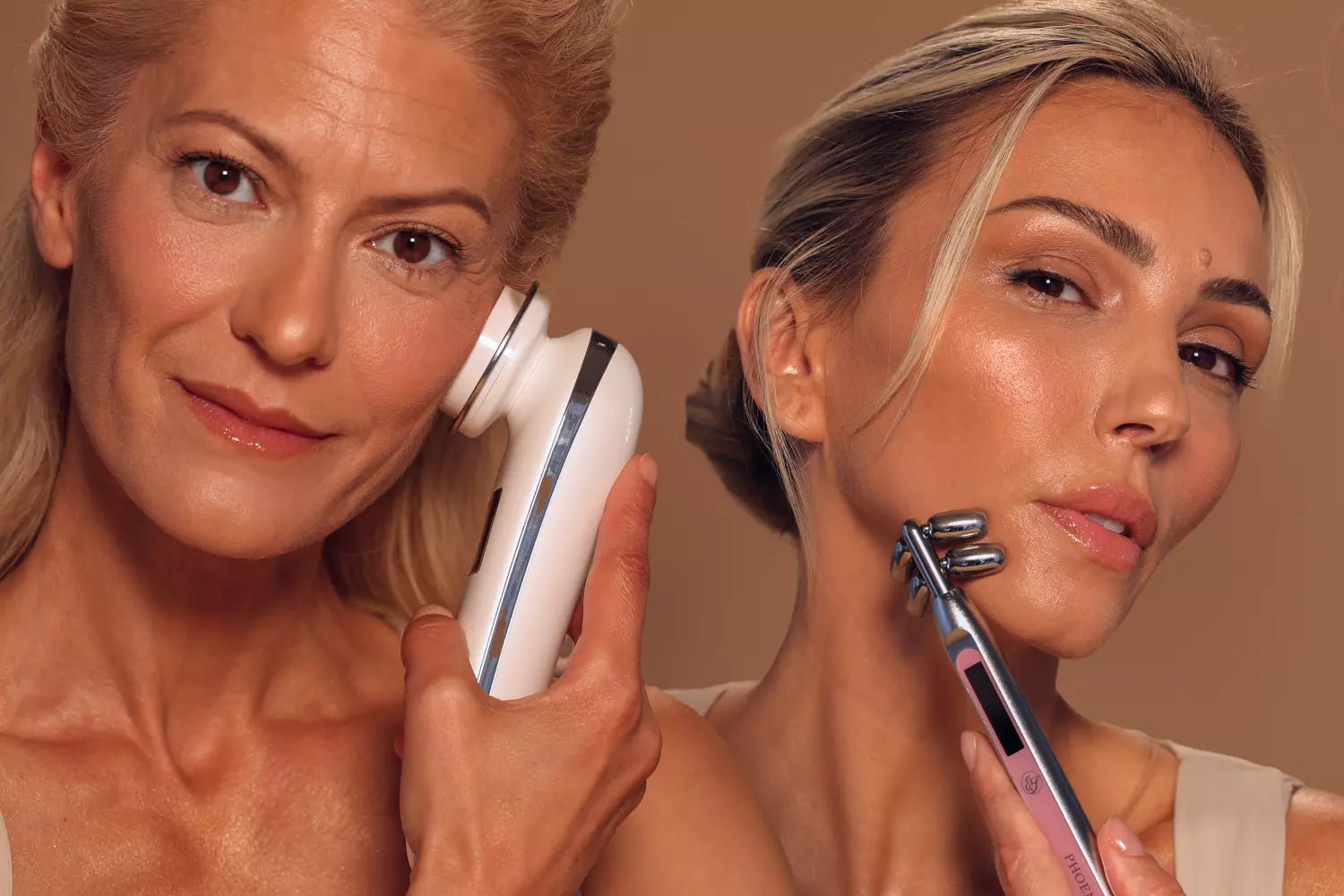
Microcurrent and EMS. Low-level electrical stimulation passed through electrodes on the skin is the mechanism behind both microcurrent and EMS, although they operate at different intensities. Microcurrent uses sub-sensory current intended to support cellular signaling, ATP production, and muscle re-education. EMS uses higher current to produce visible muscle contraction. For tech neck, the relevant target area is the lower face, jawline, and submandibular region, where microcurrent and EMS can support tone in the muscles that contribute to the cervicomental angle. The evidence for microcurrent is strongest on facial musculature, and the extension to the upper neck is reasonable but less rigorously studied. Our deeper write-up on the science of microcurrent therapy and its effects on facial muscles covers the mechanism in more detail.
Red light therapy (LED photobiomodulation). Red wavelengths around 630 to 660 nanometers, sometimes paired with near-infrared at 830 to 850 nanometers, are absorbed by mitochondrial cytochrome c oxidase, which appears to drive a cascade of effects including increased ATP production, modulated reactive oxygen species, and downstream activation of pathways involved in collagen synthesis and inflammation control. Hamblin's 2017 review in AIMS Biophysics consolidated the mechanistic evidence. For tech neck, red light therapy supports the photoaging side of the equation: it does not directly tighten skin but it appears to support the cellular machinery that maintains and rebuilds the dermal matrix.
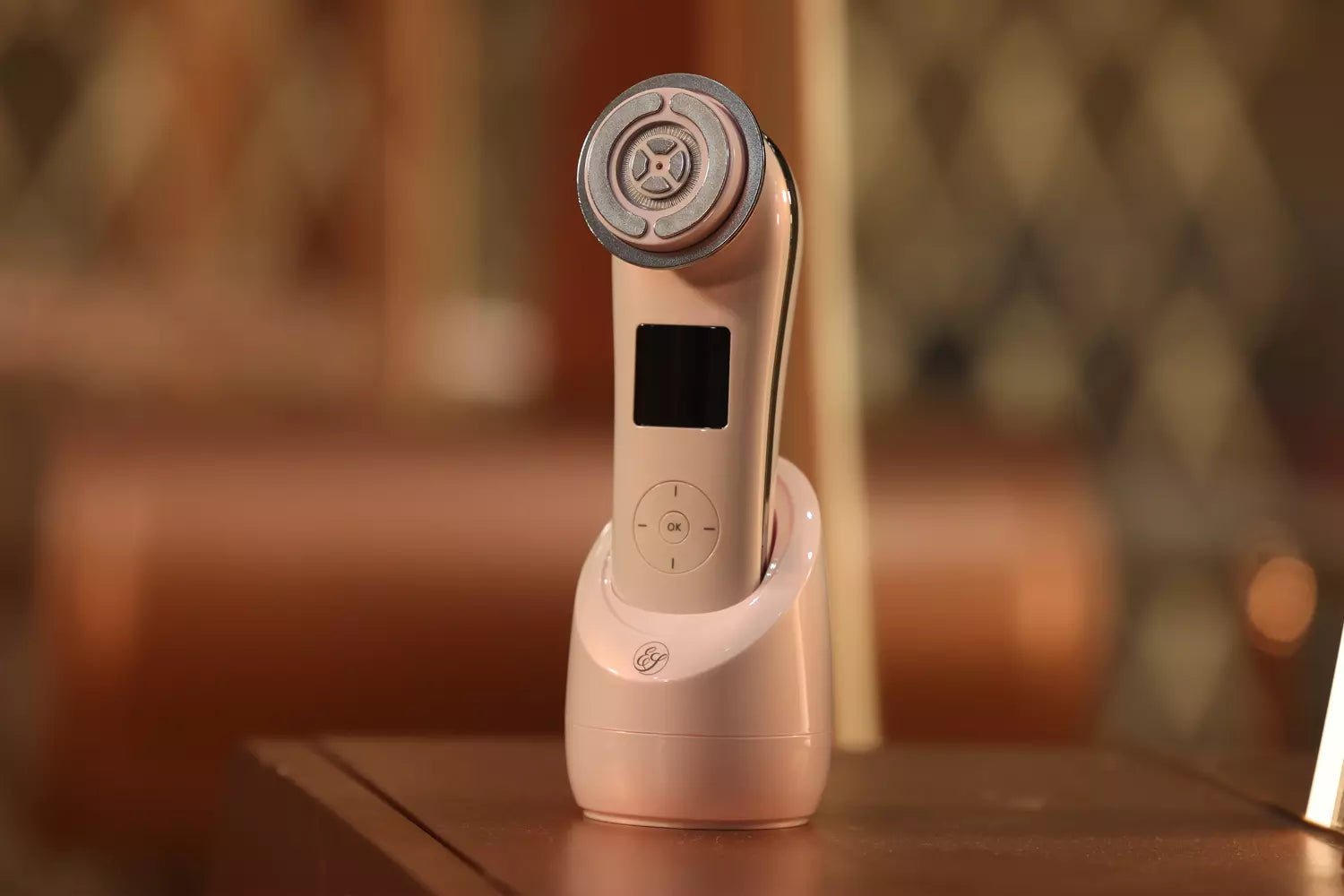
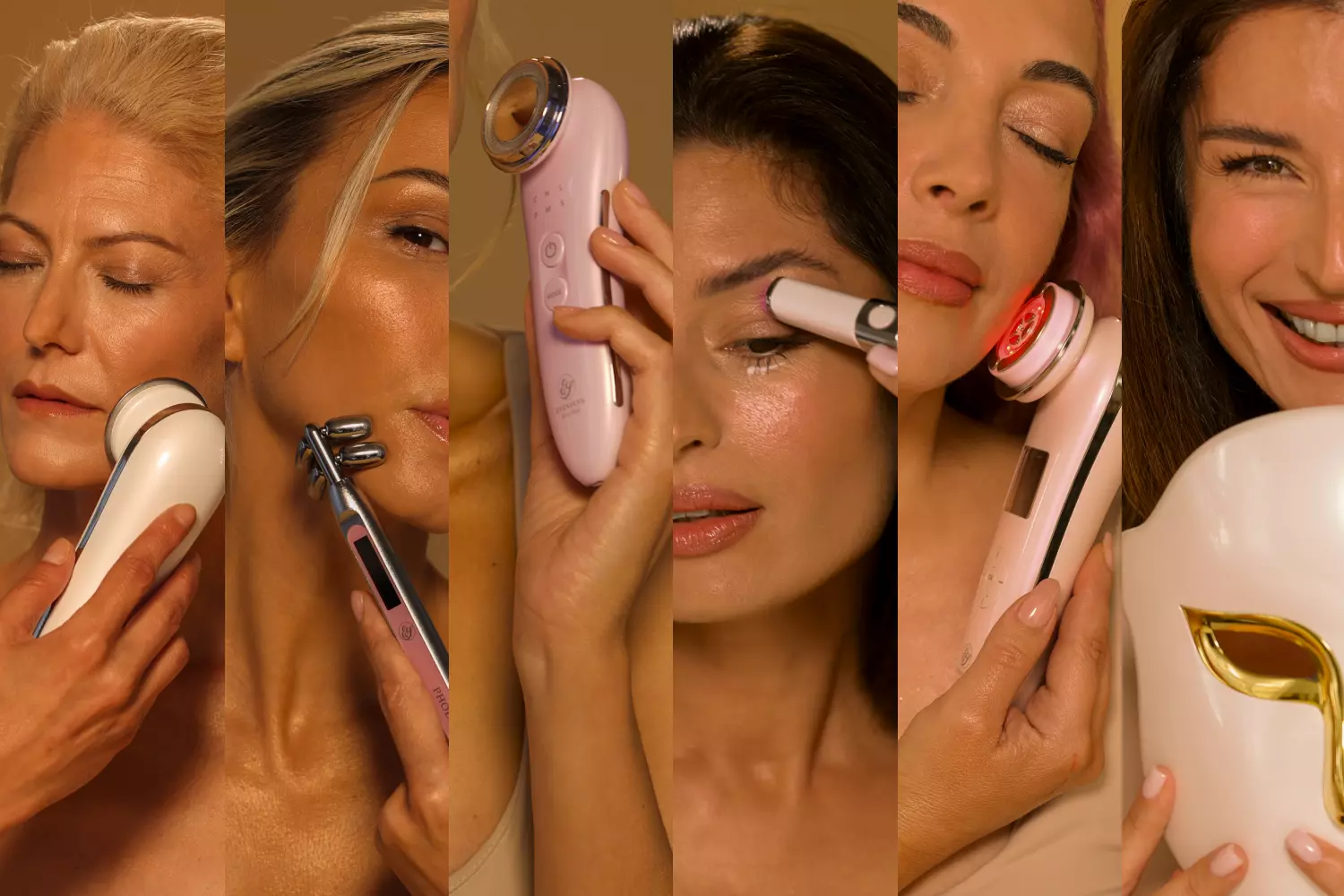
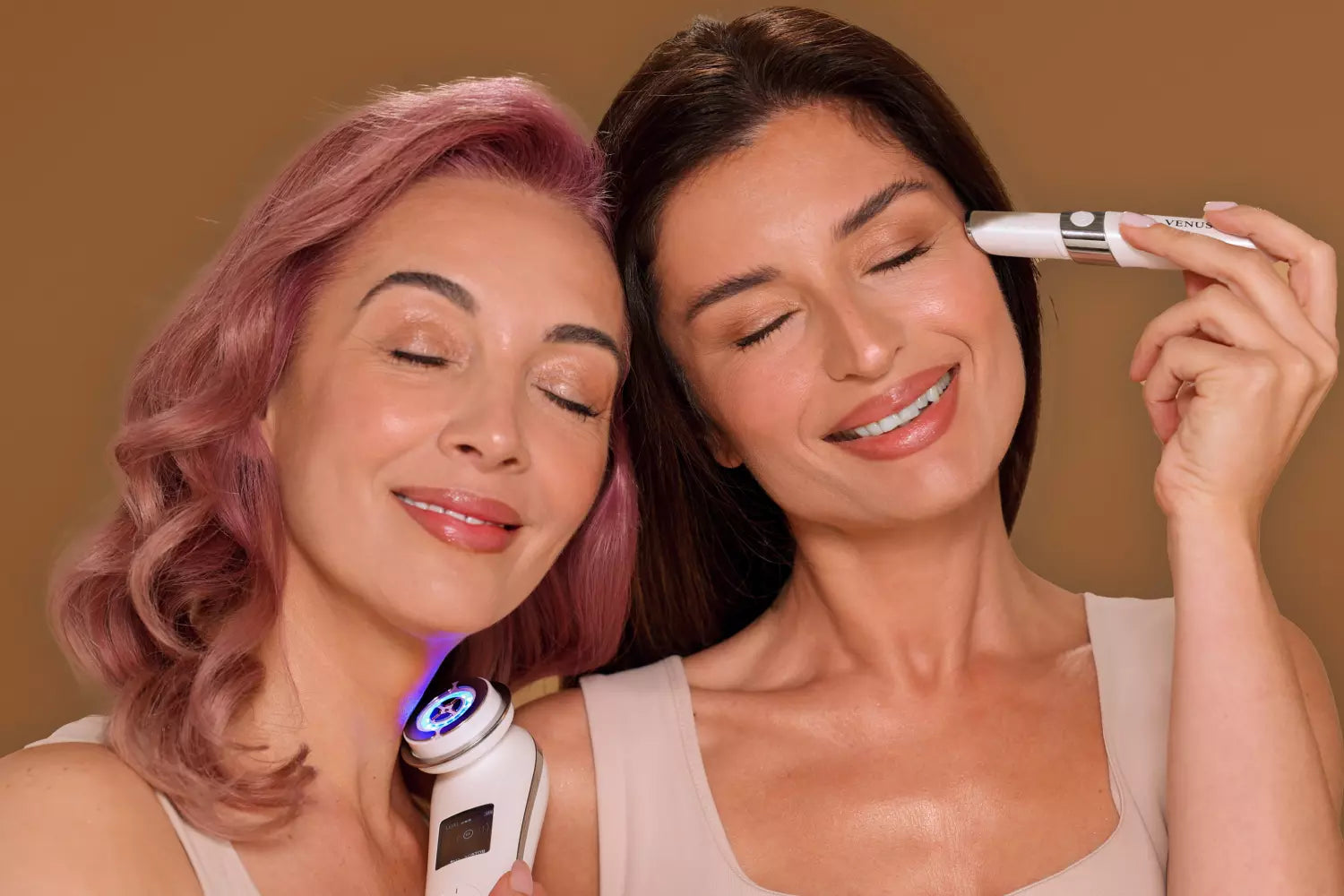
What to look for in a multi-modality device. Combination devices that pair RF, microcurrent, and LED in a single handset address the four mechanisms unevenly. They support dermal thinning (RF), platysma muscle tone (microcurrent), and photoaging signaling (LED). They do not address mechanical folding directly. If you are evaluating one, four practical things matter more than the marketing copy. First, the RF must reach a useful dermal temperature; cooler home devices often do not, which is why session frequency matters. Second, the microcurrent should have separate intensity controls because the appropriate intensity for the lower face differs from facial protocols. Third, the LED component should specify wavelength and irradiance, not just "red light." Fourth, the device should be physically suitable for the neck contour rather than designed only for the flat plane of the face. Devices that meet these criteria from various manufacturers exist; our own combination handset is one example among several. Whichever device you choose, the variable that matters more than any specification is consistency of use over 12 to 16 weeks, paired with the ergonomic and topical foundation described earlier.
Common mistakes that make tech neck worse
Five patterns come up often enough in my practice to flag directly.
Treating the neck like the face. Strong actives, aggressive exfoliation, retinoid frequency that is fine on facial skin can irritate the thinner neck skin into chronic inflammation, with redness, peeling, and barrier breakdown that makes texture and lines look worse. Start any new active at half the frequency and concentration you would use on the face and ramp up only when tolerance is clear.
Using a "neck cream" while skipping SPF. The expensive neck cream people often invest in does, at best, a fraction of what daily sunscreen on the same area does. If the budget for one is the budget for the other, prioritize the sunscreen.
Aggressive "facial yoga" routines that involve pulling and stretching the neck skin. The mechanical premise of repeatedly stretching skin to "tone" it does not have the evidence base its proponents claim. Repeatedly stretching thin skin against an unsupported muscle bed is the same insult that creates tech neck. Gentle massage for lymphatic drainage is fine. Vigorous pulling is not.
Expecting at-home devices to perform like in-clinic devices. Home RF or LED devices deliver lower energy than clinical equivalents because they must be safe in untrained hands. The trade-off is more frequent sessions and slower visible change. People who use a home device for two weeks and quit have not given the technology a fair test. Twelve to sixteen weeks is the minimum window.
Skipping the posture and ergonomic work. The most common and costly mistake. Topicals and devices applied to a neck that continues to fold forward 12 hours a day produce diminishing returns. The same effort applied to a neck that has been brought back to mostly-neutral posture produces visible change. The order of operations is posture first, SPF next, topicals and devices last.
In-clinic options and when to consider them
For established tech neck that has progressed beyond what at-home interventions are likely to address, in-clinic options exist. They differ from at-home approaches in three ways: the energy or material delivered is more concentrated, the procedure is performed by a trained professional, and the cost per session is significantly higher. Whether they are worth pursuing depends on the severity of the changes and the budget available.
Monopolar RF (Thermage and similar). A single in-clinic RF session delivers more energy and reaches deeper than a series of at-home sessions. Results emerge over 2 to 6 months as new collagen forms. A typical session for the face and upper neck costs in the low-to-mid thousands of dollars and lasts 12 to 24 months before potentially repeating. This is the in-clinic standard for established skin laxity that has not responded adequately to topicals and home devices. The Alster and Tanzi 2004 study cited earlier was performed on a Thermage device.
Microfocused ultrasound (Ulthera). Reaches deeper into the SMAS layer than RF and is particularly used for the lower face and neck. It is more uncomfortable during the procedure than RF and produces results over a similar timeline.
RF microneedling. Combines microneedling with bipolar RF delivered through the needle tips, depositing thermal energy into the dermis with less surface heating than monopolar RF. Useful for moderate texture and laxity changes. A series of three sessions is common.
Botulinum toxin for vertical bands. Direct treatment for visible platysmal bands, performed by an experienced injector. The Hu 2024 anatomical review provides detailed injection protocols for the platysma. Most effective for the dynamic, muscle-driven vertical band pattern; horizontal mechanical creases in the skin respond less reliably to neuromodulator alone, which is why horizontal lines (the more common tech-neck pattern) are typically addressed with skin-targeted treatments instead.
Hyaluronic acid filler for deep horizontal lines. Low G-prime hyaluronic acid filler can be carefully placed into established deep horizontal neck creases. Results last 6 to 12 months. The technique is unforgiving on the neck and should only be performed by an injector with specific neck experience.
Surgical neck lift. For severe laxity that has progressed beyond what energy-based devices can address, a cervicoplasty or platysmaplasty is the surgical option. This is a meaningful procedure with weeks of downtime and recovery and is a different category from anything we have discussed so far.
The honest answer on when to go in-clinic is that most tech neck cases, especially in people in their 20s, 30s, and early 40s, do not yet warrant it. The diminishing-returns curve favors prevention and consistent at-home work in the early stages. By the time the case is severe enough to warrant a Thermage session or surgical intervention, the patient has typically been ignoring the problem for years. Catching tech neck early, with posture and topicals and a consistent home-device routine, prevents the trajectory that leads to clinic-grade interventions.
A 16-week protocol with realistic expectations
What does this look like in practice? Here is a realistic 16-week starting protocol that combines the four-mechanism model into a daily routine. The expectation is meaningful but modest visible improvement in fine creping and skin tone, slight softening of established lines, and a shift in the trajectory of further deepening. Dramatic erasure of deep set horizontal lines is not the goal at 16 weeks. Maintenance and slow continued improvement is the goal at 12 months and beyond.
Weeks 1 to 2: Foundation. Set up ergonomics. Phone at eye level. Laptop on a stand. Daily SPF on neck and decolletage every morning, applied as part of the existing skincare routine. Vitamin C serum in the morning. Plain moisturizer at night. No retinoid yet. Five-second posture resets every 15 to 30 minutes. Chin tucks 10 reps, three times daily.
Weeks 3 to 4: Add retinoid. Introduce a low-strength retinol two nights per week, applied to the face and extending down the neck. Apply moisturizer first, then a pea-sized amount of retinol, then a thin layer of moisturizer over the top to buffer. If well tolerated at week 4, increase to three nights per week.
Weeks 5 to 8: Layer in device. Begin a multi-modality home device used three times per week on the face and upper neck. The conduction pattern matters for the neck: glide along the lines of the platysma fibers, from the lower face down toward the collarbones, with attention to the submandibular area where the jawline meets the neck. Continue everything from the previous weeks.
Weeks 9 to 12: Increase consistency. Retinol can move to four or five nights per week for those tolerating it well. Device sessions remain three times per week. Add a weekly hydrating mask or sheet mask focused on the neck. Photograph the area weekly under consistent lighting for objective tracking.
Weeks 13 to 16: Evaluate and adjust. Compare week 16 photographs to week 1. Most people will see noticeable improvement in surface texture and tone, modest improvement in fine creping, and small changes in deeper set lines. If progress is good, hold the protocol. If a specific deep line is not responding, consider a single in-clinic consultation about whether targeted filler or RF microneedling makes sense for that line specifically.
Beyond week 16. The goal at this point is maintenance. Daily SPF and vitamin C in the morning. Three to four nights per week of retinol. Two to three device sessions per week. Continued posture awareness. The cumulative effect of this routine over years is the difference between a 50-year-old neck that looks 50 and a 50-year-old neck that looks 40. It will not turn back the clock dramatically. It will dramatically slow the clock going forward.
One realistic note. Some lines, particularly deep horizontal lines that have been etched in for many years, may not soften meaningfully with this protocol alone. They are the ones most likely to benefit from carefully placed filler if cosmetic concern is high. Setting expectations correctly at the start is more important than chasing a treatment that is unlikely to work. Tech neck is much easier to slow than to reverse.
Frequently asked questions
What age does tech neck start?
Earlier than people expect. Faint horizontal lines exist from childhood and reflect normal skin folds at the natural creases of the neck. What changes with phone use is the rate at which those lines deepen and the appearance of additional fine lines and surface laxity. Many people in their late twenties already have visible tech-neck creasing, particularly if they were heavy phone users from adolescence.
Can tech neck wrinkles go away on their own?
Mild dynamic creases that disappear when the neck is straight may stop progressing if the underlying flexion is reduced. Lines that are visible at rest, etched into the dermis, will not disappear on their own. They can soften with consistent treatment over months but typically do not fully erase without combination therapy, and even then complete erasure of deep static lines is uncommon.
Does Botox work for horizontal neck lines?
Botulinum toxin works well for vertical platysmal bands, which are caused by overactive muscle fibers at the borders of the platysma. Horizontal neck lines are mechanical creases in the skin itself, not muscle bands, and respond less reliably to Botox alone. The treatments that address horizontal lines are skin-targeted: topical retinoids, energy-based devices, and in some cases hyaluronic acid filler placed into the lines themselves.
Is the "60 pound" head weight number real?
It is the result of a mathematical model published by Kenneth Hansraj in 2014, not a direct measurement, and the precise number depends on assumptions about head weight and cervical spine geometry. The clinical takeaway holds regardless: forward head flexion increases cervical spine load substantially, and the load increases disproportionately as the angle increases. Whether the figure at 60 degrees is exactly 60 pounds or somewhat different in a given person, the principle of disproportionate load with increasing flexion is well-established.
How is tech neck different from regular neck aging?
Regular neck aging is mostly chronological dermal thinning plus accumulated UV damage, progressing slowly across decades. Tech neck adds a third driver: mechanical folding from chronic forward-head flexion, occurring at much higher daily repetition counts than ever before. The result is the same kind of horizontal creasing showing up earlier in life and progressing faster than it did a generation ago.
Can men get tech neck?
Yes. Men typically have slightly thicker neck dermis than women and may show changes more slowly, but the same mechanical, postural, and UV mechanisms apply. Men who skip neck SPF for decades and use phones heavily develop the same horizontal creasing. The treatment principles are identical.
Are there any "neck creams" that actually work?
Neck creams with the strongest evidence behind them use the same actives as proven facial products: retinol or retinaldehyde, niacinamide, peptides, and antioxidants like vitamin C. There is no neck-specific magic ingredient. The "neck cream" label is mostly marketing. A well-formulated facial moisturizer or serum extended down the neck typically does the same job.
How often should I use a home RF or microcurrent device on my neck?
The protocols studied in home-use device trials typically range from two to five sessions per week, with most published protocols centered around three sessions per week for 8 to 12 weeks. Three sessions per week is a reasonable starting cadence. More is not necessarily better. Daily use can over-tax the skin and produce irritation without proportional benefit.
How long until I see results?
Surface improvements like hydration and texture can show within days to weeks. Wrinkle softening and elasticity improvements from collagen-stimulating interventions like retinoids and RF are typically measurable at 8 to 12 weeks and continue to improve through 6 months. Deep static lines change slowly over many months and rarely fully resolve without procedural intervention.
Should I use my phone less?
Reducing total phone time helps everything from posture to sleep, so generally yes. From a tech-neck perspective, however, the more useful change is how you hold the phone when you do use it. Lifting the phone to eye level rather than reading from your lap is the highest-impact behavioral change, and it is achievable in a way that "use less" often is not.
Can supplements help?
Hydrolyzed collagen peptides have some evidence for modest improvements in skin elasticity in mature women in placebo-controlled studies, with effect sizes smaller than topical retinoids and home devices. Vitamin C and zinc support collagen synthesis but most people meet adequate levels through diet. Supplements should not be the first line of defense against tech neck, but a high-quality collagen peptide is reasonable as an adjunct.
What about facial yoga or neck massage?
Manual techniques have a limited but real role. Lymphatic drainage massage on the neck reduces puffiness and supports circulation. Targeted strengthening of the deep cervical flexors is a posture intervention with cosmetic benefit. Aggressive facial yoga routines that involve pulling and stretching the neck skin are not supported by evidence and may worsen mechanical creasing in some people. Gentle, consistent, posture-focused work is reasonable. Forceful manipulation is not.
Is tech neck different in darker skin tones?
The four mechanisms apply to all skin types. The treatment approach has two adjustments for darker phototypes (Fitzpatrick IV through VI). First, retinoid introduction should be even more gradual because post-inflammatory hyperpigmentation can develop at the neck if irritation occurs. Second, ablative or aggressive in-clinic energy treatments carry higher risk of pigmentary changes and should be performed only by clinicians with specific experience in darker skin tones. The at-home protocol of posture, SPF, retinoid built up slowly, and a multi-modality device used at conservative settings is reasonable across all phototypes.
What about during pregnancy?
Pregnancy changes the skincare landscape. Topical retinoids (tretinoin, retinol, retinaldehyde, adapalene) are generally avoided during pregnancy and breastfeeding because of theoretical concerns about systemic absorption of vitamin A derivatives. The rest of the protocol still applies. Daily broad-spectrum mineral sunscreen, vitamin C serum, hyaluronic acid serums, and gentle moisturizers are pregnancy-compatible. At-home device use during pregnancy is an individual conversation with your obstetrician; the manufacturers of most home RF and microcurrent devices list pregnancy as a contraindication out of regulatory caution rather than because of documented harm. Posture and ergonomic interventions are entirely safe and can be the focus of effort during this window.
About this guide and our methodology
This guide was written by Dr. Lisa Hartford, MD, Chief Dermatology Advisor and Doctor-in-Residence at EvenSkyn. Dr. Hartford is a board-certified dermatologist who graduated with honors from Johns Hopkins University School of Medicine, completed dermatology residency at Mayo Clinic, and has worked in clinical practice, pharmaceutical dermatology research, and skincare R&D. She joined EvenSkyn in 2020 and reviews safety protocols and clinical claims for all EvenSkyn at-home device documentation. Read more about her on the EvenSkyn Chief Dermatology Advisor page.
Every clinical claim, biomechanical reference, and quantitative figure was traced to a peer-reviewed source verifiable on PubMed or PubMed Central, or to standard dermatology consensus where the underlying evidence base is too broad to cite a single trial (for example, daily broad-spectrum SPF). PMIDs and PMCIDs are listed in the References section. Where evidence is strong, we have said so. Where it is emerging, we have flagged it. Competitor at-home devices are not named or compared in this article. Where EvenSkyn devices are mentioned, they are mentioned as one example within a broader treatment category.
This guide is reviewed and updated annually. Reader corrections welcome at support@evenskyn.com.
References
- Hansraj KK. Assessment of stresses in the cervical spine caused by posture and position of the head. Surg Technol Int. 2014;25:277-279. PMID: 25393825.
- Kim E, Cho G, Won NG, Cho J. Age-related changes in skin bio-mechanical properties: the neck skin compared with the cheek and forearm skin in Korean females. Skin Res Technol. 2013 Aug;19(3):236-241. PMID: 23441628.
- Alster TS, Tanzi E. Improvement of neck and cheek laxity with a nonablative radiofrequency device: a lifting experience. Dermatol Surg. 2004 Apr;30(4 Pt 1):503-7; discussion 507. PMID: 15056138.
- Sadick NS, Harth Y. A 12-week clinical and instrumental study evaluating the efficacy of a multisource radiofrequency home-use device for wrinkle reduction and improvement in skin tone, skin elasticity, and dermal collagen content. J Cosmet Laser Ther. 2016;18(8):422-427. PMID: 27351303.
- Shemer A, Levy H, Sadick NS, Harth Y, Dorizas AS. Home-based wrinkle reduction using a novel handheld multisource phase-controlled radiofrequency device. J Drugs Dermatol. 2014 Nov;13(11):1342-1347. PMID: 25607700.
- Hamblin MR. Mechanisms and applications of the anti-inflammatory effects of photobiomodulation. AIMS Biophys. 2017;4(3):337-361. PMID: 28748217. PMCID: PMC5523874.
- Bu P, Duan R, Luo J, Yang T, Liu N, Wen C. Development of Home Beauty Devices for Facial Rejuvenation: Establishment of Efficacy Evaluation System. Clin Cosmet Investig Dermatol. 2024;17:553-563. PMID: 38476342. PMCID: PMC10929553.
- Hu H, Kim SB, Wan J, et al. Anatomical Guidelines and Technical Tips for Neck Aesthetics with Botulinum Toxin. Arch Plast Surg. 2024 Aug 9;51(5):447-458. PMID: 39346003. PMCID: PMC11436334.
- Sitohang IBS, Makes WI, Sandora N, Suryanegara J. Topical tretinoin for treating photoaging: A systematic review of randomized controlled trials. Int J Womens Dermatol. 2022 Mar 25;8(1):e003. PMID: 35620028.
- Boisnic S, Divaris M, Branchet MC, Nelson AA. Split-face histological and biochemical evaluation of tightening efficacy using temperature- and impedance-controlled continuous non-invasive radiofrequency energy. J Cosmet Laser Ther. 2017 Jun;19(3):128-132. PMID: 27911134.
- Waller JM, Maibach HI. Age and skin structure and function, a quantitative approach (I): blood flow, pH, thickness, and ultrasound echogenicity. Skin Res Technol. 2005 Nov;11(4):221-235. PMID: 16221138. (Reviews ultrasound studies including ~0.1 mm photoaged-vs-covered neck skin thinning in older women.)
Update log
- May 2026 (v2.3): AI-detection resilience pass. Repeated phrases reduced (the formula "the single most evidence-based" was used four times in v2.2; cut to one usage in the Key Takeaways summary, with the other three rewritten in varied phrasing). Six paragraphs rewritten to break templated cadence: the four-mechanism intro paragraph, Mechanism 1 treatment paragraph, Mechanism 3 treatment paragraph, the SPF anchor paragraph, the posture-section opening, and the platysma description (which previously had three consecutive sentences starting with "It"). Comparison table intro reworked into more conversational framing. The byline reading time was corrected from "~25 minute full read" to "~28 minute full read" to match the actual word count. The "Last clinically reviewed" date was changed to a placeholder so it gets filled in with the actual review date rather than a borrowed one.
- May 2026 (v2.2): Final line-by-line audit corrections. Reference #8 (Hu et al. 2024) journal corrected from "Facial Plastic Surgery" to "Archives of Plastic Surgery" with full citation 51(5):447-458 (PMID 39346003 verified). Article body twice incorrectly named the journal; both fixed. Three places where the article had stated that the Hu 2024 review "confirmed" botulinum toxin is less effective for horizontal neck lines were rephrased, since the Hu paper actually lists horizontal neckline among botox indications. The comparative claim has been restated as a clinical-consensus point rather than attributed to that specific paper. Reference #3 page range updated to "503-7; discussion 507" to match PubMed formatting. UV-vs-cheek comparison softened (the original "more UV per square centimeter than the cheek" was overstated). Removed an uncited claim about daily frown frequency. Removed orphan "thread lift" mention (the modality was not described in the in-clinic options section).
- May 2026 (v2.1): Citation fixes after rigorous editorial audit against PubMed records. Reference #2 corrected from "Choi YH" to lead author Kim E (Eunjoo Kim, AMORE PACIFIC R&D Center; PMID 23441628). Reference #5 author order corrected to match PubMed: Shemer A, Levy H, Sadick NS, Harth Y, Dorizas AS (PMID 25607700). Reference #9 author and journal corrected: Sitohang IBS, Makes WI, Sandora N, Suryanegara J in International Journal of Women's Dermatology (not Wang JV et al. in Journal of Cosmetic Dermatology). Reference #10 (Boisnic 2017 PMID 27911134) added with correct authors: Boisnic S, Divaris M, Branchet MC, Nelson AA, J Cosmet Laser Ther 19(3):128-132. Reference #11 (Waller and Maibach 2005, PMID 16221138) added for the 0.1 mm photoaged neck thinning figure. Article body corrected to remove misdescription of the Boisnic split-face study as "home-device literature" since the study used a clinical in-office RF device. Threaded in alternative search terms: "phone neck", "text neck", "skinification of body care", "how to fix tech neck", "tech neck treatment", "radiofrequency skin tightening", "lax skin", "loose skin".
- May 2026 (v2): Added bottom-line answer at top, Quick Answers box, and "Common mistakes" section. Strengthened Dr. Hartford byline and bias disclosure to match other EvenSkyn editorial articles. Added two new verified citations (Hu et al. 2024 on neck botulinum toxin anatomy; PMID 35620028 systematic review on topical tretinoin). Removed one citation that could not be verified through PubMed search (previously listed as Carruthers 2007). Reduced commercial framing in the at-home devices section.
- May 2026 (v1): Initial publication.




Leave a comment
All comments are moderated before being published.
This site is protected by hCaptcha and the hCaptcha Privacy Policy and Terms of Service apply.