


Medically Reviewed by Dr. Lisa Hartford, MD
What Is a Microcurrent Facial? The At-Home Guide to Devices, Cost, and Real Results
The "non-invasive facelift" everyone keeps mentioning. Here is what it actually does, what a course costs in a clinic versus at home, and how to pick a device that matches your stage of aging.
A microcurrent facial uses very low-level electrical currents (microamperes) to stimulate the muscles and tissues of the face, with the goal of a firmer, more lifted, more contoured look. A single in-spa session commonly runs in the $150–$500 range and the effect is temporary, so most people either book repeat sessions or buy a one-time at-home device. The clinical evidence is encouraging but still thin, which makes how often you actually use it the single biggest factor in whether you see anything.
- Microcurrent works on facial muscles, not just skin. Because facial muscle mass declines with age, gently re-toning those muscles can improve lift and contour. That is the basis of the "facial workout" comparison.
- The foundational lab finding is real: low-level electric current raised ATP (cellular energy) and protein synthesis in skin tissue in a classic 1982 study.[1] That is a mechanism, not a promise of wrinkle removal.
- A 12-week randomized trial of a facial muscle-stimulation device found most users reported improved firmness and tone versus controls.[2] Results faded without continued use.
- Independent reviewers are blunt that the overall evidence base is small and short-term.[5] Treat dramatic before-and-afters with caution.
- The honest cost trade-off: repeat clinic sessions add up fast, while a one-time at-home device is cheaper over a year but only works if you keep using it. Pick the device that matches your aging stage, not the most powerful one.
Worth it for maintenance and early aging, if you are consistent
- Early signs of aging and prevention-minded routines
- Maintaining results between clinic visits or stronger device sessions
- People who want a no-downtime, do-it-at-home option and will be consistent
- Deep, set-in wrinkles or significant laxity (a clinic device reaches depths an at-home tool cannot)
- Anyone wanting a one-and-done fix
- People who will not use it several times a week
What a microcurrent facial actually is
Strip away the spa branding and it is simple. A microcurrent facial passes a very low-level electrical current, measured in microamperes and far below what you can feel as a jolt, across the face using two conductive points and a slip of gel. The current is tuned to mirror the body's own bioelectricity, and it is aimed less at the surface of your skin than at the small muscles underneath it.
That muscle focus is the key. We tend to think of a youthful face as a skin story. A lot of it is a muscle story. Facial muscles lose mass and tone with age the way the rest of the body does, and slack muscle lets the skin above it settle and droop. Microcurrent gently contracts and re-educates those muscles. Estheticians lean on the "gym session for your face" line for a reason: you are nudging small, often under-used muscles toward better tone.
There is a second mechanism under the hood. In a frequently cited 1982 paper in Clinical Orthopaedics and Related Research, Ngok Cheng and colleagues found that low-level direct currents increased ATP, the molecule cells use for energy, and boosted protein synthesis and amino-acid transport in skin tissue.[1] ATP and protein synthesis are the raw materials behind collagen and tissue repair, which is why microcurrent is framed as supporting the skin as well as the muscle. Worth being precise: that was tissue in a lab, not a clinical wrinkle outcome. It explains why the idea is plausible, not how your face will look in a month.
For the deeper mechanics of muscle stimulation and aging, we go further in our companion piece on the benefits of microcurrent muscle stimulation.
Current range shown to raise ATP and protein synthesis in skin tissue.
Cheng et al., 1982 [1]Treatment period in a randomized facial muscle-stimulation trial where most users reported improved tone.
Kavanagh et al., 2012 [2]Commonly reported price of a single in-spa microcurrent session (varies by city; verify locally).
Industry pricing, verifyThe benefits people actually report
Cut through the marketing and three benefits come up consistently, both in user reports and in the small body of research: a firmer, more "lifted" look around the jaw and cheeks; sharper contour along the jawline and cheekbones; and a softer appearance of fine lines, more from improved tone and circulation than from erasing anything. Reviews also note brighter, less puffy skin, which fits microcurrent's documented effect on local blood flow and lymphatic movement.
What it does not reliably do is remove deep, static wrinkles or tighten significant sagging. Those are structural problems that sit deeper than an at-home current reaches. Setting that expectation up front is the difference between someone who is happy with their results and someone who feels sold to.
Before and after: what realistic results look like
Manage the timeline and you will manage your satisfaction. Microcurrent is cumulative. A single session can give a short-lived "snatched" look, useful before an event, that typically fades within a day or two. Real, visible change is the product of weeks of repetition. In one before-and-after clinical study, thirty participants under 45 with significant facial wrinkles were treated for twenty minutes across thirty sessions, and blinded reviewers scored a modest improvement in wrinkles immediately after the course and at one month.[3] Modest is the operative word. Anyone showing you a dramatic, instant transformation is either using filters, better lighting, or a very generous camera angle.
A sensible expectation: a subtle lift you notice first, friends notice later, sustained only as long as you keep up a maintenance routine. Stop, and facial muscles drift back toward baseline over a few weeks, the same way they would if you stopped exercising.
In-spa vs. at-home: the honest cost comparison
This is where most "microcurrent facial near me" searches end up, so let us do the maths plainly. A professional session buys you a stronger machine and a trained pair of hands, but the effect is temporary, so the cost repeats. An at-home device is a single purchase you control on your own schedule. Gentler per session, but you own it.
| Route | Typical cost | Cadence to maintain results | Rough first-year cost |
|---|---|---|---|
| In-spa microcurrent facial | $150–$500 / session | Weekly at first, then monthly | $1,800–$4,000+ |
| At-home microcurrent device | $119–$499 one-time | A few sessions a week, at home | $119–$499 + gel |
Figures are commonly reported ranges for illustration, not a quote; clinic pricing varies widely by city and provider, so verify locally.
The takeaway is structural, not exact: if you intend to keep this up for more than a few months, the at-home route is almost always the cheaper path, provided you actually use the device.
The best device is not the most powerful one. It is the one that matches your stage of aging, and the one you will still be using in three months.
What to look for in an at-home microcurrent device
Before any product names, here are the criteria that actually matter. Judge any device, ours or anyone else's, against these.
The right technology for your stage
Pure microcurrent suits prevention and maintenance. Add ultrasound for gentle toning at early signs of aging; add radiofrequency when you want deeper skin-tightening for more visible aging.
Conductivity and glide
Microcurrent needs a conductive medium. A device is only as good as its contact, so a proper conduction gel is not optional. Dry skin breaks the circuit.
A routine you will keep
Session length, charge life and ease of use decide whether you stay consistent. Consistency, not wattage, drives results.
Honest claims and support
Look for a warranty, clear contraindications, and brands that describe what a device will not do, not just what it will.
Which device fits your stage of aging
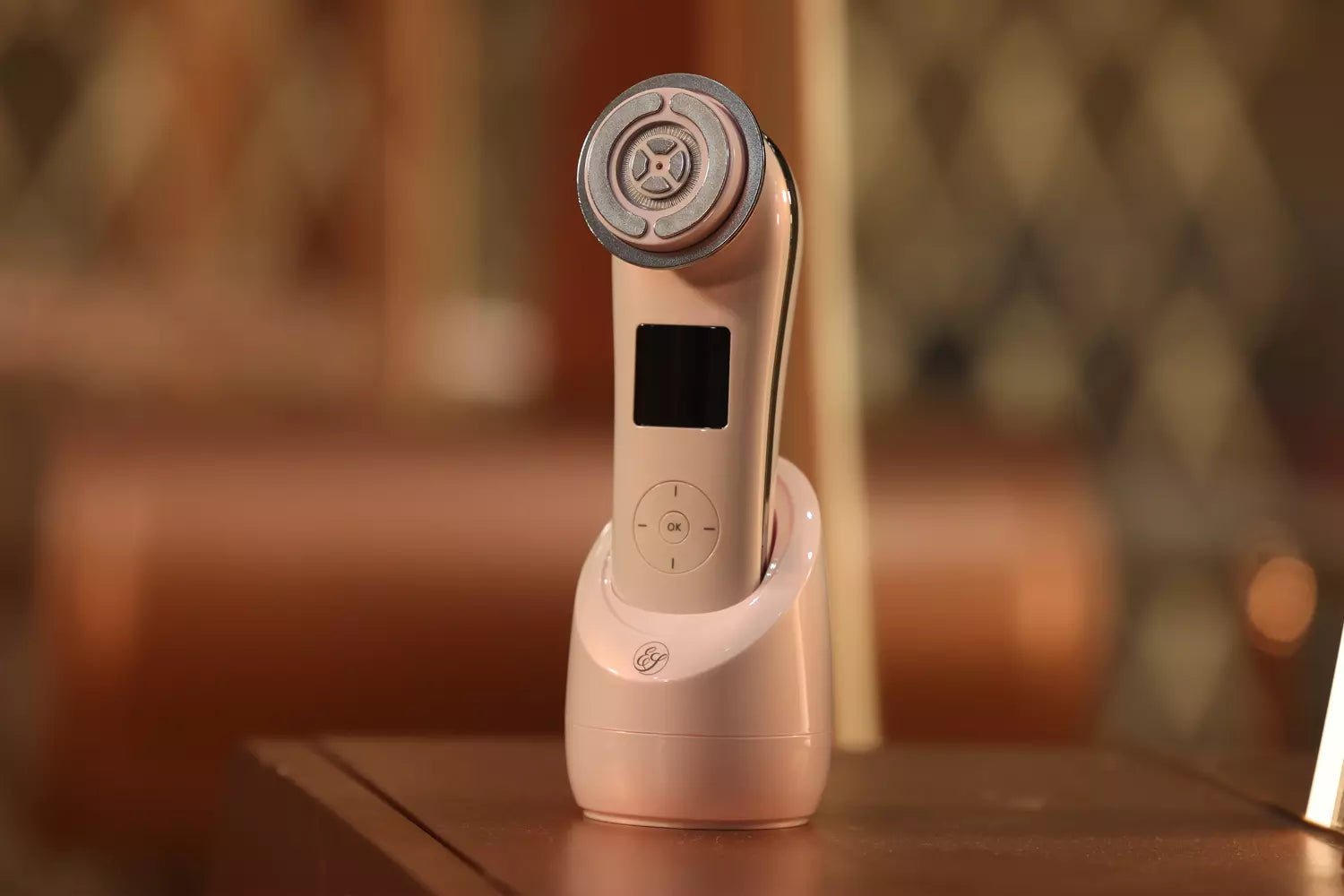
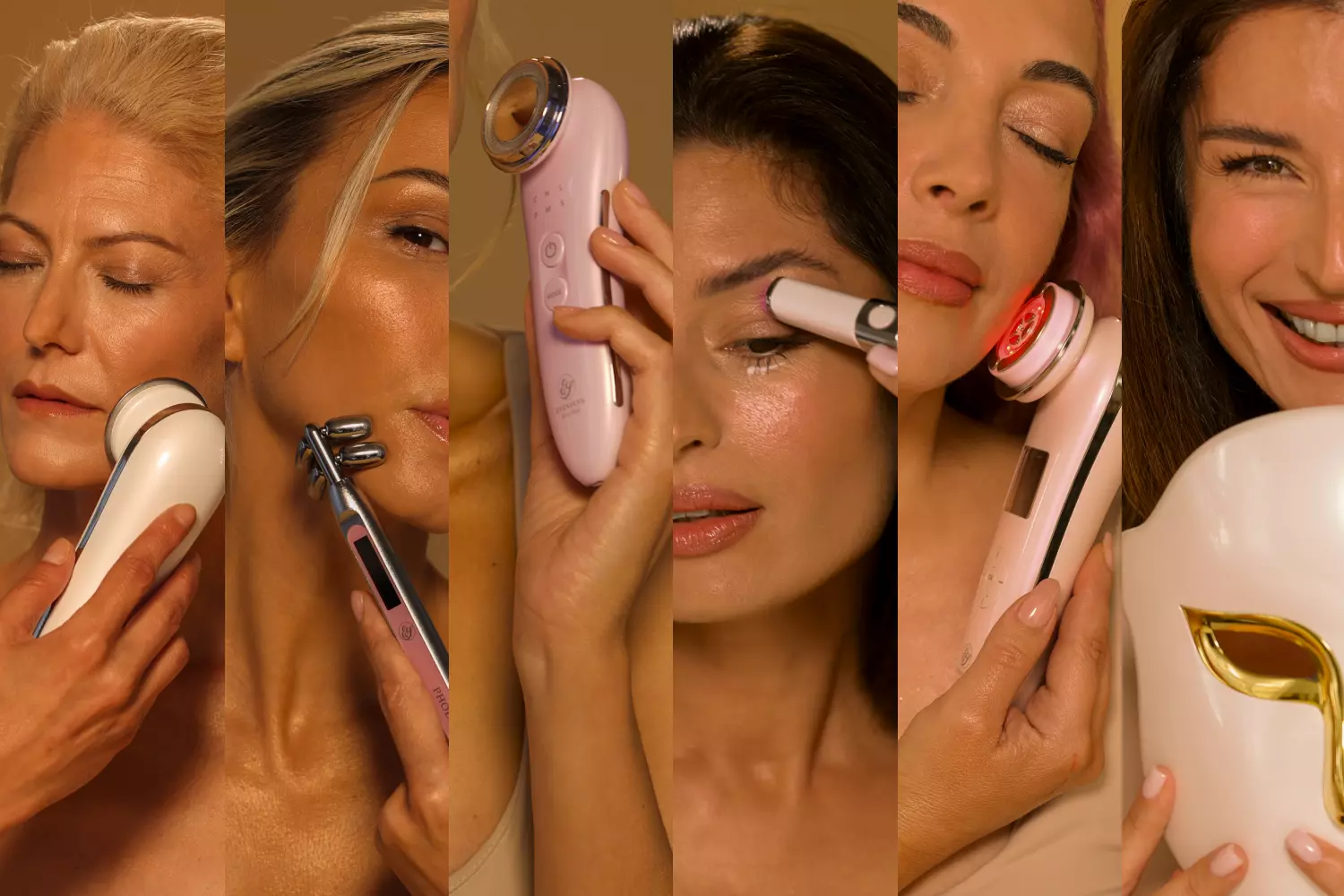
This is the part people get wrong: they buy the strongest tool when they need the right one. At-home microcurrent makes most sense as a ladder, matched to where your skin actually is. The EvenSkyn line is built around exactly that progression, and these are our devices, judged against the criteria above.
| Device | Core technology | Best matched to | Price |
|---|---|---|---|
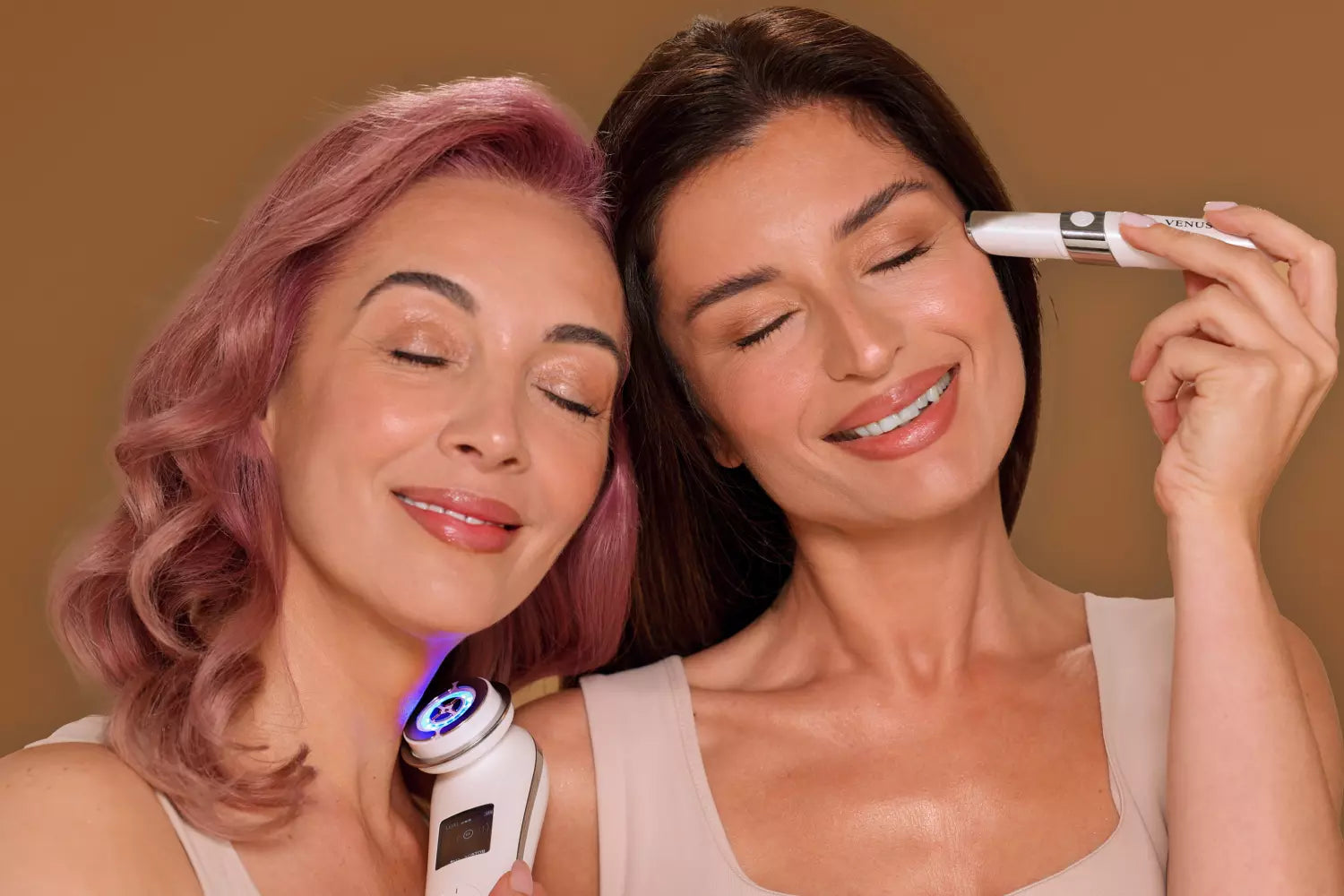
| EvenSkyn Eclipse | Ultrasound + microcurrent/EMS | Younger skin and early signs of aging that want toning without intense tightening | $199.99 |
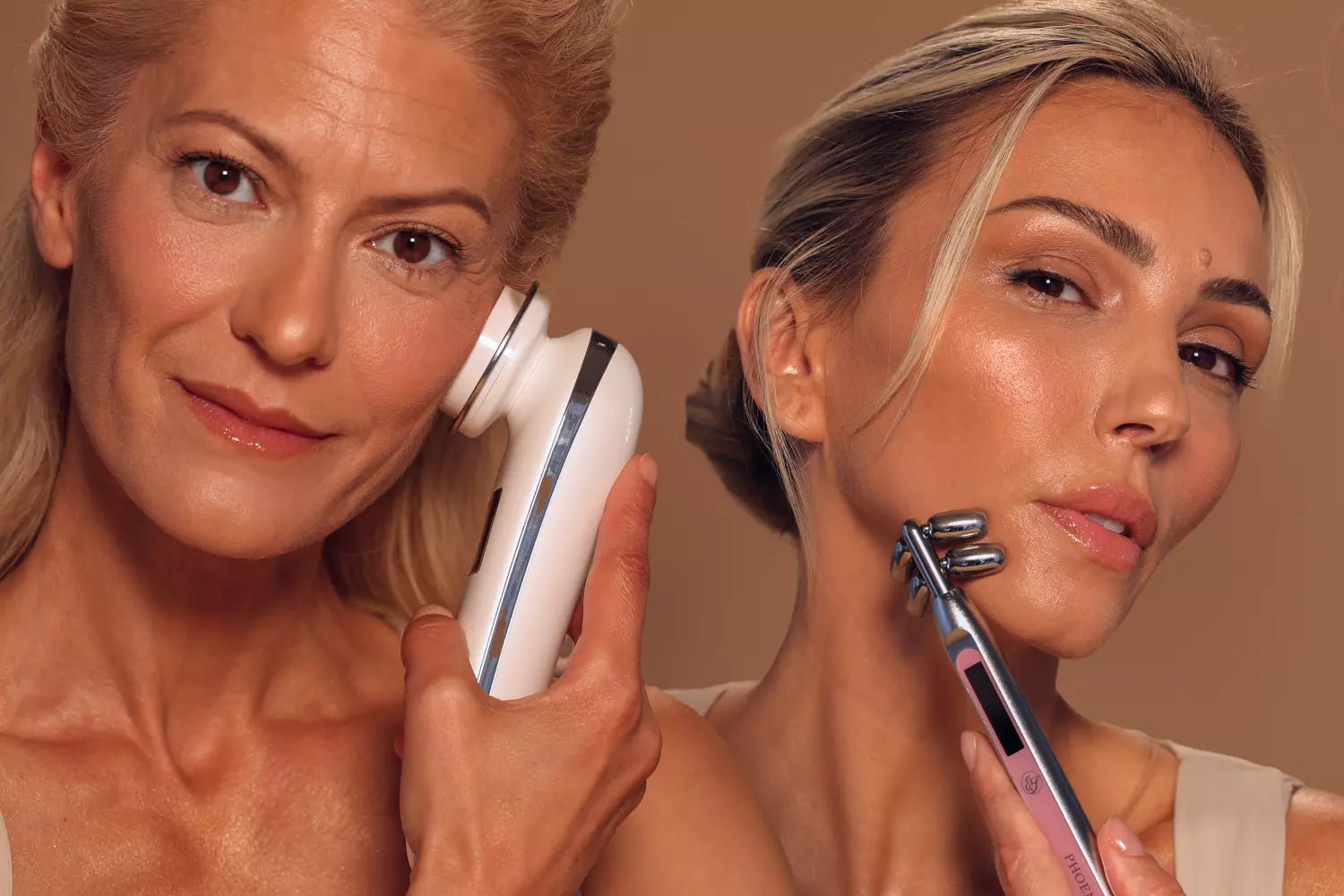
| EvenSkyn Phoenix | Microcurrent bar | Daily maintenance and toning, and upkeep between stronger sessions | $119.99 |
| EvenSkyn Lumo⁺ | Radiofrequency + microcurrent/EMS + red light | More visible aging and laxity that wants the deeper tightening RF can drive | $499.99 |
Specifications and prices are current to our product pages at time of writing and can change; verify on the live listing. Other microcurrent devices exist on the market (for example, NuFACE); brand names belong to their respective owners and are referenced here for comparison only.
A simple way to read the ladder: Eclipse is the ultrasound-led entry point for early aging, Phoenix is the affordable everyday maintenance bar that fits between bigger sessions, and Lumo⁺ is the heavyweight for visible aging, pairing microcurrent with radiofrequency for tightening that microcurrent alone will not deliver. One honest boundary worth repeating: even Lumo⁺ is an at-home device. It brings clinic-style technologies into a convenient, affordable form, but a professional in-clinic system delivers energy at depths a home tool is not designed to reach.
If your main goal is firming and lifting, see how microcurrent and radiofrequency complement each other in our piece on combining RF and microcurrent, and our deeper look at microcurrent and EMS device efficacy.
The pick for most people: start with maintenance
For the majority of readers, anyone in prevention or maintenance mode, the honest recommendation is to start with the Phoenix microcurrent bar and step up to Lumo⁺ only if and when more visible laxity calls for radiofrequency.
What it does well
Affordable, genuinely easy to keep up daily, and well suited to toning and maintaining a lifted look over time.What it won't do
It will not erase deep wrinkles or reverse significant sagging. For that you need radiofrequency (Lumo⁺) or an in-clinic procedure. Naming that limit is the point.How to do a microcurrent facial at home
The routine is short and forgiving, but the gel step is non-negotiable.
- Cleanse. Start with clean, dry skin so nothing sits between the device and you.
- Apply a conductive gel. Spread a generous, even layer of a water-based conduction gel over the area. Microcurrent cannot travel through dry skin; if the gel dries mid-session, the circuit breaks and you are just giving yourself a massage.
- Work in upward, outward strokes. Move the device slowly along the jaw, cheeks and brow, generally bottom-to-top, following your model's guidance.
- Keep sessions short and regular. Most at-home routines run five to twenty minutes, several times a week. Frequency beats intensity.
- Cleanse off and moisturize. Remove residual gel and follow with your usual serum or moisturizer.
Consistency is the whole game. A device used twice a week for three months will out-perform a stronger one used twice and abandoned in a drawer.
Does a microcurrent facial really work? An honest look at the evidence
Here is the straight version. The mechanism is well grounded: low-level current measurably raises ATP and protein synthesis in skin tissue.[1] Several clinical studies are genuinely encouraging. A 12-week randomized, controlled trial of a facial neuromuscular stimulation device reported that a large majority of participants saw improved facial tone and firmness compared with controls.[2] A separate before-and-after study found modest, blinded-rated wrinkle improvement after a course of treatments.[3] And a randomized trial of an at-home device combining low-level light, low-dose radiofrequency, microcurrent and ultrasound found significant improvements in skin elasticity, roughness, pore size and eye-wrinkle volume after eight weeks.[4]
Now the caveat that honest sources include and marketing leaves out: a 2024 systematic review of at-home facial-rejuvenation devices concluded that the existing studies are limited by small sample sizes and short follow-up periods, and that better-designed research is still needed.[5] In plain terms, the early signals are positive and consistent, but the evidence is not yet the kind of large, long-term proof you would want before promising anyone a transformation. That is exactly why we score the approach as "worth it for maintenance, with realistic expectations" rather than as a miracle.
Match the device to your skin, not the hype
Early aging and maintenance? The Phoenix microcurrent bar is the easy place to start. More visible laxity and you want real tightening? That is where Lumo⁺ and radiofrequency earn their place.
Explore the Phoenix microcurrent barMicrocurrent facial FAQ
What is a microcurrent facial?
Do microcurrent facials really work?
How often do I need to do it?
How long do the results last?
Is an at-home device as good as a professional facial?
Does a microcurrent facial hurt?
Are there side effects, and who should avoid it?
Can you overdo a microcurrent facial?
What is the difference between microcurrent and radiofrequency?
Do I need a special gel?
How we researched this
We separated two kinds of claim. Statements about mechanism and clinical outcomes are sourced to peer-reviewed literature and a systematic review, each cited below and verified at the time of writing. Statements about specific EvenSkyn devices (technology, price, intended use) come from our own current product pages and are presented as such, not as independent findings. Cost ranges for clinic treatments are commonly reported figures for illustration and should be verified locally. This article was medically reviewed by Dr. Lisa Hartford, MD, a dermatologist, for accuracy of the skin-science claims; product and pricing details remain the responsibility of EvenSkyn.
References
- Cheng N, Van Hoof H, Bockx E, Hoogmartens MJ, Mulier JC, De Dijcker FJ, Sansen WM, De Loecker W. The effects of electric currents on ATP generation, protein synthesis, and membrane transport in rat skin. Clin Orthop Relat Res. 1982;(171):264–272. PMID: 7140077.
- Kavanagh S, Newell JN, Hennessy M, Sadick N. Use of a neuromuscular electrical stimulation device for facial muscle toning: a randomized, controlled trial. J Cosmet Dermatol. 2012;11(4):261–266. doi:10.1111/jocd.12007.
- Saniee F, et al. Consideration of micro-current's effect on the variation of facial wrinkle trend: a randomized clinical trial. Life Science Journal. 2012. (Small before-and-after study, n=30; lower-tier journal — interpret with caution.)
- Efficacy and safety of a home-use handheld multi-energy-based device for skin rejuvenation: clinical, ex vivo, and histological studies. 2024. PMID: 38236440.
- Development of home beauty devices for facial rejuvenation: establishment of an efficacy evaluation system (systematic review). 2024. PMID: 38476342.



Leave a comment
All comments are moderated before being published.
This site is protected by hCaptcha and the hCaptcha Privacy Policy and Terms of Service apply.