







How LED Teeth Whitening Works on Sensitive Teeth
• A low-concentration gel, not a strong one
MatureSmile™ uses a 6% carbamide peroxide gel — about 2.1% hydrogen peroxide equivalent. Many at-home kits use 35% carbamide peroxide, roughly 12% hydrogen peroxide. The peroxide releases oxygen that breaks down deep-set stain molecules from coffee, tea, wine and tobacco. Using less of it, for less time, is the whole design principle: it is a gentler proposition for enamel that has thinned with age, though no peroxide whitener can claim zero effect on enamel and we do not make that claim.
• Two ingredients working on sensitivity, not one
Potassium nitrate calms the nerve signal inside the tooth — the mechanism behind the sharp, short pain people describe as a "zinger". Separately, sodium fluoride and calcium glycerophosphate work at the enamel surface. These are different jobs, and the gel carries both.
• What the LED actually does
The gel does the whitening. Evidence that light meaningfully increases total shade change over gel alone is mixed and still debated, and we would rather say so than overstate it. What the LED reliably does is cut a session from the hour a tray-only approach can take down to 16 minutes. If discomfort is the reason you have abandoned whitening before, shorter contact time is the thing that matters most.
• Two light modes
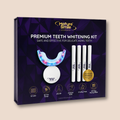
Blue light for standard whitening sessions, or a combined red + blue mode you can run alongside it. A shade guide card is included so you can track your own result rather than take ours on trust.
• A schedule designed to be finished
One 16-minute session daily for the first seven days, optional every-other-day use through day 14 for stubborn staining, then one or two top-up sessions a month. More frequent use does not produce proportionally whiter teeth and does raise the chance of sensitivity. Results vary with the type and age of the staining — surface stains respond best, and intrinsic discolouration from age, medication or trauma responds far less.
• What it will not do
It will not change the colour of crowns, veneers or bonding. If you have restorations in your smile zone, the usual sequence is to whiten first, let the shade settle for about two weeks, then have restorations matched. Speak to your dentist before starting if you have untreated cavities, cracked teeth, exposed roots or active gum disease.
Read next: Does teeth whitening damage enamel? · Why your teeth hurt after whitening · Sensitive-teeth whitening FAQ · Teeth whitening after 50
Shop: MatureSmile™ LED Teeth Whitening Kit · Teeth whitening for sensitive teeth
General information, not dental advice.

