Executive Summary Five things this guide establishes
1
At-home RF has real evidence behind it, but the mechanism is widely misdescribed. Home devices work by accelerating fibroblast activity and heat-shock protein signalling in the 40 to 44°C band, not by instantly melting and re-tightening collagen. That takes 8 to 12 weeks of consistent use, and the studies that measure it say so.[2][7]
2
Roughly half of what is sold as "RF" is not. Warmth-and-vibration wands, microcurrent tools, and multi-mode devices with no RF generator are routinely cross-shopped in this category. Three of the ten devices in this guide are reviewed specifically to draw that line.
3
Model generations quietly turned over in 2025 and 2026. The TriPollar STOP Vx that most older guides still recommend is discontinued; its replacement costs more and behaves differently. Buying guides that have not re-verified are recommending dead SKUs.
4
Microcurrent and EMS are different mechanisms, not different strengths. Microcurrent devices operate in microamperes below the motor threshold; EMS operates in milliamperes and produces actual muscle contraction. This single distinction reorders most of the market's marketing claims.
5
The EvenSkyn Lumo+ wins on the combination that matters: genuine RF, genuine EMS, and LED in one handset with clinic-style thermal architecture, at $499.99 with a 2-year warranty. Where it loses, this guide says so, including the eye area and EMS comfort for sensitive users.
90%+
of consumer RF device users in one 45-person study reported their skin looked and felt rejuvenated
Systematic review, Aesthetic Surgery Journal Open Forum, 2025 [2]
43°C × 10 min
the sustained dermal temperature shown to promote proliferation of human dermal fibroblasts
Bai et al., Journal of Cosmetic Dermatology, 2025 [7]
−10.1%
reduction in horizontal neck fold score at day 84 in a randomized split-face trial of a home RF device
Dermatology and Therapy, 2022 [5]
1. What RF Actually Does to Skin: The Corrected Science
Radio frequency skin tightening applies controlled electromagnetic energy, typically between 0.3 and 10 MHz, to heat the dermis, the collagen-bearing middle layer of skin, while sparing the epidermis above it. Systematic reviews consistently describe the same downstream result: collagen remodelling, new collagen formation, and measurable improvement in skin firmness and texture over 8 to 12 weeks of treatment.[2][3]
That mechanism, the safety profile and the buying checklist are covered at full length in our plain-language guide to radio frequency skin tightening at home; the page you are reading is the device-ranking layer on top of it.
What most consumer guides get wrong, including an earlier version of this one, is the mechanism at home-device temperatures. You will often read that RF makes existing collagen fibers "denature and tighten instantly." That is true only at clinic temperatures. Collagen's thermal shrinkage happens far above what any safe at-home device produces, and researchers state directly that a 40 to 42°C skin surface cannot produce an immediate contraction effect.[8] What the at-home temperature band actually does is quieter and better documented:
- Metabolic acceleration. Tissue held at 37 to 44°C shows increased metabolic activity and accelerated natural repair processes.[7]
- Fibroblast proliferation. Raising dermal temperature to 43°C for around 10 minutes promotes proliferation of human dermal fibroblasts, the cells that manufacture collagen and elastin.[7]
- Heat-shock protein signalling. Heating collagen to roughly 42°C stimulates production of HSP47, a chaperone protein involved in forming new, correctly structured collagen.[9]
So the honest model is this: at-home RF is a repeated training stimulus for your collagen-producing cells, not a one-session shrink-wrap. The warm, slightly plumped look right after a session is circulation and mild fluid shift, and it fades within hours. The structural change is the 8-to-12-week curve the trials measure.[4][5] A 12-week randomized split-face trial in 33 women aged 35 to 60 found the home RF side significantly outperformed an anti-aging cosmetic on forehead wrinkles, nasolabial folds, glabellar lines, and lower-face sagging, with a 10.14% reduction in horizontal neck fold score by day 84.[5]
What RF will not do
Be skeptical of anyone promising otherwise. At-home RF will not replace a surgical facelift, erase deep nasolabial folds or severe jowling, produce structural results in a single session, fix pigmentation from sun damage, or shrink facial fat. The temperatures are deliberately too low for fat effects, and pigment concerns belong to light-based categories entirely.
2. The Category Problem: Why Half of "RF Devices" Are Not RF
Search "RF skin tightening device" on any marketplace and you will see hundreds of products from $29 to $999. They are not the same technology in different packaging. In 2026 the category splits four ways, and knowing which one you are holding decides whether you get a documented collagen stimulus or a warm vibrating pebble.
Genuine RF devices generate true radio-frequency energy at a named frequency, deliver meaningful heat to the dermis, and carry skin-contact and temperature sensors. In this guide: EvenSkyn Lumo+, CurrentBody Skin RF, TriPollar STOP Vx 2, Silk'n Titan, AMIRO R1 Pro, and the EvenSkyn Venus for the eye zone.
Warmth-and-vibration devices sold as RF pair a resistive heating element with a small vibration motor. No RF generation at all. They cluster at the $50 to $150 price point, they feel like something is happening, and the dermis never reaches a therapeutic state.
Microcurrent devices mistaken for RF. NuFACE and FOREO build genuinely well-made microcurrent tools. Microcurrent delivers current in millionths of an ampere to influence cellular activity, and it is a different category with different goals. It does not heat the dermis, and at microampere levels it does not produce muscle contraction either. We review both below so the comparison is honest rather than absent.
Multi-mode devices with no RF inside. The clearest 2026 example is the Medicube AGE-R Booster Pro, a hugely popular Korean device that many buyers cross-shop against RF tools. Its six functions are electroporation, microcurrent, EMS, electric needling, LED, and sonic vibration. Radiofrequency is not one of them. It may be a fine device for what it does. It is not an RF device, and guides that list it as one, as an earlier version of this guide did, are making the exact mistake this section warns about.
60-second authenticity checkLook for a named frequency in MHz on the spec sheet, a searchable regulatory record, active temperature monitoring with skin sensors rather than a simple timer, and per-zone treatment times listed in minutes. A missing frequency number is the single fastest tell that a device is not generating true RF.
3. Thermal Architecture: The Spec Layer Nobody Reads
Two RF devices with identical wattage can behave completely differently on your face. The difference is thermal architecture: how a device reaches temperature, how it holds it, how fast it senses your skin, and what it does the instant contact breaks. This is the layer where at-home RF is genuinely won or lost, and almost no buying guide covers it. Here is the temperature map the peer-reviewed literature actually draws.[6][7][8]
The RF Temperature Map 37°C 42°C 45°C 55°C 70°C
37 to 44°C · Home operating bandMetabolic acceleration; 43°C sustained about 10 minutes promotes fibroblast proliferation; roughly 42°C triggers HSP47, the collagen-folding chaperone.
[7][9] 42 to 45°C · Epidermal ceilingThe skin surface must stay below this line to avoid thermal damage while deeper layers are heated.
[6] 45 to 50°C · Damage onsetProteins begin conformational change and cell death risk rises. No consumer device should sustain skin here.
[7] 55 to 70°C · Clinic-only shrinkageThe thermal band where collagen fibers actually contract. Reached only by professional monopolar and microneedling RF with epidermal cooling.
[8] Read device claims against that map and the marketing fog clears fast. "Instant tightening" at home would require the 55°C-plus band, which would burn you. What a well-built home device actually competes on is different: how long it can safely hold your dermis in the productive 40 to 44°C window per session. Three specs decide that:
- Sustained temperature versus peak temperature. A device that briefly touches 45°C but averages 38°C delivers less stimulus than one holding a steady 42°C. The Lumo+ approach is a sustained 42°C default with brief, sensor-gated peaks under 20 seconds when skin runs cooler. AMIRO takes a related route, cutting power the moment surface temperature exceeds 42°C.
- Sensor sampling rate. How often the device checks your skin. AMIRO publishes 50 temperature samples per second on the R1 Pro. FOREO's Anti-Shock system reads skin conductivity 200 times per second, although on a microcurrent device that protects comfort rather than managing heat. Most budget wands publish nothing, which usually means a timer, not a sensor.
- Contact-loss response. The faster power cuts when the head leaves skin, the more forgiving the device. Sub-100ms disconnect is the 2026 benchmark on premium devices; cheaper hardware runs 300 to 500ms or relies entirely on timers.
Cooling is the quiet fourth spec. Most home RF relies on passive cooling: the handset heats up during use and forces you to stop. Active semiconductor cooling, which the Lumo+ carries, pulls heat away from the contact surface continuously, extending safe session time without giving up the therapeutic band.
4. How We Evaluated, and What We Did Not Do
What we did. Every device entry was rebuilt in August 2026 from primary sources: manufacturer spec pages and manuals, current direct pricing verified in USD on August 15, 2026, regulatory database checks, and the nine peer-reviewed sources listed in the References section. Model generations were verified against manufacturers' own current catalogues, which is how we caught one widely recommended device that has been discontinued. Our deepest hands-on familiarity is, unavoidably, with our own devices; we design and manufacture them.
What we did not do. We did not run a blinded clinical panel on the competitor devices, and we do not pretend otherwise. Where an outcome figure appears next to a device, it is either from the peer-reviewed literature, cited, or a manufacturer's own reported claim, labelled as exactly that. No device was included or excluded for commercial reasons, and no placement was paid.
Weighting. Technical and thermal architecture 40%, usability and routine fit 20%, published evidence quality 20%, safety design 10%, total 2-year cost of ownership 10%.
5. The 10 Devices, Reviewed and Fact-Checked
Prices are direct-from-manufacturer in USD, verified August 15, 2026, and will drift with promotions. Genuine RF devices first, then the eye zone, then the adjacent-category devices buyers cross-shop, reviewed honestly rather than ignored.
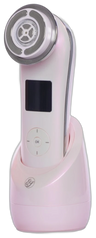
Highest composite score · made by EvenSkyn EvenSkyn Lumo+
$499.99 · Warranty 2 years · Bipolar RF + EMS + red LED · 5 to 8 minutes per session
The Lumo+ is the only device in the under-$500 field combining true bipolar RF, milliampere-level EMS, and red LED in one handset, with the safety architecture that combination requires. Its two-tier heating holds the dermis at a sustained 42°C, the HSP47 trigger point, and permits brief sensor-gated peaks under 20 seconds when skin runs cooler, a behaviour previously confined to clinic machines. Active semiconductor cooling keeps the contact surface workable through a full session instead of forcing breaks.
The EMS system runs at 100 Hz with roughly 3 milliamperes of average power. That number matters more than it looks: it is an order of magnitude above the microampere band microcurrent devices occupy, and it sits in the range where motor nerves actually fire and facial muscles genuinely contract. Build quality follows suit: titanium electrodes, medical-grade stainless steel, twice the skin-contact sensor count of typical rivals, and a 2000mAh battery rated for 550 charge cycles, roughly five years at two sessions weekly.
EvenSkyn's own reported outcomes, from manufacturer testing and stated as such: an 88% reduction in wrinkle depth and 74% improvement in the look of skin elasticity at 8 weeks, with 99% of users reporting fine lines looked improved within the first month. Treat these the way you should treat every manufacturer figure in this category, including our competitors': as the maker's claim, not independent science.
Honest limitations. It is explicitly not for the orbital eye zone; the skin there is too thin for full-power RF, so under-eye and eyelid concerns need a purpose-built device. The EMS sensation is strong, and very sensitive users often run RF-only sessions for the first weeks, which works but is a workaround. And at $499.99 it is not the cheapest way into RF; if you want basic tightening only, the CurrentBody delivers a large share of the result for less.
Shop the EvenSkyn Lumo+ → CurrentBody Skin RF
$385.99 · Warranty 1 year · Bipolar RF only · about 5 minutes per zone, roughly 35 minutes full face
A gentle, credible on-ramp to at-home RF. CurrentBody caps surface temperature at 40°C, the lower edge of the therapeutic window, and its Skin Sense system continuously adjusts delivery to hold it there. For first-timers, sensitive skin, or anyone nervous about energy-based devices, the starting choice is between this 40°C-capped handset and the EvenSkyn Lumo+ run in RF-only sessions, and CurrentBody's app-guided zone treatment is the best-designed onboarding in the category. CurrentBody reports 89% of users saw skin tightness improvement over 8 weeks in its own testing, a manufacturer figure.
Limitations. RF only: no muscle-toning EMS layer, no LED. Full-face treatment takes about 35 minutes across seven zones, which is where consistency quietly dies for many users. The 1-year warranty trails the emerging 2-year standard. Note when comparing prices that CurrentBody's bundled "skin tightening solution" listings run higher, around $459.99; the figure above is the device itself.
TriPollar STOP Vx 2
$544 street, $779 list · Warranty 2 years · Multi-polar RF + DMA muscle activation · variable session times
First, the correction most 2026 guides have not made: the original STOP Vx, still recommended across the web at around $479, is discontinued. The current line is the STOP Vx 2 and Vx 3, and street pricing on the Vx 2 Gold runs about $544 against a $779 list. TriPollar sits under Pollogen, a Lumenis subsidiary, which is genuinely strong clinical pedigree for a consumer brand, and it shows in the engineering: multi-frequency RF that heats several dermal depths at once, a thermal mapping algorithm sampling multiple facial points, and DMA electrical muscle activation layered on top.
Limitations. The heat is intense by design and reviewers with sensitive skin consistently say so. No LED layer. And the price moved firmly above the Lumo+ when the generation turned over, which changes the value math this guide is built on.
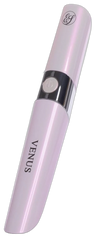
Best for the Eye Area EvenSkyn Venus
$149.99 · Warranty 2 years · Fractional RF + red/blue LED + thermal + sonic · 3 to 5 minutes per eye
The Venus exists because of a gap every full-face device in this guide shares: none of them may be used inside the orbital bone. The skin there is too thin for full-power RF. The Venus is purpose-built for exactly that zone, running lower-intensity fractional RF with red LED, blue LED, 42°C thermal stimulation, and sonic micro-vibration at 12,000 oscillations per minute for the under-eye, upper eyelid, crow's feet, and lip lines.
Limitations. It is deliberately narrow. It is not a full-face device and does not try to be; it is the second half of a pairing, most commonly with the Lumo+.
See the EvenSkyn Venus → Silk'n Titan AllWays
~$399 list · Warranty 2 years · Bipolar RF + infrared + LED · 10 to 15 minutes per zone
Silk'n now sells three Titans: the Mini, the cordless AllWays, and the flagship MultiPlatform, so check which SKU a deal actually covers. The AllWays combines RF reaching up to 4mm with light energy reaching 1.8mm and infrared heat, a legitimately broad energy mix. The catch has not changed across generations: sessions run 10 to 15 minutes per zone, and long routines are where home devices go to be abandoned. Silk'n's own guidance leans into slow, patient treatment, and for users who will genuinely sustain that, the Titan rewards them.
Limitations. Session length. Slower visible progress than higher-power rivals in user reports. Three-SKU naming that makes price comparison genuinely confusing.
AMIRO R1 Pro
$199.99 to $209.99 sale, $299.99 list · Warranty 1 year · RF at 1/1.5/2 MHz + EMS + red and infrared light · 5 to 10 minutes
The honest surprise of this sweep. AMIRO publishes the spec most budget brands hide: RF at named frequencies of 1, 1.5 and 2 MHz, six surgical-grade electrodes, and a thermal control system sampling skin temperature 50 times per second that cuts power the instant the surface exceeds 42°C. That is real thermal architecture at a $200 street price, and it earns AMIRO a genuine award here rather than a dismissive budget-tier mention. It carries FCC and CE certification rather than an FDA record, and its listed collagen figure, a 37.5% rise in type III collagen secretion in 7 days, is AMIRO's own claim, not an independent study.
Limitations. Lower sustained RF output than the premium tier, shorter battery life, a 1-year warranty, and thinner English-language support and documentation than domestic brands.
Adjacent Technology · Laser, not RF NIRA Precision Laser
~$299 · Warranty 2 years + 90-day money-back · 1450nm non-fractional laser · about 2 minutes daily
Not RF, but included because eye-area shoppers constantly cross-shop it. NIRA's 1450nm non-fractional, non-ablative laser targets the wavelength of peak dermal absorption, warming where wrinkles form without pain or downtime, and the current generation is the Pro 3 alongside the small-tip Precision. It is FDA-cleared, and NIRA backs it with a 2-year warranty plus a 90-day money-back guarantee, the strongest return posture in this guide. For crow's feet and around the mouth it is the credible laser alternative to the Venus; choose by preferred mechanism, laser versus fractional RF with LED and thermal.
Category Clarifier · Microcurrent, not RF NuFACE TRINITY+
~$395 · Warranty 1 year · Microcurrent, about 400 microamperes, three frequencies · 5 minutes daily
The category-defining microcurrent device, FDA-cleared and aesthetician-developed, with a Boost button adding 25% output and a professional ecosystem behind it. What it is not is an RF device. At around 400 microamperes it operates below the motor contraction threshold: it stimulates cellular activity rather than producing the muscle contractions its "face fitness" framing implies, and it does not heat the dermis at all. If your goal is skin tightening through collagen stimulus, you want RF. If you enjoy microcurrent's gentle, sensation-free routine, the TRINITY+ is the best-supported way to have it. We compare it directly with the Lumo+ in a dedicated head-to-head.
Category Clarifier · Microcurrent, not RF FOREO BEAR 2
~$329 · Warranty 2 years · Microcurrent up to 680 microamperes + T-Sonic massage · 2 minutes
FOREO's headline is that BEAR 2's 680 microamperes makes it the strongest at-home microcurrent tool, roughly 70% above the TRINITY+. The physiological caveat: 680 microamperes is 0.68 milliamperes, still below the motor threshold, so the muscles are not contracting and the extra amplitude buys intensity of stimulus, not a different mechanism. The Anti-Shock system sampling skin conductivity 200 times per second makes it exceptionally comfortable, the sealed silicone body is the most hygienic design in this guide, and the 2-minute routine is the easiest to keep. It remains a microcurrent device reviewed here so RF shoppers can see the line clearly.
Category Clarifier · No RF inside Medicube AGE-R Booster Pro
$220 to $399 by retailer · Warranty 1 year · Electroporation + microcurrent + EMS + electric needling + LED + sonic · app-guided modes
Korea's best-selling home beauty device and a TikTok phenomenon, the Booster Pro packs six technologies into one handset, and radiofrequency is not among them. Its strongest documented trick is electroporation, briefly opening micro-channels so skincare absorbs better, alongside microcurrent, EMS, needling-style stimulation, LED, and sonic vibration. Earlier versions of many guides, ours included, listed it as an RF device. It is not, and Medicube's own specifications say so. Judge it as an absorption-and-glow multi-tool with a real learning curve across its modes, not as a skin-tightening RF purchase.
6. Why the Lumo+ Wins 2026: The Deep Dive
Three arguments carry the verdict, and each one survives being checked.
The EMS distinction the market blurs
Most "muscle-toning" claims in this category come from microcurrent devices, and here the units matter. Microcurrent operates in microamperes, commonly 50 to 500, up to 680 on the BEAR 2, and is deliberately designed to stay below the threshold at which motor nerves fire. That is a feature for comfort: no twitching, no sensation. But it also means the muscles are not contracting, and a facial muscle that never contracts is not being trained. EMS operates in milliamperes, sends impulses strong enough to recruit motor nerves, and produces genuine involuntary contraction, the same class of stimulation physical therapy uses.
The Lumo+ EMS runs at roughly 3 milliamperes, an order of magnitude above the microcurrent band. That is why sessions feel like something is happening, and why the muscle-tone effect has a mechanism behind it rather than a metaphor. One honest caveat, because amplitude is not the whole story: waveform, pulse duration, frequency, and electrode placement all shape what any electrical stimulus achieves, and a laboratory threshold is not a promise about a specific face. The claim we make is the defensible one: EMS and microcurrent are different mechanisms, the Lumo+ carries the former, and every microcurrent device in this guide carries the latter. The full comparison lives in Microcurrent vs EMS at Home.
Two-tier heating changes what a session accomplishes
Most home RF devices treat 40 to 42°C as a flat ceiling. The Lumo+ holds 42°C as its sustained default, the temperature the HSP47 literature points at, and layers brief, sensor-gated peaks of under 20 seconds when its sensors read cooler skin.[9] Combined with active cooling on the contact surface, the practical result is more cumulative minutes inside the productive band per session, which section 3 argued is the number home RF actually competes on.
The two-year cost math
| Device | Price (USD) | Consumables, 2 yrs est. | Warranty | Effective cost/yr |
| EvenSkyn Lumo+ | $499.99 | ~$100 gel | 2 years | ~$300 |
| CurrentBody Skin RF | $385.99 | ~$80 gel | 1 year | ~$233 + warranty risk yr 2 |
| TriPollar STOP Vx 2 | $544 street | ~$90 gel | 2 years | ~$317 |
| Silk'n Titan AllWays | ~$399 | ~$100 gel | 2 years | ~$250 |
| AMIRO R1 Pro | $199.99 sale | ~$80 gel | 1 year | ~$140 + warranty risk yr 2 |
| Clinic RF course | $800 to $2,400 per session | n/a | n/a | $1,600 to $7,200+ |
Prices verified in USD from manufacturer or primary retail listings, August 15, 2026. Street prices move with promotions; clinic figures are commonly reported ranges that vary by market and provider. Verify against live listings before purchase.
On pure cost per year the AMIRO undercuts everything, and this guide says so. The Lumo+ case is cost per capability: it is the only line in that table delivering RF, true EMS, and LED together, with the strongest thermal architecture of the group, for under $30 a month across its warranty life. A single clinic RF session costs 1.6 to 4.8 times the entire device.
7. Pairing Devices for Full Coverage
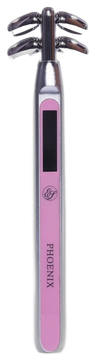
No single at-home device does the whole job, and brands are quiet about it. Full-face RF devices, ours included, must stay outside the orbital bone, which leaves crow's feet, under-eye, and eyelids untreated by exactly the tools people buy for aging concerns. The standard answer is a two-device pairing: a full-face RF handset for cheeks, jawline, neck and décolletage, plus a purpose-built orbital device. The Lumo+ and Venus bundle at $594.99 is the most cost-efficient version of that pairing in this guide, priced below the two devices separately. For body applications there is a three-device set adding the Phoenix microcurrent bar. The full logic of pairing, including sequencing across a week, is covered in the complete stack guide.
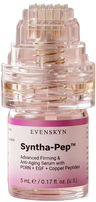
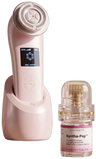
The second pairing runs on a different axis. Where the Venus extends the energy layer to the eye area, the Lumo+ and MicroInfuser duo at $589.99 adds a delivery layer instead: a fortnightly micro-channel session (0.5 mm nominal needle length) from the MicroInfuser, carrying a sealed single-use PDRN serum ampoule, alongside the Lumo+'s weekly RF, EMS and LED work. Bought as the duo the pair costs $589.99, less than the two bought separately. That stack is the one we benchmark against clinic RF microneedling in the Morpheus8-at-home comparison, which is candid about the ceiling: no home pairing, this one included, passes energy through a needle.
8. Your 12-Week Starting Protocol
Results compound; a single session produces an evening glow, twelve consistent weeks produce the measurable change the trials record.[5] The short version: weeks 1 and 2, one 5-minute session a week at low intensity, face only, generous conductive gel. Weeks 3 to 6, two to three sessions a week (one to two if you are under 40), 5 to 8 minutes each, add neck and jawline, introduce EMS for part of each session. Weeks 7 to 12, the same two to three sessions a week (one to two under 40) at the intensity your skin tolerates, face and neck. From month four, one to two maintenance sessions weekly. Never exceed 25 minutes of total RF per week on face and neck (20 minutes if you are under 40); over-treatment blunts the fibroblast response rather than doubling it. The complete week-by-week sequencing across RF, EMS, LED and micro-infusion, including how to slot multiple devices without overlap, lives in The At-Home Anti-Aging Device Stack.
The one rule that outranks the restTake a standardized before photo, same light, same angle, week 0. Perception drifts; photos at weeks 0, 4, 8 and 12 are the only progress measure that does not lie to you.
9. Safety, Contraindications, and Deeper Skin Tones
RF is well tolerated by the large majority of users, and the systematic reviews report a favourable safety profile across devices and settings.[2][3] The absolute contraindications below apply to every device in this guide. Do not use at-home RF if you have:
- An implanted pacemaker, defibrillator, cochlear implant, or any active electronic medical device
- Metal plates, screws, or dental implants within roughly 4mm of the treatment surface
- A history of keloid scarring
- Active skin cancer or a suspicious, undiagnosed lesion in the treatment area
- An active skin infection, open wound, severe acne flare, or rosacea flare in the area
- Pregnancy or breastfeeding, out of caution, as controlled studies have not been conducted
- Severe uncontrolled diabetes, given impaired heat dissipation and wound healing
Had recent injectables or a clinic procedure? Timing gaps matter and they differ by treatment; the complete wait-time table for Botox, fillers, peels, and professional RF lives in our post-procedure timing matrix. Stop any session that produces burning rather than warmth, blistering, or redness persisting past 24 hours.
RF on deeper skin tones: the part most guides skip
This deserves more than a reassurance line. Laser and IPL target chromophores, pigment among them, which is why those categories carry real hyperpigmentation risk on melanin-rich skin and why IPL devices publish skin-tone charts. RF works on a different principle: the energy converts to heat through tissue impedance, water-bearing tissue rather than pigment, so melanin is not the target and the pigment-specific risk profile of light-based devices does not transfer.[1] The practical guidance for Fitzpatrick V and VI is therefore about heat, not pigment: follow the acclimation weeks strictly, favour devices with real thermal sensing rather than timers, and treat post-inflammatory pigmentation history as a reason to start at the lowest intensity. Device documentation still gets the final word for your specific model.
10. The Cost Math vs Clinic RF
The two-year table in section 6 carries the detail; the shape is simple. A clinic RF course of three to four sessions at commonly reported rates of $800 to $2,400 per session runs $2,400 to $9,600 before maintenance. Clinic prices by treatment are in what RF skin tightening costs in 2026. Every credible home device in this guide costs less than a single mid-range clinic session, traded against lower per-session power and the requirement of consistency. The honest hybrid many readers land on, one clinic session a year plus home maintenance, and the decade-scale budget comparison, are worked through properly in The Skin Longevity Protocol and the honest guide to the RF microneedling category.
11. Reading Spec Sheets: Generations, Clearances, and Traps
Four checks catch nearly everything this sweep caught.
Check the model generation, not just the model name
Device lines turn over quietly. The TriPollar STOP Vx became the Vx 2 and Vx 3; NIRA's Pro became the Pro 3; Silk'n split the Titan into three SKUs. A guide or listing quoting last generation's price for this generation's name is your signal to verify on the manufacturer's own catalogue page before paying. If the exact model string on the box does not appear on the maker's current site, you are buying discontinued stock, which is sometimes fine and always worth knowing.
Know what the regulatory words actually mean
"FDA cleared" means a 510(k) premarket notification: the maker demonstrated the device is substantially equivalent to one already legally marketed, and the clearance has a searchable K number in FDA's public database. "FDA approved" is a different, more demanding pathway reserved for higher-risk devices, and no consumer skin-tightening handset legitimately carries it; treat "approved" in this category as a red flag about the marketer, not a stronger credential. "FCC certified" and "CE marked" govern electromagnetic emissions and European conformity respectively; they are real certifications and they are not clinical clearances. And an FDA "establishment registration" means a facility is registered with the agency, which FDA itself states does not constitute clearance or approval of any device. When a brand states clearance, the K number is checkable in about a minute; brands that publish theirs are making a verifiable claim, and that difference is worth price.
Read outcome claims for their source
"Up to X degrees" without a sustained figure, "clinical grade" without a clearance record, percentage improvements without a study identifier: each is answerable with one question, "says who, where can I read it?" Manufacturer-reported figures are legitimate information when labelled, ours included. They become deception only when dressed as independent science.
Match the mechanism to your goal
Tightening and firmness over weeks: RF. Muscle tone with real contraction: EMS. A gentle no-sensation routine: microcurrent. Surface glow and product absorption: electroporation and sonic devices. Pigment and hair: light-based categories with their own skin-tone rules. Most disappointment in this category is a mechanism mismatch, not a defective product.
12. FAQ: The 11 Questions That Matter
Does at-home RF actually work?
Yes, with honest boundaries. Peer-reviewed trials of home RF devices show measurable improvement in wrinkles, firmness and skin thickness over 8 to 12 weeks of consistent use, including a randomized split-face trial where the device side significantly outperformed an anti-aging cosmetic. Home devices run at lower power than clinic systems, so change accumulates gradually and tops out at meaningful improvement, not surgical-grade lift.
How soon will I see results?
A temporary glow after each session from warmth and circulation, fading within hours. Softening of fine lines around week 4. Measurable firmness change at weeks 8 to 12, which is where the trials place their endpoints, with remodelling continuing for months after.
How often should I use an RF device?
Two to three sessions weekly of 5 to 8 minutes is the standard cadence across premium devices. More is not better: the dermal response needs recovery time, and exceeding roughly 25 total RF minutes per week blunts results rather than doubling them.
Is RF safe for darker skin tones?
RF heats tissue through impedance rather than targeting pigment, so the melanin-specific risks of laser and IPL do not transfer. For Fitzpatrick V and VI the guidance is heat management: strict acclimation, sensor-equipped devices over timer-only ones, and lowest-intensity starts if you have a history of post-inflammatory pigmentation. Section 9 covers this fully.
Can I use RF after Botox or filler?
Wait at least 2 weeks after injections before treating the same area, longer on some practitioners' advice. The complete wait-time table by procedure is in our
timing matrix.
Will RF melt facial fat?
No. Fat effects require sustaining much higher temperatures in the fat layer than any home device produces; the literature places damaging and lipolytic ranges well above the home band, which is exactly why home devices cap where they do.
Does RF hurt?
RF itself reads as spreading warmth, like a heated stone. Devices with EMS add muscle contractions that range from odd to intense depending on level; that is the EMS working, and it is adjustable. Sharp heat or burning is a stop signal, not a sensation to push through.
Do I need conductive gel?
For RF modes, yes: gel evens energy delivery and removes drag. Moisturizers, oils and serums are not substitutes and can alter energy delivery. Which gels work across RF, microcurrent and ultrasound is covered in our
conductive gel guide.
RF versus microcurrent: which do I want?
Different mechanisms. RF heats the dermis to stimulate collagen production over weeks. Microcurrent delivers microampere current below the muscle-contraction threshold for a gentle cellular stimulus. EMS, a third category, contracts muscle outright. Tightening goal: RF. The full breakdown is in
Microcurrent vs EMS at Home.
How do I know a device is real RF?
A named frequency in MHz on the spec sheet, active temperature sensing rather than a timer, per-zone times in minutes, and a checkable regulatory record. No published frequency is the fastest tell that no RF generator is inside.
Is there such a thing as Thermage at home?
No. Thermage is a high energy monopolar clinic system delivered with surface cooling by an operator, and nothing sold for home use replicates that energy class. The closest home analogue is bipolar surface RF like the devices in this guide, which trades per-session power for repeatable, self-administered sessions. Treat any listing marketed as "Thermage at home" as a red flag, and judge the device on the spec checks in
section 11 instead.
13. Glossary of RF Terminology
- Bipolar RF: current flows between two electrodes on the device head; penetration of roughly 1 to 4mm, the format that makes home use viable.[1]
- Monopolar RF: one active electrode with a grounding pad; up to about 20mm penetration in clinical systems, requiring precise energy control. Predominantly clinic technology.[1]
- Thermal shrinkage temperature: the 55 to 70°C band where collagen's triple helix unravels and fibers contract. Clinic-only territory; home devices work below it by design.[8]
- HSP47: a heat-shock chaperone protein, stimulated around 42°C, involved in assembling new, correctly folded collagen.[9]
- Fibroblast: the dermal cell that manufactures collagen and elastin; the true target of home-band RF heating.[7]
- Neocollagenesis: formation of new collagen following controlled thermal stimulus, the documented histological outcome of RF treatment.[3]
- Microcurrent: electrical stimulation in microamperes, below the motor threshold; a cellular-level stimulus that does not contract muscle.
- EMS: electrical muscle stimulation in milliamperes, strong enough to recruit motor nerves and produce genuine contraction.
- 510(k) clearance: FDA premarket notification establishing substantial equivalence to a legally marketed device; carries a searchable K number in FDA's public database.
- Fitzpatrick scale: the six-type skin pigmentation classification; RF's impedance-based heating is why its risk profile differs from pigment-targeting light devices across types.[1]
Final Verdict
Rebuilt against verified August 2026 prices, current model generations, and nine peer-reviewed sources, the field settles clearly. The EvenSkyn Lumo+ scores highest in this guide: the only sub-$500 device pairing genuine RF and true milliampere EMS with LED, wrapped in the strongest thermal architecture in its class and a 2-year warranty. For a first device, the choice is between the CurrentBody Skin RF, the gentler on-ramp at a 40°C surface cap, and the EvenSkyn Lumo+, which sensitive users often start in RF-only sessions. The AMIRO R1 Pro is the budget pick that earns the word honestly. The TriPollar STOP Vx 2 serves experienced users who want maximum heat and will pay the post-generation price for it. And for the eye zone every full-face device must avoid, the Venus, alone or in the Lumo+ and Venus bundle, completes the coverage. Where a device in this guide is not RF, we said so; where a competitor wins a dimension, we scored it that way. That is the standard the category should be held to.
Heat is the ingredient. Architecture is what you are actually paying for.




Leave a comment
All comments are moderated before being published.
This site is protected by hCaptcha and the hCaptcha Privacy Policy and Terms of Service apply.